Papers

Characteristics Of Effective Prevention

Written by Bonnie Benard, NIDA, USA.(Originally in training manuals for Project Snowball, Illinois Teen Institutes, 1987)

Published in Britainin ‘Drug Prevention – Just say Now’ by Peter Stoker, pub. David Fulton Publishers,London, 1992.

Programme comprehensiveness/intensity

A.        Multiplicity: the causes of drug/alcohol abuse are multiple: personality, environmental, behavioural (Kandel, Logan, 1984; Hawkins et al, 1951).  Programmes tackling only one area usually fail.  You should target multiple systems (youth, families, schools, community, workplace, media, etc).  Also use multiple strategies (information, lifestyles, positive alternatives, community policies) (Botvin, 1982).

B.         Target whole community.  School-based programmes achieve less than community-based approaches.

C.         Target all youth for prevention – not just “high risk”.  Adolescence is seen to be a high-risk time for all youth in terms of health-compromising behaviour.  Labelling “high risk” youth can provoke stigmatisation and lead to self-fulfilling prophecies.  There is however an argument for defining “high risk” communities where an additional resource over and above the general prevention effort could be justified.

D.        Build drug prevention into general health promotion.  Drug abuse has been found by several (Lofquist, 1993) to be part of a complex pattern of interrelated factors – e.g. delinquency, truancy, school failure, precocious sexuality, which share common antecedents.

E.         Start at an early age and keep going!  Even in infancy there are influences in later behaviour.  Developmental difficulties by age 3 are difficult to overcome (Burton, White).  Here, it is of course relevant to mention Trevor Williams, Noreen Wetton and Alysoun Moon of the Southampton University team who have demonstrated so graphically in their “Jugs and Herrings” research papers that primary age children are not blissfully ignorant of drugs and alcohol.  Prevention programmes starting from what children actually know are essential.  Many secondary schools still seem to regard years 11 and 12 as the age at which discussion of drugs (or indeed sexuality) should be facilitated.  Don’t wait until the horse has run away before you lock the stable doors!

F.         Adequate quantity.  ‘One-shot prevention efforts do not work” (Kumpfer, 1988) there must be a substantial number of interventions, each of a substantial duration.  Project D.A.R.E. (Drug Abuse Resistance Education) initiated by Los Angeles Police and now in several countries, delivers no less than seventeen one-hour lessons to any given year and this is only part of the school programme.

G.        Integrate family/classroom/school/community life.  This is easier to say than do, but where it has happened results have been enhanced.

H.        Supportive environment, empowerment.  Where young people are encouraged to participate and take responsibility their behavioural outcomes are improved.  InBritain now peer-education methods which have been proven elsewhere have been applied to good effect.

Programme strategies

J.          ‘KAB’ - Knowledge/Attitudes/Behaviour.  Address these as a set, i.e. each must be directly tackled rather than assuming one will flow from another.  The behavioural component is in part addressed by social skills development, but also supported by positive reinforcement activities – drug free social/sporting events, commendations (preferably with something for everyone), media coverage, etc.  Research suggests that social learning theory (Bandura, 1977) produces some of the most profound improvements.

K.         Drug specific curriculum.  Affective education programmes that had not specifically covered drugs (including alcohol) were found unsuccessful, even though they addressed knowledge, attitudes and lifeskills.

L.         Gateway drugs.  So-called because people now using heavy-end drugs almost always started on these.  Gateway drugs can be tobacco, alcohol and cannabis or, these days inBritain, even heroin!  Concentration on prevention of these is therefore likely to prevent all substances.  British research by PaT (Parents against Tobacco, 1990), showed that of youth who smoked tobacco 50% had also tried an illegal drug compared with only 2% of those who did not smoke tobacco.  It should be particularly noted that cannabis is far from harmless; physical, mental and social damage is now being increasingly accepted as a reality.

M.        Salient material.  Whatever is used needs to identify with the audience, including:

•          ethnic/cultural sensitivity

•          appeal to youth’s interests

•          short term outcomes to be emphasised as important to youth as well as long term

•          appropriate language, readability

•          appealing graphics

•          appropriate to real age/reading age – a key factor

In a survey of 3, 700, 000 young American children, 25% of 9 year olds felt “some” to “a lot” of peer pressure to try drugs or alcohol (Weekly Reader, 1987).

N.        Alternatives.  Activities have to be plausible, be more highly valued than the health-compromising behaviour.  Too often these alternatives are poorly thought through. ( ‘Ping-pong = prevention’? No!)

P.         Lifeskills.      Development of these will be of wider benefit than drug prevention.  Included will be

communication, problem solving, decision-making, critical thinking, assertiveness, peer pressure reversal, peer selection, low-risk choice making, self-improvement, stress reduction and consumer awareness (Botvin, 1985).

Choosing your friends has been found in some research to be more effective than resisting the peer pressure of said friends.  Consumer awareness is a “companion” to resisting peer pressure, i.e. resisting media pressure.

Q.        Training prevention workers.  For the school setting the greater emphasis on experiential and interactive work requires teacher training to extend into youth work skills.  Community development skills are valuable in taking school initiatives into the community.  Imported “prestige” role models are all very well, but good results have been achieved with parents, peers, teachers, or outside agency workers.

R.         Community norms.  Consistency of policies throughout schools, families and communities can greatly enhance impact.

S.         Alcohol norms.  Because of its dual status as a beverage and as a culturally accepted drug, alcohol is problematic for prevention.  However, heart disease and tobacco prevention programmes have shown that societal norms can be changed.

T.         Improve schooling!  Listed here as a target because of its important correlation with healthy lifestyle.  Within the current British economic and academic climate one realistic hope may lie with co-operative learning, see the ‘Tribes’ programme, for example.

U.        Change society.  Don’t just stop with improving schools; add your voices to pressure for improvement in employment, housing, recreation and self-development; it is naïve to suppose that prevention can take place in a political vacuum.  Jessor recognises that failing to acknowledge the need for macro-environmental improvement while at the same time placing the responsibility for health solely with the individual is tantamount to “blaming the victim”.

The planning process

V.         Design, implementation, evaluation.  Evaluations have generally concentrated on outcomes rather than the quality of design.  However, implementation is as much dependent on engaging all sectors of the community (be it a school, a workplace, or a town) as it is on quality of design.  Evaluation should therefore measure process as well as outcome.

W.        Goal-setting.  Unrealistic or immeasurable goals help no-one.  It is important to set not only long-term outcome goals (for prevention is long-term) but also “process goals” such as increased involvement of parents and community, academic success, increased student-teacher interaction, and so on.

X.         Evaluation and amendment.  Prevention workers have been criticized for giving too little attention to this area, the crushing shortage of funds has much to do with it (inAmerica the ratio of funding between interdiction-policy and prevention is about 200:1).  This lack of emphasis on evaluation has been the Achilles heel that pro-drug campaigners have gleefully attacked.  Effective evaluations have been those including longitudinal design, multiple measures of process as well as outcome (Tobler, 1986), and cost-benefit analysis (CBA).  CBA is perhaps the greatest marketing tool prevention has; where CBA has been applied substantial cost effectiveness has been demonstrated.

National Drug PreventionAlliance

PO Box 594, Slough  SL1 1AA   J  Tel / Fax: +44 (0)1753 677917

E-mail: NDPA@drugprevent.org.uk   J  Internet: www.drugprevent.org.uk


Cannabis, synthetic cannabinoids, and psychosis risk: What the evidence says

Research suggests marijuana may be a ‘component cause’ of psychosis

Joseph M. Pierre, MD
Co-Chief, Schizophrenia Treatment Unit, VA West Los Angeles Healthcare Center, Health Sciences Associate Clinical Professor, Department of Psychiatry and Biobehavioral Sciences, David Geffen School of Medicine at UCLA, Los Angeles, CA

Over the past 50 years, anecdotal reports linking cannabis sativa (marijuana) and psychosis have been steadily accumulating, giving rise to the notion of “cannabis psychosis.” Despite this historic connection, marijuana often is regarded as a “soft drug” with few harmful effects. However, this benign view is now being revised, along with mounting research demonstrating a clear association between cannabis and psychosis.
In this article, I review evidence on marijuana’s impact on the risk of developing psychotic disorders, as well as the potential contributions of “medical” marijuana and other legally available products containing synthetic cannabinoids to psychosis risk.

CANNABIS USE AND PSYCHOSIS

Cannabis use has a largely deleterious effect on patients with psychotic disorders, and typically is associated with relapse, poor treatment adherence, and worsening psychotic symptoms.1,2 There is, however, evidence that some patients with schizophrenia might benefit from treatment with cannabidiol,3-5 another constituent of marijuana, as well as delta-9-tetrahydrocannabinol (?-9-THC), the principle psychoactive constituent of cannabis.6,7
Three meta-analyses have concluded cannabis use is associated with an increased risk of psychosis

The acute psychotic potential of cannabis has been demonstrated by studies that documented psychotic symptoms (eg, hallucinations, paranoid delusions, derealization) in a dose-dependent manner among healthy volunteers administered ?-9-THC under experimental conditions.8-10 Various cross-sectional epidemiologic studies also have revealed an association between cannabis use and acute or chronic psychosis.11,12
In the absence of definitive evidence from randomized, long-term, placebo-controlled trials, the strongest evidence of a connection between cannabis use and development of a psychotic disorder comes from prospective, longitudinal cohort studies. In the past 15 years, new evidence has emerged from 7 such studies that cumulatively provide strong support for an association between cannabis use as an adolescent or young adult and a greater risk for developing a psychotic disorder such as schizophrenia.13-19 These longitudinal studies surveyed for self-reported cannabis use before psychosis onset and controlled for a variety of potential confounding factors (eg, other drug use and demographic, social, and psychological variables). Three meta-analyses of these and other studies concluded an increased risk of psychosis is associated with cannabis use, with an odds ratio of 1.4 to 2.9 (meaning the risk of developing psychosis with any history of cannabis use is up to 3-fold higher compared with those who did not use cannabis).11,20,21 In addition, this association appears to be dose-related, with increasing amounts of cannabis use linked to greater risk—1 study found an odds ratio of 7 for psychosis among daily cannabis users.16
There are several ways to explain the link between cannabis use and psychosis, and a causal relationship has not yet been firmly established (Table 1).1-7,11-19,21-25 Current evidence supports that cannabis is a “component cause” of chronic psychosis, meaning although neither necessary nor sufficient, cannabis use at a young age increases the likelihood of developing schizophrenia or other psychotic disorders.26 This risk may be greatest for young persons with some psychosis vulnerability (eg, those with attenuated psychotic symptoms).16,18
The overall magnitude of risk appears to be modest, and cannabis use is only 1 of myriad factors that increase the risk of psychosis.27 Furthermore, most cannabis users do not develop psychosis. However, the risk associated with cannabis occurs during a vulnerable time of development and is modifiable. Based on conservative estimates, 8% of emergent schizophrenia cases and 14% of more broadly defined emergent psychosis cases could be prevented if it were possible to eliminate cannabis use among young people.11,26 Therefore, reducing cannabis use among young people vulnerable to psychosis should be a clinical and public health priority

Source: www.currentpsychiatry.com Vol.10 Sept 2011

Volatile substance abuse

Volatile substance abuse can cause sudden death. Stephen Ream offers advice to youth workers on helping young people.

What is volatile substance abuse?

Volatile substances readily evaporate at room temperature, giving off a “sniffable” vapour. Volatile substance abuse (VSA) is when these substances are deliberately inhaled through the mouth and/or nose to achieve a change in mental state or “high”. The most commonly misused products are butane gas from cigarette lighter refills, aerosols (deodorants or hair sprays), petrol and some glues.
Many people assume that, because these products are legal, they are safe. In fact, inhaled volatile substances can kill suddenly and unpredictably, and there is no way to avoid this risk.

How many young people inhale volatile substances?

The cheapness and accessibility of products make younger and more vulnerable children particularly susceptible. In the annual NHS report Drug Use, Smoking and Drinking Among Young People in England, VSA continues to be the most common form of substance misuse among 11- to 13-year-olds, and second only to cannabis by the age of 15. However, we have seen the positive effects of preventive education, with usage falling from 5.5 per cent of pupils in 2009, to 3.8 per cent in 2010.
According to the annual St George’s University of London report, VSA kills about 50 people a year in the UK. In the past decade it has killed more under-15s than all illegal drugs combined.

Why do young people do it?

VSA is an enticing high for teenagers in that it is cheap, accessible and fast-acting, and a volatile substance such as butane has little or no hangover effect. VSA is often a sign of problems in other areas of a young person’s life, such as bereavement, divorce or stress. But the motivating factors might just be sheer accessibility, peer pressure, boredom or a desire to shock parents or carers.

What are the warning signs?

Like any drug, these can include mood or behavioural changes such as appearing drunk or dizzy, or seeming secretive, withdrawn, irritable, restless or inattentive. A chemical smell might be noticed, a runny nose, watery eyes, rashes or spots around the nose and mouth, throat irritation or nausea.
Environmental evidence of use might include empty gas, aerosol or glue containers with teeth marks in the nozzle, or products disappearing from around the home. At least one parent told us that it was a “family joke” how much deodorant their teenager used until they realised what was going on.
Social evidence might include truancy, poor academic performance, a new social group or isolation from previous friends, and a withdrawal from activities.

What can youth workers do?

VSA can cause cardiac arrhythmia – a problem with the rate or rhythm of a heartbeat – and kill instantly. The only way to avoid this risk is to stop.
If no advice is likely to encourage a user to stop VSA immediately, it might be appropriate to give information that helps them avoid other risks, such as: don’t do VSA alone or in dangerous or out-of-the-way places; don’t impede breathing in any way; don’t use near a naked flame or lit cigarette; and don’t drink alcohol or take other drugs. However, while these will reduce the risk of suffocation or fatal accident, the toxic effects of VSA can still kill at any point.
If you find a young person intoxicated from VSA remain calm. Do not excite them or try to use force to remove the product. Any stress or physical exertion can trigger cardiac arrhythmia.
When working with a young person engaging in VSA: strip the environment of temptations; have clear, visible policies on the use and storage of volatile substances; openly discuss the potential dangers to their health; explore carefully how and why VSA started; and arrange support from other agencies, such as generic drug services, GPs and counsellors.

Source:www.cypnow.co.uk 20th Sept 2011

Will the Real Drug Policy ‘Emphasis’ Please Stand Up!

A brief look at the confusing messages emerging from current ‘prevention’ application in Australian drug policy.

QUIT – MODERATE – ACCOMMODATE? WHICH EMPHASIS ARE WE FOLLOWING?

What is going on with Australian Drug Policy Prevention application? It appears to be struggling with, what can only be described, as a Dis-associative Identity Disorder (D.I.D). The current interpretation continues to baffle the average Australian, and leaves many of us who are active in the Alcohol and Other Drug (AOD) field scratching our heads in bewilderment and sometimes utter disbelief!

SMOKING – The new leprosy?

The growing and relentless assault against tobacco via the QUIT campaign is something only ‘mushrooms’ would know little of. This vital and effective demand-reduction and education ‘war’ has been clear from its inception, and has continued to burgeon, evermore aggressively to the crusade we now see today.
The message is at the very least unambiguous, at times, bombastic! There is no guessing what the outcome of this endeavour is to be. The message and mandate is not ‘slow down’, it is not ‘moderate’ it is QUIT. The end game is the only game. There are no illusions about the time it may take to reach that goal, but that goal is the only target to aim at and as a consequence measures and outcomes are effective – more and more Australians are quitting!
Let’s commence by acknowledging the following principle, which is all but irrefutable… accessibility, availability and permissibility all increase consumption. When you reduce these, you reduce consumption. For example, the following details shows how education and legislation all reduced demand. Accessibility, availability and permissibility are all restricted and consumption drops.
In 1945 approximately 72% of Australian men smoked. The rate has been dropping ever since then. In 2007 only 18% of Australian males were daily smokers. In 1945 26% of Australian women smoked…In 2007 women were smoking at a lower rate than men with 15.2% still smoking daily. 1
• increases in getting help to quit smoking, especially use of the Quitline (2% to 4%) and nicotine replacement therapy (7% to 10%);
• increase in one year quit rate from 8% to 11% among smokers and recent quitters;
• a statistically significant reduction of about 1.5% in the estimated adult prevalence of smoking. 2
However, as successful as this message has been, the fight is not over yet, as the following excerpt so irrefutably affirms…
“ANTI-SMOKING campaigners have far from finished their battle with the tobacco industry, with some pushing for a ”license to smoke” and many predicting that cigarettes could be outlawed within a decade.” 3
Well so was the bold opening statement in recent article ‘Now butt out: new push seeks to outlaw cigarettes’ in The Age Newspaper.-

Fascinating…outlawing cigarettes, even though around 17% of Australians are still smoking – outrageous! The article went on to note that if such a ban were to take place the government would stand to lose around $6 billion dollars in tax revenue, but save an estimated $31 billion dollars currently spent per annum on smoking related health problems.
No doubt to everyone who is not a smoker this makes good health and fiscal sense…maybe even to some smokers too?
So how is that we have managed to convince a society that a ban could actually be possible on a legal drug – tobacco, that in its boom era (during the 40’s, 50’s and 60’s) was a key social accessory, that a legal ban be actually possible? A quick inventory of the processes engaged may give us some insight…

• A clear and uncompromising acknowledgement from health, government and fiscal sectors that cigarette smoking was damaging our community.

• The ensuing resolve that this must change for both fiscal, but more importantly, health reasons.

• The continuing single voice of disapproval of cigarettes from academics, politicians and health professionals. (Stopped the propaganda of the pro-smoking academics/doctors and started the recognition of the undeniable facts that ‘every cigarette is doing you damage’.)

• The sustained political will to create and implement policies to bring about change, including increased taxation, total advertising ‘blackouts’ and bans on smoking in defined places.

• These have been followed by the creation and implementation of Demand Reduction strategies that only grow in number and intensity and the relentless public education campaign on the dangers of smoking.

It would appear from both empirical data that such resolute policies work…even with a once widely accepted and socially palatable ‘legal drug’ like tobacco.
In a recent war of words over the zealous, if not poorly thought through, ‘plain packaging’ strategy, the Federal Minister for Health Nicola Roxon was quoted as saying…. “Big tobacco are fighting to protect their profits, but we are fighting to save lives.” 4 If that vitriol wasn’t enough, she was also quoted in the Australian Newspaper, again in regard to challenges to the plain packaging strategy …‘”We’re Australians. We can make laws in Australia to protect Australians…” 5 Feisty! I like it! However, comes the question… protect Australians from what? Well, Captain Obvious may answer that in this context it would be protection from the health and health budget destroying wrecking ball that is tobacco.
But is ‘health’ the real motivator that is underpinning this zeal for the wellbeing of Australians? I hope it is, but the utter inconsistency of this focused passion belies another agenda. Or is it that some people just can’t see the utter inconsistencies or, at worst, hypocrisies of this unbalanced policy focus?
If ‘health’ was the sole or main issue, then wouldn’t that same zeal, that same passion for justice of Aussie’s Health be mirrored in other areas of drug policy too? I mean, Roxon is pursuing a policy – plain packaging – that has a number of downsides to it, and only small possibility of a reduction in smoking – But that was enough, it seems, for her to implement the policy! Great I say, go for it, but why doesn’t this same ‘doggedness’ apply to the two other big monsters in the drug arena?
The Federal minister seems passionate about the anti-smoking message, passionate enough to make those sweeping statements we just read – ‘fighting to save lives!’ – ‘Making laws to protect Australians!’ and pursuing every possible vehicle to STOP people killing themselves (and our health budgets)on the way.
In a very recent interview published by the Financial Review, we get a glimpse into some of the motivators behind Roxon’s campaign against tobacco – ‘This is a defining moment for Roxon one that transcends politics and is deeply personal. Her father, a one-time smoker, died of oesophageal cancer at the age of 42…“All of us girls keenly felt the loss of not having our father as we grew up but that is not the same as being out on the street as some families are…it has made me very aware of the impact that smoking can have,” Said Roxon. This mother of a 6 year old daughter went on in the interview to declare that, ”This fight is about the past and the future. “We might be making the world a healthier place for our children, and that is very motivating. I don’t think the political gains will be very high or very quick, but the long-term health impact and feeling [that] you are in government to do some good is rewarding.”’*
I have no issue at all with this motivation from Roxon, I mean it is the personal encounter with tragedy and/or the grief of loss/dysfunction that adds undisputable weight to the abundance of health-destroying evidence that exists. But again, why isn’t this same passion for health/safety/future of children applied to the other life and health destroying drugs in the ‘recreational’ arena? Nicola would do well to spend time at Rehabilitation clinics, with families of alcohol and other drug using individuals who have not only shattered their lives but their families. Countless stories of lives and potential ruined at young ages because a drug was accessible, permissible, available and cheap. This very powerful evidence should also inform the prevention focused emphasis of alcohol and other drugs policy platform. All measures including high volumetric tax, plus clear and powerful warning labels should also be taken immediately to further ensure that children and families have the greatest protection from the damage of these drugs.
Alcohol – The protected substance?
When it comes to the other ‘legal drug’ the (it would appear) culturally entrenched alcohol – options for management have one glaring omission. Can you guess what it might be? No prizes if you said ‘QUIT’. The conspicuousness of the absence of this goal in the strategy is probably the noisiest of all elephants in the ‘Drug policy’ room. So, why is that?

We seem to have no problems creating what ‘defenders of the right to self destruct’ call a ‘Nanny State’ posture when it comes to cigarette smokers or our indigenous communities for that matter – But when it comes to the rest of the population quitting or abstaining from alcohol, then howls of derision chanting anti-‘Nanny State’ mantras are deafening!
James Campbell in his article ‘wowsers enough to drive you to drink’ featured in Herald-Sun 6 drew out, in his classic libertine framework article, some of the same inconsistencies we are bringing to attention in this paper – but I’m quick to add, for very different reasons. (Of course James would never have used the term ‘wowser’ in his title if he had even an inkling of what it stands for – We Only Want Social Evils Rectified – This of course is what all socially responsible people want. Yes, a free society, but a freedom that doesn’t disregard a) the liberty, safety and wellbeing of others b) the protection of the young, and c) bestowal of dignity on every human being… all of which are casualties when the imbibing begins.)
In his article he noted the data and subsequent recommendations recently released by the Cancer Council, but also what he has interpreted their seeming ‘double standard’ on the ‘drink’ issue. Professor Olver was quoted in the Age as saying… ”If you want to reduce your cancer risk as far as possible [abstinence] would be the option you have.” 7 yet in his article, Campbell states they stopped short of recommending abstinence from alcohol and settled for NHRMC recommendations of ‘a couple of standard drinks at any time’.
Now whilst I can see the point of incongruence, I would like to challenge Campbell’s ‘framing’ of the response. It is clear that not all cancers are caused or even added to, by alcohol, but it is equally clear, through evidence based science, that alcohol is carcinogenic.*
The point now is what do we do with that information? Certainly promoting abstinence as an option should be absolutely imperative…but that’s the problem… the ‘A’ word isn’t permitted, even in the ‘optional’ category!
Our culture is either so deeply addicted to this drug or so completely gripped by fear at being labelled something less than human because they don’t drink, that they actually cannot see the option of saying ‘No Thank you!’
Now if this was just, fully developed ‘grown ups’ who don’t care about their health or even worse, are self-medicating the vicissitudes of life with the grog, and never venture into the public space and expose others in the community to their less than sober persona, I suppose it would make less difference if one ‘partook’ (except for the medical and health bills the tax payer will have to fund)! However, it is the vulnerable in our society – the young (under 25 – still developing brains), the mentally ill, the socially and relationally isolated, the violent, the elderly, children and often women, who end up casualties of not only their own drinking, but that of others!
Whilst the link between cigarettes and disease is clear, it is no less clear with alcohol…
Alcohol consumption is the world’s third largest risk factor for disease and disability; in middle-income countries, it is the greatest risk. Alcohol is a causal factor in 60 types of diseases and injuries and a component cause in 200 others. Almost 4% (1 in 25) of all deaths worldwide are attributed to alcohol, greater than deaths caused by HIV/AIDS, violence or tuberculosis. 8
A couple of questions that are often conspicuous by their absence, when it comes to the inconsistencies in drug policy when dealing with tobacco and alcohol, are to do with impact on others. Yes, it is good to have gone to considerable lengths to minimise ‘passive smoking’, but what of the impact of what Professor Rob Moodie calls ‘passive drinking’? A couple of quick questions to ponder…
The real tragedy in all this ‘cultural reinforcement’ is that the imperative message for this demographic of abstinence, and delayed onset of drinking as long as possible, has completely disappeared .
When was the last time a cigarette caused a man to beat his wife to death?
When was the last time a cigarette caused an automobile accident killing two and disabling one for life?
When was the last time a cigarette caused a pub brawl or ‘glassing’ incident?
For the sake of brevity (and being seen to be too merciless on the sensibility of the Aussie imbiber) the following are just some of the long known, but only recently quantified data on this so called ‘social lubricant’….

a) Fiscal Cost: The research by the Australian Education and Rehabilitation Foundation (AER Foundation) has now put the total economic impact of alcohol misuse at $36 billion per annum which is over double 2005 estimates. This comprises $24.7 billion in tangible costs, which include out-of-pocket expenses, forgone wages or productivity and hospital and childcare protection costs. There are a further $11.6 billion in intangible costs, which includes lost quality of life from someone else’s drinking9

b) Consumption: Drinking more than ever before, at least 10.2 litres pure alcohol per person per annum 10

c) Cancer: “Alcohol use has been linked to thousands of cases of cancers including bowel, mouth, pharynx and larynx. 1 in 5 cases of breast cancer are linked to alcohol”. 11

d) Violence: There are more than 70,000 Australians who are victims of alcohol related assaults each year…alcohol-fuelled violence and abuse affects one in five people 12

e) Emergency Services: Ambulance Call outs in Greater Melbourne alone, for predominantly alcohol abuse have increased almost 600%: 1998-99: 1043 by 2008-09 it was 6924 13

f) Crime – In just one State alone, alcohol-related crime in Queensland has increased by 30 per cent, and public disorder offences by 65 per cent just in the past few years alone…Alcohol abuse in Queensland is now responsible for 100,000 crimes annually, or one-quarter of all offences.14

You get the point! This is, if not worse, then at the very least as bad as the smoking issue…. So, why aren’t all zeal, all passion and all strategies being implemented to prevent or stop the impact of alcohol on the Australian people and the economy?
So entrenched is the alcohol culture that according to the Australian Drug Foundation, parental supply has eclipsed all other sources of supply of alcohol to children aged 12-17. Now the excuses tabled for this kind of outrageous conduct are as follows…

a) Parents want to either, initiate their child into alcohol ‘wisely’ or at least ‘know’ how much they are drinking.

b) Parents want to be friends with their child and not parents. Believing they are avoiding stress at home by giving in to negative social influences.

c) Parents believe that if their children are going to ‘experiment’ then it’s better to do so with the legal drug.

d) ‘It’s part of being Aussie, it’s gonna happen, so might as well try and be ‘responsible’ and give them a hand in using this legal drug ‘properly’.’

So, how has that been working for us as a community? Well the evidence seems to correspond with the mindset. Again an Australian Drug Foundation recent release shows that by 16, one in five teenagers regularly binge drinks; by 18 it is 50 per cent.
It would appear this level of permissibility has only added to accessibility and availability and thus consumption has increased. I mean… ‘after all Mum and Dad are giving it to me and they use it, so it must be ok?’
The real tragedy in all this ‘cultural reinforcement’ is that the imperative message for this vulnerable demographic of abstinence and delayed onset of drinking as long as possible, has completely disappeared. All the scientific evidence reveals that their vulnerable developing brains need this option to be aggressively promoted as best practice and their parents, above all, need to get this reality check too.
Again, what continues to generate this disconnect between policy emphasis around the legal drugs of tobacco and alcohol? Both drugs are legal, but perhaps smoking an easy target now that fewer Australians do it, and is marginalised so much that scathing vitriol and uncompromising legislation will have little opposition? “But, not so with alcohol – Whilst approximately 14% of Australians who are legally permitted to drink, don’t, the amount of alcohol being consumed per person, per annum is near record highs. It would seem that challenging this second ‘monster’ can prove a difficulty, if a) votes matter b) the power brokers themselves are unable to say NO to alcohol; c) It has become the central and often sole ‘social amenity’ or even worse, d) it becomes the medication of choice for the ever growing epidemic of community wide psycho-social dysthymia.
Whatever the reason, a clear gulf exists in zeal, attention and endeavour when we juxtapose tobacco and alcohol. A gulf that screams, at best inconsistency, but at worst hypocrisy!
A quick recap…
When it comes to tobacco the policy aim for smoking is ‘quit’, and we have no problem aggressively challenging ‘smoking’ as a reckless act that needs stronger management. We have used Prohibition in its legal context to prevent smoking in a number of places and breaches of such prohibitions have met with not only social censure, but a fiscal punitive response – fines. And in this framework there appears no fear about attracting the pejorative ‘nanny state’ label.
When it comes to Alcohol, the policy aim (at the moment at least) is to avoid the ‘nanny state’ label, calling instead for management, more like a caring friend provoking a peer to a healthier choice. So the push seems to be toward ‘moderation’.
But what is happening in the arena of current illicit drug policy?
We appear to be losing the plot – the pro-drug lobby is trying to take over the judiciary, if not legislature!
When it comes to illicit drugs there appears to be a departure from all regulatory sanity. The ‘State’, on whose advice we can easily guess (George Soros funded propagandists) works ruthlessly to assassinate, mutilate and bury all processes that are focused on prevention or abstinence. Such processes the patronizingly dump into the ‘Nanny-State’ model/basket . Nor, would it seem are they interested in a Good Parent model, or even the ‘caring friend’ model… No, it would appear from all current debate this confederacy has opted for the ‘go with whatever feeling grabs you; it’s your ‘right’ and let the State clean up the mess’ approach!
There appears little to no censure, no label of ‘bad’ or ‘harmful’ or ‘destructive’ to the conduct that is illicit drug using. In fact great pains are taken to remove all terms from public documents that could potentially ‘marginalise’ the drug user. Whilst ‘name calling’ should never be condoned, conduct that illegal and destructive needs to be called for what it is and measures taken to change it. Whether the terms are legal or medical, they can never be ‘neutral’, or worse complimentary and condoning.
What is of greater concern is the tacit message oozing through the permissive interpretation of Harm Minimisation policy by the Harm Reduction Only Lobby, which is that the State sanctions and promotes – not challenges or changes – a drug user’s ‘habit’. (Yet it is the ‘habit’ that needs to change – more on that later.)
For example, they seem to be saying :

a) Please come to a special place with your illegal substance and we will assist you to take the drug of your choice (Medically Supervised Injecting Centre – MSIC). At no point will anyone ‘judge’ you for your ‘lifestyle choice’. Instead we will ensure you are comfortable and enabled in your drug taking activity whilst funding this process with tax-payer’s money. (No matter that this process breaks international laws on illicit drug use)

b) We will give you as many clean ‘needles’ as you like and will not hold you accountable for the return of used ones. In fact we will pay someone to go around and pick up your discarded syringes so you can continue to be free (not irresponsible, that would be pejorative)to continue, unhindered in your substance use, wherever and whenever you choose.

c) If the substance user opts to seek a change in conduct, only then may we humbly recommend a referral to a treatment facility. However, after we have just enabled you to continue your substance abuse (in our MSIC) and you are ‘feeling’ better (yet getting worse) after your State assisted ‘fix’, then it is unlikely that you’ll ‘feel’ the need for detox, let alone rehabilitate. So, the passive referral is ignored or forgotten.

d) If you are one of the single digit percentage of substance users that actually ‘follows through’ on referral, then no requirement will be placed on you to become drug free. No, we are only interested in trying to minimise your potential to kill yourself and make you as comfortable as possible. We will introduce you to other substances that may, or may not lead you to drug free recovery, but again, that is NOT our aim. This, after all, is only for the ‘problematic’ drug user and we must not have anyone feeling discomfort or distress from the withdrawal from drug use, even if is for a week – That would be ‘unkind’. So rather than treat you like a precious, intelligent, whole human being, we’ll simply treat you like a wounded pet and only treat the symptoms and not address the real problem.

e) The recent aggressive upsurge of promotion and use of, so called, ‘legal highs’ has produced an even clearer manifestation of this policy D.I.D/hypocrisy/inconsistencies. As these synthesized ‘designer’ concoctions started getting a more public profile, several States in Australia were quick to react by imposing age restrictions and then applying significant financial penalties (six figure fines) for those involved in distributing/using these products. Yet in some of these same States the use of current illicit drugs such as cannabis (and other currently illicit drugs that have clearly documented health damaging properties) attracts no more than a slap on the wrist for use and little more for trafficking!
It would seem no effort is spared, to ensure the drug user is rarely, if ever, is called to make changes. More than that, and at any point, an act of horrendous nature can be perpetrated against another citizen as we saw recently in the senseless murder of a deaf octogenarian pensioner, murdered by yet another (it would appear by the new label) ‘problematic drug user’. Diminished responsibility, mitigation, equivocation, even obfuscation, are employed to avoid ownership of the issue by the substance user. What’s more disturbing is that at no point is the abysmally interpreted Harm Minimisation Policy used to bring about change, let alone drug free wellness of these dysfunctional people.
The following (conveniently) long forgotten words of the remarkable Statesmen, Edmund Burke, are even more appropriate today than at any other time in recent history…
“Men are qualified for liberty in exact proportion to their disposition to put moral chains upon their own appetites… Society cannot exist, unless a controlling power upon will and appetite be placed somewhere; and the less of it there is within, the more there must be without. It is ordained in the eternal constitution of things, that men of intemperate minds cannot be free. Their passions forge their fetters.” Sir Edmund Burke

The very thing that is needed as outlined by Burke is the very thing the pro-drug lobby works tirelessly to negate. Morality is ‘off the table’ in this arena (The only time morality is invoked these days is when it comes to climate change; nowhere else is this allowed in the public discourse) In this ‘amoral’ space all attempts to impugn drug taking are perceivably removed. Terms like ‘wrong’, ‘bad’ ‘irresponsible’ are no longer permitted. So, if it is no longer referred to as ‘wrong’ then comes the next manipulative question: on what grounds should substance use still be illegal? The next step is to turn the debate into a purely ‘health’ issue. It is true, it is also a health issue, but, it is still a social, psychological and moral issue as well. But even just at the level of health policy, would think that all measures should be taken to rectify the dysfunction /disorder/ailment in order to remove the health damaging substances at least from the patient, even if not the community. Ah, but no, that’s not the agenda of this lobby faction is it!
The health issue is invoked only to manage some of the damage of substance taking and other second tier outcomes of these bad health choices, such as blood borne infections and or death. The call now in this decriminalised, so called amoral and consequence avoiding space, is that all health measures be taken to keep the patient alive and as healthy as possible to continue their ‘lifestyle choice’ of drug consumption.
This is not Australian – Time to Stand up!
At the moment the vast majority of Australians are still smart enough to know (perhaps drug free enough to know) that ultimately there I absolutely no gain/benefit in illicit drug use for individuals or society; The current National Household survey (2007) has the vast majority of Australians declaring their disapproval of illicit drugs and their use.

• 99% don’t want use of hard drugs accepted
• 95% don’t want hard drugs legalized
• 94% don’t want use of cannabis accepted
• 79% don’t want cannabis legalized
• Most Australians want tougher penalties for drug dealers.15

The largest youth survey done in our nation with a sample of around 50,000 young people saw alcohol and others drugs as the second highest on ‘what is an important issue for Australia’. This issue is the most worrying to the youngest in this most susceptible to damage of Australia’s demographic – the ones we need most protect – our children 16

When the overwhelming majority of people disapprove of illicit drugs, it might just be a cue to do something more significant than concede ground to it. You’d think that even the process (let alone value) of democracy, had any weight then the above mentioned majority opinion would mandate all and every action be taken to eradicate illicit drug use from society. According to collected data, around 6% of the world’s population aged between 15 and 64 currently use illicit drugs. 17 Australia’s stats are only a little higher than that. So here we have a user group that is arguably (at most) between a half or a third of current tobacco users, who are involved in a wilful breaking of the law to their own and the wider community’s detriment generating an exorbitant cost to our community.
So what has the response been to this? Well, it depends on where you look, who you talk to and who is playing the strings of the propaganda harp.
In recent years there has been a rising noise, about the need for illicit drug policy change. The standard mantra has been ‘the war on drugs has failed!’ Consequently we need to stop and rethink our processes and priorities.

What ‘war on drugs’? Where did this notion come from?
Well, let’s pretend for a moment there actually was a ‘war on drugs’. How could it possibly be won? Well, again it depends on how this ‘war’ was fought and what priorities were set. If the war on drugs simply attempted supply removal and arrest, then it will have limited success. However, as with most ‘battle strategies’, if they only have one tactic, then success will always be limited or the potential for failure increased. If a ‘war on drugs’ isn’t really waged as it should be then it is locked into only limited success and more likely subject to criticism of its limitation. However, as in all wars the first casualty is always truth and that is no different in this theatre of combat, as the following reveals…

The term “war on drugs” was not used in 1971 and is not used today by anyone except those who mischaracterize history and current drug policy in the US. However, if one were going to connect the term to President Nixon, then it would be more accurate to say that Nixon ended, rather than launched, the “war on drugs.”
The Nixon Administration repealed federal mandatory minimum sentences for marijuana, and on June 17, 1971, for the first time in US history, the long-dominant law enforcement approach to | 12 drug policy, known as “supply reduction”, was augmented by an entirely new and massive commitment to prevention, intervention and treatment, known as “demand reduction”. President Nixon announced this new, balanced approach to drug policy and it received full bipartisan support. Since that time, the idea of taking a balanced approach has enjoyed strong and sustained support through the terms of the seven US Presidents that followed. The US drug prevention policy, fully described in the annual National Drug Control Strategy published by ONDCP, maintains this twin-commitment to supply reduction and demand reduction, with the aim of reducing illegal drug use and the corresponding medical and social burdens that drug abuse imposes upon our nation.18
Supply reduction remains a key tactical component and criminalisation will always lend weight to that vital strategy component. Time and space here will not permit us to go into all the local and national impact on drug use that supply reduction has facilitated, but just two examples will give us a clear indication:

a) ABS 2000 death stats collection: Heroin: 417; methadone: 118;Benzos: 403; anti-depressants: 268; Cannabis: 49 Note the reduction in Heroin deaths the following year when the heroin drought (for whatever reason) caused availability to dry up, the ABS 2001 death stats collection showed: Heroin: 113; methadone: 107;Benzos: 252; anti-depressants: 194; cannabis: 28!

b) According to the Australian Institute of Criminology, the four top reasons why detained illicit drug users had not used in the previous month 19 was in order of main reason to least.

1) Dealer didn’t have drug of choice (highest reason by far)

2) No Dealers available

3) Poor quality product

4) Police presence

I want you to notice that supply reduction elements are the key factor in reducing illicit drug consumption. Again, when you reduce permissibility, accessibility and availability you reduce consumption. This is why complementary Supply Reduction strategies are imperative in conjunction with Demand Reduction strategies and compulsory detox and rehabilitation strategies.
When Ethan Nadelmann and Dr. Alex Wodak, the well-known supporters/ purveyors of the George Soros brand of cultural chaos, were on the media stage peddling their brand of harm ‘reduction’( (including the decriminalisation of illicit drugs), the voices of dissent from any other quarter were hard to hear, but not because they don’t exist considering over 90% of Australians disapprove of illicit drugs. It was the classic situation where the sane majority simply expect the government to do all that is necessary to eliminate drug use without bothering to mobilise against that small, but very ‘squeaky wheel ‘of pro-drug propaganda at legislators doors. Consequently, the long standing anti-drug movements were given no space at all.
The Nadelmann/Wodak ‘spin’ had people believing prohibition drug policy had failed and therefore the only option left was to decriminalise or legalise. They even used cleverly spun unrelated science and misrepresented data from other nations and calling that ‘enlightened’ (Such as the so called Portugal decriminalisation ‘success’). Or they hijacked the debate away from drug use and placed it in the framework of management of damage caused by drug use, which actually increases dysfunction.
It is remarkable that few clinicians or policy makers care to see or even acknowledge that the current illicit drug policy in Australia (among other western nations) has be completely hijacked by the single dimensional ‘harm reduction’ element and that has distanced them even further from the problems of drug use.
This one dimensional focus has barely anything to do with drug use and absolutely nothing to do with reducing drug use. ‘Harm Reduction’ as it currently stands, when it is all distilled down to its core (a one step process) is only focused on the attempted prevention of death and blood borne infections. Whilst this may be a noble aim, we need to move drug policy back to the forgotten reduction or prevention of drug use in our society. We are all for having a policy for reducing the spread of blood borne infections and death, but let’s call it that and move drug policy back to what drug policy is supposed to be about – the prevention and reduction of drug use in our society. Of course, even a ‘blind man’ could see, that if you prevent and/or reduce drug use, you reduce the incidence of the other damage so focused on – but that is the very thing the pro-drug lobby doesn’t want to happen, the reduction of drug use! They advocate continuation of drug use, funded by tax-payer’s who keep them alive and pay for their treatment.
So in our mind, an unavoidable question is – Where was Federal Minister for Health, Roxon on these issues? Where was the same zeal that was focused on cigarettes? At the time where this ‘drug reform’ lobby has used special arguments to remove the protection, where was the declaration, ‘making laws that protect Australians’ from substances that have long been banned because of the undeniable damage they do?
Is it utter ignorance that generates this silence? Or is it as one prominent AOD Clinician once said ‘Harm minimisation is just a euphemism for ‘we don’t know what the hell to do, so we’ve just given up!’. Or is it, reason spare us, a tacit yet wilful pursuit of cultural sabotage foisted on society because a minority of drug users who believe they can control their ‘habit’ have ‘friends’ in high places?
Prohibition is a word that has been marginalised and disparaged, again by hijacking the meaning and reinterpreting it in a different context – the context of purely a moral control of a majority. However, prohibition is, in this context, a matter of law and not a simple moral based endeavour.
We prohibit by law things that are injurious to individuals and the community. With Tobacco law, cigarette smoking is prohibited in restaurants, government buildings, some public spaces, inside cars and so on. Illicit drugs are prohibited at a higher level because of the health, family and social damage and the impediment of function and increased danger they that create. The prohibiting is based on minimising the harms done by these toxins to the community and individuals. Decriminalisation will only lead to greater substance use and experimentation and simply bolsters well the ranks of the damaged and dysfunctional. It will perpetuate this damage in an emerging generation that has little capacity to handle it. This is a crime!

Will the real drug policy emphasis, please stand up and will it stand for health, justice, responsibility and protection of the young?

Source: Shane Varcoe – Executive Director, Dalgarno Institute. www.dalgarnoinstitute.org.au August 2011

Endnotes
1 http://www.cancercouncil.com.au/editorial.asp?pageid=371
2 CHANGES ASSOCIATED WITH THE NATIONAL TOBACCO CAMPAIGN PRE AND POST CAMPAIGNSURVEYS COMPARED by Melanie Wakefield http://www.health.gov.au/internet/main/publishing.nsf/Content/health-pubhlth-publicat-document-metadata-tobccamp.htm/$FILE/tobccamp_c.pdf
3 Stark , Jill The Age, 22.5. 2011 http://www.theage.com.au/victoria/now-butt-out-new-push-seeks-to-outlaw-cigarettes-20110521-1ey2s.html#ixzz1OBTg5SRQ
4 http://www.smokernewsworld.com/market-cheap-cigarettes/
5 Nicola Roxon solid on cigarette packaging Sallie Don and Sue Dunlevy From: The Australian May 27, 2011 http://www.theaustralian.com.au/national-affairs/nicola-roxon-solid-on-cigarette-packaging/story-fn59niix-1226063781056
6 James Campbell – wowsers enough to drive you to drink, page 78, Sunday Herald-Sun May 28, 2011,
7 http://www.theage.com.au/lifestyle/wellbeing/quit-drinking-to-cut-cancer-risk-20110501-1e38g.html
8 Global Status Report on Alcohol and Health. Taken from Introduction page x, ISBN 978 92 4 156415 1 (NLM classification: WM 274) © World Health Organization 2011
9 Alcohol Education and Rehabilitation Foundation – Range and Magnitude of Alcohol’s Harm to Others August 2010
10 Wine link to rise in alcohol intake, Sikora, Kate; Page 16, Herald-Sun Edition 1 – 2/11/2010
11 Medical Journal of Australia (published May 2011)
12 Alcohol Education and Rehabilitation Foundation – Range and Magnitude of Alcohol’s Harm to Others August 2010
13 http://www.heraldsun.com.au/news/more-news/mateship-abandoned-drunks-left-behind/story-fn7x8me2-1226063706968
14 “Punch Drunk Campaign”, QLD Courier Mail – July 2009

Personality-targeted interventions delay uptake of drinking and decrease risk of alcohol-related problems when delivered by teachers.

O’Leary-Barrett M., Mackie C.J., Castellanos-Ryan N. et al.

Addressing the substance use promoting tendencies of the personality traits of London secondary school pupils at particular risk of substance misuse led to fewer drinking and, among the drinkers, fewer drinking heavily. The study showed that school staff could effectively conduct the focus group interventions.
Summary An alternative to prevention approaches applied to all children whatever their risk levels, the Preventure programme is a short intervention which targets youngsters who score highly on four personality dimensions which make different kinds of early-onset substance use and other risky behaviours particularly rewarding or hard to resist. As assessed by the Substance Use Risk Profile Scale personality questionnaire, these traits are:
Hopelessness A tendency to unhappiness, depression and feeling a failure, feelings relieved by intoxication;
Anxiety-sensitivity Fear of anxiety-related bodily sensations due to beliefs that such sensations will lead to catastrophic outcomes, for which substance use can represent a form of self-medication;
Impulsivity An inability to restrain seeking gratification in the presence of immediate rewards (such as the feelings available through substance use) despite longer term negative consequences; and
Sensation-seeking Desire for intense and novel experiences, which can be expressed as a desire to ‘get high’ through drugtaking or heavy drinking.

The Preventure intervention

The manualised Preventure intervention addresses these risk factors by drawing on psychoeducational approaches, motivational enhancement therapy, and cognitive-behavioural therapy, applied to real-life scenarios shared by high-risk young people in Britain. As implemented in the featured study, it occupied two 90-minute focus groups of on average six pupils led by two trained facilitators. Groups were formed of pupils who shared elevated scores on the same personality dimension, and the variant of the intervention applied to that group particularly targeted that dimension and the associated risks. In the first session participants were guided in a goal-setting exercise to enhance motivation to change behaviour, taught about the personality dimension and how it can predispose to problematic coping behaviours, and guided in breaking down personal experience according to the physical, cognitive, and behavioural components of an emotional response. All the exercises were specific to the personality risk factors identified in the children. The second session involved identifying and challenging personality-specific cognitive distortions which lead to problematic behaviours.
Preventure interventions have been found to prevent the onset and escalation of drug use over the following two years, but so far only as delivered by skilled research therapists. The featured study tested whether school staff, with moderate levels of training and expertise and competing responsibilities, could be trained to effectively deliver this unfamiliar interactive, small group intervention. Another issue was whether pupils would be open with adults who may hold disciplinary positions. On the other hand, it was possible that the teachers’ familiarity with their pupils would aid participation, and provide a platform for later addressing individual problems.
The study
Across nine randomly selected London boroughs, 21 randomly selected secondary schools were asked to join the study and randomly allocated to the Preventure intervention or to act as control schools which simply carried on (as all the schools had to) with the drug education components required by the national curriculum. Three schools could not be included in the featured analyses, leaving 18 schools and 2506 of the original 3021 year nine (ages 13–14) pupils. Of these pupils, 1159 or just under half scored as high risk on the Substance Use Risk Profile Scale; their responses were the basis for the featured report. 1008 could be followed up six months later; the probable responses of the remainder were estimated on the basis of earlier assessments and other data.
School staff running the Preventure intervention were trained in a three-day workshop followed by at least four hours of supervised practice and feedback on their performance while practising the full intervention with year 10 pupils from their schools. Though broader and longer-term outcomes are being assessed, the featured report focused on drinking six months post-intervention.

Main findings

Over 8 in 10 of the school staff members in the study completed training and supervision and qualified to facilitate the intervention. Each conducted on average six intervention sessions. Researchers observed at least one session by each facilitator. They judged that two thirds of the sessions had covered most of the core components of the intervention, and that two thirds also had been delivered in ways which embodied the required counselling skills of listening, enabling, involving the entire group, and being inquisitive and empathic. Facilitators themselves were all rated as at least satisfactory as cognitive therapists.

As expected, at the start of the study more of the high risk than the lower risk pupils (41% v. 32% ) had drunk alcohol in the past six months and more too had drunk heavily during that period (22% v. 12% ), defined as at least five drinks at one sitting for boys and four for girls. Six months later and compared to control schools, in schools allocated to Preventure the increase in the proportion of high risk pupils who were drinking was significantly less steep (rising from 43% to just 50% v. from 38% to 57%) chart. Narrowly missing statistical significance was a similar disparity in trends in the proportion drinking heavily across the entire population of high risk pupils; in intervention schools this rose from 22% to 25%, in control schools, from 21% to 28%.
A second set of analyses focused on the four in ten high risk pupils drinking at the start of the study. Among these drinkers, the proportion later drinking heavily actually fell in Preventure schools (from 52% to 48%) but rose in control schools (from 54% to 63%), another statistically significant difference. They were also consuming less alcohol overall, and were less likely to report drink-related problems.
These effects were comparable to those noted in previous trials of the intervention with specialist interventionists.

The authors’ conclusions

The was the first evaluation of a school-based personality-targeted intervention for substance misuse delivered by trained educational professionals. Compared with controls, the intervention was associated with significantly decreased drinking and drink-related problems six months later, and with fewer ‘binge’ drinkers among participants drinking at the start of the study – a particularly high risk group for future substance misuse. The potential health benefits of this delayed uptake of drinking are substantial: a one-year delay can decrease the risk for future alcohol-related problems by 10%.
These results replicate findings from personality-targeted intervention trials in the UK and Canada, but within an implementation model that has a higher likelihood of being adopted in the real world. The demonstration that trained and supervised school staff can achieve results comparable to specialist therapists means the intervention has the potential to become a sustainable school-based early prevention strategy with youth most at risk for developing future alcohol-related problems. However, it remains unclear whether ongoing expert supervision and/or performance and outcome feedback is required to maintain standards.
Among baseline drinkers, this trial and others have found that just from four to six young people need to be allocated to the intervention in order to later prevent one from drinking heavily – a ratio much more favourable than typically found for ‘universal’ prevention programmes which target all the young people in a population rather than just those at high risk, and which are typically of much longer duration.
The possibility that it was simply a group intervention which was effective rather than the particular content of that intervention is contradicted by studies which have compared the Preventure intervention to alternative group sessions, and by general findings that few interventions decrease substance misuse. From a similar UK trial which found reduced use of illicit drugs, it also seems unlikely that Preventure pupils in the featured study substituted these for alcohol.
In sum, the evidence appears to strongly support the use of this programme in schools, whether delivered by trained clinicians external to the school or trained school staff. However, implementations should include the expert training and supervision components unless and until it is shown that schools are able to deliver the interventions autonomously and effectively.
Relative to basic education without much if any intended prevention content, this and other studies have demonstrated substantial effects in delaying the onset of and retarding the growth of substance use. Few of the usual limitations on the generalisability of the findings to the normal run of schools apply to this study. Neither schools nor pupils were highly selected, all but a small proportion of sampled pupils were followed up, and the schools’ own staff conducted the intervention. As the authors comment, an impediment to widespread implementation may be the availability of expert trainers and supervisors. Another may be the willingness of schools to release four staff for three days training each followed by hours of supervision, and to let them spend many more hours addressing non-academic issues with a subset of high risk pupils. What may help convince them will be further results from the study if these demonstrate impacts not just on drinking but on mental health, other substance use, conduct, and academic achievement.
Among the findings is however the narrow failure to find a statistically significant impact on regular heavy or ‘binge’ drinking across all high risk pupils rather than just among those already drinking at the start of the study – a finding which seems to reflect the dilution of the results due to the inclusion of pupils unlikely to go on to drink heavily. This finding almost certainly also means no significant impact on regular heavy drinking across all the pupils in the school. Drinking as such at these ages is a concern, but in the British context, even more so is teenage binge drinking. That the intervention could not register even a short-term impact on this priority concern will lessen its appeal.
Its matching strategy above all distinguishes the featured intervention from other approaches. Plausibly, the developers argue that addressing each individual’s particular personality vulnerability to substance use should more effectively reduce or prevent that use than a more scatter-gun or generic approach. However, this remains to be convincingly demonstrated in studies which have offered essentially the same intervention, but not matched to the individual’s personality. It is possible that the advance made by the broad matching strategy embodied in the intervention’s manuals is not sufficiently great to improve on the ‘natural’ and possibly more fine-tune matching which occurs as a sensitive therapist or counsellor adapts their interpersonal style and the content of the intervention to the individual. Also at issue is the persistence of the effects past the first six months.
Other studies of the featured intervention
This study is one of the latest in a series investigating the same or similar interventions co-authored by the intervention’s developers. Given that allegiance to an intervention is associated with finding that it works, a fully independent demonstration by researchers with no personal investment in the intervention is desirable. Despite this, the body of work to date is methodologically sound, often convincing in its results and based on a plausible theory of how the intervention should work.
Among the British trials was another in London, but this time of a highly selected set of 347 schoolchildren counselled by a professional psychologist rather than school staff. As in the featured study, the intervention was associated with drinking reductions six months later, but these effects dissipated to insignificance over the next six months and remained so over the remainder of the two-year follow-up. This was in contrast to drink-related problems, experience of which increased over the first six months in the control group and remained higher than in the intervention group over the follow-up period.
Another similar study in London found that over the following six months the intervention delayed the expected increase in drinking among high risk pupils over the first six months of the follow-up, though again, by a year there was no significant difference in the drinking behaviour of pupils who had or had not been allocated to the intervention. The same trial found reduced uptake of cocaine and other drug use and a reduced frequency of drug use overall (but not cannabis in particular) over the two-year follow-up. In Canada too, the intervention was found to result in at least short-term (four months) drinking reductions in secondary school pupils.
As well as these trials among schoolchildren, earlier versions of the intervention have been trialled with adults and young adults. One trial focused on female undergraduates in Canada characterised by one of the personality traits investigated in the featured study – anxiety-sensitivity. Over the next 10 weeks, drink-related problems were relatively lower (but not quite to a statistically significant degree) among women allocated to an intervention targeted to their personality profiles compared to those allocated to a ‘placebo’ group intervention, but drinking itself was unaffected. Another study involved largely alcohol-dependent women in Canada aged 30 to 50 recruited via ads asking them to get in contact if they were concerned about their drinking or prescription drug use. A variant of the featured intervention was compared to a control intervention involving a motivational film on substance use problems and a supportive discussion with a therapist, a combination which it fairly consistently outperformed in reducing substance use. However, there were no statistically significant findings (though there were tendencies in this direction) indicating that the intervention bettered another intervention similar in every other way except that the content was not matched to the individual’s personality profile. These findings call in to question the matching strategy which above all distinguishes the featured intervention from other approaches.

Source.: www.findings.org.uk 16 August 2011
Journal of the American Academy of Child & Adolescent Psychiatry: 2010, 49(9), p. 954–963

Public Policy Statement: Definition of Addiction

Addiction is a primary, chronic disease of brain reward, motivation, memory and related circuitry. Addiction affects neurotransmission and interactions within reward structures of the brain, including the nucleus accumbens, anterior cingulate cortex, basal forebrain and amygdala, such that motivational hierarchies are altered and addictive behaviors, which may or may not include alcohol and other drug use, supplant healthy, self-care related behaviors. Addiction also affects neurotransmission and interactions between cortical and hippocampal circuits and brain reward structures, such that the memory of previous exposures to rewards (such as food, sex, alcohol and other drugs) leads to a biological and behavioral response to external cues, in turn triggering craving and/or engagement in addictive behaviors.
The neurobiology of addiction encompasses more than the neurochemistry of reward.1 The frontal cortex of the brain and underlying white matter connections between the frontal cortex and circuits of reward, motivation and memory are fundamental in the manifestations of altered impulse control, altered judgment, and the dysfunctional pursuit of rewards (which is often experienced by the affected person as a desire to “be normal”) seen in addiction–despite cumulative adverse consequences experienced from engagement in substance use and other addictive behaviors. The frontal lobes are important in inhibiting impulsivity and in assisting individuals to appropriately delay gratification. When persons with addiction manifest problems in deferring gratification, there is a neurological locus of these problems in the frontal cortex. Frontal lobe morphology, connectivity and functioning are still in the process of maturation during adolescence and young adulthood, and early exposure to substance use is another significant factor in the development of addiction. Many neuroscientists believe that developmental morphology is the basis that makes early-life exposure to substances such an important factor.
Genetic factors account for about half of the likelihood that an individual will develop addiction. Environmental factors interact with the person’s biology and affect the extent to which genetic factors exert their influence. Resiliencies the individual acquires (through parenting or later life experiences) can affect the extent to which genetic predispositions lead to the behavioral and other manifestations of addiction. Culture also plays a role in how addiction becomes actualized in persons with biological vulnerabilities to the development of addiction.
Other factors that can contribute to the appearance of addiction, leading to its characteristic bio-psycho-socio-spiritual manifestations, include:
a. The presence of an underlying biological deficit in the function of reward circuits, such that drugs and behaviors which enhance reward function are preferred and sought as reinforcers;
b. The repeated engagement in drug use or other addictive behaviors, causing neuroadaptation in motivational circuitry leading to impaired control over further drug use or engagement in addictive behaviors;
c. Cognitive and affective distortions, which impair perceptions and compromise the ability to deal with feelings, resulting in significant self-deception;
d. Disruption of healthy social supports and problems in interpersonal relationships which impact the development or impact of resiliencies;
e. Exposure to trauma or stressors that overwhelm an individual’s coping abilities;
f. Distortion in meaning, purpose and values that guide attitudes, thinking and behavior;
g. Distortions in a person’s connection with self, with others and with the transcendent (referred to as God by many, the Higher Power by 12-steps groups, or higher consciousness by others); and
h. The presence of co-occurring psychiatric disorders in persons who engage in substance use or other addictive behaviors.
Addiction is characterized by2:
a. Inability to consistently Abstain;
b. Impairment in Behavioral control;
c. Craving; or increased “hunger” for drugs or rewarding experiences;
d. Diminished recognition of significant problems with one’s behaviors and interpersonal relationships; and
e. A dysfunctional Emotional response.
The power of external cues to trigger craving and drug use, as well as to increase the frequency of engagement in other potentially addictive behaviors, is also a characteristic of addiction, with the hippocampus being important in memory of previous euphoric or dysphoric experiences, and with the amygdala being important in having motivation concentrate on selecting behaviors associated with these past experiences.
Although some believe that the difference between those who have addiction, and those who do not, is the quantity or frequency of alcohol/drug use, engagement in addictive behaviors (such as gambling or spending)3, or exposure to other external rewards (such as food or sex), a characteristic aspect of addiction is the qualitative way in which the individual responds to such exposures, stressors and environmental cues. A particularly pathological aspect of the way that persons with addiction pursue substance use or external rewards is that preoccupation with, obsession with and/or pursuit of rewards (e.g., alcohol and other drug use) persist despite the accumulation of adverse consequences. These manifestations can occur compulsively or impulsively, as a reflection of impaired control.
Persistent risk and/or recurrence of relapse, after periods of abstinence, is another fundamental feature of addiction. This can be triggered by exposure to rewarding substances and behaviors, by exposure to environmental cues to use, and by exposure to emotional stressors that trigger heightened activity in brain stress circuits.4
In addiction there is a significant impairment in executive functioning, which manifests in problems with perception, learning, impulse control, compulsivity, and judgment. People with addiction often manifest a lower readiness to change their dysfunctional behaviors despite mounting concerns expressed by significant others in their lives; and display an apparent lack of appreciation of the magnitude of cumulative problems and complications. The still developing frontal lobes of adolescents may both compound these deficits in executive functioning and predispose youngsters to engage in “high risk” behaviors, including engaging in alcohol or other drug use. The profound drive or craving to use substances or engage in apparently rewarding behaviors, which is seen in many patients with addiction, underscores the compulsive or avolitional aspect of this disease. This is the connection with “powerlessness” over addiction and “unmanageability” of life, as is described in Step 1 of 12 Steps programs.
Addiction is more than a behavioral disorder. Features of addiction include aspects of a person’s behaviors, cognitions, emotions, and interactions with others, including a person’s ability to relate to members of their family, to members of their community, to their own psychological state, and to things that transcend their daily experience.
Behavioral manifestations and complications of addiction, primarily due to impaired control, can include:
a. Excessive use and/or engagement in addictive behaviors, at higher frequencies and/or quantities than the person intended, often associated with a persistent desire for and unsuccessful attempts at behavioral control;
b. Excessive time lost in substance use or recovering from the effects of substance use and/or engagement in addictive behaviors, with significant adverse impact on social and occupational functioning (e.g. the development of interpersonal relationship problems or the neglect of responsibilities at home, school or work);
c. Continued use and/or engagement in addictive behaviors, despite the presence of persistent or recurrent physical or psychological problems which may have been caused or exacerbated by substance use and/or related addictive behaviors;
d. A narrowing of the behavioral repertoire focusing on rewards that are part of addiction; and
e. An apparent lack of ability and/or readiness to take consistent, ameliorative action despite recognition of problems.
Cognitive changes in addiction can include:
a. Preoccupation with substance use;
b. Altered evaluations of the relative benefits and detriments associated with drugs or rewarding behaviors; and
c. The inaccurate belief that problems experienced in one’s life are attributable to other causes rather than being a predictable consequence of addiction.
Emotional changes in addiction can include:
a. Increased anxiety, dysphoria and emotional pain;
b. Increased sensitivity to stressors associated with the recruitment of brain stress systems, such that “things seem more stressful” as a result; and
c. Difficulty in identifying feelings, distinguishing between feelings and the bodily sensations of emotional arousal, and describing feelings to other people (sometimes referred to as alexithymia).
The emotional aspects of addiction are quite complex. Some persons use alcohol or other drugs or pathologically pursue other rewards because they are seeking “positive reinforcement” or the creation of a positive emotional state (“euphoria”). Others pursue substance use or other rewards because they have experienced relief from negative emotional states (“dysphoria”), which constitutes “negative reinforcement.“ Beyond the initial experiences of reward and relief, there is a dysfunctional emotional state present in most cases of addiction that is associated with the persistence of engagement with addictive behaviors. The state of addiction is not the same as the state of intoxication. When anyone experiences mild intoxication through the use of alcohol or other drugs, or when one engages non-pathologically in potentially addictive behaviors such as gambling or eating, one may experience a “high”, felt as a “positive” emotional state associated with increased dopamine and opioid peptide activity in reward circuits. After such an experience, there is a neurochemical rebound, in which the reward function does not simply revert to baseline, but often drops below the original levels. This is usually not consciously perceptible by the individual and is not necessarily associated with functional impairments.
Over time, repeated experiences with substance use or addictive behaviors are not associated with ever increasing reward circuit activity and are not as subjectively rewarding. Once a person experiences withdrawal from drug use or comparable behaviors, there is an anxious, agitated, dysphoric and labile emotional experience, related to suboptimal reward and the recruitment of brain and hormonal stress systems, which is associated with withdrawal from virtually all pharmacological classes of addictive drugs. While tolerance develops to the “high,” tolerance does not develop to the emotional “low” associated with the cycle of intoxication and withdrawal. Thus, in addiction, persons repeatedly attempt to create a “high”–but what they mostly experience is a deeper and deeper “low.” While anyone may “want” to get “high”, those with addiction feel a “need” to use the addictive substance or engage in the addictive behavior in order to try to resolve their dysphoric emotional state or their physiological symptoms of withdrawal. Persons with addiction compulsively use even though it may not make them feel good, in some cases long after the pursuit of “rewards” is not actually pleasurable.5 Although people from any culture may choose to “get high” from one or another activity, it is important to appreciate that addiction is not solely a function of choice. Simply put, addiction is not a desired condition.
As addiction is a chronic disease, periods of relapse, which may interrupt spans of remission, are a common feature of addiction. It is also important to recognize that return to drug use or pathological pursuit of rewards is not inevitable.
Clinical interventions can be quite effective in altering the course of addiction. Close monitoring of the behaviors of the individual and contingency management, sometimes including behavioral consequences for relapse behaviors, can contribute to positive clinical outcomes. Engagement in health promotion activities which promote personal responsibility and accountability, connection with others, and personal growth also contribute to recovery. It is important to recognize that addiction can cause disability or premature death, especially when left untreated or treated inadequately.
The qualitative ways in which the brain and behavior respond to drug exposure and engagement in addictive behaviors are different at later stages of addiction than in earlier stages, indicating progression, which may not be overtly apparent. As is the case with other chronic diseases, the condition must be monitored and managed over time to:
a. Decrease the frequency and intensity of relapses;
b. Sustain periods of remission; and
c. Optimize the person’s level of functioning during periods of remission.
In some cases of addiction, medication management can improve treatment outcomes. In most cases of addiction, the integration of psychosocial rehabilitation and ongoing care with evidence-based pharmacological therapy provides the best results. Chronic disease management is important for minimization of episodes of relapse and their impact. Treatment of addiction saves lives †
Addiction professionals and persons in recovery know the hope that is found in recovery. Recovery is available even to persons who may not at first be able to perceive this hope, especially when the focus is on linking the health consequences to the disease of addiction. As in other health conditions, self-management, with mutual support, is very important in recovery from addiction. Peer support such as that found in various “self-help” activities is beneficial in optimizing health status and functional outcomes in recovery. ‡
Recovery from addiction is best achieved through a combination of self-management, mutual support, and professional care provided by trained and certified professionals.

Source: www.asam.org April 2011

Explanatory footnotes:
1. The neurobiology of reward has been well understood for decades, whereas the neurobiology of addiction is still being explored. Most clinicians have learned of reward pathways including projections from the ventral tegmental area (VTA) of the brain, through the median forebrain bundle (MFB), and terminating in the nucleus accumbens (Nuc Acc), in which dopamine neurons are prominent. Current neuroscience recognizes that the neurocircuitry of reward also involves a rich bi-directional circuitry connecting the nucleus accumbens and the basal forebrain. It is the reward circuitry where reward is registered, and where the most fundamental rewards such as food, hydration, sex, and nurturing exert a strong and life-sustaining influence. Alcohol, nicotine, other drugs and pathological gambling behaviors exert their initial effects by acting on the same reward circuitry that appears in the brain to make food and sex, for example, profoundly reinforcing. Other effects, such as intoxication and emotional euphoria from rewards, derive from activation of the reward circuitry. While intoxication and withdrawal are well understood through the study of reward circuitry, understanding of addiction requires understanding of a broader network of neural connections involving forebrain as well as midbrain structures. Selection of certain rewards, preoccupation with certain rewards, response to triggers to pursue certain rewards, and motivational drives to use alcohol and other drugs and/or pathologically seek other rewards, involve multiple brain regions outside of reward neurocircuitry itself.
2. These five features are not intended to be used as “diagnostic criteria” for determining if addiction is present or not. Although these characteristic features are widely present in most cases of addiction, regardless of the pharmacology of the substance use seen in addiction or the reward that is pathologically pursued, each feature may not be equally prominent in every case. The diagnosis of addiction requires a comprehensive biological, psychological, social and spiritual assessment by a trained and certified professional.
3. In this document, the term “addictive behaviors” refers to behaviors that are commonly rewarding and are a feature in many cases of addiction. Exposure to these behaviors, just as occurs with exposure to rewarding drugs, is facilitative of the addiction process rather than causative of addiction. The state of brain anatomy and physiology is the underlying variable that is more directly causative of addiction. Thus, in this document, the term “addictive behaviors” does not refer to dysfunctional or socially disapproved behaviors, which can appear in many cases of addiction. Behaviors, such as dishonesty, violation of one’s values or the values of others, criminal acts etc., can be a component of addiction; these are best viewed as complications that result from rather than contribute to addiction.
4. The anatomy (the brain circuitry involved) and the physiology (the neuro-transmitters involved) in these three modes of relapse (drug- or reward-triggered relapse vs. cue-triggered relapse vs. stress-triggered relapse) have been delineated through neuroscience research.
Relapse triggered by exposure to addictive/rewarding drugs, including alcohol, involves the nucleus accumbens and the VTA-MFB-Nuc Acc neural axis (the brain’s mesolimbic dopaminergic “incentive salience circuitry”–see footnote 2 above). Reward-triggered relapse also is mediated by glutamatergic circuits projecting to the nucleus accumbens from the frontal cortex.
Relapse triggered by exposure to conditioned cues from the environment involves glutamate circuits, originating in frontal cortex, insula, hippocampus and amygdala projecting to mesolimbic incentive salience circuitry.
Relapse triggered by exposure to stressful experiences involves brain stress circuits beyond the hypothalamic-pituitary-adrenal axis that is well known as the core of the endocrine stress system. There are two of these relapse-triggering brain stress circuits – one originates in noradrenergic nucleus A2 in the lateral tegmental area of the brain stem and projects to the hypothalamus, nucleus accumbens, frontal cortex, and bed nucleus of the stria terminalis, and uses norepinephrine as its neurotransmitter; the other originates in the central nucleus of the amygdala, projects to the bed nucleus of the stria terminalis and uses corticotrophin-releasing factor (CRF) as its neurotransmitter.
5. Pathologically pursuing reward (mentioned in the Short Version of this definition) thus has multiple components. It is not necessarily the amount of exposure to the reward (e.g., the dosage of a drug) or the frequency or duration of the exposure that is pathological. In addiction, pursuit of rewards persists, despite life problems that accumulate due to addictive behaviors, even when engagement in the behaviors ceases to be pleasurable. Similarly, in earlier stages of addiction, or even before the outward manifestations of addiction have become apparent, substance use or engagement in addictive behaviors can be an attempt to pursue relief from dysphoria; while in later stages of the disease, engagement in addictive behaviors can persist even though the behavior no longer provides relief.

The Facts on Marijuana

Several jurisdictions in the U.S. have taken steps toward decriminalizing marijuana possession for personal use or when prescribed by a physician for medicinal purposes. Other jurisdictions have pending ballot initiatives or legislative bills proposing such changes in the law.
The Board of Directors of the National Association of Drug Court Professionals (NADCP) has determined that it is essential for drug court practitioners to be fully and objectively informed about the effects of marijuana on their participants and the public at-large. This document briefly reviews the scientific evidence concerning the effects of marijuana.

Incarceration for Marijuana Possession

It is exceedingly rare to be incarcerated in the U.S. for the use or possession of marijuana. According to the National Center on Addiction & Substance Abuse at Columbia University (CASA, 2010), less than 1 percent (0.9%) of jail and prison inmates in the U.S. were incarcerated for marijuana possession as their sole offense.
Excluding jail detainees who may be held pending booking or release on bond, the rates are even lower. Prison inmates sentenced for marijuana possession account for 0.7 percent of state prisoners and 0.8 percent of federal prisoners (see Table). And, considering that many of those prisoners pled down from more serious charges, the true incarceration rate for marijuana possession can only be described as negligible.
State Prisoners Federal Prisoners
Marijuana offense only 1.6% N.R.
Marijuana possession only 0.7% 0.8%
First-time marijuana possession 0.3% N.R.

Source: Office of National Drug Control Policy, Who’s Really in Prison for Marijuana? [NCJ #204299] (citing BJS, 1999, Substance abuse and treatment, state and federal prisoners, 1997 [NCJ #172871]; U.S. Sentencing Commission, 2001 Sourcebook of Federal Sentencing Statistics). N.R. = not reported. 2

Addiction Potential

By the early 1990’s, the scientific community had concluded from rigorous laboratory and epidemiological studies that marijuana is physiologically and psychologically addictive. Every drug of abuse has what is called a dependence liability, which refers to the statistical probability that a person who uses that drug for nonmedical purposes will develop a compulsive addiction. Based upon several nationwide epidemiological studies, marijuana’s dependence liability has been reliably determined to be 8 to 10 percent (Anthony et al., 1994; Brook et al., 2008; Budney & Moore, 2002; Kandel et al., 1997; Munsey, 2010; Wagner & Anthony, 2002). This means that one out of every 10 to 12 people who use marijuana will become addicted to the drug.
Importantly, the dependence liability of any drug increases with more frequent usage. Individuals who have used marijuana at least five times have a 20 to 30 percent likelihood of becoming addicted to the drug, and those who use it regularly have a 40 percent likelihood of becoming addicted (Budney & Moore, 2002).
The hallmark feature of physical addiction is the experience of uncomfortable or painful withdrawal symptoms whenever levels of the substance decline in the bloodstream. This is, in part, what drives addicts to continue abusing drugs or alcohol despite suffering severe negative medical, legal and interpersonal consequences. Carefully controlled, rigorous laboratory studies have proven beyond further dispute that marijuana addiction is associated with a clinically significant withdrawal syndrome. When marijuana-addicted individuals stop using the drug, they experience symptoms of irritability, anger, cravings, decreased appetite, insomnia, interpersonal hypersensitivity, yawning and/or fatigue (Budney et al., 2001; Preuss et al., 2010). In fact, the features and severity of the marijuana withdrawal syndrome are virtually indistinguishable from those of nicotine (cigarette) withdrawal.
A second hallmark feature of addiction is psychosocial dysfunction resulting from repeated use of the substance. The most commonly diagnosed symptoms of psychosocial dysfunction among marijuana addicts include persistent procrastination, bad or guilty feelings, low productivity, low self-confidence, interpersonal or family conflicts, memory problems and financial difficulties (Budney & Moore, 2002; NIDA, 2005). This constellation of symptoms has been collectively referred to as an “amotivational syndrome” (e.g., Hubbard et al., 1999) because marijuana abusers tend to be characteristically languid and often achieve considerably below their true intellectual potentials.
Based on this substantial body of empirical research, the American Psychiatric Association (APA) has long recognized cannabis dependence as a valid and reliable psychiatric disorder in the Diagnostic and Statistical Manual of Mental Disorders (DSM). The DSM is the official psychiatric diagnostic classification system in the U.S. A diagnosis of cannabis dependence has been continuously included in the 3rd and 4th editions of the DSM since 1980 (APA, 1980, 1987, 1994, 2000). In the soon-to-be published 5th edition of the DSM, a cannabis withdrawal syndrome will now also be officially recognized as part of the diagnostic criteria for cannabis dependence.

Medical Harm

In many respects, smoked marijuana has the potential to be as, or more, harmful than cigarettes. Although marijuana does not contain nicotine, it does contain 50 to 70 percent more carcinogenic compounds, including tar, than cigarettes (NIDA, 2005; Hubbard et al., 1999). Marijuana also produces high levels of a particular enzyme which converts certain hydrocarbons into their carcinogenic or malignant forms (NIDA, 2005).
Although gram for gram, marijuana smoke is clearly more carcinogenic than cigarette smoke, it is difficult to predict whether actual incidence rates of induced cancers are likely to be as high as they are for cigarettes. On one hand, cannabis smokers tend to use the drug on fewer occasions than cigarette smokers. On the other hand, they typically inhale larger amounts of the drug per occasion, hold the smoke in their lungs for longer intervals of time, and are unlikely to employ filters. This makes it difficult to compare the predicted magnitudes of the harms. The best estimate from the National Institutes of Health (NIH) is that a person who smokes five marijuana cigarettes per week is likely to be inhaling as many cancer-causing chemicals as one who smokes a full pack of cigarettes every day.1
See U.S. Dept. of Justice, Drug Enforcement Administration, Exposing the myth of medical marijuana: The facts. Available at http://www.justice.gov/dea/ongoing/marijuanap.html.
Like nicotine, cannabis increases heart rate, alters blood pressure, can induce tachycardia (rapid or irregular heartbeat), increases myocardial (heart) stress, decreases oxygen levels in the circulatory system, and exacerbates angina (Hubbard et al., 1999). As a result, a person’s risk of a heart attack is increased four-fold during the first hour after smoking marijuana (NIDA, 2005).
There is no question that regular marijuana use is associated with a wide spectrum of chronic respiratory ailments. A nationally representative study of 6,728 adults found heavy marijuana use to be substantially associated with chronic bronchitis, coughing on most days, wheezing, abnormal chest sounds and increased phlegm (Moore et al., 2005).
Marijuana has undisputed negative effects on cognitive functioning, including memory, learning and motor coordination. These negative effects persist long after the period of acute intoxication, averaging approximately 30 days of residual cognitive impairment (Bolla et al., 2002; NIDA, 2005; Pope et al., 2001). This means that individuals are apt to wrongly believe they are capable of performing critical tasks, such as driving a car, operating heavy machinery, caring for children or solving work-related intellectual problems, when in fact they may be performing in the mildly to moderately impaired range of functioning.
Like any drug, marijuana’s negative effects tend to be most pronounced in elderly persons, individuals with chronic medical illnesses, and those with compromised immune systems. This is of particular concern given that marijuana is being specifically touted for “medicinal” use by elderly patients, cancer patients, and those with immunodeficiency
syndromes such as HIV/AIDS (e.g., Munsey, 2010). Rather than benefiting such individuals, marijuana has the serious potential to further suppress or compromise their immune systems and exacerbate the disease process (NIDA, 2005).

Medicinal Effects

Marijuana is a “Schedule I” drug according to the Drug Enforcement Administration (DEA), meaning it has a high abuse potential and no recognized medical indication. However, the Food and Drug Administration (FDA) has approved a particular ingredient within marijuana (THC) in a non-smoked form for certain medical indications, such as for treatment of nausea, vomiting and poor appetite. Recent studies have also supported its use in treating chronic neuropathic pain (e.g., Munsey, 2010).
To date, research indicates that oral THC (when administered at adequate doses) is as effective as smoked marijuana in achieving these therapeutic effects (e.g., Munsey, 2010). Anecdotal testimonials are the only evidence favoring smoked marijuana over oral THC for therapeutic purposes. Further research is called for to determine whether other compounds within marijuana might have medicinal properties as well, but at this juncture any such indications are purely experimental and speculative.
Regardless, smoked marijuana could no more be considered a “medication” than cigarettes or alcohol. Although cigarettes and alcohol have undeniable effects that many people may find palliative (such as alleviating short-term stress), they are very “dirty” drugs. This means they contain dozens, if not hundreds, of other physiologically active compounds which are irrelevant to their palliative effects and may actually work at cross-purposes against those effects. For example, many people believe alcohol and nicotine lower their stress level, but in fact these drugs are proven to increase anxiety, lower stress tolerance and exacerbate insomnia over the longer term. These drugs are also associated with a host of serious medical conditions, including cancer, heart disease, liver disease and respiratory illnesses. For these reasons, physicians would rarely, if ever, “prescribe” these drugs to treat a medical condition.
More research is needed to isolate the potential therapeutic effects of specific compounds within marijuana, and to determine how to administer those compounds in a manner that is medically safe and does not threaten to cause heart, lung and other diseases. Administering the “dirty” form of the drug would never be a legitimate medical end-goal.

Impact on Crime

Two recent meta-analyses (advanced statistical procedures) have concluded that marijuana use during adolescence or young adulthood significantly predicts later involvement in criminal activity and criminal arrests (Bennett et al., 2008; Pedersen & Skardhamar, 2010). The risk of criminal involvement was determined to be between 1.5 and 3.0 times greater for cannabis users than for non-users. 5 The results suggest that, all else being equal, cannabis users are at a statistically increased risk for associating with antisocial individuals, engaging in illegal conduct, and eventually getting a criminal record.

Conclusion

Marijuana is an intoxicating and addictive drug that poses serious medical risks akin to those of nicotine and alcohol. Although some physicians may consider it to have palliative indications, no national or regional medical or scientific organization recognizes marijuana as a medicine in its raw or smoked form.
If marijuana becomes decriminalized or legalized in a given jurisdiction, this does not necessarily require drug court practitioners to abide its usage by their participants. The courts have long recognized restrictions on the use of a legal intoxicating substance (i.e., alcohol) to be a reasonable condition of bond or probation where the offender has a history of illicit drug involvement. If there is a rational basis for believing cannabis use could threaten public safety or prevent the offender from returning to court for adjudication, appellate courts are likely to uphold such restrictions in the drug court context.
Individuals who have a valid medical prescription for marijuana present a more challenging issue, but one that is probably also not insurmountable. Under such circumstances, the judge might subpoena the prescribing physician to testify or respond to written inquiries about the medical justification for the prescription. In addition, the court may be authorized by the rules of evidence or rules of criminal procedure to engage an independent medical expert to review the case and offer a medical recommendation or opinion. Having a Board-certified addiction psychiatrist on hand to advise the drug court judge may provide probative evidence about whether a particular marijuana prescription is medically necessary or indicated.
It remains an open question what degree of deference appellate courts are likely to give to the conclusions of a treating physician. In the absence of clear precedent, the best course of action is to develop a factual record and make a particularized decision in each case about the medical necessity for the prescription and the rationale for restricting marijuana usage during the term of criminal justice supervision.
If judges make these decisions based on a reasonable interpretation of medical evidence presented by qualified experts, it seems unlikely that drug courts — which were specifically designed to treat seriously addicted individuals — could not restrict access to an intoxicating and addictive drug as a condition of criminal justice supervision.

About NADCP

It takes innovation, teamwork and strong judicial leadership to achieve success when addressing drug-using offenders in a community. That’s why since 1994 the National Association of Drug Court Professionals (NADCP) has worked tirelessly at the national, state and local level to create and enhance Drug Courts, which use a combination of accountability and treatment to compel and support drug-using offenders to change their lives.
Now an international movement, Drug Courts are the shining example of what works in the justice system. Today, there are over 2,400 Drug Courts operating in the U.S., and another thirteen countries have implemented the model. Drug Courts are widely applied to adult criminal cases, juvenile delinquency and truancy cases, and family court cases involving parents at risk of losing custody of their children due to substance abuse.
Drug Court improves communities by successfully getting offenders clean and sober and stopping drug-related crime, reuniting broken families, intervening with juveniles before they embark on a debilitating life of addiction and crime, and reducing impaired driving.
In the 20 years since the first Drug Court was founded in Miami/Dade County, Florida, more research has been published on the effects of Drug Courts than on virtually all other criminal justice programs combined. The scientific community has put Drug Courts under a microscope and concluded that Drug Courts significantly reduce drug abuse and crime and do so at far less expense than any other justice strategy.
Such success has empowered NADCP to champion new generations of the Drug Court model. These include Veterans Treatment Courts, Reentry Courts, and Mental Health Courts, among others. Veterans Treatment Courts, for example, link critical services and provide the structure needed for veterans who are involved in the justice system due to substance abuse or mental illness to resume life after combat. Reentry Courts assist individuals leaving our nation’s jails and prisons to succeed on probation or parole and avoid a recurrence of drug abuse and
Today, the award-winning NADCP is the premier national membership, training, and advocacy organization for the Drug Court model, representing over 27,000 multi-disciplinary justice professionals and community leaders. NADCP hosts the largest annual training conference on drugs and crime in the nation and provides 130 training and technical assistance events each year through its professional service branches, the National Drug Court Institute, the National Center for DWI Courts and the National Veterans Treatment Court Clearinghouse. NADCP publishes numerous scholastic and practical publications critical to the growth and fidelity of the Drug Court model and works tirelessly in the media, on Capitol Hill, and in state legislatures to improve the response of the American justice system to substance-abusing and mentally ill offenders through policy, legislation, and appropriations.
For more information please visit us on the web at www.AllRise.org.

Source: National Association of Drug Court Professionals. Sept. 2010

Newly Born, and Withdrawing From Painkillers

BANGOR, Me. — The mother got the call in the middle of the night: her 3-day-old baby was going through opiate withdrawal in a hospital here and had to start taking methadone, a drug best known for treating heroin addiction, to ease his suffering.
The mother had abused prescription painkillers like OxyContin for the first 12 weeks of her pregnancy, buying them on the street in rural northern Maine, and then tried to quit cold turkey — a dangerous course, doctors say, that could have ended in miscarriage. The baby had seizures in utero as a result, and his mother, Tonya, turned to methadone treatment, with daily doses to keep her cravings and withdrawal symptoms at bay.
As prescription drug abuse ravages communities across the country, doctors are confronting an emerging challenge: newborns dependent on painkillers. While methadone may have saved Tonya’s pregnancy, her son, Matthew, needed to be painstakingly weaned from it. Infants like him may cry excessively and have stiff limbs, tremors, diarrhea and other problems that make their first days of life excruciating. Many have to stay in the hospital for weeks while they are weaned off the drugs, taxing neonatal units and driving the cost of their medical care into the tens of thousands of dollars.
Like the cocaine-exposed babies of the 1980s, those born dependent on prescription opiates — narcotics that contain opium or its derivatives — are entering a world in which little is known about the long-term effects on their development. Few doctors are even willing to treat pregnant opiate addicts, and there is no universally accepted standard of care for their babies, partly because of the difficulty of conducting research on pregnant women and newborns.
Those who do treat pregnant addicts face a jarring ethical quandary: they must weigh whether the harm inflicted by exposing a fetus to powerful drugs, albeit under medical supervision, is justifiable. “I’ve had pharmacies that have just called back and said: ‘This lady’s pregnant. Why do you want me to fill this scrip? I can’t do that,’ ” said Dr. Craig Smith, a family practitioner in Bridgton, Me. “But when you stop and think about what actually happens during withdrawal and how violent it can be, that would certainly be not in the baby’s best interest.”
Still, even doctors who advocate treating pregnant addicts have had moments of doubt. “At first I was going, ‘Gosh, what am I doing?’ ” said Dr. Thomas Meek, a primary care physician in Auburn, Me. “ ‘Am I really helping these people?’ ”
There are no national figures that document the extent of the problem, but interviews with doctors, researchers, social workers and women who abused painkillers while pregnant suggest that it has grown rapidly, especially in rural regions, where officials say such abuse is most common.
In Maine, which has been especially plagued by prescription drug abuse, the number of newborns treated or watched for opiate withdrawal, known as neonatal abstinence syndrome, at the state’s two largest hospitals climbed to 276 in 2010 from about 70 in 2005. Hospitals in states including Florida and Ohio reported similar increases, and experts said the numbers were probably higher since pregnant women are rarely tested for drug use and many mothers do not admit to abusing opiates.
Tonya, 24, said she was introduced to painkillers like OxyContin, Percocet and Vicodin while working the overnight shift at an industrial bakery an hour from her home. Everyone — including co-workers, the boyfriend she met on the job and their manager — was taking pills, she said. “It was a lot easier to get through life and have energy,” Tonya said at Eastern Maine Medical Center here in January, holding Matthew a month after his birth. He was still being weaned off methadone.
Before she was pregnant, Tonya said, she quickly became addicted, spending all of her money on pills bought on the street. She and her boyfriend, Josh, needed to stave off withdrawal and get through the day, she said. Now that she is in treatment, Tonya, who like most mothers interviewed for this article did not want her last name used, said her focus was on Matthew. “We put him in this situation,” she said, “and we have to help him out of it.”
‘How Little We Know’
Rigorous studies on treating infant withdrawal are scarce, and the American Academy of Pediatrics has not published guidelines since 1998. “It’s really remarkable how little we know about the effect of prescription drugs and even nonprescription drugs on the fetus,” said Dr. Nora D. Volkow, director of the National Institute for Drug Abuse. “There are real roadblocks in terms of helping us advance the field.”
Dr. Mark L. Hudak, a neonatologist in Jacksonville, Fla., is helping to revise the pediatrics academy’s guidelines. “There are commonalities, but it’s not like you can go to a Web site that says, ‘This is what should be used by everyone,’ ” Dr. Hudak said. “No one knows what the best approach is.”
Within states, every hospital that delivers babies exposed to painkillers may have its own approach. Eastern Maine treats affected newborns with tiny doses of methadone, while Maine Medical Center in Portland uses morphine combined with phenobarbital, a barbiturate that prevents seizures. Some hospitals are also experimenting with clonidine, a mild sedative that can relieve withdrawal symptoms.
There is growing debate over treatment for pregnant women addicted to prescription drugs, in light of concerns over the effects on their babies. Many are slowly weaned from their dependence with methadone, the standard of care for decades. Methadone, when taken in prescribed doses, keeps a steady amount of opiate in the body, preventing withdrawal and drug cravings that occur when levels dip. But it, too, can be addictive and cause nagging side effects like drowsiness. And for addiction treatment, it can be obtained only at federally licensed clinics where most users have to report for a daily dose.
A growing number of addicts are instead taking buprenorphine, another drug used to treat addiction that some studies suggest staves off drug cravings as effectively as methadone but is less likely to cause withdrawal in newborns. In rural areas of the nation, where methadone clinics are few, buprenorphine is considered a promising alternative because it can be prescribed by primary care doctors and taken at home. But buprenorphine also appears not to work for some addicts.
Still, a study published in December in The New England Journal of Medicine showed that babies whose mothers had taken buprenorphine required significantly less medication after birth and less time in the hospital than did babies whose mothers were treated with methadone. But researchers cautioned that exposure to buprenorphine in utero can still cause withdrawal symptoms and that further study was needed. “We don’t want it misconstrued that buprenorphine is a miracle drug,” said Hendrée E. Jones, a Johns Hopkins University researcher and the study’s lead author.
Even less is known about longer-term effects on babies exposed to painkillers, though in a second leg of their study, Dr. Jones and her fellow researchers plan to follow the 131 babies in the cohort until they turn 3. A recent study by the Centers for Disease Control and Prevention found that babies exposed to opiates in utero, in this case legally prescribed painkillers, had slightly higher rates of birth defects, including congenital heart defects, glaucoma and spina bifida.
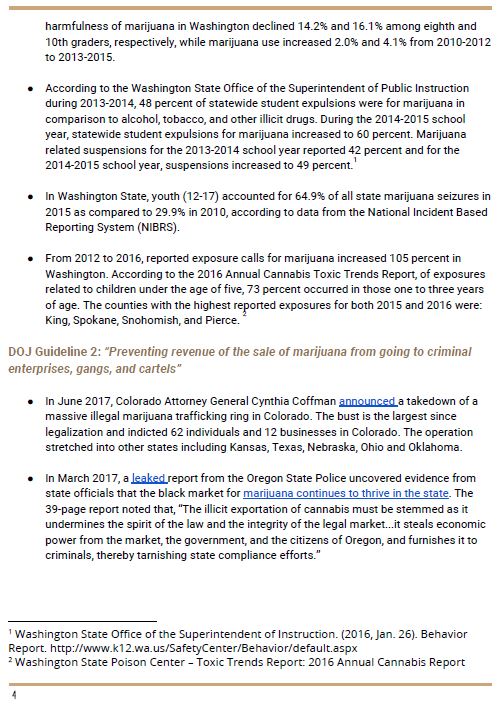
Experts say that since many drug users also smoke and abuse alcohol, not to mention that they face extenuating circumstances like poverty, it is difficult to tease out the effects of each substance on their offspring. “Most of the literature suggests consistently that the drug exposure itself is not the primary concern,” said Karol Kaltenbach, a professor at Jefferson Medical College in Philadelphia who studies addiction in pregnant women. “It’s the cumulative effect of the drug-using lifestyle — poverty, chaos in the home, domestic violence. All those things affect development.”
Not all newborns exposed to opiates have severe enough withdrawal to need medicine; at Maine Medical Center since 2003, about 55 percent of babies exposed to buprenorphine and 80 percent of those exposed to methadone have needed treatment. But it is hard to predict which ones will need it: a newborn whose mother was on a high dose of either drug might need none, while a baby whose mother took a low dose might experience acute withdrawal. Babies known to have been exposed to drugs are often kept in the hospital for at least five days because withdrawal symptoms usually do not set in immediately. Nurses examine them for a checklist of symptoms every few hours, assigning each baby a score that, if high enough, calls for treatment.
“They don’t stop crying, they can’t settle down, they don’t relax,” said Geraldine Tamborelli, nursing director of the birthing unit at Maine Medical Center, which in 2010 diagnosed opiate withdrawal in 121 newborns. “They’re struggling in your arms instead of snuggling into you like a baby that is totally fine.”
In the neonatal intensive care unit at Eastern Maine, Kendra, 3 days old, was sleeping in a dark, silent room one morning, away from the bustle and bright lights that can be especially irritating to babies going through withdrawal. Nurses frequently crept in to observe her, though, and by the afternoon her limbs had stiffened and she was crying excessively and having tremors; it was enough to begin treatment. “This seems to be ramping up fairly quickly for her,” said Dr. Mark Brown, the hospital’s chief of pediatrics, “so the decision was to start treatment more quickly.”
On the pediatric ward, Matthew started fussing while his mother, Tonya, talked to reporters that afternoon in January; his cry had a strange, reedy pitch that nurses say is common to babies with his condition. The small dose of methadone he had received gave him gas and heartburn, for which he was given two stomach medications. He also was on clonazepam, a muscle relaxant and anti-anxiety drug that helped him metabolize the methadone more slowly.
Tonya said that at first she “didn’t believe in” methadone treatment during pregnancy and that doctors had to persuade her that it would not hurt her fetus. She had experienced wrenching withdrawal when she stopped using painkillers after learning she was pregnant, she said, and the doctors had warned her that “when I was feeling that bad, he was feeling 1,000 times worse.” Tonya said that in a previous pregnancy, she quit using drugs altogether and miscarried a month later. “That was the last thing I wanted to happen this time,” she said.
Avoiding Addicts, and Liability
Treating drug-dependent mothers and babies is often lonely work, with little communication among the doctors who take it on. As Dr. Brown said, “My network for people who do this is really very small.”
Dr. Mark R. Publicker, an addiction medicine specialist at Mercy Recovery Center in Westbrook, Me., is on a mission to get more of the state’s doctors to treat pregnant prescription drug abusers and more hospitals to deliver their babies. Only a handful of doctors here treat pregnant women with buprenorphine, Dr. Publicker said, partly because they fear liability and do not want to deal with addicts. The fact that most hospitals will not deliver the babies makes doctors even less likely to treat the women. “It’s mostly ignorance,” Dr. Publicker said. “It’s a concern that it’s a risky proposition and that they’re going to wind up with an ill baby.”
In February, Dr. Smith persuaded Bridgton Hospital, which has only 25 beds, to deliver the babies of women on buprenorphine — a major victory, he said, because until then women in rural southwestern Maine had to drive an hour or more to Maine Medical to deliver. Courtney, a patient of Dr. Smith’s who discovered she was pregnant while in jail for stealing OxyContin from her landlord, said buprenorphine treatment seemed the best of her bleak options. “I just don’t want to mess up,” she said.
Tonya, too, said she was determined to make things right for Matthew, who was five weeks old when she took him home to a trailer outside Bangor. He is off the methadone now and appears healthy, but Tonya still has to go to a methadone clinic in Bangor every day for her dose and resist the pressures to return to illicit drug use. Her boyfriend began using opiates as a young teenager, she said, and his father and grandmother abused OxyContin along with him. “I’m proud that I changed my life,” Tonya said. “But at the same time, when you see your child in pain and you know your child is in pain because of a life decision you made, it’s the hardest thing in the world.”

Source: New York Times April 9th 2011

UK Cannabis legalisation lobby founders in deep water?

A personal view by David Raynes


The background to and an account of the hearing, in London on 5th February 2008, of evidence to the UK Advisory Council on the Misuse of Drugs. It met to take this evidence on re-classifying cannabis to Class B from C under the UK system.

There is surely hardly an observer of drug politics in the world who does not know that the UK, four years ago, surprisingly downgraded cannabis from B to C. under our A to C classification system of potential harm, (Also used to establish social sanctions against use & trafficking). With only a short debate in parliament, the issue was driven through by Home Secretary David Blunkett (now out of government) who had only weeks before, entered the UK Home Office as the responsible Minister.  The issue was noticed and claimed around the world as a victory for the drug legalisation lobby who clearly thought this was a step on the way to their nirvana of legal dope for all. Such an action would have been unthinkable for Blunkett’s predecessor Jack Straw (still in Government). Perhaps Prime Minister Blair took his eye off the domestic ball; bogged down over Iraq, he gave Blunkett his way while apparently we are now told, “having real doubts” himself. Thus are we governed.

The downgrading reverberated around and beyond the English speaking world; such is the power of the internet.  Some lobbyists lied about it, saying the UK had made cannabis legal. It had not, it had messed up, confusing the anti-use message and, strangely, had to put up the penalties for trafficking all Class C drugs because Blunkett had apparently not appreciated his proposed action held the danger of making Cannabis trafficking a minor crime compared to tobacco trafficking. Politically unsustainable. He swears now to this writer he had no external influences on him. Foreign readers may not know he is blind. Does his denial of external influence during his arrival briefing and subsequently before his announcement, sound credible?

Cannabis downgrading (and ultimately legalisation) had been heavily pushed in the UK, since the mid 90s, by a small but noisy, largely London based, media lobby. The downgrading and even legalisation issue was taken to the heart of an educated elite, perhaps fearful their kids might get arrested for pot smoking and not overly concerned about the wider social consequences of cannabis use, especially on the socially disadvantaged.

The statutory body that advises government on drugs, the Advisory Council on the Misuse of Drugs (ACMD) had also advanced the downgrading issue. A report from the “Police Foundation” (not much to do with the Police) led by Baroness Runciman also contributed to this new golden age of pro-pot haze and muddled thinking. A current Liberal Democrat candidate for Mayor of London, then a senior Policeman, made his own timely contribution by announcing the relaxing of the policing of cannabis the day before a pro-pot march. The scene was set. South London lapsed into a drugs no-mans land of dealers in all illegal substances. Great work! Really helpful to anxious parents. A real mess of confusing signals.

A couple of oddball Chief Constables added their pro-drugs bit and in all the UK parliamentary parties there were similar odd (but minority) contributors to the general nonsense. None of these people thinking through exactly how this idea would further damage Britain’s already bad drug using culture. Rank and file Police Officers, the key top scientists and many experienced drug workers, of course opposed the changes but were ignored. David Blunkett astonishingly refused to see six top scientists & doctors who strongly opposed his downgrading.

The UK continued to develop one of the biggest drug problems in Europe. We have difficulties with all drugs, legal or illegal. In a separate earlier action in 1999, focussing on “the drugs that cause most harm” (I always wonder who thought up that phrase), UK Customs had stopped targeting cannabis imports and the UK was flooded with the stuff, much of it Moroccan Cannabis Resin and according to users, of poor quality. The price after 2000 dropped as supplies increased, “Blunkett’s Blunder” in downgrading took effect three years later.  “Age of first use” dropped alarmingly as did “age of first regular use”. Reportedly, kids–often pre teen were/are using cannabis on the way to school, at school and on their way home. The effect of this is that these kids become un-teachable, discipline breaks down, they fail academically, some drop out of education, they are forever damaged. Many, too many, become mentally ill, some diagnosed psychotic, others below formal diagnosis as mentally ill, are nevertheless unable to really contribute to society and cause huge distress to their families. The unemployment or mentally disabled register looms for many, their jobs taken by educated hard-working Poles and others from Eastern Europe. The government becomes seriously worried. Alarm bells ring in the Department of Social Security and in the Department of Health, both now picking up the pieces of the very wrong Home Office policy. The downgrading policy is looking expensive and socially damaging.

Out on the streets, the imported poor quality cannabis resin was gradually replaced by home grown and Dutch “sinsemilla” or “skunk” cannabis, this getting progressively stronger but strength alone being only one of several contributing factors to damage.. Frequency of use and age of first use is also important, and, in the view of this writer, so is the different ratio of THC to CBD in this new fresh, home grown “super-weed”. The belief is that CBD moderates the effect of THC on the brain.

A new Home Secretary, (Blunkett having left government), took over and anxiously asked the ACMD for advice –yet again, on cannabis classification. The ACMD resorted to “return-to-sender” for this enquiry after a half-hearted review where, according to inside information, there was no vote merely a decision by the Chairman, Sir Michael Rawlins and a round the table “chat”. Dissent in the ACMD, is not encouraged our spies tell us; the ACMD members, all of them, have only negligible knowledge of the drugs market. The self-selection of new members keeps out those who oppose liberalisation so plainly, the internal debate is and can only be, very one-sided.  Perhaps the Home Office should ensure more balance?

No change then, the cannabis problem for teenagers and pre-teens gets worse. In 2007 the spin doctors and even Ministers take comfort in figures from the British Crime Survey which shows a slight reduction in cannabis use at ages 16 to 24. No one other than this writer mentions this is simply because cannabis for older young people is becoming unfashionable and gets replaced by cocaine, crack-cocaine and (particularly) gross & physically damaging alcohol consumption. Government has allowed 24 hour alcohol licensing despite widespread public concern.  Cocaine use in the UK has also zoomed up. The infection spreads to Ireland, that society develops a similar drug habit.

The regular discovery of organised Cannabis Farms, a new phenomenon in the UK (although known elsewhere, for example in Canada) and an entire new industry in the UK since “Blunkett’s Blunder”, goes unexplained, Cannabis use is down we are emphatically told. When this writer challenges this and points to the farms, one joker (A Professor and a pro-pot lobbyist) suggests the UK is a substantial exporter of cannabis. A statement that defies belief, there is no evidence of such a thing, not substantial anyway. Things are spiralling out of control. Britain is a nation of sick young people; drugs of all sorts are cheaper than ever, youth is more affluent than ever. Prime Minister Tony Blair, architect of “Blair’s Britain” and now being blamed for “Blair’s Feral Youth” is forced from office in the autumn of 2007, largely over Iraq and his handling of the Middle East but his party and most other people are basically just sick of him. This writer tells the media that the cannabis market has widened and deepened, the totality of use is higher. If it is not, where is the output of the cannabis farms going?

A new broom and a largely new group of Government Ministers take over in autumn 2007. Gordon Brown as new Prime Minister is a dour Scot, son of a church Minister he sets a different social tone to Blair and just maybe, has more integrity and social conscience. Consideration is suddenly being given to abandoning plans for giant casinos; 24 hour drinking is being reviewed, so is cannabis policy. Brown appoints a new Home Secretary, Jacquie Smith, first woman in that position. She is a self confessed experimenter with pot at University but all credit to her, she and Brown, together, take a different tone on drugs issues. She is after all a mum and mums (good for them) are driving a new national wave of sustained protest about kids being mentally damaged by pot. Brown signals he is minded to re grade cannabis to where it was, back to Class B, ending the confusion and sending clear messages about the harms. Smith refers the issue once again, back to the ACMD. The implication, clear beyond any doubt, is that Brown and Smith want, and will have, cannabis re-graded even if the ACMD do not support it. On the fringes of the ACMD there are dark mutterings about resignations if their views are ignored. Some observers may think that would be a good thing.

So we arrive at 5th February 2008. The ACMD is forced; reluctantly it seems, to hold some of its hearings in public (Why not all in public you might ask-Parliament is after all in public). It arranges a one day hearing in the City of London. Public access is limited because numbers are limited and prior application and approval are needed.  Questions to witnesses by members of the public are strictly forbidden though there is a short public comment/question session at the end.

Chairman Sir Michael Rawlins runs a tight ship, ACMD members call him “Sir”, he calls them by their first names. Very few ACMD members ask questions. Of those that do the most active seem to do it to show how clever they are, not, particularly, to illuminate the real issues. We get no indication or feel for what most members think at all. There is a pre-occupation with the penalties for drugs use & possession, not the science and social science of harm-potential and the actuality in the country. Arguably the very things that should most concern this committee. Astonishing.

Early witnesses from the Forensic Science Service and GW Pharmaceuticals confirm that herbal cannabis seizures (home grown) in the UK, are gradually getting much stronger in THC and that this new form of the drug contains hardly any CBD, leaving the effects of strong THC unconstrained. Resin we are told, long the staple of the UK market, is declining in market share and historically had almost equal amounts of THC & CBD. More work is needed on the issue of CBD but it is plain that by selection, a much higher THC-containing product is gradually taking over the market. It will continue to do so. Other academic witnesses on the potential mental health effects tell us that CBD may be “anti-psychotic”. The absence of CBD may therefore be aggravating the mental damage from the stronger THC. The new selected cannabis may be two or three times stronger, certainly not the 10 or 20 times of the tabloid press and even some over zealous commentators on my side of the debate. Cannabis is not homogeneous and techniques are available in the market to sieve it and extract a higher THC product. The mental health ill effects are more marked in young men; by 2010 cannabis use will be implicated in 25% of schizophrenia cases. Professor Robin Murray has spoken of 1500 cases a year, very expensive to treat and of course this is only the clinically diagnosed.

The most telling early witnesses are from “SANE” & “Rethink”, both mental health charities. Marjorie Wallace from SANE talks of the “confusion about legality & safety” and that cannabis is implicated in 80% of 1st episode psychosis. She says, “Only re-classification can counter the mixed messages”. There is then, an immediate and astonishing outburst from Chairman Sir Michael, angry, venomous, red-faced. (This is a really serious scientific approach, observe and learn I think to myself?) He barks out, “Are you really wanting people to go to prison for five years for possession”

Any minor confidence one might have had in a dispassionate scientific appraisal, led by Sir Michael at least, surely evaporated. His remarks are nonsense of course and misleading of the ignorant. Sentencing guidelines and historical fact show that imprisonment for just personal use possession, of any illegal drug, hardly occurs in the UK. Why bother with the facts when you are Chairman of such an important meeting, advising government, confident, despite the evidence, that you know best? Does the Home Office know he is behaving like this?

The position of “Rethink” is truly hard to fathom. They accept all the harms of cannabis, indeed they tell us about them, yes they are getting worse but to them, re-classifying so that the public can understand this better, is astonishingly not important. To this observer they seem to have been “got at” by someone, so perverse is their position. Is their funding being threatened if they take a more robust view?  Their position is surely odd especially seen in the light of the remarks by Wallace. This observer smells something very wrong indeed. They are in the same business as SANE, or ought to be. Just what is going on?

Professor Louis Appleby, National Director of Mental Health for the Department of Health gives an impressive presentation, he is clear about the mental harm, we hear of patient suicides and homicides, figures trip out, “68% had taken cannabis”, we (as a society) are “guilty of complacency” (about cannabis), “causal factor”, “benefits from re-classification”. “health perspectives” and much more. Professor Appleby is hugely convincing. He is in no doubt at all that re-classification is needed. One is encouraged that here, at last, we have a public servant being so clear about what is needed and why.

Another presentation about the physical harms is convincing that in cannabis there are all the harms of tobacco and more. Talk of head & throat cancers, early emphysema etc. A second presentation about cannabis & driving illuminates the fact that cannabis is now by far the most common drug found in those arrested under the Road Traffic Act. Cannabis influenced drivers exhibit “poor road tracking” & “divided attention”.

Debra Bell of the “Talking about Cannabis” mum’s pressure group then speaks, together with another mum, an anonymous Barrister, whose own family life, like Debra’s has been severely and permanently damaged by teenage cannabis use. Promising young people damaged mentally and permanently, we are told. Educational under-achievement, wasted years. We are told of the thousands of hits on Debra’s website, the families feeling “let down” by government and the ACMD, the widespread feeling that cannabis use has become acceptable and that parents and teachers were undermined by Blunkett’s downgrading.  Debra tells of the phone calls, parents at their wits-end, desperate and helpless in the face of kids who say cannabis is not so bad, “the government downgraded, it must be OK”. Some kids who even think it is legal. These mums must really worry Prime Minister Brown. These are articulate and educated people, they are not going to give up. They are also voters. These are the people we need to take the campaign against cannabis use forward. They bring a new focus to the battle.

M/s Cindy Burnett. Representing the Magistrates Association & Youth Courts. She is very convincing, she and colleagues are “worried about the message”, “downgrading sent the wrong message”, “caused confusion”. “unnecessary”, “poor effect on health”, “increased addiction”, “ youthful “addiction to cannabis”, “downgrading had a bad effect”, “shoplifting driven by drug addiction” (cannabis), “wrong in principle”, “badly handled”, “downward spiral”, need for Youth courts to be supportive. All strong stuff. The ACMD listen in silence, are they taking it in? Who knows?

A few government apparatchiks from the Home Office talk about their wonderful publicity campaign, they show some clips, fancy indeed but have they worked? How could these adverts turn back the bad effect of downgrading? Like swimming against a strong current. Such stuff keeps people in work but will probably have little effect.

The next speaker is Professor Simon Lenton from the National Drug Research Institute of Australia, his presence confuses, just why is he, particularly him here? I notice he pops up later in the programme again on behalf of The Beckley Foundation, (run by our disgraced ex Deputy Drugs Czar Mike Trace who resigned from the UN when exposed as linked with the George Soros inspired legalisation campaign and “Open Society”). I wonder who has paid Lenton’s fare, was it George? He can afford it. I certainly hope it was not UK public money.

Again, I ponder just why his presence is allowed by Sir Michael.

Lenton is badly briefed about the UK debate and absolutely confused; he addresses us on “The impact of the legislative options for Cannabis”. He seems to think that the lobby against cannabis and for re-classification in the UK is from people who want to “lock users up”; he is more concerned about the social sanctions than about the adverse effects. He does not appear to understand that those who want cannabis upgraded, re-graded to where it historically was, are quite prepared to examine different social sanctions, we know, everyone knows, the UK cannot arrest its way out of our drug problem.  Does he not know the pressure is about putting cannabis back where it belongs? To send a signal about the real harms. To start to change the damaging culture created around use, by the downgrading.

Is Lenton a closet legaliser cloaked in fine words, hiding his real intentions? I “Google” Lenton when I get home and check my files. Yes I thought I had heard of him from Australian friends. As I suspected, keywords, legalisation, Lindesmith, International Harm reduction, support for changes to the UN Drug Conventions etc, need I go on? That and the link with Trace tell me enough.

Does Sir Michael Rawlins understand this chap is a covert pro pot lobbyist? Does the Home Office know the witnesses have been rigged like this?

Steve Rolles from Transform, the UK’s main drug legalisation lobby group (for legalising of all drugs) speaks to us. I know him well and away from this subject can enjoy his company. He is a bright guy. His thunder has been stolen by Lenton he complains! Yes Steve we are having views like yours laid on pretty thick are we not? Is this deliberate? Is Sir Michael rigging all this stuff, does he understand it? If not him just who is rigging it? Legalisation is not up for discussion any more so just why does Transform get a slot (Debra Bell nearly did not!). Steve though admits “Cannabis is more harmful than we thought”. Well more harmful than you thought Steve, my view has been consistent since I met my first pot-heads in the 60s. My allies have always said Blunkett got it wrong, indeed the World Health Organisation indicated the mental harms of pot in its 1997 report.   Rolles advises the ACMD to concentrate on a “Scientific Harm Assessment”. Yes, I can live with that; as long as they take in all harm not just harm to the individual. Yes and they should remember that defining the social penalties for use or trafficking are not what they (the ACMD) are about, leave that to others. Rawlins passion about that penalty issue nags at me.

Do the ACMD silent members (maybe most of them) know they are being manipulated? Again, does the Home Secretary know about this? This loading the witnesses with legalisers when that is not on any agenda is surely verging on the corrupt. No wonder they want to keep out those of a different view. I reflect that it is apparent there are at least two other days of private hearings, just who are this group listening to then?  Would a “Freedom of Information” request flush it out? Can Jacquie Smith just ask? Will she? Perhaps, I muse, she will if she gets a copy of my note.

The penultimate speaker is Simon Byrne Assistant Chief Constable Merseyside Police. He is the Association of Chief Police Officers lead on cannabis. He is a reassuring and sensible figure, ACPO have changed their view, they are seeing the problems with youngsters on the ground, and, picking up the pieces. He is also not interested in locking youngsters up; he wants early intervention, guidance to youngsters and strong signals sent out that use is potentially very damaging. Byrne tells us there have been 2000 cannabis farms found in England & Wales in the last few years since downgrading, that this is a huge new criminal industry since “Blunketts Blunder” (though he does not call it that). Illegal immigrants, often Vietnamese are involved; it is taking up lots of police time. UK based readers may remember downgrading was partly sold as saving police time.  Byrne speaks of confused public views on cannabis; he and his colleagues are now strongly for re-classification to B. Re-classification would reinforce the perceptions of harm. Is anyone listening?

Next witness is Lenton again, this time on behalf of Beckley Foundation.  “Is cannabis use a contributory cause of psychosis”? He is reading a presentation prepared by Wayne Hall & Robin Room.  Yes it is a cause, and more, 1 in 10 users become dependent. Really? Age of first use is important. Well we agree. We just do not agree on a part of the solution, telling the public the truth by classifying the cannabis in the right place.

There is a brief open forum, I manage to chide Lenton for his ignorance about the reasons behind the desire for re classification, I speak about parents and supporting them, telling the truth about cannabis, there is applause from some of the public.  An ACMD member says they are not forgetting the individual sad cases they have heard about (from the mums), he looks at me, he is, I think, defensive, a man with a conscience. I remind the ACMD that Robin Murray’s 1500 schizophrenia cases a year are the tip of an iceberg, there are a quarter of a million people under 35 unable to work and claiming sickness benefits through mental illness, often associated with drug use.  There are thousands of others not in the statistics because their illness is not clinically diagnosed; the prisons are full of those who are said to be mentally ill.

A few other speakers, first a mum, then a legalise cannabis advocate, and more, it comes to an end. It is over. Lenton follows me and speaks to me outside. He is uneasy and edgy.  We debate changing the UN conventions, he wants it, I do not. The best kept international conventions of all I say. Their strength is in the fact that everyone keeps to them. I know but he appears not to, that the UK Government has explicitly said it wishes no change in the conventions. He wants “more freedom for States to do their own thing”. What are those things I say, what can states not do that you want them to do? We in the UK have prescribed heroin for years to a minority of users, the British system. He struggles to answer. He wants the Dutch to be able to deal with and control, (legitimise he means), their cannabis growers. Why I ask? Do neighbours want that? Does he not understand that one European country can not do that independently of the rest? Do the Dutch, most of them, even want that? (We know from an opinion poll that 70% do not want it). I remind him that Dutch drug policy has made the Netherlands, which is a first world country and economy, have a third-world drugs manufacturing, warehousing and distribution problem. Astonishing levels of drugs based criminality feeding ATS (amphetamine type substances) to the whole world, including Australia. . He has no other ideas when challenged. He is plainly not used to being properly challenged. Why is someone with his views here, in this meeting, priming people who are going to advise our government? Who invited him?

As I travel home, I reflect, we have heard very strong messages about the harms of cannabis, is the ACMD about to change its position? I very much doubt it. They seem to be set in their ways, closed off to the harms, controlled tightly by Rawlins, most of them not taking part in the debate. I remember the question “do users mix cannabis with tobacco”. Quite extraordinary, he is in another world.

We have though, I think, seen the cannabis legalisation argument holed below the waterline; they will keep trying but that legalisation debate is surely over in the UK. If it is really over here perhaps it will be over everywhere else. What happens in the UK is of enormous influence because of the English language and the Internet.

Will UK Prime Minister Gordon Brown and Home Secretary Jacquie Smith re classify cannabis even if the ACMD is not with them? Yes probably. They will have the support of most MPs; the Conservative parliamentary opposition is supporting it. Even some important Liberal Democrats including the then leader (our third party) who have historically been weak and wrong on drug policy have been seen at Debra Bell’s meetings, that is really good. They are also getting the cannabis harm message.  Drug Policy is best when all parties are in broad agreement. Britain’s drug policy failure can I think, be tracked back to the breaking of that unanimity in the mid 90s.

Prime Minister Brown has “made his views clear” on cannabis, he said that this week at “Prime Ministers Questions” in the House of Commons. Brown has widely been accused by his opponents of dither and “government by review”, of putting off decisions. On this I think, based on the evidence, he means business.

David Raynes.

Member. International Task force on Strategic Drug Policy

http://www.itfsdp.org/members.php

Executive Councillor National Drug Prevention Alliance UK

February 2008

Why Do Schizophrenics Smoke Cigarettes?

For health care workers in psychiatric hospitals, it is no secret: one of the major issues confronting psychiatric facilities seeking to institute blanket no-smoking policies concerns chronic inpatients with schizophrenia. Patients with schizophrenia are almost always heavy cigarette smokers, given a choice. As Edward Lyon wrote in an analysis of studies and surveys performed throughout the 1990s: “Many patients in psychiatric hospitals would smoke two, three, or even four packs of cigarettes a day if an unlimited supply of cigarettes were available.”
Generally, the rate of inpatient smoking among schizophrenics is three to four times higher than the general smoking population. In one British study of 100 institutionalized schizophrenics cited by Lyon, 92% of the men and 82% of the women were smokers. Moreover, schizophrenics smoke more cigarettes per day than other smokers do, and they commonly smoke high-tar, unfiltered cigarettes — niche brands for heavy smokers used by only 1% of the total smoking population.
Australian research performed in 2001 found that because of high rates of smoking, “people with mental illness have 30% more heart disease and 30% more respiratory disorders,” according to Ann Crocker, now a professor of Clinical Psychiatry at McGill University.
Not only do an estimated 80% of schizophrenics smoke, compared to roughly 25% of the total adult population, psychiatric facilities report that depressives and those with anxiety disorders also smoke in great numbers.
Why?
The review of studies through 1999, undertaken by Lyon and published in Psychiatric Services, shows unequivocally that schizophrenic smokers are self-medicating to improve processing of auditory stimuli and to reduce many of the cognitive symptoms of the disease. “Neurobiological factors provide the strongest explanation for the link between smoking and schizophrenia,” Lyons writes, “because a direct neurochemical interaction can be demonstrated.”
Of particular interest is the interaction between nicotine and dopamine in the nucleus accumbens and prefrontal cortex. Several of the symptoms of schizophrenia appear to be associated with dopamine release in these brain areas. A 2005 German study concluded that nicotine improved cognitive functions related to attention and memory. “There is substantial evidence that nicotine could be used by patients with schizophrenia as a ‘self-medication’ to improve deficits in attention, cognition, and information processing and to reduce side effects of antipsychotic medication,” the German researchers concluded.
In addition, the process known as “sensory gating,” which lowers response levels to repeated auditory stimuli, so that a schizophrenic’s response to a second stimulus is greater than a normal person’s, is also impacted by cigarettes. Sensory gating may be involved in the auditory hallucinations common to schizophrenics. Receptors for nicotine are involved in sensory gating, and several studies have shown that sensory gating among schizophrenics is markedly improved after smoking.
There is an additional reason why smoking is an issue of importance for health professionals. According to Lyon, “Several studies have reported that smokers require higher levels of antipsychotics than nonsmokers. Smoking can lower the blood levels of some antipsychotics by as much as 50%…. For example, Ziedonis and associates found that the average antipsychotic dosage for smokers in their sample was 590 mg in chlorpromazine equivalents compared with 375 mg for nonsmokers.”
Smoking among inpatient psychiatric patients is not trivial. Neither is the decision to institute smoking bans in psychiatric hospitals, a move that is understandably unpopular with patients.
References
Lyon, E. (1999). A Review of the Effects of Nicotine on Schizophrenia and Antipsychotic Medications. Psychiatric Services, 50, 1346-1350.
Cattapan-Ludewig, K. (2005). Why do schizophrenic patients smoke? Nervenarzt, 76 (3), 287-294.
Mueser, K., Crocker, A., Frisman, L., Drake, R., Covell, N., & Essock, S. (2005). Conduct Disorder and Antisocial Personality Disorder in Persons With Severe Psychiatric and Substance Use Disorders Schizophrenia Bulletin, 32 (4), 626-636 DOI: 10.1093/schbul/sbj068
Adler, L., Hoffer, L. Wiser, A. (1993). Normalization of auditory physiology by cigarette smoking in schizophrenic patients. American Journal of Psychiatry, 150, 1856-1861.

Source: http://brainblogger.com/2009/07/03/why-do-schizophrenics-smoke-cigarettes/
3rd July 2009

Filed under: Social Affairs (Papers) :

Smoking and Adolescent Attention Deficit

Are young smokers risking cognitive impairment as adults? Call it “nicolescence.” It’s that time of life when certain 18-and-unders discover cigarettes. Most adult smokers begin their habit before the age of 19, and a majority of adolescents have tried cigarettes at least once. But for some of them—those who were “born to smoke,” in a sense—early exposure to nicotine may influence adolescent cognitive performance in ways that adult exposure to nicotine does not. Furthermore, early exposure may result in “cognitive impairments in later life.”

These provocative notions are raised by a group of researchers at VU University, Amsterdam, The Netherlands, in a paper for Nature Neuroscience. And while the specifics of glutamate activity they have documented are fascinating, the leaps back and forth between adolescent humans and adolescent lab mice are dizzying. Nonetheless, the bold claims made in the paper prompted the scientists “to reconsider our views on the etiology of attention deficits.”

That may be more than many addiction researchers are willing to countenance, but the study makes an intriguing case for long-term effects on attentional processing. The Dutch researchers exposed adolescent rats to nicotine, assessed visuospatial attention and other markers associated with synaptic activity in the prefrontal cortex, and found impaired measures of attention and signs of increased impulsivity in adulthood after five weeks of abstinence. Adult rats exposed to nicotine for the first time did not show similar long-term consequences.

The molecular underpinnings for this phenomenon appear to be reduced glutamate receptor protein levels in the prefrontal cortex. Glutamate is a neurotransmitter involved in attention, among other cortical tasks. Glutamate levels were “altered specifically by adolescent and not adult nicotine exposure” in the lab animals, the researchers found.

The glutamate receptor mGluR2 is the likely culprit. The researchers report that “a lasting downregulation of mGluR2 on presynaptic terminals of glutamatergic synapses in the prefrontal cortex persists into adulthood causing disturbances in attention…. Restoring mGluR2 activity in vivo in the prefrontal cortex of adult rats exposed to nicotine during adolescence remediated the attention deficit.”

The study concludes: “Not only from a behavioral, but also from a molecular point of view, the adolescent brain is more susceptible to consequences of nicotinic receptor activation.” In other words, there is at least some evidence that the neurotoxic effects of nicotine are potentially more severe in the early developmental stage called adolescence.

The Dutch study is not the only one of its kind. In 2005, Biological Psychiatry published a report on cognition in which adolescent smokers “were found to have impairments in accuracy of working memory performance irrespective of recency of smoking. Performance decrements were more severe with earlier age of onset of smoking.”

And a 2007 study published in Neuropsychopharmocology, based on testing and fMRI scans of 181 male and female adolescent smokers, concluded that “in humans, prenatal and adolescent exposure to nicotine exerts gender-specific deleterious effects on auditory and visual attention…” Boys were more sensitive than girls to attention deficits involving auditory processing, while girls tended to show equal deficits in both auditory and visual attention tasks.

Counotte, D., Goriounova, N., Li, K., Loos, M., van der Schors, R., Schetters, D., Schoffelmeer, A., Smit, A., Mansvelder, H., Pattij, T., & Spijker, S. (2011). Lasting synaptic changes underlie attention deficits caused by nicotine exposure during adolescence Nature Neuroscience DOI: 10.1038/nn.2770

Source: http://addiction-dirkh.blogspot.com/2011/02/smoking-and-adolescent-attention.html 24th Feb 2011

National Anti-drug Campaign Succeeds in Lowering Marijuana Use, Study Suggests

COLUMBUS, Ohio – The federal anti-drug campaign “Above the Influence” appears to have effectively reduced marijuana use by teenagers, new research shows. A study of more than 3,000 students in 20 communities nationwide found that by the end of 8th grade, 12 percent of those who had not reported having seen the campaign took up marijuana use compared to only 8 percent among students who had reported familiarity with the campaign.

Evidence for the success of “Above the Influence” is especially heartening because the primary independent evaluation of its predecessor campaign, “My Anti-Drug”, showed no evidence for success, said Michael Slater, principal investigator of the new study and professor of communication at Ohio State University. “The ‘Above the Influence’ campaign appears to be successful because it taps into the desire by teenagers to be independent and self-sufficient,” Slater said. For example, one television ad in the campaign ends with the line “Getting messed up is just another way of leaving yourself behind.”
Campaigns that only emphasize the risk of drug use may not be effective with many teens.
“We know that many teenagers are not risk avoidant, and consider the risks of marijuana to be modest. A campaign that merely emphasizes already-familiar risks of marijuana probably won’t reach the teens who are most likely to experiment with drugs,” he said.
The study appears in the March 2011 issue of the journal Prevention Science.
Slater said this study was not originally designed to study the effectiveness of the “Above the Influence” campaign, which is sponsored by the federal Office of National Drug Control Policy (ONDCP). Instead, the study was going to examine the effectiveness of a very similar, but more localized anti-drug campaign called “Be Under Your Own Influence.” This theme was developed years before the “Above the Influence” campaign by study co-author Kathleen Kelly, professor of marketing at Colorado State University.
It involved in-school media and promotional materials combined with community-based efforts. Like the “Above the Influence” campaign, it emphasized that drug use undermines the ability of teens to achieve their goals and act independently. Slater said that members of his research team presented preliminary results supporting the effectiveness of “Be Under Your Own Influence” to the ONDCP and to Partnership for Drug Free America, which oversees creative efforts for the national campaign, in 2003, about two years before “Above the Influence” was launched. However, the researchers did not have any direct input into the development of the “Above the Influence” campaign.
Slater said the approaches are very similar. ‘Above the Influence’ uses the same approach — focusing on the inconsistency of substance use with teens’ aspirations and autonomy — that we developed,” he said.
A study published in 2006 of “Be Under Your Own Influence” showed that it reduced by about half the number of students who began using marijuana and alcohol during the two years of the project, compared to students in communities without the program. This new study was designed to replicate and extend the previous research, Slater said. In the 20 communities involved in the study, schools received some combination of some, all or none of the “Be Under Your Own Influence” materials.
The researchers surveyed 3,236 students who were about 12 years old when the study began in 2005. They were surveyed four times beginning in 7th grade and ending about a year and a half later. The researchers didn’t know that the ONDCP would be launching its “Above the Influence” campaign about the same time this new study began. As a result, though, the researchers asked students about their exposure to the national campaign during the second through fourth surveys.
The results of this study showed that the ONDCP campaign appeared to be very successful at reaching students: up to 79 percent of students surveyed said they had seen the ads. “There was wide exposure to the national campaign, and it really swamped the effects of our local effort,” Slater said. “It took over, and we didn’t see any independent effects for the ‘Be Under Your Own Influence’ campaign.”
But it was really the message of “Above the Influence” that mattered in reducing marijuana use – not the fact that it was a national campaign, he said. In their previous study, the researchers found that “Be Under Your Own Influence” showed strong local anti-drug effects, even though the national “My Anti-Drug” campaign was going on. “‘Above the Influence’ has succeeded more than its predecessor attempt to influence teens,” Slater said.
The effectiveness of the ONDCP campaign can be seen in the way it appeared to influence attitudes of teens who viewed the ads. Results showed that teens who had seen the “Above the Influence” ads were more likely than others to say that marijuana use was inconsistent with being autonomous and independent and that it would interfere with their goals and aspirations. “The teens seemed to pick up on the messages that the campaign promoted,” Slater said. “The campaign really works to honor teens’ interest in becoming autonomous and achieving goals and stays away from messages that don’t really reach the teens who are most likely to use marijuana.”
Slater says study limitations include the fact that findings regarding the ONDCP campaign were based on survey results and not a randomized, experimental design in which some youth saw the ONDCP campaign and others did not. Another limitation was that the study, while taking place in 20 communities around the U.S., did not use a random sample of U.S. youth.
Other co-authors of the study were Frank Lawrence of Penn State University; Linda Stanley of Colorado State University; and Maria Leonora G. Comello of the University of North Carolina.
The research was supported by a grant from the National Institute on Drug Abuse.

Source: http://researchnews.osu.edu/archive/aboveinfluence.htm March 2011

Filed under: Prevention (Papers) :

Marijuana use linked to increased risk of testicular cancer

Risk appears to be elevated particularly among frequent and/or long-term users.

SEATTLE — February 9 — Frequent and/or long-term marijuana use may significantly increase a man’s risk of developing the most aggressive type of testicular cancer, according to a study by researchers at Fred Hutchinson Cancer Research Center. The study results were published online Feb. 9 in the journal Cancer.
The researchers found that being a marijuana smoker at the time of diagnosis was associated with a 70 percent increased risk of testicular cancer. The risk was particularly elevated (about twice that of those who never smoked marijuana) for those who used marijuana at least weekly and/or who had long-term exposure to the substance beginning in adolescence. The results also suggested that the association with marijuana use might be limited to nonseminoma, a fast-growing testicular malignancy that tends to strike early, between ages 20 and 35, and accounts for about 40 percent of all testicular-cancer cases.
Since the 1950s, the incidence of the two main cellular subtypes of testicular cancer, nonseminoma and seminoma – the more common, slower growing kind that strikes men in their 30s and 40s – has increased by 3 percent to 6 percent per year in the U.S., Canada, Europe, Australia and New Zealand. During the same time period, marijuana use in North America, Europe and Australia has risen accordingly, which is one of several factors that led the researchers to hypothesize a potential association.
“Our study is not the first to suggest that some aspect of a man’s lifestyle or environment is a risk factor for testicular cancer, but it is the first that has looked at marijuana use,” said author Stephen M. Schwartz, M.P.H., Ph.D., an epidemiologist and member of the Public Health Sciences Division at the Hutchinson Center. Established risk factors for testicular cancer include a family history of the disease, undescended testes and abnormal testicular development. The disease is thought to begin in the womb, when some fetal germ cells (those that eventually make sperm in adulthood) fail to develop properly and become vulnerable to malignancy. Later, during adolescence and adulthood, it is thought that exposure to male sex hormones coaxes these cells to become cancerous.
“Just as the changing hormonal environment of adolescence and adulthood can trigger undifferentiated fetal germ cells to become cancerous, it has been suggested that puberty is a ‘window of opportunity’ during which lifestyle or environmental factors also can increase the risk of testicular cancer,” said senior author Janet R. Daling, Ph.D., an epidemiologist who is also a member of the Center’s Public Health Sciences Division. “This is consistent with the study’s findings that the elevated risk of nonseminoma-type testicular cancer in particular was associated with marijuana use prior to age 18.”
Chronic marijuana exposure has multiple adverse effects on the endocrine and reproductive systems, primarily decreased sperm quality. Other possible effects include decreased testosterone and male impotency. Because male infertility and poor semen quality also have been linked to an increased risk of testicular cancer, this further reinforced the researchers’ hypothesis that marijuana use may be a risk factor for the disease.
Daling first got the idea to explore a possible association between marijuana use and testicular cancer about eight years ago, when she attended a talk by a physician at the University of Washington who presented findings that only two organs, the brain and the testes, had receptors for tetrahydrocannabinol, or THC, the main psychoactive component of marijuana. Since then, a number of other sites have been found to contain THC receptors, including the heart, uterus, spleen and immune-system cells. The male reproductive system also naturally produces a cannabinoid-like chemical that is thought to have a protective effect against cancer. The authors speculate that marijuana use may disrupt this anti-tumor effect, which could be another explanation for the possible link between marijuana and increased risk of testicular cancer.
For the population-based, case-control study, Daling, Schwartz and colleagues interviewed 369 Seattle-Puget Sound-area men, ages 18 to 44, who had been diagnosed with testicular cancer about their history of marijuana use. For comparison purposes they also assessed marijuana use among 979 randomly selected age- and geography-matched healthy controls. (More than 90 percent of the cases and 80 percent of the controls in the study were Hispanic or non-Hispanic white men, due to the fact that testicular cancer is very rare in African-Americans, and because the Seattle-Puget Sound region has a relatively small African-American population.)
Study participants were also asked about other habits that may be correlated with marijuana use, including smoking and alcohol consumption. Even after statistically controlling for these lifestyle factors, as well as other risk factors, such as first-degree family history of testicular cancer and a history of undescended testes, marijuana use emerged as a significant, independent risk factor for testicular cancer. The researchers emphasize that their results are not definitive, but rather open a door to more research questions.
“Our study is the first inkling that marijuana use may be associated with testicular cancer, and we still have a lot of unanswered questions,” Schwartz said, such as why marijuana appears to be associated with only one type of testicular cancer. “We need to conduct additional research to see whether the association can be observed in other populations, and whether measurement of molecular markers connected to the pathways through which marijuana could influence testicular cancer development helps clarify any association that exists,” he said.
In future studies the researchers plan to measure the expression of cannabinoid receptors in both seminomatous and nonseminomatous tumor tissue from the cases in the study, and to see whether variation in the genes for the receptors and other molecules involved in cannabinoid signaling influences the risk of testicular cancer. In the meantime, Schwartz said, “What young men should know is that first, we know very little about the long-term health consequences of marijuana smoking, especially heavy marijuana smoking; and second, our study provides some evidence that testicular cancer could be one adverse consequence,” he said. “So, in the absence of more certain information, a decision to smoke marijuana recreationally means that one is taking a chance on one’s future health.”
The National Cancer Institute, the National Institute on Drug Abuse and funds from the Hutchinson Center supported this research, which also involved researchers from the University of Washington, Vanderbilt University and Cincinnati Children’s Research Foundation. According to the National Cancer Institute, testicular cancer is very rare, accounting for only 1 percent of cancers in U.S. men. About 8,000 men are diagnosed with testicular cancer each year, and about 390 die of the disease annually. It is the most common form of cancer in men between the ages of 15 and 34 and is most common in white men, especially those of Scandinavian descent.

Source: journal Cancer. online Feb. 9 2011 Association of Marijuana Use and the Incidence of Testicular Germ Cell Tumors,”

Fred Hutchinson Cancer Research Center
1100 Fairview Ave. N. PO Box 19024 Seattle, WA 98109

Effects of a school-based prevention program on European adolescents’ patterns of alcohol use.

Caria M.P., Faggiano F., Bellocco R. et al.
Journal of Adolescent Health: 2011, 48, p. 182–188.

The largest European drug education trial ever conducted tested whether US-style social influence programmes would prove effective in Europe. Among the successes were the reductions in problem drinking documented in this report.
Summary This account is partly based on an earlier Findings analysis of the same study.
Funded at European level by the European Commission, the European Drug Addiction Prevention trial (EU-Dap) aimed to test whether ‘social influence’ school-based drug prevention programmes of the kind developed in the USA will prove effective in Europe. Across seven countries and 170 schools it recruited 7079 12–14-year-old pupils, the largest sample ever in a European drug education trial.
Developed by the EU-Dap project team, the 12-lesson curriculum they tested is known in English as Unplugged. Materials are available on the EU-Dap web site and the programme’s development and approach has been extensively documented. As well as informing pupils about substances and their use, such curricula aim to affect substance use by training pupils how to resist pressure to use, reinforcing attitudes which sustain commitment to continued non-use, and enhancing decision-making, social and life skills. Unplugged particularly emphasised correcting pupils’ beliefs about the pervasiveness of substance use (‘normative beliefs’) by contrasting these with data from surveys of pupils of the same age which typically reveal that average use levels are lower. To make the programme more feasible for schools, it was limited to 12 lessons which can be completed within a school year. The schools’ own teachers taught the lessons after two and a half days’ training in the lessons and materials, and in how to teach them using methods which encourage interaction between pupils and between pupils and teachers, such as role-play and giving and receiving feedback in small groups.
This basic curriculum was supplemented either by meetings led by pupils selected by their classmates, or by workshops for the pupils’ parents. While the curriculum was moderately well implemented, peer-led activities were rarely conducted, few parents attended the workshops, and an important element – role-play – was generally omitted.
Schools were randomly allocated to one of these three variants of the Unplugged intervention or to act as ‘control’ schools which simply carried on with their normal lessons. Taken singly, none of the three variants significantly improved substance outcomes compared to the controls, so reports to date have concentrated on comparing outcomes for all 3547 pupils in the 78 Unplugged schools, to the 3532 pupils in 65 control schools. Excluded from this total were the 27 schools which dropped out of the study after being randomised to the interventions but before their students could be surveyed. Among these were nearly a quarter of the schools allocated to Unplugged. Another five did not conduct the latest follow-up surveys. Of the 7079 pupils surveyed before the lessons, 18 months later (15 months after the Unplugged lessons had ended) 5541 provided usable data at the latest follow-up. In between a a further survey had assessed pupils’ reactions three months after the lessons.
Main findings
At the final follow-up, pupils in Unplugged schools were not significantly less likely to have been drinking or drinking at least weekly (25% v. 30% in control schools) over the past month. However, they were significantly less likely (7% v. 9%) to report having experienced problems related to their drinking over the past year. When the sample was divided up in various ways, this effect remained statistically significant only among pupils not already drinking before the lessons, among those who thought their parents would allow them to drink, and among girls aged 12 or less at the baseline survey.
These results could not include data from the 22% of pupils who did not complete the latest follow-up survey, or who could not be identified as the same individual who completed a baseline survey. On the assumption that they did not change their behaviour or were all non-users, the results remained substantially the same. When instead ‘worst case’ assumptions were applied to each outcome, none were significantly different to those in control schools.
Because (via an anonymous code) individuals could be linked back to their baseline responses, the researchers could identify transitions in substance use patterns and problems. Of the nine possible drinking transitions, just one – non-drinkers becoming frequent (at least weekly) drinkers – was significantly less likely in Unplugged schools, though there was also a tendency for these pupils to more often stay non-drinkers and for occasional drinkers to progress less often to frequent drinking. In respect of drink-related problems, the great majority of pupils had not experienced these before the baseline survey; in Unplugged schools, these pupils were significantly more likely to stay this way and less likely to progress to frequent problems.
The authors’ conclusions
Findings on alcohol-related problems from the featured study together with earlier findings that Unplugged retarded growth in episodes of drunkenness indicate that the curriculum’s preventive effects are limited to problematic drinking rather than the frequency of consumption. Possibly this is because in these European countries, drinking at least to a moderate degree is deeply rooted in and largely determined by culture and society. In contrast, very heavy and problematic drinking is determined more by the individual and their circumstances so is more amenable to educational influences. Based on other findings from the 18-month follow-up, earlier the research team had also concluded that comprehensive social influence curricula can effectively be delivered in the European school setting and help delay onset of substance use, hinder progression to higher levels of use, and facilitate reversion to less intensive patterns of use.
Taking earlier reports together with the current report, it is now clear that the curriculum generally had no significant impacts on substance use, though there were fairly consistent tendencies suggestive of reductions. Specifically, there were no significant impacts on the prevalence of smoking, drinking, or using cannabis or other drugs. Regular use too was generally unaffected, the only significant finding being a short-lived reduction in regular smoking. At a more microscopic level, of 45 possible transitions between use or problem levels, just eight were significantly more or less likely in Unplugged schools, all in a favourable direction. Of these, all but two concerned alcohol. How much these findings can be relied on is questionable. The favourable direction of most other transitions attenuates but does not eliminate concern that among so many tests, some would have thrown up statistically significant differences purely by chance.
The pattern of findings on problem drinking in this report and on drunkenness in an earlier report suggests that the lessons did retard the age-related growth in problem drinking. At the 18-month follow-up, significantly more Unplugged pupils (87% v. 85%) continued to say they had not been drunk in past month, fewer who had been drunk once or twice in the past month at baseline progressed to more frequent drunkenness (16% v. 33%), and more reverted to not being drunk at all (59% v. 39%).
The fact that Unplugged did not significantly reduce alcohol-related problems among pupils who had already drunk or experienced drink-related problems before the lessons may have been due to the small numbers involved. The same cannot be said of the lack of impact among boys or among pupils who thought their parents would not allow them to drink. The latter finding was perhaps indicative of the lessons’ inability to improve on the impact of an anti-drinking culture in the home. However, not too much should be read in to these results. When a sample is subdivided in multiple ways, there is a heightened risk that some differences will be statistically significant purely by chance.
These generally unconvincing results were achieved against a comparator which should have allowed Unplugged to shine. By design, at entry to the study none of the schools were implementing specific drug prevention interventions with strong packages targeted at the relevant school years, a situation which presumably persisted in most control schools. In contrast, Unplugged was intended to be a strong package which could display its advantages in a study large enough to detect these. It seems probable that Unplugged was indeed preferable to doing nothing very much specifically to prevent substance use. However, if this was the case, the benefits were quite limited. Moreover the findings can only be considered applicable to the roughly half of schools prepared to take on the burden of the research and interventions, and to the minority of the entire pupil population taught in such schools who complete the surveys required by research projects. Among schools which did take on the intervention, the parental and peer-leader supplements did not prove feasible and implementation of the core curriculum itself was “just moderate”.
Overall, the findings are not strong enough to alter the view that drug education in secondary schools makes little contribution to the prevention of problems related to drinking and illegal drug use though the evidence in respect of smoking is stronger.
Mixed and generally inconclusive findings of a prevention impact from school programmes targeting substance use do not negate the possibility that general attempts to create schools conducive to healthy development will affect substance use along with other behaviours, nor do they relieve schools of the obligation to educate their pupils on this important aspect of our society. Arguably too, while less or safer substance use may be a desirable side-effect, drug education should be assessed against educational and youth development criteria to do with being relevant and useful as assessed by the young people themselves, rather than pre-set behaviour change objectives.
This draft entry is subject to consultation and correction by the study authors and other experts.

Source: Caria M.P., Faggiano F., Bellocco R. et al.
Journal of Adolescent Health: 2011, 48, p. 182–188.

Filed under: Prevention (Papers) :

Some Dubbed It Hug-a-Thug

HIGH POINT, N.C. — For over three months, police investigated more than 20 dealers operating in this city’s West End neighborhood, where crack cocaine was openly sold on the street and in houses. Police made dozens of undercover buys and videotaped many other drug purchases.
They also did something unusual: they determined the “influentials” in the dealers’ lives — mothers, grandmothers, mentors — and cultivated relationships with them. When police felt they had amassed ironclad legal cases, they did something even more striking: they refrained from arresting most of the suspected dealers.
In a counterintuitive approach, police here are trying to shut down entire drug markets, in part by giving nonviolent suspected drug dealers a second chance. Their strategy combines the “soft” pressure from families and community with the “hard” threat of aggressive, ready-to-go criminal cases. While critics say the strategy is too lenient, it has met with early success and is being tried by other communities afflicted with overt drug markets and the violence they breed.
Overt drug markets — street-corner dealing, drug houses, and the like — constitute one of the worst scourges of poor communities. Such markets foment violent clashes between dealers, as well as robbery by addicts desperate for drug money. Property values suffer. Businesses and families move out — or avoid moving in. Many residents who remain feel under siege. Police often rely on sweeps — mass arrests of street-level dealers — to eradicate drug-related crime. But those rarely provide more than short-term relief. In High Point, police believe that the combination of extensive investigation of the entire market and community involvement has helped solve the problem.
In May 2004, after accumulating evidence in the West End, police chief James Fealy invited 12 suspected dealers to a meeting at the police station, with a promise that they wouldn’t be arrested that night. Encouraged by their “influentials,” nine showed up.
In one room, they met with about 30 clergy, social workers and other community members who confronted them with the harm they were doing, implored them to stop dealing, and offered them help. The suspects, however, “were slouching in their seats and one guy even seemed to be dozing off,” recalls Don Stevenson, pastor of a local congregation, the First Reformed United Church of Christ. “Their attitude was, ‘This is just another program and it will blow over.’”
Then the alleged dealers moved to a second room where they encountered a phalanx of law-enforcement officials: police, a district attorney, an assistant U.S. attorney, and representatives of the federal Drug Enforcement Administration and the Bureau of Alcohol, Tobacco and Firearms, and others. Around the room hung poster-size photos of crack houses that had been the dealers’ headquarters. In front of each alleged dealer was a binder, laying out the evidence against him or her. There were even arrest warrants, lacking only the signature of a judge.
The law-enforcement officials made an ultimatum: stop dealing or go to jail. Several suspected dealers with violent records had already been arrested and were facing maximum charges. The same fate, officials emphasized, awaited anyone in the room who returned to dealing drugs. The district attorney promised to seek the maximum possible sentences, and the assistant U.S. attorney threatened to bring federal charges, which, he stressed, don’t allow for parole. Police from surrounding areas warned them against trying to relocate operations, noting that their names were flagged on statewide law-enforcement computers.
Rev. Stevenson recalls that the alleged dealers “seemed to be paying a lot more attention.”
The West End street drug market closed “overnight” and hasn’t reopened in more than two years, says Chief Fealy, who was “shocked” at the success. High Point police say they have since shut down the city’s two other major street drug markets, using the same strategy.
Police in neighboring Winston-Salem, N.C., as well as Newburgh, N.Y., have deployed the strategy with success, and word is spreading. Encouraged by the National Urban League, which wants to see the approach replicated nationwide, police departments in Tucson, Ariz., Providence, R.I., Kansas City, Mo., and elsewhere are gearing up to try it.
“It’s the hottest thing in drug enforcement,” says Mark A. R. Kleiman, a University of California, Los Angeles professor who specializes in illicit drug issues and isn’t involved in the project.
Some police and prosecutors object to the approach.
“Why not slam ‘em from the beginning and forget this foolishness?” says Karen Richards, county prosecutor in the Fort Wayne, Ind., area. The Urban League tried to convince her and the Fort Wayne police to try the strategy, but Ms. Richards didn’t support it. She draws a distinction between addicts, who she believes should get social support, and dealers, who she believes deserve incarceration. “Drug dealers are drug dealers,” she says. “They won’t have an epiphany and end up as model citizens.”
In Winston-Salem, many officers at first dubbed the initiative “hug-a-thug,” though few do so now that they’ve seen it in practice.
In High Point, the West End neighborhood had been a major drug market for almost 15 years, with 16 known crack houses operating at the start of the initiative. A traffic jam began almost every afternoon, as buyers, many destined for homes in the suburbs, converged on the area seeking crack, according to residents and police.
Charlie Simpson, who owns and operates a radiator-repair shop in the West End, says he frequently saw drug dealers “on all four corners, selling drugs out of their pockets.” The dealing drove away business “because women were afraid to come, men didn’t want to bring their wives, plus they didn’t want to leave their car overnight.”
The neighborhood of modest clapboard bungalows became the city’s crime capital. Lucille Dennis, 89, who has lived in the West End for half a century, says that before the initiative, she suffered three break-ins within a year and a half, and she stopped sitting on her porch for fear of getting robbed.
After the West End initiative, violent crime — defined as murder, rape, robbery, aggravated assault, prostitution, sex offenses, and weapons violations — dropped. More than two years later, violent crime remains more than 25% lower in the area, according to police statistics. Since the initiative, there hasn’t been a single murder or rape reported in the West End. “I don’t know exactly how to phrase it,” Mrs. Dennis says, “but you just don’t see as many people riding around doing nothing.”
It isn’t clear how well such an approach would work in big cities, which have much higher absolute numbers of crimes. High Point has about 90,000 residents and Winston-Salem has 190,000. In Kansas City, a city of about 500,000, Police Chief James Corwin says, “Will it work in Kansas City? I don’t really know.” His police department has almost finished the undercover investigation of a drug market it has targeted.
The initiative hasn’t eradicated illegal drug use — and it doesn’t aim to. “This is not a war on drugs,” says Chief Fealy. Rather, he says, the goal is to shut down overt drug markets because “street-level dope-dealing is what drives a significant amount of crime.”
The police had been trying to drive dealers out of the West End for years. “We were actually doing a sting every month in [West End] making dozens of arrests,” says High Point Assistant Police Chief Marty Sumner. “But the market persisted.”
It’s a pattern seen nationwide. In a report published last year by the American Enterprise Institute, authors David Boyum and Peter Reuter point to government statistics that show arrests per dollar of cocaine and heroin sold in the U.S. soared tenfold from 1981 to 2001. Moreover, the percentage of arrests that led to incarceration also shot up; in 2001 more than half the inmates in federal prisons were convicted of drug crimes, up from just 5% in 1981. Yet, during that same two-decade period, the street price of cocaine and heroin, measured in constant dollars, dropped by two-thirds, suggesting it isn’t more difficult to deal. Indeed, the authors estimated that the risk of arrest per individual cocaine sale is less than one in 15,000.
When police do sweep in, Chief Fealy says, they often capture “targets of opportunity” — dealers who are easy to nab. Hardened dealers expect dragnets, so they rarely conduct sales themselves or have significant amounts of drugs in their possession.
Drug dragnets can actually worsen the problem, because some residents resent the heavy-handed tactics, which can inflame racial tensions. Many community members “wonder whose side are the police on,” says Janet Zobel of the National Urban League. Either out of a sense of futility or suspicion, many residents stop cooperating with the police.
The High Point strategy was the brainchild of David Kennedy, a 48-year-old professor at New York’s John Jay College of Criminal Justice. In the 1990s, when he was at Harvard University, Mr. Kennedy helped develop Boston’s anti-gang strategy, a community-involvement approach credited with drastically reducing violent crime.
But the drug initiative was a much harder sell. Mr. Kennedy says he had been trying for more than five years to convince police departments across the country to try it. When Mr. Kennedy first approached Winston-Salem, “We all told him he was crazy,” says Police Chief Patricia Norris. Mr. Kennedy says he would ask, “When do you think what you’re doing now is going to start working?”
Chief Fealy took to the idea the first time he heard it in 2003. He came to High Point from Austin, Texas, where he had been assistant chief and commanded the security detail for then-Gov. George W. Bush.
Before his job interview in High Point, Mr. Fealy drove around the city and was struck by the open drug dealing. “It was just so blatant and in-your-face,” he says. Poring through crime statistics, he saw “well over 60% of our homicides were directly drug-related, and almost 100% of our person-on-person robberies.” He decided to give Mr. Kennedy’s idea a try.
First, police crunch data to find the “hot spots” most plagued by violent and drug-related crime. Then they engage in months of undercover research to understand the local drug market and identify the players — big and small. Police are accustomed to spending months undercover only to nab a major criminal, such as an organized-crime boss. “So putting three months’ work into investigating 20 corner rock dealers” normally would be considered a waste of time, Assistant Chief Sumner says.
But there is a payoff. “A market is something that requires a large number of actors,” says Mr. Reuter, who is an economist as well as an illicit-drugs expert. “If can you can get all the actors out, you can disrupt the system.”
Randy Dejournette, one of the alleged dealers invited to come to the second-chance meeting at the police station in 2004, says “everybody’s gone” from the streets in the West End — and that’s one reason he says he doesn’t deal now. “I’m not going to go out there by myself and sit on the corner and look dumb.”
The High Point police knew who were the lookouts, the runners, the petty dealers and the big wheels. Analyzing the overall market led them to suppliers they might not have found otherwise. Assistant Chief Sumner points to Kevin Cotton, a six-foot-two man with a tattoo that read “thug life,” who was a major source of drugs in a neighborhood targeted by police. An informant told them that he not only supplied dealers, but robbed and intimidated them. He “controlled the market,” Mr. Sumner says. But because he didn’t live in the area, “we probably never would have focused on him.” Police made enough undercover buys to warrant federal charges, then arrested Mr. Cotton because they felt his record was too violent for him to be offered a second chance. He’s now serving 20 years in federal prison.
Arresting violent offenders is one key to making the initiative work. It removes the dominant actors in the market and sets a powerful example. But the other key is that police refrain from arresting suspects who haven’t become hardened, violent criminals. These are often young people — Mr. Dejournette, for example, was 19 when he was invited to the second-chance meeting. For them, police try to implement a communitywide intervention, choreographed to send three clear messages: If they return to dealing, they’ll go to jail; their community will help them turn their lives around but won’t tolerate drug crime any longer; and the police and community are working together to combat dealing.
At the second-chance meeting, police lay out their evidence in a deliberately theatrical way. The Winston-Salem police edited hours of undercover surveillance footage into a short video that showed each suspect making at least one sale. “Raise your hand when you see yourself committing a felony,” the prosecutor told the suspects, according to two people who were there. They started raising their hands, and “that was a thing of beauty,” police captain David Clayton recalls. “They knew we had ‘em.”
Alleged dealers are told that they have been put on a special list. “Every one of my assistants has your name,” the district attorney told the suspects at the West End meeting. “And if they don’t prosecute you as aggressively as they can, I’ll fire ‘em.” Even the public defender — who would likely represent them in court — warned that the cases were so tight there would be virtually nothing he could do to help them.
Immediate enforcement bolsters that message. The three suspected dealers who didn’t attend the West End community meeting were arrested the next day. One person who attended the meeting but tried to sell drugs days later was also arrested. Police and community groups advertised the arrests by posting fliers throughout the neighborhood with pictures of the suspects.
The threat of going to jail is coupled with a message of support from locals. Jim Summey, pastor of the West End’s English Road Baptist Church and a leader in the community’s anticrime crusade, sums up the message: “We are against what you’re doing, but we’re for you.”
Mr. Dejournette recalls, “We wasn’t expecting that….It did make an impression on me.”
So did something deeply personal: the fact that his mother, Annette Dejournette, was, in her words, “disappointed,” “ashamed” and “hurt” by her son’s actions. She convinced him to attend the meeting even though he had been afraid it was a ploy to arrest him.
Ms. Dejournette works as a clerk in a thrift shop. Money is tight, and often the electricity or phone will get cut off, her son says. “Momma be sitting back crying and stressing, and that make me want to go back outside [on the streets] and really do something to stop my momma from crying, but she the one who talks me out of it.”
The fact that the police are giving nonviolent dealers a second chance has encouraged community cooperation. West End residents have been increasingly calling police to report minor offenses, such as truancy or drunkenness. Ms. Dejournette says she went up to several police officers and city officials and “thanked them for trying to help my son.”
The Winston-Salem neighborhood where the approach was launched last year has proved tougher. The area, centered on the Cleveland Avenue Homes housing project, has fewer community institutions, such as churches, than West End does. Turnover in its public housing is extremely high. Mattie Young, 78, president of the Cleveland Avenue Homes residents’ council for almost 18 years, says the initiative eradicated open drug dealing during the first four months. But since then, she says, it has begun to creep back, especially at night.
Police captain David Clayton says that much of the new dealing may be due to one “very dangerous individual” recently identified by residents, whom police are seeking. Still, comparing the year before the initiative to the year after, major property crimes, such as robbery and burglary, dropped by 35%, according to police figures.
In the three neighborhoods where High Point has implemented the initiative, a total of 40 alleged dealers attended the second-chance meetings. Since then, six have been arrested for dealing. Another 10 have been arrested for various other crimes, from robbery to possession of marijuana. The rest — 24 out of 40 — have stayed clear of the law, police say.
After a dispute with his boss, Mr. Dejournette lost a job with the city parks department. Now, he says, “I fill out applications, but I never get that call back.” He works odd jobs, many through a brother who does construction, but he doesn’t make the $200 a day he says he made running errands for dealers. In April, Mr. Dejournette was arrested but not charged for a nondrug offense, so he is “teetering on the edge,” as Assistant Chief Sumner puts it.
Latisha Fisher, 32, of Winston-Salem, says she had been dealing drugs on and off since she was 15. After going to a community meeting and seeing herself on a police undercover videotape, she took her second chance. Her first job was at a fast-food restaurant. The pay: $6.50 an hour. “I toughed it out” for eight months, she says. “My church and family helped me.” This summer, she landed a job on an assembly line manufacturing earth excavators, making $8.50 per hour.
Yon Weaver, a High Point city employee who helps ex-offenders or suspects find jobs, says only 10 to 15 companies in the area are willing to hire people convicted of a crime. Of the 40 suspected dealers called in to the community meetings, about 10 contacted his office for assistance. He knows three have found jobs. Some suspected dealers have simply dropped out of sight. Police say they don’t think dealers merely relocated, because no new drug hot spots have emerged since High Point’s three markets closed.
Rev. Stevenson says the alleged dealers “are still God’s people, and I want them to do well and have productive, law-abiding lives.” But noting that two murders took place within a block of his church before the initiative, he doesn’t gauge the effort’s success by whether dealers turn their lives around.
“It sounds a little ugly,” he says, “but my first priority is the community.”

By MARK SCHOOFS

Source: WallStreetJournal online. Sept. 27th 2006

Special Report – A Broken Mind

By JAN HOLLINGSWORTH The Tampa Tribune
Published: Nov. 12, 2006

The young wrestler was sitting on the kitchen floor, his bloody face illuminated by the early-morning light that streamed through a nearby window. In other parts of the world, the shadow of the moon was edging across the rising sun, marking the beginning of a dramatic and well-publicized total eclipse. Will Hollingsworth had talked of little else for the past four days: the last eclipse of the millennium and the apocalypse some believed would follow. He had not slept in more than 100 hours, holed up in his room, paging restlessly through a Bible, his television tuned to news of the eclipse. It was a peculiar obsession for a 20-year-old college student who spent most of his time training to be a world-class athlete.
Will didn’t appear intoxicated. To the contrary, he was alert, engaging and philosophical, though strangely fixated on current events.

Now this.

On any other day, he would have been out the door — running for miles along eastern Hillsborough County’s busiest roads, pumping iron at the gym, working out with his old high school wrestling team.

But on this August morning in 1999, there was only the inexplicable blood and the vacant stare that greeted me when I came to make breakfast. “What happened?” I asked my only son. “I’ve been fighting demons,” he replied.

Demons?

“It’s true,” he insisted, gesturing to his bloody face and filthy shirt. “I’ve been fighting demons all night. And I won.”

I followed his gaze through the window into the back yard. There, the torn sod and blood-stained patio marked the spot where he had pounded his face into the ground as his father and I slept, oblivious to the war we were about to wage with an invisible enemy. Will would battle his demons for the next three years. But he would never exorcise them. GHB already had laid claim to his sanity, and there was no one who could tell us how to retrieve it.

Dying To Win

Trinka Porrata is all too familiar with the phenomenon of young men who speak of mortal conflict with demons — men who pound their heads on concrete as they experience the unique and little-known psychosis that accompanies GHB withdrawal. “I can’t tell you how many times I’ve heard about that,” said the retired Los Angeles narcotics detective. “Some of them try to put their heads through plate-glass windows.” Some succeed.

Porrata, founder of Project GHB, has spent seven years throwing a lifeline into cyberspace for addicts desperate to escape the grip of a nutritional supplement promoted as a safe, non-habit-forming sleep aid that claimed to build lean muscle mass. Most have been athletes or bodybuilders, but GHB use cuts across all demographics. “It’s the most unique drug,” she said. “We have a lot of senior citizens hooked on it thinking it’s antiaging. It’s big in the gay community, big in the gym scene, big in the club scene. Yet it’s invisible.”

Porrata said she has had more than 1,800 inquiries from GHB users and their family members since Project GHB went online in December 1999. “We were getting: ‘I thought I was the only person in the world with this problem,’” she said.

Before the debut of Project GHB, anyone looking for information on the chemical discovered a nest of Internet sites featuring glowing testimonials, mail-order supplies and recipes for cooking it at home. Central Florida, with its fitness culture, was a watershed for the craze during the 1990s, before GHB-related products were outlawed.

Tampa had its own cottage industry in the form of Body Life Sciences, a now-defunct company that produced and marketed the supplement under the brand names Revivarant and Revivarant G. GHB seemed to offer something for everyone, depending on the dosage: sedation, exhilaration, sexual stimulation, weight loss and the unsubstantiated promise of massive muscles. It was readily available at health food stores and gyms, where it entered the marketplace as an ostensibly safe, legal alternative to steroids.

In recent years, its ability to induce mild euphoria and amnesia attracted a new kind of customer who employed it as a party drug associated with overdoses and sexual assaults. GHB’s link to “date rapes” and all-night raves quickly overshadowed its widespread use in the athletic community. Yet it is the athletes and bodybuilders, who incorporate it into a daily regimen, who are most at risk of becoming addicted.

“It’s really the frequency of the dose as opposed to the amount of the dose that leads to this very striking psychosis,” said David Kershaw, a psychologist for Hillsborough County’s Mobile Crisis Unit. Kershaw has seen his share of GHB addicts in withdrawal — beginning in late 1999, when the county’s mental health center saw a rash of cases involving muscular young men suffering from hallucinations and paranoia.

One believed he had an invisible tape recorder fastened to his leg. Another saw a swarm of flies covering his body. All were regular users of GHB. “The irony is that despite the fact that they wouldn’t deliberately pollute their bodies like that, they get sucked into using it,” Kershaw said. “The people I see are all athletes, all concerned with being as healthy as they can be.”

One of them was Will.

The Runner Stumbles

Will’s descent into madness was swift and seemingly irreversible.

The first sign that something was amiss came one night in the spring of 1999, when he called to ask his father to come help him change a flat tire. It turned out the tire was flat because Will had drifted off an exit ramp on Interstate 75 and into a tree. Weeks later, another late-night call — this one from an ex-girlfriend, who said she had received an urgent message from Will asking her to pick him up at a gas station near the University of South Florida.

When she arrived, she found the car, with the engine still running, the driver’s door ajar, but no sign of Will. He turned up at another nearby gas station — incoherent, with no memory of how he got there. His father and I were mystified. Will seemed as bewildered as we were. “I keep making mistakes, and I don’t know why,” he said.

He never made the connection between the potion he bought at the local health food store and the bizarre things that happened when he stopped using it. We didn’t know he was using GHB. There were a lot of things we didn’t know.

The Will we knew was exceptionally bright, responsible, hardworking and honest. A good student, a loyal friend and — most striking — a gifted athlete with a passionate dream to be the best of the best — at something.

He was, at one time, the fastest boy in Hillsborough County — sprinting and jumping his way through a medley of track-and-field titles during his middle school years. There was a charisma about the sturdy blond boy whose blistering speed brought stadium crowds to their feet as he entered the homestretch.

When he earned a place on the Brandon High School wrestling team — one of the premiere prep athletic programs in the nation — he told a sports reporter what it meant to soar with the Eagles. “I feel there is no limit to where I can go,” he said in a 1997 newspaper interview. “It is a great team and I don’t think my life will ever be the same.”

Death And Detox

About the time the young wrestler was beginning to unravel in Florida, bodybuilder Mike Scarcella, a former Mr. America, was arrested in Texas, charged with felony possession with intent to distribute GHB.

The U.S. Food and Drug Administration had banned the supplement in 1990 but left loopholes that allowed its analogues — chemical cousins that turn into GHB after ingestion — to be sold for another decade. By all accounts, including his own, Scarcella had been using the supplement for years — first as a muscle-building nightcap, then as a morning pick-me-up. Eventually he was sipping capfuls throughout the day, a classic pattern among athletic users that can lead to physical dependence in a matter of weeks or months. Scarcella was hooked. His May 1999 arrest, which resulted in 10 years’ probation, was not enough to pry him from the grip of GHB.

The 1992 Mr. America continued to use and sell the drug, even as he tried to kick the habit — first on his own, then in hospitals, where doctors had no experience with the bizarre hallucinations and raging psychosis of GHB withdrawal.

Even with a doctor’s help, withdrawal can be deadly. Stroke, heart attack and suicide are among the consequences for addicts in withdrawal, which can start within one to three hours of a missed dose.

Anxiety, restlessness and insomnia can quickly progress to delirium, muscle tremors and delusions.

“They think they’re on fire. They’re moving, thrashing, screaming,” said Karen Miotto, a University of California-Los Angeles addiction psychiatrist who helped develop a GHB detox protocol. “I think GHB is probably harder to get addicted to than some other drugs,” she added. “But once people get addicted, it is far harder to get off than any drug I’ve seen.”

Scarcella’s battle ended in August 2003, when the 39-year-old bodybuilder was admitted to a Texas hospital feeling the first effects of GHB withdrawal. By the 10th day, he had become delusional and suffered what the medical examiner termed “sudden cardiac death.”

Doctors and psychiatrists have been slow to recognize GHB withdrawal. Most know little beyond its reputation as a date-rape or club drug with the potential to deliver a swift, deadly knockout punch. Emergency room physicians have become familiar with the unconscious overdose patients — generally youthful partiers — who are often treated and released.

But they rarely consider GHB use in the muscular, hallucinating patients who are delivered in four-point restraints. “ER doctors don’t really know what to look for,” Kershaw said. Most physicians and mental health professionals also fail to recognize the early stages of withdrawal, when careful detoxification using the right medications might head off a spiral into psychosis. “It really means that the only time they’re going to get help is when they’ve reached the state of hallucinating,” said San Francisco addiction specialist Alex Stalcup. By then, their condition may be far less treatable.
“It’s just heartbreaking.”

Jesus’ Son

The angels appeared in September 1999, shortly after the eclipse that marked the end of life as we knew it.
These were not benevolent guardians, but mute, shadowy creatures only Will could see. What was their purpose? I asked him. “They’re here to watch us,” he said. Not as protectors but observers. They were neither dangerous nor benign. They just WERE, he said. Six weeks had passed since the morning of Will’s bloody battle with the backyard demons.

His father and I had spent the first week taking turns staying home from work with him as he slept round-the-clock, sedated by a physician.

The sleep deprivation that preceded the incident was enough to cause hallucinations, according to a psychologist friend. Perhaps sleep would bring him out of it, she suggested. We knew by this time that GHB had played some role. Will had acknowledged taking the supplement in the week before the eclipse. But he had stopped about three days before, he insisted. When Will finally woke up by week’s end, the crisis seemed to have passed.

He returned to his part-time job as a waiter at a Brandon restaurant and began his junior year at USF. With his sights set on the Olympics since high school, he resumed his regular workouts — and, according to his off-campus roommates, resumed his GHB use. “It takes you to a place you never want to come back from,” Will said.

On Labor Day, he was back home, reading the Bible around the clock. He stopped attending classes, didn’t report for work and did not return to the apartment he shared with three other students. He had stopped taking GHB.
He also had ceased his workouts and stopped eating. He claimed he was going to fast for two weeks — “like Jesus.”

Once again, his father and I took turns working from home, watching, waiting. He was, by law, an adult and could not be forced into an evaluation unless he proved to be a danger to himself or others. He didn’t meet that criterion — not yet. His father took his car keys, just in case. Sept. 17, 1999. It was my turn to watch over Will.

I worked on a news story from my laptop on the dining room table, just outside his bedroom. Each time I checked on him, he was sitting on his couch, reading his Bible. He had not eaten since Sept. 6. Shortly before 6 p.m., Will wandered out of his room and pulled up a chair across from me. My fingers froze on the keyboard as I met his gaze. “What are you working on?” he asked. I knew he couldn’t possibly be interested, but it was the first time in weeks he had made any effort to engage in conversation. I began to explain the story I was writing. Then I saw it, so plainly that for a moment I thought I was the one losing touch with reality.

Will’s gray-green eyes, the windows to his troubled soul, suddenly transformed into black pools of blazing madness. And for the first time, I understood the concept of possession. I was still answering his question when he cut me off in midsentence. “You don’t know who you’re dealing with, do you?” hissed the suddenly dark, dangerous creature.

“No,” I replied, cautiously. “Who AM I dealing with?” He rose from his chair and took a step toward me, his fist clenched, his face contorted with rage. “I am the Lord Jesus Christ, and I want my car keys.” I glanced at the clock. His father was due home any time now.

Will’s lips smiled, but his eyes still glittered with that dark madness. “He’s not going to save you,” he said, as though he had read my mind. The phone rang. Will answered. “Yeah, Dad. She’s right here,” he said, handing me the phone, still smiling that frightening smile. Whatever I had seen in Will’s eyes, his father heard in his voice. “Can you talk?” he asked me. “No.”

“Something is wrong?”

“Yes.”

“Get out of the house,” Will’s father told me. “Get out NOW.” Clearly the time for watching and waiting was over. His father dialed 9-1-1.

That night, the angels made their first appearance as Kershaw and his mobile crisis unit came to commit Will for 72 hours of psychiatric observation under Florida’s Baker Act — the first of nearly a dozen hospitalizations over the next 30 months. It wasn’t a tough call. Will was in “florid psychosis” and claimed alternately to be God, Jesus and Jesus’ son.

Then there were the angels, who would, in time, become Will’s constant companions. Kershaw was among the few professionals we encountered over three years who took serious note when we told him of the GHB link.

“Will’s case prompted me to educate myself on this,” he said. “If I have someone who’s got psychotic symptoms, and they’ve got a history of being a fairly well-functioning athlete with no history of mental illness, one of the first things I think of now is GHB.”

Spontaneous Combustion

GHB was the last thing David Johnson thought of as he searched the Internet for information about “Enliven,” a supplement his 28-year-old son, Tyler, purchased at a health food store near his home in Beebe, Ark.

Tyler, who had graduated weeks before from the University of Arkansas, became restless and “fidgety” on the night of July 15, 2000. His pulse raced, and he began to say things that didn’t make sense, Johnson said. Unknown to Johnson, the young bodybuilder had been taking Enliven for about a year. Now, engaged to be married and about to begin law school, Tyler had decided to stop taking it. That night, he showed his father a bottle of the supplement, labeled as a “100% Pure Cellular Recovery System” that “Renews the Body Naturally.”

What it didn’t say was the active ingredient — 1,4 butanediol, better known as BD — is a solvent that converts into GHB once ingested.

GETTING OFF ‘G’
Withdrawal from GHB is among the most prolonged and severe of any drug and should not be undertaken without medical supervision.

Cardiovascular distress is significant, posing the risk of stroke or heart attack. Spikes in blood pressure from repeated bouts of withdrawal can result in arterial damage and an enlarged heart. Withdrawal grows more severe with each subsequent attempt, “kindling” the nervous system to the point of inducing delirium or seizures.

Patients treated before they reach this stage stand a better chance of successful recovery. Detox begun in early stages of withdrawal, with onset of restlessness and anxiety, works best. Detox generally takes at least two weeks, often requiring heavy doses of sedatives, accompanied by monitoring of blood oxygen levels. David Johnson didn’t know it, but Tyler was in GHB withdrawal.

“I wanted to take him to the hospital, but he told me he was all right and he went to bed,” Johnson said.

The next morning, shortly after dawn, a neighbor discovered Tyler’s body on the Johnsons’ front lawn. He had shot himself in the head. Suicide is an all-too-common outcome in cases of GHB addiction, though the true numbers will never be known. Porrata has seen it over and over.

“It’s like spontaneous combustion, not like they pondered it. They just shoot themselves in the head,” she said.
Detox from GHB can take at least two weeks.

“I think one of the most dangerous periods is after detox, where they are suffering depression, anxiety, and it becomes this protracted withdrawal state,” Miotto said. GHB anxiety is malignant — the frightening dreams at night, the terror during the day as the central nervous system tries to deal with the legacy of a little-understood chemical assault on the brain, Stalcup said. “If I had to go through what I see people going through, I don’t know if I could do it,” he said.

Perhaps the harshest irony, Porrata said, is the people who become addicted to GHB in the pursuit of health and fitness and end up turning to street drugs to counter the effects of withdrawal. Black-market Xanax, Valium and similar drugs tend to be the ones of choice. Alcohol, cocaine, Ecstasy and even crystal methamphetamine aren’t far behind.

Of Dreams And Nightmares

In the weeks and months that followed Will’s first Baker Act, life took on a rhythm of sorts — but not the sort we envisioned.

By day, Will continued to run, lift weights, wrestle and pursue his athletic dreams. By night, he battled the demons that invaded his sleep. The boy who once was a designated driver for friends retreated to his room, alone, to drown the delusions in rum and vodka.His circle of friends shifted from students and athletes to dropouts and drug dealers who could ensure a steady supply of sedatives and anything else that might quiet the voices and visions.

I purchased a dreamcatcher and hung it beside his bed, hoping the mystical Indian legend would offer some comfort.

But nothing could banish the nightmarish images that appeared when he closed his eyes. “You can’t imagine what is happening in the world,” he told me. “Yes, I can.” I had to look no further than the gaping hole in his soul.

Laced with antipsychotics prescribed by his doctors, supplemented by a pharmacopia of his own invention, Will struggled to hold down a job and tried, unsuccessfully, to complete his junior year.

He teetered for months on the brink of madness, alternately stabilizing, then disintegrating into a series of forced hospital stays. We didn’t know whether he continued to use GHB or whether the drug had permanently rewired his brain.

“With Will, when I saw him again and again, I wasn’t sure if the GHB had triggered more of a chronic process with him,” Kershaw said. Each time Will was committed, we asked the nurses and doctors to flag his chart to reflect his GHB use — a request that often was received with blank stares and dismissive waves. Will continued to slip from our grasp, trapped in a world inhabited by demons and angels, a world defined by the absence of light or joy.

We wondered how long he could survive in such a dark and hopeless place. It didn’t help that he had come to believe he possessed the gift of prophesy and claimed to have seen his own death many times. He wouldn’t tell us when this was to occur. All he would say was that it involved fire.

Drowning In Cases

In the beginning, the addicts who flocked to Project GHB for help tended to be young men in their late teens and early 20s. Today, Porrata is seeing older men who have been using for five to 10 years. Most are 30 to 55 years old.
“It’s not the party kids,” she said. “It’s the man in midlife crisis who starts going to the gym and wants to lose a few pounds, look a little better, rekindle things — and someone introduces him to ‘G.’”

But still it is the athletes who concern her the most. “Any place you see steroids, GHB is right in the shadows,” she said. “The sports world won’t admit this drug. It’s like their secret drug, and they won’t give it up.”

Unlike steroids, there is no evidence GHB enhances physique or performance. Still, users subscribe to the myth.

“What makes GHB so attractive to athletes is it’s very difficult to detect. They pass all the routine urine drug screens that you do,” said Tampa addiction specialist David Myers.

One of Myers’ patients — a Major League Baseball player — sipped GHB from a small mouthwash bottle during his games. He told Myers and his team managers that GHB use was widespread in pro sports, including among his teammates.

“He relapsed,” Myers said. “There was no support from team management, and it was clear they were not interested in tackling GHB issues.”

There is some speculation that stepped-up enforcement has limited the drug’s availability. But despite a major Drug Enforcement Administration sting that netted 115 Internet distributors in 84 North American cities in 2002, followed by a $7 million bust this year in Scotland, there is plenty of GHB to go around. With Project GHB and other Internet sources supplying information that wasn’t available to addicts six years ago, many users are taking matters into their own hands, Porrata said. “They’ll die from other drugs,” she said. “And we’ve had so many suicides — so many.”

The Three Demons

Will’s final Baker Act took place Jan. 18, 2002. His slide into psychosis began as it always did: He stopped eating.

This time he said he planned to fast until Easter. When he entered Memorial Hospital’s psychiatric unit that day, he had been fasting for two weeks and had lost nearly 30 pounds. A public defender assigned to Will’s case blocked every effort to give him intravenous fluids and nutrients. If he wanted to starve himself, it wasn’t our business, or his doctor’s, she said. By February, Will was still fasting and began walking into walls. He fell and hit his head.

Then something remarkable happened: After three years of inexplicable madness, someone finally decided to take a look at Will’s brain. A nurse requested a CT scan. It was then that we finally met his demons. There were three of them: inoperable brain lesions whose nature and origin doctor’s couldn’t even guess at. Will was transferred to the medical floor, and for the first time in nearly two months, he received IV fluids and nutrients. Too late.

The neurological collapse began with involuntary flickering of his eyelids, which grew more pronounced each day. His hearing began to fail. He started to lose the use of the right side of his body. Still he would not eat. “Don’t worry,” he said. “I’ll be fine.” “All you have to do is start eating, and they’ll let you out of here,” I pleaded. “Isn’t there someplace you’d rather be?” “Heaven,” he said. On Easter, Will broke his fast with a Cadbury egg. He was transferred to a physical therapy unit, then sent home.

The brain scan was sent to Johns Hopkins University in an attempt to identify the lesions. The young wrestler, once the fastest boy in Hillsborough County, could not get from the bedroom to the bathroom without a walker. His balance was gone, his hearing severely impaired. And his flickering eyes couldn’t focus on a television screen, much less a Bible.
But he could kneel, and he could pray. And that is what Will did each day. “Everything will be fine,” he kept saying. “I’ve seen the future, and I’ll be wrestling.”

One of the saddest things about GHB, Miotto said, is the way the drug affects the mind. “They don’t grasp the level of their impairment,” she said. But the saddest thing about Will’s experience was his ability to grasp just that.

Despite his irretrievably broken mind, he knew what he had lost. He knew it all along. Will had always felt a particular affinity for the homeless. In the years he struggled with GHB psychosis, he actively sought them out to give them money as they picked through garbage bins. “That could be me someday,” he said. Despite his intermittent delusions of grandeur, his goals were humble. “What do you want from life?” I asked him shortly before that last Baker Act.

“I just want to be able to take care of myself,” he said. “To drive a car. To have a place of my own.”
Weeks after Will’s release from the hospital, his doctor evaluated him. He checked his eyes, his ears, his balance. This, he told him, was as good as it was going to get. As for the three still-unidentified brain lesions — things could get worse, he added.

Four days later, on June 3, 2002, my son took a gas can from the garage to the back yard. He doused himself and lit a match. A young man approached me after the memorial service. He said his name was Brandon and that Will had persuaded him to seek treatment for cocaine addiction.

“I’m two years clean and sober now,” he said. “Will saved my life, and I just wanted you to know.”

Source: Researcher Mike Messano contributed to this project. Reporter Jan Hollingsworth can be reached at (813) 865-4436 or jhollingsworth@tampatrib.com.

PRODUCT NAMES

Blue Nitro
Renewtrient
Revivarant
Remforce
Firewater
Enliven
Serenity
Revitalize Plus
Thunder Nectar
Rejoov
Flower Power
Dream On
Weight Belt Cleaner

Source: Project GHB

Filed under: Social Affairs (Papers) :

Wither Harm Reduction?

There can be few ideas that have been more immediately appealing than reducing the harm associated with the use of illegal drugs. When it was first articulated in 1988 by the Advisory Council on the Misuse of Drugs harm reduction offered those in the drugs field a way of engaging with clients in which there were more gains, more easily achieved, than the often slow progress of the long road to recovery from dependent drug use.

It is impossible to calculate the amount of money that has been directed at harm reduction within the UK over even the last fifteen years but that figure must be in the tens of billions of pounds. Methadone maintenance, a cornerstone of harm reduction influenced drug treatment, has consistently absorbed the lion’s share of what is now an £800 million a year treatment budget. Hundreds of millions of needles and syringes have been given out to injecting drug users and thousands upon thousands of drug users have been counselled in the practices of safer drug use.

The position of harm reduction at the very forefront of UK drug treatment policy is looking much less assured today than at any time in the recent past. The current drug strategy contains only a single, passing reference to the term (and even that is only a footnote to the alcohol harm reduction strategy for England). The pre-eminent focus of the UK drug strategy is on the recovery rather than simply reducing the harms associated with individual’s drug use (HM Government 2010). So why has harm reduction fallen so far from its favoured position?

First, harm reduction may have suffered as a result of the sheer success it has enjoyed in attracting massive government support set against the evidence of continuing and in some respects escalating drug harm. Hepatitis C is now so widespread amongst injecting drug users that it is difficult to see how, in the absence of harm reduction measures, it could be any more prevalent. In some cities 60% of injecting drug users are Hepatitis C positive. Drug related deaths have continued at an intolerably high level (around 2000 a year) despite a government commitment to reduce the numbers of addict deaths. In some cities, most notably Edinburgh, there have been more deaths associated with methadone than with heroin. There are signs that the level of HIV infection amongst injecting drug users long championed as a success of harm reduction is starting to increase. Between 60% to 70% of crime is connected to the drugs trade and there are clear indications of children using drugs at an increasingly young age. We are now seeing a cocaine problem that has already overtaken our heroin problem. We estimate that there are around 400,000 children growing up with one or both parents dependent upon illegal drugs. None of these are the statistics of a drug problem whose harms have been effectively reduced. The persistence of those harms has given rise to a growing feeling that it may only be by reducing the overall level of drug use that it will truly be possible to reduce the extent of the drug harms we are seeing.

Second, political support for harm reduction may have waned in the face of the evidence that most drug users entering treatment are looking not for advice on how to use their drugs with lower levels of harm but for support in how to become drug free. The first research paper reporting that finding came from Scotland showing that approaching sixty percent of drug users starting a new episode of drug treatment were looking for help in achieving a single goal – to become drug free (McKeganey et al 2004). Those findings were initially rejected by many in the drugs field although a large, National Treatment Agency survey in 2007 reported that 80% of drug users in treatment who were those using heroin, 73% of those using crack cocaine, and 50% of those on methadone were seeking to become drug free (National Treatment Agency, 2008). The emphasis on abstinence in these studies ought not really to have threatened the harm reduction lobby since abstinence was very much at the heart of the earliest formulations of the harm reduction approach. The Advisory Council on the Misuse of Drugs “Act AIDS and Drug Misuse Report”, for example, set out a hierarchy of goals which combined the aim of reducing the shared use of injecting equipment with the aims of reducing the use of prescribed drugs, and increasing abstinence from all drug use. Over time however, harm reductionists steadily diluted their commitment to reducing all forms of drug use (McKeganey 2011).

Third, political support from harm reduction may have waned as a result of the increasingly strident tone of some harm reductionists lobbying in support of the drug using lifestyle and calling for some form of relaxation in the drug laws. Levine has written that “harm reduction is a movement within drug prohibition that shifts drug polices from the criminalized and punitive end to the more decriminalized and openly regulated end of the drug policy continuum. Harm reduction is the name of the movement within drug prohibition that in effect (though not always in intent) moves drug policies away from punishment, coercion, and repression, and toward tolerance, regulation and public health”. (Levine 2001). Craig Reinarman, a U.S. academic supportive of harm reduction has identified the dangers of an increasingly strident tone on the part of some harm reductionists in calling for drug law reform. “The (harm reduction) movement has succeeded”, Reinarman writes, “partly because it blended human right and public health, not because it chose one as superordinate.…The public health principles that under gird harm reduction practices have afforded much needed political legitimacy to controversial policies. This legitimacy is a precious resource, some of which might be jeopardized if the movement were to give loud primacy to the right to use whatever drugs one desires and to make legalization its principle policy objective” (Reinarman 2004:240)

UK drug policy is now at an intersection in which one of the key questions that needs to be addressed has to do with whether it will be possible to combine the current focus on recovery with a commitment to continue to support services aimed at reducing drug related harm. Those who have benefited from the allocation of substantial public funding for harm reduction initiatives may well see their budgets reduced as resources are targeted on the recovery focussed services. If the reaction to any such rebalancing of the drugs treatment budget is an increasingly belligerent tone on the part of those who support harm reduction, it is questionable whether such a combination will be able to develop (Stimson 2010). However, successful interlinking of these approaches may also require harm reductionists to temper their support for drug law reform, emphasising less the rights of the individual to use illegal drugs, and concentrating rather more on individual and public health protection.
Neil McKeganey, Professor of Drug Misuse Research University of Glasgow

Source: Wither Harm Reduction? : UK Drink & Drug News February 2011

References
Advisory Council on the Misuse of Drugs (1988) AIDS and Drug Misuse: part 1. London: HMSO, 1988.

HM Government (2010) Drug Strategy Reducing Demand Restricting Supply Building Recovery: Supporting people to live a Drug Free life

Levine, Harry G. (2001), The secret of world-wide drug prohibition: The varieties and uses of drug prohibition. Hereinstead , October 2001 On-line: .

McKeganey, N., Morris, Z., Neale, J., Robertson, M. (2004) What are drug users looking for when the contact drug services Abstinence or harm reduction Drugs Education Prevention and Policy 11 (5) 423-435

McKeganey, N (2011) Controversies in Drugs Policy and Practice. Palgrave

National Treatment Agency (2008) 2007 User Satisfaction Survey of Tier 2 and 3 Service Users in England.

Reinarman, C. (2004) Public Health and Human Rights: The virtues of ambiguity International Journal of Drug Policy 15 pp 239-241.

Stimson, G, (2010) Harm reduction: the advocacy of science and the science of advocacy The 1st Alison Chesney and Eddie Killoran Memorial Lecture. London School of Hygiene and Tropical Medicine 17th November 2010

‘Marijuana’s link with psychosis’: Toxic Cannabis – health nightmare’

“The science is finally in on the link between cannabis use and early onset psychosis. New Australian research has provided the first conclusive evidence that smoking cannabis hastens the appearance of
psychotic illnesses by up to three years….The risks are especially high for young people whose brains are still developing.”

So were the opening lines of ABC Radios Tony Eastley’s AM report on the latest Australian research into Cannabis and psychosis. The study was carried out on an incredibly large sample group and drew on research from scores of international studies.
However, will this report, one in a long line of scientific and ‘evidence based’ papers, actually be embraced or will it be swept away (as many others have) by the relentless and often unchecked rhetoric of the shameless pro-drug lobby and their spin ‘doctors’? One of the most manipulative terms used in the pro-legalisation platform is ‘evidence based science’
and of course such ‘science’ is rarely geared to the detrimental social, familial or long term physical or mental health of individuals; no, it is aimed at trying to convince the understandably unaware public, that drug use and particularly cannabis use, isn’t a problem. It is posited by such peddlers that only ‘problematic drug use’ that may be the problem and that ‘science’ is there to help us manage the problem, not prevent it.

These most recent findings are by no means new. In recent years Professor Jim van Os and his team at the Department of Psychiatry and Neuropsychology, South Limburg Mental Health Research and Teaching Network in the Netherlands in another significant study into cannabis and youth psychosis concluded the following…
“Cannabis use … increases the risk of psychotic symptoms in young people but has a much stronger effect in those with evidence of predisposition for psychosis.”2
The publishing on line in the last few days, of findings from researchers at NSW Prince of Wales hospital concluded that:

The results of meta-analysis provide evidence for a relationship between cannabis use and earlier onset of psychotic illness, and they support the hypothesis that cannabis use plays a causal role in the development of psychosis in some patients. The results suggest the need for renewed warnings about the potentially harmful effects of cannabis.3

Yet again, this is not new, other previous and standing research as also found…
It has also been argued that 27% of the population carry a high risk genetic variant which produces a weaker Catechol-O-Methyl Transferase (COMT) enzyme which is responsible for the breakdown of dopamine in the brain…those cannabis users with weaker COMT enzyme are at 10 times greater risk of developing psychosis and,
later in life, of developing schizophrenia…the greater the amount of cannabis consumed correlates to a higher degree of risk of psychosis4

The potential damage of this cannabis induced psychosis was no more apparent than in the recent Tucson massacre at the hands of Jared Lee Loughner. In a commentary from the Institute for Behaviour and Health titled Marijuana, Schizophrenia
and Jared Loughner the following was revealed….
‘Overlooked by most commentators is Loughner’s history of heavy marijuana and alcohol use… Loughner has a serious mental disorder, probably paranoid schizophrenia…One important message that must be heard amidst the chatter over this tragedy is that marijuana is not a harmless recreational drug. The sale and use of marijuana is often trivialized, or even glamorized. Marijuana use is neither trivial nor glamorous. Marijuana use is linked to addiction, to dropping out of high school, to lower educational attainment, to other substance use, and to mental illness. Marijuana use doubles the risk and hastens the onset of schizophrenia. Once schizophrenia emerges, marijuana use adversely impacts the course of the disease. Schizophrenics are about twice as likely to smoke marijuana as individuals without this mental disorder. Marijuana use not only makes the symptoms of this disease
worse, but it reduces the effectiveness of treatments for schizophrenia. Marijuana use predicts an increase in the severity of psychotic symptoms.5

These evidences should be enough in and of themselves to renew efforts to diminish and not promote this pernicious substance, but this is only one of the health risks that Cannabis presents. What is important to note is that this illicit substance, touted as harmless to ‘most’ couldn’t be further from that, and its impact is not
restricted to mental health arena, but can and does inflict serious harm to users as the following outlines…

There is evidence of psychiatric, respiratory, cardiovascular, and bone toxicity associated with chronic cannabis use. Cannabis has now been implicated in the etiology of many major long-term psychiatric conditions including depression, anxiety, psychosis, bipolar disorder, and an amotivational state. Respiratory conditions linked with cannabis include reduced lung density, lung cysts, and chronic bronchitis.
Cannabis has been linked in a dose-dependent manner with elevated rates of myocardial infarction and cardiac arrhythmias. It is known to affect bone metabolism and also has teratogenic effects on the developing brain following perinatal exposure. Cannabis has been linked to cancers at eight sites, including children after in utero
maternal exposure, and multiple molecular pathways to oncogenesis exist.

Conclusion
Chronic cannabis use is associated with psychiatric, respiratory, cardiovascular, and bone effects. It also has oncogenic, teratogenic, and mutagenic effects all of which depend upon dose and duration of use.6

It is time that responsible and health conscious Australians, particularly policy formulators and legislators take head to the scientific evidence that refutes the manipulative rhetoric of a few, if not malevolent, then staggeringly naïve activists; those who seek only to promote the ‘rights’ of a dysfunctional minority at the expense of the mental, social and physical
health of an entire generation. It’s time to prevent, not promote!

Source: www.dalgarnoinstitute.org.au www.nobrainer.org.au Feb.2011

Endnotes
1 http://www.abc.net.au/am/content/2011/s3132596.htm 2/8/2011
2 Prospective cohort study of cannabis use, predisposition for psychosis, and psychotic symptoms in young people Cécile Henquet, Lydia
Krabbendam, Janneke Spauwen, Charles Kaplan, Roselind Lieb, Hans-Ulrich Wittchen, Jim van Os (Paper for BMJ Online First bmj.com)
3 Cannabis Use and Earlier Onset of Psychosis A Systematic Meta-analysis Matthew Large, BSc(Med), MBBS, FRANZCP; Swapnil Sharma, MBBS,
FRANZCP; Michael T. Compton, MD, MPH; Tim Slade, PhD; Olav Nielssen, MBBS, MCrim, FRANZCP Arch Gen Psychiatry. Published online February 7,
2011. doi:10.1001/archgenpsychiatry.2011.5
4”Cannabis – suicide, schizophrenia and other ill effects: a research paper on the consequences of acute and chronic cannabis use.” Drug Free
Australia March 2009
5 Marijuana, Schizophrenia and Jared Loughner – Commentary; Institute for Behaviour and Health (Jan 2011)
6 ‘Chronic toxicology of cannabis Dr. ALBERT STUART REECE Medical School, University of Queensland, Highgate Hill, Brisbane, QLD, Australia -
Clinical Toxicology (2009) 47, 517–524 Copyright © Informa UK, Ltd. ISSN: 1556-3650 print / 1556-9519 online DOI: 10.1080/15563650903074507
LCLT REVIEW Cannabis toxicology (taken from Introduction summary)

Medical Marijuana Reflects an Indifference to Public Health

In 1996 a ballot initiative in California was approved (Prop. 215, and its successor SB420), which allowed for a smoked (!) leaf of unknown chemical composition, unregulated doses of psychoactive ingredients and hundreds of other potentially hazardous chemicals, to treat serious medical conditions, including “AIDS, anorexia, arthritis, cachexia, cancer, chronic pain, glaucoma, migraine, persistent muscle spasms, seizures, epilepsy, severe nausea, any
other chronic or persistent medical symptom that substantially limits the ability of the person to conduct major life activities”. Prop 215 passage had nation-wide ramifications and set off a cascade of ballot initiatives in other states, including Montana.

A. MARIJUANA AS MEDICINE

1. The most obvious objection to Prop 215 is the use of smoking as a delivery system for drugs, after a 40 year national campaign to end smoking.
2. The second objection is the poor quality or no evidence for marijuana’s safety and efficacy in treating a myriad of diseases listed in the ballot initiatives

A few years after Prop 215 passed in California, Governor G. Davis
funnelled millions of dollars into medical marijuana research, to seek validation,
after the fact, for these “ballot-approved” medical claims. After a decade of funding, this California Center for Medicinal Cannabis Research has issued 24 publications.
Only 3/24 reports focus specifically on clinical studies to examine the effectiveness of marijuana in treating diseases listed in the ballot initiative. Only one medical condition is explored, neuropathic pain in AIDS patients. Intriguingly, recruited subjects were required to be experienced marijuana smokers and all subjects were maintained on other painkillers, but the manuscripts do not report any details on other painkillers. In the majority of observational studies published on the “therapeutic” effects of smoked marijuana, there is no reporting of side effects (e.g. intoxication, cognitive impairment, etc), information that the FDA considers essential for FDA approval. These include whether marijuana produced a feeling of “high” (“euphoria”), being impaired, feeling sedated and showing cognitive impairment in objective tests of learning, speed recall, attention.
As for the other medical indications for marijuana, five major clinical trials were discontinued because the investigators could not recruit enough patients, despite extensive advertising, to study marijuana effectiveness for relief of cancer pain, muscle spasticity, multiple sclerosis, severe nausea and vomiting, neuropathic pain. The intent to investigate was present, but candidate patients refused to enroll. It raises significant questions as to why 16 of the remaining research projects did not address the core reason for the state funding, whether marijuana is effective in all the medical conditions and indications specified in 215 and SB420.
3. The third objection, of national significance, is that ballot initiatives
circumvent stringent Federal FDA standards, a direct threat and challenge to
our elaborate, technical- and evidence-based, national drug approval system.
FDA standards have protected Americans from fraudulent, dangerous or ineffective drugs for decades, with an approval system, although imperfect, that is among the most rigorous in the world. Consider the wise FDA response to ballot initiatives for the sham cancer treatment laetrile, their denial of thalidomide approval and a myriad of other drugs deemed unsafe and unacceptable by rigorous standards. Circumvention of FDA approval by a ballot initiative is a dangerous precedent, a slippery slope that can create chaos in the evidence-based approval process for medicines.

B. FDA REQUIREMENTS

The FDA requires that a drug:
a. is a pure compound
b. its chemistry, manufacturing, and composition of matter are tightly
controlled so that each batch is identical
c. its production methods are validated
d. its shelf life is known and can be dated to protect patients from a degraded chemical
e. its microbiology is known (batches of chemicals contaminated with bacteria are rejected)
f. its pharmacology and toxicology in animals is known
g. its rate of entry, bioavailability, toxicology are known
h. its dose response, efficacy, safety are known
i. its side effect profile is documented.
j. after approval, requires case reports and safety updates to be submitted to the FDA for ongoing evaluation.

Ballot initiatives for alleged treatments erode this carefully constructed process
and lead to compromised quality of our nation’s medications.
The FDA ruling on marijuana as medicine is given below. It has not changed. Marijuana is listed in schedule I of the Controlled Substances Act (CSA), the most restrictive schedule.

• The Drug Enforcement Administration (DEA), which administers the CSA, continues to support that placement and FDA concurred because marijuana met the three criteria for placement in Schedule I under 21 U.S.C. 812(b)(1)
• Marijuana has a high potential for abuse has no currently accepted medical use in treatment in the United States
• Lacks accepted safety for use under medical supervision.
• There is sound evidence that smoked marijuana is harmful.
• A past evaluation by HHS agencies, FDA, SAMHSA and NIDA, concluded that no
sound scientific studies supported medical use of marijuana for treatment in the
United States
• No animal or human data supported the safety or efficacy of marijuana for general medical use.
• There are alternative FDA-approved medications in existence for treatment of
many of the proposed uses of smoked marijuana
• A growing number of states have passed voter referenda (or legislative actions)
making smoked marijuana available for a variety of medical conditions upon a
doctor’s recommendation.
• These measures are inconsistent with efforts to ensure that medications undergo the rigorous scientific scrutiny of the FDA approval process and are proven safe and effective under the standards of the FD&C Act.
• Accordingly, FDA, as the federal agency responsible for reviewing the safety and efficacy of drugs, DEA as the federal agency charged with enforcing the CSA, and the Office of National Drug Control Policy, as the federal coordinator of drug control policy, do not support the use of smoked marijuana for medical purposes.

C. THE PRACTICE OF MEDICINE IS IMPACTED BY MARIJUANA AS MEDICINE BALLOT INITIATIVES.

Medicine increasingly is evidence-based but marijuana has no academic presence in medical training or scholarship.

Contrary to good medical practice, there is no requirement:

a. to issue a prescription (only a recommendation)
b. extract medical history
c. give a detailed medical exam
d. discuss long term treatment, effects or follow-up
e. provide informed consent
f. consult with other physicians
g. keep proper records that support recommending marijuana instead of safe
approved alternatives
h. have a good faith relationship with a patient rather than a “marijuana mill”
i. be able to identify substance abusers or the addicted.
j. Forewarn patients on maintaining control of their product

Contrary to regulations governing pharmacies, dispensaries have:
k. no product liability
l. no product regulation
m. no chain of custody
n. no accountability
o. no pharmacists trained in drug-drug interactions of appropriate dose
measures and requirements

Summary.
Over the past 150 years the US moved rapidly away from plants as medicines to
purified products, for obvious reasons: the composition of a plant is unknown, the composition of its thousands of constituents are uncontrolled and the long term effects of each of these chemicals, alone or together on body, brain, behavior are unknown. At the time these ballots passed and presently, marijuana’s scientific record was not sufficient to fulfill FDA’s rigorous standards of safety, efficacy, consistent dosing and side effect profile. The evidence for smoked marijuana as a safe and effective treatment for over 12 diseases
(e.g. glaucoma, Alzheimer’s disease), including the myriad forms of chronic pain that respond to different class of drugs does not begin to meet professional and FDA standards.
D. RESTRICTIVE MARIJUANA LAWS ARE DRIVEN PRIMARILY BY PERSONAL AND PUBLIC CONSIDERATIONS.

Maintaining restrictions on marijuana are more compelling than ever, as marijuana potency and availability soar, in parallel with escalating scientific evidence of marijuana’s adverse consequences.

Acute effects of marijuana on brain function.
Unlike opioids, marijuana is not likely to cause death by overdose but it resides in Schedule I because of its high abuse liability, and no medical indications – essentially because it adversely disturbs brain function and biology. A Saturday night marijuana binge is intoxicating in the short term, but it can also produce residual cognitive deficits (on learning and memory) for several days. (Marijuana
research protocols generally wait at least 5-30 days for marijuana to clear, before measuring long term residual cognitive effects). These deficits are readily quantified, are exaggerated in schizophrenics, and refute advocacy for marijuana treatment of Alzheimer’s disease. Who is compromised by marijuana? The student in class who can’t focus, the construction worker at risk for injury, the unemployed who is less likely to find work, the poor, the high school drop-out, the criminal. It is unacceptable for soldiers, airline pilots, nuclear power plant operators, federal workers to test positive for marijuana.
Should it be acceptable for teachers, day care providers, construction workers, students, machine operators, miners, parents, or drivers? A 2009 National Highway Traffic Safety Administration (NHTSA) report showed that more
people are driving on weekend nights under the influence of marijuana (8.3%) than alcohol (2.2%). Emergency department mentions of marijuana in the US have increased from 281,619 to 374,435 during 2004-2008, in parallel with linear increases in marijuana potency and marijuana addiction.

Enduring effects: marijuana addiction.
Marijuana is addictive in about 9-10% of users and progression to addiction reportedly is more rapid than progression to nicotine addiction. Abstinence in the heavily addicted unmasks physical and psychological neuroadaptation, manifest by an unnerving withdrawal syndrome. Nation-wide, more
people harbor a medical (DSM-IV) diagnosis of marijuana abuse/addiction than any other illicit drug and more youth are DSM-IV positive for marijuana than for alcohol, as a percentage of users. Extrapolating from national statistics, an average cost for addiction treatment is $4,000 for ambulatory care and at least four times that amount for residential care. This can add billions of dollars for marijuana treatment needs nationally.
Marijuana and youth.
There is no reasonable evidence that marijuana sold for “medical
purposes” will prevent diversion to young adolescents. Our abysmal failure at preventing youth cigarette smoking or alcohol consumption should be our intuitive guide. Youthful users of marijuana are at particular risk. The addiction rates of marijuana are 6-fold higher in young adolescents who initiate marijuana use at age 14 or younger. Early onset of marijuana use is also associated with addiction to other drugs in adulthood, including alcohol and heroin. Some have speculated that genetics, cigarettes smoking, social
environment, poverty, child abuse, psychiatric conditions confer this higher risk in the young. But how to explain that adolescent rats exposed to the most active constituent of marijuana, delta-9-tetrahydrocannabinol or THC, only during adolescence, seek heroin at higher rates after they mature into adults compared with matched controls, and display a fundamental change in brain opioid systems long after their last dose? Social, environmental, poverty, child abuse, psychiatric conditions do not apply to inbred rats – the drug alone alters the trajectory of brain and behavioral development.

Marijuana use and neuropsychiatric disorders.
In nine population studies of more than 75,000 people from seven different countries, early marijuana use was found to be associated with an average two-fold higher risk for later-onset psychosis and schizophrenia. The influential medical journal Lancet, which declared in 1995 that “The smoking of cannabis, even long term, is not harmful to health.” changed this conclusion in 2007, by stating that “Research published since 1995, including the systematic review in
this issue, leads us now to conclude that cannabis use could increase the risk of psychotic illness… governments would do well to invest in sustained and effective education campaigns on the risks to health of taking cannabis.” A current debate is being waged on whether to revise comparative risk assessment in the Global Burden of Disease (GBD) to include the attribution of psychosis to marijuana use. Degenhardt et al argue that the risk assessment should be included because the evidence is as good as that for many other risk
factors in the GBD. Some scientists have estimated that marijuana contributes about 8% to new cases of schizophrenia. If this estimate is accurate, unfettered marijuana access in California conceivably would add 25,000+ cases of schizophrenia, with an estimated cost of caring for this cohort for 30 years in excess of $6 billion (based on a low estimate of $8,000/per patient/year).

Long term heavy marijuana use.
Heavy daily marijuana use across protracted periods can exert harmful effects on brain tissue and mental health. Brain imaging of long-term heavy marijuana users has shown exposure-related structural abnormalities in brain regions critical for learning, memory and emotional responses, with changes associated
with impaired verbal memory and other symptoms. Abnormal brain size and brain circuitry of adolescent marijuana users have also been recently documented. Compromised academic performance, school drop-out, and a host of other adverse consequences are elevated in high school or college students who use marijuana. Accurate price tags for these lost educational and employment opportunities don’t exist, but at the very least, they
should weigh heavily on the citizens’ conscience. Peripheral health is also affected, as marijuana use is associated with increased risks for bronchitis, compromised pulmonary function, precancerous lung changes, cardiovascular events, problematic pregnancies, teratogenic and hormonal effects.
Despite this evidence, 2009 was a banner year for marijuana use in our nation. Compared with 2008, 1.5 million more marijuana users were added to the ranks in 2009. The steady decline in marijuana use among youth over the past 6 years was reversed in 2009.
Marijuana use among 12-17 year olds increased by over 7%, with a 14% increase among boys, and a 13% increase among college students. Expanding acceptance of medical marijuana and proliferating availability conceivably are driving reduced perception of harm and a pivotal rise in use.

Authors’ Biography: Bertha K. Madras is a Professor of Psychobiology in the Department of Psychiatry at Harvard Medical School and former Deputy Director for Demand Reduction in the White House Office of National Drug Control Policy.

Source: Sent to Drugwatch International Feb.2 2011

Filed under: Medicine and Marijuana :

Why Cannabis Must be Reclassified

By Mary Brett, BSc.

Today’s cannabis is much stronger
In 1971 drugs were classified in the UK,and cannabis was placed into the B category. Since then it has changed out of all recognition. The THC (tetrahydrocannabinol, the psychoactive ingredient) content at that time was under 1%. This rose in 2002 to more than 7%. Specially cultivated varieties like skunk and nederweed can have THC contents of more than 30%.

Even more alarming is the fact that the class A cannabis oils with up to 60% THC are now also downgraded to class C. Although rare in Britain, these powerful mind bending drugs should stay where they were, in their proper place, alongside cocaine and heroin.

Persistence in the cells
THC is rapidly absorbed into the blood and then sequestered into fatty tissue in the body, especially the cell membranes of the brain. Release of THC back into the blood is very slow. Fifty per cent will still be there after a week and 10% a month later. The prolonged presence of the drug in our brain cells, results in the disruption and impairment of the chemical communication system, the neurotransmitters between the cells, for some considerable time.

Dependence and addiction
Because THC mimics and so replaces one of the neurotransmitters, anandamide, it has its own receptor sites. These occur in many different areas of the brain so many systems are affected. These include concentration, memory, learning, motor skills, judgment, reasoning, planning, logical thoughts, reward, pain, sound and colour perception. Tolerance and physical addiction occur and withdrawal symptoms are common when use of the drug ceases, though not so severe as the “cold turkey” of heroin withdrawal due to its persistence in the body.7 The earlier the child starts to use cannabis, the greater the escalation of use. In September 2002, out of 6 million drug addicts in the USA, two thirds were cannabis dependent. More were being treated for cannabis than for alcohol addiction. Psychological addiction has been recognized for many years and is very difficult to treat.

Driving and flying hazards
Psycho-motor skills are affected so cannabis intoxication is a driving hazard In some American studies, cannabis has been implicated as many times as alcohol in accidents, although 10 times as many people drink. In Norway, 56% of drug-impaired drivers who tested negative for alcohol tested positive for THC.12 It has been estimated that in 2001, out of 4 million high school seniors in the US, approximately one sixth admitted to driving under the influence of cannabis. Of these, 38,000 reported crashing as a result. Alcohol was blamed for 46,000 accidents. Airline pilots on flight simulators could not land their planes properly even 24 hours after a joint and had no idea they had a problem. Someone having a joint today should not be driving tomorrow.

Psychiatric risks/schizophrenia/psychosis
Mental illness and cannabis have been linked for a long time15 but 3 papers in the BMJ in November 2002 brought the subject sharply into focus.16 Studies from New Zealand, Australia and Sweden found strong links with a variety of mental disorders including schizophrenia, psychosis, depression and anxiety. A separate Dutch study noted that 50% of psychiatric cases were due to cannabis. Professor Robin Murray of The Institute of Psychiatry has been widely quoted recently in the press, saying that cannabis is the “number one problem facing mental health services in inner cities”. A colleague, Dr Paddy Powers said that cannabis is a factor in 70 to 80% of all psychosis cases. Over 2000 cases of cannabis psychosis in a 2-year period caused an experiment in decriminalization in Alaska to be terminated by public referendum in 1991.

THC increases the amount of the neurotransmitter dopamine released in the brain. The psychiatric symptoms of schizophrenia are mediated by dopamine. This may prove to be the link. A Swedish scientist, Jan Ramstrom, said in 1989, “Cannabis is one of the most psychopathogenic narcotic preparations. It is worth mentioning that the opiates (heroin etc), apart from the development of dependence itself, produce far fewer toxically precipitated psychiatric complications than do cannabis preparations”

Violence
One of the cries of the liberalisers of this drug is, “Better for kids to sit around stoned and peaceful rather than be drunk and violent”. Not so! A New Zealand paper in 2002 showed young male users to be 5 times more likely to be violent than their non-using peers.

Overdosing?
Maybe you can’t overdose on cannabis; tobacco smokers don’t overdose either; in US records for 1999, of 664 marijuana related deaths, 187 of them involved only marijuana. Mentions of marijuana use in emergency room visits has risen in the United States by 176% since 1994, surpassing those of heroin. 110,000 such visits were recorded in 2001.

Personality changes
Even on one joint a month, a “cannabis personality” develops within a year or so. Users become inflexible, can’t plan their days properly, can’t take criticism or criticise themselves. At the same time they feel lonely and misunderstood. Trying to talk sense to them becomes a futile exercise.26 They are more likely to drop out of school, steal, become violent, run away from home or contemplate suicide.27 Adolescents with their immature brains are particularly vulnerable to mind-altering drugs. Personal and emotional development can be severely compromised.28

Cognitive impairment/school performance
Teachers will tell you that school performance begins to decline with those using cannabis. An American paper showed that youths with an average grade D or below, were more than 4 times as likely to have used cannabis in the past year as those with an average grade A. Australian researcher, Dr Nadia Solowij, said, “Use more often than twice a week for even a short period of time, or use for 5 years or more at a level of even once a month, may each lead to a compromised ability to function to their full mental capacity, and could possibly result in lasting impairments”.

A study of municipal workers found those using cannabis on or off the job reported more “withdrawal behaviours”, leaving work without permission, daydreaming, shirking tasks and spending work time on personal matters. All practices that adversely affect productivity and morale, not only for the users but also their colleagues.

Lung disease – emphysema/ bronchitis/cancer
Cannabis smoke contains between 50 and 70% more of the carcinogens found in unfiltered tobacco smoke.32 The amount of tar and levels of carbon monoxide absorbed are 3 to 5 times more than for the same amount of tobacco.33 Pre-cancerous changes have been seen in the airways of 20 to 30 year olds,34 and rare head and neck cancers, formerly only seen in older tobacco smokers are now being seen in young cannabis users. A case of emphysema showing a pair of lungs shot through with holes from cannabis use is yet another item in this sorry saga.

Effects on the reproductive system and children
Cannabis can suppress ovulation in women and if they smoke when pregnant, the baby will be lighter and have a smaller head circumference. A long running study of children in Canada by Peter Fried has discovered deficits in their cognitive functioning at 9. One form of leukaemia is 10 times more common in these offspring.

A reduction in sperm count and the presence of abnormal sperm has been documented for years. Some men complain of impotence. Cannabis smoking in the previous hour has been associated with a fivefold increased risk of heart attack in middle-aged people.

The gateway effect
Australian researchers found that weekly users were 60 times more likely to move on to other drugs, the strongest association being in 14 to 15 year olds. A possible genetic link was dismissed by a study of 300 pairs of same-sex twins in New Zealand. Use of cannabis by one of them before the age of 17 meant that he or she was 2 to 5 times more likely to have drug problems and dependency later in life, than their sibling. Professor Denise Kandel and her team in the USA have researched this topic for the past 20 years or so. They have consistently found that level of usage is a major factor.

Medical Use
Pure synthetic THC, Nabilone, is already available in the UK for the nausea of chemotherapy and the stimulation of the appetite in AIDS patients.51 No-one should have a problem with extracts of cannabis being purified and tested, as they are now in Britain, if, according to the EU rules for medicines they prove to be efficacious, but cannabis, per se, with its 400 chemicals would never pass the tests. Nabilone anyway is by no means the first choice of doctors because of its side effects.54 The warning on it reads, “THC encourages both physical and psychological dependence and is highly abusable. It causes mood changes, loss of memory, psychosis, impairment of coordination and perception, and complicates pregnancy”.

Keith Stroup, an American pot-using lawyer said in 1979, “We will use the medical marijuana argument as a red herring to give pot a good name”.

In conclusion
For a UK government which banned beef-on-the-bone with its infinitesimal risk of transmitting CJD, it is astonishing that they should relax the law on a drug which has been proved to be so damaging.

*************************

This digest is an extract of a much longer paper prepared by Mary Brett, BSc., Head of Personal, Social and Health Education at Dr Challoner’s Grammar School in Amersham, Buckinghamshire, England, and a former Executive Councillor of the National Drug Prevention Alliance. The full paper runs to 9 pages, including 54 technical references. The full paper may be requested from Mrs Brett by emailing her on mary.brett@dsl.pipex.com

*************************

For further extensive references and research digests on cannabis and other drugs, access the NDPA website on www.drugprevent.org.uk – and see also its links to several other sites in a range of countries.

Consequences of Illicit Drug Use In America

Drug Deaths

38,371 people died of drug-induced causes in 2007, the latest year for which data are available. The number of drug-induced deaths has grown from 19,128 in 1999, or from 6.8 deaths per 100,000 population to 12.6 in 2007.1 (These include causes directly involving drugs, such as accidental poisoning or overdoses, but do not include accidents, homicides, AIDS, and other causes indirectly related to drugs.)
There is a drug-induced death in the U.S. every 15 minutes.
Compared to other causes of preventable deaths, drug-induced causes exceeded the 31,224 deaths from injuries due to firearms and the 23,199 alcohol-induced deaths recorded in 2007. In the same year, 34,598 deaths were classified as suicides and 18,361 deaths as homicides.3

Drugged Driving

From a national roadside survey in 2007, one in eight (12.4%) of weekend nighttime drivers tested positive for at least one illicit drug.4
Based on a self-report survey in 2009, approximately 10.5 million Americans reported driving under the influence of an illicit drug during the past year.5
In 2009, one in three drivers killed in motor vehicle crashes who were tested for drugs and the results known, tested positive for at least one medication or illicit drug.6
Among high school seniors in 2008, one in 10 (10.4%) reported that in the two weeks prior to their interview, they had driven a vehicle after smoking marijuana.7

Children

Annual averages for 2002 to 2007 indicate that over 8.3 million youth under 18 years of age, or almost one in eight youth (11.9%), lived with at least one parent who was dependent on alcohol or an illicit drug in the past year.8 Of these, About 2.1 million youth lived with a parent who was dependent on or abused illicit drugs, and almost 7.3 million lived with a parent who was dependent on or abused alcohol.9

School Performance

Significantly fewer youth in school who are current marijuana users report an average grade of “A” (12.5%) compared to those who are not current marijuana users (30.5% report an average grade of “A”).10
College students who use prescription stimulant medications nonmedically typically have lower grade point averages, are more likely to be heavy drinkers and users of other illicit drugs, and are more likely to meet diagnostic criteria for dependence on alcohol and marijuana, skip class more frequently, and spend less time studying. 11

Economic Costs

The economic cost of drug abuse in the US was estimated at $180.9 billion in 2002, the last available estimate. This value represents both the use of resources to address health and crime consequences as well as the loss of potential productivity from disability, premature death, and withdrawal from the legitimate workforce.12
ONDCP seeks to foster healthy individuals and safe communities by effectively leading the Nation’s effort to reduce drug use and its consequences. December 2010
Addiction and Treatment Need
In 2009, 23.5 million persons aged 12 or older needed treatment for an illicit drug or alcohol use problem (9.3 percent of persons in that age group). Of these, 7.1 million persons needed treatment for illicit drug problems, with or without alcohol.13
Of the 23.5 million persons needing substance use treatment, 2.6 million received treatment at a specialty facility in the past year, and of the 7.1 million needing drug treatment, 1.5 million received specialty treatment.14

Acute Health Effects

In 2008, an estimated 2 million visits to emergency departments in US hospitals were associated with drug misuse or abuse, including close to one million (993,379) visits involving an illicit drug. Nonmedical use of pharmaceuticals was involved in 971,914 visits.15 Cocaine was involved in 482,188 visits, marijuana was involved in 374,435 visits, heroin was involved in 200,666 visits, and stimulants (including amphetamines and methamphetamine) were involved in 91,939 visits.

Criminal Justice Involvement

According to a 2009 study of arrestees in 10 major metropolitan areas across the country, drug use among the arrestee population is much higher than in the general U.S. population. The percentage of booked arrestees testing positive for at least one illicit drug ranged from 56 percent to 82 percent. The most common substances present during tests, in descending order, are marijuana, cocaine, opiates (primarily metabolites of heroin or morphine), and methamphetamine. Many arrestees tested positive for more than one illegal drug at the time of arrest.16
According to a 2004 survey of inmates in correctional facilities, 32 percent of state inmates and 26 percent of federal prisoners reported that they used drugs at the time of the offense.17

Environmental Impact and Dangers

There are significant environmental impacts from clandestine methamphetamine drug labs, including chemical toxicity, risk of fire and explosion, lingering effects of toxic waste, and potential injuries. The number of domestic meth lab incidents, which includes dumpsites, active labs, and chemical/glassware set-ups, dropped dramatically in response to the Combat Meth Epidemic Act, (CMEA) of 2005, from nearly 13,000 in 2005 to just over 6,000 in 2007. However, traffickers are devising methods to avoid the CMEA restrictions and domestic meth lab incidents are rising again, reaching 9,800 in 2009.18
Coca and poppy cultivation in the Andean jungle is significantly damaging the environment in the region. The primary threats to the environment are deforestation caused by clearing the fields for cultivation, soil erosion, and chemical pollution from insecticides and fertilizers. Additionally, the lab process of converting coca and poppy into cocaine and heroin has adverse effects on the environment.19
Mexican drug trafficking organizations have been operating on public lands in the U.S. to cultivate marijuana, with serious consequences for the environment and public safety. Propane tanks and other trash from illicit marijuana growers litter the remote areas of park lands from California to Tennessee. Growers often use a cocktail of pesticides and fertilizers many times stronger than what is used on residential lawns to cultivate their crop. These chemicals leach out quickly, killing native insects and other organisms directly. Fertilizer runoff contaminates local waterways and aids in the growth of algae and weeds. The aquatic vegetation in turn impedes water flows that are critical to maintaining biodiversity in wetlands and other sensitive environments.20

Source: Office of National Drug Control Policy. USA Dec. 2010

1 Xu, J; Kochanek, KD; Murphy, SL; and Tejada-Vera, B. Deaths: Final Data for 2007. National Vital Statistics Reports 58/9, Centers for Disease Control and Prevention, National Center for Health Statistics (May 2010).
2 Calculated from Xu, et al. (2010).
3 Xu, et al. (2010).
4 National Highway Traffic Safety Administration, 2007 National Roadside Survey of Alcohol and Drug Use (December 2009).
5 SAMHSA. 2009 National Survey on Drug Use and Health, Detailed Tables (September 2010).
6 National Highway Traffic Safety Administration, Drug Involvement of Fatally Injured Drivers (November 2010).
7 University of Michigan. 2008 Monitoring the Future Study. Unpublished special tabulations (December 2010).
8 SAMHSA. Children Living with Substance-Dependent or Substance-Abusing Parents: 2002-2007 (April 2009).
9 SAMHSA. Children Living with Substance-Dependent or Substance-Abusing Parents: 2002-2007 (April 2009).
10SAMHSA. 2007 and 2008 National Surveys on Drug Use and Health, unpublished special tabulations (September 2010).
11 Arria AM; DuPont RL. Nonmedical Prescription Stimulant Use Among College Students: Why We Need to Do Something and What We Need to Do. Journal of Addictive Diseases. 29;4:417-426. 2010.
12 Office of National Drug Control Policy, The Economic Costs of Drug Abuse in the United States, 1992-2002 (December 2004).
13 Substance Abuse and Mental Health Services Administration [SAMHSA]. 2009 National Survey on Drug Use and Health (September 2010).
14 SAMHSA. 2009 National Survey on Drug Use and Health (September 2010).
15 SAMHSA. Drug Abuse Warning network, 2009 (January 2010).
16 Office of National Drug Control Policy, ADAM II 2009 Annual Report (June 2010).
17 Bureau of Justice Statistics, Drug Use and Dependence, State and Federal Prisoners, 2004 (October 2006).
18 National Drug Intelligence Center [NDIC]. National Drug Threat Assessment 2010 (February 2010).
19 NDIC. National Drug Threat Assessment 2010 (February 2010).
20 NDIC. National Drug Threat Assessment 2010 (February 2010).

The Mexican Drug War

A Nation Descends into Violence

By Mathieu von Rohr

The Mexican government has been using the army to fight the nation’s drug cartels for about four years. It isn’t working. Some critics say the army is part of the problem, even if the occasional mission removes a kingpin. But President Felipe Calderón has no one else to trust.
Ivana García didn’t flee when two headless bodies were found in front of the city hall, nor did she leave when a body without arms or legs was hanging above a downtown square. But when fighting erupted on the street in front of her house, when mercenaries working for the drug cartels began firing their Kalashnikovs from armored vehicles, and when house-to-house skirmishes went on for hours, as if Ciudad Mier were a town in Afghanistan, not bordering the United States, she had no choice but to flee. In fact, almost the entire population, about 6,000 people, left Ciudad Mier. When they realized there was no one to protect them — no government, no army — they packed their belongings and left their homes.
Ciudad Mier used to be an inconspicuous Mexican municipality on the Rio Grande River, consisting of a colonial center and a few rectangular blocks of houses. Now it is known throughout the country as a ghost town — one of those symbolic places that exist all over Mexico. Each of these towns can tell the story of a nation descending into violence.
Horrific, but Commonplace
One of them is Ciudad Juárez, where more than 3,000 murders were committed this year alone, making it the most violent city in the world. Criminals battle each other in broad daylight in the resort town of Acapulco. In the village of Praxedis, a 20-year-old woman became police chief because no one else dared to accept the job. On a ranch in northern Mexico, a 77-year-old man shot and killed four of the gunmen who had been sent to kill him, only to be murdered by the rest. He was celebrated as a hero. Horrific news reports have become commonplace in Mexico. Some 29,000 people have died in drug wars within the past four years, and this year the number of killings doubled to about 12,000. An astonishing 98 percent of the crimes committed in Mexico remain unpunished.
It has been four years since President Felipe Calderón came to office promising to defeat the cartels, multibillion-dollar organizations that supply the United States, the world’s largest drug market, with cocaine, crystal meth, heroin and marijuana. Calderón mobilized 45,000 soldiers and federal police officers for his campaign. There was no one else he could trust, including local police forces and governors. The army is his only reliable tool.
There have certainly been many spectacular arrests. Famous drug kingpins were arrested or killed, including the leader of the “La Familia” cartel, who died earlier this month. But have these successes weakened the drug cartels? There are few indications that this is the case.
At first, many citizens saw the violent excesses as the beginning of a necessary evil. Recent opinion polls, however, show that a majority now opposes the government’s strategy. The newspapers are filled with reports of kidnappings, blackmail and beheadings. There are blogs that specialize in publishing photos of severed limbs taken with mobile phones.
It is easy to picture the savagery with which this war is being waged. But it is more difficult to understand why the violence doesn’t stop, what its causes are and what can be done about it. Could the legalization of drugs be the answer, as some experts suggest? Or maybe more border controls? Would a new national police force and a reform of the government solve the problem? Or is it best to simply leave the cartels alone, which for years was the government’s policy?
These are the questions that Mexico is asking itself in 2010, the 200th anniversary of the beginning of its war of independence. The filmmaker Luis Estrada has given his native country a bitter film for its anniversary: “El Infierno” (Hell). It is the portrait of a world consisting of nothing but narcos, whores and corruption. “We have a national problem, and it’s called impunity,” says Estrada, a soft-spoken man with glasses and a gray beard. “People who break the law aren’t punished. That’s why many believe that honesty doesn’t pay. We Mexicans are in hell, that’s for sure. I just don’t know which pit of hell it is at the moment.”

A Ghost-Town Census

It is a hot day in late November, and Ivana García has screwed up the courage to return to Ciudad Mier for the first time since she left. She walks through the abandoned streets of the town that was once hers, a 34-year-old woman in jeans, wearing gold-plated earrings and carrying a plastic purse. The army has hired her to count the number of people still living in the town, but there are few left to count. They offered her 700 pesos, or €42 ($55) a week. She was afraid to take the job, but she needed the money to pay the exorbitant rent for her apartment in Ciudad Alemán, the next town, where she now lives.
García and two other young women walk from house to house, knocking on doors that no one opens. The few people they encounter couldn’t afford to leave or are very old. The questionnaires the women have brought along in clear plastic binders include questions about income and the remaining residents’ opinions about safety. They represent the government’s clumsy attempt to demonstrate that it still exists. Two dozen soldiers follow the women, on foot and in pickup trucks armed with machine guns, securing the streets. Most of the houses they pass are riddled with bullet holes. Starving dogs slink across the dirt roads.
Some 400 people still live in a refugee camp in the next town. They have been there for more than four weeks, and most do not want to return to Ciudad Mier. They say that when the army withdraws, in a few weeks or months, the whole thing will start again.

‘Some States Remind Me of Afghanistan’

Ciudad Mier is in the northwestern panhandle of the state of Tamaulipas, a narrow strip of land bordering Texas. It is one of the areas some experts compare to failed states. One expert, Edgardo Buscaglia, who specializes in drug-related organized crime, is currently working in Kandahar, Afghanistan. In a telephone interview, he said he had stopped using the expression “Colombianization” to describe what’s happening in Mexico. “There are now areas in some states that remind me of what I see here in Afghanistan,” he said. Narcos, or drug dealers, control about 12 percent of Mexican territory, according to some estimates.
There are no longer any police officers or mayors in large sections of Tamaulipas and the northern part of Nuevo León, two states in northeastern Mexico. They were either killed or have fled, and now the narcos operate checkpoints on the streets.
The two drug cartels that are at war in Tamaulipas were allies until a year ago: The Gulf cartel and its paramilitary arm, the Zetas. Here, the term drug war isn’t just a metaphor for a series of gang murders, as it is in Ciudad Juárez. Instead, it describes a level of almost military violence between cartels, which send armies of adolescent “sicarios,” or killers, into battle, often better equipped than soldiers in the Mexican army.
A Code of Silence
The mayor of Ciudad Mier, a perfumed man who wears his shirt open at the chest, is standing in the town hall. He says he cannot give an interview, or else — and he runs his finger across the neck of this reporter to demonstrate what could happen to him if he did. The citizens of his town want to talk, but they also want to remain anonymous. There has always been drug smuggling here, they say, and the Zetas have always been in power. In a town where there was hardly any work for young men, the drug lords were able to entice recruits with the promise of fast money, cocaine and the prettiest girls.
Their villas, built in the ornamental narco style, with gilded railings and decorative columns, are still standing. The owners fled when the Zetas broke with the Gulf Cartel, and today they live in the United States or in Mexico City. There was a victory parade of sorts when the Gulf Cartel captured the town on Feb. 22. A motorcade of 60 SUVs and pickup trucks carrying heavily armed fighters drove into the streets of Ciudad Mier.
They killed five police officers that had worked for the Zetas, beheaded a police chief and a female drug dealer, and laid out the remains on the village square. After that, say local residents, the new gangs were friendly. Unlike the Zetas, they said hello to people on the street. But the fighting wasn’t over yet. In mid-October, Ivana García found a dead Zeta fighter on the street. She had never seen the man. He must have been a mercenary from somewhere else, she thought, a young man wearing brown trousers and with a muscular torso. He was lying in a pool of blood.
On Nov. 2, the Zetas returned, driving 40 heavily armored SUVs with gun barrels poking out of their sides. The ensuing battle wore on for days and nights, killing many, and leading to the departure of residents and the arrival of the army.
The soldiers stalking along behind García as she walks through Ciudad Mier hold their rifles at the ready, as if someone could shoot at them at any moment. They storm suspicious-looking houses. The hooded commander says that he doesn’t know whether all of the bandits were driven out. The government of Tamaulipas claims the town is now safe and has called upon the local population to return to their homes. By the end of her first day of work, García has counted six inhabited houses.

‘Narco Saints,’ Money and Girls

Almost no other business in the world is as lucrative as the drug trade. The United Nations estimates that $72 billion (€55 billion) worth of drugs are sold each year. Cocaine is the most profitable of all drugs. Cocaine paste costs $800 a kilo (2.2 pounds) in Colombia, and in Chicago a buyer pays $100 a gram. The price goes up by 12,400 percent along the way. Mexican cartels smuggle an estimated 192 tons to the United States each year.
There are seven drug cartels in Mexico. While alliances often change, almost all the groups have their origins in Sinaloa, a state on Mexico’s west coast known as the birthplace of the narcos. The area is home to Joaquín Guzmán, also called El Chapo, the leader of the Sinaloa cartel. He’s the world’s most glamorous drug lord, as evidenced by the fact that Forbes includes him on its list of the wealthiest people in the world. (No one, however, has access to his bank statements. Culiacán, the capital of Sinaloa, is the Rotterdam of the cocaine trade, the place where prices are set. It lies between the Pacific Ocean and the green hills of the Sierra, where farmers grow marijuana and opium poppies. It is a friendly-looking city of 600,000 with whitewashed homes, though Culiacán has the second-highest murder rate in the country.
For the past two years, El Chapo has been battling his former allies, the Beltrán Leyva brothers. It is a war of kings, and when author Elmer Mendoza tells the story, it sounds like a Greek tragedy. Mendoza, 61, is a bearded, soft-spoken man born in Culiacán, where his crime novels are set. He portrays this world so realistically that some accuse him of being a narco author.
“I’ve been hearing their legends since I was a child,” he says. “These people had bigger houses and the most beautiful girls, and sometimes songs were even written in their honor.” There is a folk hero in Sinaloa, Jesús Malverde, who is known as the “narco saint,” a Robin Hood who took from the rich and gave to the poor. Many believe that El Chapo is his revenant, a hero of the people. Mendoza says that what is happening to his country is terrible. “But as an author, I admire people who do extraordinary things. Isn’t there something epic about bringing a shipment of cocaine from Medellín to Los Angeles?”

Culiacán, Ground Zero

The gang war that originated in Culiacán and eventually engulfed half the country began on Jan. 21, 2008, when the army arrested the drug lord Alfredo Beltrán Leyva, known as El Mochomo, in a simple house in the Tierra Blanca neighborhood. Did El Chapo tip off the army? Convinced that he did, the Beltrán Leyva brothers brought Zeta mercenaries into the city and began killing everyone who worked for him, including police officers, judges, politicians and journalists.
These people had believed that El Chapo would protect them, but then the Zetas shot and killed one of his sons in a shopping center parking lot. “People began to doubt their hero. They were afraid,” says Mendoza. “Isn’t that beautiful, from a purely literary point of view?” The author stands in the cemetery of Culiacán, the narcos’ final resting place. The graveyard is a city of marble and domed mausoleums known as Jardines del Humaya. It’s the size of several football fields, and it continues to grow.
They’re all buried here, side-by-side — the drug lords and their rivals, their children and the 18-year-old killers who, at the end of their brief lives, were at least able to afford some measure of splendor. The larger than life-sized portraits of young men with hard features hang in giant, 10-meter-tall mausoleums, next to pictures of their girlfriends and their weapons.
Nowhere in Culiacán is the power of the drug cartels as palpable as it is here. This is their temple city, and anyone who desecrates their graves can expect to receive death threats from the scouts and guards before long.
The Absent Government
Why isn’t El Chapo, the most powerful of all drug lords, in prison? He’s been living in a secret location for years. Is the government incompetent, or is it protecting a cartel? Many credible people believe the government has an agreement with the drug lord. Some believe that it is trying to solve the violence problem by handing over the drug trade to one cartel. In a recently published book, investigative journalists Anabel Hernández claims that former President Vicente Fox allowed El Chapo to escape from a maximum security prison in 2001 in return for a payment of $20 million. According to Hernandez, the Calderón government knows his whereabouts, but instead of arresting him it is eliminating his enemies.
There are many rumors and conspiracy theories in Mexico. What is perhaps most remarkable about them is what people believe their government to be capable of. They have little faith in federal institutions, which are weak. Mexico has been a real democracy only for the last 10 years, after being controlled for 70 years by a single party, the Institutional Revolutionary Party (PRI). The PRI protected organized crime, but also held it in check.
President Calderón declared war on the cartels, but he lacked the necessary tools. The police are corrupt at almost every level, and in some communities they’re identical with the ruling cartel, which helps to explain why so many municipal officers are murdered. The justice system is also viewed as corrupt. There are no independent prosecutors, and charges are never brought in many cases, because they are handled poorly or because defendants buy their way out.
The army is the only institution that Calderón can trust, although the story of Ciudad Mier reveals how ineffective it is. Soldiers can occupy a territory, but they cannot investigate or penetrate the structures of a cartel. According to security consultant Alberto Islas, a cartel is like a logistics company with a military arm. Instead of scrutinizing the structures, the government becomes embroiled in skirmishes with 18-year-old foot soldiers.

A ‘Decapitation Strategy’

The government has hardly any functioning investigative agencies. Mexico receives key information from US government agencies like the Drug Enforcement Administration (DEA). The Americans provide the army with information on the whereabouts of drug lords, allowing the Mexican soldiers to capture or kill them. This “decapitation strategy” produces reports of successes, but no real success. The cartels quickly replace their leaders.
The massive deployment of the military also poses a threat to society. Throughout Mexico, soldiers have been accused of hundreds of cases of human rights violations and torture, even murder. Critics say the large number of military operations is responsible for the violence in the first place, because it has destroyed equilibriums and triggered turf wars across the country.
The army cannot solve Mexico’s real problems — poverty, lack of education and weak government. Most experts agree on how Mexico ought to liberate itself. The only question is whether anyone has the political power to do it.
The country is a long way from being a stable democratic society, says Luís Astorga, a social scientist in Mexico City. The biggest challenge, according to Astorga, is to create a constitutional state strong enough to resist the power and money of the cartels. This requires nonpartisan political will; but Astorga says representatives of the three major parties all have their hands in the drug business. Astorga says he does not believe the government is cooperating with a cartel. But as long as there are no independent judges, he believes, there will always be rumors and speculation.
Many yearn for simple solutions; they believe in a return to the days when the cartels were allowed to do as they pleased. Even some high-level politicians say privately that the problem is drug consumption in the United States, and that it’s time to legalize marijuana. But the cartels are involved in up to 22 other types of crimes as well, including film piracy, human trafficking and extortion.
Vanda Felbab-Brown of the Brookings Institution in Washington says that bringing in the army was unavoidable, but that what is important now is to finally develop a functioning police force. Mexico does have plans for a national police reform, but they are making slow progress Edgardo Buscaglia, the expert on drug-related crime, and his team studied 17 countries that have successfully fought organized crime. He says that all of them took the same four important steps.
• First, says Buscaglia, comes a reform of the judicial system.
• Second, laws are needed to fight corruption in politics, because 70 percent of all election campaigns in the country are partially financed with drug money.
• Third, Mexico must investigate the flow of funds from the drug trade into the economy. According to Buscaglia, 78 percent of the Mexican economy has ties to the drug cartels.
• Finally, social programs are needed for young people, as the Colombian city of Medellín has demonstrated. Such programs are meant to turn young people’s attention away from a life working for the cartels — a life that can end quickly.

Taking Back Mexico, With PowerPoint

There are many ideas, but who is there to implement them?
Javier Treviño, the lieutenant governor of Nuevo León, has a plan that consists of a large number of PowerPoint slides. He wants to eliminate violence in Monterrey, the city where he lives, and in the surrounding state. Treviño, a short man with a moustache and glasses, speaks English with an American accent. He studied at Harvard, then worked as a diplomat and later in private industry, before he entered politics. He’s one of the few people in Mexico who have not lost faith in the ability of politics to shape the country.
Perhaps it is also a question of honor for Monterrey, Mexico’s wealthiest city. Located in the northeastern part of the country, 140 kilometers (88 miles) south of the US border and surrounded by mountains on three sides, Monterrey resembles an American city, with its glass and marble office towers. Many of the country’s most important companies are headquartered there.
It came as a shock to the city’s affluent citizens when, at the beginning of the year, members of the Zetas and the Gulf Cartel suddenly started shooting each other on their streets. The battle being waged in Ciudad Mier had moved to the middle of Monterrey, an economic center that was always immune to chaos elsewhere in Mexico. Many of the wealthy left town, or even the country — including the publisher of the country’s most important newspaper, La Reforma, who fled to Dallas.
Treviño is proud of the 29 slides in his presentation, which he shows to every visitor. His plan includes all the elements the think tanks have deemed necessary: social programs and reforms of the judiciary and the criminal code. The state of Nuevo León has also established a statewide police force that it hopes will finally be clean and effective. The officers will be required to take regular lie-detector tests. They will be paid well enough to end their dependence on bribes; they will receive scholarships for their children.
Nuevo León is to become a model for all of Mexico, says Treviño. It sounds like an effective plan. And who knows? It might even work. Once it is implemented, there might be at least one state in Mexico with a functioning police force. Treviño wants to make a start by strengthening institutions and society, and what better place to launch such an effort than Monterrey, the most advanced city in the country?
He continues clicking through his slides. The next one shows the country’s highway network. Two of the five main highways in the north are colored dark red, which means that they are safe for travel. The goal for 2011, says Treviño, is to make the three other highways safe as well.

Translated from the German by Christopher Sultan

Source: www.spiegel online 23rd Dec. 2010

Filed under: Law (Papers),South America :

“Medical” Marijuana Use Has Same Effect as Recreational Use

Marijuana used for medical purposes has the same long term effect on the user as marijuana used for recreation. Marijuana use can cause impairment of short-term memory, attention, motor skills, reaction time, and the organization and integration of complex information. Marijuana use alters perceptions and creates time distortion and can cause drowsiness and lethargy. Heavy marijuana use can cause apathy, decreased motivation, and impair cognitive performance and can cause mental health problems. Employees who use marijuana off-duty are still effected by it. Impaired cognition that can cause lapses in judgement can remain for a long period. Memory defects can last as long as six weeks. See: Abbie Crites-Leoni, Medicinal Use of Marijuana: Is the Debate a Smoke Screen for Movement Toward Legalization? 19 J. Legal Med. 273, 280 (1998) (citing Schwartz, et al., Short- Term Memory Impairment in Cannabis-Dependent Adolescents, 143 Am. J. Dis. Child. 1214 (1989)

Employers may be liable for the actions of employee who use marijuana especially those employees in safety sensitive positions. The more chronic the use of “medical” marijuana the higher the risk.

VIOLATIONS OF FEDERAL LAW

Will employers have to accommodate marijuana use that violates federal law? Marijuana, remains illegal under federal law because of its “high potential for abuse,” its lack of any “currently accepted medical use in treatment in the United States,” and its “lack of accepted safety for use … under medical supervision.”Gonzales v. Raich, 545 U.S. 1 (2005); United States v. Oakland Cannabis Buyers’ Cooperative, 532 U.S. 483 (2001)

IF THIS BILL PASSES “MEDICAL” MARIJUANA WILL RESULT IN MORE MARIJUANA USE AMONG EMPLOYEES

As consumers we all pay for lost productivity and job-related accidents in the final costs of the produced goods and higher insurance premiums due to workplace accidents. Drug using employees are not as safe. They are 3.6 times more likely to be involved in a work-related accident than their non-using employee, and 5 times more likely to file workers’ compensation claims. As many as 50% of all workers’ compensation claims may involve substance abuse.[ EN1]

The U.S. Postal Service did a study that showed that substance abusers have 55% more accidents, experience 85% more on-the-job injuries, and have a 78% higher rate of absenteeism when compared to non-substance abusing employees.[ EN2] A report by the National Safety Council claimed that 80% of those injured in serious drug-related work accidents are not the drug using employees, but innocent employees and others.[ EN3]

Drug using employees commit workplace crimes. There is a very significant statistical correlation between drug use and criminal conduct.[ EN4]

Substance abuse also causes:

Domestic and financial difficulties for employees;

Poor judgment in employment decision making;

Potential embarrassment to the employer as a result of off-duty conduct, which may be publicized, including criminal charges, diversion of supervisory and managerial time;

Damage to company property; and

Time devoted to discipline and grievance matters.[EN5]

While the studies vary somewhat, it is clear that there is substantial substance abuse in the workplace and it has a powerful negative impact on our economy and productivity. The increased use of “medical” marijuana will magnify all these problems.

References

[EN1] Current, The Truth About Drug Testing: Answers to the Questions Everyone Is Asking, p. 3 (1st Ed., Fort Lauderdale, FL, 1998).

[EN2] “Pre-employment Drug Testing: Association with EAP, Disciplinary, and Medical Claims Information” U.S. Postal Service, Personnel Research and Development Branch, Office of Selection and Evaluation, July 1992.

[EN3] Wisotsky, The Ideology of Drug Testing [Ideology of Drug Testing], 11 Nova L Rev 763, 768 (1987).

[EN4] See Stewart, Proof Positive of Drug Link to Crime, Wall St J, May 28, 1987, at 26, col 3.

[EN5]Alcohol & Drugs in the Workplace: Costs, Control and Controversies, A BNA Special Report [Costs, Control and Controversies], 7 (Bureau of National Affairs, Washington, D.C. 1986)

Source: Attorney David Evans in email to Drug Free America Foundation June 2010

Filed under: Medicine and Marijuana :

Outcome Evaluation of the F.I.S.T. Drug Court Program

In the 15th Judicial District of Louisiana

Introduction and Review of Relevant Literature

During the second half of the twentieth century, two opposing views of drug use and abuse began to coincide. First, the disease concept of drug abuse and addiction became commonplace, as seen in the action of Congress passing the Comprehensive Alcohol Abuse and Alcoholism Prevention, Treatment and Rehabilitation Act in 1970. This led to the designation of monies for federal treatment programs, while simultaneously major health insurers began to include treatment plans for same in their coverage (Lemanski,2001). As a result, the numbers of treatment facilities increased dramatically.

Second, there was a simultaneous increase during this time period in the criminalization of drug use, with harsh penalties attached to drug related crimes (Andrews et al, 1990). The consequence was a growth in the criminal justice system’s control over drugs, resulting in a dramatic increase of drug-related incarcerations (Lock et al., 2002). Recognition of the futility of the effort to use entirely punitive measures, and overcrowding in correctional facilities and court systems has led to a search for viable alternatives. Into this abyss has entered the drug court treatment program.

The first such program began in Miami in 1989, and by the year 2000, more than 650 drug courts were in existence across the country (Dechenes et al., 2002). A decade later, there were 2,038 fully operational drug courts in the United States and 226 that were in the planning stages, as of July 2009 (Office of National Drug Control Policy, 2010). The U.S. Department of Justice, in association with the National Association of Drug Court Professionals has defined ten key components for the establishment of drug court programs, though some variation exists from program to program.

Specifically, eligibility and suitability requirements vary, as well as what types of treatment are offered. Essentially, drug courts are a compromise between punitive and treatment strategies (Dorf and Fagan, 2003). These programs combine the extensive supervision of punitive models of justice with the treatment model of drug addiction to seek a reduction in criminal recidivism and improve the life chances of participants (Belenko, 1998; Gottfredson et al., 2003). Empirical evidence has supported the view that recidivism is reduced, as well as the corresponding monetary spending on drug cases throughout the justice system (Banks et al., 2003; Gottfredson et al., 2003; Hora et al., 1999; Kalich and Evans, 2006).

The evaluation of the effectiveness of drug court programs has been necessitated by the tremendous proliferation of such programs across the United States. This paper is a follow-up report of one such program, upon the request of the program particularly due to the amount of time that has passed since program inception and also due to the
implementation of a particular type of therapy into the program (moral reconation therapy). At a time when drug court monies may be looked to for utilization in other budgetary locations, it is especially important to know whether drug court participants fare better than non-participants who qualified for drug court but refused to participate
and were instead assigned to either straight probation supervision or to a modified educational probation supervision. In only this way is it possible to really begin to address any possible savings in terms of criminal recidivism and therefore monetary and other costs. The report detailed below also examines the perceptions of drug court
graduates toward the drug court program, in order to investigate the meaning and impact of the program on the lives of its participants. The most rigorous evaluations of drug court programs compare drug offenders who enter the program to those who qualified but chose not to enter the program. Additionally, rigorous studies include those that randomly assign clients to receive drug court services. These have consistently indicated lower recidivism rates for drug court participants and graduates (Deschenes, et al., 1995; Finigan, 1998; Gottfredson et al., 1997; Peters and
Murrin 2000, Wolfe et al., 2002).

The two primary components of all drug court programs are intensive supervision and drug treatment. The implementation of these two components varies across jurisdictions. Intensive supervision typically combines elements such as small caseloads for probation officers and frequent court appearances and urinalysis testing. Treatment typically fuses several well documented types of drug abuse treatment programs. Very few studies have attempted to differentiate the impact of these two components on drug court participants and even fewer have specifically focused on long-term effectiveness. However, they do suggest the need for further evaluation of drug court outcomes, with particular attention to identification of predictors of those outcomes.

Background of the F.I.S.T. Drug Court Program and Parameters for this Study

The general criminal justice system in the 15th Judicial District is actually one which
utilizes two types of drug courts via what is known as Tract 1 and via the F.I.S.T.
(Focused Intervention Through Sanctions and Treatment) Drug Court Program.
However, of the two, only the F.I.S.T. Drug Court Program is eligible to receive federal monies from the 1994 Crime Act, and it is restricted further by that Act to accept only defendants with drug-related crimes and no history of violent offenses. Tract 1 processes all other drug defendants. Thus, Tract 1 remains the traditional adversarial drug tract, with the F.I.S.T. drug court technically under that tract as a special non-adversarial court to which eligible non-violent felony offenders may be referred (if identified as eligible by the Assistant District Attorney assigned to Drug Court).
The prosecutor is obliged to prosecute only when there is proof of guilt. Consequently, prior to declaring a defendant eligible, he is to check all available information to insure the appropriateness of prosecution. Eligibility also depends upon the lack of exclusionary factors. Exclusionary criteria for entry into the program include: violent criminal history and conviction of four or more felonies. Misdemeanor offenders are usually excluded unless they aggressively seek inclusion.

Upon referral to the Drug Court by the prosecutor, potential participants are then
clinically screened for suitability using the Substance Abuse Subtle Screening Inventory (SASSI3), the Substance Abuse Questionaire, and a personal interview. Clinically, exclusionary criteria for entry into the program include: mental illness that has not received clearance from a doctor indicating participation will not negatively affect the illness (for example, no schizophrenia diagnoses are accepted into the program because the clinical structure of the program has been deemed unacceptable for said diagnosis). Acute health problems are excluded on a case-by-case basis,

depending on the level of function present. If deemed suitable, the offender is referred for a consultation with the public defender or a privately retained defense attorney. After consultation with a defense attorney, if the offender is interested in participating in the drug court program, the defense attorney notifies the F.I.S.T Drug Court prosecutor, who files a Bill of Information. Some offenders choose to participate in drug court as a condition of probation (after admitting to the crime and receiving a suspended sentence), while others choose to remain in Tract1 and go to trial, or plead guilty and receive a suspended sentence with less intensive conditions of probation. Still others opt to participate in drug court as a condition of bond, while awaiting motion hearings in Tract 1. If found guilty in Tract 1, the probationers must attend drug education classes, monthly meetings with the judge, and comply with periodic random drug screens. One year of sobriety completes the program for these individuals.

However, if the random test is positive for drugs, drug treatment is ordered (drug
education has proven insufficient) and graduated sanctions are imposed. At the third
positive drug screen, and pending a positive determination of both eligibility and
suitability for Drug Court, probationers in Tract 1 (as of August 2002) will be given a
coerced choice: participate in drug court or go to jail for one year. This choice will not
be offered, however, if the defendant was offered drug court before entering Tract 1 and rejected that treatment option. Such rejection is final, and is justified by the F.I.S.T. Team on the grounds that although addiction to drugs is an illness, the choices individuals make also have consequences. The goal of such a stance is to encourage responsible decision-making; therefore, if an addict chooses against treatment, he/she must endure those consequences. Thus, at this stage in Tract 1, if the choice of entering the F.I.S.T. program has never before been offered, and if the probationer chooses jail rather than treatment, upon the fourth positive drug screen, probation is revoked, and a sentence is imposed.

If, however, the probationer chooses drug court at any point, the sanctions for continued positive drug screens increase according to the F.I.S.T drug court schedule of sanctions. Unless the individual has been rearrested for another felony or violent offense, no definitive point marks the termination of a drug court client=s participation. When revocation from drug court does occur, the previously suspended sentence is reinstated, minus any reductions the probationer may have earned for compliance to program requirements up to that point.

Drug court participants who are initially offered and choose drug court must plead guilty to their crime in order to receive a suspended or deferred sentence and participate in the program as a condition of probation, the outcome of their sentence pending the successful completion of the F.I.S.T. Drug Court Program. Individuals deemed eligible and suitable can also try the F.I.S.T. Drug Court Program as a condition of bond, while awaiting the outcome of their case in Tract 1. All drug court participants have 30 days to opt out of the program and to choose adjudication via Tract 1. Incentives to remain are strong, such as dismissal of the prosecution upon satisfactory completion of the drug court program (the equivalent of an acquittal) and expungement of the charge from the participants record. Defendants in the F.I.S.T. Drug Court Program, then, are voluntary participants, who agree to comply with a number of general and special conditions of their suspended sentence with active supervised probation and treatment.
A third option also exists for drug offenders in the 15th JDC, aside from the assignment to Drug Court or Tract 1. Individuals may be deemed both eligible and suitable but refuse to participate in drug court and receive supervised probation instead. In this case, the individual must report to the probation officer, comply with random urinalyses, and otherwise not violate the conditions of his/her probation. These individuals are on Tract 3 or “straight probation.” Successful completion of probation means that probation is not revoked, nor is a sentence imposed.

Statement of Purpose
The primary goal of this evaluation is to explore the effectiveness of the F.I.S.T. Drug
Court Program at reducing recidivism rates of participants when compared to nonparticipants of varying kinds. The universe of offenders who were deemed both eligible and suitable and who were offered the F.I.S.T. Drug Court Option is the population under examination. This examination will determine whether the outcome target has been met (the number and % of participants who achieve the outcome, in this case, lower recidivism rates) for all eligible and suitable individuals, regardless of the tract to which they belong. Tests of significant differences between the tracts will also be determined between the previously described tracts: Tract 1 completers (Prevention Plus), Tract 3 completers (Straight Probation), and Drug Court Completers. In the analyses that follow, the Drug Court population is further divided into two groups, those who completed the Program prior to the introduction of MRT (Moral Reconation Therapy), and those who completed the program with the MRT component in place. All analyses are controlled for time in tract and recidivism rates are calculated from time of initial arrest for which Drug Court was offered to 6 months, 6 months to 12 months, and 12 plus months. Finally, Drug Court Alumni are interviewed about their drug court experiences.

Methods
Data were obtained from several sources: F.I.S.T. Program Records, Tract 1 Program
Records, the State of Louisiana Office of Probation and Parole, and F.I.S.T. Alumni
interviews. Only variables available for all offenders were included in these analyses.

F.I.S.T. Program records have been maintained since program inception in 1998. As
such, a list of names and identification information was available for use by the Office of Probation and Parole to locate arrest records for each individual. For some individuals no records were found by the Office of Probation and Parole,and
therefore, these individuals were excluded from the analyses due to missing information. Similarly, some participant names were on some lists and not others, or on multiple lists. In each of these cases, the participants were excluded from the analyses. All coding was double coded and entered by hand into an SPSS database in electronic format. While it is possible that some bias might be present in the resulting dataset, this is not likely, as excluded cases were statistically examined for patterns in demographics or other key variables of interest. None were identified. Descriptive statistics were performed using SPSS to produce percentages, averages, and frequencies. Additionally, tests of significance were performed using the Chi Square statistic
.
In addition, qualitative interviews were obtained from 30 F.I.S.T. Alumni who were
willing to be interviewed. The interviews were conducted in Spring 2010 via

telephone. Not all participants who were contacted were willing to be interviewed (n=5), and not all of the phone numbers were still working and accurate numbers (n=22). However, it is important to note that this information was given voluntarily, and did not take place under the supervision of any Drug Court Personnel.

Findings

Most of the sample was not re-arrested in the first six months after the initial eligible drug court arrest (79%). However, the re-arrests were nearly 3 times as many for drug arrests as for violent or other crimes (n= 362 v. 143 v. 79). During the 6-12 months after the initial eligible drug court arrest, again, 79% of the total sample was rearrested. Again, the pattern emerged of nearly 3 times as many drug re-arrests than violent or other crimes (n= 376 v. 138 v. 89). Thus, the pattern emerges that for all persons in the sample, during the first year after the initial eligible drug court arrest, most re-arrests were drug related.

However, these initial data are over-general and need to be examined more closely to
identify the makeup of each tract within the drug offending population. Specifically,
when examining the total dataset by tract, it becomes clearer that those who choose to
complete drug court are slightly older than those completing Tract 1 or Tract 3 (52% are age 26 and older v. 46% and 49%, respectively). In addition, those who choose to
complete drug court are much more likely to be white (64%) than those completing Tract 1 (54%) or Tract 3 (53%). Finally, those who choose to complete drug court are much more likely to include females (31%) than what is found in Tract 1 or 3 (15% v. 20%). This pattern of older, more white and more female participants may suggest that drug court is a more appealing choice for such a population to choose to complete, or to complete successfully.

Drug Court Completers V. Prevention Plus/Tract 1 Completers
In any evaluation of outcomes, it is important to evaluate the differences between groups for statistical significance. This component of the evaluation seeks to examine the differences between drug court completers and Tract 1 completers in terms of statistical significance. Recall that participants in drug court are subject to rigorous educational and therapeutic tools, while there is a small educational component in Tract 1. First, the data were analyzed for statistically significant differences in age, and the differences that were found were found not to be significant (chi square < .12). However, this changes when the data are analyzed according to race and gender there is clearly a significant difference between completers in Tract 1 and
Drug Court completers in that Drug Court completers are significantly more likely to be white. Likewise, there is a significant difference between completers in Tract
1 and Drug Court completers in that Drug Court completers are significantly more likely to be female.

More importantly, when examining the effectiveness of these two programs with regard to recidivism, statistically significant differences are found in re-arrest records.
Specifically, when comparing Tract 1 completers to Drug Court completers
Tract 1 completers are twice as likely to be re-arrested within the first six months than are Drug Court completers This is especially the case with drug crimes,
where Tract 1 completers are nearly 5 times more likely to recidivate a drug crime than are Drug Court completers.

Finally, when looking at long term completers of either Tract 1 or Drug Court where re-arrests occur at 12 plus months, those participants who complete Drug
Court are significantly less likely (30% v. 52%) to be rearrested after 12 months,
especially for drug crimes and violent crimes than are those participants who complete Tract 1.it is clearly significant that more completers of Tract 1 are re-arrested for drug crimes than are Drug Court completers (37% v. 20%) at this point in time. It is clearly also the case that completers of Tract 1 are significantly more
likely to be re-arrested for violent crimes than are Drug Court Completers at this time
(25% v. 12%).

Drug Court Completers V. Straight Probation/Tract 3 Completers

This component of the evaluation seeks to examine the differences between drug court completers and Tract 3 completers in terms of statistical significance. Recall that participants in drug court are subject to rigorous educational and therapeutic tools, while there is no therapeutic or educational intervention in Tract 3. First, the data were analyzed for statistically significant differences in age, and the differences that were found were found not to be significant (chi square < .45). However, this changes when the data are analyzed according to race and gender .
There is clearly a significant difference between completers in Tract 3 and
Drug Court completers in that straight probationers are significantly more likely to be
non-white . Likewise, there is a significant difference between completers in
Tract 3 and Drug Court completers in that Drug Court completers are significantly more likely to be female.

Furthermore, when examining the effectiveness of these two programs with regard to
recidivism, statistically significant differences are found in re-arrest records at all levels. Specifically, when comparing Tract 3 completers to Drug Court completers in
Tract 3 completers are nearly 6 times more likely to be re-arrested within the first six
months than are Drug Court completers (28.3% v. 5.4%, Chi square <.00).
This is especially the case with drug crimes, where Tract 3 completers are nearly 8 times more likely to recidivate a drug crime than are Drug Court completers. Likewise, straight probationers are 3 times more likely to recidivate a violent
crime than are Drug Court completers within this time period . Likewise, straight probation completers are significantly more likely at the 6-12 month
time period to recidivate, and especially to recidivate drug and violent crime when
compared to completers of Drug Court .

Finally, straight probation completers on Tract 3 are also statistically more likely to reoffend after one year than are drug court completers, and they do so with both drug and violent crimes .In sum, then, Drug Court completers have a better recidivism rate at all times and for all crimes, especially drug and violent crimes in comparison to both groups of eligible and suitable persons who were offered drug court during the same time period. These other groups, tracts 1 and 3, are interesting comparisons further in that the former offers some prevention education and seems to have a better rate of recidivism than does the latter which offers no prevention education and which has the worst rate of recidivism.

Certainly these findings offer strong support for the continued use of drug courts and
prevention education to reduce recidivism rates in the communities where they are
provided.

Drug Court: Pre v. Post Moral Reconation Therapy

As part of this evaluation, analyses were conducted within the Drug Court Completer
population by further subdividing the population into those who finished the program
before Moral Reconation Therapy (MRT) was introduced (n=74) and those who finished the program after MRT was introduced in February 2005 (n=112). MRT is conducted via structured facilitated groups in order to overcome problems encountered in individual therapy for substance abusers, such as over-exploration of a client’s past and over discussion of their feelings at a particular time. MRT is a cognitive-behavioral group method which allows problems such as this to be avoided.

Furthermore, the use of MRT as a group treatment is economical and efficiently incorporates more clients with fewer hours by the group counselor. Group sessions have always been a part of Drug Court, but the MRT group is special in that it is goal oriented and present-focused. For these reasons, analyses were conducted to determine if clients receiving MRT have a lower recidivism rate than do clients receiving more traditional drug court therapies. It is important to remember, however, that regardless of the subgroup analyses, Drug Court Completers are significantly lower in recidivism than other drug crime offenders.

For the analyses between pre-MRT and post-MRT completers, the total sample of
completers (n=186) was subdivided. Each group was compared for significant
differences in age, race, and sex, and no statistically important differences in the two
groups were identified. Furthermore, time since completion of the program was
statistically controlled (as with the above analyses). Interestingly, there are no significant differences between pre and post MRT completers at time periods less than 12 months (analyses available upon request). However, over the long term, post-MRT completers appear to respond better and to recidivate less frequently than do pre-MRT completers, especially in drug and violent crimes. Thus, it seems in the short term there is no MRT advantage but over a longer period of time the advantage is statistically significant.

Qualitative Component: Drug Court Completers Perceptions of Drug Court
In this final component of the evaluation, Drug Court Completers were interviewed and asked a series of questions about their experience with drug court. Thirty interviews were obtained with detailed responses for these interviews. Each interviewee was asked the following set of open-ended questions:

1. How did you feel when you were assigned to drug court?
2. If pleased, what pleased you…
3. If disappointed, what was disappointing…
4. What was the first session like for you?
5. What do you feel worked best for you in the program?
6. Why was , best for you in the program?
7. What do you feel did not work?
8. Why do you feel did not work?
9. How did you feel when you finished?
10. If you will miss the group, why?
11. If you are just glad it’s over, why?
12. What benefits did you receive from this program?
13. Do you have any suggestions for changes to the program?

Below, a random representation of the comments given in the responses are presented in composite form for qualitative purposes.

Interview 1: I felt lucky when I was assigned to drug court; my choice was drug court or jail. I was lucky to go to drug court. What worked best for me in the program was
putting me in jail because I had never been in jail where I could not bond out and this
time I couldn’t. It’s not that drug court does not work; it’s that you don’t want it to work. If not for drug court, I would not be clean today.
Q: Do you have any suggestions for change for the program? Yes, I believe they should have more involvement with the people who graduate because I disagree with [the person] running the alumni program. She is a self admitting crack head and still drinks to this day, and if you go to NA they will tell you alcohol is a drug too. Everybody else, except for her, was very helpful to me.

Interview 2: My counselor worked best for me. He enlightened me and let me know that there was life without dope and I am grateful for that. I think it worked. I have a life. I have been clean and I am grateful I have had the same job for over two years. The day I graduated I felt good, it was the first time I had finished something in a long time. I felt accomplished. I am still active with Drug Court because I want to share with others what I learned about structure, honesty, and integrity. I have my family back in my life and God I live without drugs, life is good. I’m back in school getting my Master’s.
Q:Do you have any suggestions for change for the program? Just maybe offer the
program to more people; it will benefit them. The doors should maybe be opened to
repeat offenders so they may have this opportunity. The criteria should maybe be looked at.

Interview 3: The thing that worked best for me was the complete package. It was
probably at the very beginning they left no room for failure; it was very intensive. They had all the bases covered and there was no time to go out and relapse. I don’t think there was any part that was a waste of time. When I graduated, I was elated but scared but I had my support group in place so that when I left their nest I still had people who I could call on. I also still have a few friendships that were forged. There is a certain sense of being glad it is over due to the fact that it was time consuming, but it needed to be.
Q:What benefits did you receive from this program? The program gave me the tools I needed to continue recovery. It made me confident to become a contributing part of society. There are also legal benefits and one being having my record expunged
Q: Do you have any suggestions for change in the program? They are out-growing the building they were in; they need more space. It’s an awesome program – well worth it – it saved my life – it gave it back to me.

Interview 4: Q: What was the first session like for you? It was probably the hardest because I was miserable. I wanted to get high. I was fearful of the unknown. The first session was overwhelming. I was still loaded. I had several sanctions that were due to my use. I was still confused. But Drug Court gave me the structure to save my life. That was what worked best for me. The structure of drug court and the length of time. The different phases are really strenuous and we need the structure, we need the time because it takes all of that. What did I feel did not work? What does not work is the individual. Drug court works. It’s not drug court that failed me, but me that failed drug court. I have the experience of knowing today that at first the sanctions don’t work and then it happens that you stop and surrender to the program.
Q: If you are glad it’s over, why? One of the reasons I’m glad it’s over is because now I get to use what they taught me. I get to get back into society and make amends for the wrong I’ve done.

Interview 5: There are two types: those that need and those that want it. The ones who want it stay sober. Drug court is a long treatment that not only gives you a stable
environment but it gives you guidance. There are people like me who have flaws and
drug court has given me all of the tools I could ever need to keep me going. Now with
this change, everybody whose life I touch is better because of my experience with drug court. I am just so grateful. I was a convicted felon looking at 60 years. Drug court gave me a chance.

Interview 6: What worked best for me was the MRT book was absolutely wonderful. By the time I reached the 40th meeting it started to all click for me. I got a sponsor and saw how the MRT’s worked with the 12 steps. The discipline worked really good.
Q: How did you feel when you graduated? Relieved. I felt I had learned so much. I had high respect for the counselors there. Actually I wanted to cry. I had bonded with the people there – it was kind of sad. I love group and I still make 4 meetings a week. I really would not feel right if I didn’t go to at least 3 meetings a week, so I’m still working the 12 steps. Q: What benefits did you receive from this program? Definitely I kicked my addiction, I also quit smoking, I was given an opportunity to look at myself living life on life’s terms. I just never realized how it affected my spiritual growth. Q: Any suggestions for change to the program? I would incorporate the 12 steps into the program. The MRTs are important but I would add the 12 steps, and the meetings are very important. Something else I would add is alternate NA and AA to the meetings and what it is that the alcohol began you on your journey to drugs.

Interview 7: What worked best for me was the MRT book and the involvement of the
counselors. The book explains how and talks about social and moral responsibilities.
The involvement of the counselors gave you someone who was not your peers to
encourage you and go over things with. Q: Any suggestions for change to the
program? In some respects I think they should have more restrictions on how they
present themselves to society.

Interview 8: After graduation, I felt great, but a little nervous about stepping out into the world without being drug tested. Twenty five months sober, I feel good! Q: Are you glad it’s over? Well because of the time it took you know, to leave work early and go and UA or go to a meeting. Q: What did you learn from this program? I learned to not depend on drugs. I learned tools about what I can do when I’m stressed out about a situation instead of using.

Interview 9: Q: What do you feel worked best for you in the program? Having a
very close set of peers, because as peers it’s easier for them to relate to you on the same level. What did NOT work for me was the numerous meetings because Phase 1 is 4 of everything a week. There is no time to do anything else. Q: Any suggestions for change to the program? I think they should let people choose. I went because I wanted to andothers were forced and it makes it difficult going through phase 1 and 2 for those that want to be there. Everyone is grown enough to make their own decisions.

Interview 10: Everything worked – if you work the program it will work you. When I was finished I was happy but felt like I was losing a family. Q: What benefits did you receive from the program? I got an apartment, job, a bank account, friends, my
respect, dignity, family, peers. I benefitted a lot. Q: Any suggestions for change to the program? If they could just not have call in everyday – not weekends – and it could give people the chance to be responsible to come back on Monday. It’s too much everyday; they need to want for themselves.

Interview 11: Q: What was the first session like for you? I honestly can’t tell you
because I didn’t want to be there. I closed my mind and one week later I got sanctioned and went to the halfway house. When I came back from the halfway house I was so ready to change until I was ready to do anything and everything they told me to do. I can’t think of anything that didn’t work. Probably the assignments for each phase worked best because it got deep into the way reality really was; it helped me to be a better mother and daughter. I got my GED, I held a job for almost 2 years, I became independent, I got engaged, I mended the wounds between my parents and I, I became a friend and sponsor. They gave me my life back. I was able to keep my little girl and I really feel that if not for Drug Court I would probably be dead on the side of the road.

Interview 12: I think what worked best for me was the MRT book – it made me go deep into ME and not just blaming other people but holding myself accountable. Everything worked, but especially the MRT book. Q: How did you feel when you finished? I was proud of my accomplishment, it was the first thing I ever accomplished in my life. It will forever be a part of my life. I wear a shirt that says DRUG COURT WORKS. Q: What benefits did you receive from the program? That drug court introduced me to Narcotics Anonymous. Q: Do you have any suggestions for changes to the program? Drug court has changed a lot and now the clients are doing different drugs and they’re taking coricidin as a drug. I learned this through Narcotics Anonymous.

Interview 13: Q: What do you feel worked best for you? The meetings – they got me to interact with a bunch of people just my kind. Q: What do you feel did not work? Sanctions because I felt that drug court was being vengeful for my actions. I think they need to do away with the sanctions. What benefits did you receive from this program? Sobriety, gained new sober friends, much more clearer thinking, a new aspect on life, a greater relationship with God.

Interview 14: Q: What do you feel worked best for you? The immediate consequences if you do something wrong. Q: What do you feel did not work? They have stuff that they make you do like case management and gender group. It’s the same thing over and over. I’m sure that with their time they can come up with more and you see the same people over and over like housing – you can learn something else. Q: Any suggestions for changes to the program? Yes, just for the upper part of the program – be more equal – don’t let personal feelings get in the way they treat people.

Interview 15: Q: How did you feel when you got assigned to Drug Court? I was
glad. I had been in jail for 8 months. It was like a ticket out of jail at first. Q: What
was the first session like for you? It was kind of questionable; it was like how could
these people really help me – I like getting high. It was something I had to do to stay
free. Q: What worked best for you? It would have to be the rules that they gave me. I had to make 4 meetings, I had to UA, I had to attend meetings and go to the outside
meetings. This was what stood out to me and what helped me because my life had no
rules. I had nowhere to be. I had no structure. You see, I just lived. I would be out all
night, so when I had rules then I was there you make meetings and you hear things that relate to your life and you get exercises. They did a lot of exercises that would make you think about your life. It gave me structure. I spent a year and a half in drug court, and you know I never missed one group, I wasn’t glad it was over, but I was glad I had finished something because you know I didn’t finish much in my life. I had accomplished something. Q: Do you have any suggestions for change to the program? If it’s not broke, don’t fix it. If my car comes with a certain type of rims, and I like it, I ‘m not going to put any 20’s on it.

(Interviews 16-30 available upon request)

Conclusions and Key Findings

While different interviewees preferred different parts of the program, it seems that all
agreed that drug court worked for them and changed their lives for the better. In the U.S. we house proportionately more of our population in prison than does any other country and for longer periods of time than do many countries (Tischler, 1999). Recidivism rates of inmates suggest that prison is not successful at rehabilitation, and alternatives to incarceration such as the F.I.S.T. drug court therefore seem to offer a more viable and affordable option to the thousands of dollars spent per year on housing individual prisoners. This evaluation supports a previous evaluation completed in 2005 for the F.I.S.T. program in which findings strongly suggest the success rate of the program supersedes that of other alternatives to incarceration such as Tracts 1 and 3. Furthermore, the effect is stronger over the long term when participants have been exposed to the MRT component of the program.

Re-arrest rates are dramatically and statistically significantly lower for Drug Court completers than for Prevention Plus (Tract 1) or Straight Probation (Tract 3). This is especially true for drug crimes and violent crimes. While there may be some differences in the population of drug court versus these programs, these differences fail to explain the success of the program relative to the other two programs. This, along with the interviews of graduates of the program demonstrate overall positive perceptions
on the part of the participants. The findings of this evaluation should clearly show that a need for continued financial support of the F.I.S.T. Drug Court Program will be money well spent.

Source: www.ind.com 6th August 2010

References

Andrews, D.A., I. Zinger, R.D. Hoge, J. Bonta, P. Gendreau and F. Cullen. 1990. “Does
Correctional Treatment Work? A Clinically Relevant and Psychologically Informed
Meta-Analysis.” Criminology 28(3): 369-404.
Belenko, S. 1998. “Research on Drug Courts: A Critical Review”. National Drug Court
Institute Review 1(1): 1-43.
Deschenes, E.P., S. Turner, and P.W. Greenwood. 1995. “Drug Court or Probation? An
Experimental Evaluation of Maricopa County’s Drug Court.” The Justice System Journal
18: 55-73.
Deschenes, E., Peters, R., Goldkamp, J., and S. Belenko, 2002. Drugs courts. In J.
Sorenson, R. Rawson, J. Guydish, & J. Zweben (Eds.), Research to practice, practice to
research: Promoting scientific clinical interchange in drug abuse treatment. Washington,
D.C.: American Psychological Association.
Dorf, M.C. and J. Fagan. 2003. “Problem-Solving Courts: From Innovation to
Institutionalization.” The American Criminal Law Review 40(4): 1501-1511.
Finigan. M.W. 1998. “An Outcome Program Evaluation of the Multnomah County
S.T.O.P. Drug Diversion Program.” Portland, ORE: NPC Research Inc.
Gottfredson, D. C., K. Coblentz, and M.A. Harmon. 1997. “A short-term Outcome
Evaluation of the Baltimore City Drug Treatment Court Program.” Perspectives (Winter):
33-38.
Gottfredson, D.C., S.S. Najaka and B. Kearley. 2003. “Effectiveness of Drug Treatment
Courts: Evidence from a Randomized Trial.” Criminology and Public Policy 2(2): 401-
426.
Lemanski, M. 2001. A History of Addiction and Recovery in the United States. Tucson,
AZ: See Sharp Press.
Lock, E., J. Timberlake, and K. Rasinski. 2002. “Battle Fatigue: Is Public Support
Waning for ‘War’ –Centered Drug Control Stategies?” Crime and Delinquency 48: 380-
398.
Office of National Drug Control Policy. 2010. “National Criminal Justice Reference
Service.”http://www.ncjrs.gov/spotlight/drug_courts/facts.html Accessed 15 June 2010.
Peters, R. H. and M. R. Murrin. 2000. “Effectiveness of Treatment-Based Drug Courts in
Reducing Criminal Recidivism.” Criminal Justice and Behavior: 27(1): 72-96.
21
Wolfe, E., J. Guydish and J. Termondt. 2002 “A Drug Court Outcome Evaluation
Comparing Arrests in a Two Year Follow-Up Period.” The Journal of Drug Issues: 1155-
1172.
References
Andrews, D.A., I. Zinger, R.D. Hoge, J. Bonta, P. Gendreau and F. Cullen. 1990. “Does
Correctional Treatment Work? A Clinically Relevant and Psychologically Informed
Meta-Analysis.” Criminology 28(3): 369-404.
Belenko, S. 1998. “Research on Drug Courts: A Critical Review”. National Drug Court
Institute Review 1(1): 1-43.
Deschenes, E.P., S. Turner, and P.W. Greenwood. 1995. “Drug Court or Probation? An
Experimental Evaluation of Maricopa County’s Drug Court.” The Justice System Journal
18: 55-73.
Deschenes, E., Peters, R., Goldkamp, J., and S. Belenko, 2002. Drugs courts. In J.
Sorenson, R. Rawson, J. Guydish, & J. Zweben (Eds.), Research to practice, practice to
research: Promoting scientific clinical interchange in drug abuse treatment. Washington,
D.C.: American Psychological Association.
Dorf, M.C. and J. Fagan. 2003. “Problem-Solving Courts: From Innovation to
Institutionalization.” The American Criminal Law Review 40(4): 1501-1511.
Finigan. M.W. 1998. “An Outcome Program Evaluation of the Multnomah County
S.T.O.P. Drug Diversion Program.” Portland, ORE: NPC Research Inc.
Gottfredson, D. C., K. Coblentz, and M.A. Harmon. 1997. “A short-term Outcome
Evaluation of the Baltimore City Drug Treatment Court Program.” Perspectives (Winter):
33-38.
Gottfredson, D.C., S.S. Najaka and B. Kearley. 2003. “Effectiveness of Drug Treatment
Courts: Evidence from a Randomized Trial.” Criminology and Public Policy 2(2): 401-
426.
Lemanski, M. 2001. A History of Addiction and Recovery in the United States. Tucson,
AZ: See Sharp Press.
Lock, E., J. Timberlake, and K. Rasinski. 2002. “Battle Fatigue: Is Public Support
Waning for ‘War’ –Centered Drug Control Stategies?” Crime and Delinquency 48: 380-
398.
Office of National Drug Control Policy. 2010. “National Criminal Justice Reference
Service.”http://www.ncjrs.gov/spotlight/drug_courts/facts.html Accessed 15 June 2010.
Peters, R. H. and M. R. Murrin. 2000. “Effectiveness of Treatment-Based Drug Courts in
Reducing Criminal Recidivism.” Criminal Justice and Behavior: 27(1): 72-96.
21
Wolfe, E., J. Guydish and J. Termondt. 2002 “A Drug Court Outcome Evaluation
Comparing Arrests in a Two Year Follow-Up Period.” The Journal of Drug Issues: 1155-
1172.

The “Resounding Success” of Portuguese Drug Policy

The power of an attractive fallacyManuel Pinto Coelho*

Dr, Chairman of Association for a Drug Free Portugal – member of World Family Organization
Member of International Task Force on Strategic Drug Policy
Member of Drug Watch International

We grew up believing that no matter how many times affirmed, no matter how insistently repeated, a lie, as convenient as it could be, would never become the truth. Does that principle still apply today? We wonder…

Last year, Mr. Glenn Greenwald an American lawyer and writer, fluent in Portuguese, was invited and sponsored by Cato Institute – Washington think-tank committed to libertarianism that has been a long-time advocate of drug legalization – to come to our home country Portugal, with a certain task at hand. He was to develop a study concerning the results of the Portuguese drug decriminalization policy. After 3 weeks he went back to the United States and wrote a book. And on that book he characterized the Portuguese drug policy as being a huge success. An example. A lesson to the world. A model worth being replicated.

Those 33 pages do look appealing. The book was a tremendous sensation.
So many attractive indicators and positive statistics really pleased a lot of minds,
including the media, which boosted the proliferation of the “good news”. The TIME magazine published an article commending the book and its content.
It had a record number of viewing hits that day. “The Moderate Voice”, “The Kansas City Star”, the “Pittsburgh Tribune-Review”, “The Examiner”, the “Scientific American”, are just a few of the publications that mimicked the phenomena. In Portugal, the magazine “Visão” dedicated two articles in two consecutive numbers to this “happening” with the flashy title “Portugal inspires Obama”. “The Economist” was next in line and many others followed.
And so the book was flying around the world and speeding through the internet,
inflaming people all over the globe.

But…
Was the book truthful? Was the information in it reliable? Was it worth all that credit? Is that the truth?
Let’s take a look at some statements that might have helped trigger the libertarian euphoria.

It says:
–“The total number of drug-related deaths has actually decreased from the pre-decriminalization year of 1999 (when the total was close to 400) to 2006 (when the total was 290)”.

And regarding consumption, it gives the general notion of decreasing tendencies
affirming that:
-“Prevalence rates for the 15 to 19 age group have actually decreased in absolute terms since decriminalization.” -“Most significantly, the number of newly reported cases of HIV and AIDS among drug addicts has declined substantially every year since 2001.”

It looks rather good doesn’t it?

Unfortunately it does not comply with the truth. So lets abandon the artefacts and move to the real facts.

Consumption
Looking closer at the data regarding prevalence, it’s curious that the only 3 graphics presented in Mr. Greenwald’s book, mainly focus on an age span population comprised between 13 and 19 years old. Only a brief reference is made to the adjacent 20 to 24 age group, that already doesn’t show any mild decrease, but rather a boosted 50% increase. +50%

And still concerning the 13 to 15 age group in school environments, if we want to look at the same data in a different perspective, we can attest to an increase in every drug category from 1998 to 2002, with cannabis sky-rocketing the charts with its 150% raise.

Only to have a mild decrease on to 2006, with the exception of heroin, and although numbers are still not available regarding subsequent years, there is a general sense that the numbers are ascending yet again.

If we look below the age of 34 it’s nearly a 50% escalation. If one glances at the numbers related to prevalence in the total Portuguese population, there isn’t a single drug category, not one, that has decreased since 2001.

Between 2001 and 2007, the drug consumption in Portugal increased by 4.2% in absolute terms – the percentage of people who have experimented

with drugs at least once in their lifetime, climbed from 7.8% in 2001 to 12%.in 2007.

The following statistics are reported:
• Cannabis: from 12.4% to 17% (15-34 years old)
• Cocaine: from 1.3% to 2.8% (15-34 years old)
• Heroin: from 0.7% to 1.1% (15-64 years old)
• Ecstasy: from 1.4% to 2.6 (15-34 years old)
(Portuguese IDT – November 2008) +40%

Cannabis
It is difficult to assess trends in intensive cannabis use in Europe, but among the
countries that participated in both field trials between 2004 and 2007 (France, Spain, Ireland, Greece, Italy, Netherlands and Portugal), there was an average increase of approximately 20%. (EMCDDA – November 2008)

Cocaine
“There remains a notorious growing consumption of cocaine in Portugal, although not as severe as that which is verifiable in Spain. The increase in consumption of cocaine is extremely problematic.”
(EMCDDA´s Executive Director, Wolfgang Gotz, Lisbon – May 2009)

In the chapter “Trends” of cocaine use, the new data (Surveys from 2005-2007) confirms the escalating trend during the last year in France, Ireland, Spain, United Kingdom, Italy, Denmark and Portugal. (EMCDDA – November 2008)

While amphetamines and cocaine consumption rates doubled in Portugal, cocaine drug seizures have increased sevenfold between 2001 and 2006, rating us the sixth highest in the world in that matter. (WDR – June 2009)

Heroin and drug related Deaths and Homicides
In Portugal, heroin is the most responsible for internments in drug rehabilitation facilities and for overdose deaths.
Behind Luxembourg, Portugal has the highest rate of consistent drug users and IV heroin dependents. (Portuguese Drug Situation Annual Report – 2006)

Concerning drug-related deaths, in 2005 Portugal had 219 deaths, representing an increase of 40% relative to 2004 (156). (Portuguese Drug Situation Annual Report – 2006)
In 2006, the total number of deaths as a consequence of overdose did not diminish radically compared to 2000. In fact, the opposite occurred.

“With 219 deaths by drug ‘overdose’ a year, Portugal has one of the worst records, reporting more than one death every two days. Along with Greece, Austria and Finland, Portugal is one of the countries that recorded an increase in drug overdose by over 30% in 2005″. (EMCDDA – November 2007)

The number of deceased individuals that tested positive results for drugs (314) at the Portuguese Institute of Forensic Medicine in 2007, registered a 45% raise, climbing fiercely after 2006 (216). This represents the highest numbers since 2001 – roughly one death per day – therefore reinforcing the growth of the drug trend since 2005. (Portuguese IDT – November 2008)

In Portugal, since decriminalization has been implemented, the number of drug related homicides has increased by 40%. “It was the only European country with a significant increase in (drug-related) murders between 2001 and 2006″
(WDR – June 2009).

HIV and AIDS
On to the HIV and AIDS issue, by no means have the numbers declined substantially. Again, the exact opposite takes place. Portugal remains the country with the highest incidence of IDU-related AIDS and it is the only country recording a recent increase. 703 newly diagnosed infections, followed from a distance by Estonia with 191 and Latvia with 108 reported cases.
We’re top of the list, with a shameful 268% aggravation from the next worst case. (EMCDDA – November 2007)

The number of new cases of HIV / AIDS and Hepatitis C in Portugal recorded among drug users is eight times the average found in other member states of the European Union. “Portugal keeps on being the country with the most cases of injected drug related AIDS (85 new cases per one million of citizens in 2005, while the majority of other EU countries do not exceed 5 cases per million) and the only one registering a recent increase. 36 more cases per one million of citizens were estimated in 2005 comparatively to 2004, when only 30 were referred ” (EMCDDA – November 2007).

It’s rather simple and easy to grasp the reality of the facts, with one look at the real figures, the official figures. Still Mr. Glenn Greenwald managed to picture it otherwise, and most of the world press bought it, and subsequently some governments disgracefully did too.

That’s the power of an attractive fallacy.
In the same line of thought as Mr. Greenwald’s misleading book, there were recently published on the foreign press, two articles that deserved our attention.
The first one by Danny Kushlik of the Transform Drug Policy Foundation entitled
“Portuguese style decriminalization and legal regulation”. And a second one published in Oxford Journals – British Journal of Criminology with the partial funding of Beckley Foundation (usually very active in criticizing the United Nations drug Conventions) signed by Caitlin E.

Hughes and Alex Stevens: “What Can We Learn From The Portuguese Decriminalization of Illicit Drugs?”
Both , underestimating the readers understanding, suggest the contrary to what the numbers show clearly and unequivocally. In this last one, the authors are peremptory in their “Conclusion”: “ …since decriminalization in July 2001, the following changes have occurred:

• reduced illicit drug use among problematic drug users and adolescents, at least since 2003;
• reduced burden of drug offenders on the criminal justice system;
• reduction in opiate-related deaths and infectious diseases;

… and continues:
• “It is also an ethical and political choice of how the state should respond to drug use. Internationally, Portugal has gone furthest in emphasizing treatment as an alternative to prosecution. Portuguese political leaders and professionals have by and large determined that they have made the right policy choice and that this is an experiment worth continuing.”… “As this paper has shown, decriminalization of illicit drug use and possession does not appear to lead automatically to an increase in drug related harms. Nor does it eliminate all drug-related problems. But it may offer a model for other nations that wish to provide less punitive, more integrated and effective responses to drug use”.

Articles like these ones were so effective, that, as we mentioned before, already the Czech Republic, Mexico and Argentina copied the model and adopted the famous Portuguese drug decriminalization model.

Decriminalization and CDT’s

Let’s recede in time back to 2001. In early summer July 1st a law takes effect that decriminalizes every single drug, provided that it is for personal use only.
This means that yet illegally sold, purchased or consumed, you will never be criminally charged for any of it, unless you possess a quantity superior to an estimated 10 day supply, then transforming yourself into a drug dealing criminal.
Compared with this law, the Dutch famous permissiveness is a strict dictatorship!
So what did the mentors of this new law have in mind when they idealized it?
Their belief was that by eliminating the social stigma of guilt associated with
criminalized drug consumption, users would be more willing to enrol in drug dissuasion programs. This is based on the conception that most addicts avoid treatment for the fear of criminal charges.

In a article dedicated to Portugal´ s drug policy “The Economist” in it’s printed edition (August 27th 2009) says:
“Officials believe that, by lifting fears of prosecution, the policy
has encouraged addicts to seek treatment. This bears out their view that -
sanctions are not the best answer. ´Before decriminalization, addicts were afraid to seek treatment because they feared they would be denounced to the police and arrested,´ says Manuel Cardoso, deputy director of the Institute for Drugs and Drug Addiction, Portugal´ s main drugs-prevention and drugs-policy agency. ´Now they know they will be treated as patients with a problem and not stigmatised as criminals´.”

So the current Portuguese reality, that one reality the world has recently been invited to follow, is that anyone who’s drug dependent and commits a crime is not a criminal, because drug dependents are sick poor people.

In almost 20 years of experience – we directed the first private Portuguese drug
dependency rehabilitation clinic (Health Ministry Licence 1/1996) – neither ourselves nor any of our several collaborators, have ever heard or even slightly sensed this supposed fear of seeking treatment over the risk of criminal indictment.

Not even 1 of the 14.000 addicts that went through our clinics has ever showed any kind of fear concerning the authorities. Even in long sessions with psychologists, never was that a topic of conversation.This conception is a seriously distorted projection of reality. It is an unfounded lame argument.
This statement is also a serious and painful attempt against all the crowd of medical doctors, followers by obligation of the Hippocratic oath that ensures professional secrecy.

These doctors, although without proper conditions to do their job, as a consequence of a total absurd drug dependency policy, are giving their best to help drug dependents and their families.

As to the differentiation of dealers from users, official reports from the National Institute of Administration state that since 2001 is very hard to distinguish between dealer and consumer, since it is fairly easy for a dealer to organize his distributing method through smaller, below the line quantities.

As matter of fact that important document reports on Chapter XIV – The Future of the National Strategy: Main Questions – How to distinguish the consumer from the Traficant? ”Doubts rises in what concerns the main criteria explicated on the Decreto- Lei n.º 130-A/2001 of 23 de April, in which is considered a consumer everyone that does not carry drug quantity superior to10 days of use. So, it is possible to exert drug traffic with more distributed logistics avoiding the possession of quantities superior to that limit. How can we ameliorate this criterion?”

Since this neutral (INA) report was published – November 2003 – until today, nothing was done to improve the situation. Absolutely nothing was changed, and despite the disappointing results, the Portuguese strategy was renewed up until 2012. In fact, nowadays, in this country that some people insist on preaching as a role-model to the world, if you walk alone through any crowded street in Lisbon’s Bairro Alto or in certain populated spots of historical downtown, you are likely to be approached by individuals sneakily alluring with hashish, cocaine and others on their swift hands, even in broad daylight. Such daring characters were inexistent 5 years ago in places like these. There is a growing sense of fearlessness in the selling of small quantity drugs, since most police officers find it unworthy of their attention and
effort.

According to this ideology, a beneficial distinction is created when putting this law to practice: on one hand we would have dealers and traffickers sent to prison and on the other, we would have more dependents sent into treatment facilities. Furthering this notion, was the creation of the CDT´ s (Commissions for the Dissuasion of Drug Addiction) where users caught in the act, would be sent for evaluation, and if so justified, they would be persuaded to follow treatment in order to avoid Administrative fines and other light penalizations. Better explaining the CDT’s: there is no better way to illustrate how these new facilities, created as a form of diversion from imprisonment, truly work, than to present the reader the desperate appeal from the director of one of the most significant units.
The letter that follows was posted on IDT’s intranet services:

“The Portuguese CDT’s were created one for each district under the entry into force of Law 30/2000, which decriminalized the consumption of narcotic drugs and psychotropic substances. Becoming, then, the institutions or authorities with the responsibility to take knowledge of the offenses which began to be originated by the situations of consumption, leaving the realm of the courts: they began by depending on the Presidency of the Council of Ministers and subsequently by the Ministry of Health. Usually the cases that reach the CDT’s are sent by the PSP (Portuguese Public Police Force), GNR (Portuguese Military Guard) Courts and Prisons. Hence the law itself specifies in particular the existence of a multidisciplinary team in each CDT, covering the fields of psychology, sociology, social service, law and administrative and directive part. The same law provides and requires different processing in each case, since the hearing, the
technical evaluation, measures of deterrence, any work of motivation for treatment, monitoring process in its different moments (suspension, sanction if any, etc.). Similarly, the law requires that the hearing and the taking of any decision must be made only with a quorum, is to say, with at least two of the three members set out in the Board of Directors the Commission. The same law also recommends that any decision is adequately supported by a report of the technical team, observing this team the monitoring of cases in stage of suspension, creating networks and linking with support institutions or treatment.

Accordingly – and taking into account the different stages of the process (from receipt of the case, sealing of seized drugs and its transmission to the State safe deposit, the service of police officers and defendants, hearing, evaluation, decisions, reports, minutes, quotas and several information to attach to each case, the statement of measures taken and the corresponding bureaucratic processing,

correspondence sending, creation of maps and databases in constant update, ordering of the destruction of drugs after each archiving process, meetings, etc..) the law provides for eight persons employed by each Committee,
being one President, two vowels, two elements in the technical support team (psychology and social work) and three elements in the administrative support team.

What happens, however, is that despite many statements giving notice of the longstanding lack of resources to the minimum requirement: the CDT Braga as always seen increased the volume of work and decreased the number of staff to do it. In the first year, in December 2001, the

Social Service Technician left, as she lived in Vila do Conde and was admitted on Welfare Services of that city. She has never been replaced.

In January 2003, a member of the Board of Directors, the one specialized in the field of psychology, left to engage in private practice. In May of that year it was the time for one of the administrative employees, because she lived in Esposende and was able to be placed at the local Health Centre. Also in October of the same year, the psychologist of the technical support team leaves the service, being this team, since then, without any of the two members
provided by law. In February 2004, the second administrative official leaves, as she lived in Guimarães and managed to be employed in a private company in this city.
At that time, the CDT Braga was left with only one administrative employee, on top of all in nursing license which reduced in two hours her daily work schedule. Only later, in November 2007, after much insistence, another administrative employee was placed in system of mobility from the IRS of Braga. The situation deteriorated again in August 2009, when the oldest administrative employee moves to Lisbon at her request, to accompany her husband who had
been placed in a company at the capital city. In November of this year, the IRS requires the employee who is in mobility in this service but belongs to their staff.
Thus, of the three elements of the administrative team provided by law, this team – which was often short of staff and with board members assisting the many secretarial work – is now also without anyone. Like this, the CDT with one of the largest work volume in the country has

currently two members of the Board (President and Juridical Vowel), totally depleted, for more than five years, of any element in the technical support team and also completely lacking, up to the moment, administrative support. Of the eight elements that the law provides, there are only two resistant ones.

These problems have often been reported by different ways, at different times and for various departments. It is even reported that in the present context, it is almost impossible to open the doors of this service in good conditions of functionality and safety. It was further added that, given the holiday season where there will be only one person present at the service and that, even if there are two, they will have to unfold to the main administrative services and to assist to the basic office tasks: it is not possible under law to carry out hearings or to take decisions in the many cases that will be piling up, some on the verge of expiry. It should be understood that everything was always done and the effort always ensured to give the best prestige to a public service with internationally recognized merit. And
everything was always reassured even at times when the situation had become uncomfortable and suffocating. We are proud of it and feel duty done and with a clear conscience. I also believe that people who I address to could and can in many contexts be somewhat hamstrung to resolve these serious and urgent issues, denoting intention to solve… The difference is that now it became impossible to this service to give a minimally satisfactory response and with dignity – even at the level of assuring the existence of conditions to open doors… Considering this situation, we would appreciate to whom it might consider the possibility of eventually working for the CDT of Braga or had knowledge of someone available to perform duties here, either in the technical team of psychology and social work, either in the technical and
administrative staff. Thanking you in advance for the attention that you could dedicate in order to a better cooperation or easing to overcome this major constraint, we remain at your disposal.
T
he Chairman of the CDT Braga Jorge Tinoco”.

Note: the underlined parts are APLD’s responsibility.
For a better understanding of this new Portuguese reality let us give some more statistical insight on these entities – the CDT´s:

From a total number of 7.346 processes instated to caught users, 2.816 were classified has being non dependents 2.075 are pending evaluation and 783 were considered to be dependents.

Of these 783, 661 voluntarily accepted to be treated in order to temporarily suspend the legal process. From this group of 661 people, 166 had never had any prior contact with treatment facilities. 127 resumed abandoned treatment and 368 were already following treatment when they got caught practising the illegal offense.
So we can attest that the CDT units, one for every district, with a total of 99 technicians working in them, only managed to conduct towards treatment 166 addicts. Since the remaining (127 + 368) were already referenced and being followed in the CAT facilities.
This means that those supposed indicators of statistical success, come from referencing the dependents that are already referenced, once again misleading everyone into factual misinterpretation.

Plus, the 2.816 referenced as not constituting risk cases, in other words, yet not having a drug dependency, were dismissed from any kind of intervention.
This is equivalent to saying that they wait for users to get hooked on drugs, before they grant them any support. This is disastrous.

As well confirmed by the IDT 2008 Report that says that there is evident lack of
response upon this population. Five of these CDT units don’t even have any technical element on their staff, and many others lack professionals too.

Health
On the very recent 2010 World Drug Report released last June 26th, the Executive Director of the United Nations Office on Drugs and Crime (UNODC), Mr. Antonio Maria Costa (Executive Director) signed an extremely preoccupant Forward ED was peremptory:
“…Most importantly, we have returned to the roots of drug control, placing health at the core of drug policy. By recognizing that drug addiction is a treatable health condition, we have developed scientific, yet compassionate, new ways to help those affected. Slowly, people are starting to realize that drug addicts should be sent to treatment, not to jail.”… …

“While the pendulum of drug control is swinging back towards the right to health and human rights, we must not neglect development.”

…“Above all, we must move human rights into the mainstream of drug control.” …“Just because people take drugs, or are behind bars, this doesn’t abolish their right to be a person protected by law – domestic and international.”

What a strange world this we are living in, where it’s becoming increasingly difficult to distinguish right from wrong, even for good willed people sharing the same moral and ethical values. Surprisingly the United Nations still most representative official, in applying in his speech the two favorite arguments, the two “jewels of the crown” of the well known economic-social-political group that insistently and restlessly wishes to legalize drugs – “health” and “human rights” – indicates eventually that, he too was influenced by the “resounding success” of the Portuguese experience, and maybe did not find the strength to resist the pressure, dropped the towel and capitulated! Amazingly UNODC’s Forward speech is coincident with pro-legalization organizations like Drug Policy Alliance, Cato Institute, Transnational Institute, Beckley Foundation, Encod, among many others who claim that the War on Drugs cannot be won and that
drug use and dependency should be treated as a health problem and not as a criminal one.
By joining his voice to others who consider prohibition a violation of human rights, giving the idea that drugs are not the vehicle responsible for violence and crime but instead the war against drugs is, as that pledged group usually says. The ED’s Forward doesn’t invite as it should the drug dependent to live without drugs, considering instead, between the lines, a “responsible use” and not less surprisingly attracts the world tofollow the so original as promptly condemned example of Portugal and, likewise, decriminalize drugs too!

Who could have imagined this some years ago? After the ED’s speech, the model of society (in what concerns narcotic dependence), that always used to address the phenomenon in a winning optimistic and positive way, a society that would not allow drugs to be part of it, that used to carry the message that narcotic dependent behavior should always be considered unacceptable and marginal (the drug addicts used to feel uneasy on the streets), and would adopt regulation that makes life more difficult for those who decide to take drugs, surprisingly and unfortunately gave place to another model. A pessimistic, negative and ineffective one which considers utopian a society free from drugs, that doesn’t follow necessarily the goal of abstinence (in the name of compassion…), pretends above all to make the use of drugs less dangerous by making them more acceptable in society (narcotic dependents feel protected, not to say stimulated) and bases itself essentially on the concept of taking care of and supporting rather than reaching a cure – the unfortunately famous Portuguese one.

It is our understanding that contrary to what it is suggested on the last UNODC’s Forward, by the Executive Director Antonio Maria Costa (ED) we should not place health but welfare at the core of drug policy. As a matter of fact these are two completely different situations: if the key word for “health” is disease, the key word for welfare is discomfort.

Considering drug dependency a “treatable health condition” like Portuguese officials and the ED do, is another way to call it a disease – the ED labeled it countless times…”drug addicts need treatment as much as patients of chronic diseases such as cancer, diabetes and tuberculosis” (UNODC Annual Report – 2008). This opens the door to medical treatment and other harm reduction strategies, hiding that before the (un)health conditions are installed, before diseases like AIDS and other co-morbid situations are installed, there is an important panoply of other conditions much more related with psychological and social discomfort – personal and societal factors that drive the drug dependent into drug dependency.

Health problems are essentially consequences of a prior uneasiness felt by the individual. The disease model linked to “mainstream healthcare” prevents the correct scientific research of all these situations, a crucial research which could evolve into effective treatment.

Talking about “health problems” is to the public opinion the same than talking about”disease”-that-must-be-dealt-naturally-by-doctors.

But what is treatment? What can we interpret treatment to be? – This is the heart of the matter, the mother of all questions.
• Can the perpetuity of a called chemical dependency be considered a treatment?
• Can we interpret the massive 70% majority of dependents in substitute drug programs in Portugal to be an indicator of success, or are they just a deluding form of social control?
• Can dependents aspire to a life free of drugs?
• Can drug-free treatments do the job?

Deep underneath all these questions lies the fundamental one: Is the drug dependent a condemned victim of his own biology or can he work himself around that issue through the process of discovering himself and his will power?
In other words, is drug dependency an incurable disease or is essentially a cognitive behavioral entanglement? This is the fundamental question and the answer to it is determinant in the choice of treatment to be approached and the politics to be drawn. As we can see in further detail later on, the society as a whole feeling dismissed of its obligations, keeps itself away from the scene, so perpetuating the discomfort, sorry, the “illness” of the drug addict!
“Harm reduction” strategies are used in Portugal – a country where drug dependency is officially considered a disease – as the main tool to fight drug dependency, as can be confirmed by such a high percentage of drug dependents in substitution programs. This means that those strategies are prioritized, much to the detriment of prevention and treatment. In political terms, this also means that, surely well intentioned, Portuguese officials understand that to treat the drug dependent is indeed a very difficult task and that the majority of them relapse one time after
another when they try to stop using drugs.

So to the Portuguese people, drugs are awful and they are (poorly) persuaded to stayaway from them. But if someone is already using them, then… that’s OK, because they are “sick” and they don’t have any power to change that for the rest of their lives.

A letter we received some years ago from the Portuguese Prime Minister portrays
eloquently the situation and the Portuguese reality:
“…substitution treatment (methadone) that in the beginning were considered as just a means to achieve abstinence,have now been accepted as therapeutic maintenance programs, eventually definite in character, but that can in some cases work as a starting point for dependency liberation.”

UNODC’s 2008 slogan “use music, use sports, do not allow drugs to come into your life” had been in Portugal, in a symbolic way, replaced since 2001 by “use methadone, use buprenorphine, don’t allow drugs to abandon your life…!”
With a policy like the Portuguese one, Portuguese narcotic dependents feel more and more protected not to say stimulated. When they listen to their “drug czar” – Portuguese IDT and EMCDDA President’s thoughts: – “as a diabetic needs insulin, some people need an opiate”…”the demonization of drugs and the message that drugs kill is outdated”…”I am not a fundamentalist with drugs since people can live in balance with them”… “cannabis is not already seen as a gateway to other drugs” their soul disposition is not hard to guess – jumps of joy! More or less unconscientiously, policies like the these, give up helping drug dependent in their changing process on the way to abstinence and prefer to take care and support them.

Drug dependence as a chronic disease arises from this desistance process.
It is pessimistic, negative and inadequate, and all in the name of “compassionate humanism”, and as we said before, does not lead to abstinence.

But does abstinence work? Even if the regular citizen and drug therapists experience did not tell us that abstinence and spontaneous remission are familiar realities, a well known study revealed that people who completed successfully a treatment program (even if one year only after the beginning of the abstinence) reduced 60% illicit activities. The sALE of drugs fell close to 80%, imprisonment decreased more than 60%, drug dependents without a roof decreased to numbers close to 43%, dependence to Social Institutions fell 11% and finally the employment increased 20%. (National Institute on Drug Abuse, Drug Abuse Treatment Outcome Study (1997); Department of Health and Human Services, National Treatment Improvement and Evaluation Study (1996).

“Health at the core of drug policy” like has been done with an excused rigor since 2001 in Portugal is now also stated by the ED? False medical therapies have been used by successive governments not only in Portugal as a smoke curtain behind which have been hidden some of the most pressing problems that sicken our societies.
By transferring it to the authority of medical profession, they have successfully managed, so far, to transform political problems (that can not be resolved in a commission time…) into medical problems requiring specialized medical intervention, depriving us as society of the responsibility of an accurate and correct research of the true causes of entering and exiting drug dependency.

But is “drug addiction a treatable health condition”? It is very sad and worrying when the noble science of Medicine is emphasized as the solution for drug dependency. People must understand that what drug addicts really need is psychological help, not medical (while medical doctors can prescribe medicines, psychologists “prescribe” psychotherapy). To send away the indispensable psychologists with their fundamental emotional control strategies and skills to avoid the situations that lead to drug abuse, is to open perversely the door to the fantastic paraphernalia with which doctors usually feed (the Government calls it “treating”) the “disease” – syringes, needles, methadone,
buprenorphine, condoms, etc. – with the aid of large staff on the street, ingloriously and willingly doing their best to care drug abusers.

This is the case happening in Portugal. If instead the world understands the phenomenon less like a disease (of the will or whatever) and more like a psychological state, a way of dealing with life, if people understand that what those unfortunate people need is a reason to live and for this purpose doctors (as ourselves) can offer nothing, a decisive step forward will be performed.
When the ED states that “we have developed scientific, yet compassionate, new ways to help those affected” we agree that we must go on searching new ways of scientific research but as we stated previously, oriented in a different direction. In a direction that can help us better understand the discomfort or the privation of well-being induced by the unhappy situations that are mostly responsible for drug users to fall into the drug dependency.

Not the current research that tries to find out (with the disguised enthusiasm of pharmaceutical industrials) biomedical/bio-chemical reasons for one essentially cognitive-behavioral phenomenon. Betting on this “treatable health condition” betting on this conveniently shy disease conception of drug dependency, Governments like the Portuguese do not understand that on dependence people “get in”, while on the disease people “fall”. As a result, drug dependents go on pretending they are sick and the government goes on pretending they are treating them! That is the very thing.

This is turning political problems into medical ones, like sweeping dust under the carpet, pretending to recover people by patting them on the back and allowing them to maintain the same addictive pattern… This is neither humanization nor compassion.

What is indeed human and compassionate is the urgent creation of a new paradigm to the drug dependency phenomenon – the creation of a culture of observation, the creation of a new culture where one would look at the drug dependent instead the drug dependency. Attentions should be directed to individual´s health, social, familiar, economic and psychological idiosyncrasies thus leaving the “one size fits all” model and returning to tailor-made hand giving that makes him or her finally feel… like a human being. That would be the real work, the decisive one on the way to the drug dependents and their families welfare. That would be the real work, the decisive one to cure the drug dependent of his “disease”.

We can resume by saying that in philosophical terms, to confuse the concept of “treatment” with the concept of “social control” as nowadays is done in Portugal is an incorrect attitude. In psychological terms, to convince drug dependents that their metabolism is unbalanced and that they have to maintain it dependent of anopiate as methadone, buprenorphine or any another, instead of fighting for their autonomy, is distorting and deluding. Any policy that drives a significant fringe of its society to a situation of defeat or inability to fight for its growth and personal development is unethical.

Jail
“Slowly, people are starting to realize that drug addicts should be sent to treatment, not to jail” expressed the ED on the UNODC’s Forward.
Most respectfully, this is another unhappy statement by the ED, that if adopted by the international community as it was already in Portugal, can be very harmful as well.

Firstly, as we said before, this opens a precedent as it clearly invites other countries to do the same that Portugal did, to decriminalize the consumption, the possession and acquisition of drugs. And what is more extraordinary, is that it sounds like a prize to a country that did it with very bad results against the rest of the world and against UN Conventions that the EDrepresents…!

The APLD can imagine everyone who is wishing to legalize drugs clapping their hands vibrantly – Mr. Soros, Mr. Nadelmann, Mr. Trebach and relatives must feel very happy indeed, with their abstruse goal getting a little closer…

By the way, we remember when that happened in our country Portugal in July 2001, United Nations INCB was fast, as it should, to condemn our original attitude – we were the only country in the whole world to do it! Secondly, it is a nonsense and an incongruity. Who wins by weakening drug laws?
Is it not true that like the ED several times stressed out, “the rule of law” is one (the main one?) of the three pillars where any winner drug addiction policy, and not only, should sustain on?
“We are slaves of the law in order to be free” said Cicero (106 aC-43 aC). He did not mention any exceptions!

Don’t send drug addicts to jail? To legalize crime committed by drug dependents (or by “patients” – sic) doesn’t seem to be the most effective way to fight it.
As a matter of fact (and as we’ve mentioned before) in our country, since
decriminalization has been implemented in July 2001, the number of homicides related to drugs has increased 40%. It was the only European country with a significant increase in (drug-related) homicides between 2001 and 2006.
(WDR- June 2009).

Confirming national and international official data, a recent report commissioned by the IDT, the Center for Studies and Opinion Polls (CESOP) of the Portuguese Catholic University, based on direct interviews regarding the attitudes of the Portuguese towards drug addiction revealed that 83.7% of respondents indicated that the number of drug users in Portugal has increased in the last four years, 66.8% believed

that the accessibilityof drugs in their neighborhoods was easy or very easy and 77,3% stated that crime related to drugs had also increased.(IDT “Toxicodependências” No. 3, 2007).

What is happening in Portugal is very peculiar; drug dependents, with the support of the government since 2001, rely on their status as “sick people” to not be punished for their crimes. The same is to say that they do crimes but they are not criminals because they are drug dependents… But then afterwards, these addicts forget that they are “sick” and are assumed as free and responsible people who are able to decide whether they want treatment or not!

After the decriminalization in Portugal, the law punishes only when another illicit act is added to the effect of use, which works almost every time as attenuation.
The example of Portugal shows clearly that facilitating access to drugs, will not be the way to reduce the use, the decrease of drug dependencies or related crime.
In considering, through decriminalization, the drug dependent as a patient and not as a delinquent, the State cannot then choose, through a policy which prioritizes “harm reduction” measures, to feed the “disease” instead of healing it.

But people may wonder; must drug dependents be sent to prison? Of course, if they commit a crime within a certain penal frame, a crime that deserves that type of punishment, yes they must go to prison like any other citizen. Is the prison the right answer to the drug dependent problem? Although it might seem strange, yes it can be. First of all, if the drug dependent is not only a user but is also someone who carries drugs to deliver/sell to others, then yes, he deserves and he must go to the jail. What happens in Portugal – the most liberal country in the world where any citizen, as we’ve said before, is allowed to carry drugs up to a ten day supply, so being considered for personal use only, thus
not being considered a dealer, and punished only with a fine – is a perfect absurdity. No one in a civilized society should have the “human right” to harm his neighbor.

Secondly, it all depends on the prison policy system. if, as is the case in Sweden where one has a nearly perfect system that really treats the criminal drug dependent in a drug free program, with a wilful multidisciplinary team taking advantage of possessing the most important tool to help someone in his recovering process – Time, they have it in a large amount – and using it properly, then yes, it can be good. We can even go farther and say, that it can be a blessing to be arrested, to stop the dependency and to rehabilitate oneself.

In Sweden they do not feed drugs to drug dependent prisoners as it happens in Portugal, Spain – where needle machines and shooting rooms are available (in Portugal the Government has been trying every year without success – much to officials surprise and anger, for the last two years, although a nurse has been patiently available 24 hours a day, not even one prisoner has required it ever…) and a few more ingenuous countries. In Swedish prisons, drug needle machines and shooting rooms are not available and hopefully, they never will be. There’s the understanding that if you cannot make a prison a drug free place, how on earth can someone even imagine that would succeed anywhere else?!

By using drug detection dogs, searching visitors as well as staff working, the Swedish system gives the first step to clearly indicate that drugs are not welcome. Drug detection dogs are available at almost every prison in Sweden.
There are drugs in Swedish prisons as it happens in the rest of the world but at least there are very serious efforts in order to get rid of them. In Sweden, when drug dependent prison inmates leave the prison, they have less chances
to return back by drug dependency reasons. They do their best to care and rehabilitate the human being and they do not use drugs to treat drug problems.

Human rights
”Above all we must move human rights into the mainstream of drug control.”
(UNODC’s Forward) Before starting to discuss the problem of human rights, the first question we should point out is; from what point of view are we interested to discuss this so controversial subject?
The economic?
The political?
The legal?

Or are we going to discuss above all the drug dependents and their families’ so precious welfare? Considering that the reader elected this last one, if there is a correct understanding of it, then one should be absolutely familiar with commentaries like the one from “Sandra”, a former drug dependent, one among millions in drug rehabilitation centers throughout this world: “If it was not so troublesome for me being a drug dependent, I am sure that I would not have cured myself. If, everyday, when I’d wake up, I knew that it was easy for
me to get my drug of choice without any worries, I am positively convinced that I would not be able to stop using it ever. The opposite should happen. Drugs are like that”.

People should understand that this statement is the real paradigm of the drug dependent thought – everything he/she needs, is definitively not more drugs, available or not, in the name of their “human rights”. What he/she wants, what he and she are begging for is help to escape that “life” the circumstances dropped them in. If anyone has any doubts about this, please make an enquiry and ask them what they’d prefer: a costless and painless drug free program versus more drugs, and listen to the answer!

So addressing the question: In a free society, shouldn’t everyone have the freedom to do what they want with their body since that does not harm any third party? Answer: no. First of all, although the individual could be free when he begins using drugs, once he gets dependent, he looses that freedom immediately. The consumption, becoming imperative, ends-up subverting the rules of any society, no matter how authoritarian that society may be.

Secondly, we all are gregarious by nature. In modern societies nobody can be an island, we all depend upon each other. To the alcoholic or to the drug dependent, the surrounding ambience – the husband/wife, the children, the neighbour, the friends, the co-workers, the society in general – shall always be affected by his/her deviant behavior. Not to mention the suffering of the families, often greater than the dependent’s own suffering, because adding to their own sorrows and suffering they are punished as well by their relative’s drug problems.
That is why, regarding the collective, each and every individual ought to always subordinate to limitations, which mean that living in society implies to accept restrictions to individual liberty.

As it was said by the, so considered to be, father of the modern liberalism, the English philosopher John Stuart Mill (1806-1873) in his classic “On Liberty”, in 1859:
“Over himself, over his own mind and body, the individual is sovereign… …The only purpose for which power can be rightfully exercised over any member of a civilized community, against his will, is to prevent harm to others…”

It is a fact that drugs destroy the brain structure that allows us to decide freely. And free decision making is the pillar of man’s dignity and man’s right to assume responsibilities. In being enslaved to drugs, man is discarding his most fundamental right: the right to control his own actions. Man has the right to his free decision making abilities. Furthermore – in being indebted to do it in a responsible way, he cannot escape that obligation. And drugs reduce or retire him from that right of free choice.

So, we can affirm that human rights are incompatible with drug abuse. Consequently, politic officials have the moral and civil obligation to protect them.
Each and every policy that undermines human rights, each and every policy that supports, encourages and promotes the use of drugs, questions essential values like health and safety and violates established rights. Each and every policy that allows one significant part of the population to remain enslaved chemically and psychologically by drugs, is a cruel
and inhumane one, and must not be accepted.
Let’s make it clear; sometimes people do not understand, or pretend not to, that drug abuse aggravates social and emotional misery and undermines human rights. By facilitating drug consumption, addicts such as all the “Sandras” in the world are being neglected and penalized.

If society as a whole, doesn’t emerge in refusal of the concept that it is a human right to take drugs, one of these days we could be waking up in a world where the common understanding is that… the marginal ones, are those who do not use them! As someone once said, the message should be explicit: “It is in our best interest to help find solutions for drug dependency, not to let the dependents destroy themselves and all those around them!”

One may ask people who use the human rights argument to reach the goal of legalization, if, to their understanding, legalization would make drugs become less available? Would then they be less attractive? Or be less addictive? Would they raise productivity? Or diminish road accidents? Diseases? Crimes? Can it ever be the solution the drug dependents and the world are expecting it to be? Can
it solve these problems? There is no need for expertise in this subject to understand that legalization, sustained by the human right to use drugs, definitely is not the best way to protect and improve the wellbeing of the individual and society. It is definitely not the most intelligent way to protect public health and to offer security and a balanced approach to the drug problem. Very often when we think about the drugs market, we forget what is primary and secondary.
The fact that Mother Nature produces plants like poppy, or that international crime cartels took property of drug distribution, is not a primary factor.
The primary factor is that millions of people are ready to break the norms and rules for the goal of using drugs, be them natural or synthetic – most of these people are children, they’re young people! We dont have to read the declaration of children’s rights to understand that, as a responsible society we have the obligation to protect them and to not allow those who carry drugs destroy them.

“Legalize drugs and send the dealer to unemployment” we very often hear.
Concerning this, there is a lot of misconceptions about the drug seller role.
Most people have the misconception that the classic “dealer” – that evil guy we see on movies usually in black clothes – is the entity responsible for a considerable amount of the miseries drugs carry to our youth. Eventually for them, were drugs to be legalized, the consequent free market of drugs
could definitely put them out of business and consequently children released from their influence could recover their normal lives and perspective a better future.
Unfortunately, anyone who studies the problem with any accuracy knows that the reality is very far from that. In real life what happens is that, the very first accountability for the very first contact with drugs is…mine, yours. It concerns most of our beloved ones, as well as our regular relatives and friends.
They’re the ones who naively and without dimensioning properly or understanding what they are really doing, want to share – since they feel good using them – through friendly complicity with their beloved ones, the source of their ever ready easy way to “happiness” – in the beginning drugs feel good, if they didn’t, they wouldn’t be the problem they are and we would not be speaking about them now.

The classic “dealer” usually appears later on when the dependence is already well
established and/or when they feel that someone wants to stay clean. Then, has it happens a lot of times, they come very nicely and give their product money free, as the “good friends” they are. With this bit of knowledge, the reader who has the responsibility to raise his children, can now easily understand why for us, the ED’s statement ”Above all we must move human rights into the mainstream of drug control”, is so, to say the least… hugely polemic!

Shall prevention strategies acting by dissuading the youth from drug use, be considered at any time obstructive or oppressive of human rights? No they can´ t. Not for the drug user, nor for all those around him or her. In the name of liberty, solidarity, equality, democracy, human dignity and…human rights, we all, be us children or adults, have the right to grow up in drug free places. To treat the drug dependent (inside or outside prison) is not a question of compassion. It is a question of love for his neighbor, a question of respect for human rights.
We are afraid that moving human rights into the mainstream of drug control, as the UNODC’s ED proposes, might be scarily similar to Goethe’s (1749-1832) pessimistic prescience anticipating the “humanist medicalization”.
He wrote: “I believe that in the end humanitarianism will triumph, but I fear that, at the same time, the world will become one big hospital, with each person acting as the other´s nurse”.
(J.W. von Goethe, “Letter to Charlotte von Stein” (June 8, 1787) in Gedenkausgabe, 11: 362. – Szasz, T. in Pharmacracy, Syracuse, 2003, pag 165.)

Manuel Pinto Coelho August 4, 2010

Filed under: Prevention (Papers) :

Stages of Change


A Blueprint to build strong Foundations for Change.
Professor Carlo DiClemente’s Stages of Change model is feted worldwide for enhancing the understanding and skills which make a substance-abuse treatment provider effective. It helps clinicians develop thoughtful, individually tailored, scientifically grounded treatment plans – here he extends it to policy and programmes.
This article was originally published in Addiction Today journal, March 2005. As we prepare for new – and hopefully more progressive -policies to address addiction treatment, this information is increasingly relevant.
Research tells us that central qualities of the effective clinician are empathy, warmth and positive regard. It also tells us that developing and implementing a clearly articulated treatment plan and providing treatment for the problems a client presents are effective skills. But putting these qualities and skills into action is a challenge.
How does an individual clinician learn to express these central human qualities of caring and compassion with clients who are often difficult and unhappy about being in treatment, and whose central disorder is often characterised by behaviours which do not easily elicit empathy? And given the incredible heterogeneity among substance-use clients, how can a clinician develop a personalised treatment plan grounded in science?
Further, how can we apply those same principles to other workers in the field of substance-use treatment, including members of drug/alcohol action teams? Is there a common framework? Can the process of change be applied at a systemic level as well as at an individual level?
We answered these questions at ARF’s UK/European Symposium on Addictive Disorders in London (where photo on this page was taken). But let’s open up the issue… Deepening our understanding of addiction can also deepen our understanding of the implications for policy and programmes. It can let us see that we need a common framework – such as Models of Care – and a common assessment tool, which has eluded drug/alcohol action teams, to their increasingly vocal frustration. Deep understanding of what our clients are all about, and the meaning of what we are doing, can lead us to a conceptualisation of the entire process of change and the entire continuum of care.

WHAT IS THE STAGES OF CHANGE MODEL?

Developing genuine understanding of – even empathy for – a client requires professionals to look beyond that client’s behaviour when using alcohol or drugs, and to understand the nature of substance-use disorders and difficulties inherent in changing long-standing, pervasive patterns of thought and behaviour. They are helped in this by the ‘stages of change’ model, combined with a good treatment plan.

The current model posits five stages of change:
o precontemplation
o contemplation
o preparation
o action and
o maintenance.

People in the first stage show no sign of intent to change a problem behaviour, be it because of a lack of awareness, unwillingness or a lack of hope because previous attempts failed. Contemplators are more visibly distressed about their problem behaviours than precontemplators and have begun to weigh the positives and negatives of change.
The preparation stage covers people who are ready to change both attitude and behaviour, and to change soon. When people are in the action stage, behaviour change has clearly begun. So they need skills to implement specific change methods. They also need to be aware of the psychological – cognitive, behavioural and emotional – events which can work against their best efforts. And they need to learn how to prevent major reversals, such as having a relapse and returning to pre-change patterns. The action stage lasts an average of about six months.
The last major stage of change is maintenance, where people sustain and strengthen improvements they have made. They can take a few years to eel “secure”.
_____________________________________________
“The stages of change are a model of ‘how to think’
rather than ‘how to do’…
They describe attitudes, intentions and behaviours
related to tasks of change”
_____________________________________________
All of this is voluntary rather than coerced change. Indeed, the stages of change are a model of “how to think” rather than “how to do”. They describe attitudes, intentions and behaviours related to the tasks of change. Note that the “change” sought is specific: commitment to change one behaviour might say nothing about commitment to change a related behaviour. And each stage refers to a time period and to tasks which a person or organisation must complete before moving to the next stage.

COMMON CHARACTERISTICS

Let’s look at the commonalities of clients in the five stages of change – then readers can draw their own conclusions as to the similarities at a systemic level for change in our field.
The common characteristics of people in the precontemplative stage are: defensive, resistant to suggestion of problems associated with their use/ behaviour, uncommitted or passive in treatment/work, consciously or unconsciously avoiding steps to change their behaviour, lacking awareness of a problem, often pressured by others to change, feeling coerced and ‘put upon’ by significant others.
The characteristics of contemplators of change are: seeking to evaluate and understand their actions, distressed, desirous of exerting control or mastery, thinking about making change, have not begun taking action and are not yet prepared to do so, many previous attempts to change, evaluating pros and cons of their behaviour and of changing it.
Now we come to the preparation stage, where people: intend to change their behaviour, are ready to change attitude and behaviour, are on the verge of taking action, are engaged in the change process, are prepared to make firm commitments to follow through on the action option they choose, and are making or have made the decision to change.
Common characteristics of people in the action stage are that they have: decided to change, verbalised or otherwise shown a firm commitment to change, tried to modify behaviour and/or environment, demonstrated motivation, and are willing to follow suggested strategies and activities for change.
And what do we share at the maintenance stage? Characteristics are: working to sustain changes achieved to date, focusing considerable attention on avoiding slips or relapses, feeling fear or anxiety about relapse and facing high-risk situations, and less frequent but often intense temptations to return to old habits.

MOTIVATIONAL STRATEGIES to promote change include giving advice, practising empathy, removing barriers, providing feedback, providing choice, clarifying goals, decreasing desirability of unhealthy habits, and active helping.
CLINICAL STRATEGIES for people in the action stage include maintaining engagement in the change process/treatment, supporting a realistic view of change through small successive steps, acknowledging the difficulties, helping people to identify high-risk situations through a functional analysis and developing coping strategies to overcome these, helping people to find new reinforcers of positive change, and helping people to assess if they have strong support networks.
Clinical strategies for people in the maintenance stage include helping them to identify and sample drug-free sources of satisfaction, supporting lifestyle changes, affirming people’s resolve and self-efficacy, helping them to practise and apply new coping strategies to avoid a return to unhealthy habits, and maintaining supportive contact.

TREATMENT/ACTION PLANNING

Based on information gathered during assessment, this is created in collaboration with each person wishing to change and addresses mutually agreed goals. It serves a variety of purposes, including prioritising short- and long-term goals, choosing the optimal interventions for specific goals, identifying barriers to the achievement of goals, and monitoring progress towards goals over time.
For our new purposes, goals can be as much on a national or local level as they can be on a personal level. They can include decrease in or cessation of substance use, which can impact on other goals such as improving family and employment situations, extending social support networks, and returning to school or college. One obvious benefit of prioritising goals is that attention is focused on the most pressing problems.
Another is that successes in these main areas often place people in a better position to address secondary goals.
It is important to recognise the treatment/action plan as flexible and changeable. Unexpected needs or problems can arise. Some goals might depend on others. Some might take longer than anticipated.

Common features of treatment plans include:
o developed as a result of a comprehensive assessment and modified over time as warranted
o reflects participation from appropriate disciplines – medicine, psychiatry, psychology, social work or vocational rehabilitation – as warranted
o reflects the person’s presenting needs and specifies their strengths and limitations
o consists of specific goals which pertain to the attainment, maintenance and/or re-establishment of physical and emotional health
o identifies specific objectives which relate directly to the treatment/change goals
o specifies the frequency of treatment/change contacts
o includes provisions for periodic re-evaluations and revisions, as needed, of the plan, and
o identifies criteria for determining if goals have been achieved, as well as for terminating change.
Some qualities of well-formed treatment/change goals are that they are: salient and meaningful to the person or organisation wishing change, incremental and so more manageable, concrete, specific and behaviour focused, able to increase desired behaviours, realistic and achievable, seen as requiring work and effort, and are appropriate for the projected change period.

FUTURE DIRECTIONS
In addition to its popularity with many addiction counsellors and researchers, the stages of change model should prove useful in tracking and predicting change. Most people have followed problematic paths over many years and made multiple attempts to change before being successful. They get stuck at certain points in the process of change and invest more time and energy in not changing than in activities to promote change. There is an ebb and flow, and important, distinct tasks which mark the process.
People can move forward and backward through the stages, and they can do so quickly. Their tasks involve a number of dimensions – motivation, decision making, efficacy, coping activities – which have an ongoing influence on the change process, can be accomplished quickly or slowly, and can be done more or less completely. These stages of change seem to resemble the stage dimensions of personality development proposed by Erickson in 1963.
Moving through change does not appear to be a case of doing more of the same thing, but instead doing the right thing at the right time.

There is also a growing body of literature which appears to support the relationship of stages to important outcomes.
One advantages of model is that the process of change is assumed to be the same for substance-abuse problems as well as other life problems.

It has been applied to changes related to many behaviours, including anxiety, medication compliance and health protection. The stages cover considerable ground, since the process of intentional behaviour change is central in the life of an individual, with major implications for growth and development.
There are few models which can be applied to such a variety of behaviours with such consistent results… Let’s change together.

Source: Addiction Today Aug.1st 2010

Filed under: Treatment :

Marijuana Research Review

July 30, 2010

We have been monitoring ALL scientific research on marijuana/cannabis since about 1994 (and before that we purchased reference material from NIDA of all previous scientific studies). My husband is a nephrologist and clinical pharmacologist and my son is a rheumatologist. Both of these medical specialties require a depth of knowledge of pharmaceutical drugs that far surpasses that of most other subspecialties. One of the most important aspects of prescribing drugs of any sort is knowing the potential side effects and knowing how the drug will interact with other drugs or foods the individual may be taking. Every person is unique and drugs that are benign to one individual may be deadly for another. Penicillin is an excellent example because though it has saved millions of lives, it is also deadly for some. To date there are more than 20,000 published studies on marijuana and none of them offer proof of its safety or efficacy. That being said, I am attaching a file of documents relating to marijuana being a leading cause of drug-related emergency room episodes.

Fifteen years ago I attended a medical conference in Auckland, NZ with my husband. The doctor sitting next to me at dinner asked what I do. I told him that I was the unpaid head of a non-profit drug prevention organization. He said he didn’t think NZ had a drug problem. The doctor sitting across from us interjected that not only did NZ have a drug problem but that it was impacting the medical system. He said that he was head of the psychiatric unit at Auckland’s main hospital and that he would venture that at least 50% of those admitted for emergency psychiatric problems were there because of marijuana. I had heard that marijuana could cause psychiatric problems because two individuals I knew had kids who would go “round the twist” as they say in Auckland, whenever they smoked pot, and would end up in psychiatric care, but I had no idea is was that severe.

Then, about ten years ago, just after my husband became director of transplant for Legacy Hospital Systems, we went to dinner with one of the administrators and his wife. The wife asked what I do and I told her. She then volunteered that she was head of a triage unit in a psychiatric ward at another hospital and that it was her opinion that at least 65% of those admitted for emergency psychiatric problems were there because of marijuana.

re ingesting cannabis. One does not always know the potency of the cannabis being used or how much is in the product. Below is an exchange between a doctor who ingested “space cakes” and the editor of High Times Magazine. You will see that Ed Rosenthal (then the editor) acknowledges that marijuana can cause problems for even experienced users.

Marijuana is such an insidious drug that it may be years before we see the full extent of its potential to do harm. But a couple of things I think are VERY important and that is that marijuana has become a major factor in infertility (see Science Magazine for starters), and it destroys brain cells.

I am also attaching a document put together in 1999 (when there were only about 10,000 studies on marijuana) by a drug prevention specialist out of Canada. This document is called The Marijuana Connection and it categorizes the studies by side effect.

Source: Marijuana Research Review July 2010

Constituents of Cannabis Sativa L. (Marijuana)

In a document entitled “Constituents of Cannabis Sativa L. (Marijuana)” published by the University of Mississippi, Research Institute of

Pharmaceutical Sciences, Department of Pharmaceutics” (Ross SA, Elsohly MA. Constituents of Cannabis Sativa L. XXVIII A review of the natural

constituents: 1980-1994. J. Pharm Science. 1995;4:1-10, it states that marijuana contains 483 substances, 66 of which are cannabinoids. No

other plant contains cannabinoids.

Up to January, 2001, over 15,000 scientific papers have been published on cannabis and its constituents and many reviews have been written on

cannabis constituents and cannabinoid chemistry. A total of 483 natural constituents have been isolated and/or identified in Cannabis sativa

L., and they have been delineated as follows:

Cannabinoids 66
Nitrogenous Compounds 27
Amino acids 18
Proteins, Glycoproteins, Enzymes 11
Sugars & related compounds 34
Hydrocarbons 50
Simple Alcohols 7
Simple Aldehydes 12
Simple Keytones 13
Simple Acids 21
Fatty Acids 22
Simple Esters & Lactones 13
Steroids 11
Terpenes 120
Non-Cannabinoids Phenols 25
Flavonoids 21
Vitamins 1
Pigments 2
Elements 9

High-potency cannabis and the risk of psychosis

During the last quarter of the 20th century recreational use of
cannabis increased greatly across the world.1 Cannabis consumption
came to be seen as a normal leisure activity, and was regarded
as safe even by the medical establishment.2 However, in recent
years there has been considerable controversy over the use of
cannabis, with, for example, the UK government repeatedly
reviewing its safety.3 This concern has arisen from large prospective
epidemiological studies which have reported that use of
cannabis increases the risk of schizophrenia-like psychosis.4,5
However, these studies have not collected detailed data on the
patterns of use or potency of the cannabis used, which may be
important factors moderating the associated risk.6
The principal constituents of cannabis are D9-tetrahydrocannabinol
(D9-THC) and cannabidiol. The former is the main
psychoactive ingredient and in experimental studies it produces
transient psychotic symptoms and impaired memory in a dose dependent
manner.6,7 In contrast, cannabidiol does not induce
hallucinations or delusions, and it seems to antagonise the cognitive
impairment and psychotogenic effects caused by D9-THC.6
Until the early 2000s the most freely available type of cannabis
in the UK was cannabis resin (‘hash’), which had approximately
70% of the ‘street’ market, followed by traditional imported herbal
cannabis and then sinsemilla (‘skunk’). Cannabis resin contains
2–4% D9-THC and a similar proportion of cannabidiol, whereas
herbal cannabis contains a similar percentage of D9-THC but no
cannabidiol.8,9 However, sinsemilla (skunk) has increasingly taken
over the UK market and its THC concentration, and to a lesser
extent that of imported herbal cannabis, has been consistently
rising. For example, seizures of cannabis on the streets of England
in 2008 by the police showed that sinsemilla had a market share
of more than 70%, and had reached a D9-THC concentration of
12–18% with virtually no cannabidiol.8,9

Smith has suggested that such high-potency cannabis might be
especially harmful to mental health.10 We therefore compared
patterns and types of cannabis use in people experiencing their
first episode of psychosis and in a healthy control sample.
Specifically, we sought to test the hypothesis that daily use of
high-potency cannabis is associated with a particularly high risk
of psychosis.

Method
Sample
We approached all patients aged 18–65 years who presented with a
first episode of psychosis to the Lambeth, Southwark and Croydon
adult in-patient units of the South London & Maudsley Mental
Health National Health Service (NHS) Foundation Trust between
December 2005 and October 2008. We validated clinical diagnosis
by administering the Schedules for Clinical Assessment in
Neuropsychiatry (SCAN).11 Patients who met ICD–10 criteria
for a diagnosis of psychosis (codes F20–F29 and F30–F33)12 were
invited to participate in the study; cases with a diagnosis of
organic psychosis were excluded. During the same period we
recruited a healthy control group (n = 174) from the local
population living in the area served by the Trust, by means of
internet and newspaper advertisements, and distribution of
leaflets at train stations, shops and job centres. Cannabis was
not mentioned in these advertisements. Particular attention was
directed to attempting to obtain a control sample similar to the
patient sample in age, gender, ethnicity, educational qualifications
and employment status. Those who agreed to participate were
administered the Psychosis Screening Questionnaire,13 and
excluded if they met criteria for a psychotic disorder or reported
a previous diagnosis of psychotic illness.
Ethical permission was obtained from the Trust and the
Institute of Psychiatry research ethics committee. All study
participants signed a consent form allowing publication of data
originating from the study.

Background
People who use cannabis have an increased risk of
psychosis, an effect attributed to the active ingredient D9-
tetrahydrocannabinol (D9-THC). There has recently been
concern over an increase in the concentration of D9-THC in
the cannabis available in many countries.

Aims
To investigate whether people with a first episode of
psychosis were particularly likely to use high-potency
cannabis.

Method
We collected information on cannabis use from 280 cases
presenting with a first episode of psychosis to the South
London & Maudsley National Health Service (NHS) Foundation
Trust, and from 174 healthy controls recruited from the local
population.

Results
There was no significant difference between cases and
controls in whether they had ever taken cannabis, or age at
first use. However, those in the cases group were more
likely to be current daily users (OR = 6.4) and to have smoked
cannabis for more than 5 years (OR = 2.1). Among those who
used cannabis, 78% of the cases group used high-potency
cannabis (sinsemilla, ‘skunk’) compared with 37% of the
control group (OR 6.8).

Conclusions
The finding that people with a first episode of psychosis had
smoked higher-potency cannabis, for longer and with greater
frequency, than a healthy control group is consistent with
the hypothesis that D9-THC is the active ingredient
increasing risk of psychosis. This has important public health
implications, given the increased availability and use of highpotency
cannabis.

Source: The British Journal of Psychiatry (2009)
195, 488–491. doi: 10.1192/bjp.bp.109.064220

The Heroin Trial Failure

A report of a recent heroin prescription trial in Britain published in the Lancet (29th May 2010) was widely promoted as a success. The fact is that for a very costly intervention a surprisingly small minority got off street heroin.
Of the 43 clients that received a heroin dosage of 450mg twice a day plus a nightly oral methadone supplement over a 26 week period, just 5 of them managed to get off street heroin. Hardly a measure of success.
That means that the remaining 38 although they decreased their consumption of street heroin (hardly surprising) are still involved in the illegal heroin market, and still involved in the crime, harm and misery related to it.
Regardless of the at best mixed results, the authors make the following recommendation based on their study: “UK Government proposals should be rolled out to support the positive response that can be achieved with heroin maintenance treatment for previously unresponsive chronic heroin addicts.” This is not the way policy making should be informed.
It would be a surprise if a free handout of 900 mg a day of heroin would not decrease street heroin consumption to some extent. What is a significan and surprise finding is that even when offering free heroin, the program has such a limited impact on the use of street heroin.
The cost of heroin prescription per client is estimated to be about €18.000 a year, far more than for other treatment options. The UK government has spent about €700.000 on two heroin trials last year.

Misleading media reports

Reports in the press pretend that the project kept people “off street drugs”. That is stretching the truth quite a bit. This is how Reuters (Reuters Health) quote the researchers: “Prescribing heroin to addicts who can’t kick their habit helps them stay off street drugs, British researchers said Friday”, under the headline “Prescription heroin helps addicts off street drugs”. This is clearly misleading, and it reflects badly on the researchers that are clearly unable or unwilling to present a correct picture of their results.
The clients were measured on their reduction of street heroin, not other drugs. They were in fact not even tested for other drugs. For a specialist in drug treatment and for health politicians this is not very helpful. Drug addiction must be seen as a whole and not as unrelated consumption of various substances.
Associated Press reports that “Some heroin addicts who got the drug under medical supervision had a better chance of kicking the habit than those who got methadone, a new study says”, under the title “Study: heroin better than methadone to kick habit”.
First of all, to “kick the habit” means to get off the addiction. But the aim of the trial was not to get people off addiction. It did not even measure that. Second, the study does not say that treatment with heroin is better than methadone, it suggests that for some hard to treat/reach clients (5-10% of the heroin addicts) heroine may give better results. For the vast majority of problem heroin users methadone would be more suitable.
To see such inaccurate and misleading reporting by the world’s two most serious news agencies should worry everyone who is interested in how science is translated. Much of the responsibility should however lie on the researchers since they presumably were given the text for verification before release. In any case one would expect the researchers to immediately ensure that the grossly misleading reports were corrected.

“A ripple of excitement”?

The journalists’ reports lack precision and insight; the researchers however seem to have engaged in pure spin.
Professor Strang is quoted by The Independent in an article from September last year that the “the findings have sent a ripple of excitement through the addiction treatment community, which is unused to seeing progress with hard core addicts.” The researchers claim they have uncovered “”major benefits” in cutting crime and reducing street sales of drugs”.
See Kathy Gyngells blog at Centre for Policy Studies from September last year where she reports on some of the spin behind this affair while searching for the facts behind the “excitement”.
How is it possible to be positively surprised about these results, one may ask. Anyone would understand that if you give addicts heroin they will not have to buy it. The surprise is that so many of them continue to buy street heroin nevertheless.

Moralism, determinism and a bit of science

The biased approach of the researchers gets even more evident by reading the quote by Thomas Kerr, one of the researchers. He is director of the Urban Health Research Initiative at the University of British Columbia in Vancouver. He says to Reuters “I would argue it’s completely immoral and unethical to fail to treat those individuals and to allow them to suffer and allow the community around them to suffer”.
The first question to consider is if this is at all treatment. Treatment per definition should address the addiction and the health problems. This does not. If anything, it is primarily crime prevention. If treatment was paramount then why are treatment outcome indicators not measured? Their findings of psychosocial benefits are only anecdotal.
Second, the term, “allow them to suffer” assumes that their suffering is caused by “street” heroin and relieved by prescribed heroin. This represents a very narrow and simplistic understanding of the harm and problems related to addiction and drug use.
The researcher seems wedded to the myth of the demon drug. A basic social profile of the 43 clients would show that a host of social and psychosocial problems was well established before the drug problem and the addiction became the dominant issue.
Kerr question may therefore be turned around: Is it not equally “immoral and unethical” to fail to treat those individuals’ underlying problems and “allow them to suffer and allow the community around them to suffer”?
Why is it apparently more moral and ethical to substitute street heroin with prescription heroin and thereby reducing crime levels than actually treating their addiction and underlying social problems?
Do they know what addiction is?
The researchers seem to display a profound lack of understanding of what addiction is. Strang says the results shows they have “turned around” the users drug problem. “Turned around”? What happened with the few people that started to use less street heroin and more prescribed heroin cannot be called a turnaround. Some of them would commit somewhat less crime and spend a bit less time running for the next fix. Some contact is established. But where is exactly the “turnaround” in terms of the addiction and health problems? Their drug problem is not turned around and certainly not the addiction.
What this trial illustrates is the limitations of such harm reduction measures rather than its strengths. It also illustrates how scientific results may be distorted and misleading, possibly intentionally. Heroin prescription may have some benefits for some people, but they appear to be very limited, very costly and we know too little about it to make a judgement anywhere near what the researchers did in this case.
The simple question remains: what exactly is the treatment objective? What is the health related benefit? And where is the continuum of care and treatment? The programme has managed reach this very difficult group that is hard to reach and hard to treat. A politician would ask: OK, you’ve reached some of them, so what do you do?

Source: Report by Anders Ulstein, Updated 12.06.10 , published by Drug-Watch International
The study is called “Supervised injectable heroin or injectable methadone versus optimised oral methadone as treatment for chronic heroin addicts in England after persistent failure in orthodox treatment (RIOTT): a randomised trial”, written by John Strang and colleagues.

Filed under: Prevention (Papers) :

The Facts on Adult Drug Courts

By Douglas B. Marlowe, J.D., Ph.D.
Chief of Science & Policy

Effectiveness

More research has been published on the effects of adult drug courts than virtually all other criminal justice programs combined. By 2006, the scientific community had concluded beyond a reasonable doubt from advanced statistical procedures called meta-analyses2that drug courts reduce criminal recidivism, typically measured by fewer re-arrests for new offenses and technical violations. The Table below summarizes the results of five independent meta-analyses all reporting superior effects for drug courts over randomized or matched comparison samples of drug offenders who were on probation or undergoing traditional criminal case processing. In each analysis, the results revealed that drug courts significantly reduced crime rates by an average of approximately 8 to 26 percent, with the “average of the averages” reflecting approximately a 10 to 15 percent reduction in recidivism.
Because these figures reflect averages, they mask substantial variability in the performance of individual drug courts. Approximately three quarters of the drug courts (78%) were found to have significantly reduced crime (Shaffer, 2006), with the best drug courts reducing crime by as much as 35 to 40 percent (Lowenkamp et al., 2005; Shaffer,
2006). In well-controlled experimental studies, the reductions in recidivism were shown to last at least three years post-entry (Gottfredson et al., 2005, 2006; Turner et al., 1999), and in one study the effects lasted an astounding 14 years (Finigan et al., 2007).
In 2005, the U.S. Government Accountability Office (GAO, 2005) similarly concluded that drug courts reduce crime; however, relatively little information was available at that time about their effects on other important outcomes, such as substance abuse, employment, family functioning and mental health. In response to the GAO report, the National Institute of Justice sponsored a national study of adult drug courts, entitled the Multisite Adult Drug Court Evaluation (or MADCE). The MADCE compared outcomes for participants in 23 adult drug courts located in seven geographic clusters around the country (n = 1,156) to those of a matched comparison sample of drug offenders drawn from six non-drug court sites in four geographic clusters (n = 625). The participants in both groups were interviewed at entry and at 6 and 18-month follow-ups, and provided oral fluid specimens at the 18-month follow-up. Their official criminal records are also being examined for up to 24 months.
The 6 and 18-month findings were presented at the 2009 Annual Conference of the American Society of Criminology (Rempel & Green, 2009; Rossman et al., 2009). In addition to significantly less involvement in criminal activity, the drug court participants also reported significantly less use of illegal drugs and heavy use of alcohol3. These self-report findings were confirmed by saliva drug tests, which revealed significantly fewer positive results for the drug court participants at the 18-month assessment (29% vs. 46%, p < .01). The drug court participants also reported significantly better improvements in their family relationships, and non-significant trends favoring higher employment rates and higher annual incomes. These findings confirm that drug courts elicit substantial improvements in other outcomes apart from criminal recidivism.

Cost-Effectiveness

In line with their positive effects on crime reduction, drug courts have also proven highly cost-effective (Belenko et al., 2005). A recent cost-related meta-analysis concluded that drug courts produce an average of $2.21 in direct benefits to the criminal justice system for every $1.00 invested — a 221% return on investment (Bhati et al., 2008). When drug courts targeted their services to the more serious, higher-risk offenders, the average return on investment was determined to be even higher: $3.36 for every $1.00 invested.
These savings reflect measurable cost-offsets to the criminal justice system stemming from reduced re-arrests, law enforcement contacts, court hearings, and use of jail or prison beds. When more distal cost-offsets were also taken into account, such as savings from reduced foster care placements and healthcare service utilization, studies have reported economic benefits ranging from approximately $2.00 to $27.00 for every $1.00 invested (Carey et al., 2006; Loman, 2004; Finigan et al., 2007; Barnoski & Aos, 2003). The result has been net economic benefits to local communities ranging from approximately $3,000 to $13,000 per drug court participant (e.g., Aos et al., 2006; Carey et al., 2006; Finigan et al., 2007; Loman, 2004; Barnoski & Aos, 2003; Logan et al., 2004).

Target Population

No program should be expected to work for all people. According to the criminological paradigm of the Risk Principle, intensive programs such as drug courts are expected to have the greatest effects for high-risk offenders who have more severe antisocial backgrounds or poorer prognoses for success in standard treatments (e.g., Andrews & Bonta, 2006; Taxman & Marlowe, 2006). Such high-risk individuals ordinarily require a combined regimen of intensive supervision, behavioral accountability, and evidence-based treatment services, which drug courts are specifically structured to provide.

Consistent with the predictions of the Risk Principle, drug courts have been shown to have the greatest effects for high-risk participants who were relatively younger, had more prior felony convictions, were diagnosed with antisocial personality disorder, or had previously failed in less intensive dispositions (Lowenkamp et al., 2005; Fielding et al., 2002; Marlowe et al., 2006, 2007; Festinger et al., 2002). In one meta-analysis, the effect size for drug court was determined to be twice the magnitude for high-risk participants than for low-risk participants (Lowenkamp et al., 2005). In a county-wide evaluation of drug courts in Los Angeles, virtually all of the positive effects of the drug courts were determined to have been attributable to the higher-risk participants (Fielding et al., 2002).

Fidelity to the 10 Key Components

In fiscally challenging times, there is always the pressure to do more with less. This raises the critical question of whether certain components of the drug court model can be dropped or the dosage decreased without eroding the effects. The “key components” of drug courts are hypothesized to include a multidisciplinary team approach, an ongoing schedule of judicial status hearings, weekly drug testing, contingent sanctions and incentives, and a standardized regimen of substance abuse treatment (NADCP, 1997). Each of these hypothesized key components has been studied by researchers or evaluators to determine whether it is, in fact, necessary for effective results. The results have confirmed that fidelity to the full drug court model is necessary for optimum outcomes — assuming that the programs are treating their correct target population of high-risk, addicted drug offenders.

Multidisciplinary Team Approach

The most effective drug courts require regular attendance by the judge, defense counsel, prosecutor, treatment providers and law enforcement officers at staff meetings and status hearings (Carey et al., 2008). When any one of these professional disciplines was regularly absent from team discussions, the programs tended to have outcomes that were, on average, approximately 50 percent less favorable (Carey et al., in press). In other words, if any one professional discipline walks away from the table, there is reason to anticipate the effectiveness of a drug court could be cut by as much as one half.

Judicial Status Hearings

Research clearly demonstrates that judicial status hearings are an indispensible element of drug courts (Carey et al., 2008; Festinger et al., 2002; Marlowe et al., 2004a, 2004b, 2006, 2007). The optimal schedule appears to be no less frequently than bi-weekly hearings for at least the first phase (first few months) of the program. Subsequently, the frequency of status hearings can be ratcheted downward; however, it appears that status hearings should be held at least once per month until participants have achieved a stable period of sobriety and have completed the intensive phases of their treatment regimen
.
Drug Testing

The most effective drug courts perform urine drug testing at least twice per week during the first several months of the program (Carey et al., 2008). Because the metabolites of most common drugs of abuse remain detectable in human bodily fluids for only about one to four days, testing less frequently can leave an unacceptable time gap during which participants can use drugs and evade detection. In addition, drug testing is most effective when it is performed on a random basis. If participants know in advance when they will be drug tested, they may adjust their usage accordingly or take other countermeasures in an effort to beat the tests.

Graduated Sanctions & Rewards

The pervasive perception among both staff members and participants in drug courts is that sanctions and incentives are strong motivators of positive behavioral change (Lindquist et al., 2006; Goldkamp et al., 2002; Harrell & Roman, 2001; Farole & Cissner, 2007). Two randomized, controlled experiments have confirmed that the imposition of gradually escalating sanctions for infractions, including brief intervals of jail detention, significantly improves outcomes among drug offenders (Harrell et al., 1999; Hawken & Kleiman, 2009). Comparably less research has addressed the use of positive rewards in drug courts, but preliminary evidence suggests that tangible incentives may improve
outcomes especially for the more incorrigible, higher-risk participants (Marlowe et al., 2008).
Substance Abuse Treatment

Longer tenure in substance abuse treatment predicts better outcomes (Simpson et al., 1997) and drug courts are proven to retain offenders in treatment considerably longer than most other correctional programs (Belenko, 1998; Lindquist et al., 2009; Marlowe et al., 2003). The quality of treatment is also a critically important consideration. Significantly better outcomes have been achieved when drug courts adopted standardized, evidence-based treatments, including Moral Reconation Therapy (MRT; Heck, 2008; Kirchner & Goodman, 2007), the MATRIX Model (Marinelli-Casey et al., 2008) and Multi-Systemic Therapy (MST; Henggeler et al., 2006); as well as culturally proficient services (Vito & Tewksbury, 1998). What all of these evidence-based treatments share in common is that they are highly structured, are clearly specified in a manual or workbook, apply behavioral or cognitive-behavioral interventions, and take participants’ communities of origin into account.

Conclusion

The scientific evidence is overwhelming that adult drug courts reduce crime, reduce substance abuse, improve family relationships, and increase earning potential. In the process, they return net dollar savings back to their communities that are at least two to three times the initial investments. The optimal target population for drug courts has been identified, and fidelity to several key ingredients of the drug court model has been demonstrated to be necessary for favorable results.

The challenge now is to extend the reach of adult drug courts without diluting the intervention below effective levels. Any program can be made cheaper simply by lowering the dosage or by providing fewer services to more participants. The difficult task is to maintain effectiveness in the process. Rather than drop essential components of the drug court model, research indicates that the better course of action is to standardize the best practices of drug courts so they can be reliably implemented by a larger number of programs, each serving a larger census of clients. This is the next great challenge for the drug court field.

Source: National Association of Drug Court Professionals.

References

Andrews, D. A., & Bonta, J. (2006). The psychology of criminal conduct (4thed.). Cincinnati: Anderson.
Aos, S., Miller, M., & Drake, E. (2006). Evidence-based public policy options to reduce future prison construction, criminal justice costs, and crime rates. Olympia, WA: Washington State Institute for Public Policy.
Barnoski, R,. & Aos, S. (2003). Washington State’s drug courts for adult defendants: Outcome evaluation and cost-benefit analysis. Olympia, WA: Washington State Institute for Public Policy.
Belenko, S. (1998). Research on drug courts: A critical review. National Drug Court Institute Review, 1, 1-42.
Belenko, S., Patapis, N., & French, M. T. (2005). Economic benefits of drug treatment: A critical review of the evidence for policy makers. Missouri Foundation for Health, National Rural Alcohol & Drug Abuse Network.
Bhati, A. S., Roman, J. K., & Chalfin, A. (2008). To treat or not to treat: Evidence on the prospects of expanding treatment to drug-involved offenders. Washington, DC: The Urban Institute.
Carey, S. M., Finigan, M., Crumpton, D., & Waller, M. (2006). California drug courts: Outcomes, costs and promising practices: An overview of phase II in a statewide study. Journal of Psychoactive Drugs, SARC Supplement 3, 345-356.
Carey, S. M., Finigan, M. W., & Pukstas, K. (2008). Exploring the key components of drug courts: A comparative study of 18 adult drug courts on practices, outcomes and costs. Portland, OR: NPC Research. Available at www.npcresearch.com.
Carey S. M., Waller, M., & Weller, J. (in press). California drug court cost study – Phase III: Statewide costs and promising practices, final report. Portland, OR: NPC Research.
Farole, D. J., & Cissner, A. B. (2007). Seeing eye to eye: Participant and staff perspectives on drug courts. In G. Berman, M. Rempel & R. V. Wolf (Eds.), Documenting Results: Research on Problem-Solving Justice (pp. 51-73). New York: Center for Court Innovation.
Festinger, D. S., Marlowe, D. B., Lee, P. A., Kirby, K. C., Bovasso, G., & McLellan, A. T. (2002). Status hearings in drug court: When more is less and less is more. Drug & Alcohol Dependence, 68, 151-157.
Fielding, J. E., Tye, G., Ogawa, P. L., Imam, I. J., & Long, A. M. (2002). Los Angeles County drug court programs: Initial results. Journal of Substance Abuse Treatment, 23, 217-224.
Finigan, M., Carey, S. M., & Cox, A. (2007). The impact of a mature drug court over 10 years of operation: Recidivism and costs. Portland, OR: NPC Research. Available at www.npcresearch.com
Goldkamp, J. S., White, M. D., & Robinson, J. B. (2002). An honest chance: Perspectives on drug courts. Federal Sentencing Reporter, 6, 369-372.
Gottfredson, D. C., Kearley, B. W., Najaka, S. S., & Rocha, C. M. (2005). The Baltimore City Drug Treatment Court: 3-year outcome study. Evaluation Review, 29, 42-64.
Gottfredson, D. C., Najaka, S. S., Kearley, B. W., & Rocha, C. M. (2006). Long-term effects of participation in the Baltimore City drug treatment court: Results from an experimental study. Journal of Experimental Criminology, 2, 67-98.
Harrell, A., Cavanagh, S., & Roman, J. (1999). Final report: Findings From the Evaluation of the D.C. Superior Court Drug Intervention Program. Washington, DC: The Urban Institute.
Harrell, A., & Roman, J. (2001). Reducing drug use and crime among offenders: The impact of graduated sanctions. Journal of Drug Issues, 31, 207-232.
Hawken, A., & Kleiman, M. (2009). Managing drug involved probationers with swift and certain sanctions: Evaluating Hawaii’s HOPE [NCJRS no. 229023]. Washington DC: National Institute of Justice. Available at http://www.ncjrs.gov/pdffiles1/nij/grants/229023.pdf.
Heck, C. (2008). MRT: Critical component of a local drug court program. Cognitive Behavioral Treatment Review, 17(1), 1-2.
Henggeler, S. W., Halliday-Boykins, C. A., Cunningham, P. B., Randall, J., Shapiro, S. B., & Chapman, J. E. (2006). Juvenile drug court: Enhancing outcomes by integrating evidence-based treatments. Journal of Consulting & Clinical Psychology, 74, 42-54.
Kirchner, R. A., & Goodman, E. (2007). Effectiveness and impact of Thurston County, Washington drug court program. Cognitive Behavioral Treatment Review, 16(2), 1-4.
Latimer, J., Morton-Bourgon, K., & Chretien, J. (2006). A meta-analytic examination of drug treatment courts: Do they reduce recidivism? Canada Dept. of Justice, Research & Statistics Division.
Lindquist, C. H., Krebs, C. P., & Lattimore, P. K. (2006). Sanctions and rewards in drug court programs: Implementation, perceived efficacy, and decision making. Journal of Drug Issues, 36, 119-146.
Lindquist, C. H., Krebs, C. P., Warner, T. D., & Lattimore, P. K. (2009). An exploration of treatment and supervision intensity among drug court and non-drug court participants. Journal of Offender Rehabilitation, 48, 167-193.
Lipsey, M. W., & Wilson, D. B. (2001). Practical meta-analysis. Thousand Oaks, CA: Sage.
Logan, T. K., Hoyt, W., McCollister, K. E., French, M. T., Leukefeld, C., & Minton, L. (2004). Economic evaluation of drug court: Methodology, results, and policy implications. Evaluation & Program Planning,27, 381-396.
Loman, L. A. (2004). A cost-benefit analysis of the St. Louis City Adult Felony Drug Court. St. Louis, MO: Institute of Applied Research.
Lowenkamp, C. T., Holsinger, A. M., & Latessa, E. J. (2005). Are drug courts effective? A meta-analytic review. Journal of Community Corrections, Fall, 5-28.
Marinelli-Casey, P., Gonzales, R., Hillhouse, M., et al. (2008). Drug court treatment for methamphetamine dependence: Treatment response and post-treatment outcomes. Journal of Substance Abuse Treatment, 34, 242-248.
Marlowe, D. B., DeMatteo, D. S., & Festinger, D. S. (2003). A sober assessment of drug courts. Federal Sentencing Reporter, 16, 153-157.
Marlowe, D. B., Festinger, D. S., Dugosh, K. L., Arabia, P. L., & Kirby, K. C. (2008). An effectiveness trial of contingency management in a felony pre-adjudication drug court. Journal of Applied Behavior Analysis, 41, 565-577.
Marlowe, D. B., Festinger, D. S., Dugosh, K. L., Lee, P. A., & Benasutti, K. M. (2007). Adapting judicial supervision to the risk level of drug offenders: Discharge and six-month outcomes from a prospective matching study. Drug & Alcohol Dependence, 88S, 4-13.
Marlowe, D. B., Festinger, D. S., & Lee, P. A. (2004a). The judge is a key component of drug court. Drug Court Review, 4 (2), 1-34.
Marlowe, D. B., Festinger, D. S., & Lee, P. A. (2004b). The role of judicial status hearings in drug court. In K. Knight & D. Farabee (Eds.), Treating addicted offenders: A continuum of effective practices (chap. 11). Kingston, NJ: Civic Research Institute.
Marlowe, D. B., Festinger, D. S., Lee, P. A., Dugosh, K. L., & Benasutti, K. M. (2006). Matching judicial supervision to clients’ risk status in drug court. Crime & Delinquency, 52, 52-76.
National Association of Drug Court Professionals. (1997). Defining drug courts: The key components. Washington, DC: Office of Justice Programs, U.S. Dept. of Justice.
Rempel, M., & Green, M. (2009, November). Do drug courts reduce crime and produce psychosocial benefits? Presentation at the 2009 Annual Conference of the American Society of Criminology, Philadelphia, PA.
Rossman, S. B., Green, M., & Rempel, M. (2009, November). Substance abuse findings from the Multi-Site Adult Drug Court Evaluation (MADCE). Presentation at the 2009 Annual Conference of the American Society of Criminology, Philadelphia, PA.
1 Updated 6/29/10
Meta-analysis is an advanced statistical procedure that yields a conservative and rigorous estimate of the average effects of an intervention. It involves systematically reviewing the research literature, selecting out only those studies that are scientifically defensible according to standardized criteria, and statistically averaging the effects of the intervention across the good-quality studies (e.g., Lipsey & Wilson, 2002).
3 “Heavy use” of alcohol was defined as = 4 drinks per day for women, and = 5 drinks per day for men.
Shaffer, D. K. (2006). Reconsidering drug court effectiveness: A meta-analytic review [Doctoral Dissertation]. Las Vegas: Dept. of Criminal Justice, University of Nevada.
Simpson, D. D., Joe, G. W., &Brown, B. S. (1997). Treatment retention and follow-up outcomes in the drug abuse treatment outcome study (DATOS). Psychology of Addictive Behaviors, 11, 294-307.
Taxman, F. S., & Marlowe, D. B. (Eds.) (2006). Risk, needs, responsivity: In action or inaction? [Special Issue]. Crime & Delinquency, 52(1).
Turner, S., Greenwood, P. Fain, T., & Deschenes, E. (1999). Perceptions of drug court: How offenders view ease of program completion, strengths and weaknesses, and the impact on their lives. National Drug Court Institute Review, 2, 61-85.
U.S. Government Accountability Office. (2005). Adult drug courts: Evidence indicates recidivism reductions and mixed results for other outcomes [No. GAO-05-219]. Washington, DC: Author.
Vito, G. F., & Tewksbury, R. A. (1998). The impact of treatment: The Jefferson County (Kentucky) drug court program. Federal Probation, 62, 46-51.
Wilson, D. B., Mitchell, O., & MacKenzie, D. L. (2006). A systematic review of drug court effects on recidivism. Journal of Experimental Criminology, 2, 459-487.

Filed under: Law (Papers) :

Effective delivery and positive messages

A rare finding of substantially reduced youth substance use following a media campaign demonstrates the value of well tailored content and an effective, manageable delivery mechanism.
The campaign included print materials such as posters and promotional items such as book covers, tray liners, T-shirts, water bottles, rulers and lanyards, intended to associate drug-free lives with early teen aspirations for autonomy (“Be Under Your Own Influence” was the campaign’s identifier). Over two years school staff distributed the materials to secondary school pupils while community leaders involved in drug prevention worked with project staff to devise broader campaigns intended to reinforce the school-based measures. 16 communities across the United States were randomly allocated to mount these campaigns or to act as controls. Parental permission was received for 4216 first year pupils (average age 12) to participate in the study. They were surveyed before the interventions and then three more times, the last time after they had ended.

The key question was whether growth in substance use was retarded in the media campaign communities. The answer was yes, most clearly for drinking and cannabis use and less clearly (but still substantially) for smoking.
In the two sets of communities, at the start roughly the same proportions of pupils had tried these substances. Over the next two years, half as many pupils in the campaign communities started to use each of the three.
An earlier analysis suggested that the school campaign had worked by fostering the perception that substance use was incompatible with the pupils’ aspirations.

In context

Its inexpensive strategy meant the project could afford repeated exposure in a way that would not have been possible with mass media ads. It also gave teachers and school counsellors (who often distributed the materials) a chance to amplify the effects through interaction with the pupils and for pupils to discuss the campaign among themselves. Possibly relevant too were the marketing and PR backgrounds of the leading researcher and campaign strategist, who co-opted strategies used by companies seeking to sell to young people. Effects were much larger than the norm, probably because the study incorporated principles of effective media campaigns including tailoring to the community, preparatory research with the intended audience, a theoretical foundation, targeting to relevant sub-groups (in this case, youngsters largely yet to try drugs), novel and appealing messages, and effective delivery channels.
However, a third of the pupils did not participate in the study (among whom are likely to have been those most prone to substance use) and larger conurbations were excluded. Nor we do not know whether frequent use was also retarded, though this seems likely.

Practice implications An expertly planned and adequately resourced media campaign systematically focused on preventing substance use in young people can make a difference. Localities which want to achieve this will need to maintain focus on this objective rather than the many others campaigns can explicitly or implicitly serve. Upbeat messages about the advantages of not using seem to have more effect and less potential to backfire than negative warnings. Despite the emergence of important principles ( Incontext), there is no formula which guarantees success. Especially since there are also no demonstrably successful UK examples, any campaign should be evaluated against its objectives or a close proxy. If they will cooperate, schools are an effective and inexpensive delivery mechanism, but such activities are not an alternative to drug education lessons or pastoral interventions for high-risk pupils.
Featured studies Slater M.D. et al. “Combining in-school and community-based media efforts: reducing marijuana and alcohol uptake among younger adolescents.”
Health Education Research: 2006, 21(1), p. 157–167 DS
Contacts Michael Slater, School of Communication, Ohio State University, 3022
Derby Hall, 154 North Oval Mall, Columbus, OH 43210, USA, slater.59@osu.edu.
Thanks to Neil McKeganey of the Centre for Drug Misuse Research at the University
of Glasgow for his comments.

Source: Findings.org.uk

Pharmacotherapy for Cannabis Dependence How Close Are We?


Ryan Vandrey1 and Margaret Haney2
1 Johns Hopkins University School of Medicine, Baltimore, Maryland, USA
2 New York State Psychiatric Institute and College of Physicians and Surgeons of Columbia University,
New York, New York, USA

Abstract

Cannabis is the most widely used illicit drug in the world. Treatment admissions for cannabis use disorders have risen considerably in recent years, and the identification of medications that can be used to improve treatment outcomes among this population is a priority for researchers and clinicians.
To date, several medications have been investigated for indications of clinically desirable effects among cannabis users (e.g. reduced withdrawal, attenuation of subjective or reinforcing effects, reduced relapse). Medications studied have included those: (i) known to be effective in the treatment of other drug use disorders; (ii) known to alleviate symptoms of cannabis withdrawal (e.g. dysphoric mood, irritability); or (iii) that directly affect endogenous cannabinoid receptor function. Results from controlled laboratory studies and small open-label clinical studies indicate that buspirone, dronabinol, fluoxetine, lithium and lofexidine may have therapeutic benefit for those seeking treatment for cannabis-related problems. However, controlled clinical trials have not been conducted and are needed to both confirm the potential clinical efficacy of these medications and to validate the laboratory models being used to study candidate medications. Although the recent increase in research towards the development of pharmacotherapy for cannabis use disorders has yielded promising leads, well controlled clinical trials are needed to support broad clinical use of these medications to treat cannabis use disorders.

Cannabis (also known as marijuana or hashish) is obtained from the plant Cannabis sativa. Cannabis contains many psychoactive compounds that affect the endogenous cannabinoid receptor system, of which D-9-tetrahydrocannabinol (THC) has been identified as the compound primarily responsible for the subjective ‘high’ experienced by users.[1] The acute effects of cannabis include subjective feelings of euphoria, relaxation, dream-like state, altered sensory perception, slowing of time, anxiety/paranoia and increased appetite. Cannabis also increases heart rate and, in rare instances, can induce hallucinations or psychosis.

THC is a partial agonist of the cannabinoid receptor type 1 (CB1), a G protein-coupled receptor that is expressed in the brain at highest concentrations in the basal ganglia (motor control), cerebellum (sensorimotor coordination), hippocampus (memory) and cortex (higher-order cognition). Like most, if not all, addictive drugs, exposure to psychoactive cannabinoids stimulates brain reward areas and can induce appetitive drug-seeking and drug-taking behaviours. Evidence of these effects includes studies in which exposure to cannabis increased dopamine release in the mesolimbic-dopamine reward pathway, enhanced electrical brain stimulation reward, established conditioned place preference and established drug self-administration.
Similarly, abrupt cessation of long-term cannabinoid exposure produces cellular changes in the brain reward pathway (increased corticotrophin releasing factor, decreased dopamine) that have been linked to the dysphoric effects associated with withdrawal from drugs such as alcohol, opioids and cocaine, and are thought to contribute to relapse. Recognizing that cannabis shares neurobiological features associated with dependence on other drugs is important when considering pharmacological treatment of cannabis use disorders.

The rationale for developing pharmacological treatments for cannabis use disorders is clear. There are an estimated 160 million current cannabis users worldwide, and the number of people who meet criteria for cannabis dependence exceeds that for dependence on any other illicit drug. Treatment admissions for cannabis use disorders in many areas have steadily increased in the past decade, including a 2-fold increase in the US and 3-fold increases in Australia and
Europe. Clinical trials have demonstrated that evidence-based psychosocial interventions (e.g.motivational enhancement, contingency management, cognitive-behavioural therapy) result in overall improved clinical outcomes compared with usual care or delayed control conditions. However, as is common with other drugs (e.g. opioids, cocaine, nicotine), adults and adolescents seeking treatment for cannabis-related disorders have great difficulty achieving and sustaining periods of abstinence: the majority relapsing to use following therapeutic interventions.Thus, there exists a clear need for the development and dissemination of interventions that improve clinical outcomes (e.g. reduced use/abstinence, fewer drug-related problems) for the increasing number of those seeking treatment for their cannabis use.

One method of improving clinical outcomes for patients seeking treatment for cannabis use disorders is to identify medications that exhibit clinical benefit and could be added to existing evidence-based psychosocial treatments. There is evidence that a combination of pharmacotherapy and psychosocial therapy can significantly improve substance abuse treatment outcomes relative to psychosocial treatments alone. Pharmacotherapies can aid in the treatment of drug dependence in several ways. One approach is to identify medications that attenuate symptoms of withdrawal. This can be achieved with agonist/substitute medications (e.g. nicotine patch for tobacco dependence, methadone for opioid dependence) or by use of medications known to alleviate specific withdrawal symptoms (e.g. clonidine for sweating, gastrointestinal disturbance and hypertension during opioid withdrawal).

Another approach for pharmacotherapy is the use of medications that attenuate the reinforcing effects of the target drug. One way this can be done is by directly blocking the receptor with an antagonist (e.g. naltrexone for opioid dependence) or partial agonist (e.g. buprenorphine for opioid dependence). A third approach is the use of medications that induce adverse effects when combined with the drug of dependence (e.g. disulfiram induces nausea when combined with alcohol). There are currently no accepted pharmacological treatment interventions for cannabis use disorders. Identification of such medications is an increasing priority among researchers and clinicians working with cannabis users and has been addressed in a number of recent papers. In this manuscript, we review the extant research investigating medications of potential therapeutic efficacy for the treatment of cannabis dependence. Because of space constraints and the clinical focus of this review, preclinical laboratory studies will not be covered but can be found in other reviews. Areas of focus will include human laboratory studies, clinical case reports and small open-label trials, and controlled clinical trials. This paper will complement and extend previous reviews on the topic.

1. Human Laboratory Studies
1.1 Attenuation of Withdrawal Symptoms Research dating back to the 1970s provides clear evidence that a valid and reliable cannabis withdrawal syndrome occurs. Common symptoms of withdrawal in humans include: anger and aggression, anxiety, depressed mood, irritability, restlessness, sleep difficulty and strange dreams, decreased appetite and weight loss. Chills, headaches, physical tension, sweating, stomach pain and general physical discomfort have also been observed during cannabis withdrawal but are less common.Most symptoms begin within the first 24 hours of cessation, peak within the first week and last approximately 1–2 weeks. Because there is evidence that cannabis withdrawal contributes to the high relapse rates among heavy cannabis users,amelioration of cannabis withdrawal symptoms may be an important target for the development of pharmacological treatment interventions for heavy cannabis users. Much of the current research in humans has been conducted by a group of researchers at Columbia University in the US. There, an inpatient human laboratory model was designed to characterize the effects of medications on the consequences of abstinence from cannabis (e.g. withdrawal symptoms). Research volunteers who smoked cannabis multiple times per day and who were not seeking treatment for their cannabis use were enrolled in a series of studies investigating several medications. Participants smoked cannabis (active or placebo) and received oral medication (active or placebo) each day under double-blind conditions. The protocol used a within-subject crossover design so that each participant received each active and placebo combination of cannabis and medication. Further, most of the laboratory studies administered
medication repeatedly each day until steady state levels were attained prior to assessing the effects of cannabis. The effect of receiving placebo versus active medication during the periods of cannabis abstinence (placebo cannabis) was then evaluated. Outcome variables included round the-clock data on mood and physical symptoms, psychomotor task performance, food intake, social behaviour and sleep. Medications investigated in this model to date have been bupropion, divalproex, nefazodone, lofexidine and dronabinol. Bupropion is used clinically as an antidepressant and for smoking cessation, and is thought to exert clinical effects by inhibiting reuptake of noradrenaline (norepinephrine) and dopamine, and possibly by acting as a nicotine receptor antagonist. Divalproex is used clinically as a mood stabilizer as well as to treat epilepsy and migraine headaches. Divalproex dissociates into valproate ions in the gastrointestinal tract and, though uncertain, clinical effects are thought to be mediated by increased GABA levels in the CNS. Nefazodone is an antidepressant and is believed to operate by blocking postsynaptic serotonin 5-HT2A receptors and, to a lesser extent, by inhibiting presynaptic serotonin and noradrenaline reuptake. Lofexidine is used to treat symptoms of opioid withdrawal and acts as an agonist at the a2-adrenergic receptor. Dronabinol is used clinically as an antiemetic and appetite stimulant, and is a partial agonist of CB1 receptors.
In laboratory studies using the methods described previously, administration of bupropion (placebo or 300 mg/day for 17 days)[42] and divalproex (placebo or 1500mg/day for 29 days) during periods of cannabis abstinence significantly worsened mood compared with placebo. Nefazodone (placebo or 450mg/day for 26 days) significantly decreased ratings of anxiety and muscle pain during abstinence but did not alter other essential features of cannabis withdrawal. Lofexidine (2.4mg/day for 8 days) significantly reduced ratings of chills, restlessness and upset stomach, and improved sleep but was associated with increased sedation during the day. Not surprisingly, the medication that has demonstrated the most clinical potential in reducing cannabis withdrawal has been dronabinol. Dronabinol is a synthetic formulation of THC, the primary psychoactive component in cannabis. In that regard, it is similar to using nicotine replacement products to suppress withdrawal during tobacco abstinence. In one study by the Columbia University researchers, dronabinol (10 mg five times daily for 6 days) significantly
decreased ratings of cannabis craving, anxiety, misery, chills and self-reported sleep disturbance,
and reversed the anorexia and weight loss associated with cannabis withdrawal. This attenuation of withdrawal symptoms occurred even though participants in this study were unable to reliably distinguish dronabinol from placebo. In a follow-up study, dronabinol administered at a higher dose and less frequently (20 mg three times daily for 8 days) again decreased ratings of restless and chills, and reversed anorexia but was associated with significant increases in drug effect, drug liking, irritability and latency to sleep compared with placebo. However, in this same study a combination of dronabinol (20 mg three times daily) and lofexidine (mg/day) decreased ratings of restlessness, chills, craving and upset stomach, and improved multiple measures of sleep but also increased sedation during the day and drug effect ratings. The effects of dronabinol (0 mg, 10 mg and 30 mg, three times daily for 15 days) on cannabis withdrawal were also recently reported in an outpatient study of daily cannabis users not seeking treatment. Dronabinol dose dependently decreased withdrawal symptoms during 5-day periods of abstinence while participants were in their home environment. Compared with placebo,
the 10 mg dose reduced participant ratings of aggression, craving, irritability, sleep difficulty and total withdrawal. Though withdrawal was attenuated at the 10 mg dose, it remained significantly elevated compared with a baseline period when participants smoked cannabis as usual. When participants received the 30 mg dose, withdrawal symptom severity was significantly reduced compared with both the placebo and 10 mg conditions and, more importantly, none of the withdrawal symptom ratings differed from the cannabis-as-usual baseline condition, indicating
a maximum therapeutic effect at this dose. Consistent with the initial study described
previously, the 10 mg dose regimen was not associated with increased ratings of intoxication and was not reliably distinguished from placebo. However, the 30 mg dose was distinguished from placebo by all participants and resulted in significantly increased drug effect ratings.

1.2 Attenuation of Subjective and Reinforcing Effects
Laboratory studies have also investigated the ability of medications to reduce the acute effects of smoked cannabis or orally administered THC. In one experiment, pretreatment with the CB1 receptor antagonist rimonabant significantly attenuated the physiological and subjective effects of smoked cannabis administered 2 hours later. Acute administration of rimonabant 90 mg reduced participant ratings of the strength and liking of the smoked cannabis by approximately 40% and reduced cannabis-induced tachycardia by 59%. In a subsequent study, acute administration of rimonabant 90 mg again reduced cannabis-induced tachycardia, but the
attenuation of subjective drug effects was not replicated. In this same study, repeated daily doses of rimonabant (40 mg) administered for 15 consecutive days to a second group of participants reduced cannabis-induced tachycardia following acute cannabis administration on days 8 and 15. The subjective effects of cannabis were also reduced by rimonabant in this group, but that reduction was only significantly different from placebo on day 8 and not on day 15. Thus, rimonabant reduced the effects of smoked cannabis in two studies, but a reduction of subjective
drug effects was not consistently observed. Additional research is needed to investigate the dose effects of this antagonism and whether it translates to clinically meaningful behaviour change (reduced use or relapse prevention). Studies have also investigated whether the m-opioid receptor antagonist naltrexone, which has been shown to decrease cannabinoid self administration in non-humans, can reduce the subjective effects of cannabinoids in humans. In cannabis users, pretreatment with high doses of naltrexone (50–200 mg) failed to attenuate,and in some cases enhanced, the subjective effects of dronabinol and smoked cannabis. By contrast, a lower, more opioid-selective dose of naltrexone (12 mg) decreased the intoxicating
effects of dronabinol 20mg but not 40 mg in a recent study. These findings indicate that the influence of naltrexone on cannabinoid effects may vary as a function of the naltrexone dose, but also that the effect of naltrexone can be overcome with higher doses of cannabis. The effect of dronabinol on the subjective and reinforcing effects of smoked cannabis has also been investigated. Participants received dronabinol 0 mg, 10 mg or 20 mg four times daily for 3 consecutive days. Each day, participants sampled the dose of cannabis cigarette available that day and were then given four choices during the course of that day to smoke the sampled dose of cannabis or receive a voucher worth $US2 that would be added to their study earnings.
Subjective drug effect ratings were obtained following the sample dose of cannabis under each dronabinol dose condition. Dronabinol attenuated the subjective effects of smoked cannabis but did not affect the choice to smoke cannabis (reinforcing effects). Of note, the competing reinforcer, a voucher worth $US2, may not have been sufficiently sensitive to detect changes in cannabis reinforcing efficacy. Also, each dronabinol dose condition only lasted for 3 days, whereas more time may be needed to see an effect of maintenance medication. Thus, more data are needed to determine whether dronabinol disrupts ongoing cannabis use.

The subjective effects of cannabis have also been evaluated in single studies for several other medications. In a small laboratory study, a 0.4mg dose of clonidine (an a2-adrenoreceptor agonist and opioid withdrawal medication) administered 3 hours prior to smoked cannabis reduced cannabisinduced tachycardia but did not reduce subjective effects. Bupropion (300 mg) decreased ratings of the ‘high’ following smoked cannabis, but, as described previously, this dose also exacerbated withdrawal effects during a period of abstinence. In two other laboratory studies described previously, the subjective effects of smoked cannabis were not altered by nefazodone (450 mg) and were increased following administration of divalproex (1500 mg).

1.3 Relapse Prevention
In one recent study, relapse was modelled in non-treatment seekers by structuring laboratory conditions (charging participants $US10 for a single initial puff of cannabis) so that a return to cannabis use was costly. The effects of dronabinol (20 mg three times daily) and lofexidine (2.4 mg/day) were evaluated both when administered alone and when administered together. In this study, neither dronabinol nor lofexidine alone reduced the number of participants who elected
to smoke any amount of cannabis compared with placebo during a 4-day maintenance period, but the combination of the two drugs doubled therate of complete abstinence (25% abstinent for each medication alone, 50% for the combination).Compared with the placebo condition, the average amount of money spent per day on cannabis was reduced in both the lofexidine alone and the combined medication conditions.

2. Case Reports and Small Open-Label Studies

Several studies have investigated the efficacy of potential treatment medications for cannabis dependence in small clinical samples. One recent open-label study investigated atomoxetine as a potential pharmacotherapy in adults presenting for treatment of cannabis dependence. Atomoxetine is a non-stimulant medication that inhibits noradrenaline reuptake and is used to treat attention-deficit hyperactivity disorder. Thirteen participants received atomoxetine (25–80 mg/day; mean 62 mg/day) for 11 weeks. A non-significant reduction in cannabis use was
observed. However, several adverse events were reported, including clinically significant gastrointestinal problems in 77% of participants. Two participants withdrew from the study because of these adverse effects. An open-label investigation was also conducted with the anxiolytic medication buspirone, a 5-HT1A receptor agonist and dopamine D2 receptor mixed agonist/antagonist.[60] Ten treatment-seeking cannabis users received buspirone (up to 60 mg/day; mean 39 mg/day) for up to 12 weeks. Self-reported cannabis use declined from
use on 73% of days prior to treatment to use on 39% of days during treatment, and 44% of urine drug screens conducted during treatment were negative for cannabis (100% positive at intake). Significant decreases in craving and irritability during treatment were also observed. However, several adverse events were reported during the trial and only two participants completed the entire 12-week study. Following a preclinical study showing that lithium, a mood stabilizer that enhances oxytocin expression, attenuated cannabis withdrawal in rats, two small open-label clinical studies were conducted. In one study, lithium was administered to nine adults presenting for treatment of cannabis dependence. All participants indicated that previous quit attempts resulted in significant withdrawal symptoms and that abstinence failed to extend beyond a few days or weeks. Lithium (600–900 mg/day) was administered for 6 days and resulted in reduced withdrawal severity in four of the nine participants. However, cannabis was admittedly smoked during this period by one of these four participants and cannabis abstinence was not verified in the others. In the second study, 20 cannabis-dependent participants received lithium (500 mg twice daily) for 7 days in an inpatient detoxification facility. Twelve participants (60%) completed the 7-day inpatient detoxification (two were removed because of adverse events). Cannabis abstinence at post-treatment follow-up sessions was 64% (day 10), 65% (day 24) and 41% (day 90). Participants also self-reported cannabis abstinence on 88% of days post-treatment, with five participants reporting continuous abstinence that was corroborated with urine toxicology tests on day 90. To date, the only published report in which dronabinol has been used clinically to treat cannabis dependence is a paper describing two case studies. In both cases, the patients used cannabis daily and had repeatedly failed in prior quit attempts. Dronabinol was started at a dosage of 30 mg/day (10 mg three times daily) and then adjusted in both cases. Both patients were able to achieve sustained periods of abstinence; however,adjunct medications were required (divalproex for case 1 and venlafaxine for case 2). In case 1, the patient was successfully tapered off dronabinol without relapse. In case 2, removal of dronabinolresulted in either relapse or heavy alcohol use. This patient continued using dronabinol (5 mg two to three times daily) as a maintenance medication. A case report has also been published in which the atypical antipsychotic medication quetiapine was administered to eight cannabis-dependent patients with a diagnosis of either schizophrenia or bipolar disorder. Following quetiapine administration at a mean dosage of 388 mg/day (range 100–1200 mg/day) for an average of approximately 6 months, cannabis use in these eight patients was reported as being reduced from an average of 35.6 g/week to 1.1 g/week. Concomitant medications administered during the
quetiapine treatment period included unspecified antidepressants (n = 4), gabapentin (n = 2) and methadone (n = 1). It is unclear from the report whether cannabis use rates were verified via objective measures (e.g. urine toxicology) or if the medication was well tolerated by all patients who received it.

3. Clinical Trials

At this time, there is only one published controlled clinical trial in which a medication was tested for efficacy in participants presenting for treatment where cannabis dependence was the primary problem. In this double-blind trial, 25 participants were randomized to receive divalproex (500–2000 mg/day; mean 1673 mg/day) or placebo for 6 weeks and were then crossed over to the opposite medication condition. Participants also received weekly relapse prevention counselling throughout the study. Cannabis use was assessed via self-reporting and quantitative urine testing. An overall reduction of cannabis use was reported, but few urine drug screens were free of cannabis, suggesting that sustained abstinence was not achieved. There was no effect of divalproex compared with placebo on any cannabis use measures. Adverse events related to divalproex were common and resulted in discontinuation for three participants, and toxicology analyses indicated that medication compliance was poor among those receiving active medication. One other controlled clinical trial has been published in which cannabis use was measured following administration of medication, but in this study participants represented a subgroup of participants within a larger trial for the treatment of alcoholism and depression primary to their cannabis dependence. Following a brief inpatient detoxification, participants were randomly assigned to receive fluoxetine 20–40 mg/day (a selective serotonin reuptake inhibitor used to treat depression) or placebo for 12 weeks (n = 11 group). Compared with placebo, those who received fluoxetine reported using less cannabis, using cannabis on fewer days, drinking less alcohol and had a greater decrease in ratings of depression. No objective measures of substance use were obtained to verify the self-reports in this study, and it is unclear whether the decrease in cannabis use was mediated by reductions in alcohol use or depression.

4. Conclusion
Efforts to identify medications that can improve treatment outcomes for cannabis use disorders have increased considerably in recent years but still lag far behind the medication development efforts for treating dependence on other drugs (e.g. alcohol, cocaine, opioids). Most of the current research is limited to laboratory models and small open-label trials, with only one published controlled clinical trial (compared with dozens to hundreds of controlled pharmacotherapy trials for treating dependence on alcohol, cocaine, nicotine and opioids). The laboratory studies described in section 1 all employed cannabis users who were not trying to reduce or quit their cannabis use. Although it is possible that this limits the generality of these studies, it is important to point out that for drugs such as cocaine and heroin, the validity of human laboratory studies of self-administration for predicting
medication efficacy in the clinic is better than most other m