
After alcohol, marijuana is the drug most abused by teens. In fact, marijuana is the most widely used illicit substance in the United States and recent data show an uptrend in teen marijuana use during 2009. Unfortunately, it is still viewed today by many as being the same drug it was 45 years ago, despite significant changes.
Prevalence of Use by
Teens in the past 30 ays (2008)
monitoringthefuture.org
Marijuana:
8th grade – 5.8%,
10th grade- 13.8%,
12th grade – 19.4%
It is a Stronger Drug Today. Delta9-tetrahydrocannabinol, A.K.A. “THC” is the active ingredient in marijuana that creates the intoxication. From the 1960’s – 1970’s marijuana was around 1/2 % – 3% THC. For 35 years following the 70‘s, the potency of marijuana slowly increased to 4% by 1995.
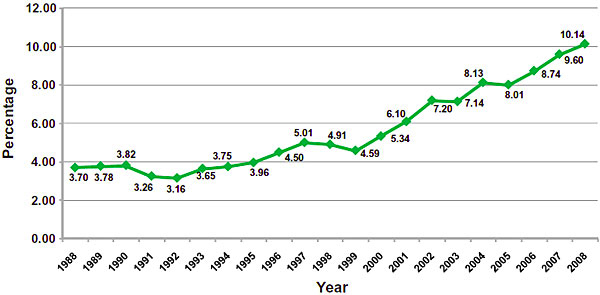
2. Average Age of First Use is Younger Today.
Replicated studies since 1997 have provided a convergence of data suggesting that “early onset of first intoxication,” as an independent variable, significantly increases the probability of developing addiction. 4 Today the average age of first intoxication is 12 years old. This ompares to the 1960’s when marijuana was primarily used by college students. One study by (1997) Grant & Dawson, shows the probability of a person developing addiction based on age of first intoxication in the chart below. In addition to age as a variable if the drug-user has a
genetic family history of addiction then the risk factor is increased by 15 percent. See chart below.

3. Marijuana Then vs. Today – A Picture is Worth a Thousand Words:
Marijuana Then:
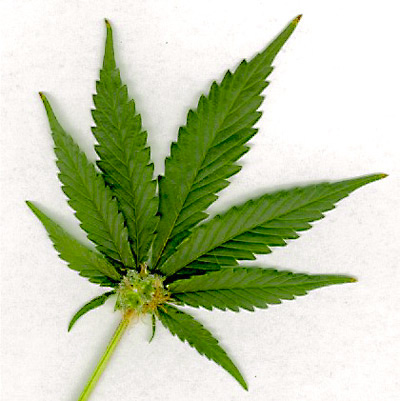
Paraphernalia Then:


Marijuana Today:
20 – 25% THC)


Paraphernalia Today
Vaporizer, Grinder, Blunt Wrap


Clearly this is not the same marijuana used 40 years ago or certainly prior to 1995. For many, this grade of marijuana has only been accessible from “cannabis clubs.” At the same time, because the cost of the marijuana in the clubs was so expensive, many card holders still purchased marijuana from dealers on the street. However, with the economic contraction high grade marijuana prices have fallen in many of the cannabis clubs and access is now easier. Moreover, seeds to grow highly potent marijuana are easily purchased via the internet.
Clients in our program state that “the weed is so sticky I need to use a weed grinder to break it up if I want to roll a blunt.”
4. Withdrawal From the Drug Can Occur Today:
t the 2009 medical doctor’s CSAM conference in San Francisco, a focus was on how to manage marijuana withdrawal with Gabapentin. Withdrawal symptoms include loss of appetite, problems sleeping and anxiety. Clearly people did not experience withdrawal 40 years ago and medicines weren’t being explored to manage withdrawal symptoms. Finally, with regard to teens, any drug being abused inhibits normal neural, emotional and social development, which can create a athological relationship to intoxication resulting in negative consequences with school, family, money, friendships, romantic attachments, health, mental health, sports, employment, etc.
Final Thoughts: Evaluations, Education
&Treatment
Marijuana is not the innocuous drug that some believe it to be. Too often parents and professionals base their understanding of the drug from their own personal use 20 years ago. One of the  biggest challenges facing professionals who pecialize in the treatment of teen and young adult addictive disorders is that the intervention is not only with the individual, but it is also with the family, other health care professionals, schools, and legal system, who might “minimize” or discount the severity of marijuana abuse. Statements such as “It is only marijuana,” “at least it isn’t oxycontin, meth, etc” are examples of the type of denial described as “minimizing.” These messages from various systems support denial for the individual who is having consequences in different areas of their life because of the drug. For this reason, intervention must occur with the individual, family and community in order to be effective. It is also
important that if families are seeking help for their child who is abusing drugs, they should seek professionals who are specially trained in adolescent and young adult addiction. If you are a parent or a professional working with teens and it is discovered that they have used, regardless of the frequency, an evaluation by a specialist is warranted. The individual needs to become educated, explore their relationship to intoxication and examine how it has already impacted different areas of their life in addition to learning new affect regulation and relational skills to move beyond this in their life. In addition, the family needs education on teen addiction, an understanding on how the brain, emotional, and social development are thwarted by drug use.
An examination of parental denial & enabling is needed as well as help with developing and implementing a good home contract, drug testing and education regarding how to be both a supportive resource for their child meanwhile maintaining a zero tolerance of drug use.
Sources:
1. Janet E. Joy, Stanley J. Watson, Jr., and John A Benson, Jr., “Marijuana and Medicine:
Assessing the Science Base,” Division of Neuroscience and Behavioral Research, Institute of
Medicine (Washington, DC: National Academy Press, 1999).
2. http://www.monitoringthefuture.org/data/09data.html#2009data-drugs
3. http://www.justice.gov/ndic/pubs37/37035/national.html
4. (1997) Grant & Dawson, Journal of Substance Abuse, Vol. 9
5. http://www.oas.samhsa.gov/newUsers.html
6. (1997) Grant & Dawson, Journal of Substance Abuse