2012 April
Kouimtsidis C., Reynolds M., Coulton S. et al.
Drugs: Education, Prevention and Policy: 2011, early online publication.
Request reprint using your default e-mail program or write to Dr Kouimtsidis at drckouimtsidis@hotmail.com
Compromised by an inability to interest enough patients, the only randomised UK trial of cognitive-behavioural therapy for methadone patients was unable to be definitive but did find some signs of benefit and that the therapy had pulled some of the intended psychological levers.
Summary Cognitive approaches to treating substance misuse problems are still relatively new and it is important to understand how they work. Relevant treatment models emphasise the role of: self-efficacy to cope with situations associated with drug use without using; developing skills to cope with these situations as well as skills to generate broader lifestyle changes; and changing patients’ expectations of the positives and negatives of using the substance. Successful treatment is theorised to result from a reduction in the extent to which patients expect positive outcomes from substance use, an increase in their negative expectations, and enhanced self-efficacy and coping skills.
The featured study was the first study to directly test this model in the context of substitution treatment for opiate dependence. The findings derive from the UKCBTMM United Kingdom Cognitive Behaviour Therapy Study In Methadone Maintenance Treatment. study, which investigated the effectiveness and cost-effectiveness of cognitive-behavioural therapy for patients in opiate substitute prescribing programmes, itself the first randomised controlled trial of a psychosocial intervention in this setting in the UK.
At several UK treatment centres, the study randomly allocated substitute prescribing patients to keyworking only or keyworking plus cognitive-behavioural therapy, and assessed whether the additional therapy improved outcomes six and 12 months later. Additional therapy was offered weekly for 24 weeks but typically patients attended only four sessions. Therapists and keyworkers were recruited from existing staff and the therapists were trained and supervised in the therapy.
Perhaps because so few patients were eligible for and prepared to join the trial (just 60 did so of 369 who were eligible), though there were outcome gains from the extra therapy, none were statistically significant. Nevertheless, as measured by their effect sizes, A standard way of expressing the magnitude of a difference (eg, between outcomes in control and intervention groups) applicable to most quantitative data. Enables different measures taken in different studies to be compared or (in meta-analyses) combined. Based on expressing the difference in the average outcomes between control and experimental groups as a proportion of how much the outcome varies across both groups. The most common statistic used to quantify this difference is called Cohen’s d. Conventionally this is considered to indicate a small effect when no greater than 0.2, a medium effect when around 0.5, and a large effect when at least 0.8. In the featured study effect sizes were expected to be about 0.3. the gains were as large as expected in terms of reductions in the severity of addiction and heroin use, and improved compliance with prescribed methadone use. The cost of the extra therapy was more than outweighed by savings in health, social, economic, work, and criminal justice costs. Perhaps because patients had already been in methadone treatment for on average five months, these savings were less than in some other studies, and the difference in cost savings between therapy and non-therapy groups was not statistically significant.
Main findings
However, the featured report was less concerned with whether extra cognitive-behavioural therapy improved the end result of methadone treatment, than with how it might have done so. One way was expected to be by improving how well patients coped with life’s problems, a concept measured by a standard questionnaire which assessed different aspects of this ability. Relative to keyworking only, as expected, at six months the therapy was followed by a significant improvement in the degree to which patients positively reappraised problems, and a non-significant improvement in problem solving. Other domains where additional improvements were expected (logical analysis, seeking guidance and seeking alternatives) improved to roughly the same degree regardless of the extra therapy. Six months later (and 12 months after therapy had started) a similar analysis revealed that nearly all the expected mechanisms had improved after cognitive-behavioural therapy but deteriorated without it. The exception was logical analysis, where the reverse pattern was seen. Despite these trends, none of differences between patients who had or had not been offered cognitive-behavioural therapy were statistically significant, so chance variation could not be ruled out.
As expected, the degree to which patients felt confident that they could resist the urge to use drugs (‘self-efficacy’) increased after cognitive-behavioural therapy but decreased (at six months) or increased less (at 12 months) without this therapy. Patients were also asked about the good and bad consequences they expected from cutting down their heroin use. These measures changed in the opposite to what was expected; patients offered the therapy became relatively less positive and more negative about cutting down. Again, none of these differences between the two groups of patients were statistically significant.
Further analyses not reported here assessed changes among only patients who attended at least one session of their intended psychosocial intervention and related changes to the number of therapy sessions attended.
The authors’ conclusions
Though no definite conclusions can be taken from this study, there are indications that the therapy may be effective through at least some of the intended mechanisms, but also that methadone-maintained patients at services as configured in England in the 2000s generally reject the chance for this form of extra therapy.
The fact that few patients were prepared to join the study and that those who did attended few therapy sessions suggest there could be major barriers to implementing cognitive-behavioural therapy in routine practice in the British drug treatment system, perhaps associated with a culture of limited psychological therapy and relatively low expectations of clients’ engagement and compliance with treatment.
With such a small sample there is a heightened possibility that real differences made by the therapy will fail to meet conventional criteria for statistical significance and be mistakenly dismissed as chance variation. That this might have happened is suggested by the fact that the relative increase in days free of heroin use after six months was as great as expected. With a larger sample, it might well have also proved statistically significant. Economic analyses also found non-significant but appreciable net social cost-savings. The featured analysis supplements these outcome findings with indications that cognitive-behavioural therapy may have fostered some but not all of the crucial problem-solving skills.
The main seemingly counter-productive finding related to expectations about the pros and cons of reducing heroin use as measured by a scale yet to be validated. Also, more sessions of therapy did not further enhance the presumed psychological mechanisms through which the therapy worked. Nor were these mechanisms significantly related to substance use and other outcomes – again, perhaps due to the small sample size.
While appreciating the limits set by sample size, the non-significant trends suggesting that the therapy worked though the intended mechanisms were generally small in size. Of 22 comparisons between the two sets of patients, in only one had a mechanism (positively reappraising life’s problems) changed to a statistically significant degree in the expected direction – a result to be expected purely by chance. Together with a few counterproductive trends, these minor changes in the mechanisms thought to be specific to cognitive-behavioural therapy do not suggest it has a special role (that is, over and above other forms of psychological therapy) as a supplement to routine keyworking in the circumstances of the trial. At the same time the findings suggest that extra therapeutic contact did help stabilise patients who were prepared to accept it. Whether this needed to be cognitive-behavioural or a recognised therapy of any kind is impossible to tell from the study. Broader research offers little support for a distinctive role in addiction treatment for cognitive-behavioural approaches, results from which are generally equivalent to other approaches. It also seems that, at least in the mid 2000s, a steep hill remained to be climbed before formal psychological interventions of any kind were routinely and expertly implemented inBritain’s methadone clinics. How far that has changed is unclear. Details below.
CBT in methadone treatment
Guidelines from Britain’s National Institute for Health and Clinical Excellence (NICE) recommend cognitive-behavioural therapy not as a routine means of further stabilising patients, but to help with lingering anxiety and/or depression among those already stabilised in maintenance treatment. However, the analyses which led NICE to counsel against routine use did not show that cognitive-behavioural therapy was ineffective, just that it was not convincingly more effective than other well structured therapies.
Published in 2007, these guidelines did not have available to them the latest update of an authoritative meta-analytic A study which uses recognised procedures to combine quantitative results from several studies of the same or similar interventions to arrive at composite outcome scores. Usually undertaken to allow the intervention’s effectiveness to be assessed with greater confidence than on the basis of the studies taken individually. review conducted for the Cochrane collaboration which combined results from studies comparing structured psychosocial interventions against normal counselling among methadone and other opiate substitution patients. Taking in new studies available up to 2011, it found that overall such interventions had improved neither retention nor outcomes (including opiate use) to a statistically significant degree. In particular, the same was true of the family of behavioural interventions including cognitive-behavioural therapy. Contrary to expectations, this update found contingency management conferred no significant benefits, contradicting both its earlier findings and the NICE guidelines referred to above.
In the Cochrane review, verdicts in respect of cognitive-behavioural therapy rested on three studies, one of which does not appear to have reported substance use outcomes but did find greater improvements in psychological health. Relative to drug counselling alone, so too did a study of male US ex-military personnel starting methadone treatment. A year later, in this study cognitive-behavioural patients had improved more on a much wider range of psychological, social and crime measures, but not in respect of substance use. From methadone plus routine drug counselling only, so complete were the reductions in opiate use that little space was left for additional therapy to further improve outcomes. These two US studies are supplemented by a German study which found that group cognitive-behavioural therapy led to significantly greater post-therapy reductions (at the six-month follow-up) in drug use than routine methadone maintenance alone. The effect was largely due to changes in cocaine use, but there were also minor extra improvements in abstinence from opiate-type drugs and benzodiazepines. What these three studies suggest is that offering extra psychotherapy (not necessarily cognitive-behavioural therapy in particular) improves psychological and social adjustment and perhaps too helps reduce non-opiate substance use, but that methadone maintenance itself as implemented in these studies was such a powerful anti-opiate use intervention that further gains on this front were harder to engineer.
CBT in substance use treatment generally
If in terms of core substance use outcomes, cognitive-behavioural therapy in methadone maintenance does little to improve on routine counselling, this will simply be in line with findings in respect of the therapy’s role in treating drug and alcohol problems in general. A review combining results from relevant studies suggested that it remains to be shown that cognitive-behavioural therapies are more effective than other similarly extensive and coherent approaches. Studies which directly tested this proposition often found little or no difference, even when the competing therapy amounted simply to well structured medical care.
The implication is that choice of therapy can be made on the basis of what makes most sense to patient and therapist, availability, cost, and the therapist’s training. In respect of cost and availability, cognitive-behavioural therapy may (more evidence is needed) prove to have two important advantages. The first is that effects may persist and even amplify without having to continue in therapy. The second is that it lends itself to manualisation to the point where it can be packaged as an interactive computer program and made available in services lacking trained therapists – potentially a crucial advantage for widespread implementation.
Will CBT help methadone patients leave treatment?
Beyond core substance use outcomes is what in Britain is now a priority issue – whether more intensive therapy, even if it seems to add little to the powerful opiate use reduction effect of methadone treatment, might help people gain sufficient psychological and social stability to leave this treatment, and leave it sooner. In respect of psychotherapy in general and cognitive-behavioural therapy in particular, this remains a live possibility with some support from studies of during and post-treatment changes, though none have directly tested whether these enable patients to more safely leave the shelter of substitute prescribing programmes.
However, from the starting point revealed by the featured study, there seems a long way to go before structured psychosocial interventions of any kind are routine in Britain’s methadone services. An earlier report from the study commented that services were overstretched and understaffed and suffered from high staff turnover. Very few staff had been trained in psychological interventions and sometimes even basic individual client keyworking was extremely limited. Difficulties in engaging clients in the study were attributed partly to a low level of psychological interventions in services, which in turn led to low expectations of clients engaging with these interventions. Perhaps too, the authors speculated, some clients were reluctant to become involved in more intensive treatment or to address psychological issues not previously identified in usual clinical care. Most tellingly, the researchers observed “a nihilistic view of psychological intervention and clients’ capacity for change among some staff”.
In this climate, and with the added burden of research procedures, the small proportion of patients prepared to accept therapy and attend more than a few sessions is likely to be an underestimate of the possible caseload if cognitive-behavioural therapy were well promoted as a part of usual care, especially if elements of the approach were incorporated in keyworking rather than offered as an optional add-on.
In a different set of services probably sampled in the mid-2000s, perfunctory brief encounters focused on dose, prescribing and dispensing arrangements, attendance records, and regulatory and disciplinary issues characterised the keyworking service offered by some British criminal justice teams to offenders on opiate substitute prescribing programmes. However, ‘relapse prevention’ was the most common therapeutic activity in the sessions, featuring in 44% of the last sessions recalled by the staff, a term often taken to imply cognitive-behavioural approaches. What staff included under this heading was unclear, and the time given to it averaged just seven minutes, but is does suggest that there is a platform which could be built on. Unfortunately the need to do this building to foster recovery and treatment exit has coincided with resource constraints which make widespread training in and implementation of fully fledged therapy programmes seem unlikely.
Thanks for their comments on this entry in draft to Christos Kouimtsidis of the Herts Partnership NHS Foundation Trust in England. Commentators bear no responsibility for the text including the interpretations and any remaining errors.
Last revised 16 December 2011
Source: www.findings.org.uk
Latest in an impressively coherent and persistent series of studies of how US courts specialising in supervision and treatment of drug-related offenders can do more to reduce drug use and crime. Triaging offenders to more or less intensive programmes and then adjusting based on actual progress made significant differences.
Summary Drug courts specialise in closely supervising (through regular urine tests and court appearances) and ordering the treatment of drug-related offenders to improve compliance with treatment as an alternative to prosecution or imprisonment. Judges impose sanctions or offer praise or more tangible rewards and adjust treatment depending on progress. However, in the USA this intensive process is available to only a small minority of potentially suitable offenders. Extending the reach of drug courts may be more feasible if intensive supervision and treatment are reserved for offenders who need them in order to do well, and if these decisions can to a degree be routinised rather than made on an individual basis.
Background to the study
One step towards this is to match intensity to the risk that the offender will fail to meet the requirements of the court, imposing stricter supervision on offenders assessed as high risk before the start of their sentences. As described by Findings, this has been trialled by the research group responsible for the featured study. They found that high risk (antisocial personality disorder or a history of treatment for drug abuse problems) offenders were more likely to test negative for drugs and to complete their court orders when they had been randomly assigned to fortnightly court progress hearings rather than hearings ‘as needed’ in response to infractions. A further trial implemented this matching procedure and again found better outcomes among high risk offenders matched to fortnightly hearings.
However, predicting in advance how offenders will react to different drug court requirements is an imperfect science. Another step forward is to adapt these to how offenders actually do respond, if possible based on pre-set criteria derived from research findings. For example, if a participant misses a set number of counselling sessions, an ‘adaptive’ regimen might stipulate a motivational enhancement intervention. Treatment staff retain authority to override or alter an adaptation, but typically have to explain their decisions. The featured study was the first major test of adaptive programming in a drug court.
Deciding who needs more supervision or treatment
The criteria for adapting the drug court regimen and the adaptations were developed by the drug court team and research staff with a view to being feasible as well as effective. As in earlier studies in the series, first offenders were categorised as high or low risk and assigned on this basis to fortnightly or as-needed hearings. Monthly assessments identified those who did not comply with the court’s requirements, indicated by two or more unexcused missed counselling sessions or failures to provide a valid urine specimen. In these instances it was assumed that judicial supervision was inadequate and it was stepped up to fortnightly or, if already fortnightly, further infractions would result in conviction for the original offence.
At other times offenders might attend treatment and comply with tests, but still carry on using illegal drugs, indicated by two or more positive urine tests. In these instances it was assumed that the treatment A minimum of four months (approximately 18 weeks) of weekly group psychoeducational counselling sessions covering the pharmacology of drug and alcohol use, progression from substance use to dependence, the impact of addiction on the family, treatment options, HIV/AIDS risk reduction, and relapse prevention strategies. Participants could also attend group or individual treatment sessions based on clinical need. was inadequate and its intensity was stepped up to include clinical case management entailing an additional two therapeutic group sessions per week and one individual session per month focused on motivational enhancement and relapse-prevention techniques.
A pilot study demonstrated the feasibility and promise of this approach, paving the way for the featured study.
About the study
Essentially the featured study tested whether in addition to triaging based on starting risk levels, adjusting treatment and supervision based on the offender’s actual progress improved outcomes. Both the pilot and the featured study were conducted in a drug court in the city of Wilmington, the largest in the USstate of Delaware. It accepted adult local residents charged with a misdemeanour Less serious offences such as possession or use of cannabis or possession of equipment related to drug use. without a history of a serious violent offending, and who drug court treatment staff assessed as meeting criteria for substance abuse or dependence. Defendants plead guilty but will be absolved if they satisfactorily complete Minimum requirements are attending at least 12 weekly group counselling sessions, providing at least 14 consecutive weekly drug-negative urine specimens, remaining arrest free, obeying programme rules and procedures, and paying a $200 court fee. the drug court programme and are not arrested for the next six months. Failing this they are convicted, have a criminal record, stand to lose their driving licences, and to be sentenced to a period on probation.
In 2009 and 2010 researchers approached 335 consecutive drug court defendants of whom 130 agreed to join the study (risking allocation to more intensive supervision and treatment than usual) and 125 actually started the programmes it tested. All were triaged based on their risk levels As in previous studies, antisocial personality disorder or prior treatment for drug problems indicated high risk and fortnightly hearings. to fortnightly or as-needed hearings and their progress was monitored monthly by researchers and reported back to the drug court.
Using the criteria outlined above, for a randomly selected 62 offenders, these monthly assessments determined Unless the drug court team or judge decided otherwise. whether those failing to comply with attendance and testing requirements were subject to more frequent or stricter supervision, and whether those still using drugs were directed in to more intensive treatment. Remaining offenders were subject to the court’s usual procedures.
Primarily at issue was whether adapting treatment/supervision to progress reduced drug use, as indicated by weekly urine tests over the first 18 weeks of the drug court sentence, the minimum needed to complete it.
Main findings
The key finding was that offenders subject to the predetermined adaptations were less likely to use illegal drugs. Of the urine tests they took, 68% indicated they were drug free compared to 49% of comparison offenders. Assuming missed tests would have indicated drug use, the figures were 61% and 46%. Under either assumption, offenders whose supervision and treatment were adapted to their progress were over twice as likely as other offenders to submit a urine test negative for illegal drugs, a statistically significant difference, and one which was apparent over the entire 18 weeks.
In contrast, the proportions of offenders who satisfactorily completed the drug court programme within 18 weeks (31% in the adaptive regimen, 23% of the remainder) or within a year (68% and 67% respectively) did not significantly differ.
Just over a third of both sets of offenders at some time failed to meet criteria for complying with attendance or urine test requirements. These infractions were much more likely (64% v. 30%) to be responded to by the court when offenders were subject to the adaptive regimen and the court had been alerted to the infraction by the researchers. Also, roughly the same proportions (a fifth to a quarter) of offenders continued to use illegal drugs, though in this case the court was no more likely impose consequences on offenders in the adaptive programme.
There was a (not statistically significant) tendency for more offenders in the adaptive programme to see the drug court’s procedures as fair, but otherwise no differences in perceptions of how effectively these acted as deterrents, attitudes to the judge, and satisfaction with drug court services, all of which were generally positive.
The authors’ conclusions
Findings confirmed that adaptive programming can promote abstinence from illegal drugs among misdemeanour offenders sentenced by a drug court. This improvement in drug abstinence rates appears to have been attributable to more intensive supervision of offenders who failed to comply with attendance and testing requirements, rather than to more intensive and individualised treatment in response to continued drug use.
As intended, the criteria set for adapting the regimen, alerts to when these were breached, and the clear structure for how the court should respond, seem to have helped staff identify and rectify mismatches between offenders and the supervision schedule they had been assigned to on the basis of their anticipated risk of failure. In theory, drug court staff could have made these adjustments on their own initiatives, but were much less likely to do so without the guidance and assistance of the adaptive structure. Lacking this, they imposed consequences in respect of less than one in three of the times when offenders failed to show up for treatment or testing, a ratio unlikely to optimally promote compliance with supervision requirements. The adaptive regimen meant fewer offenders ‘slipped through the cracks’ to continue noncompliant behaviour with relative impunity. There was no indication (if anything, the reverse) that this greater strictness jaundiced offenders’ views of the court or its procedures.
Strangely, while offenders whose programmes were adapted were more likely to test abstinent, they were no more likely to satisfactorily complete the drug court programme, despite the fact that a run of 14 ‘clean’ urine tests was perhaps the primary requirement. It could be that the adaptive regimen failed to affect the other criteria offenders had to meet to satisfy the court and expunge their offence, or that the court took other factors in to account in making these decisions.
One methodological concern is that under 4 in 10 of the offenders asked to join the study did so, reducing the degree to which the findings can be assumed to be representative of what would happen if such procedures were applied across the board. It seems likely that refusers were less motivated to comply with the court’s requirements or felt (perhaps due to their addiction) that they would be unable to satisfy the court if more intensively supervised. Also, rather than persisting impacts, these findings reflected periods when many offenders had recently ended or were still on drug court sentences.
There may be scope to improve criteria used to adapt supervision and treatment. For example, the assumption that non-attendance for counselling or testing does not require more intensive treatment may be false if offenders who have lapsed try to hide this by not turning up. And while supervision and treatment could be intensified in response to poor progress, there was no mechanism for good progress to trigger the reverse.
Marlowe D.B., Festinger D.S., Dugosh K.L. et al.
Criminal Justice and Behavior: 2012, 39(4), p. 514–532.
This is the latest in an impressively coherent and persistent attempt to evidence howUSdrug courts can do more to reduce drug use and crime, including ways to conserve resources by reserving intensive intervention for offenders who need it. These studies have shown that triaging on the basis of initial risk and then adjusting in the light of experience, based on simple and clear criteria and feasible treatment and supervision enhancements, are both possible for US drug courts and effective in promoting abstinence from illegal drugs. In turn this finding confirms that some kind of courts are more effective than others. Generally drug court sentences are associated with lower crime and drug use rates than comparison sentencing options, but there are not enough rigorous and convincing studies to be sure that this is due to drug court procedures as opposed to the type of offenders seen by drug courts or some other factor. Feeling more the weight than the quality of the evidence, generally reviewers have cautiously concluded that drug courts are more effective then conventional sentencing, but this largely US evidence is of doubtful relevance to the UK, where negative findings from Scotland may have contributed to a waning in enthusiasm at a national level for extending the drug court model to more offenders. Details below.
About the study
While the strategies tested by the featured study and its predecessors may seem obvious, deciding on the criteria for risk, the dividing line between poor versus good progress, and corresponding adjustments to supervision and treatment, is not straightforward. In the US context, and particularly in the context of a court trying less serious offences, triaging on the basis of antisocial tendencies and prior drug treatment and then adjusting on the basis of two missed appointments or urine tests had in some respects the desired impact. As the authors pondered, the puzzle is why this impact did not extend to what for the offender is probably the critical outcome – successfully completing the sentence.
For society and Britainin particular, crime-reduction is probably the critical outcome. Whether the full adaptive regimen reduced criminal recidivism is as yet unreported, but a prior study found that the first step – triaging high-riskUS misdemeanour offenders to fortnightly supervision – did not do so to a statistically significant degree. According to their confidential accounts to researchers, among high-risk offenders in this study the reduction in the proportion who offended was greater (down by 23% v. 7%) when they had been left to the court’s usual (roughly monthly) hearings.
The authors of the featured study suggest that rather than intensified treatment, imposing tighter supervision and more certain sanctions was how the adaptive regimen helped offenders avoid illegal drug use. This raises the issue of whether for these types of offenders, treatment can be dispensed with altogether and supervision and sanctions relied on to enforce compliance. For what seems to have been a mainly methamphetamine using caseload, this was essentially the proposition tested in Hawaii. Where the featured study reserved more intensive treatment for offenders with positive urine tests, inHawaii they took this a step further by reserving treatment as such. There intensive urine testing allied with swift and certain but not severe sanctions for non-compliance dramatically curbed drug use, prison time and re-arrest rates among a high risk group of drug using offenders. Treatment was available for offenders who wanted it or whose repeat positive drug tests suggested it was needed, but few did want or need it – perhaps 1 in 10.
British policy and experience
In the featured study’s drug court it seems that most offenders confined their regular illegal drug use to cannabis. In Hawaii, a stimulant was the main problem drug and opiate use was rare. These caseloads are very different from the dependent heroin users who have committed serious and/or repeated offences who constitute the major part of the caseload in drug courts in England and Scotland. It seems unlikely that many in the UK would be considered at low risk of reoffending, that fortnightly classes would be considered an adequate treatment for their addictions, or that many could sustain four months without registering some form of illegal drug use in at least two weekly urine tests. Generally they would be considered to warrant at least the intensity of treatment reserved for the minority of poor responders in the featured study. Though this means that in the British context, risk criteria and adaptive responses would have to be different, the principle of establishing these, and doing so on the basis of evidence rather than intuition, is likely to be applicable. If costly sentence failure and imprisonment are to be avoided, it seems critical that such adjustments are made before offenders get to the point where their breaches lead the court to revoke the drug court order and re-sentence for the original offence.
Drug courts have operated in Englandand Scotlandfor several years but are not widespread. In six pilot English courts, involved offenders and professionals felt the courts were a useful addition to the range of initiatives aimed at reducing drug use and offending. They set concrete goals for offenders to meet, raised self-esteem, and imposed a degree of accountability for their actions on offenders. They were also seen as facilitating partnership working between agencies. However, Scottish courts too were seen as useful and effective, yet there was no reliable evidence that (despite costing substantially more per order and per successfully completed order) their sentences were any more effective than similar orders made by other courts, as assessed by the proportions of offenders reconvicted and the frequency of convictions.
The 2010 English drug strategy made no specific mention of drug courts. For more details on criminal justice policy it referred to a Ministry of Justice green paper, which warned that drug courts “will only be continued if they genuinely make a difference and are cost effective”. Evidence gathered for the paper was equivocal about the applicability of international evidence to England and Wales and did not list drug courts among its “promising approaches”. The applicability of reasonably promising evidence from overseas (primarily the USA) was also questioned by the UK Drug Policy Commission in its review of programmes for problem drug-using offenders.
Scotland’s drug strategy published in 2008 looked forward to the assessment of the country’s pilot drug courts cited above, which found no reliable crime-reduction impact but increased cost. A review of interventions for drug using offenders produced for the Scottish Government accepted these findings, and warned that the most rigorous international trials which randomly allocated offenders to drug courts or other judicial options found only weak crime reduction impacts which fell short of statistical significance.
Given the negative crime reduction findings in Scotland, the lack of evidence in the rest of Britain, and doubts about the validity and applicability of mainly USinternational evidence, the national-level impetus apparent a few years ago for trying drug courts in Britainmay have waned. Treatment allied with urine or other biological tests for drug use remain high on the UKagenda, but drug courts no longer appear to be seen as a prime means of ensuring and supervising such programmes. Nevertheless, such courts could be seen as one way to ensure offenders enter and comply with the treatment programmes (and specifically addiction treatment) the Ministry of Justice saw as effective in reducing the costs of crime, or one way local areas may choose to pursue the crime reductions which it suggested could attract financial rewards in ‘payment by results’ schemes.
Recent reviews
Reservations in the Scottish review cited above over the evidence for drug courts from randomised trials were echoed in a review conducted by British experts for the Swedish Council for Crime Prevention. It was able to synthesise crime-reduction results from just two high quality trials. Together these registered an advantage for drug courts versus comparison judicial options, but not one which was statistically significant. According to this analysis, treatment in general had been shown to reduce drug-related crime, but the same could not yet be said of treatment delivered via a drug court.
Mandated by USlaw, in 2011 the USGeneral Accounting Office investigated how well US adult drug courts have reduced crime and substance use and their associated costs and benefits. They reported that compared to alternative dispositions, generally studies found drug courts were associated with lower rates of criminal recidivism and relapse to drug use, but few studies were free of possible bias arising from non-random selection of drug court versus comparison offenders. Due mainly to reduced future victimisation and justice system expenditures, benefits to society expressed in financial terms usually but not always outweighed costs. This balance was partly dependent on the expense of the alternative disposal; if community sentences supervised by a drug court replaced prison, the cost savings were likely to be positive and substantial.
In hedging its cost-benefit findings, the General Accounting Office touched on a fundamental criticism of US drug courts – that most exclude violent or drug dealing offenders or those with extensive criminal histories and serious mental health issues. The upshot is often a caseload of low-level drug offenders who are otherwise generally law-abiding, many of whom might have been more cheaply and appropriately diverted out of the criminal justice system altogether. The report also echoed a general finding in other research syntheses – that the more sound the study, the less likely it is to find any substantial recidivism reductions due to drug courts.
How far most studies fall short of the gold standard randomised controlled trial was commented on by (at the time of writing) the latest synthesis of drug court studies. Among this “methodologically weak” body of work, just three of 92 studies of courts Other than those dealing with traffic-related offences. trying adults had randomly allocated offenders to these versus alternative judicial procedures. Across these three, recidivism was lower among drug court offenders, but the finding was not statistically significant. The next most sound studies typically attempted instead to match drug court and comparison offenders on key variables, or to adjust the findings for their relative risks of offending. Across these 20 studies, recidivism was modestly and significantly lower among drug court offenders, but such research designs have limited power to iron out the most important differences between offenders who are or are not referred to (or choose to be processed by) drug courts. Presumably crucial variables – like how committed the offenders is to succeed, their social and family support, or professional assessments of how well suited they are to a drug court regimen – are rarely available to researchers. Echoing the featured study, this synthesis found that drug use was lowest in courts which supervised offenders frequently and which – like the court in the study – could hold out the prospect that success would expunge the original offence. These too were among the effective ingredients identified in a major study funded by the US Department of Justice of 23 drug courts.
For Findings drug court analysis run this search. In particular see these background notes with a detailed consideration of one of the most methodologically rigorous studies to date, conducted in Baltimore with a caseload unusually relevant to the UK because it consisted mainly of heroin addicts with extensive criminal records. Though methodological concerns remained, it found that over the three years after offenders had been allocated to the court or to normal proceedings, the average numbers of new arrests and charges were significantly fewer among drug court offenders and drug use was lower.
Source www.findings.org.uk 30 March 2012
W De La Haye (1), K Powell-Booth (2). (1) The University of the West Indies, Mona Campus, Jamaica, (2) The University of the West Indies, Mona Campus & University of Technology, Jamaica.
Background: Cannabis is a popular drug mainly among adolescent males in Jamaica. The aim of this study was to assess whether there is a difference in performance of male cannabis users and non-users on tests of learning, memory, attention and intelligence.
Methods: Psychological tests of intelligence, learning and memory were administered for all participants. Tests included Wechsler Intelligence Scales for Children, fourth edition (WISC-IV) Wide Range Assessment of Memory and Learning, third edition (WRAML. 3). The sample size (N = 62), with an age range of 13 and 17 years, comprised 2 groups: adolescent users of cannabis (n = 30), the experimental group, and non-users of canabis (n = 32), the control group. Both groups’ performance was compared on each test. Independent t-tests were used to analyze the data, with alpha = .05.
Results: There is a significant difference in performance between the groups, as non-users had higher scores on all tests of memory than users of cannabis. The largest mean difference was for Verbal Intelligence Quotient (VIQ), 6.65, followed by Digit Span Forward 6.47, and 6.60 for Digit Span Backward, while the smallest mean difference was for the Picture Memory sub – test. The mean age was 14.97 years, (SD = 1.36).
Conclusion: Users of cannabis displayed cognitive deficits on all tests of memory.
Findings lend support to research that suggests that cannabis use may impair learning and memory.
Source: Winston De La Haye, M.D., M.P.H., D.M.
Lecturer and Consultant Psychiatrist . Dep. of Community Health & Psychiatry
The University of the West Indies, Mona Campus,JAMAICA
TORONTO, Nov. 2 — Methamphetamine can be detected in the hair of newborns whose mothers used the drug during pregnancy, researchers here have found.
Action Points
Note that this study shows that methamphetamine used during pregnancy can be found in the hair of neonates, suggesting it crosses the placental barrier with effects that are not completely understood.
Advise patients who ask that drug abuse during pregnancy can be detrimental to the fetus, with a range of physical and intellectual sequelae, as well as hazardous to the mother.
It represents the first direct evidence in humans that crystal meth, which is a growing drug-abuse problem in North America, can cross the placenta and affect the growing fetus, according to Facundo Garcia-Bournissen, M.D., of the Motherisk program at the Hospital for Sick Children.
Researchers at the program have been testing hair samples from parents and adults across Canada for several years, usually when there is clinical suspicion of drug abuse on the part of parents, Dr. Garcia-Bournissen and colleagues reported in the online issue of Archives of Disease in Childhood.
From June 1997 through December 2005, the database accumulated results of 34,278 tests for drugs in hair, representing 8,270 people. Nearly 60% (or 4,926) of these people were positive for at least one drug of abuse, the researchers said.
In a retrospective analysis, Dr. Garcia-Bournissen and colleagues examined the incidence of methamphetamine in hair samples:
• The first methamphetamine was found in hair in 2003, when six samples tested positive, with a slight increase in 2004, with eight cases.
• There were 372 cases in 2005 and the researchers said preliminary data for 2006 indicates that the surge has not stopped.
• The study identified 11 mother-neonate pairs in which each was positive for methamphetamine.
• Also, one newborn was negative, although the mother was positive.
The median methamphetamine values in the mother-baby pairs were 1.75 ng/mg for the mothers and 1.63 ng/mg for the newborns. Dr. Garcia-Bournissen and colleagues said.
The median concentrations were not significantly different, “suggesting that the transplacental transfer of methamphetamine is extensive,” the researchers said. On an individual level, maternal and neonatal drug levels correlated significantly (at P=0.003, using Spearman’s rho test, with r=0.8).
Interestingly, among the 171 subjects who were positive for methamphetamine and whose hair was tested for other drugs, 83.5% were positive for at least one other drug, usually cocaine, Dr. Garcia-Bournissen and colleagues found.
In contrast, among the 1,053 subjects negative for methamphetamine but positive for some other drug, only 38% were positive for more than one drug, they said.
“Positive exposure to methamphetamine strongly suggests that the person is a polydrug user, which may have important implications for fetal safety,” the researchers said.
The effects of the drug on the exposed child remain unclear, Dr. Garcia-Bournissen and colleagues noted, although there is some evidence that “children exposed in utero to methamphetamine are at risk of developmental problems, because of either the effect of direct exposure to the drug during pregnancy or growing in the environment associated with parental methamphetamine misuse, or probably both.”
Because the study was retrospective and anonymous, clinical information on the exposed infants is not available, the researchers said.
Source: www.medpage.today.com 2nd Nov. 2006
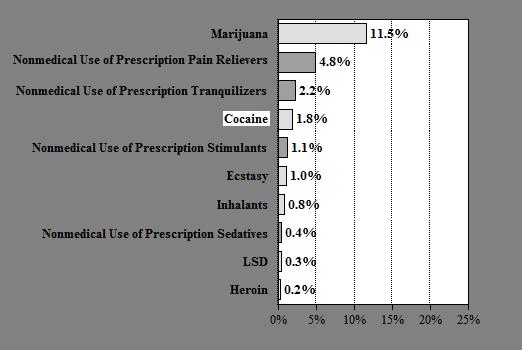
U.S. residents continue to be more likely to report the nonmedical use of prescription drugs† than the use of almost all types of illicit drugs, according to recently released data from the 2010 National Survey on Drug Use and Health (NSDUH). Approximately 5% of persons ages 12 or older reported using prescription pain relievers nonmedically in the past year and 2% reported the nonmedical use of prescription tranquilizers—more than any type of illicit drug with the exception of marijuana. The nonmedical use of prescription stimulants was slightly less prevalent at 1.1%. All other substances, including ecstasy and prescription sedatives used nonmedically, were used by 1% or less of U.S. residents. These rankings have remained relatively unchanged over the past five years (see CESAR FAX, Volume 15, Issue 36).
†Nonmedical use of prescription drugs refers to using a prescription pain reliever, tranquilizer, stimulant, or sedative without a personal prescription or only for the experience or feeling it causes. It also include drugs within these groupings that originally were prescription medications but currently may be manufactured and distributed illegally, such as methamphetamine, which is included under stimulants.
NOTE: NSDUH is representative of the civilian, noninstitutionalized population aged 12 and older living in the U.S., which represents approximately 98% of the population. The survey excludes homeless persons who do not use shelters, military personnel on active duty, and residents of institutional group quarters, such as jails, hospitals, and residential drug treatment centers.
SOURCE: Adapted by CESAR from Substance Abuse and Mental Health Services Administration (SAMHSA), Results from the 2010 National Household Survey on Drug Use and Health: Detailed Tables, 2011. Available online at http://oas.samhsa.gov/NSDUH/2k10NSDUH/tabs/Cover.pdf.
Some 1,173,386 people in England were admitted to casualty for injuries or illnesses caused by drinking in 2010/11, compared with just 510,780 in 2002/3, according to the data. The figures for last year represent an 11 per cent increase on the previous 12 months, when alcohol-related admissions stood at 1,056,962.Separate information published by Anne Milton, the public health minister, showed that since January an estimated 7,074 under-18s have been admitted to hospital due to alcohol.Diane Abbott, the shadow public health minister, said the Government should take notice of the statistics and “get a grip” on binge drinking. She accused ministers of “rapidly pushing us towards a binge drinking crisis”, despite similar annual increases in recent years.She said: “The alarm bells should be ringing with the publication of these figures. A recent report predicted that binge-drinking will cost the NHS £3.8 billion by 2015, with 1.5 million A&E admissions a year.” Andrew Lansley, the Health Secretary, blamed Labour’s 24-hour drinking policy and accused the last government of “taking their eye of the ball” on the issue of binge drinking. He said: “These figures are disturbing evidence that, despite total consumption of alcohol not increasing recently, we have serious problems with both binge-drinking and long-term excessive alcohol abuse in a minority of people. Our alcohol strategy, which we will set out in the new year, will outline what further steps we are taking to tackle this growing problem.” Today’s Local Alcohol Profiles for England figures also show that the number of hospital admissions for conditions attributable to alcohol are rising at a similar rate. The number of admissions has more than doubled since 2002/03 and increased by nine per cent last year. In 2002/03 there were 926 admissions per 100,000 people for conditions caused by alcohol, rising to 1,743 per 100,000 in 2009/10 and 1,898 last year. The biggest increase over the past 12 months was inLondon, with a jump in admissions of 14 per cent, followed by the East of England with 10 per cent. From The Telegraph Dec. 2011 |