2019 March

This week, the Rocky Mountain High Intensity Drug Trafficking Area released its fifth annual report titled The Legalization of Marijuana in Colorado: The Impact, Volume 5. We devote today’s issue of The Marijuana Report newsletter to highlighting a few of many significant findings the report contains.

National Families in Action has remade some of the graphs and charts in the report to emphasize key findings. This one shows how many of Colorado’s students were expelled, referred to law enforcement, or suspended in the 2015-2016 school year. This is the first year the Colorado Department of Education differentiated marijuana violations from all drug violations, and this year’s report will serve as a baseline to determine whether marijuana violations increase, decrease, or stay fundamentally the same.

Read The Legalization of Marijuana in Colorado: The Impact, Volume 5 here. This information appears on page 41 (PDF page 49).
The new report explains that although Colorado created its own Healthy Kids Survey, the combination of a poor response rate and the fact that several major counties with large populations had low or no participation rendered the 2015 survey’s results invalid. For a discussion of this see page 33 (PDF page 41). Volume 5 relies on the National Survey on Drug Use and Health to compare Colorado marijuana use with the national average for ages 12-17, 18-25, and 26 & older over a ten year period (2005-2006 to 2014-2015).

See data for these graphs on the following pages:

  • Ages 12-17, page 36 (PDF page 44)
  • Ages 18-25, page 56 (PDF page 64)
  • Ages 26 & Older, page 60 (PDF page 68)

Read The Legalization of Marijuana in Colorado: The Impact, Volume 5 here.
The report notes that data from the National Highway Traffic Safety Administration, 2006-2011 Fatality Analysis Reporting System (FARS), and 2012-2016 Colorado Department of Transportation show that drivers testing positive for marijuana who were killed in traffic crashes rose from 6 percent of all traffic deaths in 2006 to 20 percent eleven years later. Marijuana-related traffic deaths jumped from 9 percent to 14 percent once the state commercialized marijuana for medical use and from 11 percent to 20 percent after legalizing the drug for recreational use.

Read more about marijuana-related driving in Colorado here starting on page 13 (PDF page 21).
In 2016, more than one-third of Colorado drivers who tested positive for marijuana had marijuana only in their systems. Another 36 percent had marijuana and alcohol. Slightly over one-fifth tested positive for marijuana and other drugs but no alcohol, while 7 percent had marijuana, alcohol, and other drugs on board.

See page 18 (PDF page 26) in The Legalization of Marijuana in Colorado: The Impact, Volume 5 here.
The Marijuana Report is a weekly e-newsletter published by National Families in Action in partnership with SAM (Smart Approaches to Marijuana).

Visit National Families in Action’s website, The Marijuana Report.Org, to learn more about the marijuana story unfolding across the nation.

Our mission is to protect children from addictive drugs
by shining light on the science that underlies their effects.

Addictive drugs harm children, families, and communities.
Legalizing them creates commercial industries that make drugs more available,
increase use, and expand harms.

Science shows that addiction begins in childhood.
It is a pediatric disease that is preventable.

We work to prevent the emergence of commercial
addictive drug industries that will target children.

We support FDA approved medicines.

We support the assessment, treatment, and/or social and educational services
for users and low-level dealers as alternatives to incarceration.

About SAM (Smart Approaches to Marijuana)

SAM is a nonpartisan alliance of lawmakers, scientists and other concerned citizens who want to move beyond simplistic discussions of “incarceration versus legalization” when discussing marijuana use and instead focus on practical changes in marijuana policy that neither demonizes users nor legalizes the drug. SAM supports a treatment, health-first marijuana policy.  SAM has four main goals:

  • To inform public policy with the science of today’s marijuana.
  • To reduce the unintended consequences of current marijuana policies, such as lifelong stigma due to arrest.
  • To prevent the establishment of “Big Marijuana” – and a 21st-Century tobacco industry that would market marijuana to children.
  • To promote research of marijuana’s medical properties and produce, non-smoked, non-psychoactive pharmacy-attainable medications.

Source: Email from National Families in Action http://nationalfamilies.org October 2017 

Tom P. Freeman, Peggy van der Pol, Wil Kuijpers, Jeroen Wisselink,Ravi K. Das, Sander Rigter, Margriet van Laar, Paul Griffiths, Wendy Swift,Raymond Niesink and Michael T. Lynskey

ABSTRACT:

Background

The number of people entering specialist drug treatment for cannabis problems has increased considerably in recent years. The reasons for this are unclear, but rising cannabis potency could be a contributing factor. Methods Cannabis potency data were obtained from an ongoing monitoring programme in the Netherlands. We analysed concentrations of δ -9-tetrahydrocannabinol (THC) from the most popular variety of domestic herbal cannabis sold in each retail outlet (2000–2015). Mixed effects linear regression models examined time-dependent associations between THC and first-time cannabis admissions to specialist drug treatment. Candidate time lags were 0–10 years, based on normative European drug treatment data.

Results

THC increased from a mean (95% CI) of 8.62 (7.97–9.27) to 20.38 (19.09–21.67) from 2000 to 2004 and then decreased to 15.31 (14.24–16.38) in 2015. First-time cannabis admissions (per 100 000 inhabitants) rose from 7.08 to 26.36 from 2000 to 2010, and then decreased to 19.82 in 2015. THC was positively associated with treatment entry at lags of 0–9 years, with the strongest association at 5 years, b = 0.370 (0.317–0.424), p < 0.0001. After adjusting for age, sex and non-cannabis drug treatment admissions, these positive associations were attenuated but remained statistically significant at lags of 5–7 years and were again strongest at 5 years, b = 0.082 (0.052–0.111), p < 0.0001.

Conclusions

In this 16-year observational study, we found positive time-dependent associations between changes in cannabis potency and first-time cannabis admissions to drug treatment. These associations are biologically plausible, but their strength after adjustment suggests that other factors are also important.

Source: https://www.researchgate.net/publication/322830280_Changes_in_cannabis_potency_and_first-time_admissions_to_drug_treatment_A_16-year_study_in_the_Netherlands January 2018

Science Spotlight

New research suggests that marijuana users may be more likely than nonusers to misuse prescription opioids and develop prescription opioid use disorder. The study was conducted by researchers at the National Institute on Drug Abuse (NIDA), part of the National Institutes of Health, and Columbia University.

The investigators analyzed data from the National Epidemiologic Survey on Alcohol and Related Conditions, which interviewed more than 43,000 American adults in 2001-2002, and followed up with more than 34,000 of them in 2004-2005. The analysis indicated that respondents who reported past-year marijuana use in their initial interview had 2.2 times higher odds than nonusers of meeting DSM-IV diagnostic criteria for prescription opioid use disorder by the follow-up. They also had 2.6 times greater odds of initiating prescription opioid misuse, defined as using a drug without a prescription, in higher doses, for longer periods, or for other reasons than prescribed.

A number of recent papers suggest that marijuana may reduce prescription opioid addiction and overdoses by providing an alternate or complementary pain relief option. That suggestion is partly based on comparisons of aggregate data from states that legalized marijuana for medical use vs. those that didn’t. In contrast, the current study focuses on individual marijuana users vs. nonusers and their trajectories with regard to opioid misuse and disorders. These findings are in-line with previous research demonstrating that people who use marijuana are more likely than non-users to use other drugs and develop problems with drug use.

For a copy of the paper, go to – “Cannabis Use and Risk of Prescription Opioid Use Disorder in the United States” – published in the American Journal of Psychiatry.

For information about the link between marijuana use and increased risk of addiction to other drugs, go to: www.drugabuse.gov/news-events/latest-science/marijuana-use-raises-sud-risk.

For more information, contact the NIDA press office at media@nida.nih.gov or 301-443-6245. Follow NIDA on Twitter and Facebook. 

Source: https://www.drugabuse.gov/news-events/news-releases/2017/09/marijuana-use-associated-increased-risk-prescription-opioid-misuse-use-disorders September 2017

For those who are still concerned about ‘evidence based science’ and ‘best medical and pharmaceutical practice’…the following ‘open letter’ with attachments was sent to all Federal Senators, NSW and Victorian Premiers last week. 

Dear Senator,
 
In the coming weeks/months, you will no doubt be presented with a Bill to consider changing both law and process to permit a new version of ‘medical marijuana’. On behalf of our Institute and a concerned public I would like you to carefully consider the following.

Firstly I write with some concerns about the consultation conducted on behalf of Victorian State government by the VLRC in Melbourne on May 6th this year and the now subsequent recommendations that have emerged from this very small Melbourne meeting (Less than 60 people in attendance! – This issue was directly raised with Victorian Health Minister earlier this year).

Whilst we gleaned from radio interviews with VLRC representatives prior to the consultation that the public discussions on the potential introduction of a new form ‘medical marijuana’ (different to existing medicinal forms of cannabis derived pharmaceuticals already in the Australian market) were not for changing laws to suit a particular agenda. It was instead implied that the purpose was to look at potential redundancies that might hinder best practice.  It was to be, for all intents and purposes an unbiased mechanism to: glean evidence, perspectives, opinions and ideas from the general public for consideration in the higher and more important discussion of wise, evidence based, best healthcare practice before making any move on the release of another version of therapeutic cannabis.

Conversely, our affiliate/colleagues experience of the very small Melbourne consultation did not reflect any of the above expectation. Rather those of our affiliates who attended observed the following:

  1. A seemingly deliberately emotively charged atmosphere, in favour of getting cannabis legalised for medical purposes. The tone seemed to be set to that end from the outset.
  2. The meeting was facilitated by representatives of the VLRC who appeared to have a bias toward the legalisation of ‘medical marijuana’ in manner that suited the self-medicating option, regardless of evidence based science.
  3. When attempts were made to present evidence contrary to the seemingly predetermined agenda of these facilitators, they were either quickly shut down (if they dared to speak in the first place) or continually ignored; apparently, dissenting opinions were not welcome. Whilst at the same time, proponents for ‘self-medication’ use of cannabis were given complete and unfettered access to the floor, producing statements such as:“Many, many people have been cured – from just about anything and everything.”
    “What would you rather have – infertility or 35 seizures a day?”
    “Random workplace drug testing is wrong.”Not only are these statements (now on record) outrageous, they are also utterly unsubstantiated by any legitimate clinical trial. This very small contingent of pro-cannabis lobbyists were permitted to simply spruik anecdotes with no evidence based presentation yet also had their evidenced-deprived opinions affirmed and validated by the facilitators.
  4. The facilitators appeared to infer that the Government (of Victoria, at least) already has legislation in place with this current ‘consultation’ process simply in play to validate those changes and therefore it is in essence a forgone conclusion. There was also a strong indication that either the A.M.A. or T.G.A. recommendations or processes would be ignored and negated wherever possible by simple legal changes.

Senator, it is a concern that if this particular experience of ours was repeated in other consultations with the same consensus manufacturing agenda, then this consultative process is a travesty.

If a government negates not only good evidence based science, but also established protective, best practice medical processes to enable a legal rite of passage for self-medication, it is placing itself at an extremely high risk of litigation. Future law-suits are likely, from the ‘victims’ of self-medicating regimes who will cite the changes in law that were NOT based on proper clinical trial or TGA and AMA recommendations and protocols.  When emotionally charged vitriol combines with vote chasing and misguided sympathies, it is the recipients of these untested substances that will be the final casualties – especially children! Compassion and wisdom dictate that all fair and democratic processes be engaged to maximise help and minimise harm, especially to children who will be the ones at greatest risk of an ill-advised self-medicating regime.

Senator, for purposes of clarification about the possible national legalisation of ‘another’ route/process/protocol for medicines are you able to confirm or deny that:

  1. The representations by the facilitators at the Melbourne consultation are in fact reflective of the pre-ordained intent of the public consultation documented above in not only Victoria, but other States and Territories?
  2. If not, will a review of the practice/method/behaviours be made into this particular process and subsequently the clearly questionable recommendations that have emerged from such narrow, non-evidence based and seemingly biased processes?
  3. A fair and proper representation of all views on this matter be gleaned from these meetings/consultations and interpreted and represented fairly without prejudice?
  4. A.M.A. and T.G.A. processes and protocols for best practice on medicines will be upheld and engaged, or simply ignored and by-passed?

Finally Senator, it is of grave concern that a pattern seems to be emerging from this ‘populist’ process, that best practice, evidence based protocols may simply be ignored and by passed.  If this is indeed the plan and the use of VLRC type agencies is the vehicle to do so, then the following must be raised.

The Dalgarno Institute ask:

  • Do you want your government and your ministerial role to be linked with a poorly considered and non-evidenced based process that enables a self-medicating policy – particularly for the ones the State has greatest responsibility to protect – the children?
  • Will your government and ministerial role be the ones who in so ignoring proper clinical processes facilitate a quasi-health regime that will precipitate immediate and long term unwanted side effects that can then be later subject to litigation and class-actions?
  • If an unqualified and unproven self-medicating mechanism is sanctioned and approved by government, and the inevitable damage (particularly to children) emerges, will the taxpayers of Australia have to fund the damages of an ill-conceived and non-TGA/AMA approved medical practice? Or will there be iron-clad caveats in place that ensure those who chose to use their own version of ‘medicine’ be the only ones liable for the outcomes of it, and not place further healthcare and monetary burden on the vast majority of tax-payers who have sought to follow best evidence-based and prescriptive practices?
  • If proper clinical trials and T.G.A and A.M.A. processes and protocols are negated or circumvented and a ‘new’ or ‘alternative’ process for registering, manufacturing, prescribing and dispensing marijuana as medicine be put in place, then how will you/your government  address the following important questions.
    • Who will be ‘growing’ and preparing this ‘medicine’?
    • Who will monitor content and quality of ‘medicine’?
    • Who will determine dosage rates and quantities?
    • What mechanisms will be in place to ensure quality control is followed?
    • What mechanisms will be in place to ensure, movement, dispensing and use of this ‘medicine’ is done without risk to non-patients?
    • Who will be able to prescribe this ‘medicine’ – Doctors, pharmacists, naturopaths, nurses, and counsellors? Who will monitor this process and ensure total safety?
    • What community safe-guards will be in place to ensure this new ‘medicine’ will not be misused?
    • Will the ‘medicine’ come in edible or smoked form and what safeguards will be in play around such a ‘medicine delivery’ system?
    • Will there be advertising and public promotion of this new form of ‘medicine’? Will that be strictly monitored to ensure no misinformation will mislead the public?
    • Which government department will oversee this process and how many more new protocols, processes, staff and finance will be required to set up this new vehicle for ‘medicine’ identification and management?
    • Who will be paying for this new and added cost?

We at Dalgarno Institute and its growing coalition remain very concerned for the overwhelming majority of Australians who are being kept in the dark about this new and illegitimate push to change evidence based processes and the laws that ensure those processes are protected. We are looking to you, in your role, to ensure that there is a genuine and robust pursuit of best medical and health practice outcomes for all Australians, particularly the most vulnerable – the young, very sick and disadvantaged – and that any mechanism that seeks to undermine that platform not be permitted to emerge under any circumstance.  Science and best health practice, NOT lawyers should determine pharmaceutical best practice.

I have also attached just a very small sample of the volumes of evidence-based data currently in the scientific space that raise clear warnings about a ‘new’ and untested version of cannabis as medicine. Please avail yourself of them and consult the people who do know better, compassion and good government demands it.
We look forward to receiving your response.

Sincerely Yours, 

Shane Varcoe
Executive Director
Dalgarno Institute

You can read our compassionate policy stance on M.M titled ‘CANNABIS AS MEDICINE? CAUTION NEEDED’!

https://dalgarnoinstitute.org.au/index.php/advocacy/dalgarno-aod-policy/86-open-letter-to-all-australian-politicians-regarding-new-version-of-medicinal-cannabis

Source: Email from Dalgarno Institute

September 2017

Drug Free America Foundation launched its new Marijuana and the Workplace Tool Kit this morning at a forum co-sponsored with Drug Free Manatee and the Manatee Chamber of Commerce at Pier 22 in Bradenton FL.  The forum featured a presentation by Amy Ronshausen, Deputy Director of Drug Free America Foundation who unveiled the Tool Kit and discussed how the implementation of Florida’s medical marijuana program will affect employers in the state. The forum also included a panel discussion with a group of experts that includes healthcare and labor attorneys, insurance representatives and a state legislator.

            As marijuana legalization efforts gain traction around the country as it has in Florida, the business community needs to be prepared.  “Employers must be diligent and proactive in understanding how the use of marijuana affects individuals, the overall influence to their business, and the level of financial liability that is acceptable,” according to Calvina Fay, executive director of Drug Free America Foundation.  “It is critical that an evaluation be completed based upon legitimate science, the safety-sensitive nature of the business, and risk analysis as opposed to perception and emotion,” she said.

Employees that use marijuana and other drugs negatively impact the bottom line for employers due to increased workplace accidents, injuries, and other effects, increasing the cost of doing business.  “The safety of all employees, vendors, customers, other drivers, pedestrians, or generally anyone encountering an employee while driving under the influence of pot could be impacted,” said Fay.

The tangled web of conflicting and diverse laws and statutes being drawn across the country varies from state to state, from jurisdiction to jurisdiction, making this issue very confusing for all concerned.  No two states’ marijuana laws are identical, further complicating the issue.

Identifying and defining liability related to marijuana use is perhaps one of the most evolving areas of risk management and insurance practices.  “From the viewpoint of an insurer, the conflicting laws are particularly troublesome for insuring a business against unexpected loss with no clear best practice and can potentially impact workers compensation claims and well as health, life and other business insurance coverage and premiums,” Fay suggested.

A smart approach for employers is to implement workplace practices that encourage safe, healthy lifestyles, and discourage behaviors that are counter-productive, both from a personal and a business standpoint. “In this tumultuous time of conflicting laws, confusion, and change, employers are encouraged to stay the course where a drug-free workplace is concerned,” continued Fay.  “We also encourage employers to remain consistent and fair in the application of workplace rules and procedures and to regularly review their program in relation to applicable laws, regulations and statutes that may have changed,” she concluded.

The Marijuana and the Workplace Tool Kit can be found at http://www.ndwa.org/resources/marijuana-in-the-workplace-toolkit/ 

Source: Email from Drug Free American Foundation

September 2017

Since the mid-1990s, the percentage of prime-age American men who don’t have a job — and aren’t looking for one — has risen dramatically. Over the same time period, per-capita sales of opioid painkillers in the United States has more than quadrupled. A new study suggests that there may be a relationship between these two facts.

In a paper published by the Brookings Institution on Thursday, Princeton economist Alan Krueger compares county-level data on opioid-prescription rates and labor-force participation, and finds that the more opioids were prescribed in a given region, the more likely that region was to have seen a significant decline in workforce participation.

The correlation was so dramatic, Krueger estimates that rising opioid prescriptions could plausibly account for one-fifth of the decline in the labor-force participation among American men between 1999 and 2015.

In previous research, Kreuger revealed that nearly half of all American men between the ages of 25 and 54 who were not in the labor force took pain medication on a daily basis. For two-thirds of those men, that daily pain medication was the kind that requires a prescription.

Critically, Krueger’s new research suggests that the counties where opioids are most widely prescribed aren’t, necessarily, places where the population is exceptionally ill or disabled. Rather, they are places where doctors seem to be exceptionally comfortable writing opioid prescriptions to treat pain.

Currently, America’s overall labor-force participation rate is 62.9 percent, unchanged from three years ago, and well below the 67 percent level that was typical in the late 1990s. Most of this decline can be attributed to benign factors — the retirement of the baby boomers, and a rising percentage of young Americans delaying work to pursue higher education. But the drop in participation by prime-age men has been sharp — right now, America has the second-lowest such rate among OECD countries — and very much malign: Krueger finds that prime-age men who have dropped out of the labor force are significantly less happy than their employed and unemployed peers.

There is still some ambiguity in Krueger’s findings. It’s possible that, to some extent, labor-force detachment increases demand for prescription opioids, rather than vice versa. Nonetheless, his paper offers compelling evidence that America’s painkiller habit isn’t just producing 100 overdose deaths in our country each day, but also impairing our economy’s capacity to grow.

Notably, the prescription opioid industry has achieved all this without actually reducing the levels of pain that Americans report.

“Despite the massive rise in opioid prescriptions in the 2000s,” Krueger notes in his paper, “there is no evidence that the incidence of pain has declined.”

http://nymag.com/intelligencer/2017/09/the-opioid-crisis-is-taking-a-toll-on-the-american-workforce.html

Thomas M. Nappe, DO* and Christopher O. Hoyte, MD

Abstract

Since marijuana legalization, pediatric exposures to cannabis have increased. To date, pediatric deaths from cannabis exposure have not been reported. The authors report an 11-month-old male who, following cannabis exposure, presented with central nervous system depression after seizure, and progressed to cardiac arrest and died. Myocarditis was diagnosed post-mortem and cannabis exposure was confirmed.

Given the temporal relationship of these two rare occurrences – cannabis exposure and sudden death secondary to myocarditis in an 11-month-old – as well as histological consistency with drug-induced myocarditis without confirmed alternate causes, and prior reported cases of cannabis-associated myocarditis, a possible relationship exists between cannabis exposure in this child and myocarditis leading to death. In areas where marijuana is commercially available or decriminalized, the authors urge clinicians to preventively counsel parents and to include cannabis exposure in the differential diagnosis of patients presenting with myocarditis.

INTRODUCTION

Since marijuana legalization, pediatric exposures to cannabis have increased, resulting in increased pediatric emergency department (ED) visits. Neurologic toxicity is most common after pediatric exposure; however, gastrointestinal and cardiopulmonary toxicity are reported. According to a retrospective review of 986 pediatric cannabis ingestions from 2005 to 2011, pediatric exposure has been specifically linked to a multitude of symptoms including, but not limited to, drowsiness, lethargy, irritability, seizures, nausea and vomiting, respiratory depression, bradycardia and hypotension.Prognosis is often reassuring. 

Specific myocardial complications related to cannabis toxicity that are well documented in adolescence through older adulthood include acute coronary syndrome, cardiomyopathy, myocarditis, pericarditis, dysrhythmias and cardiac arrest. To date, there are no reported pediatric deaths from myocarditis after confirmed, recent cannabis exposure. The authors report an 11-month-old male who, following cannabis exposure, presented in cardiac arrest after seizure and died. Myocarditis was diagnosed post-mortem and cannabis exposure was confirmed. Analyses of serum cannabis metabolites, post-mortem infectious testing, cardiac histopathology, as well as clinical course, support a potential link between the cannabis exposure and myocarditis that would justify preventive parental counseling and consideration of urine drug screening in this reported setting.

CASE REPORT

An 11-month-old male with no known past medical history presented to the ED with central nervous system (CNS) depression and then went into cardiac arrest. The patient was lethargic for two hours after awakening that morning and then had a seizure. During the prior 24–48 hours, he was irritable with decreased activity and was later retching. He was noted to be healthy before developing these symptoms. Upon arrival in the ED, he was unresponsive with no gag reflex. Vital signs were temperature 36.1° Celsius, heart rate 156 beats per minute, respiratory rate 8 breaths per minute, oxygen saturation 80% on room air.

Physical exam revealed a well-nourished, 20.5 lb., 11-month-old male, with normal development, no trauma, normal oropharynx, normal tympanic membranes, no lymphadenopathy, tachycardia, clear lungs, normal abdomen and Glasgow Coma Scale rating of 4. He was intubated for significant CNS depression and required no medications for induction or paralysis. Post-intubation chest radiograph is shown in Image 2. He subsequently became bradycardic with a heart rate in the 40s with a wide complex rhythm. Initial electrocardiogram (ECG) was performed and is shown in Image 1.

He then became pulseless, and cardiopulmonary resuscitation was initiated. Laboratory analysis revealed sodium 136 mmol/L, potassium 7.7 mmol/L, chloride 115 mmol/L, bicarbonate 8.0 mmol/L, blood urea nitrogen 24 mg/dL, creatinine 0.9 mg/dL, and glucose 175 mg/dL Venous blood gas pH was 6.77. An ECG was repeated (Image 3). He received intravenous fluid resuscitation, sodium bicarbonate infusion, calcium chloride, insulin, glucose, ceftriaxone and four doses of epinephrine. Resuscitation continued for approximately one hour but the patient ultimately died.

Initial electrocardiogram demonstrating wide-complex tachycardia.

Post-intubation chest radiograph. Measurement indicates distance of endotracheal tube tip above carina.

Repeat electrocardiogram showing disorganized rhythm, peri-arrest.

Further laboratory findings in the ED included a complete blood count (CBC) with differential, liver function tests (LFTs), one blood culture and toxicology screen. CBC demonstrated white blood cell count 13.8 K/mcL with absolute neutrophil count of 2.5 K/mcL and absolute lymphocyte count of 10.7 K/mcL, hemoglobin 10.0 gm/dL, hematocrit 34.7%, and platelet count 321 K/mcL. LFTs showed total bilirubin 0.6 mg/dL, aspartate aminotransferase 77 IU/L, and alanine transferase 97 IU/U. A single blood culture from the right external jugular vein revealed aerobic gram-positive rods that were reported two days later as Bacillus species (not Bacillus anthracis). Toxicology screening revealed urine enzyme-linked immunosorbent assay positive for tetrahydrocannabinol-carboxylic acid (THC-COOH) and undetectable serum acetaminophen and salicylate concentrations. Route and timing of exposure to cannabis were unknown.

Autopsy revealed a non-dilated heart with normal coronary arteries. Microscopic examination showed a severe, diffuse, primarily lymphocytic myocarditis, with a mixed cellular infiltrate in some areas consisting of histiocytes, plasma cells, and eosinophils. Myocyte necrosis was also observed. There was no evidence of concomitant bacterial or viral infection based on post-mortem cultures obtained from cardiac and peripheral blood, lung pleura, nasopharynx and cerebrospinal fluid. Post-mortem cardiac blood analysis confirmed the presence of Δ-9-carboxy-tetrahydrocannabinol (Δ-9-carboxy-THC) at a concentration of 7.8 ng/mL. Additional history disclosed an unstable motel-living situation and parental admission of drug possession, including cannabis.

DISCUSSION

As of this writing, this is the first reported pediatric death associated with cannabis exposure. Given the existing relationship between cannabis and cardiovascular (CV) toxicity, as well as the temporal progression of events, post-mortem analysis, and previously reported cases of cannabis-induced myocarditis, the authors propose a relationship between cannabis exposure in this patient and myocarditis, leading to cardiac arrest and ultimately death. This occurrence should justify consideration of urine drug screening for cannabis in pediatric patients presenting with myocarditis of unknown etiology in areas where cannabis is widely used. In addition, parents should be counseled regarding measures to prevent such exposures.

The progressive clinical presentation of this patient during the prior 24–48 hours, including symptoms of somnolence, lethargy, irritability, nausea, seizure and respiratory depression are consistent with previously documented, known complications of recent cannabis exposure in the pediatric population. It is well known that common CV effects of cannabis exposure include tachycardia and decreased vascular resistance with acute use and bradycardia in more chronic use. These effects are believed to be multifactorial, and evidence suggests that cannabinoid effect on the autonomic nervous system, peripheral vasculature, cardiac microvasculature, and myocardial tissue and Purkinje fibers are all likely contributory. The pathogenesis of myocarditis is not fully understood. In general, myocarditis results from direct damage to myocytes from an offending agent such as a virus, or in this case, potentially a toxin. The resulting cellular injury leads to a local inflammatory response. Destruction of cardiac tissue may result in myocyte necrosis and arrhythmogenic activity, or cellular remodeling in chronic myocarditis.

Autopsy findings in this patient were consistent with noninfectious myocarditis as a cause of death. The histological findings of myocyte necrosis with mature lymphocytic mixed cellular infiltrate are consistent with drug-induced, toxic myocarditis.The presence of THC metabolites in the patient’s urine and serum, most likely secondary to ingestion, is the only uncovered risk factor in the etiology for his myocarditis. This is highly unlikely attributable to passive exposure.

It is difficult to extrapolate a specific time of cannabis ingestion given the unknown dose of THC, the individual variability of metabolism and excretion, as well as the lack of data on this topic in the pediatric population and post-mortem redistribution (PMR) kinetics. However, the THC metabolite detected in the patient’s blood, Δ-9-carboxy-THC, is known to peak in less than six hours and be detectable for at least a day, while the parent compound, tetrahydrocannabinol (THC), is expected to rapidly metabolize and distribute much more quickly, being potentially undetectable six hours after exposure in an infrequent user. 

The parent compound was below threshold for detection in this patient’s blood. In addition, if cannabis ingestion occurred the day of presentation, it would have been more likely that THC would have been detected with its metabolite after PMR. Given this information, the authors deduce that cannabis consumption occurred within the recent two to six days, assuming this was a single, acute high-potency ingestion. This time frame would overlap with the patient’s symptomatology and allow time for the development of myocarditis, thus supporting cannabis as the etiology.

The link between cannabis use and myocarditis has been documented in multiple teenagers and young adults. In 2008 Leontiadis reported a 16-year-old with severe heart failure requiring a left ventricular assist device, associated with biopsy-diagnosed myocarditis.The authors attributed the heart failure to cannabis use of unknown chronicity. In 2014 Rodríguez-Castro reported a 29-year-old male who had two episodes of myopericarditis several months apart.Each episode occurred within two days of smoking cannabis.In 2016, Tournebize reported a 15-year-old male diagnosed with myocarditis, clinically and by cardiac magnetic resonance imaging, after initiating regular cannabis use eight months earlier. There were no other causes for myocarditis, including infectious, uncovered by these authors, and no adulterants were identified in these patients’ consumed marijuana.Unlike our patient, all three of these previously reported patients recovered.

In the age of legalized marijuana, children are at increased risk of exposure, mainly through ingestion of food products, or “edibles.”These products are attractive in appearance and have very high concentrations of THC, which can make small exposures exceptionally more toxic in small children.

Limitations in this report include the case study design, the limitations on interpreting an exact time, dose and route of cannabis exposure, the specificity of histopathology being used to classify etiology of myocarditis, and inconsistent blood culture results. The inconsistency in blood culture results also raises concern of a contributing bacterial etiology in the development of myocarditis, lending to the possibility that cannabis may have potentially induced the fatal symptomatology in an already-developing silent myocarditis. However, due to high contaminant rates associated with bacillus species and negative subsequent blood cultures, the authors believe this was more likely a contaminant. In addition, the patient had no source of infection on exam or recent history and was afebrile without leukocytosis. All of his subsequent cultures from multiple sites were negative.

CONCLUSION

Of all the previously reported cases of cannabis-induced myocarditis, patients were previously healthy and no evidence was found for other etiologies. All of the prior reported cases were associated with full recovery. In this reported case, however, the patient died after myocarditis-associated cardiac arrest. Given two rare occurrences with a clear temporal relationship – the recent exposure to cannabis and the myocarditis-associated cardiac arrest – we believe there exists a plausible relationship that justifies further research into cannabis-associated cardiotoxicity and related practice adjustments. In states where cannabis is legalized, it is important that physicians not only counsel parents on preventing exposure to cannabis, but to also consider cannabis toxicity in unexplained pediatric myocarditis and cardiac deaths as a basis for urine drug screening in this setting.

Source: https://www.ncbi.nlm.nih.gov/pmc/articles/PMC5965161/ March 2017

Libby Stuyt, MD spoke at the Oregon Health Forum with Drs. Esther Choo of OHSU and Katrina Hedberg who is the State Epidemiologist and State Health Officer at the Oregon Public Health Division, and at the Oregon Law & Mental Health Conference in June 2017 on the unintended consequences of marijuana legalization.

Stuyt is an addictions psychiatrist and medical director at the Colorado State Hospital in Pueblo. She is also the president of the National Acupuncture Detoxification Association.

Stuyt has a unique and expert view on the effect of increased marijuana availability and use, and as Colorado is about two years ahead of Oregon in the process of legalization and regulation of marijuana.

Stuyt’s data is from information collected by the state of Colorado and from her experience as a clinician and researcher.

  • Colorado has had significant increase in marijuana use by people under 18 years old. All use by under-age persons is illicit use. Most Colorado youth get marijuana from adults they know – not from retail stores.
  • Pueblo Colorado, with a population of 106,000 has over 7000 homeless people (Portland with a population of 583,000 has about 4500); many are people who arrived seeking employment in the marijuana industry.
  • 13% of children given CBD for seizure disorders have had “really bad” reactions; the CBD made seizures worse.
  • Estimates of marijuana addiction at 9-10% is from research on low-potency THC; this data should no longer be used. Scientists don’t know addiction rate to high potency THC, but use by youth is increasing, for daily users addiction rate is about 50%, withdrawal is harder, and violence associated with high potency THC is higher.
  • Stuyt calls marijuana addiction a “learning disorder.”
  • Marijuana use significantly reduces neurogenesis in the brain.
  • Doctors are seeing more psychosis related to high-potency THC marijuana.
  • 75% of Stuyt’s patients have PTSD. 83% of her patients are seeking treatment for marijuana addiction. Marijuana masks symptoms of marijuana, it does not treat or cure PTSD. PTSD is treatable and curable – but not with active marijuana use.
  • Increased correlation – not causation – of suicide in adolescents who use marijuana

Source: http://www.mentalhealthportland.org/report-on-marijuana-use-in-colorado/ August 2017

  • US Department of Veteran Affairs found an increase in PTSD symptoms from veterans who used medical marijuana 
  • Among patients who use medical marijuana, 80% use it for chronic pain and 33% for PTSD
  • Use for chronic pain can lead to increased risk of motor vehicle accidents and short-term cognitive impairment, experts warn
  • Medical marijuana is allowed in 30 states including DC 
  • The NFL is looking into medical marijuana use for its players for pain relief

There is no conclusive evidence that marijuana helps with chronic pain and post-traumatic stress disorder, experts say.

Since legalization, 80 percent of medical marijuana patients use it for chronic pain and about 33 percent use it for PTSD.

However, experts warn that there isn’t enough research to confirm it is effective for users.

Researchers around the country are scrambling to find evidence of the harms and benefits of patients using medical marijuana as it becomes legalized in more states.

And now they have found that there is still an insufficient amount of evidence to prove if medical marijuana can help with chronic pain and PTSD.

Researchers from the US Department of Veterans Affairs analyzed data into the treatment of chronic pain and PTSD in patients.

With chronic pain, the results in one clinical trial showed only 28 percent of participants feeling a change when using nabiximols, which is a mixture THC and CBD.

Also, there was 16 percent of participants who felt a change when taking a placebo.

This suggests psychological symptoms are possible when someone thinks they are feeling pain.

Experts also warn the use of marijuana for chronic pain could lead to an increase risk of harm such as motor vehicle accidents, psychotic symptoms and short-term cognitive impairment.

Dr Thomas O’Brien, who has run his own medical marijuana office in New York City for the past year-and-a-half, told Daily Mail Online that he’s seen high success rates from his patients dealing with chronic pain.

The type of marijuana he gives to his patients is high in CBD, so he says it doesn’t have the psychotic symptoms that critics worry about.

‘My patients do not feel sleepy or experience memory loss when they take it,’ Dr O’Brien said.

The marijuana he prescribes is from an indica-dominant strain. This means there is high CBD and low THC, which he says won’t give patients the same ‘high’ feeling that is felt from recreational marijuana.

NFL says it WILL study marijuana in terms of pain relief for players

Early this month, the NFL confirmed with Daily Mail Online that it will look into using medical marijuana for its players.

The NFL has had a strict stance against their players using marijuana.

But a report came out saying 50 percent of NFL players admitted to using marijuana to relieve pain.

The league usually prescribes highly addictive opioid painkillers to help players deal with game-related injuries and pain.

This change comes after player Calvin Johnson retired due to chronic pain and injury.

He said the players were given opioids from doctors ‘like candy’.

Currently, a player caught with THC in their system will face a fine and full-season suspension.

Source: Bleacher Report

He will prescribe a dose with a higher level of THC only if his patient’s symptoms are so bad that they can’t sleep.

He works with his patients to figure out the best mixture for them and their symptoms based on a spectrum level.

‘They are in pain and suffering from their conditions,’ Dr O’Brien said. ‘This is not recreational.’

Dr O’Brien has worked with more than 600 patients and claims that close to 90 percent have seen success.

‘The key is to educate the community that it is not like you’re going out back and sneaking a puff.’

In a large observational study of veterans, the researchers found an increase in participants who experienced a heightening of their PTSD symptoms when using medical marijuana.

The study looked at evidence from 47,000 veterans dealing with PTSD from 1992 to 2011.

From this group of veterans, the researchers could not conclusively say that medical marijuana has benefits when dealing with people with PTSD.

US Secretary of Veterans Affairs David Shulkin said: ‘My opinion is, is that some of the states that have put in appropriate controls, there may be some evidence that this is beginning to be helpful. And we’re interested in looking at that and learning from that.’

But the VA does not prescribe medical marijuana to its veterans currently.

‘Until the time that federal law changes, we are not able to be able to prescribe medical marijuana for conditions that may be helpful,’ Shulkin said.

Marijuana is legal for medical and recreational use in eight states: Massachusetts, Colorado, Washington, Alaska, Oregon, Nevada, California and Maine.

It is also legal for strictly medical use in the District of Columbia and 21 states: Montana, North Dakota, Arizona, New Mexico, Arkansas, Louisiana, Florida, Illinois, Minnesota, Michigan, Ohio, New York, Pennsylvania, Maryland, Vermont, New Hampshire, New Jersey, Rhode Island, Connecticut, Delaware and Hawaii.

How is THC used and what its effects

Tetrahydrocannabinoil (THC) is a natural element found in a cannabis plant. It is the most common cannabinoid element found in the cannabis plant. THC is found in the recreational form of marijuana.

THC is psychoactive:

This means that the drug has a significant effect on the mental processes of the person taking it.

Effects on people taking it:

  • Produces the ‘high’ feeling
  • Relaxation
  • Altered senses
  • Fatigue
  • Hunger

How it helps medically: 

Marijuana with THC are used to help with chemotherapy, multiple sclerosis and glaucoma.

Medical marijuana practitioners can diagnose a mixture of THC and CBD to the patient for treatment.

How is CBD used and what its effects

Cannabidiol (CBD) is a natural element found in a cannabis plant. It is lesser known than THC and does not produce the same ‘high’ that people experience when they have recreational marijuana.

CBD is an antipsychotic:

This means that the drug helps manage psychosis such as hallucinations, delusions or paranoia. Antipsychotic drugs are used for bipolar disorder and schizophrenia.

Effects on people taking it:

  • Reduces anxiety and paranoia
  • Boosts energy
  • Helps with pain and inflammation

How it helps medically: 

Marijuana with CBD strains are used to help with chronic pain, PTSD and epilepsy

Medical marijuana practitioners can diagnose a mixture of THC and CBD to the patient for treatment.

The study notes that there is still a lack of evidence and clinical trials to conclusively say there are benefits or harms to medical marijuana.

Former Surgeon General Dr Vivek Gupta released a report in November saying: ‘Marijuana is in fact addictive.’

But he supported the idea of easing up restrictions on marijuana studies to help better understand the drug since its legalization is moving fast through the US.

Dr O’Brien said part of the issue was people not understanding the difference between the use of THC and the use of CBD.

‘It is very safe [CBD],’ he said. ‘We need to study it for other medical conditions that haven’t been approved by the states yet.’

The restrictions on marijuana studies are partly due to the Drug Enforcement Agency’s hesitation on allowing medical marijuana across the US.

Last year, the DEA said it would accept applications for new growers to be used for clinical trials and other studies.

Currently, there is only one federally regulated operation that studies marijuana use and it is at the University of Mississippi.

There have been 25 applicants so far to host a new grow operation but none have been approved yet, according to Scientific American.

This has led to many critics saying that the DEA is still trying to slow down the research into medical marijuana to prevent its use federally.

Source: http://www.dailymail.co.uk/health/article-4789388/Medical-marijuana-does-not-help-chronic-pain-PTSD.html August 2017

  • In California, illegal marijuana farms are taking over thousands of acres of land as toxic wastes are increasingly corrupting ecosystems
  • California is responsible for the majority of illegal U.S. marijuana farming
  • New data says the state holds ‘731,000 pounds of solid fertilizer, 491,000 ounces of concentrated liquid fertilizer and 200,000 ounces of toxic pesticides.’
  • The United States Environmental Protection Agency announced in 2011 its planned to ban toxic fertilizers like zinc phosphide 
  • Chemicals of the kind have been linked to serious health effects in both animals and humans

Illegal marijuana farms are taking over thousands of acres of land as toxic waste continues to corrupt ecosystems in areas along the West Coast.

According to a new report accessed by Reuters, the state of California, which is responsible for more than ’90 percent of illegal U.S. marijuana farming,’ has shown a drastic increase in the use of nationally restricted fertilizers and pesticides such as carbofuran and zinc phosphide, ecologists say.

‘Increasingly, dangerous, unregistered pesticides are being encountered by law enforcement officers who investigate illegal marijuana grows,’ Special Agent-in-Charge of the Environmental Protection Agency criminal enforcement program, Jay M. Green, announced in a public release.

  • Illegal marijuana farms are corrupting ecosystems on the West Coast

  • Thousands of used butane cans used to process concentrated marijuana dumped in the forest in Humboldt County, California

  • Fertilizer seen in a makeshift pond with irrigation hoses attached in order to funnel water to grow sites in Mendocino County is California

‘Through their indiscriminate application, these unregistered pesticides pollute our lands and waters, create a significant safety risk to humans and animals, and present a mounting cleanup expense for taxpayers.’

Expert ecologist Mourad Gabriel, who reports over the issue for the U.S. Forest Service, said California is utilizing ’41 times more solid fertilizers and 80 times more liquid pesticides’ than the state’s initial reported cited in 2013.

Chemicals of these kind have been linked to health defects and death in both animals and humans.

The agency cited ‘a single swallow can be fatal to a small child, and carbofuran to be ‘highly toxic to vertebrates and birds. In granular form, a single grain will kill a bird; for humans, one quarter of a teaspoon is a sufficient dose to be fatal.’

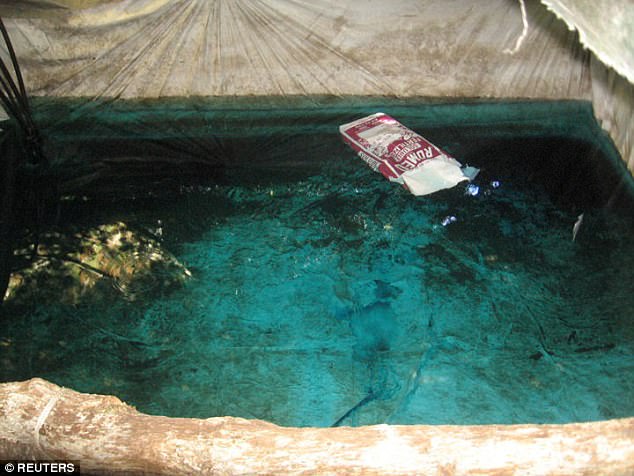
  • Blue tinted water with fertilizer at an illegal marijuana growing site in Mendocino County, California

The Environmental Protection Agency announced in 2011 the department would ban the inorganic chemical compound zinc phosphide.

Included in the unpublished data accessed by Reuters, Gabriel said federal land in California currently holds ‘731,000 pounds of solid fertilizer, 491,000 ounces of concentrated liquid fertilizer and 200,000 ounces of toxic pesticides.’

Illegal pot growers could face jail time and numerous charges for growing illegally, while taxpayers could expect to be left with hefty bills to aid in the sterilization of the toxic waste sites.

  • A pot growing greenhouse is nestled into a clearing in Shelter Cove

  • Taxpayers could expect to be left with hefty bills to aid in the sterilization of toxic waste sites

Since marijuana was legalized in the state of California, officials have been pushing to properly license growers and carefully supervise the production, testing and distribution of hemp.

Supervisor of Trinity County Keith Groves said there are roughly 4,000 illegal growers in the region currently.

‘I’ll be happy if we can get 500 of them to become licensed,’ he told Reuters.

The expense and danger of cleanup has created a backlog of 639 illegal marijuana farms awaiting restoration in California, according to U.S. Forest Service data compiled for Reuters. Each farm covers up to 50 acres.

 ‘We’re getting contamination over and over again at those locations,’ said Gabriel, as toxins move from unsafe containers into the soil and water.

At sites that state officials said they had cleaned up completely, his team found 30-50 percent of the chemicals were still there.

‘They are like superfund sites,’ said Assistant U.S. Attorney Karen Escobar,

Source: https://www.dailymail.co.uk/news/article-4768664/Marijuana-farms-forming-toxic-waste-dumps-California.html August 2017

LONDON (Reuters) – People who smoke marijuana have a three times greater risk of dying from hypertension, or high blood pressure, than those who have never used the drug, scientists said on Wednesday. The risk grows with every year of use, they said. The findings, from a study of some 1,200 people, could have implications in the United States among other countries. Several states have legalized marijuana and others are moving toward it. It is decriminalized in a number of other countries.

“Support for liberal marijuana use is partly due to claims that it is beneficial and possibly not harmful to health,” said Barbara Yankey, who co-led the research at the school of public health at Georgia State University in the United States. “It is important to establish whether any health benefits outweigh the potential health, social and economic risks. If marijuana use is implicated in cardiovascular diseases and deaths, then it rests on the health community and policy makers to protect the public.” Marijuana is also sometimes used for medicinal purposes, such as for glaucoma. 

The study, published in the European Journal of Preventive Cardiology, was a retrospective follow-up study of 1,213 people aged 20 or above who had been involved in a large and ongoing National Health and Nutrition Examination Survey. In 2005–2006, they were asked if they had ever used marijuana.

For Yankey’s study, information on marijuana use was merged with mortality data in 2011 from the U.S. National Center for Health Statistics, and adjusted for confounding factors such as tobacco smoking and variables including sex, age and ethnicity. The average duration of use among users of marijuana, or cannabis, was 11.5 years. The results showed marijuana users had a 3.42-times higher risk of death from hypertension than non-users, and a 1.04 greater risk for each year of use. There was no link between marijuana use and dying from heart or cerebrovascular diseases such as strokes.

Yankey said were limitations in the way marijuana use was assessed ― including that researchers could not be sure whether people had used the drug continuously since they first tried it. But she said the results chimed with plausible risks, since marijuana is known to affect the cardiovascular system. “Marijuana stimulates the sympathetic nervous system, leading to increases in heart rate, blood pressure and oxygen demand,” she said.

Experts not directly involved in the study said its findings would need to be replicated, but already raised concerns. “Despite the widely held view that cannabis is benign, this research adds to previous work suggesting otherwise,” said Ian Hamilton, a lecturer in mental health at Britain’s York University.

Reporting by Kate Kelland, editing by Jeremy Gaunt

Source: https://www.huffpost.com/entry/marijuana-use-holds-three-fold-blood-pressure-death-risk_n_598b4b2be4b0d793738c2917 September 2017

Filed under: Cannabis/Marijuana,Health :
  • The rapper is suing insurance company, claiming it is refusing to pay him after he was forced to cancel shows in November last year
  • In legal documents Lloyd’s suggest marijuana may have led to Kanye’s mental health issues in a bid to invalidate the performer’s insurance claim
  • Psychosis affects the mind and causes the sufferer to lose touch with reality
  • Dr Lucy Troup, from Colorado State University, explained it cannabis use could cause a psychotic breakdown
  • She said there are a variety of factors that influence it, but research shows it is linked to psychosis and other mental health issues 

By Abigail Miller

Kanye West is suing his tour’s insurer after the company allegedly refused to pay for his canceled shows in November – and blamed his cannabis use.

The rapper was forced to cancel the last 21 shows of his North American tour after he had a mental breakdown and had to be checked into a hospital.

While his insurer Lloyd’s of London would normally cover the costs, the company said they don’t have to pay because his marijuana use caused the breakdown.

The 40-year-old is asking for $10 million in damages from Lloyd’s, claiming the company has yet to pay him out for his cancelled shows, and has no intent to do so.

His company said in a legal document filed on Tuesday that insurers have yet to pay and is ‘implying that Kanye’s use of marijuana may provide them with the basis to deny the claim’.

Here, Daily Mail Online takes a closer look at how marijuana use could cause psychosis and potentially cause a mental breakdown, as Lloyd’s claims.

Marijuana legalization began in the United States in 1996, when California legalized the drug for medical use.

That sparked a wave.

In the next decade, 14 states followed suit: Oregon, Alaska, Washington, Maine, Hawaii, Nevada, Colorado, Montana, Vermont, New Mexico, Michigan, New Jersey, Arizona and Massachusetts.

Then in 2012, Colorado and Washington state legalized the drug for recreational use.

Now, just five years later, marijuana is legal for medical and recreational use in eight states: Massachusetts, Colorado, Washington, Alaska, Oregon, Nevada, California and Maine.

It is also legal for strictly medical use in the District of Columbia and 21 states: Montana, North Dakota, Arizona, New Mexico, Arkansas, Louisiana, Florida, Illinois, Minnesota, Michigan, Ohio, New York, Pennsylvania, Maryland, Vermont, New Hampshire, New Jersey, Rhode Island, Connecticut, Delaware and Hawaii.

The wave has given rise to a booming industry of edibles, dispensaries, cannabis healthcare professionals, and paraphernalia.

Marijuana is the national favorite according to a report published by Addictions.com, making up more than 70 percent of all drug use in the United States.

But experts warn researchers are struggling to keep up with the pace of legalization, and there are still many gaps in our knowledge.

However, some experts warn people are using the drug to self medicate for things like depression and anxiety despite research showing it does more harm than good.

In fact, there research shows that increased risk of depression as a result of frequent marijuana use is thought to be behind psychosis’ onset. The two mental health conditions have previously been linked.

‘A number of people choose to self medicate, but it could actually make things like anxiety and depression worse,’ Dr Lucy Troup, a professor of cognitive neuroscience at Colorado State University told Daily Mail Online.

‘We can’t fully understand yet the brain mechanisms that cause mental illness, but we’ve seen a clear link between marijuana use and users who report psychotic breaks. But again, it’s different for every person.’

In California medical marijuana can be used as a treatment for anxiety. In the other states and DC, someone suffering from anxiety or depression can apply for a medical marijuana license if their conditions are considered to be severe and debilitating.

COULD CANNABIS TREAT MIGRAINES?

Chemicals in cannabis could be effective at treating painful migraines, research revealed last month.

Cannabinoids, the compounds in marijuana that make you feel high, may be better at treating pain than recommended migraine medication, a study found.

Researchers from the Interuniversity Center in Florence found that pills containing the chemicals reduce the pain felt by migraine sufferers by 43.5 per cent.

The drug also had a number of additional effects, including stopping stomach aches and muscle pain, according to the researchers.

Previous research has found cannabis reduces migraines by targeting cells in the body that control pain relief and inflammation.

CAN MARIJUANA USE CAUSE A PSYCHOTIC BREAK?

Psychosis is defined as a condition that affects the mind and causes the sufferer to lose touch with reality.

Symptoms include:

  • delusions and hallucinations
  • feelings of paranoia and suspiciousness
  • disorganized thinking and speaking
  • loss of or decreased motivation
  • loss of or decreased ability to initiate or come up with new ideas
  • difficulties expressing emotion

Studies have found that marijuana is thought to cause psychosis-like experiences by increasing a user’s risk of depression. The two mental health conditions have been linked.

Frequently abusing the substance also significantly reduces a user’s ability to resist socially unacceptable behavior when provoked, research suggests.

‘We don’t understand the precise mechanisms for psychosis, but there is clear research that supports that cannabis use can lead to it,’ Dr Lucy Troup, a professor of cognitive neuroscience at Colorado State University told Daily Mail Online.

‘I can’t comment particularly on Kanye West’s case, because I don’t know a lot about him other than what the media says. But there are different variables that could have made it more likely such as how long it’s been used, when someone first started, how concentrated or potent the drug is that they are using, how they are taking it, and their specific genotype.’

Drug-induced psychosis is most commonly associated with LSD or amphetamines, but can also be caused by marijuana, cocaine and alcohol.

Results of a study by the University of Montreal revealed that going from being an occasional marijuana user to abusing the substance once a week or as often as every day, increases the risk of psychosis-like experiences by 159 percent.

The results also demonstrated that marijuana use reduces a person’s ability to resist socially unacceptable behavior in response to a particular stimulus.

KANYE WEST’S PAST MARIJUANA USE: COULD THE DRUG HAVE CAUSED THE RAPPER’S MENTAL BREAK?

In the past Kanye has been candid about his weed habit. He’s made multiple references in his songs. He also admitted to smoking before the 2015 Video Music Awards where he infamously announced his 2020 presidential candidacy.

Dr Troup explained that while she doesn’t know much about the rapper’s circumstance in particular, she was surprised to hear that Lloyd’s of London isn’t paying out.

She said that if a bank makes that claim about anyone, be it Kanye or someone less well known, the process to support that claim is long and complicated.

‘There isn’t enough knowledge about his [Kanye’s] medical history for anyone but his doctor to say for sure what caused his mental break,’ Dr Troup explained. ‘It would be a long and complicated process because they would have to look at his blood work, a hospital report, and a number of other things.’

‘I’m guessing when you insure a rock star you have to expect these kinds of things,’ she added.

A source has also told InTouch that Kim and Kanye are now worried footage taken by the rapper’s team in days prior to the tour’s cancellation could be used against him in court.

The video allegedly shows his mental state deteriorating before he broke down in the days leading up to his hospitalization.

Source: https://www.dailymail.co.uk/health/article-4758542/Could-marijuana-caused-Kanye-s-mental-breakdown.html
August 2017

Back to top of page

Powered by WordPress