2023 May

  • Thousands gathered at crowded ‘420’ rally calling for legalisation of cannabis 
  • Possession of the Class B drug carrying maximum jail sentence of five years
  • Met Police defended lack of action saying it meant rally passed ‘largely without incident’

It’s a sight that makes a mockery of Britain’s drug laws.

As families relaxed in the warm sunshine, thousands of drug users gathered in a Central London park to smoke cannabis – in full view of the police.

Officers stood by in Hyde Park and watched, smiling, as plumes of pungent smoke filled the air.

Revellers, including some teen-agers, lay sprawled on the grass, confident the police would do nothing at the crowded ‘420’ rally, an annual event which calls for the legalisation of cannabis.

One man said: ‘I’m not that bothered about being arrested. The police will just take it off us – and we’ve got more anyway.’

There were no arrests at Friday’s rally, even though possession of the Class B drug carries a maximum jail sentence of five years.

The shocking failure to enforce the law comes as The Mail on Sunday today reveals nine out of ten teenagers in drug clinics are being treated for cannabis abuse.

A Met Police spokesman last night defended their lack of action, saying its approach to enforcing drug laws ‘meant [the rally] passed off largely without incident’ and was ‘no different from any other day’.

Their leniency is mirrored by new figures showing the police and courts are increasingly going soft on drugs. The number of ‘proven drug law offenders’ plummeted to 102,948 in 2016 – a fall of a quarter in two years, according to the Focal Point on Drugs report.

Of these, ‘the majority were dealt with outside court’, with 41,831 sentenced in court, the rest given a warning or caution. The ‘most common sentence was a fine’, meted out to a third, while a fifth were jailed, including 1,009 for possession and 7,459 for trafficking.

The ‘420’ event is believed to have been named after a group of 1970s Californian youngsters who met after school at 4.20pm to smoke marijuana. The day April 20 has since become an informal festival to celebrate the drug.

Source: Fury as thousands gather to smoke cannabis in Hyde Park and not a SINGLE ONE of them is charged  | Daily Mail Online April 2018

Veterans are twice as likely as non-veterans to die from accidental overdoses involving prescription opioids. In an effort to lower opioid intake, some veterans are turning to hemp products, like CBD oil, to treat chronic pain and PTSD. Now some veterans are saying they want more research and access, reports CBS News correspondent Nancy Cordes. 

They are not your typical lobbyists. They’re veterans whose lives were nearly ruined — first by their injuries, and then by their meds. 

“I was at a higher than likely rate of committing suicide from pain,” Navy veteran Veronica Wayne told lawmakers. She took opioids for 17 years after an airplane maintenance hatch hit her head.

“I basically became a walking zombie,” Wayne said.
 
She tried medical marijuana, but still felt impaired. That’s when she heard about hemp.

“It’ll still kill all the pain symptoms and give you the relief that you need, but you’re not going to feel high,” Wayne said.

Now she uses CBD oil. But, she notes, “You can’t get it from the VA. It’s not, it’s not legal.”

Like marijuana, hemp is derived from the cannabis plant. But hemp does not contain THC, the chemical that makes you high. Still both hemp and marijuana are classified as Schedule 1 controlled substances, restricting the VA and other federally funded entities from conducting research. The American Legion is leading the push to change that.

“Anything that makes a veteran feel better — especially something that’s non-toxic — is something we’re going to support,” said Louis Celli, national director of Veterans Affairs and rehabilitation at the American Legion.
 
Currently hemp products are marketed as unregulated supplements, which makes many doctors reluctant to recommend them.

“We’re not exactly sure how to use them, what the right dose is, how they interact,” said Wayne Jonas, the former director of the NIH office of alternative medicine.

But lawmakers on both sides are pushing to change the law.
 
“I’m actually cautiously optimistic if we get something on the floor, that it will pass,” Rep. Earl Blumenauer, D-Ore., said.

Until then, Army reservist Dale Rider said many of his buddies are wary of the product that he said helps his back pain.
 
“For them, they’re all worried that because it’s so closely related to marijuana, that it could pop up on a drug test randomly,” Rider said.

The industry has a powerful ally in Senate Majority Leader Mitch McConnell, who represents Kentucky, where hemp is seen as a potential cash crop. Last month he introduced a bill in the Senate that has bipartisan support to legalize hemp as an agricultural commodity.

Veterans push lawmakers to legalize hemp products – CBS News April 2018

Foreign gangs are finding that black-market marijuana is profitable even in states that have legalized cannabis.

An El Paso County sheriff’s deputy processes bags of distribution-ready marijuana seized from an illegal grow house in Colorado Springs, Colorado on May 15, 2018.Andrew Blankstein / NBC News

Source: Foreign cartels embrace home-grown marijuana in pot-legal states (nbcnews.com) May 2018

National Drug Intelligence Center
North Carolina Drug Threat Assessment
April 2003

Marijuana

Marijuana is the most readily available and widely abused drug in North Carolina. Marijuana is abused by individuals of various ages in North Carolina. Outdoor cannabis cultivation is widespread in the state. Indoor cultivation occurs to a lesser extent. Mexican criminal groups, the dominant wholesale distributors of marijuana in the state, transport multiton shipments of Mexico-produced marijuana into North Carolina in tractor-trailers, primarily from Mexico and southwestern states. African American, Caucasian, and Jamaican criminal groups and OMGs also transport marijuana produced in Mexico into North Carolina and distribute wholesale quantities. Caucasian and Mexican criminal groups also distribute wholesale quantities of marijuana produced in large outdoor grows in North Carolina. At the retail level marijuana is distributed by African American, Caucasian, and Hispanic gangs; OMGs; and local independent producers and dealers including students, homemakers, and business people.

Abuse

Marijuana is the most widely abused illicit drug in North Carolina, and the drug is abused by individuals of all ages. According to the 1999 NHSDA, 4.7 percent of North Carolina residents reported having abused marijuana in the 30 days prior to the survey. The same figure was reported nationwide. The survey data also indicate that rates of marijuana abuse are highest among teenagers and young adults. Nearly 14 percent of North Carolina residents aged 18 to 25 surveyed reported having abused marijuana in the past month, while 6.8 percent of residents aged 12 to 17 surveyed reported the same. Of North Carolina residents aged 26 and older, 3.1 percent reported past month marijuana abuse.

The number of marijuana-related treatment admissions in North Carolina ranked second to the number of cocaine-related admissions each year from FY1996 through FY1999. Marijuana-related treatment admissions increased 70 percent from 7,285 in FY1996 to 12,382 in FY1999, according to the North Carolina Department of Health and Human Services. (See Table 3.)

Table 3. Marijuana-Related Treatment Admissions, North Carolina, FY1996-FY1999
Fiscal Year Admissions
1996   7,285
1997   9,382
1998 11,150
1999 12,382

Source: North Carolina Department of Health and Human Services.

According to 2000 ADAM data, 44.2 percent of adult male arrestees tested positive for marijuana. Marijuana abuse was highest among male arrestees under 21 years of age; 84.4 percent of arrestees under 21 tested positive for marijuana.

Availability

Marijuana produced in Mexico or in North Carolina is readily available. Mexico-produced marijuana is relatively inexpensive and has a low THC (tetrahydrocannabinol) content (average 3.3%). According to local law enforcement, in 2001 a pound of Mexico-produced marijuana sold for $600 to $1,000 in North Carolina. A pound of marijuana produced from cannabis cultivated outdoors in North Carolina sold for $600 to $900. In North Carolina cannabis plants cultivated indoors using hydroponic operations usually yield marijuana with a higher THC content that is significantly more expensive. A pound generally sold for $2,400 in 2001.

The number of marijuana-related arrests was dramatically higher in 1999 than in 1994, particularly among juveniles. According to the North Carolina State Bureau of Investigation, juvenile arrests for marijuana possession likewise were significantly higher in 1999 than in 1994.

Table 4. Marijuana-Related Arrests, North Carolina, CY1994-CY1999
Year Arrests
1994 15,476
1995 17,462
1996 19,266
1997 22,924
1998 22,662
1999 22,728

Source: North Carolina State Bureau of Investigation.
Note: Includes possession or sale/manufacturing.

Table 5. Juvenile Marijuana-Related Arrests, North Carolina, CY1994-CY1999
Year Arrests
1994 1,532
1995 2,286
1996 2,684
1997 3,173
1998 2,932
1999 3,004

Source: North Carolina State Bureau of Investigation.
Note: Includes possession.

The amount of marijuana seized in the state increased dramatically from 1998 through 2001. Federal law enforcement authorities in North Carolina seized 801 kilograms of marijuana in 1998, 2,301 kilograms in 1999, 4,885 kilograms in 2000, and 3,826.8 kilograms in 2001, according to FDSS data. Additionally, the number of cannabis plants seized by state and local authorities increased 36 percent from 29,753 in 1999 to 40,464 in 2000.

The number of marijuana-related federal sentences in North Carolina ranked second to cocaine-related federal sentences from FY1996 through FY2000. According to USSC data, the number of marijuana-related federal sentences fluctuated from FY1996 through FY2000, with 113 in FY1996, 72 in FY1997, 79 in FY1998, 124 in FY1999, and 81 in FY2000

Violence

Cannabis growers take extreme measures intended to injure or kill intruders on cultivation sites. Cannabis growers frequently protect their grows by booby trapping them with explosives, trip-wired firing devices, and pits dug in the ground. The perimeters of cultivation sites frequently are littered with shards of glass and wooden boards with upright nails. Cultivation sites may also be guarded by aggressive dogs such as pit bulls. Law enforcement authorities report that weapons, usually firearms, are seized frequently from the homes of cannabis growers. Officials from the Asheville Buncombe Metropolitan Enforcement Group, in response to the NDIC National Drug Threat Survey 2001, report that cannabis growers frequently place animal traps among cannabis plants.

Production

Cannabis cultivation is widespread in North Carolina. Outdoor cannabis cultivation is more common than indoor cultivation because of the state’s long growing season, temperate climate, and rural areas that allow growers to conceal cultivation sites. Cannabis growers frequently use federal forest land, particularly in western North Carolina, to minimize the risk of personal property seizures if the plots are seized by law enforcement. Mexican and Caucasian criminal groups are the primary cultivators of outdoor cannabis. Reporting from law enforcement officials indicates that cannabis cultivation is widespread in areas including the Pisgah and Nantahala National Forests in the western part of the state. Outdoor cultivation sites in North Carolina are larger than before, according to law enforcement authorities. In July 2001 state and local law enforcement authorities seized more than 23,000 cannabis plants, ranging in size from seedlings to 9-foot-tall plants, from a large field that covered nearly 2 acres in Chatham County. This cannabis cultivation site was one of the largest ever seized in North Carolina.

Growers also cultivate high potency cannabis in indoor hydroponic operations. Indoor grows vary in size and number from dozens to several hundred cannabis plants. Indoor cultivation requires the grower to regulate light, heat, humidity, and fertilizer. Caucasian and African American independent producers are the primary cultivators of cannabis using hydroponic techniques.


Four Illegal Immigrants Arrested

In March 2002 local law enforcement officials arrested four individuals in Randolph County and seized approximately 1 kilogram of cocaine and more than 52 pounds of marijuana following a tip from an informant. The individuals were illegal immigrants believed to be from Mexico.

The informant’s tip led to a traffic stop and a joint investigation by the vice and narcotics units of the Randolph County Sheriff’s Office, the High Point Police Department, the Guilford County Sheriff’s Office, and the Asheboro Police Department.

Based on the information, officers stopped and searched a minivan and seized approximately 1 kilogram of cocaine. After receiving consent from the suspects, officers searched a residence and seized 52.5 pounds of marijuana from a van that was parked at the residence.

All four individuals were charged with felony drug charges.

Source: Randolph County Sheriff’s Office.


Transportation

Mexican criminal groups are the dominant transporters of Mexico-produced marijuana into North Carolina. They primarily use tractor-trailers to transport multiton quantities of marijuana concealed among legitimate goods such as produce, furniture, and other items from Mexico and southwestern states. Law enforcement officials report that tractor-trailers carrying 1,000 pounds or more of marijuana are increasingly common. In March 2001 law enforcement authorities in Rowan County seized over 4 tons of marijuana from a tractor-trailer that was destined for a farmhouse in the county. The seizure was one of the largest marijuana seizures in North Carolina history.


North Carolina Legislators Stiffen Marijuana Laws

In 1999 North Carolina state legislators enacted a law making possession of 10 or more pounds of marijuana a felony offense. The change was in response to an increasing number of marijuana shipments totaling 1,000 pounds or more that were being transported into the state.

Source: North Carolina Governor’s Crime Commission.


Mexican, African American, Caucasian, and Jamaican criminal groups also transport marijuana in private vehicles. These criminal groups transport Mexico-produced marijuana directly from Mexico and southwestern states. They also transport marijuana from Georgia, South Carolina, and Tennessee. Transporters conceal marijuana in luggage or in false compartments and sometimes smear marijuana packages with food or liquid soap to conceal the distinctive odor. In May 2001 a sheriff’s deputy in Harrison County, Mississippi, seized 35 pounds of marijuana from a private vehicle and arrested two Mexican individuals who claimed to be traveling from Edinburg, Texas, to Charlotte. The marijuana was wrapped in packing tape and concealed in the gas tank, which contained two compartments: one for gasoline and one for contraband. In April 2001 a Louisiana state trooper arrested an individual driving a vehicle from Texas to North Carolina and seized 62 pounds of marijuana hidden in luggage in the trunk. The marijuana was wrapped in clear cellophane, smeared with mustard, and wrapped again with fabric softener sheets.


Marijuana Smuggled Through South Carolina Port

Guilford County sheriff’s deputies seized nearly 3,000 pounds of marijuana and arrested five individuals in December 2000 in Greensboro. The marijuana had been smuggled on a ship arriving at the Port of Charleston, South Carolina, from Mexico and was concealed in a container among packages of napkins and detergent. The marijuana had been transported into North Carolina by truck.

Source: Associated Press, 5 December 2000.


Criminal groups, particularly Jamaican, also transport marijuana into North Carolina on commercial airlines, employing couriers who conceal the drug in their luggage or strap packages of it under their clothing. The DEA San Diego Division reports that San Diego is a principal distribution hub for marijuana produced in Mexico supplied to Jamaican criminal groups in the southeastern United States. Mexican DTOs based in Mexico supply marijuana to Jamaican criminal groups in San Diego who then distribute the drug to other Jamaican criminal groups in North Carolina and other southeastern states. Jamaican criminal groups in North Carolina often falsely market Mexico-produced marijuana as Jamaican marijuana because Jamaican marijuana is reputed to be more potent and is, therefore, more expensive. Marijuana produced in Mexico sells for about $400 per pound in San Diego but sells for as much as $2,400 per pound as Jamaican marijuana in North Carolina.

Mexican, African American, and Caucasian criminal groups also transport marijuana into North Carolina from southwestern states via package delivery services. According to 2000 Operation Jetway data, law enforcement authorities in North Carolina seized at least 19 packages that contained multipound quantities of marijuana. The packages were sent from Texas and California, and most were destined for Charlotte. According to the Charlotte-Mecklenburg Police Department, approximately one-half of the packages were sent to members of Mexican criminal groups, and approximately one-half were sent to members of African American criminal groups.

Mexican, African American, and Caucasian criminal groups also transport marijuana into the state on buses and passenger trains. In December 2000 Davidson County sheriff’s deputies stopped a bus traveling from Texas to North Carolina and seized 80 pounds of marijuana in a duffel bag. None of the passengers admitted to owning the bag. According to law enforcement authorities, the passengers were Mexican migrant workers traveling from Texas to North Carolina for employment.

Unknown quantities of marijuana produced in North Carolina are transported out of the state in private vehicles and via package delivery services into urban and rural areas in Georgia, South Carolina, Tennessee, and Virginia.

Distribution

In North Carolina Mexican criminal groups are the primary wholesale distributors of marijuana produced in Mexico. African American, Caucasian, and Jamaican criminal groups also distribute wholesale quantities of Mexico-produced marijuana. All of these criminal groups distribute marijuana to gang members and local independent dealers; they also distribute some marijuana at the retail level. These criminal groups sell marijuana to dealers of other races and ethnicities; however, in a small number of communities, they distribute marijuana only within their own ethnic group because they distrust outsiders. OMG members sell wholesale quantities to members of smaller motorcycle gangs and female associates who handle retail distribution.

Cannabis growers who cultivate large outdoor plots–usually Caucasian and Mexican criminal groups–sell wholesale quantities of locally produced marijuana to gang members and local independent dealers and occasionally sell retail quantities. Growers who cultivate small amounts of cannabis in their homes or tend small plots–usually Caucasian and African American independent dealers–abuse the drug themselves or sell it to friends, family members, and associates.

At the retail level marijuana is distributed by African American, Caucasian, and Hispanic gangs; OMGs; and local independent producers and dealers including students, homemakers, and businesspeople. Law enforcement authorities report that marijuana is sold at various locations such as open-air drug markets; parking lots; bars and nightclubs; college, high school, and middle school campuses; and businesses and private homes. Law enforcement authorities report that high school students, in particular, are becoming increasingly involved in retail marijuana distribution on and near school grounds. In April 2001, law enforcement officers in Chapel Hill arrested a high school student who had concealed small plastic bags of marijuana in a sock that he had hidden in his pants. Law enforcement officers report that the student intended to sell the marijuana to other students on school grounds.

Source: Marijuana – North Carolina Drug Threat Assessment (justice.gov) April 2003

The cannabis-derived chemical is non-psychoactive, and – while federally illegal – has been hailed as a cure for disease

In early May, a federal court declined to protect cannabidiol (CBD), a chemical produced by the cannabis plant, from federal law enforcement, despite widespread belief in its medical value.

The ruling was contrary to existing evidence, which suggests the chemical is safe and could have multiple important uses as medicine. Many cannabis advocates consider it a miracle medicine, capable of relieving conditions as disparate as depression, arthritis and diabetes.

The perception of its widespread medical benefits have made the chemical a rallying cry for legalization advocates.

The first thing to know about CBD is that it is not psychoactive; it doesn’t get people high. The primary psychoactive ingredient in marijuana is tetrahydrocannabinol (THC). But THC is only one of the scores of chemicals – known as cannabinoids – produced by the cannabis plant.

So far, CBD is the most promising compound from both a marketing and a medical perspective. Many users believe it helps them relax, despite it not being psychoactive, and some believe regular doses help stave off Alzheimer’s and heart disease.

While studies have shown CBD to have anti-inflammatory, anti-pain and anti-psychotic properties, it has seen only minimal testing in human clinical trials, where scientists determine what a drug does, how much patients should take, its side effects and so on.

Despite the government ruling, CBD is widely available over the counter in dispensaries in states where marijuana is legal.

CBD first came to public attention in a 2013 CNN documentary called Weed. The piece, reported by Dr Sanjay Gupta, featured a little girl in Colorado named Charlotte, who had a rare life-threatening form of epilepsy called Dravet syndrome.

At age five, Charlotte suffered 300 grand mal seizures a week, and was constantly on the brink of a medical emergency. Through online research, Charlotte’s desperate parents heard of treating Dravet with CBD. It was controversial to pursue medical marijuana for such a young patient, but when they gave Charlotte oil extracted from high-CBD cannabis, her seizures stopped almost completely. In honor of her progress, high-CBD cannabis is sometimes known as Charlotte’s Web.

After Charlotte’s story got out, hundreds of families relocated to Colorado where they could procure CBD for their children, though not all experienced such life-changing results. Instead of moving, other families obtained CBD oil through the illegal distribution networks.

In late June, the US Food and Drug Administration could approve the Epidiolex, a pharmaceuticalized form of CBD for several severe pediatric seizure disorders. According to data recently published in the New England Journal of Medicine, the drug can reduce seizures by more than 40%. If Epidiolex wins approval it would be the first time the agency approves a drug derived from the marijuana plant. (The FDA has approved synthetic THC to treat chemotherapy-related nausea.)

Epidiolex was developed by the London-based GW Pharmaceuticals, which grows cannabis on tightly controlled farms in the UK. It embarked on the Epidiolex project in 2013, as anecdotes of CBD’s value as an epilepsy drug began emerging from the US.

While parents treating their children with CBD had to proceed based on trial and error, like a folk medicine, they also had to wonder whether dispensary purchased CBD was professionally manufactured and contained what the package said it did. GW brought a scientific understanding and pharmaceutical grade manufacturing to this promising compound.

Fortunately, like THC, CBD appears to be well tolerated; as far as I can tell, there are no recorded incidents of fatal CBD overdoses.

Since Weed first aired, GW’s stock has climbed 1,500%.

GW’s first drug Sativex, which contains both CBD and THC, is available as a treatment for MS-related spasticity in Canada, Australia, and much of Europe and Latin America. The company is also studying cannabinoid-based drugs as a treatment for autism spectrum disorders, an aggressive brain tumor called glioblastoma, and schizophrenia.

Other industries, not subject to the strict regulations governing pharmaceuticals are eager to develop their own CBD products, everything from joints and vape pens to skin creams and edibles which may or may not have valid medical use.

In Los Angeles, it’s among the latest wellness fads. It can be found in cocktails, and an upscale juice shop will even add a few drops of CBD infused olive oil to a beverage for $3.50.

Source: What is CBD? The ‘miracle’ cannabis compound that doesn’t get you high | Cannabis | The Guardian May 2018

Abstract

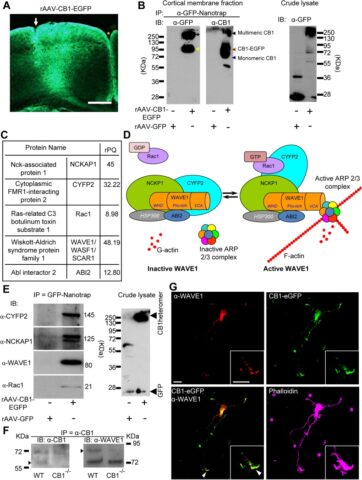
The molecular composition of the cannabinoid type 1 (CB1) receptor complex beyond the classical G-protein signaling components is not known. Using proteomics on mouse cortex in vivo, we pulled down proteins interacting with CB1 in neurons and show that the CB1 receptor assembles with multiple members of the WAVE1 complex and the RhoGTPase Rac1 and modulates their activity. Activation levels of CB1 receptor directly impacted on actin polymerization and stability via WAVE1 in growth cones of developing neurons, leading to their collapse, as well as in synaptic spines of mature neurons, leading to their retraction. In adult mice, CB1 receptor agonists attenuated activity-dependent remodeling of dendritic spines in spinal cord neurons in vivo and suppressed inflammatory pain by regulating the WAVE1 complex. This study reports novel signaling mechanisms for cannabinoidergic modulation of the nervous system and demonstrates a previously unreported role for the WAVE1 complex in therapeutic applications of cannabinoids.

Polysubstance use—when more than one drug is used or misused over a defined period of time—can occur from either the intentional use of opioids with other drugs or by accident, such as if street drugs are contaminated with synthetic opioids. In the first half of 2018, nearly 63% of opioid overdose deaths in the United States also involved cocaine, methamphetamine, or benzodiazepines, signaling the need to address polysubstance use as part of a comprehensive response to the opioid epidemic. Fentanyl, a highly potent synthetic opioid, has been identified as a driver of overdose deaths involving other opioids, benzodiazepines, alcohol, methamphetamine, and cocaine.

Two classes of drugs are frequently co-used with opioids: depressants and stimulants. Although there are medical uses for some drugs in these classes, they also all have high potential for misuse. Mixing opioids—which are depressants—with other depressants or stimulants, either intentionally or unknowingly, has contributed to the rising number of opioid overdose deaths, which have more than doubled since 2010. Efforts to reduce opioid overdose deaths should incorporate strategies to prevent, mitigate, and treat the use of multiple substances. 

Depressants

Depressants act on the central nervous system to induce relaxation, reduce anxiety, and increase drowsiness. Opioid use concurrent with the use of another sedating drug compounds the respiratory depressant effect of each drug, creating a higher risk for overdose and fatal overdose than when either drug is used alone.

Benzodiazepines

Benzodiazepines are prescribed for medical use as sedatives but are commonly misused for nonmedical purposes and in combination with prescription and illicit opioids. In 2018, just over 9,000 U.S. deaths involved both opioids and benzodiazepines, more than twice the number of 2008 deaths due to such co-use. Moreover, in 2018, nearly half (47.2%) of benzodiazepine overdose deaths involved synthetic opioids (e.g., fentanyl). Fatal overdoses involving both prescription opioids and benzodiazepines nearly tripled from 2004 to 2011.

Alcohol

In 2017, 15% of opioid overdose deaths involved alcohol. From 2012 to 2014, more than 2 million people who misused prescription opioids were also binge drinkers of alcohol (defined as more than five drinks for a man or more than four drinks for a woman within a two-hour period); compared with nondrinkers, binge drinkers were associated with being twice as likely to misuse prescription opioids. Evidence indicates that about 23% of people with an opioid use disorder have a concurrent alcohol use disorder.

Stimulants

Stimulants increase arousal and activity in the brain. In 2017, opioids were involved in more than half of stimulant-involved overdose deaths—about 15,000 total. The co-use of stimulants with synthetic opioids such as fentanyl either intentionally or through drug contamination has increased the number of stimulant-involved overdose deaths. The opposing impacts of increased arousal from stimulants and sedation from opioids on the body can make the outcomes of co-use less predictable and raise the risk of overdose.

Methamphetamine

About 12% of opioid overdose deaths from January to June 2018 involved methamphetamine, an illicit drug. In 2017, opioids were involved in 50% of methamphetamine-involved deaths, and recent data suggests synthetic opioids are driving increases in methamphetamine-involved deaths. One study found that 65% of those seeking opioid treatment had reported a history of methamphetamine use, with more than three-quarters of them indicating that they had used methamphetamines and opioids mostly at the same time or on the same day.

Cocaine

Of the nearly 15,000 cocaine overdose deaths in 2018, nearly 11,000 also involved opioids; this number accounts for about 23% of the total opioid overdose deaths that year. In fact, since 2010 the number of deaths caused by a combination of opioids and cocaine has increased more than fivefold. People who primarily use cocaine but sometimes co-use opioids are at high risk for overdose because of the increasing presence and potency of fentanyl in the drug supply and a lower tolerance for opioids than someone who regularly uses them.

What should be done?

It is critical that state policies addressing the rise in polysubstance use and its link to increased risk of overdose span across prevention, harm reduction, and treatment strategies. To effectively accomplish this, states should:

  • Enact policies that increase provider use of prescription drug monitoring programs (PDMPs) to reduce the co-prescription of opioids and benzodiazepines. PDMPs, state-based electronic databases that contain information on controlled substance prescriptions, allow prescribers and pharmacists to monitor patients’ prescription drug use and can promote safer prescribing practices that help prevent overdoses. High rates of benzodiazepine prescribing are correlated with the drug’s involvement in opioid overdose deaths.
  • Expand naloxone distribution to reach people who use stimulants. Naloxone reverses the respiratory depression effects of opioids to safeguard against a fatal overdose and remains effective when people use opioids in combination with other drugs. Considering that opioids are frequently implicated in cocaine and methamphetamine overdose deaths, people who primarily use stimulants are recognized as an at-risk population for opioid overdose. Laws that allow for increased community distribution of naloxone can help safeguard against polysubstance use overdoses.
  • Amend drug paraphernalia laws to allow possession of fentanyl test strips. Fentanyl test strips can detect the presence of fentanyl in a person’s drug supply when dipped into a solution of a small amount of the drug in water. People who use drugs have indicated that if a test strip found fentanyl in their supply, they would take measures to prevent an overdose, such as injecting at a slower pace or using less of the drug at a time. Fentanyl test strips are mainly used by people who inject opioids but can also be helpful for those who use stimulants and fear fentanyl contamination by preventing unintentional co-use that could lead to a fatal overdose. Amending drug paraphernalia laws to allow the possession of drug-checking devices, including fentanyl test strips, would permit agencies and organizations to distribute test strips to people who use drugs and help to prevent fentanyl-related overdose deaths.
  • Prohibit the discharge of patients from publicly funded opioid use disorder (OUD) treatment programs for their continued substance use. Treatment programs often discharge patients from treatment involuntarily because of their continued illicit drug use (a practice commonly called administrative discharge). This practice poses a particular risk for patients being treated for OUD with methadone or buprenorphine who are at high risk for overdose if discharged without medication. Although co-use of other drugs, such as stimulants, with medications for OUD can interfere with treatment, it remains safer for patients to continue medication treatment because of their high risk for overdose from using illicit opioids. People with OUD who use benzodiazepines are particularly at higher risk for overdose when not on medication treatment. Federal guidelines recommend avoiding administrative discharge and instead suggest that treatment programs re-evaluate a patient’s needed level of care if the current treatment plan proves ineffective.

Conclusion

As the increase in opioid use evolves into an increase in polysubstance use, understanding how different substances interact may inform strategies that help prevent overdose. Though some individuals knowingly combine or co-use opioids with stimulants or other depressants, an additional and growing concern is the adulteration of other drug supplies with fentanyl. Strengthening policy efforts across the continuum of prevention, harm reduction, and treatment to address the risks of polysubstance use can slow the rates of drug overdose deaths in the United States.

Source: https://www.pewtrusts.org/en/research-and-analysis/fact-sheets/2020/10/opioid-overdose-crisis-compounded-by-polysubstance-use October 2020

The proportion of inmates in jails with a moderate to severe stimulant use disorder—including addiction to methamphetamine—has surged in recent years, a study presented at the recent American Society of Addiction Medicine annual meeting suggests.

The study of inmates in two jails in rural North Carolina found over seven times more inmates with a substance use disorder met criteria for addiction to stimulants, including methamphetamine, in 2016 compared with 2008.

“These findings confirm anecdotal reports we were hearing from county sheriffs and correctional officers that they had noticed a considerable increase in meth-related crimes and meth lab seizures in rural areas,” said lead researcher Dr. Steven Proctor, Senior Research Professor and Associate Director of the Institutional Center for Scientific Research at Albizu University in Miami, Florida. “We don’t know whether a change in crime prevention strategy is driving law enforcement to prioritize meth-related crimes, leading to more arrests of people with stimulant use disorders, or whether increased use of meth is leading to an increase in meth-related crimes.”

Proctor said that although prevalence estimates of substance use disorders are provided annually for the non-institutionalized U.S. general population through nationally representative surveys, such methods are absent for correctional populations.

The study included data from 176 inmates in 2008 and 149 inmates in 2016. Proctor found alcohol was the most prevalent substance use disorder diagnosis in 2008, followed by cannabis and cocaine. Substance use disorders related to opioids and stimulants were relatively infrequent in 2008.

In sharp contrast, the substance use disorder category involving stimulants was the most prevalent diagnosis in 2016, followed by alcohol and opioids. The proportion of inmates with a moderate-severe opioid use disorder in 2016 was twice that of the prevalence of dependence in 2008.

The prevalence of cannabis use disorder remained relatively constant, but there was a dramatic drop in alcohol and cocaine use in 2008 and 2016.

Proctor noted these findings cannot be applied to the population at large. “It is difficult to track patterns of illicit meth use in the general population over the same period, because until 2015 the National Survey on Drug Use and Health only included questions about prescription stimulants, and didn’t ask about illicit meth use,” he said. “Further research is needed to determine whether these findings are applicable to non-correctional populations.”

Source: Featured News: Number of Inmates With Meth Addiction Jumps in Rural Jails – Partnership to End Addiction (drugfree.org) May 2018

Abstract

Objectives: Previous studies have found a negative population-level correlation between medical marijuana availability in US states, and trends in medical and nonmedical prescription drug use. These studies have been interpreted as evidence that use of medical marijuana reduces medical and nonmedical prescription drug use. This study evaluates whether medical marijuana use is a risk or protective factor for medical and nonmedical prescription drug use.

Methods: Simulations based upon logistic regression analyses of data from the 2015 National Survey on Drug Use and Health were used to compute associations between medical marijuana use, and medical and nonmedical prescription drug use. Adjusted risk ratios (RRs) were computed with controls added for age, sex, race, health status, family income, and living in a state with legalized medical marijuana.

Results: Medical marijuana users were significantly more likely (RR 1.62, 95% confidence interval [CI] 1.50-1.74) to report medical use of prescription drugs in the past 12 months. Individuals who used medical marijuana were also significantly more likely to report nonmedical use in the past 12 months of any prescription drug (RR 2.12, 95% CI 1.67-2.62), with elevated risks for pain relievers (RR 1.95, 95% CI 1.41-2.62), stimulants (RR 1.86, 95% CI 1.09-3.02), and tranquilizers (RR 2.18, 95% CI 1.45-3.16).

Conclusions: Our findings disconfirm the hypothesis that a population-level negative correlation between medical marijuana use and prescription drug harms occurs because medical marijuana users are less likely to use prescription drugs, either medically or nonmedically. Medical marijuana users should be a target population in efforts to combat nonmedical prescription drug use.

Source: Medical Marijuana Users are More Likely to Use Prescription Drugs Medically and Nonmedically – PubMed (nih.gov) July/August 2018

Child Neglect and Violence by Marijuana Impaired Parents are the Leading Causes

As articles in popular magazines portray cannabis as the “it” drug, parents are being led to believe that a serving of marijuana is no more dangerous than a glass of beer or wine.”

— Dr. Ken Finn

WASHINGTON, DC, US, April 23, 2018 /EINPresswire.com/ — Parents Opposed to Pot (POP), a nonprofit dedicated to exposing the dangers of marijuana, counts 106 child abuse deaths related to marijuana since states voted to legalize it in November 2012. POP cautions that the normalization of marijuana should be a primary concern to parents and child protection agencies. April is Child Abuse Prevention Awareness Month, and April 25 is Child Abuse Prevention Awareness Day.

Parents Opposed to Pot found local newspaper reports of the incidents online, and the number of deaths could actually be much higher. Some states are more likely than other states to report when marijuana drug use is involved. The deaths have occurred in 30 states, and the counts are higher in states that have legalized pot. The problem is serious enough that when the National Alliance for Drug-Endangered Children ran a conference last summer, much of it focused on marijuana. Nationally, approximately 1700 child abuse deaths occur each year, and substance abuse is a major risk factor.

The earliest deaths after 2012 that POP recorded seemed to be from neglect: toddlers who drowned, died in fires, or infants who were left in hot cars when parents smoked pot and forgot about them. However, many deaths related to marijuana were caused by domestic violence, because parents became angry or psychotic from pot use and had paranoid delusions. The potency of marijuana is several times stronger than it was in the 1990s.The public has not been educated well about how marijuana can trigger psychosis and/or schizophrenia, as stated in the 2017 National Academy of Sciences report.

Shortly after Colorado commercialized marijuana in 2014, stories of three tragic deaths of toddlers related to their parents’ use of marijuana emerged. The month Washington legalized possession of marijuana, a two-year-old drank from his mother’s bong and died. After investigating, state officials determined that the toddler had ingested lethal amounts of both THC and meth, enough to kill an adult.

“As articles in popular magazines such as Cosmopolitan and Oprah Winfrey’s ‘O’ portray cannabis as the ‘it’ drug, parents are being led to believe that a serving of marijuana is no more dangerous than a glass of beer or wine,” explains Dr. Ken Finn, a medical advisor to PopPot.org. “However, three sets of twins died in fires when parents abandoned these toddlers for reasons related to their marijuana use.”

The promotion of marijuana as a way to relax is inappropriate for parents or caregivers of small children, and the promotion of marijuana for pregnant women with morning sickness is a dangerous trend.

Marijuana use impairs executive functioning — which led to poor judgement and forgetfulness in many of these deaths. Greater acceptance means more use, and more use means more addiction.

Eleven deaths occurred in Colorado, while 10 took place in California. In both states, at least one child died where butane hash oil (BHO) labs operated, and numerous children were injured in BHO fires. The two most recent deaths in Colorado occurred last summer when a mother followed a cult leader to a marijuana farm. No one knows how long the two girls had been dead when they were discovered locked in a car covered in tarp last September. They were starved to death. An unusual death in California occurred when a babysitter went to her cousin’s car to smoke pot, leaving a 16-month-old boy inside. The toddler eventually came outside and the visiting car ran over him.

Many ER treatments followed the accidental ingestion of marijuana candies and cookies. A medical journal reported last year that an 11-month-old baby suffered from an enlarged heart muscle and couldn’t be revived a few days after ingesting marijuana in Colorado. However, it’s usually not edibles that kill children, but other acts of neglect and violent behavior.

In Florida, three children drowned when parents or babysitters smoked pot and forgot about them. At least 10 deaths occurred when parents left small children in hot cars while they smoked cannabis. The most common forms of death by neglect when parents use cannabis are fires, 15, drownings, 10 and hot cars, 10.

During the intense debate over medical marijuana in Pennsylvania, the number of pot-related child abuse deaths seemed to increase. Much drama was used to discuss children with seizures, while five other children died due to adult pot use between April and December, 2016.

POP is not the only organization to notice the uptick in child deaths related to marijuana. Yvapil County District Attorney Sheila Polk reported that, in 2013, 62 deaths of children in Arizona were associated with cannabis , and that it was the substance most often related to accidental deaths in the state.

Nationally, parents cause about three quarters of child abuse deaths and most child abuse deaths occur because of neglect. When there’s marijuana in the picture, violence or violent neglect are just as likely to cause death. Boyfriends of the mothers caused 14 such deaths, most often from violence, with the moms in these instances often using pot too. One recent death was the beating death of a three-year-old. The stepfather, who was charged, kept marijuana in the house. Research shows that cannabis can trigger negative thoughts and violent behavior. But, we haven’t included this case our list because it’s not clear what role the drug played in this death.

In four cases, children died because babysitters’ neglected the child, while in four different instances a relative was responsible for the deaths.

POP published 18 blog articles on Child Endangerment that explain some of facts surrounding the deaths. A downloadable fact sheet available on the PopPot.org webpage simplifies the statistics.

Parents Opposed to Pot is a 501c3 nonprofit based in Merrifield, Virginia.

Source: Over 100 Child Abuse Deaths Found Related to Cannabis, with Rise of Commercial Industry (einpresswire.com) April 2018

Abstract

There is a strong association between cannabis use and schizophrenia but the underlying cellular links are poorly understood. Neurons derived from human-induced pluripotent stem cells (hiPSCs) offer a platform for investigating both baseline and dynamic changes in human neural cells. Here, we exposed neurons derived from hiPSCs to Δ9-tetrahydrocannabinol (THC), and identified diagnosis-specific differences not detectable in vehicle-controls. RNA transcriptomic analyses revealed that THC administration, either by acute or chronic exposure, dampened the neuronal transcriptional response following potassium chloride (KCl)-induced neuronal depolarization. THC-treated neurons displayed significant synaptic, mitochondrial, and glutamate signaling alterations that may underlie their failure to activate appropriately; this blunted response resembles effects previously observed in schizophrenia hiPSC- derived neurons. Furthermore, we show a significant alteration in THC-related genes associated with autism and intellectual disability, suggesting shared molecular pathways perturbed in neuropsychiatric disorders that are exacerbated by THC.

Conflict of interest statement

The authors declare that they have no conflict of interest.

Fig. 1. THC treatment regulates genes involved in mitochondrial and glutamate pathways. 

a RNA sequencing of hiPSC-derived neurons reveals 497 genes (acute) and 810 genes (chronic) are significantly changed following THC exposure, including. b genes involved in mitochondrial (e.g., COX7A2MT-CO1, and MT-CO3) and glutamate (e.g., GRID2) pathways (Quantitative RT–PCR (qRT–PCR); Ordinary one-way ANOVA with Tukey’s multiple comparisons test: *p < 0.05. n = 5 (see qRT–PCR, Ca–Ce, Supplementary Table S1)). Ingenuity pathway analysis shows that mitochondrial oxidative phosphorylation is strongly altered after both acute c and chronic d THC exposure

Fig. 2. Postsynaptic density and ion channel genes are regulated by THC treatment. 

ab Multiple postsynaptic density and ion channel genes are significantly altered in hiPSC-derived neurons following acute or chronic THC exposure, including the postsynaptic gene HOMER1 (Quantitative RT–PCR (qRT–PCR); Ordinary one-way ANOVA with Tukey’s multiple comparisons test: *p < 0.05. n = 5 (see qRT–PCR, Ca–Ce, Supplementary Table S1)). c Network analysis combining all THC-related genes from acute and chronic THC treatment shows broad changes to fundamental cellular functions such as RNA biology, chromatin regulation and development

Fig. 3. Genes altered by THC treatment in hiPSC-derived neurons are significantly associated with autism and intellectual disability. 

a Venn diagram showing the overlap between THC-related genes and autism, intellectual disability and schizophrenia. b THC-related genes are significantly related to autism and intellectual disability (p-value < 0.05)

Fig. 4. THC treatment results in neuronal hypo-excitability similar to observations using schizophrenia-associated neurons. 

a Venn diagram showing impaired transcriptional response following 50 mM KCl treatment for 3 h in THC exposure hiPSC-derived neurons. b A similar decrease in significantly regulated transcripts following 50 mM KCl for 3 h is observed in schizophrenia-associated hiPSC-derived neurons. c A cohort of 5 control (C1–5) and 4 schizophrenia-associated (SZ1-4) cases were used for (d) candidate qRT–PCR analysis investigating COX7A2GRID2 and HOMER1 following acute THC exposure. e Blunted effect of THC treatment can be seen in immediate early gene transcripts such as NR4A1 and (fFOSB following KCl-induced activation (Quantitative RT–PCR (qRT–PCR); Ordinary one-way ANOVA with Tukey’s multiple comparisons test: *p < 0.05, **p < 0.01, ***p < 0.001, ****p < 0.0001. n = 5 controls (see qRT–PCR, Ca–Ce, Supplementary Table S1); n = 4 schizophrenia (see qRT–PCR, S1–S4, Supplementary Table S1))

Abstract

The recent demonstration that addiction-relevant neuronal ensembles defined by known master transcription factors and their connectome is networked throughout mesocorticolimbic reward circuits and resonates harmonically at known frequencies implies that single-cell pan-omics techniques can improve our understanding of Substance Use Disorders (SUD’s). Application of machine learning algorithms to such data could find diagnostic utility as biomarkers both to define the presence of the disorder and to quantitate its severity and find myriad applications in a developmental pipeline towards therapeutics and cure. Recent epigenomic studies have uncovered a wealth of clinically important data relating to synapse-nucleus signalling, memory storage, lineage-fate determination and cellular control and are contributing greatly to our understanding of all SUD’s. Epigenetics interacts extensively with glycobiology. Glycans decorate DNA, RNA and many circulating critical proteins particularly immunoglobulins. Glycosylation is emerging as a major information-laden post-translational protein modification with documented application for biomarker development. The integration of these two emerging cutting-edge technologies provides a powerful and fertile algorithmic-bioinformatic space for the development both of SUD biomarkers and novel cutting edge therapeutics.

Hypotheses: These lines of evidence provide fertile ground for hypotheses relating to both diagnosis and treatment. They suggest that biomarkers derived from epigenomics complemented by glycobiology may potentially provide a bedside diagnostic tool which could be developed into a clinically useful biomarker to gauge both the presence and the severity of SUD’s. Moreover they suggest that modern information-based therapeutics acting on the epigenome, via RNA interference or by DNA antisense oligonucleotides may provide a novel 21st century therapeutic development pipeline towards the radical cure of addictive disorders. Such techniques could be focussed and potentiated by neurotrophic vectors or the application of interfering electric or magnetic fields deep in the medial temporal lobes of the brain.

Source: Pathways from epigenomics and glycobiology towards novel biomarkers of addiction and its radical cure – PubMed (nih.gov) July 2018

Abstract 

Objectives

We aimed to describe and correlate the hospital panorama of psychotic disorders (PD) with cannabis use (CU) trends in all Portuguese public hospitals.

Methods

We conducted a retrospective observational study that analysed all hospitalizations that occurred in Portuguese public hospitals from 2000 to 2015. Hospitalizations with a primary diagnosis of PD or schizophrenia were selected based on Clinical Classification Software diagnostic single-level 659. Episodes associated with CU were identified by the International Classification of Diseases Version 9, Clinical Modification code 304.3/305.2 that correspond to cannabis dependence/cannabis abuse.

Results

The number of hospitalizations with a primary diagnosis of PD and schizophrenia associated with CU rose 29.4 times during the study period, from 20 to 588 hospitalizations yearly (2000 and 2015, respectively) with a total of 3,233 hospitalizations and an average episode cost of €3,500. Male patients represented 89.8% of all episodes, and the mean/median age at discharge were 30.66/29.00 years, respectively. From all hospitalizations with a primary diagnosis of PD or schizophrenia, the ones with a secondary diagnosis of CU rose from 0.87% in 2000 to 10.60% in 2015.

Conclusions

The increase on secondary diagnosis coding and the change on cannabis patterns of consumption in Portuguese population with an increasing frequency of moderate/high dosage cannabis consumers may explain the rise on PD hospitalizations

We note the report on the rising gastroschisis incidence 3.1 times 1995-2012

The 20-fold variation across California mirrors the ten-fold variation across Canada here the distribution pattern closely mirrors cannabis consumption, and from where cannabis-related adjusted O.R.= 3.54 (95%C.I. 2.22-5.63) has been reported .

Several clues suggest cannabis is likely involved also in California.  Statewide gastroschisis rose 2.84-fold 2005-2012, whilst last month cannabis use in northern California rose 2.56-fold from 8.41% to 21.55% 2006-2008 to 2014-2016 in the National Survey of Drug Use and Health.

Combining the midrange county rates supplied  with published birth, population and NSDUH data it can be shown that the gastroschisis rate in the NSDUH 1R northern 15 counties rose O.R.=2.33 (95%C.I. 1.91-2.83) compared to the rest of the state for the whole period 1995-2012.

Anderson found rurality was a risk factor for cannabis use which fits with the burgeoning cannabis industry.  Timber production was a probable surrogate marker, and the Federal parks are known to accommodate substantial cannabis plantations.

Moreover as various potent herbicides and rodenticides including carbofuran are used in commercial operations and contaminate the water table these also need to be considered as novel indirect toxins.

Gastroschisis follows cannabis use in many places including Australia, Canada, Mexico, North Carolina, and Washington state.  Mechanistically this is consistent with the appearance of cannabinoid type 1 receptors (CB1R) on the omphalovitelline vessels from the ninth week of gestation, and documented occurrence of cannabis arteritis .

The real possibility clearly needs to be considered that the global rise in cannabis use may underlie the dramatic rise in gastroschisis in many locations.  Indeed since heart and brain defects including anencephaly and brain impairments consistent with autistic deficits are also well described in the congenital cannabis exposure literature, together with Downs syndrome, it may be that a wide variety of defects could be related to the budding industry.

The potential link with the autism spectrum including cannabis-dependent, dose-related and rampant neurexin- neurologin-mediated synaptic dehiscence is of particular concern.  The rapidly growing autism epidemic in Colorado is matched by an autism hotspot in the northern cannabis zone of California which has likely become even hotter since that study was conducted.

Careful substance-spatiotemporal analyses of positive and negative correlation are indicated to investigate causal relationships.

The possibility of worldwide multiorgan cannabis-induced CB1R-mediated severe clinical teratology has not been widely canvassed.

Source:  email: stuart.reece@bigpond.com  

Abstract

Endocannabinoids regulate brain development via modulating neural proliferation, migration, and the differentiation of lineage-committed cells. In the fetal nervous system, (endo)cannabinoid-sensing receptors and the enzymatic machinery of endocannabinoid metabolism exhibit a cellular distribution map different from that in the adult, implying distinct functions. Notably, cannabinoid receptors serve as molecular targets for the psychotropic plant-derived cannabis constituent Δ(9)-tetrahydrocannainol, as well as synthetic derivatives (designer drugs). Over 180 million people use cannabis for recreational or medical purposes globally. Recreational cannabis is recognized as a niche drug for adolescents and young adults. This review combines data from human and experimental studies to show that long-term and heavy cannabis use during pregnancy can impair brain maturation and predispose the offspring to neurodevelopmental disorders. By discussing the mechanisms of cannabinoid receptor-mediated signaling events at critical stages of fetal brain development, we organize histopathologic, biochemical, molecular, and behavioral findings into a logical hypothesis predicting neuronal vulnerability to and attenuated adaptation toward environmental challenges (stress, drug exposure, medication) in children affected by in utero cannabinoid exposure. Conversely, we suggest that endocannabinoid signaling can be an appealing druggable target to dampen neuronal activity if pre-existing pathologies associate with circuit hyperexcitability. Yet, we warn that the lack of critical data from longitudinal follow-up studies precludes valid conclusions on possible delayed and adverse side effects. Overall, our conclusion weighs in on the ongoing public debate on cannabis legalization, particularly in medical contexts.

At the Tip of an Iceberg: Prenatal Marijuana and Its Possible Relation to Neuropsychiatric Outcome in the Offspring – PubMed (nih.gov) September 2015

A life-threatening heart infection afflicts a growing number of people who inject opioids or meth. Costly surgery can fix it, but the addiction often goes unaddressed.

Dr. Thomas Pollard, a cardiothoracic surgeon in Knoxville, Tenn., and his team working to replace heart valves that had been damaged from endocarditis, an infection the patient developed from injecting drugs. Shawn Poynter for The New York Times

OAK RIDGE, Tenn. — Jerika Whitefield’s memories of the infection that almost killed her are muddled, except for a few. Her young children peering at her in the hospital bed. Her stepfather wrapping her limp arms around the baby. Her whispered appeal to a skeptical nurse: “Please don’t let me die. I promise, I won’t ever do it again.”

Ms. Whitefield, 28, had developed endocarditis, an infection of the heart valves caused by bacteria that entered her blood when she injected methamphetamine one morning in 2016. Doctors saved her life with open-heart surgery, but before operating, they gave her a jolting warning: If she continued shooting up and got reinfected, they would not operate again.

With meth resurgent and the opioid crisis showing no sign of abating, a growing number of people are getting endocarditis from injecting the drugs — sometimes repeatedly if they continue shooting up. Many are uninsured, and the care they need is expensive, intensive and often lasts months. All of this has doctors grappling with an ethically fraught question: Is a heart ever not worth fixing?

“We’ve literally had some continue using drugs while in the hospital,” said Dr. Thomas Pollard, a veteran cardiothoracic surgeon in Knoxville, Tenn. “That’s like trying to do a liver transplant on someone who’s drinking a fifth of vodka on the stretcher.”

The problem has consumed Dr. Pollard, a calm Texan who got his Tennessee medical license in 1996, just after the widely abused opioid painkiller OxyContin hit the market. He has seen an explosion of endocarditis cases, particularly among poor, young drug users whose hearts can usually be salvaged, but whose addiction goes unaddressed by a medical system that rarely takes responsibility for treating it.

Certain cases haunt him. A little over a year ago, he replaced a heart valve in a 25-year-old man who had injected drugs, only to see him return a few months later. Now two valves, including the new one, were badly infected, and his urine tested positive for illicit drugs. Dr. Pollard declined to operate a second time, and the patient died at a hospice.

“It was one of the hardest things I’ve ever had to do,” he said.

The Treatment Gap

As cases have multiplied around the country, doctors who used to only occasionally encounter endocarditis in patients who injected drugs are hungry for guidance. A recent study found that at two Boston hospitals, only 7 percent of endocarditis patients who were IV drug users survived for a decade without reinfection or other complications, compared with 41 percent of patients who were not IV drug users. Those hospitals are among a small but growing group trying to be more proactive.

Dr. Pollard has been lobbying hospital systems in Knoxville to provide addiction treatment for willing endocarditis patients, at least on a trial basis, after their surgery. If the hospitals offered it, he reasons, doctors would have more justification for turning away patients who refused and in the long run, hospitals would save money.

Addiction has long afflicted rural east Tennessee, where the rolling hills and mountains are woven with small towns suffering from poverty and poor health. Prescribing rates for opioids are still strikingly high, and the overdose death rate in Roane County, where Ms. Whitefield lives, is three times the national average. Jobs go unfilled here because, employers say, applicants often cannot pass a drug test.

Across Tennessee, some 163,000 poor adults remain uninsured after state lawmakers refused to expand Medicaid under the Affordable Care Act. For them, and even for many covered by Medicaid, as Ms. Whitefield is, evidence-based opioid addiction treatment remains meager. More common are cash-only clinics, or abstinence-based programs that bank on willpower instead of the addiction medications that have proved more effective.

Treatment for endocarditis usually involves up to six weeks of intravenous antibiotics, often in the hospital because doctors are wary of sending addicted patients home with IV lines for fear they would use them to inject illicit drugs. Many, like Ms. Whitefield, also need intricate surgery to repair or replace damaged heart valves. The cost can easily top $150,000, Dr. Pollard said.

Advice from specialty groups, like the American Association for Thoracic Surgery and the American College of Cardiology, about when to operate remains vague. For now, “it’s just a lot of anecdote — surgeons talking to each other, trying to determine when we should and when we shouldn’t,” said Dr. Carlo Martinez, who is one of Dr. Pollard’s partners and who operated on Ms. Whitefield at Methodist Medical Center of Oak Ridge.

Their practice, owned by Covenant Health, will almost always operate on someone with a first-time case of endocarditis from injecting drugs, Dr. Pollard said. But repeat infections, when the damage can be more extensive and harder to fix, make it a tougher call. Dr. Mark Browne, Covenant’s senior vice president and chief medical officer, said, “Each patient is evaluated individually and decisions regarding the appropriate course of care are determined by their attending physician.”

In the nearly two years since she got sick, Ms. Whitefield has felt physically diminished and been prone to illness. She also feels harshly judged by a medical system that saved her life but often treats her with suspicion and disdain.

Over the same stretch of time, Dr. Pollard has grown increasingly disillusioned with hospitals that consider addiction treatment beyond their purview, and haunted by the likelihood that many of his drug-addicted patients will die young whether they get heart surgery or not. He set up a task force in 2016 to address the problem but has faced obstacles, especially concerning cost and, he believes, a societal reluctance to spend money on people who abuse drugs.

“Everybody has sympathy for babies and children,” he said. “No one wants to help the adult drug addict because the thought is they did this to themselves.”

Dr. Pollard has been consumed by the problem of endocarditis among drug users whose addiction goes unaddressed. “We’ve literally had some continue using drugs while in the hospital,” he said. Joe Buglewicz for The New York Times

____

Ms. Whitefield, a talkative young woman with brooding eyes, goes by the nickname Shae. She started on opioid painkillers as a teenager suffering from endometriosis, a disorder of the uterine tissue, and interstitial cystitis, a painful bladder condition. She got the opioids from doctors for years, and eventually from friends.

She and her high school boyfriend, Chris Bunch, had three children by the time she was 26. She trained to become a licensed practical nurse but dropped out of the program when her oldest son, Jayden, got seriously ill as a baby. The family lives in a tiny town that Mr. Bunch, now Ms. Whitefield’s husband, described as “country, country, country.”

In 2015, after their daughter, Kyzia, was born, Ms. Whitefield sank into postpartum depression. She was obsessively worried about shielding Kyzia from sexual abuse and other traumas she had experienced as a child. She started injecting crushed opioid pills and occasionally meth, savoring the needle’s sting — she had an old habit of cutting herself to provide relief from emotional pain — at least as much as the high.

After sharing a needle with one of her brothers that day in June 2016, Ms. Whitefield started shivering and sweating. A fever soon followed, and she lay for almost a week on the couch, thinking she had a kidney infection. She was delirious by the time Jayden, then 8, woke her stepfather one morning and told him to call 911.

She arrived at Methodist Medical Center of Oak Ridge with full-blown sepsis, floating in and out of consciousness. Her organs had started to shut down.

At home, she had stared at a picture on the wall of her grandmother faintly smiling, a source of reassurance, for days. When the first nurse leaned over her in the emergency room, she thought she smelled her grandmother’s perfume.

Her stepfather, Brian Mignogna, remembers being stunned when a doctor who initially assessed her said that if it were up to him, he would not go to great lengths to save her.

“He said once someone’s been shooting up, you go through all this money and surgery and they go right back to shooting up again, so it’s not worth it,” Mr. Mignogna recalled. “I was just dumbfounded.”

Dr. Martinez was the on-call heart surgeon a few days later, though, and felt strongly about taking Ms. Whitefield’s case. Her children and stepfather had been constants at her bedside, and unlike some patients he had seen, she had readily admitted to her drug use. He believed her when she said she had not been injecting for long and wanted to stop.

“She was a young mother and her family was involved; her father was there,” he said. “To me, it seemed she had that social support that patients need once they recover from this.”

Ms. Whitefield also had health coverage through Medicaid, the government insurance program for the poor, because she has young children. It paid for her care, whereas if she were uninsured, the hospital would have had to cover the cost.

Antibiotics cleared the infection that initially led her to the hospital, but she ended up needing surgery two months later. Her mitral valve was so damaged that she had begun showing signs of heart failure. Dr. Martinez was compassionate, but he stressed that the surgery would be “a one-time deal,” Mr. Mignogna recalled.

“The way he put it was, ‘You relapse and end up with another infection, we won’t treat you again,’” Mr. Mignogna said.

Dr. Martinez repaired Ms. Whitehead’s mitral valve in a three-hour operation. It involved sawing open her breastbone, connecting her to a bypass machine to keep blood flowing through her body, and then stopping her heart and fixing the valve. He reinforced it with a small plastic ring before restarting her heart and closing her up.

She had written a note to each of her children — wise Jayden, kind Elijah, strong-willed Kyzia — in case she never woke up. Two weeks later, she was well enough to go home. She soon began seeing a counselor at a clinic unaffiliated with the hospital system and taking buprenorphine, a medication that diminishes opioid cravings and has been found to reduce the risk of relapse and fatal overdose.

Ms. Whitefield has had occasional cravings since the surgery but says she has not used drugs again, traumatized by the memory of her ordeal.

“I know next time God might not save me,” she said quietly. “They will not treat me for a second time if I have track marks or anything like that.”

As she recuperated, Ms. Whitefield started thinking about returning to school, aspiring to become a drug and alcohol counselor or real estate agent, or both.

She has also started serving as an advocate of sorts for others in her community who get endocarditis or other infections from injecting, driving them to the emergency room or sharing every detail of the protocol that saved her. She smarts at the thought of providing only “comfort care” — antibiotics but no surgery — even if a patient refuses addiction treatment.

“When do you stop wanting to save a life?” she asked. “If you have that ability, who’s to say you shouldn’t use it? I see it from their standpoint — not wanting to repeat the same game. But it’s hard, you know? This isn’t an easy disease to break away from.”

____

Dr. Pollard, a quietly driven high school valedictorian, used to have no empathy for drug-addicted patients.

“I was like everyone else: ‘They do it to themselves, they deserve what they get,’” he said. “But then when you see their children, and hear about friends my kids went to school with who have died, it’s closer to home.”

When he became president of the Knoxville Academy of Medicine in 2015, he came up with the idea of the city’s hospital systems teaming up to offer addiction treatment to endocarditis patients. He had the perfect platform to push for it, he thought.

So the following year, he set up a task force that included people from each hospital system — his own, Covenant Health; the University of Tennessee Medical Center; and Tennova Healthcare — as well as from two drug treatment centers and some community groups.

At a task force meeting last August, about a year after Ms. Whitefield’s surgery, Dr. Pollard clicked through a PowerPoint presentation full of data a research nurse had compiled. From 2014 through 2016, the three hospital systems in Knoxville had provided valve surgery to 117 patients diagnosed with endocarditis from injecting drugs. Ten had received a second surgery after becoming reinfected; of those, two had received a third.

Just over half the patients were uninsured, and only 1 percent had private coverage. From the data, it was impossible to know if anyone had been reinfected but turned away by doctors. But at least 21 people — 18 percent — had died since their heart surgery, typically from sepsis or respiratory failure, which Dr. Pollard said indicated reinfection.

The group discussed Dr. Pollard’s proposal for Cornerstone of Recovery, an addiction treatment center here, to admit a handful of endocarditis patients as soon as they were cleared for discharge. Cornerstone would provide several months of inpatient treatment and up to a year’s worth of Vivitrol, a monthly $1,000 shot that blocks cravings and helps prevent relapse.

Buprenorphine, the medication Ms. Whitefield takes, is less expensive. But Cornerstone does not provide it because it is an opioid itself and “is trading one for the other,” said Webster Bailey, its executive director of marketing. Many addiction experts have called that view “grossly inaccurate.” They say it is weaker than drugs like oxycodone and heroin, activating the brain’s opioid receptors enough to ease cravings but not enough to provide a high in people who are already dependent on opioids.

Patients would sign an agreement stating that if they returned to abusing drugs after addiction treatment, they might not be considered a candidate for future heart surgery. The total cost per patient: perhaps $55,000, which Dr. Pollard hopes that government and private funding would help cover if the program expanded.

“This should be part of the treatment, just like antibiotics are,” he told the group.

A surgeon from Tennova dryly pointed out: “Not everybody in that group is going to say, ‘This is for me, I’m going to do it.’”

Still, the group decided Dr. Pollard should take the next step, pitching the pilot plan to each system’s top executives.

“We are competing systems, but this is a common enemy that unites us all,” he said afterward. “We need a united policy.”

Source: https://www.nytimes.com/2018/04/29/health/drugs-opioids-addiction-heart-endocarditis.html April 2018

Back to top of page

Powered by WordPress