2023 October

Abstract

Rising Δ9-tetrahydrocannabinol concentrations in modern cannabis invites investigation of the teratological implications of prenatal cannabis exposure. Data from Colorado Responds to Children with Special Needs (CRCSN), National Survey of Drug Use and Health, and Drug Enforcement Agency was analyzed. Seven, 40, and 2 defects were rising, flat, and falling, respectively, and 10/12 summary indices rose. Atrial septal defect, spina bifida, microcephalus, Down’s syndrome, ventricular septal defect, and patent ductus arteriosus rose, and along with central nervous system, cardiovascular, genitourinary, respiratory, chromosomal, and musculoskeletal defects rose 5 to 37 times faster than the birth rate (3.3%) to generate an excess of 11 753 (22%) major anomalies. Cannabis was the only drug whose use grew from 2000 to 2014 while pain relievers, cocaine, alcohol, and tobacco did not. The correlation of cannabis use with major defects in 2014 (2019 dataset) was R = .77, P = .0011. Multiple cannabinoids were linked with summary measures of congenital anomalies and were robust to multivariate adjustment.

Introduction

While the teratogenic activities of cannabis have been investigated since the 1960s, substantially higher levels of Δ9-tetrahydrocannabinol of currently used cannabis suggests that the neonatal epidemiology of former years requires reexamination.
Urgency for epidemiological reassessment achieves particular currency in view of recent US data indicating that 24% of pregnant Californian teenagers test positive for cannabinoids, that 69% of pregnant Coloradan mothers have cannabis recommended to them by cannabis dispensaries, and that 161 000 pregnant women across the United States admitted to cannabis use during their pregnancy.
In such a context, experience from flagship states such as Colorado, which has been a pioneer in US cannabis use and also supports a detailed and public database of congenital defects, is invaluable to ascertain current trends and likely future directions. Cannabis was permitted for medicinal use from November 2000 and was decreed legal in November 2011 with full effect from 2014.
Colorado also has one other considerable advantage that greatly simplifies the statistical analysis of its data, as during the period 2000 to 2014, nationally representative datasets indicate that the use of other drugs was static or falling. In this sense, therefore, the Coloradan context is ideal from a statistical and public health perspective to ascertain current teratological trends while statistically isolating the effect of rising cannabinoid exposure to facilitate the study of prenatal cannabis exposure (PCE).
This study explores the presence of any overall trends in the pattern of Coloradan congenital anomalies data and investigates the extent to which ecologically documented drug use trends explained some of this variance.

Conclusion

An excess of 11 753 to 20 152 birth defects occurred in Colorado from 2000 to 2014, which represents a 6.7- to 9.4-fold excess of growth in defects compared with growth in births. Defects in 6 of 8 major organ systems increased significantly in frequency. While other drug use was falling over this period, cannabis use alone rose. Cannabis and many cannabinoids were shown to be associationally linked with this rise with correlation coefficients up to 0.78, were confirmed on bivariate analysis, and were robust to multivariate adjustment. In the context of multiple mechanistic pathways, causality is strongly implied. Longitudinal case-control series denominated by an objective measures of drug use are indicated.

Source: Cannabis Teratology Explains Current Patterns of Coloradan Congenital Defects: The Contribution of Increased Cannabinoid Exposure to Rising Teratological Trends – Albert Stuart Reece, Gary Kenneth Hulse, 2019 (sagepub.com) July 2019

A growing number of countries are deciding to ditch prohibition. What comes next?

In an anonymous-looking building a few minutes’ drive from Denver International Airport, a bald chemotherapy patient and a pair of giggling tourists eye the stock on display. Reeking packets of mossy green buds—Girl Scout Cookies, KoolAid Kush, Power Cheese—sit alongside cabinets of chocolates and chilled drinks. In a warehouse behind the shop pointy-leaved plants bask in the artificial light of two-storey growing rooms. Sally Vander Veer, the president of Medicine Man, which runs this dispensary, reckons the inventory is worth about $4m.

America, and the world, are going to see a lot more such establishments. Since California’s voters legalised the sale of marijuana for medical use in 1996, 22 more states, plus the District of Columbia, have followed suit; in a year’s time the number is likely to be nearer 30. Sales to cannabis “patients” whose conditions range from the serious to the notional are also legal elsewhere in the Americas (Colombia is among the latest to license the drug) and in much of Europe. On February 10th Australia announced similar plans.

Now a growing number of jurisdictions are legalising the sale of cannabis for pure pleasure—or impure, if you prefer. In 2014 the American states of Colorado and Washington began sales of recreational weed; Oregon followed suit last October and Alaska will soon join them. They are all places where the drug is already popular (see chart 1). Jamaica has legalised ganja for broadly defined religious purposes. Spain allows users to grow and buy weed through small collectives. Uruguay expects to begin non-medicinal sales through pharmacies by August.  

Canada’s government plans to legalise cannabis next year, making it the first G7 country to do so. But it may not be the largest pot economy for long; California is one of several states where ballot initiatives to legalise cannabis could well pass in America’s November elections. A majority of Americans are in favour of such changes (see chart 2).

Legalisers argue that regulated markets protect consumers, save the police money, raise revenues and put criminals out of business as well as extending freedom. Though it will be years before some of these claims can be tested, the initial results are encouraging: a big bite has been taken out of the mafia’s market, thousands of young people have been spared criminal records and hundreds of millions of dollars have been legitimately earned and taxed. There has so far been no explosion in consumption, nor of drug-related crime.

To get the most of these benefits, though, requires more than just legalisation. To live outside the law, Bob Dylan memorably if unconvincingly claimed, you must be honest; to live inside it you must be regulated. Ms Vander Veer points to a “two-inch thick” book of rules applicable to Medicine Man’s business.

Such rules should depend on which of legalisation’s benefits a jurisdiction wants to prioritise and what harms it wants to minimise. The first consideration is how much protection users need. As far as anyone has been able to establish (and some have tried very hard indeed) it is as good as impossible to die of a marijuana overdose. But the drug has downsides. Being stoned can lead to other calamities: in the past two years Colorado has seen three deaths associated with cannabis use (one fall, one suicide and one alleged murder, in which the defendant claims the pot made him do it). There may have been more. Colorado has seen an increase in the proportion of drivers involved in accidents who test positive for the drug, though there has been no corresponding rise in traffic fatalities.

The chronic harm done by the drug is still a matter for debate. Heavy cannabis use is associated with mental illness, but researchers struggle to establish the direction of causality; a tendency to mental illness may lead to drug use. It may also be the case that some are more susceptible to harm than others.

Jonathan Caulkins of Carnegie Mellon University has found that cannabis users are more likely than alcohol drinkers to say the drug has caused them problems at work or at home. It is an imperfect comparison because most cannabis users are, by definition, lawbreakers, and therefore perhaps more prone to such problems. Nonetheless it is clear that pot is, in Mr Caulkins’ words, a “performance-degrading drug”.

What’s more, some struggle to give it up: in America 14% of people who used pot in the past month meet the criteria by which doctors define dependence. As in the alcohol and tobacco markets, about 80% of consumption is accounted for by the heaviest-using 20% of users. Startlingly, Mr Caulkins calculates that in America more than half of all cannabis is consumed by people who are high for more than half their waking hours.

To complicate matters, the public-health effects of cannabis should not be looked at in isolation. If taking up weed made people less likely to consume cigarettes or alcohol it might offer net benefits. But if people treat cannabis and other drugs as complements—that is, if doing more pot makes them smoke more tobacco or guzzle more alcohol—an increase in use could be a big public-health problem.

No one yet knows which is more likely. A review of mostly American studies by the RAND Corporation, a think-tank, found mixed evidence on the relationship between cannabis and alcohol. Demand for tobacco seems to go up along with demand for cannabis, though the two are hard to separate because, in Europe at least, they are often smoked together. The data regarding other drugs are more limited. Proponents of the Dutch “coffee shop” system, which allows purchase and consumption in specific places, argue that legalisation keeps users away from dealers who may push them on to harder substances. And there is some evidence that cannabis functions as a substitute for prescription opioids, such as OxyContin, which kill 15,000 Americans each year. People used to worry that cigarettes were a “gateway” to cannabis, and that cannabis was in turn a gateway to hard drugs. It may be the reverse: cannabis could be a useful restraint on the abuse of opioids, but a dangerous pathway to tobacco.

More bong for your buck

Danger and harm are not in themselves a reason to make or keep things illegal. But the available evidence persuades many supporters of legalisation that cannabis consumption should still be discouraged. The simplest way to do so is to keep the drug expensive; children and heavy users, both good candidates for deterrence, are particularly likely to be cost sensitive. And keeping prices up through taxes has political appeal that goes beyond public health. Backers of California’s main legalisation measure make much of the annual $1 billion that could flow to state coffers.

Setting the right level for the tax, though, is challenging. Go too low and you encourage use. Aim too high and you lose one of the other benefits of legalisation: closing down a criminal black market.

Comparing Colorado and Washington illustrates the trade-off. Colorado has set its pot taxes fairly low, at 28% (including an existing sales tax). It has also taken a relaxed approach to licensing sellers; marijuana dispensaries outnumber Starbucks. Washington initially set its taxes higher, at an effective rate of 44%, and was much more conservative with licences for growers and vendors. That meant that when its legalisation effort got under way in 2014, the average retail price was about $25 per gram, compared with Colorado’s $15. The price of black-market weed (mostly an inferior product) in both states was around $10.

The effect on crime seems to have been as one would predict. Colorado’s authorities reckon licensed sales—about 90 tonnes a year—now meet 70% of total estimated demand, with much of the rest covered by a “grey” market of legally home-grown pot illegally sold. In Washington licensed sales accounted for only about 30% of the market in 2014, according to Roger Roffman of the University of Washington. Washington’s large, untaxed and rather wild-west “medical” marijuana market accounts for a lot of the rest. Still, most agree that Colorado’s lower prices have done more to make life hard for organised crime.

Uruguay also plans to set prices comparable to those that illegal dealers offer. “We intend to compete with the illicit market in price, quality and safety,” says Milton Romani, secretary-general of the National Drug Board. To avoid this competitively priced supply encouraging more use, the country will limit the amount that can be sold to any particular person over a month. In America, where such restrictions (along with the register of consumers needed to police them) would probably be rejected, it will be harder to stop prices for legal grass low enough to shut down the black market from also encouraging greater use. Indeed, since legalisation consumption in Colorado appears to have edged up a few percentage points among both adults and under-21s, who in theory shouldn’t be able to get hold of it at all; that said, a similar trend was apparent before legalisation, and the data are sparse.

If, starved of sales, the black market shrinks beyond a point of no return, taxes could later go up, restoring the deterrent. There is precedent for this. When the prohibition of alcohol ended in 1933, Joseph Choate of America’s Federal Alcohol Control Administration recommended “keeping the tax burden on legal alcoholic beverages comparatively low in the earlier post-prohibition period in order to permit the legal industry to offer more severe competition to its illegal competitor.” After three years, he estimated, with the mob “driven from business, the tax burden could be gradually increased.” And so it was (see chart 3).

Those taxes reflected the strength of what was for sale; taxing whiskey more than beer made sense as a deterrent to drunkenness. Here, so far, the regulation of cannabis lags behind. The levies on price or weight used by America’s legalising states are easy to administer, but could push consumers towards stronger strains. In the various lines sold by Medicine Man, for example, the concentration of tetrahydrocannabinol (THC), the chemical compound that gets you high, varies from 7% to over 20%. The prices, though, are mostly the same, and there is no difference in tax. Some like it weak, but on the whole, Ms Vander Veer says, the stronger varieties are what people ask for. If they cost no more, why not? The average potency on sale in Denver is now about 18%, roughly three times the strength of the smuggled Mexican weed that once dominated the market.

Barbara Brohl, the head of Colorado’s Department of Revenue, says THC-based taxation is something the state may try in the future. But the speed with which the regulatory apparatus was set up—sales began just over a year after the ballot initiative passed in November 2012—meant that they had to move fast. “We’re building the airplane while we’re in the air,” she says. Uruguay, clear that it wants to be “a regulated market, not a free market”, as Mr Romani puts it, plans a more direct way of discouraging the stronger stuff. Dispensaries will sell just three government-approved strains of cannabis, their potencies ranging from 5% to 14%.

Another issue for regulators is the increasing number of ways in which cannabis is consumed. The star performer of the legalised pot market is the “edibles” sector, which includes THC-laced chocolates, drinks, lollipops and gummy bears. There are also concentrated “tinctures” to be dropped onto the tongue and vaping products to be consumed through e-cigarettes. Foria, a California company, sells a THC-based personal lubricant (“For all my vagina knew, I was laying on one of San Diego’s fabulous beaches!” reads one testimonial).

The popularity of these products looks set to grow; users appreciate the discretion with which they can be consumed, producers like the ease with which their production can be automated (no hand-picking of buds required). But edibles, in particular, make it easy to take more than intended. A hit on a joint kicks in quickly; cakes or drinks can take an hour or two. Inexperienced users sometimes have a square of chocolate, feel nothing and wolf down the rest of the bar—only to spend the next 12 hours believing they are under attack by spiders from Mars.

The three cannabis-related deaths in Colorado all followed the consumption of edibles. Hospitals in the state also report seeing an increasing number of children who have eaten their parents’ grown-up gummy bears. In response the authorities have tightened their rules on packaging, demanding clearer labelling, childproof containers, and more obvious demarcation of portions.

A second concern about new ways of taking the drug is that they could attract new customers. Ms Vander Veer says that edibles offer a “good way to get comfortable with how THC makes you feel”; women, older people and first-timers are particularly keen on them. If you see cannabis as a harmless high, this is not a problem. If you want to keep usage low, it is.

The innovation seen to date is just a taste of what entrepreneurs might eventually dream up. On landing in Denver—which, uncoincidentally, is now the most popular spring-break destination for American students—you can call a limo from 420AirportPickup which will drive you to a dispensary and then let you smoke in the back while you cruise on to a cannabis-friendly hotel (some style themselves “bud ‘n’ breakfast”). You can take a marijuana cookery course, or sign up for joint-rolling lessons. Dispensaries offer coupons, loyalty points, happy hours and all the other tricks in the marketing book.

Legalisation has also paved the way for better branding. Snoop Dogg, a rap artist, has launched a range of smartly packaged products called “Leafs by Snoop”. The estate of Bob Marley has lent its name to a range of “heirloom marijuana strains” supposedly smoked by the man himself.

Roll up for the mystery tour

Branding means advertising, which may itself promote use. Many in America would like to follow Uruguay’s example and ban all cannabis advertising, but the constitution stands in their way. When Colorado banned advertising in places where more than 30% of the audience is likely to be under-age cannabis companies objected on the grounds of their right to free speech, though the suit was later dropped.

As well as moving into advertising, the industry is growing more professional in its lobbying. In legalisation initiatives the “Yes” side increasingly outspends the “No” side: in Alaska by four to one, in Oregon by more than 50 to one. Rich backers help—in California Sean Parker, an internet billionaire, has donated $1m to the cause. In some states, ballot initiatives have been heavily influenced by the very people who are hoping to sell the drugs once they are legalised. In November 2015 voters in Ohio soundly rejected a measure that would have granted a cannabis-cultivation oligopoly to the handful of firms that had backed it.

Worries about regulatory capture will increase along with the size of the businesses standing to gain. Big alcohol and tobacco firms currently deny any interest in the industry. But they said the same in the 1960s and 1970s, a time when Philip Morris and British American Tobacco, it has since been revealed, were indeed looking at the market. Brendan Kennedy, the chief executive of Privateer Holdings, a private-equity firm focused on the marijuana industry, says that several alcohol distributors have invested in American cannabis firms.

Even without such intervention big companies are likely to emerge. Sam Kamin, a law professor at Denver University who helped draft Colorado’s regulations, suspects that eventual federal legalisation, which would make interstate trade legal, could well see cannabis cultivation become something like the business of growing hops, virtually all of which come from Washington, Oregon and Idaho. Big farms supplying a national market would be much cheaper than the current local-warehouse model, driving local suppliers out of the market, or at least into a niche.

The industry has so far been helped by the fact that many on the left who might normally campaign against selling harmful substances to young people are vocal supporters of legalisation. That could change with the growth of a business lobby that, although understanding that an explosion in demand would trigger a backlash, may have little long-term interest in restraint. The prospect of such a lobby could also serve as an incentive for states to take the initiative on legalisation, rather than waiting for their citizens to demand it. Fine-tuning Colorado’s regime, Mr Kamin says, has been made harder by the fact that the ballot of 2012 enshrined legalisation in the state constitution. Other states “might want [their rules] to be defined instead by legislation, not citizens’ initiative,” suggests Ms Brohl, the Colorado tax chief.

Different places will legalise in different ways; some may never legalise at all; some will make mistakes they later think better of. But those that legalise early may prove to have a lasting influence well beyond their borders, establishing norms that last for a long while. It behoves them to think through what needs regulating, and what does not, with care. Over-regulation risks losing some of the main benefits of liberalisation. But as alcohol and tobacco show, tightening regimes at a later date can be very difficult indeed.

Source:  http://www.economist.com/news/briefing/21692873   13 Feb. 2016

Abstract

Objectives: 

E-cigarette use has increased dramatically among adolescents in the past 5 years alongside a steady increase in daily use of marijuana. This period coincides with a historic rise in depression and suicidal ideation among adolescents. In this study, we describe the associations between e-cigarette and marijuana use and depressive symptoms and suicidality in a large nationally representative sample of high school students.

Methods: 

We used data from the 2 most recent waves (2015 and 2017) of the Youth Risk Behavior Survey. Our sample (n = 26,821) included only participants with complete information for age, sex, race/ethnicity, and exposure to e-cigarettes and marijuana (89.5% of survey respondents). We performed multivariate logistic regressions to explore the associations between single or dual use of e-cigarette and marijuana and depressive and suicidal symptoms in the past year adjusting for relevant confounders.

Results: 

E-cigarette-only use was reported in 9.1% of participants, marijuana-only use in 9.7%, and dual e-cigarette/marijuana use in 10.2%. E-cigarette-only use (vs no use) was associated with increased odds of reporting suicidal ideation (adjusted odds ratio [AOR]:1.23, 95% CI 1.03–1.47) and depressive symptoms (AOR: 1.37, 95% CI 1.19–1.57), which was also observed with marijuana-only use (AOR: 1.25, 95% CI 1.04–1.50 and AOR: 1.49, 95% CI 1.27–1.75) and dual use (AOR: 1.28, 95% CI 1.06–1.54 and AOR: 1.62, 95% CI 1.39–1.88).

Conclusions: 

Youth with single and dual e-cigarette and marijuana use had increased odds of reporting depressive symptoms and suicidality compared to youth who denied use. There is a need for effective prevention and intervention strategies to help mitigate adverse mental health outcomes in this population.

Source: Depressive Symptoms and Suicidality in Adolescents Using e-C… : Journal of Addiction Medicine (lww.com) Sept/Oct 2019

Tragically, the last few months of music festivals repeatedly resembled scenes from a hospital emergency ward, witnessing this season’s highest number of drug related hospitalisations and the deaths of predominately young adults ranging from 19 to 25 years-old.
In the aftermath of these heart wrenching events, harm reduction advocates have taken to media on mass advocating for pill testing as the next risk minimisation strategy that could potentially save lives.
Often, supporters are quick to highlight that pill testing is “not a silver bullet”, just one measure among a plethora of strategies. But the metaphor is a false equivocation. Rather, pill testing is more like Russian Roulette.
Similar to Russian Roulette, taking psychotropic illicit drugs is a deadly, unpredictable high stakes ‘game’. It’s the reason they’re illegal. There is no ‘safe’ way to play.
But arguments and groups supporting pill testing construct this false perception, regardless of how strenuously advocates claim otherwise. Organisations such as STA-SAFE, Unharm, Harm Reduction Australia, the ‘Safer Summer’ campaign all exploit the context of harm and safety within an illicit drug taking culture.
To continue the metaphor of Russian Roulette, it’s rather like insisting on testing a ‘bullet’ for velocity or the gun for cleanliness and handing both back. It’s pointless. The bullet might not kill at first, but the odds increase exponentially after each attempt.

No Standard Dose Available and the Limitations of Pill Testing
In reality, no testing of the hundreds of new psychoactive substances flooding nations every year can make a dose safe.

As Drug Watch International succinctly puts it, “Most people have been conned into using the word ‘overdose’ regarding illicit drugs. No such thing. Why? Because it clearly implies there is a ‘safe’ dose which can be taken – and everyone knows that’s a lie. The same goes for the words, ‘use’ and ‘abuse’. Those terms can only be applied to prescribed pharmaceuticals because they have a prescribed safe dose. I have asked each jurisdiction in Australia if the legal amount of alcohol when driving, up to 0.49, is considered safe for driving. All said no – they would not state that.”
These substances remain prohibited because they are not manufactured to a pharmaceutical standard and are poisonous, unpredictable toxins that make it impossible to test which dose either in isolation or in a myriad of combinations proves fatal.
The limitations of pill testing4 have been discussed by Dr John Lewis (University of Technology Sydney) and prominent toxicologist Dr John Ramsey, emphasising that it is:
• Complex process
• Costly and time consuming
• Detects mainly major components of a sample that may not be the active substance
For example, even a relatively small amount of ingredients such as Carfentanil are lethal.
Speaking after Canberra’s pill trial in 2017, forensic toxicologist, Andrew Leibie, warned that pill testing trial is no “magic bullet” for preventing drug deaths but also expressed deep concern surrounding the freedom for scientific debate because public sector employees feared repercussions.

Leading harm reduction activist, Dr David Caldicott, in a 2015 interview admitted that the quality and type of pill testing would affect pill taking behaviour at festivals. When told that users potentially wouldn’t get their drugs back and the lengthy 45-minute process involved, “‘I think there’ll be a lot of people who will say forget it completely.’ His reasoning being that a lot of young people don’t have the money to spare a pill and it would slow down the momentum of the party.”

Could this be the motivation behind current trial of pill testing at Goovin’ the Moo where volunteering attendees where given the choice between testing the entire pill – effectively destroying it – or scraping the contents and handing back the remainder, despite the fact that the latter approach brings even less accuracy. This is another example of drug users, not evidence informing policy procedure.
The irony of course is that many of the advocates for pill testing would object to sugary drinks, foods and caffeinated energy drinks in school cafeterias on the basis these hinder the normal development of healthy children but do not object to the infinitely direr situation facing kids at music festivals.

Purity vs Contaminated – Another Misleading Contrast
The fallacious arguments surrounding safe dosage remain the same irrespective of whether the substance is tested as seemingly pure. Take MDMA that goes by various street names Molly and Ecstasy. It is the most popular recreational drug in Australia and was responsible for many of the deaths at music festivals.
In 1995, 15-year old, Anna Woods, died after several hours from consuming a single pill of pure MDMA at a Rave Party. Pill testing would not have changed this outcome. Anna’s case also highlights the idiosyncratic nature of drug taking in that while her three friends ingested the same tablets, Anna was the only one to have a reaction. Russian Roulette is again the most appropriate metaphor.
The Coroner’s report on Anna Wood’s death stated, “It is not unlikely that a tragedy such as this will occur again in N.S.W. In an effort to reduce the chance of that happening, I propose to recommend that the N.S.W. Health Department publishes a pamphlet, which will have the twofold effect of educating those who use the drug as to its dangers, and also educating the community as to the appropriate care of the individual who becomes ill following ingestion of the drug.”
Nearly twenty-five years later the fatalities involving MDMA keep mounting. In the only Australian study of 82 drug related deaths between 2001 to 2005, MDMA featured predominately. The fluctuating potency of this drug is further established as it is not only fifteen-year-old girls but grown men dying.

“The majority of decedents were male (83%), with a median age of 26 years. Deaths were predominantly due to drug toxicity (82%), with MDMA the sole drug causing death in 23% of cases, and combined drug toxicity in 59% of cases. The remaining deaths (18%) were primarily due to pathological events/disease or injury, with MDMA a significant contributing condition.”
The indiscriminate nature of MDMA was also witnessed with the latest fatalities at music festivals. For example, very different amounts of MDMA accounted for the five young people that died across New South Wales.
“In one case, a single MDMA pill had proved lethal while another young man who ingested six to nine pills over the course of the day had an MDMA purity of 77 per cent… (That is) a very high rate of purity,” Dr Dwyer said.”
Comparable stories are found all over the world including the UK case of Stephanie Jade Shevlin that is eerily similar to Anna Woods.
Drug dealers aware of the naïvely misleading narrative of pure and impure illicit drugs have been caught bringing pill testing kits to concerts in a bid to convince potential buyers of quality and hike up prices.

High Risk-Taking Culture

The prevailing culture at music festivals is one of blissful abandon and haste. It is a no longer fringe groups at the edges of society but the mainstream choice for generations of children and young adults fully embracing the legacy of, “tune in, turn on and drop out”.
Yet despite the prevailing culture, harm reductionists insist that pill testing will better inform partygoers of drug contents and provide the necessary platform for ‘further conversations about the drug dangers.’ (All of which of course can be achieved outside a venue.)
But this is conjecture and another attempt at experimental based policy.
As cited earlier, Dr Caldicott admitted, anything that stops the party momentum experience is likely rejected. This is because when dealing with high-risk behaviour removing too many risks takes away the thrill of reward.

In an age that has more educated men and women than ever before, it’s not the lack of information that is driving this level of experimentation but the growing indifference to it.
In the aftermath of the death of 25-year-old pharmacist, Sylvia Choi (2015), it was discovered that security staff at the Stereosonic festival were consuming and dealing drugs.
Further, the report often cited purporting to show a growing body of research for drug users wanting pill testing actually confirms that those with college degrees were less likely than those with high school qualifications to test their pills.
This seems to be a trend in Australia also with one judge fed up with groups of “well-off pill poppers” and “privileged” young professionals, including nurses and bankers – filling the court.
Another article describes the attitude of drug taking among festival goers (including University students) as not so much concerned about what is on offer but demand for cheap designer drugs.
The author notes, “A few deaths don’t deter experimentation, and if you’re going to experiment, you need to be sure you don’t die.”
But the determination for experimentation with different forms of self-destructive drugs is making staying alive increasingly less likely, as the levels of polydrug use is also on the rise.
According to Global Drug Survey, “Over 90% of people seeking Emergency Medical Treatment each year after MDMA have used other drugs (often cocaine or ketamine) and/or alcohol and more frequent use of MDMA is associated with the higher rates of combined MDMA use with other stimulant drugs and ketamine.”

Australia’s enquiry into MDMA supports this finding, “Nevertheless, the fact that half of the toxicology reports noted the detection of methamphetamine in the blood is consistent with the polydrug use patterns of living MDMA users.”

Pill Testing Overseas Failing to Stop Drug Demand and Supply

The push continues for Australia to adopt front of house or front-line pill testing at music festivals as in Europe and the UK. But not everyone is convinced of its resounding success.
Last year, UK’s largest festival organiser reversed its previous support for drug testing facilities. Managing director, Melvyn Benn, stating, “Front of house testing sounds perfect but has the ability to mislead I fear.”
Mr Benn details those fears, “Determining to a punter that a drug is in the ‘normal boundaries of what a drug should be’ takes no account of how many he or she will take, whether the person will mix it with other drugs or alcohol and nor does it give you any indicator of the receptiveness of a person’s body to that drug.”
In 2001, The European Monitoring Centre for Drugs and Drug Addiction (EMCDDA) produced its scientific report, On-Site Pill-Testing Interventions In The European Union.
Incomplete evaluation procedures have hindered the availability for empirical evidence on the effectiveness of pill testing. “The conclusions one can draw from that fact remain ambiguous.”
Perhaps the most disturbing feature of the report is the admission that decreasing black market activity isn’t within the scope of pill testing goals. “Overall, to alter black markets is ‘not a primary goal’ or ‘no goal at all’ for most pill-testing projects.” Within that same report drug users are classed as ‘consumers’ with an entitlement to know what their pills contain.
The report goes on to list the range of services offered alongside pill testing at venues. These include everything from: brain machines, internet consultations, needle exchange, presenting on-site results of pill-testings, chill-out zones, offering massage, giving out fruits, giving out free drinking water and giving out condoms.
And in another twist of just how far the common sense boundaries are stretched, for number of participating nations, tax payer funded pill testing is also offered at illegal rave venues.

Given the overwhelming lack of evidence that pill testing indeed saves lives, Australian toxicologist, Andrew Liebie’s claim is not easily dismissed, “the per capita death rate from new designer drugs was higher in Europe – where pill testing was available in some countries – than in Australia.”
The antipathy to drug taking was also witnessed by the Ambulance Commander at the latest pill testing trial, again in Canberra, Groovin’ the Moo.

No War on Drugs Just a Submission to Harm Reduction Promotion
The narrative for pill testing will at some stage mention the failed “war on drugs” and by association hard line but failing law enforcement measures either explicitly or implicitly such as in the statement below.
“Regardless of the desirability of treating it as a criminal issue rather than a health one, policing at festivals has limited impact on drug consumption, as research presented at the Global Cities After Dark conference last year suggests: 69.6 per cent of survey respondents said they would use drugs if police were present.”
But what this article completely fails to grasp is that police presence makes little impact because the law is rarely or, at best, laxly enforced and a climate of de facto decriminalisation has been the norm for decades. This was the situation with Portugal before finally decriminalising drugs for personal use in 2001.
Journalists for The Weekend Australian attempting to report events at a recent dance party stated sniffer dogs did nothing to stop the “rampart” stream of drugs. They described a scene of disarray; discarded condoms with traces of coffee grounds within toilets (believed to mask the smell of drugs), bodies strewn on the ground littered with drug paraphernalia, others were rushed to waiting ambulances, while one attendant told them “I got away with it” and another admitting popping two pills a night was “average”. Had they been allowed to stay longer maybe more party goers would be openly stating what many know, drugs supply and demand are at all-time highs irrespective of police presence.

Journalists instead were treated as criminal trespassers, threatened by security and ordered to leave under police escort.
The basis of Australia’s National Drug Strategy includes harm minimisation efforts as part of an overall strategy that also supports reductions in drug supply and demand.
The inadvertent admission that pill testing is not about curbing drug demand comes from another harm reduction stalwart, Alex Wodak, “It’s a supposition that this (pill testing) might increase drug use, but if it does increase drug use but decrease the number of deaths, surely that’s what we should be focusing on.”
In fact, Dr Wodak confirms that pill testing would incentivise drug dealers to provide a better product. “There was no commercial pressure on drug dealers to ensure their products were safe. But if we had testing and 10% of drug dealer A’s supply was getting rejected at the drug testing counter, then word would get around.”
A similar focus on consequences rather than causes is expressed by Dr David Caldicott, “I don’t give a s**t about the morality or philosophy of drug use. All I care about is people staying alive.”
In other words, take the pill, just don’t die…this time. What the long-term affects are to those drug users that survive hospitalisation, the impact on development, mental health, employment loss, families, the growing cost to taxpayers and the crushing weight on emergency services, hospitals and physicians let alone the constant appetite and entrenchment for more drugs will have to wait. Just don’t die.
The ongoing dilution of law enforcement is also seen by various experts all but demanding that police and sniffer dogs be removed entirely from music festivals. No doubt to be replaced with on-site massages, electrolyte drinks, brain machinery, chill out zones, fruit and more free condoms.
Prof Alison Ritter from the University of NSW and Fiona Measham from the University of Durham both agree that intensive policing combined with on-site dealing “could significantly increase drug related harm.” How intensive could police efforts be with such blatant on-site dealing was not explained.

The Unrelenting Push for Drug Legalisation
The real end game behind the dubious safety and harm messaging is drug legalisation. Pill testing, minus the caveat of being called a ‘trial’, would unlikely find full approval without a corresponding change in the law.
The limitations of pill testing and the legal ramifications in giving back a tested pill that proved lethal would become a public liability minefield.
This is clearly seen from the article in the Daily Telegraph, Pill Test Death Waiver Revealed, Jan 5, “The testing capabilities are so limited that revellers would be required to sign a death waiver, which includes a warning that tests cannot accurately determine drug purity levels or give any indication of safety.”
Later the article reports, “Mr Vumbaca said he had been given extensive legal advice to include the warnings on the waiver because of the limitations of testing information … we are not a laboratory and we have one piece of equipment … the test gives you an indication of purity, but you can’t tell the exact amount.”
The waiver would release everyone in testing from, “any liability for personal injury or death suffered … in any way from the services.”
Scattered within the pages of countless articles on pill testing released over the last few months, this admission of pill testing tied in within a broader agenda of drug legalisation is repeatedly made but easily missed among the hype.
Gary Barns from the Australian Lawyers Alliance said the latest deaths could be avoided or risk of death could be minimised with a “law change”.
Sydney Criminal Lawyers are more explicit, “And it seems clear that if adults were able to purchase quality controlled MDMA over the counter in plain packaging with the contents marked on the side, it would be far safer than buying from some backyard manufacturer with no oversight or guarantees.”
And disappointingly, even former AFP and DPP speaking on Four Corners state drug legalisation as a necessary public conversation.
It seems that these same advocates for policy and law change are willing to give a platform for the rights of those determined to self-destruct but not the rest of the law abiding community and their common good.

Pill testing – The Climate Change of Drugs
If comparing pill testing as a ‘silver bullet’ was an inaccurate metaphor, then the comparison to climate change shows the extent of not only erroneous but deliberate obfuscation. “This issue of pill-testing is climate change for drugs,” says Dr David Caldicott.
And yet the dark environment which produces the pills and wreaks so much unnecessary destruction to countless thousands of people all over the world is never fully understood or exposed to those that would blissfully take one small pill for a few hours of entertainment.
But talk of boycotting products that pollute the atmosphere, meat that is packaged from abused animals, clothing produced from exploited workers, or products genetically modified, most likely those same illicit pill takers would passionately relinquish and possibly even risk their personal safety to protest these injustices.
Yet, these are dwarfed by illicit drugs. The most barbaric network of human, economic and environmental exploitation.
Some of the social miseries are well known, including international crime syndicates and narco-terrorism. While others such as environmental damage due to deforestation, chemical waste and the recent drug toxicity detected in Adelaide waterways are often overlooked in an age of socially conscientious consumerism.
But the list of downward consequences is always local and personal, with illicit drugs linked to preventable death, disease and poverty. In cases of domestic violence, alcohol and drugs contributed to 49 per cent of women assaulted in the preceding 12 months.

Those who suffer the most are those who can least afford the consequences; the poor, young, vulnerable, indigenous and rural communities as revealed in the Australian Criminal Intelligence Commission report.
Faced with such overwhelming statistics pro-drug lobbyists use inevitability mantras such as, “they’re doing it anyway” to sway public opinion toward legalisation; but fail to apply the same arguments to other societal abuses such as paedophilia, obesity, gambling, domestic violence, alcohol or tobacco.
It is time to stop the dishonest rhetoric of harm reductionist activists and the deliberate intellectual disconnect that has greatly influenced the Australian government drug strategy and peak medical bodies toward policies emphasising reducing drug harms (injecting rooms, needle distribution, methadone and now pill testing) while minimising the need to reduce demand and supply.
Eleni Arapoglou
– Writer and Researcher, Drug Advisory Council of Australia (DACA)

Source: PillTestingDACA_PoliticianBrief05-02-19.pdf (drugfree.org.au) February 2019

Three decades ago, I would have been over the moon to see marijuana legalized. It would have saved me a lot of effort spent trying to avoid detection, constantly looking for places to hide a joint. I smoked throughout my teens and early 20s. During this period, upon landing in a new city, my first order of business was to score a quarter-ounce. The thought of a concert or a vacation without weed was simply too bleak.

These days it’s hard to find anybody critical of marijuana.

The drug enjoys broad acceptance by most Americans — 63 percent favoured ending cannabis prohibition in a recent Quinnipiac poll — and legislators on both sides of the aisle are becoming more likely to endorse than condemn it. After years of loosening restrictions on the state level, there are signs that the federal government could follow suit: In April, Senate Minority Leader Charles E. Schumer (D-N.Y.) became the first leader of either party to support decriminalizing marijuana at the federal level, and President Trump (his attorney general notwithstanding) promised a Republican senator from Colorado that he would protect states that have legalized pot.

And why not? The drug is widely thought to be either benign or beneficial. Even many of those apathetic toward its potential health benefits are ecstatic about its commercial appeal, whether for personal profit or state tax revenue. Legalization in many cases, and for many reasons, can be a good thing. I’m sympathetic.

But I am also a neuroscientist, and I can see that the story is being oversimplified. The debate around legalization — which often focuses on the history of racist drug laws and their selective enforcement — is astoundingly naive about how the widespread use of pot will affect communities and individuals, particularly teenagers. In our rush to throw open the gate, we might want to pause to consider how well the political movement matches up with the science, which is producing inconveniently alarming studies about what pot does to the adolescent brain.

Marijuana for sale at a Colorado dispensary.    (Matthew Staver/Bloomberg Creative Photos)

I took a back-door route to the science of marijuana, starting with a personal investigation of the plant’s effects. When I was growing up in South Florida in the 1980s, pot was readily available, and my appreciation quickly formed the basis for an avid habit. Weed seemed an antidote to my adolescent angst and ennui, without the sloppiness of alcohol or the jaw-grinding intensity of stimulants.

Of the many things I loved about getting high, the one I loved best was that it commuted the voice in my head — usually peevish or bored — to one full of curiosity and delight. Marijuana transformed the mundane into something dramatic: family outings, school, work or just sitting on the couch became endlessly entertaining when I was stoned.

Like any mind-altering substance, marijuana produces its effects by changing the rate of what is already going on in the brain. In this case, the active ingredient delta-9-THC substitutes for your own natural endocannabinoids and mimics their effects. It activates the same chemical processes the brain employs to modulate thoughts, emotions and experiences. These specific neurotransmitters, used in a targeted and judicious way, help us sort the relentless stream of inputs and flag the ones that should stand out from the torrent of neural activity coding stray thoughts, urges and experience. By flooding the entire brain, as opposed to select synapses, marijuana can make everything, including the most boring activities, take on a sparkling transcendence.

Why object to this enhancement? As one new father told me, imbibing made caring for his toddler much more engrossing and thus made him, he thought, a better parent. Unfortunately, there are two important caveats from a neurobiological perspective.

As watering a flooded field is moot, widespread cannabinoid activity, by highlighting everything, conveys nothing. And amid the flood induced by regular marijuana use, the brain dampens its intrinsic machinery to compensate for excessive stimulation. Chronic exposure ultimately impairs our ability to imbue value or importance to experiences that truly warrant it.

In adults, such neuro-adjustment may hamper or derail a successful and otherwise fulfilling life, though these capacities will probably recover with abstinence. But the consequences of this desensitization are more profound, perhaps even permanent, for adolescent brains. Adolescence is a critical period of development, when brain cells are primed to undergo significant organizational changes: Some neural connections are proliferating and strengthening, while others are pared away.

Although studies have not found that legalizing or decriminalizing marijuana leads to increased use among adolescents, perhaps this is because it is already so popular. More teenagers now smoke marijuana than smoke products with nicotine; between 30 and 40 percent of high school seniors report smoking pot in the past year, about 20 percent got high in the past month, and about 6 percent admit to using virtually every day. The potential consequences are unlikely to be rare or trivial.

The decade or so between puberty and brain maturation is a critical period of enhanced sensitivity to internal and external stimuli. Noticing and appreciating new ideas and experiences helps teens develop a sense of personal identity that will influence vocational, romantic and other decisions — and guide their life’s trajectory. Though a boring life is undoubtedly more tolerable when high, with repeated use of marijuana, natural stimuli, like those associated with goals or relationships, are unlikely to be as compelling.

It’s not surprising, then, that heavy-smoking teens show evidence of reduced activity in brain circuits critical for  flagging newsworthy experiences, are 60 percent less likely to graduate from high school, and are at substantially increased risk for heroin addiction and alcoholism. They show alterations in cortical structures associated with impulsivity and negative moods; they’re seven times more likely to attempt suicide.

Recent data is even more alarming: The offspring of partying adolescents, specifically those who used THC, may be at increased risk for mental illness and addiction as a result of changes to the epigenome — even if those children are years away from being conceived. The epigenome is a record of molecular imprints of potent experiences, including cannabis exposure, that lead to persistent changes in gene expression and behavior, even across generations. Though the critical studies are only now beginning, many neuroscientists prophesize a social version of Rachel Carson’s “Silent Spring,” in which we learn we’ve burdened our heirs only generations hence.

Might the relationship between marijuana exposure and changes in brain and behavior be coincidence, as tobacco companies asserted about the link between cancer and smoking, or does THC cause these effects? Unfortunately, we can’t assign people to smoking and nonsmoking groups in experiments, but efforts are underway to follow a large sample of children across the course of adolescent development to study the effects of drug exposure, along with a host of other factors, on brain structure and function, so future studies will probably be able to answer this question.

In the same way someone who habitually increases the volume in their headphones reduces their sensitivity to birdsong, I followed the “gateway” pattern from pot and alcohol to harder drugs, leaping into the undertow that eventually swept away much of what mattered in my life. I began and ended each day with the bong on my nightstand as I floundered in school, at work and in my relationships. It took years of abstinence, probably mirroring the duration and intensity of my exposure, but my motivation for adventure seems largely restored. I’ve been sober since 1986 and went on to become a teacher and scholar. The single-mindedness I once directed toward getting high came in handy as I worked on my dissertation. I suspect, though, that my pharmacologic adventures left their mark.

Now, as a scientist, I’m unimpressed with many of the widely used arguments for the legalization of marijuana. “It’s natural!” So is arsenic. “It’s beneficial!” The best-documented medicinal effects of marijuana are achieved without the chemical compound that gets users high. “It’s not addictive!”  This is false, because the brain adapts to marijuana as it does to all abused drugs, and these neural adjustments lead to tolerance, dependence and craving — the hallmarks of addiction.

It’s true that a lack of benefit, or even a risk for addiction, hasn’t stopped other drugs like alcohol or nicotine from being legal, used and abused. The long U.S. history of legislative hypocrisy and selective enforcement surrounding mind-altering substances is plain to see. The Marihuana Tax Act of 1937, the first legislation designed to regulate pot, was passed amid anti-Mexican sentiment (as well as efforts to restrict cultivation of hemp, which threatened timber production); it had nothing do with scientific evidence of harm. That’s true of most drug legislation in this country. Were it not the case, LSD would be less regulated than alcohol, since the health, economic and social costs of the latter far outweigh those of the former. (Most neuroscientists don’t believe that LSD is addictive; its potential benefits are being studied at Johns Hopkins and New York University, among other places.)

Still, I’m not against legalization. I simply object to the astounding lack of scepticism about pot in our current debate. Whether or not to legalize weed is the wrong question. The right one is: How will growing use of delta-9-THC affect individuals and communities?

Though the evidence is far from complete, wishful thinking and widespread enthusiasm are no substitutes for careful consideration. Instead of rushing to enact new laws that are as nonsensical as the ones they replace, let’s sort out the costs and benefits, using current scientific knowledge, while supporting the research needed to clarify the neural and social consequences of frequent use of THC. Perhaps then we’ll avoid practices that inure future generations to what’s really important.

                                       By Judith Grisel,    May 25, 2018

Source:  https://www.washingtonpost.com/ posteverything/wp/2015/04/30/yes-pot-should-be-legal-but-it-shouldnt-be-sold-for-a-profit/   

(Denver, CO) – Today, a new study on the impact of marijuana legalization in Colorado conducted by the Centennial Institute found that for every one dollar in tax revenue from marijuana, the state spends $4.50 as a result of the effects of the consequences of legalization.

This study used all available data from the state on hospitalizations, treatment for Cannabis Use Disorder (CUD), impaired driving, black market activity, and other parameters to determine the cost of legalization. Of course, calculating the human cost of addiction is nearly impossible, we can assume the cost estimated for treating CUD is a gross underestimate due to the fact that it is widely believed among health officials that CUD goes largely untreated…yet rates have been increasing significantly in the past decade.

That, in conjunction with the fact that there is no way of quantifying the environmental impact the proliferation of single use plastic packaging common within the marijuana industry, leads us to believe this is indeed a very conservative estimate.

“Studies such as this show that the only people making money off the commercialization of marijuana are those in the industry who profit at the expense of public health and safety,” said Dr. Kevin Sabet, president of Smart Approaches to Marijuana (SAM). “The wealthy men in suits behind Big Marijuana will laugh all the way to the bank while minority communities continue to suffer, black markets continue to thrive, and taxpayers are left to foot the bill.”

“The data collected in this study, as in similar studies before it, continues to show the scope of the cost of commercialization. The effects of legalization are far and wide, and affect just about every resident in the state directly and indirectly,” said Jeff Hunt, Vice President of Public Policy for Colorado Christian University.

“The pot industry doesn’t want this dirty truth to be seen by law makers and the taxpayers, who were promised a windfall in tax revenue,” said Justin Luke Riley, president of the Marijuana Accountability Coalition. “The MAC will continue to shine a light on the industry and urge our lawmakers to reign in Big Pot before it brings more harm on Coloradans.”

Source: New Colorado Report: Cost of Marijuana Legalization Far Outweighs Tax Revenues – Smart Approaches to Marijuana (learnaboutsam.org) November 2018

Fullerton, California, police officer Jae Song conducts a field sobriety test on a driver suspected of driving while impaired by marijuana. A growing number of drugged drivers have been killed in crashes. Bill Alkofer/The Orange County Register/SCNG via AP

As legal marijuana spreads and the opioid epidemic rages on, the number of drugged drivers killed in car crashes is rising dramatically, according to a report released today.

Forty-four percent of fatally injured drivers tested for drugs had positive results in 2016, the Governors Highway Safety Association found, up more than 50 percent compared with a decade ago. More than half the drivers tested positive for marijuana, opioids or a combination of the two.

“These are big-deal drugs. They are used a lot,” said Jim Hedlund, an Ithaca, New York-based traffic safety consultant who conducted the highway safety group’s study. “People should not be driving while they’re impaired by anything and these two drugs can impair you.”

Nine states and Washington, D.C., allow marijuana to be sold for recreational and medical use, and 21 others allow it to be sold for medical use. Opioid addiction and overdoses have become a national crisis, with an estimated 115 deaths a day.

States are struggling to get a handle on drugged driving. Traffic safety experts say that while it’s easy for police to test drivers for alcohol impairment using a breathalyzer, it’s much harder to detect and screen them for drug impairment.

There is no nationally accepted method for testing drivers, and the number of drugs to test for is large. Different drugs also have different effects on drivers. And there is no definitive data linking drugged driving to crashes.

“With alcohol, we have 30 years of research looking at the relationship between how much alcohol is in a person’s blood and the odds they will cause a traffic crash,” said Jake Nelson, AAA’s traffic safety director. “For drugs, that relationship is not known.”

Another problem is that drivers often are using more than one drug at once. The new study found that about half of drivers who died and tested positive for drugs in 2016 were found to have two or more drugs in their system.

Alcohol is also part of the mix, the report found: About half the dead drivers who tested positive for alcohol also tested positive for drugs.

Drug Testing Varies

More than 37,000 people died in vehicle crashes in 2016, up 5.6 percent from the previous year, according to the National Transportation Highway Safety Administration.

Using fatality data from the federal agency, Hedlund, the governors’ highway safety group’s consultant, found that 54 percent of fatally injured drivers that year were tested for drugs and alcohol. Of those who had drugs in their system, 38 percent tested positive for marijuana, 16 percent for opioids and 4 percent for both. The remaining 42 percent tested positive for a variety of legal and illegal drugs, such as cocaine and Xanax.

That means more than 5,300 drivers who died in fatal crashes in 2016 tested positive for drugs, Hedlund said. Those numbers don’t include all drivers killed in crashes or those who drove impaired but didn’t have a crash.

Driver drug testing varies from state to state. States don’t all test for the same drugs or use the same testing methods.

“A lot of the tools we developed for alcohol don’t work for drugs,” said Russ Martin, government relations director for the highway safety group. “We don’t have as clear a method for every officer to conduct roadside tests.”

Police who stop drivers they think are impaired typically use standard sobriety tests, such as asking the person to walk heel to toe and stand on one leg. That works well for alcohol testing, as does breathing into a breathalyzer, which measures the blood alcohol level.

But these standard sobriety tests don’t work for drugs, which can only be detected by testing blood, urine or saliva. Even then, finding the presence of a drug doesn’t necessarily mean the person is impaired.

With marijuana, for example, metabolites can stay in the body for weeks, long after impairment has ended, making it difficult to determine when the person used the drug.

States have dealt with drugged driving in different ways. In every state it is illegal to drive under the influence of drugs, but some have created zero tolerance laws for some drugs, whereas others have set certain limits for marijuana or some other drugs.

That creates another challenge because policymakers are trying to make changes that aren’t necessarily based on research, said Richard Romer, AAA’s state relations manager.

“The presence of marijuana doesn’t necessarily mean impairment,” Romer said. “You could be releasing drivers who are dangerous and imprisoning people who are not impaired.”

State Statistics

In Colorado, the first state to legalize recreational marijuana, there were 51 fatalities in 2016 that involved drivers with THC blood levels above the state’s legal limit, according to the state department of transportation. THC is the main active ingredient in marijuana, and causes the euphoria associated with the drug.

An online survey in April by the department found that 69 percent of pot users said they had driven under the influence of marijuana at least once in the past year and 27 percent said they drove high almost daily. Many recreational users said they didn’t think it affected their ability to drive safely.

In Washington state, a 2016 report by the AAA Foundation for Traffic Safety found that fatal crashes of drivers who recently used marijuana doubled after the state legalized it.

The governors’ highway safety group is recommending that states offer advanced training to a majority of patrol officers about how to recognize drugged drivers at the roadside.

Officers in some states already are using a battery of roadside tests that focus on physiological symptoms, such as involuntary eye twitches, pulse rate and muscle tone, to determine whether a driver is impaired by drugs. And at the police station, some officers trained as drug examiners do a more extensive series of tests to identify the type of drug.

The safety group also wants states to launch a campaign to educate the public about how drugs can impair driving and work with doctors and pharmacists to make patients aware of the risks of driving while using prescription medications such as opioids.

And it is calling on states and the federal government to compile better data on drugged driving, including testing all drivers killed in crashes for drugs and alcohol.

“Not every driver in a fatal crash is tested. And plenty of drivers out there haven’t crashed and haven’t been tested,” Martin said. “We have good reason to believe there are more drug-impaired drivers out there than the data shows.”

Source: Drugged Driving Deaths Spike With Spread of Legal Marijuana, Opioid Abuse – Stateline May 2018

Substance use has often been described as “bad learning” linked with impairments in reward processing and decision-making, but there is little substantial research to support this idea. A recent study by Byrne et al. suggests that substance misuse not only promotes harmful habit formation, which might undermine survival, but also makes it difficult to stop using.

Model-free vs. Model-based Learning

The “Dual Systems” theory of reinforcement learning defines two distinct systems:

  1. The model-based, or goal-directed system, where actions are planned and purposeful, and we learn about the connection between actions and outcomes, and how to modify our behavior to achieve the desired outcome. This system requires more cognitive processing and is more flexible and controlled.

  2. The model-free, or habit-based system, where learning is informed by reflexive responses to stimuli – like compulsive substance use and cravings. This system of learning is less flexible and is more controlled by automatic processing.

The differences between the two systems of learning have been highlighted by researchers in relation to harmful habitual behaviors such as substance use. One school of thought suggests that learning informed by the model-free system, with more of a focus on instinctual response to stimuli and less of a focus on conscious and informed decision-making, sets a person up to be more likely to engage in detrimental behaviors like substance use.

There is evidence that progressing from first use to misuse and addiction is paralleled by a shift from planned, purposeful, and goal-directed behavior to behavior that is habitual and reflexive. This progression and subsequent loss of control has been discussed by National Institutes on Drug Abuse Director Dr. Nora Volkow in her keynote speech at the APA and in her blog about free will. Model-free, conditioned learning means it is harder for a person to engage their frontal lobes, the part of the brain that helps us prioritize healthy, long-term and rational decisions. Repeated problematic substance use initiates a process where humans begin to respond more instinctually to the substance, wanting more and more of it over time. Use begets use, which leads to maladaptive behaviors centered around obtaining and using the substance to trigger the very same dopamine response that drives and reinforces model-free, habitual learning.

Substance Use and Reward Devaluation

Reward devaluation is a process that occurs in the brain where the value of a desirable outcome, like singing in a band, mentoring, or maintaining sobriety is reduced significantly. This process plays into why improving treatment outcomes can be so hard – treatment for addiction is not as “reinforcing” in the brain as substance use. Compulsive drug use is considered “highly pleasurable” by the parts of the brain that control decision-making when people are heavily addicted and feel as though they need the substance to survive. But treatment? not so much — long-term treatment is difficult to complete without continual support and a long-term treatment plan. Many patients stop attending treatment and/or support groups, and taking prescribed medications unless they are compelled to follow a set treatment plan and have adequate supports in place to help keep them on track.

Addiction is correlated to a considerable decrease in a person’s ability to devalue or disengage from habits learned through the model-free system. This means that problematic substance use affects our ability to make decisions and as the disorder progresses, we begin to put less value on long-term rewards and more value on immediately satisfying a need. Gradually, short term needs, like substance use, override long-term needs, like maintaining employment or investing in personal relationships.

Goals of Study

  1. To examine the associations between model-based and model-free learning with a wide array of substance use behaviors. The process used to determine this was measuring individual variations in eye-blink rate, an indirect proxy for dopamine functioning, a key neural process related to model-free learning.

  2. To assess whether problematic substance use predicted reward disengagement.

Why is This Important?

Patients with substance use disorders are driven to use despite harmful consequences, and although addiction is understood more and more as an acquired brain disease, many are still mystified as to why those suffering can’t manage to break their “habit.” This study helps foster a greater understanding of the mechanisms that explain why. Use may be thought of as “recreational” by the user, but it poses a challenge to the brain, reinforcement systems, and reward hierarchies, which can change a person quickly and in a way that is hard for those around them to understand. Once reward-outcome associations are well established— i.e., taking drugs makes a person “feel good”— individuals with substance use disorders have changed the most basic mechanisms in their brain, and will have more difficulty disengaging from the habitual tendencies. It is not clear how individual experiences, genetics, trauma, and other factors change the speed of these changes. That said, the results of this study are consistent with previous data depicting how alcohol dependence indicates a greater likelihood that a person has habit-based learning strategies over goal-directed strategies. The results do not, however, provide us with more information about whether biological recovery is possible, and how we could make recovery more likely and sustainable for patients.

Authors state that current findings highlight how problems with substance use go beyond the realms of habit formation: they also influence the process of disengaging or “breaking” habits by making it more difficult for individuals with substance use disorders to stop using substances. A better understanding of the mechanisms in the brain that take over once substance use becomes problematic may help us create more effective prevention campaigns and treatments once substance use progresses to a harmful habit.

Source: Why are habits so hard to break? (addictionpolicy.org) May 2019, updated October 2022

Tell Your Children:
The Truth About Marijuana, Mental Illness, and Violence

by alex berenson

free press, 272 pages, $26

The smoking of marijuana, with its careful preparation of the elements and the solemn passing around of the shared joint, was the unholy communion of the counterculture in the late 1960s, when our present elite formed its opinions. Many of them allowed their children to follow their bad examples, and resent that this exposes their young to a (tiny) risk of persecution and career damage. As a result, those who still disapprove of marijuana are much disliked. The book I wrote on the subject six years ago, The War We Never Fought, received a chilly reception and remains so obscure that I don’t think Alex ­Berenson, whose book has received much friendlier coverage, even knows it exists. As a writer who naturally covets readers and sales, I find this mildly infuriating.

But let me say through clenched teeth that it is of course very good news that a fashionable young metropolitan person such as Mr. ­Berenson is at last prepared to say openly that marijuana is a dangerous drug whose use should be severely discouraged. For, as ­Berenson candidly admits, he was until recently one of the great complacent mass of bourgeois bohemians who are pretty relaxed about it. He confesses in the most important passage in the book that he once believed what most of such people believed. He encapsulates this near-universal fantasy thus:

Marijuana is safe. Way safer than alcohol. Barack Obama smoked it. Bill Clinton smoked it too, even if he didn’t inhale. Might as well say it causes presidencies. I’ve smoked it myself, I liked it fine. Maybe I got a little paranoid, but it didn’t last. Nobody ever died from smoking too much pot.

These words are a more or less perfect summary of the lazy, ignorant, self-serving beliefs of highly educated, rather stupid middle-class metropolitans all over the Western world in such places as, let’s just say for example, the editorial offices of the New York Times. Thirty years from now (when it’s too late), they will look as crass and irresponsible as those magazine advertisements from the 1950s in which pink-faced doctors wearing white coats recommended certain brands of cigarettes. But just now, we are in that foggy zone of consciousness where the truth is known to almost nobody except those with a certain kind of direct experience, and can be ignored by everyone else.

One of the experienced ones, thank heaven, is Alex ­Berenson’s wife Jacqueline. She is a psychiatrist who specializes in evaluating mentally ill criminals. One evening, the Berensons were discussing one of her cases, a patient who had committed a terrible, violent act. Casually, Jacqueline remarked, “Of course he was high, been smoking pot his whole life.” Alex doubtfully interjected, “Of course?,” and she replied, “Yeah, they all smoke.” (She didn’t mean tobacco.) And she is right. They all do. You don’t need to be a psychiatrist to know this. You just have to be able to do simple Internet searches.

Most violent crime is scantily reported, since local newspapers lack the resources they once had. The exceptions are rampage mass killings by terrorists (generally in Europe) and non-political crazies (more common in the United States). These crimes are intensively reported, to such an extent that news media find things out they were not even looking for, such as the fact that the perpetrator is almost always a long-term marijuana user. Where he isn’t (and it is almost always a he), some other legal or illegal psychotropic, such as steroids or “antidepressants,” is ­usually in evidence. But you do have to look, and most people don’t. Then you have to see a pattern, one that a lot of important, influential people specifically do not want to see.

That husband-and-wife conversation in the Berenson apartment is the whole book in a nutshell, the epiphany of a former apostle of complacency from the college-­educated classes who suddenly discovers what has been going on around him for years. What he repeats over and over again is very simple: Marijuana can make you permanently crazy. (This is a long-term cumulative effect, not the effect of immediate intoxication.) And once it has made you crazy, it can make you violent, too.

You’ll only find out if you’re susceptible by taking it. It is not soft. It is not safe. It is one of the most dangerous drugs there is, and we are on the verge of allowing it to be advertised and put on open sale. Berenson has gotten into predictable trouble for asserting that the connection is pretty much proved. Alas, this is not quite so. But the correlation is hugely powerful. The chance that it is meaningful is great. Who would be surprised if a drug with powerful psychotropic effects turned out to be the cause of mental illness in its users? Correlation is not causation, but it is one of the main tools of ­epidemiology. Causation, ­especially in matters of the brain, is extraordinarily difficult to prove, and so we may have to base our actions, or our refusals to take action, on something short of total certainty.

Tell Your Children is filled with persuasive, appalling individual case histories of wild violence, including the abuse of small children. It also lists and explains the significance of powerful, large-scale surveys of Swedish soldiers and New Zealand students, which connect the drug to mental illness and lowered school performance. Berenson provides facts and statistics about violent crime in places where marijuana is widely available, and anecdotes so repetitive that they cease to be anecdotes. The puzzle remains as to why it is necessary to say all this repeatedly when a sensible person would listen the first time.

Perhaps it is because of the large, and very well-funded, campaigns for marijuana legalization described by Berenson. People who drink fair-trade coffee and eat vegan, who loathe other greed lobbies—such as pharmaceuticals, tobacco, fast food, or sugary drinks—smile on this campaign to make money from the misery of others.

Berenson shows how mental illness has grown in our midst without being noticed in public statistics. A comparable growth in, say, measles or tuberculosis would have shown up. But deteriorating mental health does not, thanks to privacy concerns, and to the fact that mental illness is not easily classified. It is also a sad truth that rich, advanced Western societies nowadays begrudge money for the mental hospitals needed to house and protect those who have overthrown their own minds. They are reluctant to record the existence and prevalence of the very real suffering that ought to be treated in the hospitals they have sold off, demolished, or never built.

Berenson also witheringly describes the propaganda devised by those who want to legalize the drug, from the mind-expanding zealots who view drug use as liberating to the hard-headed entrepreneurs and political professionals. Argue against them at your peril. Your audience may learn something, but your opponents will not. Wilful ignorance is the most powerful barrier to communication. It seals the human mind up like a fortress. You might as well read the works of Jean-Paul Sartre to a hungry walrus as try to debate with such people. I have attempted it. They don’t hear a word you say, but they hate you for getting in their way.

Berenson gives a fairly thorough account of the “medical marijuana” campaign, an almost comically absurd attempt to portray a poison as a medicine. This campaign is so bogus that it will vanish from the earth within days of full legalization, because in truth there is very little evidence that marijuana-based medicines are of much use. Berenson quotes one refreshingly candid marijuana defender as admitting, “Six percent of all marijuana users use it for medical purposes. Medical marijuana is a way of protecting a subset of society from arrest.”

In the U.S., legalizers are poised to win the modern civil war over the legalization of marijuana which has been dividing the country for half a century. It looks now as if marijuana will soon be legalized, on general sale, advertised and marketed and taxed. This worrying process has already begun in Canada. The United States has approached the issue sideways, conceding states’ rights in a way that would have delighted the Confederates.

The United Kingdom has taken a similar route: It pretends to maintain the law and, when asked, insists it has no plans to change it. But the police and the courts have gradually ceased to enforce it, so that it is now impossible to stroll through central London without nosing the reek of marijuana. Europe has gone the same way, with minor variations. Among the free law-governed nations, only Japan and South Korea still actively and effectively enforce their drug possession laws, and benefit greatly from it. But how long can they hold out?

The legalization campaigners are working like termites to undo the 1961 U.N. Convention that is the basis of most national laws against narcotics, using all the money and dishonesty at their command. They have plenty of both. So, besides the two disastrous, irrevocably legal poisons of alcohol and tobacco, we shall before long have a third—and probably a fourth and fifth not long afterward. If marijuana is legal, how will we keep cocaine and ecstasy illegal for long? Next will come heroin and LSD.

One reason for the default in favor of legalization and non-enforcement is the false association made by so many between marijuana and liberty. The belief that a dangerous, stupefying drug is an element of human liberty has taken hold of two, perhaps three generations. They should know better. Aldous Huxley warned in his much-cited but infrequently read dystopian novel Brave New World that modern men, appalled by the disasters of war and social conflict, would embrace a world where thinking and knowledge were obsolete and pleasure and contentment were the aims of a short life begun in a test-tube and ended by euthanasia. He predicted that they would drug themselves and one another to banish the pains of real life, and—worst of all—come to love their own servitude. In one terrible scene, the authorities spray protesting low-caste workers with the pleasure drug soma, and the workers end up hugging one another and smiling vaguely before returning to their drudgery. (Soma, unlike its real-life modern equivalents, is described as harmless, something easier to achieve in fiction than in reality.) What ruler of a squalid, wasteful, unfair, and ugly society such as ours would not prefer a stupefied, flaccid population to an angry one? Yet somehow, the freedom to stupefy oneself is held up quite seriously by educated people as the equal of the freedoms of thought, speech, and assembly. This is the way the world ends, with a joint, a bong, and a simper.

Whatever was wrong with my intense little segment of the 1960s revolutionary generation (and plenty was wrong with it), we believed that when we saw injustice we should fight it, not dope ourselves into a state of mind where it no longer mattered. But my tiny strand of puritan Bolsheviks was long ago absorbed into a giggling mass of cultural revolutionaries, who scrawled “Sex, Drugs, and Rock and Roll” on their banners instead of “Liberty, Equality, and Fraternity,” or even “Workers of All Lands, Unite!”

While Berenson’s facts are devastating, his own response to the crisis is feeble. He opposes marijuana legalization—and what intelligent person does not? He babbles of education and warning our children. But he declares that “decriminalization is a reasonable compromise.” Actually, it is not. It cannot be sustained. If matters are left as they are, legalization—first de facto and then de jure—will follow, because there will be no impetus to resist it. Unless the law decisively disapproves of and discourages the actual use of the drug, it is neither morally consistent nor practically effective.

The global drug trade would be nowhere without the dollars handed over to it by millions of individuals who are the end-users. We search for Mr. Big and never catch him. But we ignore or even indulge Mr. Small, regarding him as a victim, when in truth he keeps the whole thing going. In the end, the logic leads relentlessly to the stern prosecution and deterrent punishment of individual users. It is because I recognize this grim necessity that I remain a pariah. It is because he doesn’t that Alex Berenson is still just about acceptable in the part of the Western world that believes marijuana is a torch of ­freedom. 

Peter Hitchens is a columnist for The Mail on Sunday.

Source:  https://www.firstthings.com/article/2019/05/reefer-sadness

DRP0013

 1.Aims Cannabis Skunk Sense (also known as CanSS Ltd) provides straight-forward facts and research-based advice on cannabis. We raise awareness of the continued and growing dangers to children, teenagers and their families of cannabis use.

2.We provide educational materials and information for community groups, schools, colleges and universities; and guidance to wide range of professions, Parliament and the general public – with a strong message of prevention not harm reduction.

3.The Inquiry document says: ‘Government’s stated intention in its 2017 drug strategy is to reduce all illicit and other harmful drug use…….’

4.Missing from this Inquiry document is the following 2017 Strategy statement: ‘preventing people – particularly young people – from becoming drug users in the first place’. Prevention should be first and foremost in any statement as well as in the minds of us all. FRANK was mentioned just once in this strategy; ‘develop our Talk to FRANK service so that it remains a trusted and credible source of information and advice for young people and concerned others’. This claim will be challenged in this report.

5.If prevention (pre-event) were to be successful, there would be little need for a policy of reducing harmful use. Unfortunately, for fifteen or sixteen years now, prevention has taken a back seat.

6.In 1995 Prime Minister John Major’s government produced ‘Tackling Drugs Together’ saying, ‘The new programme strengthens our efforts to reduce the demand for illegal drugs through prevention, education and treatment’.

7.Objectives included: ‘to discourage young people from taking drugs’ and to ensure that schools offer effective programmes of drug education, giving pupils the facts, warning them of risks, and helping them to develop the skills and attitudes to resist drug use – all good common sense.

8.On harm reduction, the government said, ‘The ultimate goal is to ensure people do not take drugs in the first place, but if they do, they should be helped to become and remain drug-free. Abstinence is the ultimate goal and harm reduction should be a means to that end, not an end in itself’.

9.In 1998 the Second National Plan for 2001-2, ‘Tackling Drugs to Build a Better Britain’ was published. Although prevention was still the aim, the phrase ‘informed choice’ appeared, the downhill slide from prevention had started.

10.The` Updated Strategy in 2002 contained the first high-profile mention of ‘Harm Minimisation (Reduction)’. David Blunkett in the Foreword said, ‘Prevention, education, harm minimisation, treatment and effective policing are our most powerful tools in dealing with drugs’.

Some bizarre statements appeared, e.g.: ‘To reduce the proportion of people under 25 reporting use of illegal drugs in the last month and previous year substantially’. Is  infrequent use of drugs acceptable?

In October 2002 at a European Drugs Conference, Ashford, Kent, Bob Ainsworth, drugs spokesman for the Labour government, said that harm reduction was being moved to the centre of their strategy. Prevention was abandoned, ‘informed choice’ and ‘harm reduction’ ruled.

The official government website for information on drugs is FRANK set up in 2003. It continued with the harm reduction policy of the Labour Government.

From the beginning, FRANK was heavily criticised. The Centre for Social Justice (CSJ), founded by Iain Duncan-Smith MP in 2004, consistently criticised FRANK for being ill-informed, ineffective, inappropriate and shamefully inadequate, whilst citing a survey conducted by national treatment provider Addaction who found that only one in ten children would call the FRANK helpline to talk about drugs. Quite recently, when asked about sources where they had obtained helpful information about alcohol or smoking cigarettes, young people put FRANK at the bottom.

The CSJ recommended that FRANK be scrapped, and an effective replacement programme developed to inform young people about the dangers of drug and alcohol abuse based on prevention rather than harm reduction.

The IHRA (International Harm Reduction Alliance) gives the following definition of harm reduction:

Harm reduction refers to policies, programmes and practices that aim to minimise negative health, social and legal impacts associated with drug use, drug policies and drug laws. Harm reduction is grounded in justice and human rights – it focuses on positive change and on working with people without judgement, coercion, discrimination, or requiring that they stop using drugs as a precondition of support.   

The use of Harm reduction instead of Prevention is tantamount to condoning drug use – a criminal activity. The legitimate place for harm reduction is with ‘known users’ on a one to one basis as part of a treatment programme to wean them off completely and attain abstinence in a safer manner than abrupt stoppage which can be very dangerous. One example of this is to inhale the fumes of heroin rather than injection, thus avoiding blood-borne diseases such as AIDS, hepatitis and septicaemia.

An opioid substitute drug for heroin addiction, methadone has the advantage of being taken orally and only once/day. As the dosage is reduced, abstinence will be attained more safely. However, methadone users are often ‘parked’ for months on this highly addictive drug without proper supervision or monitoring. In 2008 in Edinburgh, more addicts died of methadone than heroin.

Harm reduction is a green light. If children are encouraged to use drugs by being given tips on how to use them more safely, many will do it. The son of a friend told his mother. ‘It’s OK we go on to the FRANK website and find out how to take skunk safely by cutting our use and inhaling less deeply’. He is now psychotic!

Prevention works. Between 1997 and 1991 America saw drug use numbers plummet from 23 to 14 million, cocaine and cannabis use halved, daily cannabis use dropped by 75%.

In 2005, Jonathan Akwue of In-Volve writing in Drink and Drugs News, criticised the campaign for lacking authenticity; its ill-judged attempts at humour which try to engage with youth culture; and diluting the truth to accommodate more socially acceptable messages.

The conservatives regained power under David Cameron. FRANK did not change.

In 2005, Mr Iain Duncan Smith again criticised FRANK, saying “Drugs education programmes, such as Talk to FRANK, have failed on prevention and intervention, instead progressively focussing on harm reduction and risk minimisation, which can be counter-productive”

In 2011 it was announced FRANK would be re-launched and the team commissioned ‘A Summary of Health Harms of Drugs’ from The John Moore’s University Liverpool, a hotbed of harm reduction. A psychiatrist from The FRANK Team was involved. Their section on cannabis is totally inadequate, out of date, no recognition of deaths, brain shrinkage, violence, homicides, suicides, the huge increase of strength of THC etc. Professor Sir Robin Murray’s research on mental illness (2009) and the discovery that CBD is virtually absent from skunk are of vital importance.

Many worrying papers have been written since, especially about brain development, all of which are ignored.  CanSS met with the FRANK team prior to their re-launch in 2011 where it was agreed that the cannabis section would, with their assistance, be re-written. All but two very small points were ignored, one about driving after taking alcohol with cannabis and the effect on exam results. The harm reduction advice about cannabis was removed at the request of CanSS.

Scientific evidence detailing FRANK’s inaccuracies was given to the Government by CanSS and other drug experts over the years – all of it ignored. Complaints and oral evidence were submitted to the HASC in April and September 2012 and the Education Select Committee in 2014. Government drugs spokesmen have also been contacted with concerns about FRANK.

As the official government source of information on drugs for the UK public, the FRANK site must be regularly updated and contain the many new accurate findings from current scientific research. The public is owed a duty of care and protection from the harm of drugs, especially cannabis, the most commonly used.

The following list contains some of the glaring omissions and vital details from the FRANK website:

Deaths from cancers except lung, road fatalities, heart attacks/strokes, violent crime, homicides, suicides. Tobacco doesn’t cause immediate deaths either.

Alcohol with cannabis can be fatal. An alcohol overdose can be avoided by vomiting but cannabis suppresses the vomiting reflex.

Cases of severe poisoning in the USA in toddlers are increasing, mostly due to ‘edibles’ left within reach. Accidental ingestion by children should be highlighted.

Hyperemesis (violent vomiting) is on the increase.

Abnormally high levels of dopamine in the brain cause psychosis (the first paper on this was written in 1845) and schizophrenia, especially in those with genetic vulnerabilities, causing violence, homicides and suicides. Skunk-induced schizophrenia costs the country around £2 billion/year to treat.

Young people should understand how THC damps down the activities of the whole brain by suppressing the chemical messages for several weeks. It is fat soluble and remains in the cells. Messages to the hippocampus (learning and memory) fail to reach its cells, some die, causing permanent brain damage. IQ points are lost. Few children using cannabis even occasionally will achieve their full potential.

Serotonin is depleted, causing depression and suicides. The huge increase in the strength of THC in cannabis due to the prevalence of skunk (anything from 16% to over 20%) and the almost total lack of CBD is ignored as is the gateway theory, medical cannabis, passive smoking and lower bone mineral density, bronchitis, emphysema and COPD.

They need to be taught that there is reduced ability to process information, self-criticise and think logically. Users lack attention and concentration, can’t find words, plan or achieve routines, have fixed opinions, whilst constantly feeling lonely and misunderstood. They should know of the risk of miscarriages and ectopic pregnancies.

Amazingly, the fact THC damages our DNA is virtually unknown among the public. In the 1990s, scientists found new cells being made in the adult body (white blood, sperm and foetal cells), suffered premature ‘apoptosis’ (programmed cell death) so were fewer in number. Impotence, infertility and suppressed immune systems were reported.  This is important.

In 2016 an Australian paper discovered THC badly interferes with cell division i.e. where chromosomes replicate to form new cells. They fail to segregate properly causing numerous mutations as chromosomes shatter and randomly rejoin.  Many cells die (about 50% of fertilized eggs (zygotes). Any affected developing foetus will suffer damage. Resultant foetal defects include gastroschisis (babies born with intestines outside the body), now rising in areas of legalisation, anencephaly (absence of brain parts) and shortened limbs (boys are about 4 inches shorter). Oncogenes (cancer-causing) can be switched on. Bladder, testicle and childhood cancers like neuroblastoma have all been reported. The DNA in mitochondria (energy producers in cells) can also be damaged.

Parliament controls the drug laws, so why are the police able to decide for themselves how to deal with cannabis possession?

Proof of the liberalisation of the law on cannabis possession appeared in the new Police Crime Harm Index in April 2016, where it appeared 2nd bottom of the list of priorities. In the following November it fell to the bottom. Class ‘A’ drug possession was immediately above. Possession has clearly become a very low priority. In 2015, Durham Police decided they would no longer prosecute those smoking the drug and growing it ‘for their own use’. Instead, officers will issue a warning or a caution. Then Durham Chief Constable Mike Barton announced that his force will stop prosecuting all drug addicts from December 2017 and plans to use police money to give free heroin to addicts to inject themselves twice a day in a supervised ‘shooting gallery’.  This surely constitutes dealing. The police can it seems, alter and ‘soften’ laws at will. 

Several weeks ago, I happened to check the FRANK website. Quietly, stealthily and without fanfare, a new version had appeared – completely changed. Absent were the patronising videos, games and jokes. Left were A to Z of Drugs, News, Help and Advice (e.g. local harm reduction information) and Contact.

There is poor grammar, i.e. ‘are’ instead of ‘is’ and ‘effect’ where it should be ‘affect’. Mistakes like these do not enhance its credibility.

The drug information is still inadequate with scant essential detail, little explanation and still out of date. This is especially true of cannabis. THC can stay in the brain for many weeks – still sending out its damping-down signals.

What shocked me though were the following:

Our organisation recently received an email about a call to FRANK requesting advice. A friend, a user who also encouraged others to use as well, had lied in a court case where her drug use was a significant factor. He contacted FRANK about her disregard for the law for a substance that was illegal. The advisor raised his voice whilst stating the friend has the right to do what she wants in her own home and mocked him about calling the police. He was shocked and upset by the response.

Ecstasy – Physical health risks

  • Because the strength of ecstasy pills are so unpredictable, if you do decide to take ecstasy, you should start by taking half or even a quarter of the pill and then wait for the effects to kick in before taking anymore – you may find that this is enough.
  • If you’re taking MDMA, start by dabbing a small amount of powder only, then wait for the effects to kick in.
  • Users should sip no more than a pint of water or non-alcoholic drink every hour.

The ‘NEWS’ consisted of 8 pictures with text. In 2 of the 8 items, opportunity is taken to give more ecstasy harm reduction advice. One is titled, ‘Heading out this weekend with Mandy or Molly?’ This is blatant normalisation. The others aren’t ‘news’ items either, but more information about problems.

The section on each drug entitled, ‘Worried about drug x’ mostly consists of giving FRANK’s number. ‘If you are worried about your use, you can call FRANK on 0300 1236600 for friendly, confidential advice’. Any perceptions that FRANK is anything but a Harm Reduction advice site are dispelled completely.

Mentor International is a highly respected worldwide Prevention Charity.  Government-funded Mentor UK is in charge of school drug-education with their programme, ADEPIS (Alcohol and Drug Education and Prevention Information Service). Mentor UK masquerades as a ‘Prevention’ charity but practices ‘Harm Reduction’ and has done so from its inception in 1998. A founding member, Lord Benjamin Mancroft, is currently prominent in the APPG: Drug Policy Reform, partly funded by legaliser George Soros’s Open Society Foundation.

Professor Harry Sumnall of John Moores University Liverpool, a trustee on Mentor UK’s board, signed a ‘Legalisation’ letter in The Telegraph 23rd November 2016 along with the university, Professor David Nutt, The Beckley Foundation, Nick Clegg, Peter Lilley, Transform, Volte-face and other well-known legalisation advocates. Eric Carlin, former Mentor UK CEO (2000-2009), is now a member of Professor David Nutt’s Independent Scientific Committee on Drugs (ISCD). At a July 2008 conference in Vienna, he said “we are not about preventing drug use, we are about preventing harmful drug use”.

Examples of their activities:

The ‘Street Talk’ programme, funded by the Home Office, carried out by the charities Mentor UK and Addaction and completed in March 2012 was aimed to help vulnerable young people aged 10 – 19, to reduce or stop alcohol and drug misuse. Following the intervention, the majority of young people demonstrated a positive intention to change behaviour as follows: “I am confident that I know more about drugs and alcohol and can use them more safely in the future” – 70% agreed, 7% disagreed’.

 Two CanSS members attended a Mentor UK meeting on 7th January 2014 at Kent University, where Professor Alex Stevens, a sociology professor favouring the opening of a ‘coffee shop’ in Kent and supporting ‘grow your own’ was the main speaker. The audience consisted mainly of young primary school teachers. He became increasingly irritated as CanSS challenged his views, becoming incandescent when told knowledge of drug harms is the most important factor in drug education. The only mention of illegality (by CanSS) was met by mirth!

In a Mentor UK project ‘Safer at school’ (2013), the greatest number of requests from pupils, by 5 to 6 times, were: – effects of drugs, side-effects, what drugs do to your body and consequences. Clearly it had been ignored. Coggans 2003 said that, ‘the life skills elements used by Mentor UK may actually be less important than changing knowledge, attitudes and norms by high quality interactive learning’.

Paul Tuohy, the Director of Mentor UK in February 2013 emailed CanSS, ‘Harm reduction approaches are proven and should be part of the armoury for prevention……..there are many young people harming their life chances who are already using and need encouragement to stop, or where they won’t, to use more safely’.

In 2015 Mentor incorporated CAYT (Centre for Analysis of Youth Transitions) with their ‘The Climate Schools programmes’. Expected Outcomes: ‘To show that alcohol and drug prevention programmes, which are based on a harm minimisation approach and delivered through the internet, can offer a user-friendly, curriculum-based and commercially-attractive teaching method’.

In November 2016, Angelus and Mentor UK merged, ‘The Mentor-Angelus merger gives us the opportunity to reach a wider audience through the delivery of harm-prevention programs that informs young people of the harms associated with illicit and NPS drug-taking, to help support them in making conscientious healthy choices in the future’.

The under-developed brains in young people are quite incapable of making reasoned choices. Nor should they. Drug-taking is illegal.

Michael O’Toole (CEO 2014 –2018) said in an ACMD Briefing paper.

Harm reduction may be considered a form of selective prevention – reducing frequency of use or supporting a narrowing range of drugs used’. “It is possible to reduce adverse long-term health and social outcomes through prevention without necessarily abstaining from drugs”. 

It is a puzzle that any organisation, including the Government, can condone drug-taking, an illegal activity, either by testing drugs or dishing out harm reduction advice, without being charged with ‘aiding and abetting’ a crime.

Mary Brett, Chair CanSS and Lucy Dawe,Administrator CanSS www.cannabisskunksense.co.uk    

Source: http://data.parliament.uk/writtenevidence/committeeevidence.svc/evidencedocument/health-and-social-care-committee/drugs-policy/written/97965.html March 2019

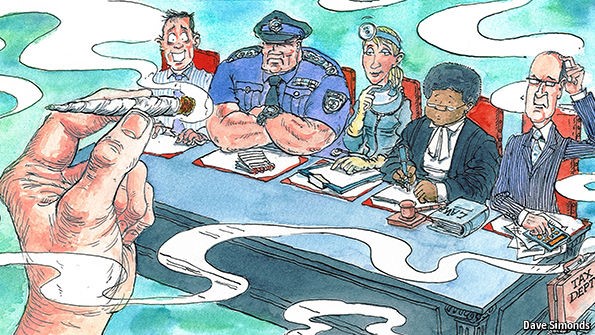
— Effect on sperm quality, testicular function worse than cigarettes

CHICAGO — Men who smoked marijuana had significantly degraded sperm quality and testicular function, worse than tobacco users and comparable to men with diagnosed infertility, according to a long-term Brazilian study.

As compared with smokers, marijuana users had lower median values for sperm concentration, motility, and morphology (P<0.01). Marijuana use also was associated with reduced testicular volume and an increased rate of nonobstructive azoospermia, clinical features often found in male infertility.

Marijuana’s deleterious effects on reproductive parameters resulted from increased production of reactive oxygen species (ROS), as seminal ROS concentrations were 20 times higher in marijuana users as compared with smokers, reported Jorge Hallak, MD, of the University of Sao Paulo, at the American Urological Association (AUA )annual meeting.

“Overall, the marijuana group had semen quality equivalent to the infertile group, with the exception of higher ROS and DNA damage than infertile men,” Hallak said during an AUA press briefing. “DNA damage is higher in all groups (marijuana users, smokers, and infertile men) as compared to controls, but higher levels were found in the marijuana group and infertile men. Basic semen parameters are not sufficient to identify changes of magnitude in sperm cell function.”

A second study summarized at the press briefing provided the first reported evidence of an association between marijuana use and development of benign prostatic hyperplasia/lower urinary tract symptoms (BPH/LUTS).

recent international study showed a consistent and statistically significant decline in sperm quality (count and motility) over the past 40 years. The explanation for the decline remains elusive, but multiple factors have been proposed: environmental exposures, poor nutrition, genetics, and social/behavioral factors.

Over the past 2 decades, technologic advances allowed more detailed examination of sperm. Showed that sperm are highly vulnerable to oxidative stress, which has been implicated in a multitude of major human diseases and disorders. Subfertility and infertility almost almost always arise as a consequence of oxidative stress, said Hallak.

The rationale for evaluating marijuana’s effect on male fertility parameters included a lack of information on the topic and the worldwide use of the drug. With an estimated 200 million users worldwide, marijuana is the most widely used psychoactive drug, including more than 20 million regular users in the U.S.

Since 2000, Hallak and colleagues have studied the effects of marijuana and tobacco on spermatozoa and testicular function and relationships with male infertility, hypogonadism, and sexual dysfunction. Each study participant has two comprehensive semen analyses that go well beyond usual lab assessments and include ROS, sperm DNA integrity, creatinine kinase activity, and antisperm antibodies.

Unlike many prior studies, enrollment was limited to users of cannabis and excluded use of cannabinoid-containing products. The study population comprised 125 men with diagnosed infertility, 144 tobacco smokers, 74 marijuana users, and a control group of 279 men (prevasectomy with no clinical factors for testicular dysfunction).

Current marijuana use was ascertained by self-report at the time of enrollment. Median age at first use of marijuana was 18.6, and median duration of marijuana use was 8 years.

Clinical characteristics of the infertile men included increased levels of prolactin; decreased sperm concentration, motility, and morphology; and increased seminal pH and ROS. Tobacco smokers had decreased follicle-stimulating hormone, luteinizing hormone, and prolactin; decreased testicular volume; and decreased seminal volume.

Marijuana users had a significantly lower median estradiol level (10.04 ng/dL) as compared with all the other groups (P<0.001). Marijuana use was associated with the highest median seminal ROS: 14.31 x 10⁴ cpm/20 x 106 versus 5.66 for infertile men, 0.70 for smokers, and 0.68 for the fertile control group. Hallak noted that marijuana induces production of intracellular ROS whereas tobacco smoke creates extracellular oxidative stress.

The study of marijuana use and BPH/LUTS included 20,548 men (age >45) who had prescriptions for finasteride and or a super-selective alpha blocker during the period from January 2011 to October 2018. The primary objective was to identify factors significantly associated with BPH/LUTS, said Granville Lloyd, MD, of the University of Colorado Anschutz School of Medicine in Aurora.

A multivariable analysis identified marijuana use as a statistically significant player in the development of BPH/LUTS (odds ratio 1.253, P<0.001). Other significant predictors were depression (OR 2.015), erectile dysfunction (OR 1.847), metabolic syndrome/obesity (OR 1.586), hypertension (OR 1.576), hypogonadism (OR 1.392), and diabetes (OR 1.280, P<0.001 for all). Alcohol use did not have a significant association with BPH/LUTS (OR 0.982).

Noting that BPH/LUTS etiology is poorly understood, Lloyd said, “From this analysis we can conclude that BPH is associated with systemic diseases, depression, and marijuana use but not alcohol.”

“Men who use marijuana are more likely to be treated for BPH,” he stated. “This is a novel finding. Cannabinoids are pharmacologically active and influence voiding, which raises the question of whether marijuana is a risk factor or self-treatment?”

Source: Studies: Weed Degrades Sperm, Spurs LUTS | MedPage Today May 2019

At the center of America’s deadly opioid epidemic, non-pharmaceutical fentanyl appears to be finding its way into illegal stimulants that are sold on the street, such as cocaine. Adulteration with fentanyl is considered a key reason why cocaine’s death toll is escalating. Cocaine and fentanyl are proving to be a lethal combination – cocaine-related death rates have increased according to national survey data. This has important emergency response and harm reduction implications as well—naloxone might reverse such overdoses if administered in time. A recent study by Nolan et. al. assessed the role of opioids, particularly fentanyl, in the increase in cocaine-involved overdose deaths from 2015 to 2016 and found these substances to account for most of this increase.

Fentanyl and Cocaine

Fentanyl is a synthetic, short-acting opioid that is 50 to 100 times more powerful than morphine and increasingly associated with a heightened risk of fatal overdose. The combination of heroin and cocaine, also known as “speedballing,” was popular in the 1970s.  Recently, there has been an uptick in cocaine being adulterated with other powerful substances like the synthetic opioid fentanyl. Unlike in the intentional combination of cocaine with other substances in the 70s, many modern users are not aware that their cocaine may be mixed with another substance, leaving them vulnerable to an accidental overdose.

Cocaine deaths have moved up to the second most common substance present in fatal overdoses—after opioids. Before 2015, fentanyl was involved in fewer than 5% of all overdose deaths each year. This rate increased to 16% in 2015 and continues to rise. At the beginning of 2016, 37% of cocaine-related overdose deaths in New York City involved fentanyl. By the end of the year, fentanyl was involved in almost half of all overdose deaths in NYC. Since then, several US cities have reported similar outbreaks of overdose fatalities involving fentanyl combined with heroin or cocaine. The combination of fentanyl and cocaine has been a considerable driver of the rising death toll since 2015, and opioid-naive cocaine users are at an especially high risk of unintentional opioid overdose.

Why is Fentanyl Appearing in Cocaine?

One theory is that the adulteration is an accident and occurs by residual fentanyl being present in the same space and on the same surfaces where cocaine is being processed. Another theory is that the increasing presence of fentanyl in cocaine concerns cost and supply. Drug cartels can add other cheaper drugs and medications as fillers to stretch out their product.1 By adding fentanyl they may also be producing a more potent and addictive product to expand their market. This, however, is risky since even a small amount of fentanyl can result in death. The Drug Enforcement Agency (DEA) explains that even 2 milligrams of fentanyl, about the size of a grain of rice, can be deadly to an adult. In light of that fact, it’s distinctly possible that street-level illicit drug dealers do not have insight into the contents of their product and are unknowingly selling cocaine adulterated with fentanyl.

Present Study

Data in this study was acquired from death certificates from the New York City Bureau of Vital Statistics and toxicology results from the New York City Office of the Chief Medical Examiner. Age-adjusted rates per 100,000 residents were calculated for 6-month intervals from 2010 to 2016.

Results suggested that individuals using cocaine in New York City were vulnerable to a greater risk of a fatal overdose due to the increasing presence of fentanyl in the city’s drug supply. In fact, 90% of the increase in cocaine overdose fatalities from 2010 to 2016 also involved fentanyl.

Public Health Challenges

This study highlighted some public health challenges caused by fentanyl-adulterated cocaine:

  1. First responders and those present at the scene of a cocaine overdose may consider administering Naloxone even if the patient denied using opioids.

  2. Fentanyl is very dangerous and powerful and dramatically increases the risk of lethal overdose.

  3. Opioid-naïve individuals that have been using fentanyl-free cocaine lack a potentially life-saving tolerance for opioids. Adding fentanyl to their drug of choice puts this group at an even higher risk of fatal overdose.

  4. Opioid-naïve cocaine users are typically not targeted by current harm reduction strategies and public messages concerning opioid overdose. A lack of education and access to critical resources, including naloxone —the lifesaving overdose reversal drug— render this population more vulnerable to a fatal overdose.

Looking to the Future

As the issue continues to get worse — 19,000 of the 42,000 reported opioid overdose deaths in 2016 were related to fentanyl — the authors of the study emphasize the importance of overdose prevention intervention for cocaine users, with a strong emphasis on access to naloxone and information about fentanyl.

Future prevention efforts must be widened to include cocaine users, especially those who are opioid-naïve, to prevent more fatal overdoses. Cocaine overdose awareness, treatment for dependence, and relapse prevention must be prioritized in a comprehensive response to addiction that puts us on a better path forward and ensures that this country does not repeat past mistakes by implementing substance-centric policy and education efforts.

Citation

Nolan, M. L., Shamasunder, S., Colon-Berezin, C., Kunins, H. V., & Paone, D. (2019). Increased presence of fentanyl in cocaine-involved fatal overdoses: implications for prevention. Journal of Urban Health, 1-6.

Source: Fentanyl-adulterated Cocaine: Strategies to Address the New Normal (addictionpolicy.org) Updated October 16th 2022

It is not all that long since people seriously tried to pretend that cigarettes were safe. Most of them were motivated by greed, and by fear that the truth would destroy their profits.

Everyone now agrees that cigarettes cause lung cancer and many other diseases. But we forget the struggle that doctors and scientists had to fight, against Big Tobacco, to get this accepted.

Sir Richard Doll and Sir Austin Bradford-Hill established in 1950 that there was a clear link between smoking and cancer. A wider study in 1954 absolutely confirmed this.

Yet such was the power and wealth of the tobacco giants that it was decades before anything serious was done to discourage smoking. It was not until 1971 that the first feeble warning was placed on cigarette packets in this country.

As late as 1962, the cigarette-makers were still pretending there hadn’t been enough research, and even that tobacco was good for you, claiming ‘smoking has pharmacological and psychological effects that are of real value to smokers’.

A Tory MP, Ted Leather, denounced the doctors’ warnings as ‘unscientific tosh’ and ‘hysterical nonsense’. Lung cancer was blamed on air pollution. The prominent journalist Chapman Pincher proclaimed ‘cigarette risks are being exaggerated’. It was seriously argued that restrictions on smoking were an attack on liberty.

I’d guess that many who made such claims lived to regret, bitterly and with some embarrassment, their part in covering up a terrible danger. Those who listened to them died, early and often horribly. They are still dying now, in cancer wards up and down the country.

Earlier, firmer action would have saved them and their families from much grief. Those tobacco apologists all have their parallels now.

I know, but will not name here, drug lobbyists, a Tory MP and several prominent journalists, who make the same excuses for marijuana, just as the evidence of its grave dangers piles up. They claim the evidence against it is exaggerated. They claim it has medical benefits. They claim its effects are caused by something else. May God forgive them. I cannot.

Our society, learning nothing from the tobacco disaster, has for years been appallingly complacent about this terribly dangerous drug, whose effect on the brains and minds of its users can be utterly devastating. Knowledge of its dangers does not show up in statistics which pay little attention to the sort of damage it does.

The victims of marijuana seldom die (though they increasingly frequently kill others, in mad car crashes and violent crime).

School failure, delinquency, delusional behaviour, persecution mania, young lives wholly blighted and continued only thanks to a devastating cocktails of antipsychotic drugs, do not register much in NHS figures. Nor do the special miseries of the families of these people, compelled to care, for life, for a husk of the person they once knew and had hopes for, and still love. Such families keep their grief to themselves. But there are many of them.

Look, I am right about this. But it is no good being right if you are not believed. I and my allies are roughly where the doctors who warned against lung cancer were in the mid-1950s. The evidence keeps on coming. Last week’s report linking marijuana use to depression and suicidal feelings among the young is just the latest in a great mountain of such studies. But the popular culture continues to act as if there’s nothing to worry about.

It is now seven years since I published a book which pointed out the truth – that the police and courts have given up prosecuting the major crime of marijuana possession. Back in 2012 I was denounced, snubbed, sneered at and told by distinguished academics that I was wrong and that there was a stern regime of cruel prohibition.

Now everybody recognises that what I said seven years ago is absolutely true. It is hard not to do so when so much of our country openly stinks of marijuana. Even if the Commissioner of the Metropolitan Police, Cressida Dick, cannot smell it, the rest of us can.

Sooner than seven years from now, I suspect that the connection between marijuana and severe mental illness will also be widely understood and accepted. But will it be too late?

Today’s Big Dope lobby wants to silence warnings about the dangers of marijuana until they have it legalised, and we can’t go back. They are like the Big Tobacco of the 1950s, a cynical greed campaign prepared to cause misery to others in the pursuit of riches.

This is the reason for its busy Trojan Horse operation to portray marijuana as a medicine, a claim for which there is very little evidence. And in any case, what use would a medicine be whose users risked irreversible mental illness?

Thalidomide was wonderful at treating morning sickness. But what does that matter compared with its terrible side effects?

Be on your guard. Make sure your MP isn’t fooled by Big Dope propaganda. Write to your MP when you see reports of crimes whose perpetrators were cannabis smokers. Your local papers will be full of them, if you look. Ask your MP to read the many reports linking this drug with mental illness.

And don’t be fooled. All of us sympathise with the mothers of very sick children who seek remedies for them. But beware of the shadowy figures who often stand behind such stories, and who use this suffering to promote a nasty cause.

It’s a race against time. If we lose it, the suffering which follows will be at least as bad as the suffering caused by cigarettes, and probably far worse.

Peter Hitchens  Mail on Sunday  

Source: Cigarettes are healthy! (And if you believe that, you’ll fall for Big Dope’s marijuana propaganda, too) – Mail Online – Peter Hitchens blog (mailonsunday.co.uk) February 2019

DEA says Houston is both a big market for synthetic pot and a major source

More than 1 million packets of a dangerous, unpredictable new breed of drug were seized in the Houston area by the DEA in the past two years, yet criminal charges are rare for those who make, sell or use them.

The packets, sold as potpourri or incense, are among the more popular brands of so-called synthetic marijuana taking center stage in a new front in the war on drugs.

On a recent afternoon, glossy packets of strawberry-flavored “Kush” lay side by side in a lighted glass display case, just past the bongs and pipes, at a Houston-area shop. The mixture inside looks like dried, finely crushed green leaves. It is smoked like pot but packs a far different punch – and is fueling the never-ending search for ways to get high.

“This is a new frontier for drugs and drug traffickers,” said Rusty Payne, a spokesman for the Drug Enforcement Administration. “I want to shout it from the roof tops: This is nasty stuff.”

Despite pressure from law enforcement, users still don’t have to go to underground dealers to score. Instead, they just visit smoke shops and convenience stores that sell the products.

Houston has a key role in the popularity of the drugs. It is not only a large marketplace for them, but they are covertly made here and shipped to other regions, according to court documents.

Doctors said the substances – technically classified as synthetic cannabinoids – can be aggressive, unstable and damaging.

Hearts race. Blood pressure soars. Seizures can be unleashed.

Paranoia is known to grip some users, as well as agitation and suicidal tendencies that can last five or six hours and land them in emergency rooms.

“They come in, and they are wild and psychotic and sometimes have a distinct smell,” said Dr. Spencer Greene, director of medical toxicology for Baylor College of Medicine. “They are going to be kind of wild and kind of crazy, and potentially very sick.”

Part of the problem is that the potency of the drugs can vary so greatly, and that users can never be sure what they are smoking.

Emily Bauer, a 17-year-old former user who lives in Cypress, learned just how bad they can be on a Friday night in 2012.

She smoked a packet, as she had done many times before, and ended up suffering what her family has been told was a series of strokes.

“I am improving constantly, and my vision is getting better,” she said, noting that she continues with high school thanks to people who read textbooks aloud to her and help her write.

Bauer and her parents have been sharing her story publicly in hopes that others will avoid the drugs. She said it just is not accurate to compare what she smoked to marijuana.

“It is more like smoking bleach,” she said.

Banned at trade shows

They come in colorful packets with dozens of other brand names, including Scooby Snax and Hello Kitty. The packages look like packets of candy and cost from $6 to $20, depending on the size.

They carry warnings that the contents are not for human consumption and sometimes incorrectly note contents are legal.

Authorities contend the language is just an attempt to dodge state and federal laws.

In schemes reminiscent of the popular crime drama “Breaking Bad,” rogue chemists repeatedly tweak compounds to create new generations of designer drugs faster than laws can catch them.

“Trained chemists know exactly what they are doing,” said Jeff Walterscheid, a toxicologist with the Harris County Institute of Forensic Sciences.

He noted that tweaking one molecule can make a new drug.

Dozens of such deviations of synthetic cannabinoids have been identified in the past few years, according to the DEA, and the list of what is out there is believed to be growing weekly.

To prepare the drugs for consumption, chemicals – usually white powdery mixtures – are often imported from China where they were prepared by chemists who keep an eye on U.S. laws, according to the DEA.

After U.S.-based manufacturers get those chemicals, they are often dissolved in acetone and then sprayed over leafy material, dried and spritzed with flavors such as grape, strawberry or cherry. Then they are poured into packages that are delivered in bulk to stock the shelves of retailers.

A manufacturing operation in Stafford was shut down by police in September after five day laborers staggered to an ambulance company looking for help. They had been overcome by fumes.

The factory was in an industrial park and a few hundred yards from a day care center. All that was left behind on a recent visit to the site was a scattering of crushed leaves in a carpeted office and a small black and blue packet labeled Amsterdam Dreams Potpourri.

Manufacturers of these substances aren’t considered nearly as violent as drug-cartel gangsters, but turf wars flare up.

Authorities point to a brutal dispute between two manufacturers. One stormed into the other’s business on Harwin, doused him with gasoline, and threatened to set him ablaze if he didn’t stop stealing a brand name.

The dispute faded. No one was arrested.

Jeff Hirschfeld, president of Champs, which holds national trade shows for thousands of smoke shop owners, said two years ago he decided to ban synthetic marijuana vendors from his events.

“There are so many states that don’t allow it, we just did not think it was proper,” he said.

“I am a grandfather of six, and I would not really recommend it for my grandkids,” he said. “I have not tried it, but I know people who have. Some say good, some say bad, but I’m not comfortable with it.”

Users vary from high school kids to working professionals. The drug also doesn’t show up in urine tests for marijuana, which might appeal to people on parole or job applicants.

Not meant for humans

In the past two years in Houston, synthetic cannabinoids were in the system of a person who hanged himself, another who was hit by an allegedly drunken driver while walking along a tollway, and another who was shot to death, according to the Harris County Institute of Forensic Sciences.

Users are playing roulette with their lives, said Walterscheid, the Harris County toxicologist.

“You cannot look at a container of Kush Apple and know what is in it,” he said. “When buying a package that looks the same every day for a year, you could be getting something different every single time.”

John Huffman, a South Carolina chemist who years ago led a team that developed synthetic cannabinoids while researching under a federal grant, said some strains now being copied could easily be 50 times more potent than marijuana.

“They are all dangerous. Don’t use them,” said Huffman, who retired four years ago. “They were never designed for this.”

The substances were tested on animals but were never to be used by humans.

Criminal charges rarely are filed as cases involving these emerging drugs bring on a host of new scientific, medical and legal complexities.

Clinical tests have not yet been conducted on humans on any of these drugs, so it can be tough to prove the extent of their harm. Experts could also clash over whether the ingredients of a given drug make it illegal, among other issues.

People who knowingly make or sell synthetic cannabinoids for human consumption can face federal charges. Possession of some of those substances, regardless of weight, can in some cases be a misdemeanor in Texas.

“We have been taking an active role trying to classify more of these, make more of them fall in the penal code,” said Marcy McCorvey, division chief of the major narcotics division of the Harris County District Attorney’s Office.

She said that prosecutors are handcuffed by insufficient laws, but if they can make a case, they will take it to court.

“It is very frustrating. I know of police officers who are out there trying to combat the problem,” McCorvey said. “I understand parents who want it off the shelves. I wish I could prosecute sellers and suppliers in a more harsh manner, but the state law does not allow for a harsher penalty as it is written.”

Few criminal charges

Despite the DEA seizing more than 1 million packets of the drugs, as well as the pending forfeitures of more than $8 million, federal prosecutors in Houston have yet to charge anyone, according to officials.

The U.S. Attorney for the Southern District of Texas, who is based in Houston, declined to comment.

In June, federal authorities in San Antonio announced Operation Synergy. At least 17 people were arrested in San Antonio, Houston and elsewhere for alleged roles in a synthetic cannabinod ring.

In another case, Houston resident Issa Baba was charged federally in Pennsylvania with using the Web to sell synthetic pot and other designer drugs. More than $5 million was seized from his bank accounts. Baba has signed a guilty plea.

Another Houston-area man has not been charged with a crime, but more than $2 million was taken from him in May on the grounds that it was proceeds from making synthetic cannabinoids. Bundles of $100 bills wrapped in rubber bands were stashed at his ex-wife’s home in La Marque.

Lawyer Chip Lewis, who represents Baba and the other man, said the cases against his clients come at a tricky time, as the Department of Justice has decided not to challenge laws that permit the medical and recreational use of marijuana.

“It is a slippery slope we are on here,” Lewis said. “Yes, we will prosecute you for this. No, we are not going to prosecute you for something else on the books.”

Javier Pena, chief of the DEA’s Houston Division, said getting this breed of drugs off the streets has become a moral mission as much as a legal one.

“We are trying to say to store owners: You know who you are. You need to stop selling this poison.”

Source: https://www.houstonchronicle.com/news/investigations/article/Houston-gains-key-role-in-synthetic-marijuana-5024607.php  November 2013

Kevin Sabet was a drug control policy adviser in the White House for both Republicans and Democrats

When most people talk about Canada’s impending legalization of marijuana, they talk about the future. When Kevin Sabet talks about it, he worries about history repeating. 

“There are huge misconceptions, I often feel like we’re living in 1918, not 2018,” he said.” When I say 1918, I mean 1918 for tobacco when everyone thought that smoking cigarettes was no problem and we had a new industry that was just starting.”

In 1918, soldiers returning home from the trenches of the First World War brought cigarettes home with them and unwittingly sowed the seeds of one of 20th century’s biggest health epidemics. 

“We hadn’t had tobacco related deaths before the 20th century because we hadn’t had a lot of cigarettes, which actually gave us the most deadly form of tobacco we’ve ever seen. I feel like we’re like that with marijuana.”

Kevin Sabet is the president of Smart Approaches to Marijuana, or SAM, a non-profit agency in the United States devoted to ‘preventing another big tobacco.’ (Smart Approaches to Marijuana)

A former drug control policy adviser to the White House under both the Democrats and Republicans, Sabet is the President and CEO of Smart Approaches to Marijuana, a public health organization opposed to marijuana legalization and commercialization in the United States. 

He said the sudden about-face by Ontario’s newly-elected Progressive Conservative government away from a public monopoly on marijuana sales to a mixed public-private is “a really bad move.” 

“When I see the government monopoly being tossed out the window in favour of a private program that really puts private profit over public health.. I worry about that,” he said. “I think it’s a really bad move.” 

“They are moving from a government monopoly to private retail and that’s going to open the door to all the marketing and promotion and normalization that already is a huge problem for our already legal drugs.”

“We’ve seen how that turned out for pharmaceuticals like opiates, which are highly dangerous and we’ve seen how that turned out for tobacco and alcohol.”

Big investors lining up to cash-in on pot

With legalization still months away, there are growing signs that marijuana and big business are starting to become best buds. (Nicolas Pham/Radio-Canada)

In fact, Sabet points out, some of the same players have already expressed their willingness to provide Canadians with legal marijuana on a massive scale. 

Constellation Brands, the maker of some of the most popular wines and beers in the world, has already paid $5 billion for Canopy Growth, the world’s largest publicly traded licensed producer of marijuana in Smith Falls, Ont. 

Several notable Canadian brands have also expressed an interest in legal bud, including Molson, which has mused publicly about a THC infused beer and Shopper’s Drug Mart, which hopes to branch out in sales of medical marijuana online. 

“We’re already seeing the private market salivating in Canada, waiting to be that next addiction for profit substance and I don’t see how that helps us.” 

‘Not your Woodstock weed’

Why that worries Sabet is the combination of savvy corporate marketing and increasingly intense levels of THC, or tetrahydrocannabinol, the active ingredient in marijuana. 

“Today’s marijuana is not your Woodstock weed,” he said. “I think there’s a wild misperception about what today’s marijuana experience really is.” 

There are signs too that marijuana sold on the street is stronger than it used to be. According to a 2017 report from the Hazelden Betty Ford Foundation, an American healthcare organization that helps people struggling with addiction, said the concentration of THC in marijuana has risen three-fold in the last two decades, from four per cent in 1994 to 12 per cent in 2014. 

Sabet notes that marijuana sold commercially in some states goes even further and is available in highly concentrated forms, such as hash, wax, or shatter with no rules or limits on the concentration of marijuana’s active ingredient. 

“It’s not four per cent THC, which is the ingredient that gets you high. It’s up to 99 per cent THC and there are no limits on THC,” he said. “I’m really concerned especially how today’s high potent marijuana is going to contribute to mental illness.” 

Potent pot and drug-induced psychosis

Anecdotally, one only has to look as far as the story of Mark Phillips, a lawyer from a prominent Toronto family, who pleaded guilty to assault causing bodily harm in April, after he attacked a St. Thomas family with a baseball bat, calling them terrorists. 

During Phillips’ court appearance, his lawyer and psychiatrist said he was suffering from a drug-induced psychosis.

His lawyer, Steve Kurka told Justice John Skowronski that Phillips, whose mental health had been declining in the months and weeks leading up to the December 2017 baseball bat attack, smoked three or four joints before driving to London and then nearby St. Thomas, getting into arguments with people he believed to be Muslims targeting him along the way.

“[It] doesn’t shock me,” Sabet said of the Phillips case. “Today’s highly potent THC can have an aggressive violent effect. I’m not going to say everybody is going to have a psychotic breakdown. We’re going to see stuff like this become more and more common.”

Despite his concerns about pot, Sabet said he doesn’t want to see Canada go back to the days of arresting people for simple pot possession, nor does he see a problem with people growing the plant at home on a small scale either. 

“I don’t care about that,” he said. “The issue is when you make this a legal market and advertise it and throw it to the forces who are in the business of promotion. They are in the business of advertising and commercialization and pot shops next to your kid’s school and billboards and coupons and products, that’s my worry.” 

Sabet believes the real Reefer Madness is giving private companies control of retail sales, where they can use marijuana as a tool in their pursuit of profit at the cost of public health. 

“I worry that Canada is following the example of the United States in terms of this new industry which promotes, recklessly advertises, makes wild claims, ignores all harms and absolutely focuses on advertising to kids.” 

Source: Ontario’s new retail pot plan ‘puts profit over public health’ says former Obama drug adviser | CBC News August 2018

Britain snorts more of the drug than almost anywhere in Europe, more young people are taking it and deaths are rising. Why?

The moment Dan (not his real name) realised he had a problem with cocaine, he had been off work for a week, sick with flu. His phone buzzed. It was his cocaine dealer, calling to check he was OK. When Dan, one of his favoured customers, hadn’t been in touch to buy the cocaine he usually took several times a week, the dealer knew something was wrong.

“I don’t like thinking about that,” Dan says, shaking his head as we sit in a London pub. Now 36, Dan estimates he has spent £25,000 on cocaine. Lines in the pub on a Friday night after work. Lines on a Wednesday evening at a friend’s house while earnestly discussing 90s hip-hop. Lines at house parties, weddings, birthday parties and for no reason at all, other than that cocaine – the white powder that makes no one a better version of themselves, but that many of us continue to do anyway – is everywhere and freely available.

Britain is a cocaine-loving country, and its love for the drug is growing. The country snorts more cocaine than almost anywhere in Europe. “Cocaine use is going up,” says João Matias of the European Monitoring Centre for Drugs and Drug Addiction. In the UK in 2017-2018, 2.6% of people aged 16-59 took powdered cocaine (as opposed to crack cocaine, the more potent variant of the drug, which was taken by 0.1% of the population in the same period), up from 2.4% in 2013-2014, according to Home Office figures.

More young people are taking cocaine than ever before: 6% of 16- to 24-year-olds have tried it, despite the fact that, overall, fewer young people take drugs in general. It is also likely that Home Office figures, which often exclude students, prisoners and homeless people, underestimate cocaine use because those groups typically have above-average illegal drug use.

Most of this cocaine ends up in our sewage system, and researchers have been finding increasing levels in Britain’s water supply since 2012, Matias says. Levels are highest at weekends, indicating recreational use.

Cocaine used to be the sole preserve of affluent City workers and dissolute rock stars. They continue to favour the drug: data from the crime survey of England and Wales showed that powdered cocaine use increased from 2.2% in 2014/15 to 3.4% in 2017/18 in households earning £50,000 a year or more. (Use among those earning less than £10,000 a year fell during this period, although researchers believe the use of crack cocaine may be on the rise in poorer communities.) But powdered cocaine now appeals to those in more modest income brackets, too. “Coke is pretty classless now,” says Ian Hamilton, a senior lecturer in mental health at the University of York. “It’s not for financiers in the City of London any more. It’s more affordable, so that’s opened up the market to people who wouldn’t have tried it before.” And dealers are savvy marketers. Dan pulls out his phone to show me a “bargain bucket offer” he has received: five grams of cocaine for £210.

Users come from all backgrounds. In Hyndburn – the once-prosperous centre of England’s textile industry, which is now in decline – 17 young people died of cocaine overdoses in a nine-month period in 2017. In Newcastle, according to a Vice report, cocaine has become “an important factor in the city’s legitimate economy”, with bars offering privacy curtains for patrons who wish to snort lines off their phones.

According to the National Crime Agency, recent years have seen the Albanian mafia take control of the UK’s lucrative cocaine market with a brutally effective business model. By negotiating directly with the cartels in drug-producing Latin America, cutting out traditional international importers, the Albanian mafia have been able to deliver a purer, more affordable product to market: cocaine hasn’t been this cheap since 1990.

Ironically, anti-drug laws have also improved the quality of cocaine. The 2015 Serious Crime Act criminalised the import of cutting agents such as benzocaine. When it is harder to cut the product, purity increases. This, along with the fact that cocaine production has increased in Latin America, has created a perfect powder storm. Cocaine purity, which has been increasing since 2010, is at its highest level in a decade. What happens when a product becomes cheaper, more plentiful and better quality? More people try it.

As purity and availability increase, so, too, does the misery wreaked by cocaine. Hospital admissions for mental health disorders linked to cocaine have almost trebled in the past decade. Cocaine-related deaths have increased for the sixth year running, up to 432 deaths in England and Wales in 2017, compared with 112 in 2011. (It’s worth noting that these figures refer to powdered and crack cocaine, as official statistics do not differentiate between the two when establishing cause of death. Many of these deaths will involve users who have longstanding addictions to crack cocaine, as well as other co-dependencies.) Users leap from balconies, or fall from mountain paths while under the effects of the drug. Or their bodies give out on them: many deaths take place when users mix cocaine with alcohol, producing the toxic chemical cocaethylene.

“There are a number of risks when it comes to mixing any drugs together,” says the consultant addiction psychiatrist Dr Prun Bijral of the drug treatment service Change Grow Live. As “alcohol is a depressant and cocaine is a stimulant,” combining the two in large quantities can overstimulate the heart and nervous system, leading to, in extreme circumstances, heart attacks. Mixing the two also “impairs your ability to measure and make a judgment on risks”, Bijral adds, meaning that you are far more likely to get yourself into a dangerous situation while drinking and taking cocaine. And it is not just your heart you should be worried about: cocaine abuse can cause the soft inner cartilage of your nose to erode, and it has been linked to brain abnormalities in regular users.

Lucy White, a student at the University of the West of England, knew the dangers of messing with drugs: she saw 19-year-old Drake Morgan-Baines collapse and die in front of her, of MDMA (ecstasy) poisoning, while she was working in Motion nightclub in Bristol. “She was really disturbed by it,” her sister, Stacey Jordan, tells me. But just seven months later, White herself died of a lethal cocktail of cocaine and prescription drugs. “It was the drugs that killed her, but it was also the people she was with, and the peer pressure,” Jordan says. “I don’t think she realised how dangerous it was.”

Cocaine use creates subtler forms of misery, too. “I’m the most confident person for those few hours when I’m on it,” Dan says, “but afterwards I’m having horrendous, almost suicidal, thoughts.” Paranoia lasts for days after a bender. “It’s crushing. The depression outweighs the good times so much,” he says. “It’s the feeling of being a disappointment to my parents. What the fuck am I doing?”

Dan thinks Britons love cocaine because we work so hard (on average, we work the longest hours in Europe). “You can do coke tonight and go to work tomorrow and no one will know,” he says. “I may be a bit less productive, but only I know that.” Even though mixing alcohol and cocaine can prove deadly, many continue to do it. “Coke and alcohol go really well together,” Hamilton says. “You can drink for longer, and it makes you more confident.”

“After two drinks, I wouldn’t be able to relax unless I knew the coke was sorted,” Dan says. “That was my mentality.”

At a time of welfare cuts and ever-longer NHS mental health waiting lists, cocaine also seems to offer a quick fix for those struggling with stress or anxiety. “If you are a young person who is a bit anxious, lacking in confidence or not sure of your place in the grand scheme of things, coke sorts all that out for you,” Hamilton says. “If you can offer me a line now that makes me feel better, or the alternative is that I’m going to have to wait at least four weeks to see a counsellor, it’s an absolute no-brainer.” He pauses. “I’m not recommending it. But austerity has created a real bottleneck in people getting the support they need, and drugs are far more instant. They have no opening and closing hours.”

Recently, I was in the sort of pub you bring your parents to: an upmarket affair with chalkboard menus. I went to the bathroom and there, dusted across the toilet-roll holder like icing sugar on a Victoria sponge, was a fine but unmistakable layer of cocaine. For someone like Dan, who is trying to avoid taking the drug, “you have to be very careful. It’s everywhere.” Recently, he was eating dinner in a Greek restaurant when a nearby stranger offered him cocaine. Did he accept? He drops his voice. “I did, yeah.”

Cocaine’s resurgence is also linked to our changing night-time economy. The number of nightclubs in the UK halved between 2005 and 2015, and more than 25% of pubs have closed since 2001. As these places shutter, British people increasingly socialise behind closed doors. Unlike the club drug ecstasy, cocaine is best taken at home. Dan and his friends would often avoid bars to head back to someone’s flat, turn on some music and get a bag of cocaine in. “Bars are full of dickheads, so I’d say: ‘Let’s get out of here – I’m done.’ Only I wouldn’t be done: I’d stupidly stay up until 7am, having the same conversation.”

To many people, a line of cocaine with a glass of wine on Saturday night is an ordinary sort of thing – and they certainly don’t think of the devastation wreaked by drug cartels in cocaine-producing parts of the world. “It’s not seen as a hard drug,” says Hamilton. “It’s snorted, not injected, so you don’t have to cross that line.”

“The Chelsea flower show, the opera, churches, a Momentum fundraiser, Peppa Pig World …” The former Sun journalist Matt Quinton lists the places he and his colleagues found cocaine traces while working undercover for the newspaper. “Peppa Pig World was unexpected,” he says. The most shocking place Quinton found cocaine? A toilet that was only accessible to NHS staff. Because these exposés were popular with readers, and cheap to put together, Quinton or his colleagues would be sent out by editors to swab pretty much anywhere. As well as becoming extremely proficient at wiping down lavatories, Quinton learned one thing. “Coke is absolutely everywhere, especially if alcohol is being served,” he says. In the 18-month period Quinton only failed to find cocaine once: in the bathroom at a children’s festival. “That was because they had these toilets that were entirely plastic and clearly being blast-washed on a regular basis.” And, he adds, “they didn’t serve alcohol”.

Even Jordan’s friends don’t see a bit of coke as much of anything, really, despite the fact she lost her sister to the drug. It angers her. “You can’t get away from it if all your friends do it,” she says. “I’ve been at weddings and people are doing it in the toilet. I’m looking on in pure horror.” After witnessing someone snorting cocaine off their hand at a nightclub bar, she avoids going clubbing. “I start lecturing strangers because I get too angry.” She understands why people do it. “I don’t think people understand the butterfly effect that it has – unless something happens to you.”

Recent months have seen attempts to challenge the laissez-faire attitudes. Last July, London’s mayor, Sadiq Khan, linked escalating violence on the city’s streets to middle-class cocaine use. Days later, the Metropolitan police commissioner, Cressida Dick, denounced hypocritical middle-class users who profess to be politically aware. In October, the home secretary, Sajid Javid, told the Daily Mail that a government review would specifically look at the damage occasioned by middle-class drug users. Where did this sudden cross-party consensus on the evils of middle-class drug originate? One man: Simon Kempton.

In May last year, Kempton – who is the Police Federation’s lead on drugs – was chairing a panel discussion at its annual conference when a journalist asked for his views on prohibition. “I let my guard down a bit and said something honest, which is never a good thing,” Kempton smiles. He singled out middle-class drug users for fuelling street violence. A media storm ensued, but after Dick, Khan and Javid echoed his stance, Kempton felt vindicated. He hopes to transform middle-class users’ attitude to the drug. “If you think back to when I was a nipper, drink-driving was accepted ethically,” he says. “It took 20 or 30 years of better education to understand that drink-driving isn’t ethical. There’s similar work to be done.”

But does middle-class cocaine use really cause knife crime? “To my mind, the focus on middle-class cocaine users is a smokescreen for the failure to deal with the underlying causes of youth crime and violence,” says Prof Alex Stevens, an expert in criminal justice at the University of Kent, and the president of the International Society of the Study of Drug Policy. Since 2011, the coalition and Conservative governments have consistently attempted to link gangs and youth violence to drugs. But while street-level violence may be seen in the dealing of crack cocaine across so called county lines, powdered cocaine has a different supply chain. “Middle-class users don’t get their coke from young kids who are riding motorbikes out of council estates,” Stevens says. “There is violence in that supply chain too, but most of it happens in Latin America.”

If the evidence is shaky, why are politicians so keen to connect these dots? “It’s a strategy to keep in people’s minds the link between drugs and black youths,” says Stafford Scott, an anti-racism campaigner based in Tottenham, north London. It also allows them to shirk responsibility for dealing with the real causes of knife crime: “poverty, isolation and marginalisation”. Has Scott ever seen any evidence of cocaine dealing in the communities he works with? “You don’t see powdered cocaine in the ’hood,” he says.

Whether or not you agree that cocaine causes knife crime on our streets, one thing is for certain: cocaine causes damage. Maybe the damage takes place in a faraway country you prefer not to think about. Maybe it’s a subtler form of damage: to your relationships, finances, wellbeing or career.

Dan has pulled himself out of the depths of his cocaine addiction gingerly. Sometimes, he slides downhill. Avoiding social situations where he knows cocaine will be present helps, “because I’m weak”, he says. “If I have a drink, I know someone will have coke on them, and it’s so hard to say no.”

But it’s not easy to keep your distance. After we finish our interview, we step out of the pub into the frigid night air. We’re about to part ways when Dan notices a man outside, speaking loudly on the phone. He’s withdrawing a large sum of cash from an ATM and directing someone to his location. We look at each other, and Dan sighs.

The charity Change Grow Live (changegrowlive.org) offers further information on, and help with, the issues raised in this article

Source: The white stuff: why Britain can’t get enough cocaine | Drugs | The Guardian January 2019

  • Teenagers who smoke have thicker matter in certain parts of their brains
  • This was found in areas involved with emotions, memory, fear and panic
  • Adolescent brains are typically thinning and being refined during this period
  • Experts said ‘most people would assume one or two joints would have no impact’

Just one or two joints is enough to change the structure of a teenager’s brain, scientists have warned.

And the drug could cause changes affecting how likely they are to suffer from anxiety or panic, according to a study.

Researchers found 14-year-old girls and boys exposed to THC – the psychoactive chemical in cannabis – had a greater volume of grey matter in their brains.    

This means the tissue in certain areas is thicker, and it was found to be in the same areas as the receptors which marijuana affects.

Experts said thickening of brain tissue is the opposite of what usually happens during puberty, when teenagers’ brain matter gets thinner and more refined.

Researchers did scans of teenagers’ brains and discovered those who had been exposed to small amounts of marijuana (top row) had thicker regions of the brain (indicated by more orange and yellow tissue) than those who had never smoked cannabis (bottom row)

Researchers from the University of Vermont scanned the brains of teenagers from England, Ireland, France and Germany to study marijuana’s effects. 

They found differences in the volume of grey matter in the amygdala and the hippocampus.

These sections are involved with emotions, fear, memory development and spatial skills – changes to them suggests smoking cannabis could affect these faculties.    

Scientists said theirs is the first evidence to suggest structural brain changes and cognitive effects of just one or two uses of cannabis in young teenagers.

And it suggests as teenagers brains are still developing, they may be particularly vulnerable to the effects of THC.

THC, full name tetrahydrocannabinol, is the chemical in marijuana which makes people high and is what makes it illegal in the UK. 

‘Consuming just one or two joints seems to change grey matter volumes in young adolescents,’ said study author Professor Dr Hugh Garavan.

‘The implication is that this is potentially a consequence of cannabis use. You’re changing your brain with just one or two joints.

‘Most people would likely assume that one or two joints would have no impact on the brain.’

What changes the increased brain volume directly causes is unclear, but the researchers said it is important to understand cannabis’s effects in detail.

This is especially so in the US, where more states are legalising the drug and a view of it being harmless is spreading, they said.

Professor Garavan said cannabis use appears to produce the opposite effect on brain matter of what usually happens during puberty. 

He said a typical adolescent brain undergoes a ‘pruning’ process in which  it gets thinner, rather than thicker, as it refines its connections. 

‘One possibility is they’ve actually disrupted that pruning process,’ he said. 

Previous studies have focused on heavy marijuana users later in life and compared them against non-users. 

Few have looked at the effects of the first few uses of a drug.

Another of the study’s authors, Catherine Orr, now a lecturer at Swinburne University of Technology in Australia said: ‘Rates of cannabis use among adolescents are high and are increasingly concurrent with changes in the legal status of marijuana and societal attitudes regarding its use.

‘Recreational cannabis use is understudied, especially in the adolescent period when neural maturation may make users particularly vulnerable to the effects of THC on brain structure.’

The study, part of a long-term European project known as IMAGEN, involved 46 teenagers who used recreational marijuana once or twice by the age of 14.

They reported how many joints they had smoked and had brain scans.

It also involved 69 teenagers who used the drug at least 10 times between the ages of 14 and 16, and 69 who had not touched the drug by age 16.

Scientists also assessed them for signs of various mental disorders including ADHD, anxiety, depression and panic disorder.    

Dr Orr said: ‘Of the behavioural variables tested, only sensation seeking and agoraphobia differed between the cannabis users and controls. And these factors were not related to greater grey matter differences.’ 

The researchers said the area of the brain which cannabis interacts with is particularly important for brain development in adolescence, suggesting teenagers could be particularly affected by THC. 

Dr Orr concluded: ‘Almost 35 per cent of American 10th graders have reported using cannabis and existing research suggests that initiation of cannabis use in adolescence is associated with long-term neurocognitive effects.

‘We understand very little about the earliest effects of cannabis use, however, as most research is conducted in adults with a heavy pattern of lifetime use.

‘This study presents evidence suggesting structural brain and cognitive effects of just one or two instances of cannabis use in adolescence.’  

The study was published in The Journal of Neuroscience.

Source: Smoking weed just ONCE could change a teenager’s brain | Daily Mail Online January 2019

Abstract

Background: Normalisation of medicinal and recreational marijuana use has increased the importance of fully understanding effects of marijuana use on individual-and population-level health, including prenatal exposure effects on child development. We undertook a systematic review of the literature to examine the long-term effects of prenatal marijuana exposure on neuropsychological function in children aged 1-11 years.

Methods: Primary research publications were searched from Medline, Embase, PsychInfo, CINAHL EbscoHost, Cochrane Library, Global Health and ERIC (1980-2018). Eligible articles documented neuropsychological outcomes in children 1-11 years who had been prenatally exposed to marijuana. Studies of exposure to multiple prenatal drugs were included if results for marijuana exposure were reported separately from other substances. Data abstraction was independently performed by two reviewers using a standardised protocol.

Results: The eligible articles (n = 21) on data from seven independent longitudinal studies had high quality based on the Newcastle-Ottawa Scale. Some analyses found associations (P < 0.05) between prenatal marijuana exposure and decreased performance on memory, impulse control, problem-solving, quantitative reasoning, verbal development and visual analysis tests; as well as increased performance on attention and global motion perception tests. Limitations included concurrent use of other substances among study participants, potential under-reporting and publication biases, non-generalisable samples and limited published results preventing direct comparison of analyses.

Conclusions: The specific effects of prenatal marijuana exposure remain unclear and warrant further research. The larger number of neuropsychological domains that exhibit decreased versus increased psychological and behavioural functions suggests that exposure to marijuana may be harmful for brain development and function.

Keywords: attention; cannabis; intellect; intrauterine; memory; perception.

Source: Effects of prenatal marijuana exposure on neuropsychological outcomes in children aged 1-11 years: A systematic review – PubMed (nih.gov) November 2018

What are Marijuana Concentrates or THC Concentrates? 

A marijuana concentrate is a highly potent THC concentrated mass that is most similar in appearance to either honey or butter, which is why it is referred to or known on the street as “honey oil” or “budder.”

What Does it Look Like?

Marijuana concentrates are similar in appearance to honey or butter and are either brown or gold in color. The different forms includehash or honey oil (a goey substance)wax or butter (soft, lip balm-like substance), and shatter (a hard, solid substance)(See photo gallery at the bottom of the article)

What are the Street Names?

710 (the word “OIL” flipped and spelled backwards), wax, ear wax, honey oil, budder, butane hash oil, butane honey oil (BHO), shatter, dabs (dabbing), black glass, and errl.

How is it Made?

One popular extraction method uses butane, a highly flammable solvent, which is put through an extraction tube filed with marijuana. The butane evaporates leaving a sticky liquid known as “wax” or “dab.” This method is dangerous because butane is a very explosive substance. There have been explosions in houses, apartment buildings and other locations where someone tried the extraction. 

How is it Used?

It’s used a few ways:

  • Infusing marijuana concentrates in various food or drink products
  • Smoking remains the most popular form of ingestion by use of water or oil pipes or heated in a glass bong.
  • Electronic cigarettes (also known as e-cigarettes) or vaporizers. Many users of marijuana concentrates prefer the e-cigarette/vaporizer because it’s smokeless, odorless, and easy to hide or conceal. The user takes a small amount of marijuana concentrate, referred to as a “dab,” then heats the substance using the e-cigarette/vaporizer producing vapors that ensures an instant “high” effect upon the user. Using an e-cigarette/vaporizer to ingest marijuana concentrates is commonly referred to as “dabbing” or “vaping.”

What are the Effects of Using Marijuana Concentrates? 

Marijuana concentrates have a much higher level of THC. The effects of using may be more severe, both psychologically and physically. 

Sources: “Marijuana Extracts,” National Institute on Drug Abuse (NIDA); “Marijuana Concentrates,” Drugs of Abuse – DEA.


Source: What You Should Know About Marijuana Concentrates/ Honey Butane Oil | Get Smart About Drugs March 2022

An investor in a major Canadian cannabis company has had longstanding ties, including business dealings, with influential Mafia members and drug traffickers, Radio-Canada has learned.

Another investor in the same company has links with a prominent member of the Rizzutos, the powerful Montreal crime family.

In still another case, an individual managed to sell his cannabis business to one of the big players in the industry, despite his connections to drug traffickers. In return, he received shares in the company and rented out space for a cannabis grow-op.

Prime Minister Justin Trudeau’s legalization plan was supposed to cut out organized crime, but an investigation by Radio-Canada’s Enquête shows Health Canada has granted production licences to companies with individuals with links to the criminal underworld.

Enquête examined hundreds of documents as part of its investigation, including reviews conducted by Canadian securities oversight bodies. Enquête is not naming the companies or individuals involved.

For its part, Health Canada says it has not seen any cases of organized crime infiltration of more than 130 licensed cannabis producers since 2013.

To produce cannabis, those who hold certain positions in companies must first obtain a permit from Health Canada by taking a security screening.

Any past connections with individuals related to organized crime are part of the analyzed information.

Red flags raised

To secure a licence, Health Canada first checks if the individual has a criminal record.

Second, the RCMP consults police databases to review information that may indicate an applicant’s links to criminals.

Health Canada makes its final decision with the information provided by the RCMP.

The RCMP says it raised red flags on about 10 per cent of the applicants it was asked to check out in 2016 and 2017.

“It’s really criminal associations,” says Supt. Yves Goupil, who gives the example of a person “associated with individuals who have criminal records.”

In a statement, Health Canada said it can “categorically confirm” that it didn’t issue “security clearance to an individual when the RCMP provided evidence to the department that it was associated with organized crime.”

“Health Canada has found no evidence that organized crime has infiltrated one of more than 130 federally registered producers,” spokesperson Eric Morrissette said in an email.

Security checks only scratch the surface

Throughout the period in which Canada’s cannabis industry was developing, primarily for medical purposes, only individuals who directly ran the companies were required to obtain a security clearance.

This approach, says Conservative Senator Claude Carignan, demonstrates a naiveté about the workings of high-level organized crime.

“If there is someone who has a criminal record, it is not that person they will put to apply for the licence,” Carignan said. “It would be completely naive to think that.”

Last spring, Carignan and his Senate colleagues tried, unsuccessfully, to amend Bill C-45 on the legalization of cannabis in order to demand more transparency from companies entering the industry.

Several companies have opaque and complex structures.

“You never see who the real licence holders are,” said lawyer and tax expert Marwah Rizqy, who raised the issue before a Senate committee last spring and has since been elected Liberal MNA for the Quebec riding of Saint-Laurent.

The black hole of trusts

It’s not uncommon for cannabis companies to be funded through family trusts.

Originally designed for estate and tax planning, trusts are an ideal way to hide individuals with interests in a business, said Marie-Pierre Allard, who studies tax policy at the Université de Sherbrooke.

“The beneficiaries of the trust are not disclosed publicly. It’s anonymous,” she said, adding that it is “one of the great vulnerabilities of the Canadian legal system.”

“If we want to eliminate the Mafia cannabis market, we cannot allow them to use tax havens or trusts to enter indirectly through the back door,” Carignan said.

A report by the federal Department of Finance and several international organizations identifies trusts as one of the vehicles most at risk for money-laundering in Canada.

In a Senate appearance last April, Rizqy suggested refusing to grant production licences to companies financed through trusts.

“Maybe it would be wise to deny the licence outright because you are not able to unequivocally establish that the security clearance is really valid,” said Rizqy.

The recommendation was not accepted. The federal cannabis legislation adopted this summer, however, did include more extensive background checks into individuals who back cannabis companies.

Too many requirements for the cannabis industry?

Carignan has faced criticism for his efforts to make cannabis companies more transparent.

Line Beauchesne, a criminologist at the University of Ottawa, believes Health Canada’s investigations are adequate and consistent with the government’s desire to ensure the quality of the product and to prevent smuggling.

“Why especially for the cannabis industry?” Beauchesne asked.

If there were to be new rules of transparency, “all industries moving into Canada” should be affected, she said.

She acknowledged, however, that Health Canada “is absolutely not equipped to conduct financial investigations.”

Its traditional role is to ensure a product meets certain standards.

“Health Canada’s job is to make sure that when I eat cheese, it’s cheese. When it’s eggs, it’s eggs. And when [it comes to] cannabis, it’s cannabis.”

The limits of police investigations

The number of audits to be conducted in the cannabis industry is so great investigators have to make choices, said the RCMP’s Goupil.

The work of police is complicated considerably when the sources of financing for businesses come from abroad, including from tax havens.

“Technically, there is nothing illegal there. But it’s hard for [the RCMP] and for Health Canada to go out and check in those countries,” he said.

“Often, it’s going to be the janitor who will sign the company documents or a law firm in country X. At some point, we cannot do the research. It’s a lot of investment, a lot of time, a lot of money,” Goupil said.

“We cannot have a fully bulletproof system. If organized crime has an opportunity to make a profit, it will exploit it. “

Tax havens are not the only barrier to police work. Secrecy also exists in some companies in Canada.

“We need to use other more advanced techniques such as physical surveillance and wiretapping that will help us identify who is behind the company and who operates it,” he said.

These survey techniques, however, require considerable resources and cannot be deployed for all cannabis companies.

“We cannot afford it.”

Source: Licensed cannabis growers have ties to organized crime, Enquête investigation finds | CBC News November 2018

Radula complanata, a cannabinoid moss. Henri Koskinen/Shutterstock

Most of us know that the cannabis plant produces compounds that react with the human body. That’s because we have our own system that makes similar compounds, cannabinoids, that have a wide range of actions from appetite control to immune function. Cannabis contains a cannabinoid called THC that interacts with the brain, resulting in euphoria and relaxation, as well as increased hunger and anxiety. It was long thought that there was no other natural source of cannabinoids – and along with a long list of supposed medical uses the mythical power of cannabis, and the psychoactive properties of THC, has grown.

But as it turned out, another plant contains something similar: a compound that has the structural hallmarks for it to act on the brain in a similar way to THC. The discovery of this lost twin, called cis-PET (perrottetinene), or PET, was tucked away in specialist chemistry journals in papers published in 1994 and 2002, with no subsequent research confirming its biological activity. But in a new study, published in Science Advances, a group of Swiss scientists have delved into the mechanism by which PET may be acting on the brain.

The particular liverwort in question, Radula, is endemic to New Zealand and Tasmania and is used as a herbal medicine by the Maori people. Preparations using this plant are also sold as a THC-like legal high on the internet.

But while similar to THC, does PET actually produce the same effects that THC does at a cellular and molecular level? Does it mimic the physiological effects? And is it different in ways that could give it therapeutic advantage or disadvantage? Some 24 years after its first discovery, the team of chemists and biochemists behind the new study have teased some of the answers out.

Their research was no mean feat. It required a new synthesis method to produce enough PET to do meaningful experiments. Once this was achieved, the researchers looked at two mirror versions of the two compounds, cis (the version found in the liverwort) and trans (a version they artificially created in the lab). In chemistry, the cis and trans terms tell us which side of the carbon chain the functional groups are (the bit of the molecule that does the work).

The researchers wanted to find out if these two versions of PET were able to interact with the two receptors found in humans that mediate the psychoactive effects of cannaboids – CB1, the receptor that produces the “high” effect from THC, and CB2 – in the same way as THC (how strongly they bound and how much is needed to produce an effect).

The researchers found intriguing similarities between the two versions in PET and THC. For both PET and THC, the trans versions (the abundant THC version found in cannabis and the lab-synthesised version found in liverwort) bound to the CB1 receptor better than the cis versions.

THC and PET side by side. Oliver Kayser

What’s interesting about this is that while the levels of cis-PET found in the liverwort plant are too low to produce the “high” effects produced by THC (hence why smoking PET won’t produce a high), it could explain why PET might still have a medicinal effect (similar to the effect produced by lower dose THC). However, any methods to extract and concentrate the liverwort compound could lead to the same problems as THC.

But what about CB2, the other cannabinoid receptor? This receptor plays a role in immune responses. Here the Swiss scientists found that the cisversions of both THC and PET bound this receptor better than the transversions. The implications of this are yet to be explored, but it again hints at a potential medicinal benefit worth exploring further.

The authors of the study then went on to test whether the binding of the CB1 receptors in the brains of mice had the same recognisable THC effects. Usually when THC binds with this receptor it produces four key effects: reduced body temperature, muscle rigidity, reduced movement and decreased sensitivity to pain. In this behavioural test, all four effects were also achieved in the mice using cis-PET, albeit in a much bigger amount.

But there was one notable difference. Inflammation in the brain is mediated by molecules called prostaglandins that can be derived from metabolic pathways involving our own body cannabinoids or plant-derived trans-THC. In contrast, the production of these mediators was reduced by cis-PET. It remains to be seen whether this is a good thing or a bad thing.

So while the study is just a start in understanding the mechanisms and effects of PET on the brain, there’s much we still don’t know. What we do know now, however, is that the levels of PET that are found in the natural liverwort plant are too low to produce the recognised effects of THC, so smoking it is unlikely to lead to a high. But it is also interesting that this compound could well have medicinal benefits without the high – one of the key reasons that THC has previously been dismissed as a medicine. Illegal trading and cultivation has confounded much meaningful clinical research, but this is changing and this new compound will add to the treasure trove of plant-derived cannabinoids that we still have much to understand.

Source: https://theconversation.com/liverwort-could-have-medicinal-benefits-of-cannabis-thc-without-the-high  Oct.24th 2018

* Correspondence:

Albert Stuart Reece  

A leading perspectives piece in the New England Journal of Medicine recently observed the salience of assessing drug safety in children and emphasized that effects experienced in childhood can have long lasting impacts as they interfere with maturation and growth of the organism into later life.  Senior researchers from the National Institute of Drug Abuse have frequently drawn attention to the implications of adolescent cannabis exposure.  The effects of gestational exposure are even more far reaching.  These factors are given further urgency by studies showing 25% of Californian teenage mothers in California use cannabis.

Cannabis-related neuroteratology appears to clearly fall on a spectrum of deficits.

With the obvious caveats that many of the longitudinal studies of prenatal cannabis exposure (PCE) have been conducted in very different populations, that it is not easy to control for other sociodemographic factors frequently associated with drug use, and that the concentration of cannabis commonly used in the older studies was much lower, findings which together engender a fair degree of heterogeneity in the published reports, a remarkably consistent thread runs through the PCE literature.  Three major longitudinal studies have followed children exposed prenatally from white middle class Ottawa from the late 1970’s; from predominantly African-American Pittsburgh from 1982; and from the Netherlands from 2001.  Reductions in birth weight of 200-300g, slightly smaller head circumferences (2.8mm), and body length are reported in weekly users with several studies reporting dose-response effects.

In terms of neurobehavioural functioning increased neonatal startle response were seen, with specific cognitive defects in grade school, increased impulsivity, hyperactivity and depression at age 10, poor school achievement, adolescent delinquency, increased violence and aggression amongst girls, increased use of tobacco and cannabis in teens, and in the early 20’s in the longest running study, deficits in short term memory, visuospatial memory and motor impulse control.  These defects have been linked with ADHD and with autism.  Microcephaly was also noted in a large Hawaiian study.  Increased neonatal startle and later cognitive defects are also seen in rodents after PCE.

These findings are clinically significant, and may assume public health significance when one notes that autism is increasing in all USA states where it is measured, paralleling rising rates of cannabis use across the country.

Two reports from C.D.C. indicate an almost doubling of the rate of anencephaly following PCE R.R.=1.9 (95%C.I. 1.1-3.2).  In the context of the foregoing findings this major datum implies that cannabis has the unusual distinction of being a neurotoxin which interferes with brain development to the point of chemically amputating the forebrain.  Hence there is clear evidence of a graded spectrum of deficits following PCE from subtle ASD- and ADHD- like neurobehavioural defects, to smaller heads, to microcephaly and to anencephaly including foetal neurological and neonatal death.

In the context of indicative epidemiology consideration of pathophysiological mechanisms is pertinent to address the Hill principles of causality.

There are numerous compelling mechanisms by which PCE can be related to subsequent teratogenic outcomes.

Importantly the cerebellum, midbrain, diencephalon and forebrain express moderate to high levels of type 1 cannabinoid receptors (CB1R) from early in gestation.

It was recently powerfully demonstrated that opposing gradients of the ligand-receptor guidance pairs slit-Roundabout (robo) and the notch ligand dll control and determine mammalian corticogenesis in diverse organisms including snakes, birds, mice and human organoids by controlling the switch for cortical neurogenesis from directly via radial glia cells to a more indirect and proliferative pathway via intermediate progenitors (Figure 1).   Cannabinoids have been shown to reverse this natural gradient for dll, and acting via a 2AG / CB2R / slit2 / Robo1 / 2AG / CB1R / JNK / ERK pathway to stimulate robo.

Neurexin-neuroligin is a trans-synaptic ligand-receptor pair which directly induces and maintains synapse formation, and has been shown to be inhibited by cannabinoids.

Axon guidance is also controlled by robo-slit and by stathmin-induced tubulin polymerization, which are sensitive to cannabinoids.

White matter disconnection is well documented following adolescent and prenatal cannabis use, and in autism, and oligodendrocytes have CB1R’s and CB2R’s.

Mitochondria possess both CB1R’s and cannabinoid signal transduction machinery and are known to be highly sensitive to cannabinoids and interact with DNA maintenance pathways by several routes.

Cannabinoids have also been shown to alter signaling via the neurotransmitters: glutamate, GABA, opioids, dopamine, serotonin and enkephalin.

Cannabinoids have demonstrated intergenerational epigenetic effects on the medium spiny neurons of the nucleus accumbens and amygdala and also on immune cells which sculpt dendritic networks and prune synapses.

Acting via CB1R, GPR55, and vanilloid type 1 receptors cannabis has been linked with arteritis with likely downstream actions on neurogenic and other stem cell niches.

Endocardial cushions also carry high levels of CB1R’s and the American Academy of Pediatrics has a position statement noting the increased incidence of Ebstein’s syndrome and ventricular septal defect (VSD) after PCE.  Both syncytiotrophoblast and placental arteries carry high concentrations of CB1R’s and abnormalities of uterine blood flow have been documented.

Cannabinoids interfere with tubulin polymerization and mitotic spindle function and thereby act as indirect genotoxins. The implication of cannabis with four inheritable cancers implies malignant teratogenicity and genotoxicity.

Colorado reports dramatic rises of total congenital anomalies, microcephaly, VSD, ASD, Down’s syndrome and chromosomal defects, all of which are relatively straightforward to quantify.

Colorado legislators have also moved to declare a state of crisis related to an autism rate presently growing by 30% 2012-2014.  Similarly in northern California a coincident hotspot of cannabis use, gastroschisis and autism has been reported.  In New Jersey 4.5% of 8 year old boys are autistic.

The above findings comprehend both positive and negative association along with multiple plausible biological pathways linking causality.

As rising rates of community cannabis use augment rising cannabis concentrations and intersect often asymptotic cannabinoid dose-response genotoxicity curves, increased clinical teratogenesis is to be expected.  Of these anomalies the neurobehavioural teratology will likely be the most common, is arguably the most costly and severe, and is also most difficult to quantify.

Are we prepared?

Source:  Paper by Albert Stuart Reese sent to Elinore.Mccance-katz@samhsa.hhs.gov  2018

Source: 2017-Cannabis-Toxic-Trend-Report.pdf (wapc.org) 2017

Abstract

Excessive alcohol use is extremely prevalent in the United States, particularly among trauma-exposed individuals. While several studies have examined genetic influences on alcohol use and related problems, this has not been studied in the context of trauma-exposed populations. We report results from a genome-wide association study of alcohol consumption and associated problems as measured by the alcohol use disorders identification test (AUDIT) in a trauma-exposed cohort. Results indicate a genome-wide significant association between total AUDIT score and rs1433375 [N = 1036, P = 2.61 × 10⁻⁸ (dominant model), P = 7.76 × 10⁻⁸ (additive model)], an intergenic single-nucleotide polymorphism located 323 kb upstream of the sodium channel and clathrin linker 1 (SCLT1) at 4q28. rs1433375 was also significant in a meta-analysis of two similar, but independent, cohorts (N = 1394, P = 0.0004), the Marine Resiliency Study and Systems Biology PTSD Biomarkers Consortium. Functional analysis indicated that rs1433375 was associated with SCLT1 gene expression and cortical-cerebellar functional connectivity measured via resting state functional magnetic resonance imaging. Together, findings suggest a role for sodium channel regulation and cerebellar functioning in alcohol use behavior. Identifying mechanisms underlying risk for problematic alcohol use in trauma-exposed populations is critical for future treatment and prevention efforts.

Keywords: AUDIT; alcohol consumption; alcohol use disorder; expression QTL; fMRI; genome-wide association study.

Source: Problematic alcohol use associates with sodium channel and clathrin linker 1 (SCLT1) in trauma-exposed populations – PubMed (nih.gov) September 2018

Abstract

Opioid use disorder is a highly disabling psychiatric disorder, and is associated with both significant functional disruption and risk for negative health outcomes such as infectious disease and fatal overdose. Even among those who receive evidence-based pharmacotherapy for opioid use disorder, many drop out of treatment or relapse, highlighting the importance of novel treatment strategies for this population. Over 60% of those with opioid use disorder also meet diagnostic criteria for an anxiety disorder; however, efficacious treatments for this common co-occurrence have not be established. This manuscript describes the rationale and methods for a behavioral treatment development study designed to develop and test an integrated cognitive-behavioral therapy for those with co-occurring opioid use disorder and anxiety disorders.

The aims of the study are (1) to develop and pilot test a new manualized cognitive behavioral therapy for co-occurring opioid use disorder and anxiety disorders, (2) to test the efficacy of this treatment relative to an active comparison treatment that targets opioid use disorder alone, and (3) to investigate the role of stress reactivity in both prognosis and recovery from opioid use disorder and anxiety disorders. Our overarching aim is to investigate whether this new treatment improves both anxiety and opioid use disorder outcomes relative to standard treatment. Identifying optimal treatment strategies for this population are needed to improve outcomes among those with this highly disabling and life-threatening disorder.

Source: Development of an integrated cognitive behavioral therapy for anxiety and opioid use disorder: Study protocol and methods – PubMed (nih.gov) July 2017

Abstract

Among individuals with substance use disorders (SUDs), comorbidity with other psychiatric disorders is common and often noted as the rule rather than the exception. Standard care that provides integrated treatment for comorbid diagnoses simultaneously has been shown to be effective. Technology-based interventions (TBIs) have the potential to provide a cost-effective platform for, and greater accessibility to, integrated treatments. For the purposes of this review, we defined TBIs as interventions in which the primary targeted aim was delivered by automated computer, Internet, or mobile system with minimal to no live therapist involvement. A search of the literature identified nine distinct TBIs for SUDs and comorbid disorders. An examination of this limited research showed promise, particularly for TBIs that address problematic alcohol use, depression, or anxiety. Additional randomized, controlled trials of TBIs for comorbid SUDs and for anxiety and depression are needed, as is future research developing TBIs that address SUDs and comorbid eating disorders and psychotic disorders. Ways of leveraging the full capabilities of what technology can offer should also be further explored.

Source: Technology-Based Interventions for Substance Use and Comorbid Disorders: An Examination of the Emerging Literature – PubMed (nih.gov) May/June 2017

From a Colorado Springs Gazette Opinion

Last week marked the fifth anniversary of Colorado’s decision to sanction the world’s first anything-goes commercial pot trade.

Five years later, we remain an embarrassing cautionary tale.

Visitors to Colorado remark about a new agricultural smell, the wafting odor of pot as they drive near warehouse grow operations along Denver freeways. Residential neighborhoods throughout Colorado Springs reek of marijuana, as producers fill rental homes with plants.

Five years of retail pot coincide with five years of a homelessness growth rate that ranks among the highest rates in the country. Directors of homeless shelters, and people who live on the streets, tell us homeless substance abusers migrate here for easy access to pot.

Five years of Big Marijuana ushered in a doubling in the number of drivers involved in fatal crashes who tested positive for marijuana, based on research by the pro-legalization Denver Post.

Five years of commercial pot have been five years of more marijuana in schools than teachers and administrators ever feared.

“An investigation by Education News Colorado, Solutions and the I-News Network shows drug violations reported by Colorado’s K-12 schools have increased 45 percent in the past four years, even as the combined number of all other violations has fallen,” explains an expose on escalating pot use in schools by Rocky Mountain PBS in late 2016.

The investigation found an increase in high school drug violations of 71 percent since legalization. School suspensions for drugs increased 45 percent.

The National Survey on Drug Use and Health found Colorado ranks first in the country for marijuana use among teens, scoring well above the national average.

The only good news to celebrate on this anniversary is the dawn of another organization to push back against Big Marijuana’s threat to kids, teens and young adults.

The Marijuana Accountability Coalition formed Nov. 6 in Denver and will establish satellites throughout the state. It resulted from discussions among recovery professionals, parents, physicians and others concerned with the long-term effects of a commercial industry profiteering off of substance abuse.

“It’s one thing to decriminalize marijuana, it’s an entirely different thing to legalize an industry that has commercialized a drug that is devastating our kids and devastating whole communities,” said coalition founder Justin Luke Riley. “Coloradans need to know, other states need to know, that Colorado is suffering from massive normalization and commercialization of this drug which has resulted in Colorado being the number one state for youth drug use in the country. Kids are being expelled at higher rates, and more road deaths tied to pot have resulted since legalization.”

Commercial pot’s five-year anniversary is an odious occasion for those who want safer streets, healthier kids and less suffering associated with substance abuse. Experts say the worst effects of widespread pot use will culminate over decades. If so, we can only imagine the somber nature of Big Marijuana’s 25th birthday.

Source: Five Years Later, Colorado Sees Toll of Pot Legalization (illinoisfamily.org) February 2017

(Reuters Health) – Cannabis use by mothers or fathers during pregnancy, or even only before pregnancy, is associated with an increased risk of psychotic-like episodes in their children, a Dutch study suggests.

Because pot use by mothers and fathers carried similar risk, and a mother’s use before pregnancy had the same effect as use during pregnancy, the study team speculates that parental pot use is likely a marker for genetic and environmental vulnerability to psychotic experiences rather than a cause, and could be useful for screening kids at risk for psychosis later in life.

Babies exposed to cannabis in the womb do have an increased risk of being underweight and unusually small when they’re born and developing cognitive and behavior problems early in life, the researchers note in Schizophrenia Research. Cannabis can also cause hallucinations in adults, particularly with frequent use and at high doses, but less is known about the potential for infants exposed to the drug in the womb to develop psychotic-like symptoms.

For the study, researchers examined data from questionnaires asking 3,692 10-year-olds whether they had symptoms that are similar to what adults might experience with psychosis: hearing voices that nobody else detects, seeing things others don’t see, and having thoughts that others might find strange.

They also examined mothers’ reports on their own marijuana use as well as any use by their partners, and they also looked at lab tests for signs of cannabis in mothers’ urine.

When mothers used marijuana during pregnancy, children were 38 percent more likely to have these psychotic-like symptoms than the children of mothers who abstained from use during pregnancy, the study found. But children of mothers who used pot only before, but not during, pregnancy also had a 39 percent higher risk than the kids of mothers who didn’t use it.

Fathers’ cannabis use during pregnancy, meanwhile, was associated with a 44 percent greater likelihood of psychotic-like experiences in their kids.

“Some children with psychotic experiences are at increased risk to develop psychosis or other psychiatric disorders,” said lead study author Dr. Koen Bolhuis, a researcher at Erasmus Medical Center Rotterdam in the Netherlands.

“Unfortunately very little is known about how to treat psychotic experiences in children, or to prevent them from getting worse,” Bolhuis said by email.

Psychotic-like experiences aren’t disabling or frequent enough to be classified as psychosis, a severe mental health disorder in which patients’ thoughts and emotions are impaired on such a regular basis that they routinely experience delusions and hallucinations that make it impossible to know what’s real and what isn’t.

Psychosis can be caused by schizophrenia, and it can also happen as a result of some other medical conditions and as a side effect of certain prescription medications or illegal drugs.

In the current study, mothers who used cannabis during pregnancy were more likely than other women to smoke and drink during pregnancy, which can both independently influence the risk of emotional and behavioral health problems in children. They were also more likely to have partners who used cannabis while they were pregnant.

The study wasn’t a controlled experiment designed to prove whether or how cannabis exposure might directly cause psychotic experiences in children.

Researchers also lacked data on how much of infants’ cannabis exposure came from parent’s smoking versus ingesting pot.

With inhaled cannabis, it’s difficult to separate the impact of the drug itself from the effect of carbon monoxide also released in the smoke, noted Marcel Bonn-Miller of the University of Pennsylvania Perelman School of Medicine in Philadelphia.

“Carbon monoxide is a known toxicant which causes hypoxia, or oxygen deprivation, which has several well-known and well-studied detrimental effects on pregnancy and offspring development,” Bonn-Miller, who wasn’t involved the study, said by email.

Still, the current study results add to evidence that there’s no safe amount of cannabis exposure for babies in the womb, said Dr. Nathaniel DeNicola of George Washington University in Washington, D.C.

“We have sufficient data and biologic plausibility that marijuana use during pregnancy increases the risk of preterm birth and growth restricted babies,” DeNicola, who wasn’t involved the study, said by email. “The data is mixed on stillbirth, but still cause for concern.”

Source: Pot smoking by parents tied to risk of psychotic episodes in kids | Reuters August 2018

  • A handful of recent studies are beginning to reveal the possible health effects of e-cigarette use, and they are not all positive.
  • These findings and a reported uptick in teen vaping have spurred government regulators to act.
  • Researchers have found evidence of toxic metals like lead in e-cig vapor. Evidence also suggests that vaping may be linked to an increased risk of heart attacks.
  • Regulators and health experts are particularly concerned about a device called the Juul, which packs the same nicotine content per pod as a pack of cigarettes.


Smoking kills. No other habit has been so strongly tied to death.

In addition to inhaling burned tobacco and tar, smokers breathe in toxic metals like cadmium and beryllium, as well as metallic elements like nickel and chromium — all of which accumulate naturally in the leaves of the tobacco plant.

It’s no surprise, then, that much of the available evidence suggests that vaping, which involves puffing on vaporized liquid nicotine instead of inhaling burned tobacco, is at least somewhat healthier. Some limited studies have suggested that reaching for a vape pen instead of a conventional cigarette may also help people quit smoking regular cigarettes, but hard evidence of that remains elusive.

Very few studies, however, look at how vaping affects the body and brain. Even fewer specifically examine the Juul, a popular device that packs as much nicotine in each of its pods as a standard pack of cigarettes.

But a handful of studies published in the past few months have begun to illuminate some of the potential health effects tied to vaping. They are troubling.

With that in mind, the Food and Drug Administration outlined a new policy on Thursday morning designed to eventually curb the sale of e-cigs and reign in their appeal to young people.

Most recently, researchers at the Stanford University School of Medicine surveyed young people who vaped and found that those who said they used Juuls vaped more frequently than those who used other brands. The participants appeared to be insufficiently aware of how addictive the devices could be.

Most e-cigs contain toxic metals, and using them may increase the risk of a heart attack

Researchers took a look at the compounds in several popular brands of e-cigs (not the Juul) this spring and found some of the same toxic metals (such as lead) inside the device that they would normally find in conventional cigarettes. For another study published around the same time, researchers concluded that at least some of those toxins appeared to be making their way through vapers’ bodies, as evidenced by a urine analysis they ran on nearly 100 study participants.

In another study published this summer, scientists concluded that there was substantial evidence tying daily e-cig use to an increased risk of heart attack. And this week, a small study in rats suggested that vaping could have a negative effect on wound healing that’s similar to the effect of regular cigarettes.

In addition to these findings, of course, is a well-established body of evidence about the harms of nicotine. The highly addictive substance can have dramatic impacts on the developing brains of young adults.

Brain-imaging studies of adolescents who begin smoking traditional cigarettes (not e-cigs) at a young age suggest that those people have markedly reduced activity in the prefrontal cortex and perform less well on tasks related to memory and attention, compared with people who don’t smoke. Those consequences are believed to be a result of the nicotine in the cigarettes rather than other ingredients.

Nicholas Chadi, a clinical pediatrics fellow at Boston Children’s Hospital, spoke about the Juul at the American Society of Addiction Medicine’s annual conference this spring. He said these observed brain changes were also linked to increased sensitivity to other drugs as well as greater impulsivity. He described some anecdotal effects of nicotine vaping that he’d seen among teens in and around his hospital.

“After only a few months of using nicotine,” Chadi said, the teens “describe cravings, sometimes intense ones.” He continued: “Sometimes they also lose their hopes of being able to quit. And interestingly, they show less severe symptoms of withdrawal than adults, but they start to show them earlier on. After only a few hundred cigarettes — or whatever the equivalent amount of vaping pods — some start showing irritability or shakiness when they stop.”

A new survey suggests that teens who use Juul e-cigs aren’t aware of these risks

The Juul, which is made by the Silicon Valley startup Juul Labs, has captured more than 80% of the e-cig market and was recently valued at $15 billion. But the company is facing a growing backlash from the FDA and scientists who say the company intentionally marketed to teens.

On Tuesday, the company responded to some of these concerns — first by announcing that they’d be temporarily banning the sale of their flavored products at retailers and by deleting their social media accounts, which some research suggests has allured more young customers.

Yet very little research about e-cigs has homed in on the Juul specifically.

So for a study published this week, researchers from the Stanford University School of Medicine surveyed young people who vaped and asked them whether they used the Juul or another e-cigarette.

Their results can be found in a widely accessible version of the Journal of the American Medical Association called JAMA Open. Based on a sample of 445 high-school students whose average age was 19, the researchers observed that teens who used the Juul tended to say they vaped more frequently than those who used other devices. Juul users also appeared to be less aware of how addictive the devices could be compared with teens who vaped other e-cigs.

“I was surprised and concerned that so many youths were using Juul more frequently than other products,” Bonnie Halpern-Felsher, a professor of pediatrics who was a lead author of the study, said in a statement.

“We need to help them understand the risks of addiction,” she added. “This is not a combustible cigarette, but it still contains an enormous amount of nicotine — at least as much as a pack of cigarettes.”

Source: https://www.businessinsider.com/vaping-e-cigs-juul-health-effects-2018-10 October 2018

Last June, under huge and hysterical media pressure, Home Secretary Sajid Javid opened the lid on the Pandora’s box of ‘medicinal’ cannabis. He issued emergency licences to allow access for two young boys with severe forms of epilepsy and at the same time ordered a review into evidence of its therapeutic efficacy, falling for what soon transpired to be a well-orchestrated campaign. Coordinated by Volteface, the openly pro-legalising recreational cannabis think tank funded by Paul Birch, a multi-millionaire British tech tycoon, it was aided by the journalist and campaigner Ian Birrell, who has disclosed his membership of its advisory panel. Mrs Caldwell and her sick child had, the Daily Mail argued, been hijacked by a pro-cannabis lobby that stands to make billions. She herself has a vested interest as the director of a company marketing cannabis oil which she sells online.

With useful idiots like Lord Hague ready to make two and two add up to five by arguing that the current law is indefensible and therefore we must legalise cannabis altogether, the campaign had got off to a flying start.

Since then the media onslaught of the metro-elite’s demands for legal access to this drug has not stopped. Fuelled by Canada’s ill-considered decision to legalise recreational use, it reached peak volume last week. Kate Andrews of the Institute of Economic Affairs made her case for it based on a startlingly under-informed account of post-legal pot Colorado (she cannot have read the latest impact update) and arrest stats from the American Civil Liberties Union. Whatever their reliability, she should know that here you are unlikely to receive a custodial sentences before at least seven previous convictions or cautions, and that 50 per cent sent to prison for the first time have at least 15 ‘previous’. As to cannabis possession, it is a myth that is anything other than decriminalised already.

Then we had former Met Chief Lord Hogan-Howe adding his pennyworth. He has no reason not to know the devasting evidence from Colorado and Washington State, yet he thinks we need a two-year review of legalisation. Philip Collins of the Times seems equally gung-ho about Colorado’s descent into a dangerous drugs products free-for-all.

In the most sickeningly selfish article of all, the gloating Simon Jenkins raised his ‘glass of cannabis wine’ to the drug culture that no legalisation will ever sanitise.

Unmentioned was that Canada’s decision was based on no evidence at all that it would either reduce youth use or meaningfully curtail the black market, the stated goals for taking the country down this path

Nor was the fact that Canada’s ‘journey’ had started – where else? – with medicinal cannabis, the cannabis lobby’s admitted and cynical strategy to buy the drug a good name and lower the public’s defences.

This is the wheeze our Home Secretary has fallen for. He has already made good his promise of June 26 and given the all-clear for clinical specialists routinely to prescribe cannabis oil and similar products for epilepsy and multiple sclerosis. Taking effect on November 1, this decision is based on the hastily prepared recommendation of his Chief Medical Officer, Dame Sally Davies, that vaguely designated ‘cannabis based medicinal products’ should be ‘rescheduled’ (in other words, legalised for ‘prescription’).

This comes before the Advisory Council on the Misuse of Drugs (ACMD) recommendations have been followed through for a clear definition of what a cannabis-derived medicinal product is, and ‘additional frameworks’ and clinical guidance for ‘checks and balances’ for safe prescribing.

Yet these are products neither clinically tested nor of proven efficacy, which doctors will be under great pressure to prescribe and which will leak into the illegal market.

In this one misguided action, oblivious to those interests ruthlessly exploiting the medicinal cannabis pipe dream, the Home Secretary has casually trashed the UK’s world class and purposefully onerous pharmaceutical approval system.

The Home Secretary cannot have read the small print of Dame Sally’s review, or he chose not to, in his rush to get the Billy Caldwell story off the front pages. It has the hallmarks of a dodgy dossier. For the American evidence on which it relies states that there is ‘no or insufficient evidence to support or refute the conclusion that cannabis or cannabinoids are an effective treatment for epilepsy’.* Likewise the meta-analysis Dame Sally leant on provided her with no evidence for epilepsy.

The only ‘conclusive or substantial’ the American evidence finds is for the treatment of chronic pain in adults, chemotherapy-induced nausea and vomiting and for improving patient-reported multiple sclerosis spasticity symptoms. For these conditions the licensed cannabis-based drugs Sativex, Marinol and Nabilone exist.

Elsewhere the serious problems associated with the medicalisation of cannabis have been set out. The testimonial evidence it largely relies on falls short of the standards required for the approval of other drugs – which are ‘adequately powered, double blind, placebo controlled randomised clinical trials’.

Against this absence of evidence is the very real evidence of the drug’s harm which has presented itself again in rising hospital cannabis admissions. These include alarmingly high numbers of teens urgently admitted with psychosis. Had Dame Sally had taken more time, extended her search and listened to recent warnings, she would have found that this is far from the only public health risk associated with cannabis.

A long, well-written and referenced article in the BMJ by an Australian academic, Professor Albert Reece, entitled Known Cannabis Teratogenicity Needs to be Carefully Considered, published shortly after the Davies review, raises the alarming question of whether exposure to cannabis has significance for rising birth defects; and whether full-spectrum cannabis (unlike the FDA-approved drug Epidiolex) could have some of the problems of thalidomide.

Reece’s concern is that even were the clinical efficacy of cannabinoids to be demonstrated, ‘their teratogenic potential, from both mother and father’ would need to be carefully balanced with their clinical utility. A teratogen, for the uninitiated, is an agent that can disrupt the development of the embryo or foetus and halt the pregnancy or produce a congenital malformation (a birth defect).

Professor Reece reports that ‘gestational cannabis has been linked with a clear continuum of birth defects’ in a range of longitudinal studies, and increased foetal death, and reflects a worldwide increase in high cannabis-using areas.

He is not alone to be concerned. The website of NHS Wales carries a warning about cannabis which indicates that it is taking its gastroschisis (a condition in which the bowel herniates out of the abdomen during foetal development) outbreak seriously.

The question of whether cannabis is to blame for rising rates of gastroschisis has been raised elsewhere and those puzzled by it cite drug use as a risk factor, as does the NHS. 

Professor Reece’s warning needs heeding. Only once before has a known teratogen been marketed globally: thalidomide. What the Home Secretary and his Chief Medical Officer need reminding of, as Reece makes clear, is that the thalidomide disaster is ‘the proximate reason for modern pharmaceutical laws’. These are laws that Sajid Javid, Dame Sally Davies and the AMCD are prematurely prepared to overturn.

Previously supportive commentators have begun to express their reservations about the implications of ‘medicinal’ cannabis. It can’t be allowed to become a free-for-all, writes Alice Thomson in the Times.

She is right to worry, and the dangers could be worse than anything she has imagined.

This is why the Home Secretary needs to stop and take stock. He still has time to review and revoke his ill-advised and media-pressured decision. As for the vested interests behind legalising cannabis, he should know that as far as medicinal cannabis is concerned more will never be enough.

*Epidiolex, the GW Pharmaceuticals CBD-based epilepsy drug which has recently been approved for Dravet Syndrome in the US and which we can expect to be approved in Europe, does not fall into this category. One must presume that GW Pharma with twenty years of research would have included the psychoactive ingredient that Mrs Caldwell and her campaign claim is necessary, had they been able to justify it clinically.

Source: The Home Secretary has acted prematurely and dangerously on medical cannabis – The Conservative Woman October 2018

NEARLY 800 babies were born suffering the effects of their mother’s drug addiction in the past three years in Scotland – with experts warning the true toll is likely to be higher.

New figures show 774 babies were recorded as affected by addiction or suffering withdrawal symptoms from drugs between 2014 and 2017.

The drugs pass from mother to foetus through the bloodstream, resulting in babies suffering a range of withdrawal symptoms after birth and developmental delays in childhood.

Consultant neonatologist Dr Helen Mactier, honorary secretary of the British Association of Perinatal Medicine, said there was a “hidden” number of women who took drugs in pregnancy and varying definitions of drug misuse in pregnancy which meant figures were likely to be an underestimate.

She said: “The problem largely in Scotland is opioid withdrawal – heroin and methadone.

“The baby withdraws from these substances and they are very irritable, cross, unhappy children who can be quite difficult to feed until they finally get over the withdrawal.”

Dr Mactier said at birth the babies were usually small, and had small heads and visual problems. She added there is evidence they suffer developmental delays in early childhood.

The figures, revealed in a written parliamentary answer, show an increase of 80% in cases from the three-year period from 2006-9, when 427 babies were born with the condition.

However, it said the data over time should be treated with caution as there has been an improvement in recording drug misuse.

The highest numbers over the past three years were recorded in Grampian, which had 169 cases. Glasgow had 137 cases, while Tayside recorded 90, Lanarkshire 78 and Lothian 72.

Numbers have been dropping since 2011-14, when a peak of 1,073 cases were recorded.

Dr Mactier, who works at Glasgow’s Princess Royal Maternity Hospital, said having to treat babies born addicted to drugs was becoming less common in recent years.

She said: “The numbers are coming down, but we are not sure why. It is partly because women who use drugs intravenously tend to be older, so are becoming too old to have children.”

However, she pointed out one controversial area was stabilising pregnant addicts on heroin substitutes such as methadone.

She added: “That may be good for the mum, to keep her more stable and out of criminality. It is not entirely clear if that is safe for the babies, so we need more research.”

Scottish Conservative health spokesman Miles Briggs, who obtained the figures, said: “It’s a national tragedy that we see such numbers of babies being born requiring drug dependency support – we need to see action to help prevent this harm occurring.”

Martin Crewe, director of Barnardo’s Scotland, said: “We know how important it is for children to get a good start in life. We would like to see no babies born requiring drug dependency support.”

Source: https://www.sundaypost.com/fp/hundreds-of-babies-suffering-because-of-mums-drug-addiction October 2018

Abstract

Importance  Opioid-dependent patients often use the emergency department (ED) for medical care.

Objective  To test the efficacy of 3 interventions for opioid dependence: (1) screening and referral to treatment (referral); (2) screening, brief intervention, and facilitated referral to community-based treatment services (brief intervention); and (3) screening, brief intervention, ED-initiated treatment with buprenorphine/naloxone, and referral to primary care for 10-week follow-up (buprenorphine).

Design, Setting, and Participants  A randomized clinical trial involving 329 opioid-dependent patients who were treated at an urban teaching hospital ED from April 7, 2009, through June 25, 2013.

Interventions  After screening, 104 patients were randomized to the referral group, 111 to the brief intervention group, and 114 to the buprenorphine treatment group.

Main Outcomes and Measures  Enrollment in and receiving addiction treatment 30 days after randomization was the primary outcome. Self-reported days of illicit opioid use, urine testing for illicit opioids, human immunodeficiency virus (HIV) risk, and use of addiction treatment services were the secondary outcomes.

Results  Seventy-eight percent of patients in the buprenorphine group (89 of 114 [95% CI, 70%-85%]) vs 37% in the referral group (38 of 102 [95% CI, 28%-47%]) and 45% in the brief intervention group (50 of 111 [95% CI, 36%-54%]) were engaged in addiction treatment on the 30th day after randomization (P < .001). The buprenorphine group reduced the number of days of illicit opioid use per week from 5.4 days (95% CI, 5.1-5.7) to 0.9 days (95% CI, 0.5-1.3) vs a reduction from 5.4 days (95% CI, 5.1-5.7) to 2.3 days (95% CI, 1.7-3.0) in the referral group and from 5.6 days (95% CI, 5.3-5.9) to 2.4 days (95% CI, 1.8-3.0) in the brief intervention group (P < .001 for both time and intervention effects; P = .02 for the interaction effect). The rates of urine samples that tested negative for opioids did not differ statistically across groups, with 53.8% (95% CI, 42%-65%) in the referral group, 42.9% (95% CI, 31%-55%) in the brief intervention group, and 57.6% (95% CI, 47%-68%) in the buprenorphine group (P = .17). There were no statistically significant differences in HIV risk across groups (P = .66). Eleven percent of patients in the buprenorphine group (95% CI, 6%-19%) used inpatient addiction treatment services, whereas 37% in the referral group (95% CI, 27%-48%) and 35% in the brief intervention group (95% CI, 25%-37%) used inpatient addiction treatment services (P < .001).

Conclusions and Relevance  Among opioid-dependent patients, ED-initiated buprenorphine treatment vs brief intervention and referral significantly increased engagement in addiction treatment, reduced self-reported illicit opioid use, and decreased use of inpatient addiction treatment services but did not significantly decrease the rates of urine samples that tested positive for opioids or of HIV risk. These findings require replication in other centers before widespread adoption.

Trial Registration  clinicaltrials.gov Identifier: NCT00913770

Source: Emergency Department–Initiated Buprenorphine/Naloxone Treatment for Opioid Dependence: A Randomized Clinical Trial | Emergency Medicine | JAMA | JAMA Network April 2015

The fact that 1 in 6 infants and toddlers admitted to a Colorado hospital with symptoms of bronchiolitis tested positive for marijuana exposure should concern Canadians as they move to legalization on 17 October. The dangers of 2nd-hand, carcinogenic and psychoactive chemically-laden marijuana smoke were ignored by the Trudeau government in its push to legalize pot, Pamela McColl writes.

PAMELA McCOLL’S STATEMENT IN FULL…

What About Us? October 17 2018

No amount of second-hand smoke is safe. Children exposed to second-hand smoke are more likely to develop lung diseases and other health problems.  Second hand-smoke is a cause of sudden infant death syndrome (SIDS). The fact that one in six infants and toddlers admitted to a Colorado hospital with symptoms of bronchiolitis tested positive for marijuana exposure should be of grave to Canadians as they too have moved to legalization.

The dangers of second-hand, carcinogenic and psychoactive chemically-laden marijuana smoke were ignored by the Trudeau government in their push to legalize pot. This government in fact sanctioned the smoking of marijuana in the presence of children.

The government did not commission an in-depth child risk assessment of the draft legalization framework, a study called for by child advocates across the country.

The Alberta Ministry of Children’s Services’ – Child, Youth and Family Enhancement Act Placement Resource Policy on Environmental Safety states; that a foster parent must be aware of, and committed to provide a non-smoking environment by not allowing smoking in the home when a foster child is placed; not allowing smoking in a vehicle when a foster child is present; and not allowing use of smokeless tobacco when a foster child is present. As the Alberta government’s policy contains all-inclusive language of “non-smoking environment,” the same rules have been extend to legalized marijuana. Some children in the province of Alberta have been protected under policy while the majority of Albertan children and other children in Canada should rightly ask: “What About Us?”

The Canadian Charter of Rights and Freedoms secures the safety of children from threats to their health and their life. Section 15 of the Charter prohibits discrimination perpetrated by the governments of Canada. The Equality Rights section states that every individual is equal before and under the law and has the right to the equal protection and equal benefit of the law without discrimination. The provisions that protect children in foster care should extend to every child.

Section 7 of the Charter is a constitutional provision that protects an individual’s personal legal rights from actions of the government of Canada, the right to life, liberty and security of the person. The Cannabis Act fails to protect Canadian children’s right to security of the self. The right to security of the person consists of the rights to privacy of the body and its health and of the right protecting the “psychological integrity” of an individual.  Exposure to marijuana in poorly ventilated spaces exposes the non-user to the impact of a psychotropic high, including the distortion of one’s sense of reality.

Canada is a party to the Rights of the Child Treaty, the most widely ratified piece of human rights law in history.  The treaty establishes the human rights of children to health and to protection under law. Placing marijuana products and plants into children’s homes fails to protect their rights under international treaty obligations.

A petition, before the BC Government Legislative Assembly via the Minister of Municipal Affairs and Housing, seeks to make all multi-unit dwellings in BC smoke-free. Smoke-free housing is needed to protect the non-user’s health. Smoke travels, it escapes and contaminates beyond a single unit. Law consists, primarily, in preserving a person from death and violence and in securing their free enjoyment of their property. The Cannabis Act fails to preserve the rights of non-users of marijuana. It rests with citizens to stand up for their rights and those of children. Be prepared this will be an ugly, costly and lengthy process.

“We think that the true rule of law is, that the person who for his own purposes brings on his land and collects and keeps there anything likely to do mischief if it escapes, must keep it at his peril, and, if he does not do so, is prima facia answerable for all the damage which is the natural consequence of its escape. “ House of Lords Rule. Doctrine of Strict Liability of Dangerous Conditions Rylands versus Fletcher – 1868. Successful argued in Delta, Canada 1983. Individual prevented from smoking in his residence.

Provincial governments can correct the mistakes made by the federal government. Concerned citizens must see that they do.

Pamela McColl – www.cleartheairnow.org

Source: What about the children? | DB Recovery Resources October 2018

DRIVING WHILE HIGH is a growing problem in the U.S. Estimates show that a third of impaired driving incidents can be traced to marijuana, while many more involve a combination of multiple substances.

In Colorado, marijuana-related traffic deaths increased by 48 percent after the state legalized recreational use of the drug. In Washington State, 18.6% of all DUI cases in the state tested for drugs were positive for THC; from January through April, 2015, 33% were positive for THC. The number of fatally injured drivers positive for marijuana in the state more than doubled following marijuana legalization, reaching 17% in 2014.

Even as Colorado’s population has increased, fatal crashes in CO related to alcohol-impaired drivers have fallen during the era of recreational pot legalization, from 160 in 2011 to 143 in 2015 (crashes where Blood Alcohol Content, BAC, was greater than or equal to 0.08 percent), an 11 percent drop over four years. At the same time, traffic fatalities overall have risen, from 447 in 2011 to 608 in 2016, a 26 percent rise over five years, as drivers testing positive for marijuana use have risen sharply.

AAA has released guidelines on impaired driving that are important to remember. First, there is no science showing that drivers reliably become impaired after ingesting a specific amount of marijuana. This is very different from alcohol, and we could never count on a 0.08 BAC level equivalent for marijuana. Second, research has not been able to reliably measure impairment based on THC levels. THC blood levels fall so rapidly that such measured levels are vastly lower than when the impaired driving occurred due to the long delay in testing. But the effect on driving persists beyond the feeling of being high.

One groundbreaking study found that that chronic
marijuana use can impair a person’s ability to drive for up to three weeks after stopping marijuana use.

Other research has noted non-chronic users who
smoke one or two marijuana joints are likely to test
positive for marijuana at standard cut – off levels for only 2 – 3 days, with many testing negative 24
hours after smoking marijuana. After three to five
days, such users almost always test negative.

Furthermore, marijuana-impaired driving is likely an underreported problem, since many drivers high on marijuana are also using alcohol. Since there is an established standard for drunk driving, the criminal justice system often stops at a lab test showing greater than 0.08 BAC levels.

DRIVING WHILE HIGH is an unappreciated problem, compounded by a growing industry intent on protecting their brand and image. A recent Liberty Mutual survey found that a third of students said driving under the influence of marijuana is legal in states where it is recreational. More than 20% of teens reported it’s common among their friends. Parent perceptions were similar: 27% said it’s legal and 14% said it’s common among friends. A phttps://learnaboutsam.org/ublic education campaign on the dangers of driving while high is vital.

Source: Leaflet from SAM (Smart Approaches to Marijuana)

Abstract

Objectives To estimate the prevalence of fetal alcohol spectrum disorder (FASD) among young people in youth detention in Australia. Neurodevelopmental impairments due to FASD can predispose young people to engagement with the law. Canadian studies identified FASD in 11%–23% of young people in corrective services, but there are no data for Australia.

Design Multidisciplinary assessment of all young people aged 10–17 years 11 months and sentenced to detention in the only youth detention centre in Western Australia, from May 2015 to December 2016. FASD was diagnosed according to the Australian Guide to the Diagnosis of FASD.

Participants 99 young people completed a full assessment (88% of those consented; 60% of the 166 approached to participate); 93% were male and 74% were Aboriginal.

Findings 88 young people (89%) had at least one domain of severe neurodevelopmental impairment, and 36 were diagnosed with FASD, a prevalence of 36% (95% CI 27% to 46%).

Conclusions This study, in a representative sample of young people in detention in Western Australia, has documented a high prevalence of FASD and severe neurodevelopmental impairment, the majority of which had not been previously identified. These findings highlight the vulnerability of young people, particularly Aboriginal youth, within the justice system and their significant need for improved diagnosis to identify their strengths and difficulties, and to guide and improve their rehabilitation.

Source: https://bmjopen.bmj.com/content/8/2/e019605 February 2018

SCIENTISTS have captured graphic ultrasound images of the damage done to unborn babies as a result of women drinking during pregnancy. Just one glass of wine a week can make babies “jump” in the womb throughout a nine-month pregnancy. Experts believe this abnormal hyperactive behavior is the result of alcohol slowing or retarding the formation of the central nervous system. Doctors have warned for decades that women who consume large amounts of alcohol during pregnancy can affect their child’s mental development.

However, the new research suggests even moderate alcohol consumption makes a baby 3½ times more likely to suffer from abnormal spasms in the womb. The findings, by Peter Hepper, a professor at Belfast University’s fetal behavior research unit, appear to back the view that there is no safe level of alcohol consumption during pregnancy. Hepper’s findings have surprised child neurology experts. Between conception and 18 weeks, babies display a primitive “startle reflex” which causes babies to jump involuntarily in the womb at loud noises and other stimuli. However, once the nervous system is fully formed at 18 weeks, the reflex disappears in healthy babies and is replaced by a calmer “adult” reflex. Hepper found that the babies of mothers who drank — whether one unit a week or four — all continued to display a “startle reflex” throughout their pregnancy. The reflex in the babies of the non-drinking mothers tailed off at 18 weeks.

The professor also found that the babies of women who drank suffered more “startles” during the first 18 weeks. Hepper, who published his findings in the Journal of Physiology and Behaviour, concluded that even moderate consumption of alcohol had a serious effect on the formation of a baby’s central nervous system. He explained: “This indicates that the nerve pathways in the brain have been damaged.” Hepper concluded: “Our study shows that alcohol is having an effect on the baby even at low levels and that is quite disturbing. We don’t think there is a safe limit for alcohol consumption in pregnancy.” Hepper’s study appears to corroborate US research, conducted after birth, which has shown that drinking during pregnancy lowers a child’s IQ and increases hyperactivity. Some doctors believe the babies scanned by Hepper are showing the early signs of fetal alcohol syndrome (FAS) which is thought to cause a range of behavioral and neurological disorders in children.

The Fetal Alcohol Syndrome Trust estimates that between 6,000 to 12,000 babies are affected in the UK each year. Margaret Burrows, a clinical geneticist at Leicester royal infirmary, said: “The startle movement (in the womb) is clearly not normal and would seem to indicate the child has the traits of fidgeting which we see in attention deficit hyperactive disorder (ADHD). “We believe that a proportion of children who have ADHD may have developed it as a result of their mother’s drinking during pregnancy.” The next stage of Hepper’s study will monitor whether the babies go on to suffer mental and behavioral problems. Hepper presented the findings of his study of 40 pregnant women from the Royal Maternity hospital, Belfast, to the Royal Society of Medicine on Wednesday. None of the mothers was asked to drink but 20 admitted that they would continue to drink during their pregnancy. The other 20 drank no alcohol. Researchers questioned the 20 pregnant drinkers and found they consumed between one and four units of alcohol (four glasses of wine) a week. In the first half of the study all the women underwent three ultrasound scans during the first 18 weeks of their pregnancy. In the second half, the women had four more scans at 20, 25, 30 and 35 weeks. The scans lasted up to 45 minutes to try to capture hyperactivity.

Fetal Alcohol Spectrum Disorders (FASD), Fetal Alcohol Syndrome (FAS), Fetal Alcohol Effects (FAE), Partial Fetal Alcohol Syndrome (pFAS), Alcohol Related Neurodevelopmental Disorders (ARND), Static Encephalopathy Alcohol Exposed (SEAE) and Alcohol Related Birth Defects (ARBD) are all names for a spectrum of disorders caused when a pregnant woman consumes alcohol. FASD is 100% preventable. If you are pregnant or plan to become pregnant, don’t drink any beverage alcohol. There is no known safe level. To ignore the facts does not change the facts.

Source: Ultrasound Fetal Response To Alcohol Fetal Alcohol Syndrome – YouTube May 2008

Summary

Background

Alcohol use is a leading risk factor for death and disability, but its overall association with health remains complex given the possible protective effects of moderate alcohol consumption on some conditions. With our comprehensive approach to health accounting within the Global Burden of Diseases, Injuries, and Risk Factors Study 2016, we generated improved estimates of alcohol use and alcohol-attributable deaths and disability-adjusted life-years (DALYs) for 195 locations from 1990 to 2016, for both sexes and for 5-year age groups between the ages of 15 years and 95 years and older.

Methods

Using 694 data sources of individual and population-level alcohol consumption, along with 592 prospective and retrospective studies on the risk of alcohol use, we produced estimates of the prevalence of current drinking, abstention, the distribution of alcohol consumption among current drinkers in standard drinks daily (defined as 10 g of pure ethyl alcohol), and alcohol-attributable deaths and DALYs. We made several methodological improvements compared with previous estimates: first, we adjusted alcohol sales estimates to take into account tourist and unrecorded consumption; second, we did a new meta-analysis of relative risks for 23 health outcomes associated with alcohol use; and third, we developed a new method to quantify the level of alcohol consumption that minimises the overall risk to individual health.

Findings

Globally, alcohol use was the seventh leading risk factor for both deaths and DALYs in 2016, accounting for 2·2% (95% uncertainty interval [UI] 1·5–3·0) of age-standardised female deaths and 6·8% (5·8–8·0) of age-standardised male deaths. Among the population aged 15–49 years, alcohol use was the leading risk factor globally in 2016, with 3·8% (95% UI 3·2–4·3) of female deaths and 12·2% (10·8–13·6) of male deaths attributable to alcohol use. For the population aged 15–49 years, female attributable DALYs were 2·3% (95% UI 2·0–2·6) and male attributable DALYs were 8·9% (7·8–9·9). The three leading causes of attributable deaths in this age group were tuberculosis (1·4% [95% UI 1·0–1·7] of total deaths), road injuries (1·2% [0·7–1·9]), and self-harm (1·1% [0·6–1·5]). For populations aged 50 years and older, cancers accounted for a large proportion of total alcohol-attributable deaths in 2016, constituting 27·1% (95% UI 21·2–33·3) of total alcohol-attributable female deaths and 18·9% (15·3–22·6) of male deaths. The level of alcohol consumption that minimised harm across health outcomes was zero (95% UI 0·0–0·8) standard drinks per week.

Interpretation

Alcohol use is a leading risk factor for global disease burden and causes substantial health loss. We found that the risk of all-cause mortality, and of cancers specifically, rises with increasing levels of consumption, and the level of consumption that minimises health loss is zero. These results suggest that alcohol control policies might need to be revised worldwide, refocusing on efforts to lower overall population-level consumption.

Funding

Bill & Melinda Gates Foundation.

Source: Alcohol use and burden for 195 countries and territories, 1990–2016: a systematic analysis for the Global Burden of Disease Study 2016 – The Lancet August 2018

Filed under: Alcohol,Health :

Abstract

Chronic alcohol abuse causes cognitive impairments associated with neurodegeneration and volume loss in the human hippocampus. Here, we hypothesize that alcohol reduces the number of granule cells in the human dentate gyrus and consequently contribute to the observed volume loss. Hippocampal samples were isolated from deceased donors with a history of chronic alcohol abuse and from controls with no alcohol overconsumption. From each case, a sample from the mid-portion of hippocampus was sectioned, immunostained for the neuronal nuclear marker NeuN, and counter stained with hematoxylin. Granule cell number and volume of granular cell layer in the dentate gyrus were estimated using stereology. We found a substantial reduction in granule cell number and also a significantly reduced volume of the granular cell layer of chronic alcohol abusers as compared to controls. In controls there was a slight age-related decline in the number of granule cells and volume of granular cell layer in line with previous studies. This was not observed among the alcoholics, possibly due to a larger impact of alcohol abuse than age on the degenerative changes in the dentate gyrus. Loss of neurons in the alcoholic group could either be explained by an increase of cell death or a reduced number of new cells added to the granular cell layer. However, there is no firm evidence for an increased neuronal death by chronic alcohol exposure, whereas a growing body of experimental data indicates that neurogenesis is impaired by alcohol. In a recent study, we reported that alcoholics show a reduced number of stem/progenitor cells and immature neurons in the dentate gyrus, hence that alcohol negatively affects hippocampal neurogenesis. The present results further suggest that such impairment of neurogenesis by chronic alcohol abuse also results in a net loss of granule cells in the dentate gyrus of hippocampus.

Keywords: Addiction; Alcohol abuse; Dentate gyrus; Granule cells; Hippocampus; Human; Neurogenesis; Neurons.

Source: Hippocampal granule cell loss in human chronic alcohol abusers – PubMed (nih.gov) December 2018

Health experts blame lack of messaging about responsible use of powerful cannabis products

It was early evening at a popular downtown Toronto jazz bar, the band playing for an older crowd more into Ella Fitzgerald than Rihanna’s Umbrella. Part way through the set, a man in his late 50s stood and then promptly collapsed, face-first, onto the floor.

The Rex’s supervisor, Neil MacIntosh, watched in horror from behind the bar.

“You see this scene and you’re like, ‘Oh God. OK, instantly 911,'” he said.

MacIntosh assumed it was a stroke or a heart attack, but as paramedics arrived, he learned it was something quite different. 

“He had eaten a [cannabis] edible and just couldn’t handle it,” MacIntosh said.

Cannabis overdoses are something he said he’s personally witnessed at the bar three times in the past year.

That mirrors a trend happening across the country — as the Oct. 17 date for legalization of recreational pot looms, CBC News has learned that cannabis-related emergency room visits have spiked.

Data from the Canadian Institute for Health Information (CIHI) shows that over the past three years the number of emergency room visits because of cannabis overdoses in Ontario has almost tripled — from 449 in 2013-14, to nearly 1,500 in 2017-18.

In Alberta, the number has nearly doubled over the same timeframe, from 431 to 832.

Symptoms of cannabis overdose — or more precisely, THC poisoning, THC being the main psychoactive chemical in pot — include elevated heart rate and blood pressure, anxiety, vomiting and in some cases psychosis, possibly necessitating hospitalization.

Outside of Alberta and Ontario, the statistics on cannabis overdoses are sparse. But the CIHI figures that are available for other reporting jurisdictions, which include small samples from health centres in Nova Scotia, P.E.I., Yukon, Manitoba and Saskatchewan, show Canadians in some regions are being sent to a hospital because of pot at four times the rate they were in 2013.

“That’s just the tip of the iceberg,” said Heather Hudson at the Ontario Poison Centre at SickKids children’s hospital in Toronto, pointing to a rise in the number of cases involving children and cannabis.

“We are certainly getting more calls about children who are being exposed unintentionally,” she said.

While the CIHI data doesn’t break down what kind of cannabis the patients used, Toronto University Health Network emergency room physician Dr. Michael Szabo said edibles are a big factor in ER visits.

“We’re seeing a lot of people out there who are accidentally ingesting huge amounts of cannabis. They’re not realizing that what they’re taking, it is excessive,” Dr. Szabo said.

“Nothing’s labelled properly. The serving size is not clearly marked so they’re eating a whole brownie, not realizing they’re only supposed to eat one-eighth of that brownie.”

Szabo said patients who have overdosed on cannabis often present as agitated, with rapid breathing, high heart rates and elevated blood pressure.

“They have, often, symptoms like anxiety. It can progress to paranoia and actually frank psychosis, where they become detached from reality,” Dr. Szabo said.

Depending on the severity of the case, he said patients can spend up to 20 hours in the ER coming down from the unintentional high. He added that they are often exposed to unnecessary radiation from CT scans, because they initially show possible stroke symptoms.

“It’s a huge burden. They’re occupying beds. They’re occupying nursing time, physician time,” Szabo said.

Although Health Canada doesn’t have plans to make edibles legal for another year, they are already widely available and Szabo said many consumers don’t understand how they work. One problem is that people sometimes eat more of a cannabis product when they don’t feel an immediate strong effect.

“When you ingest something edible it’s going to peak in two to four hours after you take it in,” he said. “So you should not increase the amount that you’re taking until the four-hour mark.”

Szabo said he looks forward to when cannabis edibles are legalized, because at least then there will be some clear regulation governing them. Until then, he said he expects to see more patients who have eaten one gummy too many clogging up the emergency room.

Szabo blames a lack of public health messaging, and he’s not alone.

“I would have liked to have seen public health messaging starting as soon as the bill passed, if not sooner than that,” said Ian Culbert of the Canadian Public Health Association.

“We’ve known that this was coming — at the federal level the Liberals have a majority, we knew that it was going to pass,” Culbert said. “That [public health] information should have started immediately.”

CBC News contacted the departments of health in several provinces for details on their public education plans around the legalization of cannabis:

  • The Ontario ministry said, “We see public education efforts as critical in the lead up to the legalization,” but did not provide any specific details about a plan, including how and when it might be delivered.
  • Alberta Health Services said it will be launching a public awareness campaign aimed primarily at “our target audience of those aged about 25 years,” with a focus on the health risks associated with cannabis. It gave no launch date.
  • The B.C. government said it is “involved in cross-government efforts to identify key areas of focus for public education activities that will most effectively reach our most vulnerable populations.”
  • Manitoba officials told CBC News the province is working on a public education campaign that is expected to “touch on a number of areas, including health,” adding that “the campaign is in the planning phases.”

Culbert is alarmed at the scarcity of harm-reduction messaging out there for consumers, especially when it comes to unregulated edibles. He fears the number of pot-related emergency room visits will go up even more after cannabis is legalized in October.

“We know people want to use this product. We know that a quarter of 15- to 24-year-olds in Canada are currently using it in the illegal market. So it’s really important that they have the information they need to make healthy choices,” Culbert said.

And, he added, it’s not just younger users who need to be educated.

“Cannabis is a very different product than it was 20, 30 years ago. So everybody needs a bit of a refresher on how do you consume the product and limit their consumption,” Culbert said.

‘It’s meant to be gentle’

While official public health messaging remains thin, some in the burgeoning cannabis industry are taking the responsibility upon themselves to educate people about the safe and responsible use of edibles.

In her Toronto kitchen, chef Charlotte Langley uses a special machine to diffuse cannabis strains into fats and oils so she can control the dosing. She caters cannabis-themed events and helps people learn to cook safely with cannabis products.

“I highly recommend starting light. There’s no need to overindulge. It’s meant to be gentle,” said Langley, who started experimenting with cannabis menus in lieu of alcohol as a way to unwind.

“I was looking for some alternatives to sort of relax, take off some of the pain from working as a chef. You know, I’m on my feet all the time, I’m running around carrying heavy things. It’s a very demanding job,” she said.

A self-described wimp when it comes to drug use, Langley advocates “micro-dosing,” working very small doses of cannabis into recipes.

She also warns that people need to do their homework before cooking with cannabis.

“When it comes to dosing, you really have to know where the strains are coming from, where they’re being sourced, how they’re grown, whether it’s CBD or THC. [CBD] is the relaxing version, like a muscle-relaxing sort of anxiety relieving, versus the THC which is a bit more of a heady, higher-energy sort of scenario,” Langley said. “Then ease your way into trying small quantities.”

Industry guidelines

Back at The Rex bar, Neil MacIntosh is frustrated at both the lack of public education about cannabis, and of guidelines for the industry to safeguard against over-serving in a world where recreational pot will be legal and as commonplace as having a beer.

Even with all the education around responsible drinking, alcohol is a significant factor in hospitalizations, sending about 77,000 Canadians for medical treatment in 2015-16, according to CIHI figures. Still, MacIntosh said he believes public health messaging around responsible drinking works, and it also helps servers reduce overuse.

“I’d like to see a little bit of support from the agencies that tell us to manage alcohol and manage people’s experience with substances. [I’d] like to see them reiterate that there is a responsibility of the patron to, you know, to take care of themselves,” MacIntosh said.

Smart Serve Ontario, the provincial program that trains restaurant and bar staff on responsible alcohol practices, told CBC News that servers will need to “re-align their thinking when it comes to the signs of intoxication once pot is legalized.” It said it has been in talks with the Ontario  government about its role in cannabis education.

In the meantime, MacIntosh says he believes people are going to continue to learn the hard way, like the gentleman he watched pass out at the bar.

“That’s an eye opener for that guy, you know, he’s probably going to think twice about it. I hope,” MacIntosh said.

Health experts blame the spike on the use of edibles and a lack of messaging about responsible use of cannabis.

Source: Spike in cannabis overdoses blamed on potent edibles, poor public education | CBC News August 2018

Your life can change in an instant:
Fast facts about drug-impaired driving (DID)

    • 50% of cannabis users don’t think that drugs affect their driving much, while 1 in 5 don’t think it has any negative effect at all.
    • Over 1 in 3 – 39% of those who have used cannabis in the past year have driven within two hours of consuming cannabis.
    • 149 – Number of fatally injured Canadian drivers who tested positive for cannabis in 2014.
    • 3,098 – Number of DID incidents reported in Canada in 2016.
    • 2 in 5 – Approximate number of people who were a passenger in a vehicle driven by someone who had recently used cannabis.
    • Drugs impair your: balance and coordination, motor skills, judgement, reaction time, attention, decision-making skills 
    • Every 3 hours – How often a drug-impaired driving offence is recorded in Canada
    • Increases likelihood – Recent research shows a 1.3- to 3.0-fold increase in risk of a motor vehicle collisions after cannabis use.
    • 1000$ + a 1-year suspension – Minimum penalty if you are caught driving impaired

    #dontdrivehigh

    Use public transit
    Use a designated
    Call someone for a ride
    Cab or ride-share
    Stay over

    Source: Don’t Drive High. Your life can change in an instant: Fast facts about drug-impaired driving (DID) – Canada.ca December 2019

    Back to top of page

    Powered by WordPress