All countries

From CADCA –  Marianne Varkiani – (GLOBE NEWSWIRE) ALEXANDRIA, VA

CADCA is proud to announce the recipients of its 2026 National Leadership Forum Awards. Every year, CADCA recognizes exceptional individuals that have made significant contributions to the field of substance use prevention and community coalition leadership. The awards will be presented during the 36th Annual National Leadership Forum, February 2-5, 2026 at the Gaylord National Resort and Convention Center in National Harbor, Maryland.

“Our honorees represent the very best of public service and community leadership, and we look forward to celebrating their achievements at our National Leadership Forum,” said CADCA President and CEO General Barrye L. Price, Ph.D. “These distinguished leaders have shown what it means to stand up for the well-being of our communities.”

This year’s honorees exemplify innovation and dedication to creating safer, healthier, and stronger communities.

Outstanding Youth Leader: Sharmada Venkataramani

Recognizes an outstanding young person for service to a coalition and their dedication to preventing substance misuse

Sharmada is a rising junior at South Forsyth High School, passionate about youth advocacy and prevention work. She began by publishing a piece on Big Pharma’s role in the opioid crisis for the state social studies fair and further engaged with the Forsyth County Drug Awareness Council. There, she launched the “Elevate with Awareness” campaign, highlighting the importance of teen marijuana use awareness. Sharmada also led students in advocating for nicotine regulation bill HB 1260. As the youth sector lead for the 2024-2025 school year, she guides 30+ students on various prevention projects.

Additionally, she collaborated with District 4 Commissioner Cindy Jones Mills to establish the Forsyth County Youth Mental Health Coalition, distributing over 750 mental health resource guides. Sharmada serves as the county organizing deputy director at the Georgia Youth Justice Coalition, representing over 1500+ students to advocate for youth-focused reforms. She is also the JV president of her school’s mock trial team, a state-level award winner, and an officer in her school’s Future Business Leaders of America Club. In her free time, she enjoys Indian classical dancing and spending time with friends. Sharmada aims to attend law school and pursue a career in securities law.

National Newsmaker Award: Amy Neville & Alexander Neville Foundation

Recognizes an individual or organization that has used their platform or media presence to bring national attention to substance use prevention issues

Amy Neville is the President of the Alexander Neville Foundation (ANF), an organization her family founded after the tragic loss of her 14-year-old son, Alexander. A drug dealer on Snapchat sold Alex a counterfeit pill laced with fentanyl that took his life. This unimaginable loss compelled Amy to confront the fentanyl crisis and the growing dangers of unregulated social media platforms.

Through ANF, Amy works closely with young people to co-create meaningful drug prevention and social media education programs. The foundation is rooted in youth collaboration and has become a guiding voice in efforts to curb substance misuse and reshape the digital environment for children and teens. Amy continues to speak nationally on synthetic drug dangers, social media harms, and the urgent need for corporate and legislative accountability.

In April 2025, Amy appeared in Bloomberg Media’s acclaimed documentary Can’t Look Away: The Case Against Social Media, which explores the real-life consequences of Big Tech’s unchecked power. Her powerful presence in the film underscores her message: “This is all about money… We need to take back the power from these companies.”

Amy has also shared her family’s story and insights on CNN, FOX, CBS, ABC, and in Rolling Stone’s investigative piece “Inside Snapchat’s Teen Opioid Crisis.” Her mission remains clear: to prevent more families from experiencing the devastation hers has endured and to ensure youth are protected both offline and online.

National Leadership Award: Kirk Lane

Recognizes leaders who have been longtime supporters of the community coalition movement and who use their voice and influence to educate the community about the importance of substance abuse prevention

Arkansas Drug Director Kirk Lane was appointed by Governor Asa Hutchinson on August 7, 2017. In his current role, Lane serves as the Director of the Arkansas Opioid Recovery Partnership (ARORP), which works to support communities across the state through innovative prevention, treatment, and recovery initiatives. Under his leadership, ARORP partnered with CADCA to help Arkansas coalitions build capacity to secure federal Drug-Free Communities (DFC) funding. As a result of this partnership, seven of 13 ARORP-supported coalitions were awarded DFC grants, bringing $4.3 million in federal investment to Arkansas communities.

Previously, Director Lane served as the Chief of Police for the City of Benton, Arkansas. Director Lane began his law enforcement career in 1982. In 1986, he worked for the Pulaski County Sheriff’s Office for 22 years rising to the rank of Captain. His assignments during this time period included Patrol, Narcotics, Investigations, SWAT and Honor Guard. In January of 2009, Lane retired from the Pulaski County Sheriff’s Office as the Investigation Division Commander and was appointed the Chief of Police of the Benton Police Department.

He attended the University of Virginia and the University of Arkansas-Little Rock. He is a graduate of the Arkansas Law Enforcement Academy, the Drug Enforcement Administration’s Drug Commander’s Academy and the FBI National Academy 197th session. He has served on boards representing Arkansas for the Regional Organized Crime Information Center and was the Chairman of the Arkansas Chief’s Association Legislative Committee. Director Lane also served on advisory boards for the Criminal Justice Institute, the Arkansas Prescription Monitoring Program and the Arkansas Alcohol and Drug Coordinating Council.

Director Lane is an active member of the Arkansas State working group for Prescription Drug Abuse Prevention and received the 2012 Marie Interfaith Leadership Award for his work in this area. He also serves on the CADCA Board of Directors.

CADCA Lifetime Achievement Award: Dr. Mark Gold

Honors an individual whose career and contributions have had a profound and sustained impact on the prevention field

Mark S. Gold, M.D. is a world-renowned expert on addiction-related diseases and has worked for 40+ years developing models for understanding the effects of opioid, tobacco, cocaine, and other drugs, as well as food, on the brain and behavior. Today, Dr. Gold continues his research, teaching, and consulting as an Adjunct Professor in the Department of Psychiatry at Washington University in St. Louis. He publishes a weekly article for Psychology Today that translates the latest science on addiction-related issues into easy to understand, accessible information for the general public that CADCA distributes to its members.

About CADCA

CADCA is the premier prevention association equipping coalitions with tools, knowledge, and support to create positive change in their communities. CADCA’s vision is safer, healthier, and stronger communities everywhere. Through our work we have built a network of more than 7,000 coalitions across the United States and over 28 countries. At the core of CADCA’s creation is the belief in the effectiveness and efficiency of local coalitions as catalysts for drug-free communities globally, combating substance misuse through the implementation of comprehensive strategies for community change.

Source: https://sg.finance.yahoo.com/news/cadca-honor-outstanding-leaders-substance-151500024.html

Key findings and conclusions

Key findings provides an overview of selected findings from the analysis presented in Drug market patterns and trends and the thematic chapters of Contemporary issues on drugs, while Special points of interest offers a framework for the main takeaways and policy implications that can be drawn from those findings.


Source: https://www.unodc.org/unodc/en/data-and-analysis/world-drug-report-2025-key-findings.html June 2025

Why is the International Convention for the Suppression of Acts of Nuclear Terrorism (ICSANT) important for Small Island Developing States (SIDS)? Millions of radioactive sources are being transported and used worldwide for medical, agricultural and industrial purposes, and SIDS are not an exception. For instance, in virtually every country in the world there are radioactive sources being used for cancer treatment.

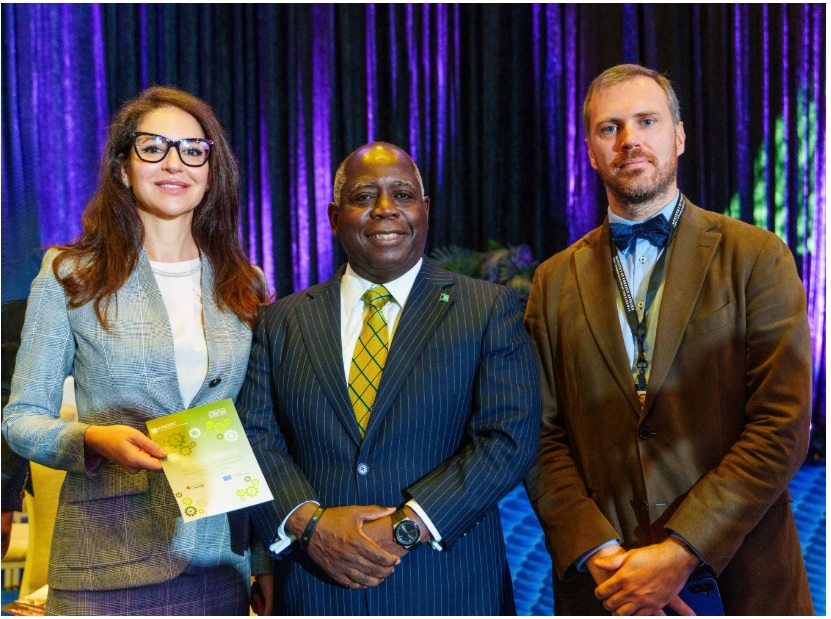
As recently stated by H. E. Ambassador Ron O. Pinder, Permanent Representative of The Bahamas to the International Atomic Energy Agency, the country is finalizing national legislation to ensure that all nuclear or radiological materials within the country’s territory are managed safely and securely. In this regard, adherence to ICSANT would help underpin these efforts.
During the Diplomatic Week 2025 “Delivering Security, Opportunity, and Justice through Diplomacy”, held on 19-23 October 2025 in Nassau, The Bahamas, UNODC discussed the Bahamas’ adherence to ICSANT, including how the Convention improves national, regional and international security. The Office also highlighted the role of ICSANT in detecting and identifying smuggled radioactive material and otherwise deterring terrorists and other criminals from using these substances. The event was opened by the Prime Minister the Honourable Philip EB Davis. It gathered over 200 delegates representing Bahamian ministers and diplomats as well as ambassadors from other countries and officials from international and regional organizations.
Ms. María Lorenzo Sobrado, Head of the Chemical, Biological, Radiological and Nuclear (CBRN) Terrorism Prevention Programme within UNODC’s Terrorism Prevention Branch spoke at the first high-level plenary session on “Emerging security threats: The Bahamas perspective”, which also featured the Honourable Wayne Munroe, KC, MP, Minister of National Security, representatives of the Royal Bahamas Police Force, the Royal Bahamas Defence Force and the Haiti Gang Suppression Force (formerly the Haiti Multinational Security Support Mission). In particular, Ms. Lorenzo Sobrado illustrated through concrete examples that the threat of terrorist and other criminal use of nuclear and other radioactive material is real for all States, not only for those ones with nuclear power programmes. She also emphasized that all States, including The Bahamas, need to establish robust and sustainable legal frameworks to counter this threat. ICSANT, to which The Bahamas is not yet party, is an essential tool at the country’s disposal to strengthen its criminal justice system and effectively prevent and combat malicious acts involving nuclear and other radioactive material.
Mr. Artem Lazarev, Programme Officer of UNODC’s CBRN Terrorism Prevention Programme, conducted a side-event on ICSANT. Through a fictional case study, he further raised awareness of relevant national stakeholders of The Bahamas on the main provisions of the Convention, benefits for the country of being party to it, and available technical and legislative assistance of UNODC.

The UNODC staff also conducted high‑level bilateral meetings on ICSANT with the following national officials: the Honourable Wayne Munroe, KC, MP, Minister of National Security; Mr. Jamahl Strachan, MP, Parliamentary Secretary, Ministry of Foreign Affairs; Her Excellency Ms. Jerusa Ali, Director General, Ministry of Foreign Affairs; and Mr. Ryan Sands, Legal Counsel, Civil Aviation Authority of The Bahamas. Among other things, the UNODC staff provided an overview of UNODC’s ICSANT‑related tools and the tailored technical and legislative assistance that the Office can offer to The Bahamas with regard to the country’s adherence to, and implementation of, ICSANT.

The country visit was conducted under a project funded by the Government of Canada.
Source: https://www.unodc.org/unodc/en/terrorism/latest-news/2025_unodc-promotes-the-international-convention-for-the-suppression-of-acts-of-nuclear-terrorism-at-the-annual-diplomatic-week-in-the-bahamas.html

United Nations

United Nations – Office on Drugs and Crime

07 October 2025

Practical, Digital and Tailored to Help You Grow

The United Nations Office on Drugs and Crime (UNODC) has officially launched its dynamic new Learning and Innovation Programme and with it, the new powerful digital training platform called SPARK.

SPARK brings flexible, high-impact learning to professionals worldwide – from bustling capitals to remote field stations.

In many low-resource or remote settings, criminal justice institutions face significant challenges, such as fragmented access to training, language barriers and geographical isolation. As a result, many practitioners lack training altogether, while those who do receive it often rely on sporadic training or outdated courses, leaving them underprepared for rapidly evolving threats.

UNODC, through the eLearning platform SPARK, addresses these challenges by providing multilingual online and offline courses and fostering a global community of practice. This approach bridges gaps and makes knowledge on justice more accessible worldwide.

Meet SPARK: Learn Anytime, Anywhere

This new Programme reflects a growing institutional shift toward digitalization and innovation not just as tools, but as essential strategies for building safer, more secure societies.

The Learning and Innovation Programme now focuses on three core areas:

  1. Digital training delivery across all UNODC thematic areas, i.e. the world drug problem, transnational organized crime; terrorism; corruption; and criminal justice.
  2. Pedagogical support to enhance the quality and impact of training provided by partners;
  3. Digital transformation for the internal operations and processes of criminal justice institutions and academies.

“This Programme introduces a new approach to capacity-building,” said Aimée Comrie, Chief of UNODC’s Crime Prevention and Criminal Justice Section. “It is practical, digital and tailored to help institutions grow stronger through innovation.”

At the heart of the Programme is SPARK – a powerful, modern digital learning platform that offers cost-effective, flexible interactive and accessible training tools for professionals across the criminal justice system. It includes self-paced eLearning courses, with interactive scenarios and simulations, as well as eClasses, which support both in-person and virtual training formats. Knowledge hubs, including webinars, online libraries, forums and podcasts are also featured. Moreover, content is localized, tailored to regional, national or local needs. 

Digital Transformation: From the Ground Up

Many criminal justice institutions, particularly in remote or underserved regions, continue to face serious barriers to modernization: limited internet access, power outages, outdated administration systems and low levels of digital literacy. These challenges not only hinder operational efficiency but also limit the ability of institutions to adapt to rapidly changing criminal justice threats.

The Programme directly addresses these obstacles by helping institutions digitalize core operations such as data management, administration, communication and training coordination. The Programme also providers basic digital literacy training, from device operation and email use to safe web navigation and online collaboration.

“Digital transformation is not just about technology – it is about empowering institutions to function more effectively, securely and inclusively,” said Nicolas Caruso, Head of the Learning and Innovation Programme. “By addressing infrastructure and skill gaps, we are helping justice institutions become more resilient and better equipped to meet the need of their communities.”

To ensure learning reaches even the most remote locations, the Programme has introduced  Mobile Training Units (MTUs) – portable kits containing a server, laptops and a router that can run for five hours without external power and be deployed in just 20 minutes. The MTUs have been deployed in 30 locations across West, Central and Eastern Africa, Latin America, South Asia and Southeast Asia, and North Africa and the Middle East.

Moreover, over 60 eLearning Centres have already been established globally, blending in-person instruction and creating local hubs for outgoing training.

Source: https://www.unodc.org/unodc/en/news/2025/October/unodc-ignites-innovation-with-new-learning-programme-and-spark-elearning-platform.html

Event date: 30 Sep 2025

Event location: Online

Organisers: UNODC

Event type: Meeting

The 2025 Thematic Discussions on the implementation of all International Drug Policy Commitments, following up on the 2019 Ministerial Declaration, include a session on “Prevention as a core element of the public health response to drug use”, which takes place online on 30 September.

More details can be found on the UNODC-CND webpage: https://www.unodc.org/unodc/en/commissions/CND/Mandate_Functions/thematic-discussions.html

Source: https://www.euda.europa.eu/event/2025/09/2025-cnd-thematic-discussions-prevention-core-element-public-health-response-drug-use_en

by UNODC – 20 August 2025

For over three decades, the United Nations Office on Drugs and Crime (UNODC) has supported non-governmental organizations (NGOs) in low- and middle-income countries implement substance use prevention projects that benefit youth around the world. This support has been made possible through the ongoing contributions of the Drug Abuse Prevention Centre (DAPC) in Japan since 1994. The DAPC Grants Programme enables civil society organizations to initiate and scale up prevention activities for youth and with youth aligned with the UNODC/WHO International Standards on Drug Use Prevention. The grants also empower young people to take active roles in supporting the health and wellbeing of their peers.

Following the 2024 Call for Proposals, which attracted more than 500 applications (more than double the previous year’s submissions), UNODC selected four new DAPC grant recipients through a multi-phased competitive process. Grantees from Cambodia, Iraq, Sri Lanka, and Zimbabwe will soon begin implementing their projects to support youth through locally grounded prevention efforts.

The Youth Aspire Development Trust, based in Zimbabwe, will be implementing their SPARK (Substance Prevention and Awareness for Resilient Knowledgeable Communities) project.  The grantee will engage with schools and communities in the Chitungwiza region of Zimbabwe targeting students, teachers and parents. Teachers from local schools will receive training on classroom-based prevention strategies, early detection of risky behaviours, and ways to foster positive school climates. Students will also be selected as peer leaders and be equipped with life skills, refusal techniques, and resilience training to lead cascade sessions and positively influence other peers. Complementing these efforts, the grantee will also engage parents to strengthen their role in creating protective home environments for their family. And finally, to expand the reach of the programme, trained teachers and parents will conduct cascade trainings within schools and communities.

The Alcohol and Drug Information Centre (ADIC) in Sri Lanka will implement the project “Peer Power: Youth-Driven Substance Use Prevention and Resilience Building” in Colombo. Youth facilitators will be trained to mentor younger peer leaders, who will deliver interactive, skills-based workshops in local communities and schools with the support of ADIC’s resource persons. The project includes a baseline survey, capacity building for youth, creation of a tailored action plan, peer-to-peer education sessions, community and family engagement activities, and social media campaigns developed by youth. By combining in-person outreach with digital platforms, the project aims to enhance youth resilience and decision-making, empower and educate youth leaders, and strengthen community support for such initiatives.

In Cambodia, the grantee Mith Samlanh will implement its “Peer Prevention: A Youth-Driven Project Against Drugs” project by combining national and community-level initiatives. A national multimedia campaign, developed together with youth, will raise awareness about the risks of drug use through videos and prevention messages, reaching young people across social media platforms. In parallel, in-person awareness sessions will engage directly with communities in vulnerable areas of Phnom Penh, helping to bridge the digital divide and reach those who may not be active online. The grantee will also develop and integrate a Drug Prevention module into Mith Samlanh’s existing soft skills training for at-risk individuals, using evidence-informed methods to build resilience and enhance life skills. Additionally, a cascade Training of Trainers modality will strengthen local capacity by preparing teachers, social workers, youth champions, and local authorities to deliver prevention messaging and trainings to support youth and families across Phnom Penh.

In Iraq, the Bestan Child Society (Bustan Association) will implement the “Building Community Power to Prevent Youth Drug Use” project. The grantee will engage with community influencers such as teachers, sports coaches, youth leaders, and journalists to strengthen the local prevention capacity. Trained as prevention champions, they will integrate drug awareness and life skills into sports, arts, and peer-led activities that will be conducted in the target communities. Youth will also take part as informal peer educators through the 3S Initiative (Sport–Smile–Sleep), which will promote resilience and healthy lifestyles in young people.  Also, youth co-created awareness materials will further extend the project’s reach through social media and community events.

UNODC is pleased to support these four new diverse projects under the DAPC Grants Programme. Each initiative reflects a strong commitment to prevention aligned with the Standards, youth engagement, and community-level action — key elements in building healthier lifestyles and safer environments for young people to grow and thrive in. For more information about the DAPC grants projects and the programme, please visit the Youth Initiative website and stay up to date through the UNODC PTRS social media channels  (X, LinkedIn, Facebook).

Source:  https://www.unodc.org/unodc/prevention/youth-initiative/youth-action/2025/August/introducing-new-dapc-grant-funded-projects.html

Every year the United Nations Office on Drugs and Crimes releases the World Drug Report (WDR) on World Drug Day, which is observed annually on June 26th. The WDR provides updates on international drug markets, policy changes across the world, and summarizes gathered data on ongoing issues caused by drugs on all fronts.

This year’s report calls for communities around the world to break the cycle and #StopOrganizedCrime, stressing the intricacy and ever-expanding reach of organized crime networks on a global scale currently exacerbated by increased global instability. 

Among this year’s highlights, the World Drug Report finds a 28% increase in people who use drugs over the past 10 years, with marijuana the top used substance with 244 million users, followed by opioids, amphetamines, cocaine, and ecstasy.

The report also highlights a 13% increase in people suffering from drug use disorders over the past 10 years and the disproportionate imbalance among men and women with substance use disorders (SUD) who receive treatment. While 1 in 7 men with a substance use disorder receive treatment, only 1 in 18 women with SUD receive treatment.

But the most sobering reality is that youth continue to show a steady rise in drug use over the past decade. Vulnerable populations are bearing the brunt of illegal exploits and are falling prey to the cycle of poverty and crime created by underfunded systems and increased criminal activity.

Stimulant-related criminal activity is growing at an alarming rate. Between 2013-2023, global cocaine production rose 34%, global cocaine seizures rose 68%, and the number of people who use cocaine jumped from 17 million to 25 million. The steady expansion of cocaine use and rise in production continues to break records year after year. Additionally, the synthetic drug market led by methamphetamines and captagon continues to grow with drug and human trafficking feeding criminal networks that are constantly adapting to new intelligence and technological advances. The influence of this global drug crisis is reflected not only on the financial costs to communities, but on health systems, the environment, public safety, and above all, the loss of life.

Now more than ever, prevention plays a vital role in breaking the harmful cycles created by substance use. While local organizations witness the impact of drugs firsthand in their communities, and governments work to address supply and demand on a global scale, civil society is uniquely positioned to listen, respond, and offer immediate support to local leaders and at-risk populations.

By collaborating with organizations and building a network of support, we can empower individuals with evidence-based resources that strengthen protective factors, promote education, and foster long-term resilience.

Drug Free America Foundation leads the Global Task Force, uniting international non-governmental organizations with this shared mission. If you are interested in joining, please reach out to clincoln@dfaf.org .

If you would like to read the full World Drug Report click here 

Source:  Drug Free America Foundation | 333 3rd Ave N Suite 200 | Saint Petersburg, FL 33701 US

  • by Oritro Karim (United Nations) – 

UNITED NATIONS, Jun 27 (IPS) – Since 1989, the United Nations (UN) has recognized June 26 as the International Day Against Drug Abuse and Illicit Trafficking in an effort to raise awareness around the global drug problem and foster a more compassionate world, free of drug abuse. Through this year’s campaign, “Break the Cycle. #StopOrganizedCrime”, the UN underscores the importance of addressing the root causes of global drug abuse and illegal drug trading, and investing in reliable systems that prioritize prevention, education, and health.

Concurrently, the United Nations Office on Drugs and Crime (UNODC) released its annual World Drug Report, in which it analyzed the current trends in global drug abuse amid a “new era of global instability”. In the report, UNODC emphasizes the wide ranging implications of drug use on the economy, the environment, global security, and human society.

According to the report, roughly 316 million people used drugs (excluding tobacco and alcohol) around the world in 2023. UNODC also estimates that nearly half a million people around the world die annually as a result of drug use disorders, indicating a “global health crisis”. Roughly 28 million years of life are lost annually from disabilities and premature deaths due to addiction. Furthermore, there is an overwhelming lack of healthcare and education resources for individuals with drug use disorders, as only one in twelve people are estimated to have received treatment in 2023.

Cocaine has been described as the world’s fastest growing illicit drug in terms of global usage, production, and seizures. In 2023, approximately 3,708 tons of cocaine were produced, marking a 34 percent increase from the previous year. Roughly 2,275 tons were seized in 2023, a 68 percent increase from 2019’s figures. Additionally, global usage of cocaine has inflated to 25 million users in 2023.

As nations began to implement harsher crackdowns on drug production, the use and transportation of synthetic drugs, such as fentanyl and methamphetamine, has reached record-highs, accounting for nearly half of all global drug seizures. Drug trafficking groups have found ways to chemically conceal these drugs, making distribution much easier.

UNODC Executive Director Ghada Fathi Waly states that organized drug trafficking groups around the world continue to exploit global crises, disproportionately targeting the most vulnerable communities. With worldwide synthetic drug consumption having surged in recent years, the UNODC forecasts that civilians displaced by armed conflicts face heightened risks of drug abuse and addiction.

Although the cocaine market was once contained in Latin America, trade has extended through to Asia, Africa, and Western Europe, with Western Balkans having greater shares in the market. This is a testament to the influence of organized crime groups in areas facing instability, natural disasters, and economic challenges.

According to the report, since the end of the Assad regime in Syria and the subsequent political transition, nationwide use of fenethylline — also known as captagon, a cheap, synthetic stimulant — has soared. Although the transitional government of Syria has stated that there is zero tolerance for captagon trade and consumption, UNODC warns that Syria will remain a significant hub for drug production.

Angela Me, the Chief of Research and Analysis at UNODC, states that captagon use in the Arabian peninsula was spurred by regional violence, with members of terrorist organizations using it on battlefields to stay alert. Due to its highly addictive properties, as well as its severe impacts on physical and mental health, the drug has seen widespread consumption over the past several years.

“These groups have been managing Captagon for a long time, and production is not going to stop in a matter of days or weeks,” said Me. “We see a lot of large shipments going from Syria through, for example, Jordan. There are probably still stocks of the substance being shipped out, but we’re looking at where the production may be shifting to. We’re also seeing that the trafficking is expanding regionally, and we’ve discovered labs in Libya.”

Global drug trafficking is estimated to generate billions of dollars per year. National budgets to combat drug trafficking, in terms of law enforcement and prosecution, cost governments millions to billions annually as well. Healthcare systems, which are often underfunded for addiction-related treatments, are overwhelmed by the vast scale of needs. Furthermore, damages related to theft, vandalism, violence, and lost productivity in the workplace have significant impacts on gross domestic products.

Additionally, increased rates of deforestation and pollution are linked with global drug cultivation. Additional adverse environmental impacts include ecosystem damage from drug waste, which yields notable costs in environmental restoration efforts.

It is imperative for governments, policymakers, and other stakeholders to invest in programs that disrupt illicit drug trafficking groups and promote increased security, especially along borders, which are critical hubs for transporting concealed substances. Furthermore, cooperation at an international level is instrumental for the transfer of information and promoting a joint and multifaceted approach.

“We must invest in prevention and address the root causes of the drug trade at every point of the illicit supply chain. And we must strengthen responses, by leveraging technology, strengthening cross-border cooperation, providing alternative livelihoods, and taking judicial action that targets key actors driving these networks,” said Waly. “Through a comprehensive, coordinated approach, we can dismantle criminal organizations, bolster global security, and protect our communities.”

Source:  https://www.globalissues.org/news/2025/06/27/40295

United Nations – Information Service Vienna – 26 June 2025

The global illicit drug trade continues to exact a devastating toll: claiming lives, ravaging public health services, and fuelling violence and organized crime.

Drug trafficking is tearing through communities with substances that are more potent, more dangerous, and more deadly than ever. Meanwhile, criminal networks prey on the most vulnerable – particularly women and youth – as they rake in hundreds of billions annually through the illicit drug trade.

This year, we shine a light on prevention as the most essential strategy for halting the flow of drugs that fuels organized crime worldwide.

We must reduce demand through investing in education, treatment, harm-reduction measures and care; target the machinery of production by eliminating illicit laboratories and offering farmers viable alternatives; and sever trafficking networks by strengthening global trade routes and choking the financial flows of criminal networks, while always ensuring respect for human rights.

Let us recommit to ending drug abuse and trafficking, uniting to dismantle criminal networks, and breaking the cycle of suffering and destruction once and for all.

Source:  https://unis.unvienna.org/unis/pressrels/2025/unissgsm1507.html

Back to top of page

Powered by WordPress