by WRD News Team February 6, 2026
Between 1980 and now, something fundamental has shifted in how we approach drugs, and understanding this transformation requires examining the historical record with clear eyes. Peter Stoker’s peer-reviewed paper, published in The Journal of Global Drug Policy and Practice in 2007, and very recently merged from a three-part in the Journal version into a single document, republished in the NDPA Website, traces the harm reduction history that changed everything, and his analysis, backed by over 250 references, makes for profoundly uncomfortable reading.
Back in 1980, America had just pulled off something remarkable in public health terms. Through coordinated prevention efforts involving parent groups and community organisations, drug use had dropped by 60%, with approximately thirteen million people stopping entirely. Parent groups had mobilised thousands of families around clear messaging that worked precisely because it was straightforward and uncompromising.
Today we’re told that same approach is not only outdated but fundamentally impossible to replicate. Prevention doesn’t work, the contemporary consensus insists, and the only realistic option is managing drug use rather than preventing it. Schools now teach children how to use drugs “more safely” instead of why they shouldn’t use them at all, representing a philosophical shift so profound that many who lived through both eras struggle to explain how it happened.
So what changed between then and now, and more importantly, how did such a dramatic reversal occur in barely more than a generation?
When Prevention Actually Worked
The 1970s were extraordinarily rough for American communities grappling with escalating drug use across virtually all demographic groups. By 1979, one in three teenagers had tried illegal drugs, whilst among high school seniors the figure approached an alarming two in three. Parents watched their children getting swept up in drug culture and recognised that something fundamental had to give.
Groups like the National Federation of Parents for Drug-Free Youth and PRIDE refused to accept this trajectory as inevitable or irreversible. They developed coordinated responses centred on three straightforward goals: stop kids starting, help users quit, and ensure treatment was available for those who genuinely needed it.
The results, documented across multiple independent studies, speak powerfully to the effectiveness of well-implemented prevention. Between 1980 and 1992, overall drug use fell 60%, representing one of the most successful public health interventions in modern American history. This wasn’t achieved through complex interventions or expensive pharmaceutical solutions, but through clear messaging and communities working together around shared values.
Then, almost imperceptibly at first but with gathering momentum, the tide began turning in a different direction entirely.
Liverpool’s Place in Harm Reduction History
Liverpool in the 1980s was struggling with profound challenges that had been building for years. The Toxteth riots of 1981 had left deep psychological and economic wounds, leaving the city angry, economically battered, and desperately searching for new answers to seemingly intractable problems.
A group of activists saw an opportunity to advance a radically different approach. Peter McDermott, now an editor at the International Journal on Drug Policy, later admitted with remarkable candour what they’d really been pursuing. The goal, in his own words, was to “signify a break with the philosophy that placed a premium on seeking to achieve abstinence,” and this moment would prove absolutely pivotal in harm reduction history.
What happened next is profoundly telling about the unintended consequences that emerge when ideology drives policy ahead of careful evaluation. Liverpool’s heroin users had historically smoked their drugs, a pattern that carried risks but avoided the particular harms of injection. After new programmes started handing out unlimited needles, the city shifted dramatically towards majority injecting use, and Hepatitis C rates climbed sharply during the same period.
A Liverpool mother whose two children battled heroin addiction told Stoker what she saw firsthand. Workers gave out needles “by the bag full,” and they even supplied known drug dealers who’d been promised they wouldn’t be arrested if caught carrying equipment.
The question nobody seemed willing to ask, or perhaps didn’t want to face honestly, was whether this represented genuine public health intervention or something else entirely.
Following the Money
George Soros, operating through various philanthropic entities under his control, had spent over $90 million by 1997 specifically pushing for fundamental changes in drug law and policy. Current estimates, based on tracking available records, put the cumulative total somewhere closer to $200 million invested over subsequent years in supporting liberalisation efforts.
That substantial financial backing funded major advocacy organisations including the Drug Policy Alliance, the Lindesmith Institute, and countless international conferences that shaped policy discourse globally. The money paid for glossy publications reaching policymakers, sustained media campaigns influencing public perception, and full-time lobbyists who could dedicate themselves entirely to advancing liberalisation agendas.
Prevention groups, by stark contrast, operated almost entirely on modest donations and small grants, and the financial mismatch was absolutely crushing in its practical effects on policy influence.
When you can afford international conferences bringing together hundreds of policymakers, employ professional PR firms that understand media dynamics, and fund sympathetic academic research whilst your opponents scrape by on volunteer hours, the playing field isn’t merely uneven. It’s tilted at such an extreme angle that meaningful competition becomes virtually impossible.
How Harm Reduction History Shaped Education
England and Wales had approximately 100 drug education coordinators serving 50 million people during the 1980s, which isn’t a particularly large number to convince if you’re attempting to shift fundamental policy direction. Focused advocacy groups recognised this vulnerability and exploited it systematically.
By the 1990s, British schools were incorporating materials suggesting “drug use is fun” and encouraging students to explore “the benefits of drug taking” without corresponding emphasis on risks. One widely distributed curriculum posed the question: “If adults drink alcohol why should I not take Ecstasy?” without providing any framework for evaluating the obvious differences in legal status, risk profiles, and social consequences.
Australia went considerably further, making these approaches mandatory components of school-based education across entire state systems.
The philosophical groundwork had been carefully laid over preceding decades through broader changes in educational theory. Carl Rogers had developed “values clarification” with the worthy intention of helping students discover values that would serve their development and communities. In practice, however, it morphed into something quite different, as external moral guidance came to be characterised as “anti-democratic” imposition. The new orthodoxy insisted that children should work out their own values largely independently, without what was dismissively termed “interference” from adults.
Rogers himself, watching how his concepts were being implemented and recognising troubling outcomes, later expressed profound reservations. He referred to what his work had enabled as “this damned thing” and questioned publicly whether he’d unwittingly initiated something “fundamentally mistaken.”
By the time Rogers voiced these concerns, however, the educational approaches his work inspired had already achieved such widespread implementation that reversing course would have required acknowledging systemic failure on a scale that bureaucracies rarely prove willing to contemplate.
What the Research Actually Shows
Needle exchange programmes consistently get presented as obvious public health victories, yet the accumulated research tells a considerably more complicated and often quite troubling story.
In Vancouver, HIV rates amongst participants jumped from 2% in 1988 to 23% in subsequent measurements. The city now holds the unfortunate distinction of Canada’s highest overdose death rate, and more than a quarter of participants continue sharing needles despite regular access to sterile equipment.
Montreal found participants had a 33% probability of HIV infection, whilst comparable non-participants showed only 13% probability, raising serious questions about whether participation might actually increase risk.
In India, baseline measurements before programme implementation showed HIV prevalence of 1%, Hepatitis B of 8%, and Hepatitis C of 17%. Following several years of operation, these figures had risen to 2%, 18%, and a truly alarming 66% respectively.
Analysis of 131 American programmes found that of nearly 20 million needles distributed, over 7 million were never returned, leading researchers to characterise many initiatives not as genuine exchanges but as distribution programmes.
Meanwhile, rigorous studies indicated that standard addiction treatment focused on reducing or stopping injection provided substantially superior protection against HIV and Hepatitis C compared to needle programmes operating without treatment components. This finding, however, doesn’t fit comfortably within the preferred narrative and consequently receives minimal attention.
Sweden’s Different Path
Sweden’s experience provides particularly instructive contrast. Following experimentation with permissive policies after World War II and evaluation revealing unfavourable outcomes, Sweden implemented comprehensive prevention-focused strategies as national policy.
The measurable results demonstrate what’s possible when commitment remains consistent over extended periods. Sweden maintains Europe’s lowest substance use rates across virtually all categories and age groups, a remarkable achievement sustained over several decades. Treatment centres operating both voluntary and court-mandated programmes achieve comparable success rates, suggesting quality matters more than admission pathway. Education systematically prioritises preventing initiation rather than teaching “safer” consumption methods.
The Swedish experience demonstrates conclusively that prevention can achieve substantial results when adequately resourced, systematically implemented, and sustained through consistent policy commitment over the time periods required for cultural change to take root.
The Power of Words
Language plays an extraordinarily significant role in shaping how different policy approaches are perceived by stakeholders, from policymakers to the general public. Certain terminology choices have proven remarkably influential precisely because the terms themselves carry implicit assumptions that bypass critical evaluation.
The term “soft drugs” implies substantially reduced harm potential, creating categorical distinctions that research doesn’t necessarily support. “Recreational use” frames consumption within normative leisure contexts, stripping away the reality that we’re discussing powerful psychoactive substances with genuine addiction potential. “Medical use,” when applied to smoking unprocessed plant material rather than tested pharmaceutical preparations, deliberately borrows credibility from established medical practice.
Perhaps the cleverest rhetorical trick has been characterising prevention as “prohibition,” a term that deliberately evokes 1920s American alcohol policy. The word triggers immediate images of gangsters and policy failure, despite substantial historical evidence that actual prohibition achieved measurable public health improvements.
Historical analysis by Robert Peterson demonstrates that prohibition outcomes contradicted common perceptions. Cirrhosis mortality decreased by over a third, alcohol-related psychosis declined markedly, and contrary to widespread belief, murder rates rose far more slowly during prohibition than before or after.
These facts receive minimal attention in contemporary discourse, strongly suggesting that terminology choices serve rhetorical rather than analytical functions, designed to trigger emotional responses rather than encourage careful evidence evaluation.
What Users Actually Want
Professor Neil McKeganey at Glasgow University’s Centre for Drug Misuse Research did something that should be standard practice but apparently represented something quite radical. He systematically surveyed substantial cohorts of drug-dependent individuals, directly asking what services they actually wanted.
The findings revealed patterns that fundamentally contradicted prevailing assumptions underlying current service delivery. The overwhelming majority didn’t request expanded needle programmes or indefinite methadone prescriptions. Instead, they expressed clear desire for clinical assistance in achieving complete cessation and sustained recovery, essentially asking for help to stop entirely rather than support for continued use under marginally safer conditions.
This peer-reviewed finding, published in respected journals and subjected to standard methodological scrutiny, contradicts the entire philosophical rationale underlying approaches focused on managing ongoing use. The research demonstrates that when you actually ask users what they want, they articulate goals aligning much more closely with prevention and treatment than with harm reduction philosophies. These findings, however, have received remarkably limited attention in subsequent policy development and funding decisions.
Europe’s Funding Games
The European Union formally maintains that drug policy falls outside its competence and remains under member state authority through subsidiarity principles. In practical operation, however, the EU exercises considerable influence through strategic funding decisions, policy recommendations carrying significant political weight, and coordination mechanisms shaping national development.
Former Swedish MEP MaLou Lindholm systematically documented troubling patterns in how these mechanisms operate. The European Cities on Drug Policy, representing approximately 30 cities favouring liberalisation, received substantial EU funding sustained over multiple years. Meanwhile, the European Cities Against Drugs, representing over 250 cities supporting UN conventions and prevention strategies, received outright rejections on multiple applications despite membership nearly ten times larger.
The Italian Radical Party, focused explicitly on drug liberalisation advocacy, maintains permanent office space within the EU Parliament building itself. The organisation utilises Parliament telecommunications, internet, and facilities, all taxpayer-funded, to lobby elected officials who often lack detailed policy knowledge.
Analysis suggests most elected representatives possess remarkably limited knowledge of harm reduction history and policy evidence, potentially increasing susceptibility to focused lobbying from well-resourced organisations that can afford professional staff dedicated entirely to influencing legislative processes. Most politicians know almost nothing substantive beyond simplified talking points provided by whichever advocacy groups reach them first.
The Evidence Double Standard
For decades, advocates attacked prevention for supposedly lacking sufficient evidence and failing to demonstrate effectiveness through rigorous evaluation. Demanding evidence-based policy certainly represents legitimate practice, and holding prevention to high standards is entirely appropriate.
What makes this problematic is the glaring double standard in how evidentiary demands get applied depending on which approach is under scrutiny. Anna Bradley, former Director of Britain’s Institute for the Study of Drug Dependence, acknowledged publicly in the late 1990s that “there is no research base for harm reduction,” essentially admitting that programmes promoted as evidence-based alternatives lacked the systematic evaluation their advocates demanded from prevention.
Stoker personally observed a 1988 presentation by Alan Parry, a Liverpool activist, who forcefully demanded rigorous proof from prevention programmes whilst simultaneously acknowledging his own programmes had no evaluation protocols due to “limited funding.” Assessment relied on subjective impressions that approaches appeared “working well.”
This differential standard continues characterising policy discourse in ways seriously undermining claims that contemporary drug policy is genuinely evidence-based. Prevention faces relentless demands for rigorous trials and demonstrated effectiveness, whilst approaches managing active use operate with substantially reduced scrutiny and minimal evaluation requirements.
Why Opposition Got Crushed
The massive resource differential created constraints so severe that fair debate on policy merits became virtually impossible. Well-funded liberalisation groups, backed by hundreds of millions, maintained capacity for activities prevention groups could barely imagine.
They organised international conferences attracting hundreds of participants, providing networking and coordinated messaging shaping global discourse. They afforded professional publication and distribution through established channels. They employed full-time staff and structured lobbying operations developing long-term policymaker relationships. They ran sustained media campaigns across multiple platforms. They funded research programmes and academic positions generating ostensibly independent scholarship supporting preferred directions.
Prevention organisations, operating primarily through volunteer contributions and modest grants, simply couldn’t compete effectively. When prevention advocates secured media attention, they frequently received characterisation as punitive and moralistic. Liberalisation advocates, meanwhile, benefited from portrayal as compassionate, evidence-based, and appropriately pragmatic.
These treatment patterns both reflected and substantially reinforced underlying disparities, creating self-reinforcing cycles where funding advantages translated into media advantages which further entrenched funding advantages through enhanced credibility.
The Cultural Shift Behind Harm Reduction History
Understanding harm reduction history comprehensively requires considering much broader cultural transformations occurring simultaneously. Substance use behaviours don’t occur in isolation but are substantially shaped by prevailing cultural environments and normative frameworks.
From the 1960s onwards, individual rights received progressively increasing prioritisation over community responsibility and collective wellbeing. Traditional authority figures experienced progressive reduction in societal influence. Non-judgementalism became increasingly elevated as paramount virtue, to the point where making moral distinctions between choices became culturally problematic.
Values-based education underwent substantial transformation towards pure individualism. Young people received consistent messaging that external moral guidance constituted “anti-democratic” imposition inappropriate in pluralistic societies. They were systematically encouraged to develop autonomous values without reference to adult perspectives or accumulated cultural wisdom.
Family structures underwent profound changes including dramatically increased divorce rates and single-parent households. Community bonds providing support networks and shared identity weakened substantially as people moved more frequently and participated less in traditional institutions. Materialistic values and immediate gratification became increasingly dominant. Self-focused outlooks progressively superseded concern for collective wellbeing.
Into this comprehensively transformed environment, creating what might be characterised as a moral vacuum, came messaging suggesting drug use represented merely another legitimate lifestyle choice. The message insisted it required professional management rather than moral evaluation or prevention efforts, fitting perfectly within broader currents elevating individual choice whilst dismissing traditional frameworks as outdated.
Drug policy didn’t change in isolation but was intimately connected to cultural shifts creating the environment where harm reduction history could unfold precisely as it did.
Where Things Stand
British drug education reflects substantial influence from approaches systematically prioritising managing use over preventing initiation. DrugScope, receiving up to £3 million annually in government funding, has consistently promoted these approaches whilst prevention perspectives receive substantially marginalised treatment in policy forums and funding decisions.
The Drug Education Forum and Drug Education Practitioners Forum, influential bodies shaping practice across thousands of schools, have been substantially influenced over extended periods by individuals known for publicly opposing prevention priority. Schools consequently receive official guidance tending systematically to undermine clear anti-drug messaging in favour of approaches focused on purported harm reduction.
Australia implemented similar approaches as mandatory national policy several years prior, whilst Canada systematically redirected substantial prevention funding towards programmes serving active users rather than preventing initiation. Across European jurisdictions, prevention organisations face persistent resource constraints whilst liberalisation advocacy receives substantial EU funding.
Nevertheless, recent developments suggest potential for significant reassessment. McKeganey’s research on user preferences created evident discomfort amongst groups claiming to represent user interests authentically. Sweden’s sustained success maintaining remarkably low rates through consistent prevention remains extremely difficult to dismiss. Some former advocates, speaking privately, have begun acknowledging limitations and disappointing outcomes of current approaches, though such admissions rarely translate into policy reversals.
What Harm Reduction History Teaches Us
Stoker’s analysis, drawing systematically on over 250 references spanning decades across numerous jurisdictions, establishes several key evidence-based conclusions deserving serious consideration.
Prevention demonstrates measurable effectiveness when adequately implemented and sustained over sufficient time periods. America’s dramatic 60% reduction during the 1980s provides powerful evidence that prevention works at population scale when communities mobilise around clear messaging. Sweden’s sustained low rates maintained consistently across decades offer additional compelling confirmation.
Current approaches focused predominantly on managing active use whilst neglecting prevention have produced disappointing outcomes across multiple domains. These approaches have demonstrably failed to align with stated user preferences, whom research indicates primarily desire complete cessation rather than indefinite management. They’ve failed families experiencing profound disruption from member addiction. They’ve failed communities experiencing elevated drug-related crime and social disorder.
The substantial financial advantage enjoyed by liberalisation organisations, sustained through foundation funding counted in hundreds of millions, requires explicit acknowledgement and strategic response if prevention voices are to receive fair hearing. Without comparable resources enabling professional operations and sustained engagement, prevention groups will continue facing persistent structural disadvantages.
Media treatment patterns systematically favouring liberalisation require critical examination and direct challenge. The assumption that liberalisation automatically represents compassionate pragmatism whilst prevention represents punitive moralising fundamentally lacks empirical foundation. Genuine compassion would logically prioritise preventing harmful initiation over managing consequences of initiated use.
Educational approaches require systematic reorientation towards messaging clearly communicating evidence-based realities: drugs present genuine health risks, initiation is demonstrably preventable, and young people deserve meaningful protection from exploitation and misguided frameworks normalising harmful behaviours.
Fundamentally, broader cultural renewal merits serious consideration. Shared values, despite contemporary dismissal as outdated, serve crucial protective functions. Community bonds provide essential support structures and accountability mechanisms. Clear guidance from caring adults serves essential protective functions during developmental periods when young people establish lifelong patterns.
Young people benefit substantially from learning that certain choices produce demonstrably better outcomes, not through judgementalism but from genuine concern for their wellbeing and ability to build lives worth living.
The Bottom Line
Stoker’s analysis reveals a well-funded, strategically sophisticated campaign that transformed drug policy over four decades. This transformation wasn’t driven by evidence or user preferences. Research shows users want help to quit, not indefinite management of continued use.
Instead, the shift was driven by ideological commitments backed by unprecedented funding from philanthropic sources, promoted through captured institutions, and facilitated by sympathetic media.
The consequences are troubling. Millions of lives have been negatively impacted by substance use that prevention might have forestalled. Families have been torn apart. Communities struggle with drug-related crime and social disorder. Billions have been allocated to approaches producing limited results whilst prevention remains underfunded.
But it’s not predetermined. Sweden proves prevention works when properly resourced. McKeganey’s research shows academic questioning is emerging. Parent organisations are growing.
The question is whether sufficient will exists to learn from harm reduction history’s lessons. Prevention produces results when adequately funded. Alternative approaches have proven expensive whilst producing disappointing outcomes, despite compassionate rhetoric.
The evidence points towards clear conclusions for anyone genuinely committed to reducing harm.
Source: www.wrdnews.org


























 nationthailand.com/news
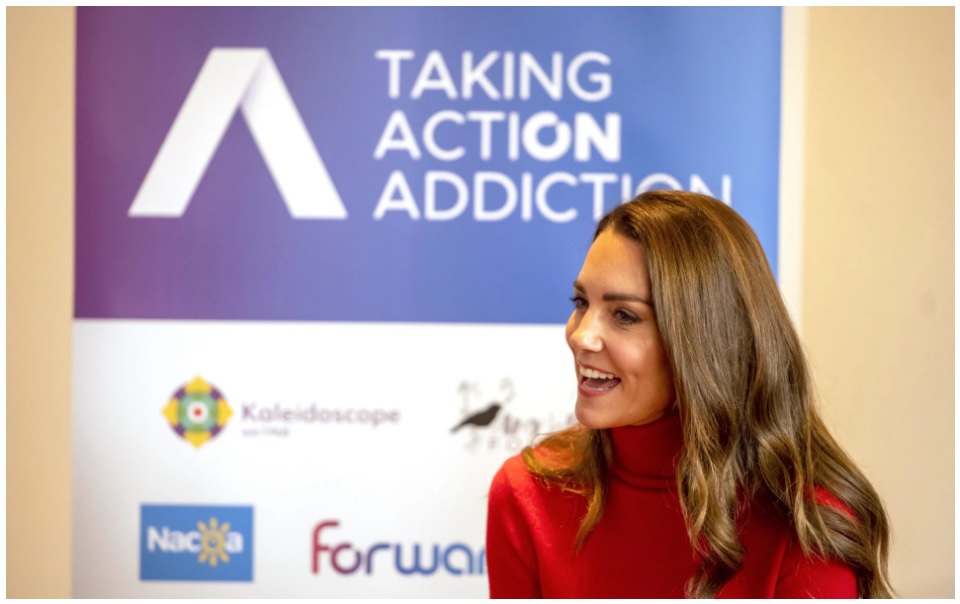
The Princess of Wales is patron of The Forward Trust, a charity devoted to assisting addicts to remain abstinent from their drug of addiction. She has just spoken out forcefully against the view that addiction is weakness of will or any kind of moral problem.
“Addiction is not a choice or a personal failing,” she said, implying thereby that it was a medical condition like any other, such as Parkinson’s disease or multiple sclerosis. She said that “people’s experience of addiction in still shaped by fear, shame and judgment, and that this ought to change”.
I am sure that HRH meant well, and that she feels genuine sympathy for addicts; but unfortunately, her view is simple, unsophisticated, dehumanising and empirically false.
It is dehumanising because, by denying that addiction is a choice, it deprives addicts of their agency both in theory and to a certain extent in practice. If, after all, you persuade someone that he does not make a choice in doing something, you also persuade him that choice cannot prevent him from doing it. He is not a human being like you and me, but a helpless feather on the wind of circumstance.
This turns him into an object, not a subject, both to himself and others. Such a view is implicitly degrading, demeaning and far from compassionate. It implies the need for an apparatus of care to look after him, much as one would look after an animal in a menagerie, with kindness but not with much respect.
Take the case of the injecting heroin addict and think what he has to do and learn to become such an addict. He has to learn where to obtain heroin and how to prepare it. He has to learn to disregard its unpleasant side effects. He has to overcome a natural aversion to pushing a needle into himself. This is not something that just happens to him.
Moreover, not only do most addicts take the drug for some time before becoming physically addicted to it, but they are fully aware in advance of the consequences of taking the drug long-term. Addicts are not “hooked” by heroin, as they often put it; rather, they hook heroin.
It is untrue that addicts require a professional apparatus to overcome their addiction. Millions of people have given up smoking, though nicotine is addictive. During the Vietnam War, thousands of American soldiers addicted themselves to heroin and gave up, with almost no assistance, one they returned home.
In 1980, Porter and Jick pointed out that people treated with strong painkillers as in-patients in hospital did not go on to become addicts once they left hospital. This was unfortunately interpreted to mean that such drugs were not addictive; but, on the contrary, it shows that addiction, in the sense of continuing addictive behaviour, is not straightforwardly a physiological condition.
At the root of the Princess’s misapprehension is the post-religious or secular view that if a person is the author of his own downfall, he is due no sympathy or compassion. It is a highly puritanical view, and since we do not want to be puritans, we make the problem a medical one instead. But since we are all sinners and the authors of our own downfall, at least in some respect or other, this also has the corollary that sympathy or compassion is due to no one when he needs it.
The Princess appears to think that if you say to an addict that he has behaved, and continues to behave, foolishly and badly, you are necessarily saying to him, “Go away, darken my doors no more”. She seems to think that the truth, far from setting people free, will imprison them until someone comes along with a technical key to unlock them.
Of course, some addicts benefit from assistance, but not for the reasons the Princess supposes. Medication may reduce their physical sufferings, and if we take once more the example of injecting heroin addicts, we discover that they may well have so destroyed their relations with everyone – their families and friends – that there is no one to whom to turn if they desire to change their ways. They thus need a helping hand, but this is not the same as removing fear or stigma (a very necessary, though not sufficient, aid to civilised life). Though she did not mean them to be so, the Princess’s words were not so much demoralising, as amoralising.
Source: https://www.telegraph.co.uk/gift/51db8fdbd5d80cb6