Age-related

In fact, 20% of people over 50 who use cannabis products reported that at least once in the past year, they had driven within two hours of using the drug.

That means they likely got on the road while the THC in cannabis still impaired their reaction times, attention and other abilities that are important to driving safely.

The findings, from a University of Michigan team led by addiction psychologist Erin E. Bonar, Ph.D., are published in the journal Drug and Alcohol Dependence. The data behind the study come from the National Poll on Healthy Aging, based at the U-M Institute for Healthcare Policy and Innovation.

Bonar and the poll team published an initial analysis in late 2024, but the new paper dives deeper into the data.

So much of the effort to reduce ‘driving while high’ through awareness campaigns has focused on young people, but our findings show this is a cross-generational issue. Targeting messages at those middle age and older adults with the highest risk of post-use driving could also include message about the options for addressing the health issues that they may be trying to self-treat with cannabis.”

Erin E. Bonar, Ph.D., professor of psychiatry, U-M Medical School

Those most likely to drive after using cannabis

Adults age 50 and over who use cannabis products daily or nearly daily were three times as likely to say they had driven soon after using, compared with those who only use cannabis rarely, the study finds.

Those who use cannabis for mental health reasons were twice as likely to say they’d driven after using it, compared with those who didn’t list mental health among their reasons for choosing to use cannabis.

And men over 50 who use cannabis were 72% more likely to drive after using THC-containing products, compared with women in the same age group who use cannabis.

In all, the poll showed that 21% of people age 50 and up had used a cannabis product at least once in the last year, including 27% of those aged 50 to 64 and 17% of those aged 65 and up.

Of the 729 respondents over 50 who said they had used cannabis in the past year, 27% said they use it daily or almost daily, while 43% had used it only once or twice. The rest were divided between those who use monthly (14%) and weekly (16%).

Beyond the riskiest groups

While the study results suggest some groups of people over 50 who could especially benefit from targeted preventive messaging about the risks of driving after using cannabis, broad-based messaging appears to be needed, Bonar says.


There were also no differences in post-use driving by age, race, ethnicity, income, history of loneliness, or caregiver status.

Those who live in states where recreational cannabis has been legalized were no more likely to drive after using the drug than those living in other states.

In addition to mental health, the poll asked about other reasons that adults over 50 might use cannabis, including several related to health. In all, 52% of people over 50 who use cannabis cited a mental health or mood-related motive for using cannabis, and 67% cited a sleep-related motive.

There was no difference in whether participants drove after cannabis use based on using it for pain, other medical reasons or sleep-related reasons, once the researchers adjusted the data. However, there was some signal that those who use it for sleep reasons may be more likely to drive after using.

This suggests a need to help adults age 50 and up understand that there are options for treating these conditions that have much more evidence behind them than cannabis, said Bonar. It also highlights the need for more robust research on which health conditions cannabis might address most effectively.

Age-specific messaging

Bonar and her coauthors also note that driving guidelines for people over age 50 who choose to use cannabis should also consider the effects of aging on cognitive and motor abilities, and the potential for interactions between cannabis and the prescription drugs that these adults are more likely to take.

Helping adults over 50 who choose to use cannabis understand the potential impacts of today’s more potent cannabis, compared with the forms available in their younger years, is also important, says Bonar.

And when advising people over 50 about reducing driving risks related to their cannabis use, she said, health care providers and public health agencies may want to focus on strategies like using cannabis at times when they’re unlikely to need to drive, such as before bedtime, and the importance of planning ahead for safe transportation via a designated driver or ride share service.

Bonar is a member of IHPI and of the U-M Addiction Center, the U-M Injury Prevention Center and the U-M Eisenberg Family Depression Center.

In addition to the new paper on cannabis use and driving among people over 50, the National Poll on Healthy Aging recently issued a report on driving behaviors among people age 65 and over. Find it at https://michmed.org/w4Ayn

Bonar and colleagues also recently published an Injury Prevention Center report on the impact of recreational cannabis legalization in Michigan, including data on motor vehicle crashes and fatalities linked to cannabis.

In addition to Bonar, the study’s authors are Lianlian Lei, Matthias Kirch, Kristen P. Hassett, Erica Solway, Dianne C. Singer, Sydney N. Strunk, J. Scott Roberts, Preeti N. Malani, and NPHA director Jeffrey T. Kullgren.

Source: https://www.news-medical.net/news/20251209/Prevention-efforts-for-cannabis-impaired-driving-should-also-focus-on-older-adults.aspx

by Erin E. Bonar, Ph.D et al. – News Release Michigan Medicine – University of Michigan

Among people over 50 who use cannabis, those most likely to drive after partaking are men, people who use daily, and those who use THC-containing products for mental health reasons

With cannabis-related vehicle crashes on the rise, a new study suggests that prevention campaigns shouldn’t focus just on young people.

In fact, 20% of people over 50 who use cannabis products reported that at least once in the past year, they had driven within two hours of using the drug.

That means they likely got on the road while the THC in cannabis still impaired their reaction times, attention and other abilities that are important to driving safely.

The findings, from a University of Michigan team led by addiction psychologist Erin E. Bonar, Ph.D., are published in the journal Drug and Alcohol Dependence. The data behind the study come from the National Poll on Healthy Aging, based at the U-M Institute for Healthcare Policy and Innovation.

Bonar and the poll team published an initial analysis in late 2024, but the new paper dives deeper into the data.

“So much of the effort to reduce ‘driving while high’ through awareness campaigns has focused on young people, but our findings show this is a cross-generational issue,” said Bonar, a professor of psychiatry at the U-M Medical School. “Targeting messages at those middle age and older adults with the highest risk of post-use driving could also include message about the options for addressing the health issues that they may be trying to self-treat with cannabis.”

Those most likely to drive after using cannabis

Adults age 50 and over who use cannabis products daily or nearly daily were three times as likely to say they had driven soon after using, compared with those who only use cannabis rarely, the study finds.

Those who use cannabis for mental health reasons were twice as likely to say they’d driven after using it, compared with those who didn’t list mental health among their reasons for choosing to use cannabis.

And men over 50 who use cannabis were 72% more likely to drive after using THC-containing products, compared with women in the same age group who use cannabis.

In all, the poll showed that 21% of people age 50 and up had used a cannabis product at least once in the last year, including 27% of those aged 50 to 64 and 17% of those aged 65 and up.

Of the 729 respondents over 50 who said they had used cannabis in the past year, 27% said they use it daily or almost daily, while 43% had used it only once or twice. The rest were divided between those who use monthly (14%) and weekly (16%).

Beyond the riskiest groups

While the study results suggest some groups of people over 50 who could especially benefit from targeted preventive messaging about the risks of driving after using cannabis, broad-based messaging appears to be needed, Bonar says.

In all, 65% of the people in the survey who said they use cannabis were between the ages of 50 and 64, with the rest over 65. But there was no difference between the age groups in likelihood of post-cannabis-use driving.

There were also no differences in post-use driving by age, race, ethnicity, income, history of loneliness, or caregiver status.

Those who live in states where recreational cannabis has been legalized were no more likely to drive after using the drug than those living in other states.

In addition to mental health, the poll asked about other reasons that adults over 50 might use cannabis, including several related to health. In all, 52% of people over 50 who use cannabis cited a mental health or mood-related motive for using cannabis, and 67% cited a sleep-related motive.

There was no difference in whether participants drove after cannabis use based on using it for pain, other medical reasons or sleep-related reasons, once the researchers adjusted the data. However, there was some signal that those who use it for sleep reasons may be more likely to drive after using.

This suggests a need to help adults age 50 and up understand that there are options for treating these conditions that have much more evidence behind them than cannabis, said Bonar. It also highlights the need for more robust research on which health conditions cannabis might address most effectively.

Age-specific messaging

Bonar and her co-authors also note that driving guidelines for people over age 50 who choose to use cannabis should also consider the effects of aging on cognitive and motor abilities, and the potential for interactions between cannabis and the prescription drugs that these adults are more likely to take.  

Helping adults over 50 who choose to use cannabis understand the potential impacts of today’s more potent cannabis, compared with the forms available in their younger years, is also important, says Bonar.

And when advising people over 50 about reducing driving risks related to their cannabis use, she said, health care providers and public health agencies may want to focus on strategies like using cannabis at times when they’re unlikely to need to drive, such as before bedtime, and the importance of planning ahead for safe transportation via a designated driver or ride share service.

Bonar is a member of IHPI and of the U-M Addiction Center, the U-M Injury Prevention Center and the U-M Eisenberg Family Depression Center.

In addition to the new paper on cannabis use and driving among people over 50, the National Poll on Healthy Aging recently issued a report on driving behaviors among people age 65 and over. Find it at https://michmed.org/w4Ayn

Bonar and colleagues also recently published an Injury Prevention Center report on the impact of recreational cannabis legalization in Michigan, including data on motor vehicle crashes and fatalities linked to cannabis.

In addition to Bonar, the study’s authors are Lianlian Lei, Matthias Kirch, Kristen P. Hassett, Erica Solway, Dianne C. Singer, Sydney N. Strunk, J. Scott Roberts, Preeti N. Malani, and NPHA director Jeffrey T. Kullgren.

Citation: Driving after cannabis consumption among US adults ages 50 years and older: A short communication, Drug and Alcohol Dependence, DOI:10.1016/j.drugalcdep.2025.112985, https://authors.elsevier.com/a/1mCG51LiD3LPLZ

Source: https://www.eurekalert.org/news-releases/1109142

Opening Statement by NDPA:

This research provides useful information which is relevant to study of prevention of health-compromising behaviours, such as drug misuse.


Image source,Monty Rakusen/Getty

by James Gallagher  – BBC Health and science correspondent – 25 November 2025The brain goes through five distinct phases in life, with key turning points at ages nine, 32, 66 and 83, scientists have revealed.

Around 4,000 people up to the age of 90 had scans to reveal the connections between their brain cells.

Researchers at the University of Cambridge showed that the brain stays in the adolescent phase until our early thirties when we “peak”.

They say the results could help us understand why the risk of mental health disorders and dementia varies through life.

The brain is constantly changing in response to new knowledge and experience – but the research shows this is not one smooth pattern from birth to death.

Instead, these are the five brain phases:

  • Childhood – from birth to age nine
  • Adolescence – from nine to 32
  • Adulthood – from 32 to 66
  • Early ageing – from 66 to 83
  • Late ageing – from 83 onwards

“The brain rewires across the lifespan. It’s always strengthening and weakening connections and it’s not one steady pattern – there are fluctuations and phases of brain rewiring,” the lead author of the research, Dr Alexa Mousley, told the BBC.

Some people will reach these landmarks earlier or later than others – but the researchers said it was striking how clearly these ages stood out in the data.

These patterns have only now been revealed due to the quantity of brain scans available in the study, which was published in the journal Nature Communications.

The five brain phases

Childhood – The first period is when the brain is rapidly increasing in size but also thinning out the overabundance of connections between brain cells, called synapses, created at the start of life.

The brain gets less efficient during this stage. It works like a child meandering around a park, going wherever takes their fancy, rather than heading straight from A to B.

Adolescence – That changes abruptly from the age of nine when the connections in the brain go through a period of ruthless efficiency. “It’s a huge shift,” said Dr Mousley, describing the most profound change between brain phases.

This is also the time when there is the greatest risk of mental health disorders beginning.

Unsurprisingly adolescence starts around the onset of puberty, but this is the latest evidence suggesting it ends much later than we assumed. It was once thought to be confined to the teenage years, before neuroscience suggested it continued into your 20s and now early 30s.

This phase is the brain’s only period when its network of neurons gets more efficient. Dr Mousely said this backs up many measures of brain function suggesting it peaks in your early thirties, but added it was “very interesting” that the brain stays in the same phase between nine and 32.

Adulthood – Next comes a period of stability for the brain as it enters its longest era, lasting three decades.

Change is slower during this time compared with the fireworks before, but here we see the improvements in brain efficiency flip into reverse.

Dr Mousely said this “aligns with a plateau of intelligence and personality” that many of us will have witnessed or experienced.

Early ageing – This kicks in at 66, but it is not an abrupt and sudden decline. Instead there are shifts in the patterns of connections in the brain.

Instead of coordinating as one whole brain, the organ becomes increasingly separated into regions that work tightly together – like band members starting their own solo projects.

Although the study looked at healthy brains, this is also the age at which dementia and high blood pressure, which affects brain health, are starting to show.

Late ageing – Then, at the age of 83, we enter the final stage. There is less data than for the other groups as finding healthy brains to scan was more challenging. The brain changes are similar to early ageing, but even more pronounced.

Dr Mousely said what really surprised her was how well the different “ages align with a lot of important milestones” such as puberty, health concerns later in life and even the pretty big social shifts in your early 30s such as parenthood.

‘A very cool study’

The study did not look at men and women separately, but there will be questions such as the impact of menopause.

Duncan Astle, professor of neuroinformatics at the University of Cambridge and part of the team responsible for the research, said: “Many neurodevelopmental, mental health and neurological conditions are linked to the way the brain is wired. Indeed, differences in brain wiring predict difficulties with attention, language, memory, and a whole host of different behaviours.”

The director of the centre for discovery brain sciences at the University of Edinburgh, Prof Tara Spires-Jones, who did not work on the research paper, said: “This is a very cool study highlighting how much our brains change over our lifetimes.”

She said the results “fit well” with our understanding of brain ageing, but cautioned “not everyone will experience these network changes at exactly the same ages”.

Source: https://www.bbc.co.uk/news/articles/cgl6klez226o.amp

Rutgers University – News Release

Rutgers Health researchers reveal how attention difficulties and impulsivity may heighten vulnerability to early and frequent substance use among young sexual minority men

Young sexual minority men – a term used to describe gay, bisexual, and other men who have sex with men – with attention-deficit/hyperactivity disorder (ADHD) symptoms are more likely to begin using substances such as cigarettes, alcohol, cannabis, stimulants and illicit drugs at an earlier age, according to Rutgers Health researchers.

The study, published in the Journal of Gay & Lesbian Mental Health and led by the Center for Health, Identity, Behavior & Prevention Studies (CHIBPS) at the Rutgers School of Public Health, analyzed data from 597 young sexual minority men to assess ADHD symptoms and their associations with substance use.

The researchers found clinically significant ADHD symptoms were both common and strongly associated with heightened risk and earlier initiation of substance use. Inattentive symptoms were closely tied to cigarette use, while both inattentive and hyperactive/impulsive symptoms predicted earlier use across all substances assessed.

“Given that young sexual minority men are disproportionately impacted by several other mental and physical health problems, this phenomenon warrants further attention from healthcare providers, researchers, and policymakers alike,” said Kristen Krause, an assistant professor at the School of Public Health and co-author of the study.

Findings also suggested key differences across subgroups. The connection between ADHD and early-onset substance use was stronger among bisexual men than among gay men, suggesting that tailored prevention strategies may be needed to address distinct vulnerabilities within the sexual minority population.

Krause, who also is the deputy director of the center, said the findings underscore the importance of integrating mental health and substance use screening and prevention efforts for sexual minority youth, particularly young men. Early identification of ADHD and intervention strategies could help reduce long-term health disparities in this group.

“At CHIBPS, we have long understood that health risks do not occur in a vacuum but that they are the result of the complex interplay of person, social conditions, and physical and mental health,” said Perry N. Halkitis, dean of the School of Public Health and senior author of the study. “Modern and relevant public health approaches recognize that simply telling people to become vaccinated, wear a condom every time, and/or of banning menthol cigarettes is simply not enough.”

“The focus must be on the person not the drug or the pathogen,” said Halkitis, whose forthcoming book, Humanizing Public Health: How Pathogen-Centered Approaches Have Failed Us, will be published by Johns Hopkins University Press in the winter.

Halkitis, who is the director of the center, and the researchers said future studies should use different measurement tools to better estimate ADHD prevalence and severity in sexual minority men. Longitudinal approaches that account for factors such as resilience, mental health comorbidities and social support could offer deeper insights and inform more effective interventions.

Source: https://www.eurekalert.org/news-releases/1105751

ABOUT RUTGERS HEALTH 

As New Jersey’s academic health center, Rutgers Health takes the integrated approach of educating students, providing specialized and compassionate clinical care for its communities, and conducting innovative research, with the goal of life-changing health  for all. Rutgers Health is a “bench-to-bedside” institution, bringing discoveries in the lab  directly to patients across the state and around the world. It includes eight schools, a  behavioral health network, and 11 centers and institutes in Newark and New  Brunswick

Kate Dubinski · CBC News ·

Faced with teens drinking alcohol and using drugs at higher rates than others in the province, a local health unit will try to reverse the trend by using a system first developed in Iceland.

The Icelandic Prevention Model will be adapted to reflect local data and community needs, officials with Southwestern Public Health told CBC News.

“Local health status data is clear: reported use of alcohol, cannabis, tobacco, and other substances among youth is higher here than in Ontario,” said Peter Heywood, director of healthy communities at the health unit, which covers St. Thomas, Woodstock, and Oxford and Elgin counties.

More than one in three young people in that region reported using alcohol, cannabis and smoking a full cigarette for the first time in Grade 9, according to public health data, and more than half of young people reported drinking alcohol in the previous year, about 10 per cent higher than the Ontario average.

High school students will be asked to take a survey from Nov. 24 to Dec. 5, asking about substance use. They’ll be asked about their experiences in school, their communication with parents and siblings, their friendships, what they do in their spare time, how they see their mental health and what substances they use and how they perceive that use.

The results will be analysed and will guide how officials apply the Icelandic model locally, said Jessica Austin, a health promotor with Southwestern Public Health.

“The Icelandic Prevention Model was developed in Iceland by social scientists in the 90s (who) looked at factors that influence youth substance use to inform their community that had high substance rates on where they could focus their efforts to lower those rates,” Austin said.

Iceland’s teenagers used drugs and alcohol at the highest rates in Europe. Now, their rates are among the lowest.

Approach adopted worldwide

The approach has been adopted in communities around the world, including some in Canada. It focuses on prevention rather than targeting specific behaviours. Using the local data, the health unit works with community agencies, recreational facilities, faith groups, police officers, and school boards to give teens a sense of belonging.

“We know substance use is a complex issue and it requires a complex solution,” Austin said. “We’ve done a lot of work using provincial data, but now we will be able to work more effectively with the local data, to come together and get into the root causes.”

It typically takes a few years for change to happen, she added.

“I think everybody gets excited when we see the Icelandic graph sitting at one per cent for smoking rates and six per cent for alcohol-use rates, when we are sitting in the nearly 50 per cent alcohol-use rates for our youth,” Austin said.

“We would love to get down to that under the 10 per cent marker. In the short term, we want to at least get to the provincial rate.”

Source: https://www.cbc.ca/news/canada/london/icelandic-prevention-model-southwestern-public-health-9.6971289

Red Ribbon Week and Cobb County School District, Georgia – Oct. 30, 2025

Every October, schools across the nation celebrate Red Ribbon Week, a time dedicated to promoting healthy, drug-free lifestyles for students of all ages. This year, the Cobb County School District and our school resource officers are joining forces to remind families that staying drug-free isn’t just a one-week message, but a lifelong commitment that begins with open and honest communication.

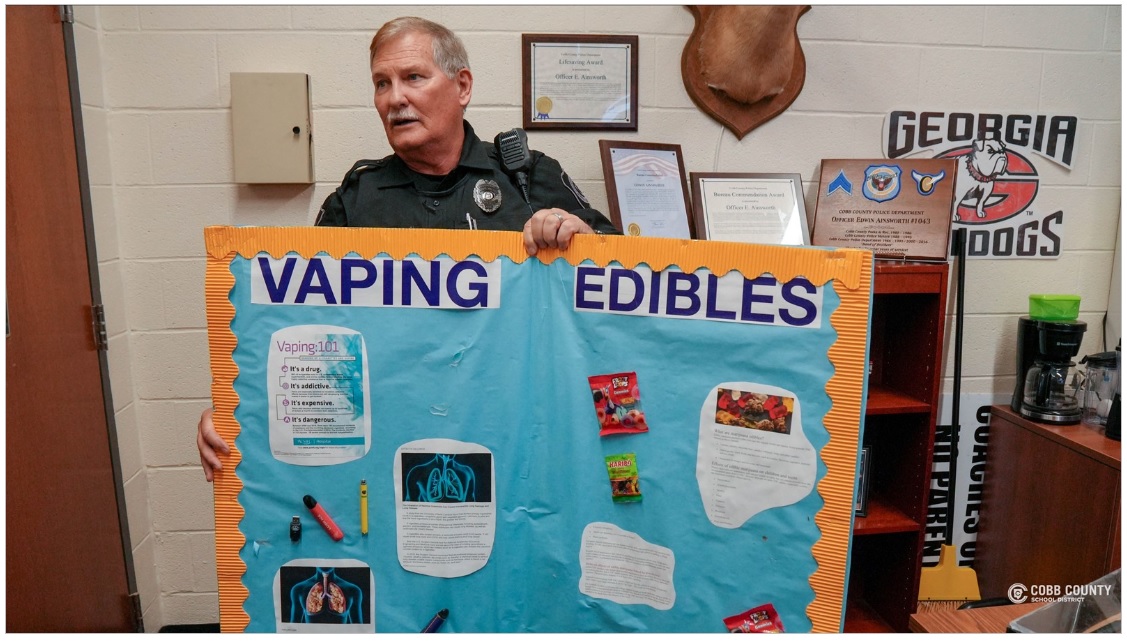
While traditional drugs are a concern, School Resource Officer Edwin Ainsworth says vaping has become one of the most visible and dangerous trends among students. 

Ainsworth explained that a distinct fruity scent is a telltale sign that students have been vaping. The smell of THC also doesn’t get past him. 

Officer Ainsworth estimates that as many as eight in ten high school students have tried vaping at least once.

“These kids like them because they’re easy. They can pull them out and smoke them quickly. Some of them are odourless, some don’t even have smoke coming out of them, and kids can hide them,” he said.

Beyond the discreet design and flavours, the health risks are real and long-lasting. “It can cause them to have a hole in their lung, and if they get really addicted, their attitude changes. They start being a little more defensive when you talk to them,” Ainsworth added, “If your lung capacity gets full with popcorn lung, you could end up on a ventilator.”

Best Practices from Cobb Schools Police

Cobb School Resource Officers emphasize that parents play the most powerful role in prevention. The best protection is to get involved. 

Here are some strategies to help keep students drug-free! 

  • Know the Signs. Watch for changes in friends, social groups, mood, and sleep patterns.
  • Stay Involved. Get to know your students’ teachers, coaches, and friends. Encourage participation in sports, clubs, and community activities. 
  • Set Clear Expectations. Be explicit about rules and consequences. Discuss them calmly and consistently. 
  • Teach the Facts. Talk about how drugs and vaping can affect decision-making, athletic performance, and future goals.
  • Start Early. Begin age-appropriate conversations in elementary school about making healthy choices.
  • Model Healthy Behaviour. Avoid using substances in front of students. 
  • Be Proactive. Conduct regular checks of bedrooms, backpacks, and vehicles.

When students make safe, healthy choices, classrooms become stronger, and communities thrive. Red Ribbon Week serves as a reminder that prevention begins at home through honest conversations, clear expectations, and supportive environments. 

Together, we can help every Cobb student stay drug-free for life.

Source: https://www.cobbk12.org/osborne/_ci/p/120665

Overdose deaths among people 65 and older linked to fentanyl mixed with stimulants such as cocaine and methamphetamines have skyrocketed by 9,000% in the past eight years, reaching levels similar to those seen in younger adults. The findings, presented at the ANESTHESIOLOGY 2025 annual meeting, highlight an alarming and often overlooked trend affecting older Americans.

This research is one of the first to use Centers for Disease Control and Prevention (CDC) data to demonstrate that older adults, a group rarely centered in overdose studies, are now deeply involved in the growing wave of fentanyl-stimulant fatalities. Those 65 and older are particularly at risk because they are more likely to have chronic health issues, take multiple medications, and process drugs more slowly as they age.

The Fourth Wave of the Opioid Epidemic

The opioid crisis has evolved through four distinct stages, each dominated by a different substance driving overdose deaths: prescription opioids in the 1990s, heroin around 2010, fentanyl beginning in 2013, and a combination of fentanyl and stimulants starting in 2015.

“A common misconception is that opioid overdoses primarily affect younger people,” said Gab Pasia, M.A., lead author of the study and a medical student at the University of Nevada, Reno School of Medicine. “Our analysis shows that older adults are also impacted by fentanyl-related deaths and that stimulant involvement has become much more common in this group. This suggests older adults are affected by the current fourth wave of the opioid crisis, following similar patterns seen in younger populations.”

Tracking the Deadly Trend in CDC Data

To examine the trend, researchers analyzed 404,964 death certificates listing fentanyl as a cause of death between 1999 and 2023, using data from the CDC Wide-ranging Online Data for Epidemiologic Research (WONDER) system. Of these, 17,040 deaths were among people age 65 and older, while 387,924 were among those aged 25 to 64.

Between 2015 and 2023, fentanyl-related deaths rose from 264 to 4,144 among older adults (a 1,470% increase) and from 8,513 to 64,694 among younger adults (a 660% increase). The most striking finding was the rapid rise in deaths involving both fentanyl and stimulants. Among older adults, these cases grew from 8.7% (23 of 264 fentanyl deaths) in 2015 to 49.9% (2,070 of 4,144) in 2023—a 9,000% jump. For younger adults, the proportion rose from 21.3% (1,812 of 8,513) to 59.3% (38,333 of 64,694) over the same period, an increase of 2,115%.

Cocaine and Methamphetamine Drive the Surge

The researchers highlighted data from these individual years because 2015 marked the onset of the fourth wave of the opioid epidemic and was also the year fentanyl-stimulant deaths among older adults were at their lowest, and 2023 as it was the most recent year of CDC data available.

The researchers noted that the rise in fentanyl deaths involving stimulants in older adults began to sharply rise in 2020, while deaths linked to other substances stayed the same or declined. Cocaine and methamphetamines were the most common stimulants paired with fentanyl among the older adults studied, surpassing alcohol, heroin and benzodiazepines such as Xanax and Valium.

Multi-Substance Overdoses and Prevention Strategies

“National data have shown rising fentanyl-stimulant use among all adults,” said Mr. Pasia. “Because our analysis was a national, cross-sectional study, we were only able to describe patterns over time — not determine the underlying reasons why they are occurring. However, the findings underscore that fentanyl overdoses in older adults are often multi-substance deaths — not due to fentanyl alone — and the importance of sharing drug misuse prevention strategies with older patients.”

The authors noted that anesthesiologists and other pain medicine specialists should:

  • Recognize that polysubstance use can occur in all age groups, not only in young adults.
  • Be cautious when prescribing opioids to adults 65 or older by carefully assessing medication history, closely monitoring patients prescribed opioids who may have a history of stimulant use for potential side effects, and considering non-opioid options when possible.
  • Use harm-reduction approaches such as involving caregivers in naloxone education, simplifying medication routines, using clear labeling and safe storage instructions and making sure instructions are easy to understand for those with memory or vision challenges.
  • Screen older patients for a broad range of substance exposures, beyond prescribed opioids, to better anticipate complications and adjust perioperative planning.

A Call to Action for Clinicians and Caregivers

“Older adults who are prescribed opioids, or their caregivers, should ask their clinicians about overdose prevention strategies, such as having naloxone available and knowing the signs of an overdose,” said Richard Wang, M.D., an anesthesiology resident at Rush University Medical Center, Chicago and co-author of the study. “With these trends in mind, it is more important than ever to minimize opioid use in this vulnerable group and use other pain control methods when appropriate. Proper patient education and regularly reviewing medication lists could help to flatten this terrible trend.”

Source: https://scitechdaily.com/a-9000-spike-in-fentanyl-deaths-is-devastating-older-americans/

Adolescence is a critical stage of growth, a time when young people begin to make their own independent choices in preparation for adulthood. However, it is also a time of vulnerability, especially when it comes to exposure to drugs and other harmful substances.

Because the brain is still developing, particularly in areas that control decision-making and impulse regulation, adolescents face unique risks that can affect their health and overall well-being. 

It is a well-established fact that the human brain does not fully mature until around the age of 25, leaving adolescents and young adults more vulnerable to the harmful effects of harmful substances. When exposure occurs during these critical years of development, it can cause both immediate harm and long-term consequences that may follow individuals well-into adulthood. 

One of the key reasons for this vulnerability lies in the development of the brain itself. According to the Harvard Health article “Adolescence: A high-risk time for substance use disorders” by Sharon Levy and Siva Sundaram, “the adolescent brain is ‘deliberately’ set up for risk-taking.” 

Areas such as the prefrontal cortex, a part of the brain which plays a central role in judgment, impulse control, and decision-making, are still “under construction” during adolescence. Because of this, younger individuals are more likely to engage in risky behaviors, including experimenting with drugs, often without fully understanding the dangers. The earlier drug use begins, the greater the potential for lasting harm. 

Substance use during this developmental period primes the brain for addiction and chronic health problems. Addiction occurs when the brain’s pleasure receptors are overstimulated, creating an artificial “reward system” that encourages repeated drug use.

For adolescents, this effect is magnified due to their still-developing neural pathways. With a heightened sensitivity to pleasure and a weaker ability to assess long-term consequences, teens are more likely to fall into cycles of use and dependency. 

What further exacerbates this issue is the limbic system, the part of the brain that processes emotions and rewards. Unlike the prefrontal cortex, the limbic system matures earlier, meaning teens often experience intense emotional responses and a stronger drive for immediate gratification.

Drugs offer that instant burst of dopamine, which quickly reinforces use through a “use-reward-repeat” pattern. 

Over time, this can disrupt the brain’s natural ability to feel pleasure, making ordinary activities less satisfying and increasing reliance on substances. 

The health risks tied to early drug use extend far beyond the brain. Adolescents who use drugs, as noted in the article “Teen drug abuse: Help your teen avoid drugs” published by Mayo Clinic, face heightened risks of heart attacks, strokes, organ damage, and worsening mental health conditions. 

Early experimentation can also serve as a gateway to more harmful substances, escalating the risks over time. Adding to the concern, research published in Neuropharmacology reports that patterns of substance use can pass down genetically, making future generations more susceptible to addiction as well.

Ultimately, drug use during adolescence is not just a temporary risk, but one that can set the stage for a lifetime of consequences. By understanding the unique vulnerabilities of the developing brain, it becomes clear why prevention and education are important. 

Protecting adolescents from early exposure to drugs is not only about safeguarding their present, but about preserving their future health as well. 

Source: https://www.pleasantonweekly.com/alameda-county/2025/10/06/how-drugs-alter-the-developing-brain-priming-adolescents-for-risk-and-dependency/

by Allysia Finley       Wall Street Journal          Sept. 14, 2025

What causes a young man to spiral from success toward loneliness, self-destruction and violence?

A police officer guards Tyler Robinson’s apartment complex in Washington, Utah, Sept. 12. Photo: andrew hay/Reuters

The descent of Tyler Robinson, the 22-year-old man suspected of murdering Charlie Kirk, is itself a tragedy worth mourning. How did a high-school whiz kid devolve into an assassin?

Such spirals aren’t so uncommon among young men, even if Mr. Robinson’s played out in a more calamitous and public way than most. Political violence is a problem. But so is the atomized culture in which young men retreat into confused inner worlds and virtual realities, which can be as addictive and destructive as any drug.

Mr. Robinson’s relatively normal background makes his actions jarring. He came from a good middle-class family. Having excelled in high school, he was awarded a scholarship to Utah State University, though he dropped out after one semester.

At some point, he appears to have become steeped in a dark digital world and videogames. He inscribed ammunition with obscure online memes (“Notices bulges OwO what’s this?”), lyrics to an anti-Fascist Italian song, and an apparent reference to the videogame “Helldivers 2,” a satire of a fascist interstellar empire inspired by the 1997 movie “Starship Troopers.”

Marinating in an internet cesspool can’t be good for the young and malleable male mind. Might killing villains in videogames desensitize the conscience? Studies have found an association between playing violent videogames and aggressive behavior, though most people who assume online avatars and fight monsters don’t become violent.

A broader problem, as Jonathan Haidt explains in his book “The Anxious Generation,” is that videogames cause boys to get lost in cyberspace. They have “put some users into a vicious cycle because they used gaming to distract themselves from feelings of loneliness,” Mr. Haidt notes. “Over time they developed a reliance on the games instead of forming long-term friendships.” They “retreat to their bedrooms rather than doing the hard work of maturing in the real world.”

The same is true of social-media platforms like Discord and Reddit, where young men often seek fraternity under pseudonyms. The platforms become substitutes for real-world camaraderie and can lead men down dark holes. Frequent social-media use has been found to rewire neurological pathways in young brains and compromise judgment.

Mr. Robinson’s spiral recalls Luigi Mangione, the 27-year-old University of Pennsylvania graduate who allegedly shot and killed UnitedHealthcare CEO Brian Thompson on a New York City street. Attractive and athletic, Mr. Mangione developed an obsession with self-improvement even as he suffered bouts of excruciating back pain. He was also an avid videogame player and active on Reddit.

Prior to the shooting, he cut off communications with family and friends. Men in their late teens and 20s sometimes experience psychotic breaks. Mr. Mangione’s apparent mental-health struggles, however, seem to have gone unnoticed as he got lost in a digital wilderness.

Or consider Thomas Crooks, the 20-year-old who attempted to assassinate President Trump at a rally last summer. Crooks graduated high school with high honors and scored 1530 on the SAT, then enrolled in an engineering program at a community college. His father said his mental health began declining in the year before the shooting.

Crooks lost social connections as he started spending more time online, visiting news sites, gaming platforms, Reddit and weapons blogs. He at one point searched for information on “major depressive disorder” and “depression crisis,” suggesting he suspected he had a mental illness. Instead of psychiatric treatment, he turned to the internet.

Like drugs, the internet can fuel delusions. Patrick Joseph White, 30, last month opened fire on the Centers for Disease Control and Prevention headquarters in Atlanta, then fatally shot himself. He was apparently exercising his rage against Covid shots, which he wrote were “always meant to indiscriminately murder as many as possible” and believed had caused his depression.

He had threatened self-harm numerous times in the previous year. In April police officers came to his home after he called a veterans’ crisis line and said he had been drinking and taking medication. White told officers he had called the crisis line “just to talk to someone.”

Videogames and the digital world may not cause mental illness, but they can be a form of self-medication that provides illusory relief from emotional troubles even as they propel antisocial behavior. The solution isn’t to ban them, but to create social structures that prevent young men from falling through the cracks.

Lost boys pose a broader cultural problem. The share of men 20 to 34 who work has been declining over the past 30 years, even as employment among young women has increased. Too many young men spend their days playing videogames, watching porn, smoking pot and trolling the internet rather than engaging with the real world.

Mr. Kirk sought to bring young people like Mr. Robinson out of their virtual caves. It’s harder to hate someone you meet in the flesh than an avatar in a digital dystopia.

Source:  Drug Watch International – www.drugwatch.org

Received from DFAF – 16 September 2025

The swift legalization of marijuana across the United States is impacting the rates of use and increasing the social acceptance among veterans 65 and older. A recent study is shining a light on this group of individuals whose struggle with marijuana use had largely flown under the radar.

The study included more than 4,500 Veterans Health Administration (VHA) patients nationwide, revealing a concerning picture of marijuana use and cannabis use disorder (CUD) in this population. Over half of respondents (57%) reported having used marijuana at some point in their lives, and 1 in 10 had used it within the past 30 days—a rate nearly double the national average for adults 65 years or older in the general population. Among these recent users, more than half were frequent users (defined as using on 20 or more days in the past month), and the majority (72%) consumed marijuana by smoking.

Perhaps most concerning was the prevalence of CUD. Among those who reported recent use:

  • One-third (36.3%) met the criteria for CUD, including 10.9% with moderate CUD and 2.5% with severe disorder CUD.

The risks were even higher among those who consumed marijuana through smoking or vaping, those who reported anxiety symptoms, and those with functional impairments in daily activities. Veterans aged 65–75 were also more likely to meet criteria for CUD compared to those over 76, and risk increased among individuals who used other substances or faced economic hardship.

Geography mattered as well: veterans living in states with legal recreational marijuana use were more than twice as likely to report use compared to those in non-legal states. In contrast, living in a medical-only state did not significantly increase odds of use—suggesting that broader legalization may be a key driver of accessibility and behavior.

The findings highlight the need for veterans to understand the risks associated with use and to receive screening for CUD, which could help identify problematic use early and connect patients with evidence-based treatment.


Source:  Drug Free America Foundation | 333 3rd Ave N Suite 200 | St. Petersburg, FL 33701 US

Back to top of page

Powered by WordPress