2025 June

by Shane Varcoe, Dalgarno Institute, based on https://nobrainer.org.au
Teen vaping is on the rise. Around the world, 16.8% of young people have already tried e-cigarettes, often starting as early as 14 years old. The risks? Nicotine addiction, lung damage, harmful chemicals, and even mental health concerns. Schools are on the frontline to tackle this issue, and now, a new programme called ‘Our Futures Vaping’ is aiming to revolutionise teen vaping prevention in schools.
Why Teen Vaping Prevention is Essential: Reports indicate that one in four teenagers in Australia has experimented with vaping. With the average age of initiation being just 14, the potential harm cannot be ignored. The effects of vaping include:
• Lung injuries caused by chemical exposure
• Higher risk of transitioning to smoking cigarettes
• Possible long-term mental health difficulties
Despite regulatory reforms aiming to restrict vaping to medicinal use, illegal access remains widespread. To address this challenge, schools need prevention tools that are credible, age-appropriate, and accessible.
A New Approach to Teen Vaping Prevention with Digital Lessons: A team of researchers has co-designed an innovative school-based programme called ‘Our Futures Vaping’. This cutting-edge project takes the fight against teen vaping to the classroom, with an engaging digital platform tailored to Year 7 and 8 students. It’s more than just a teaching tool; it’s a way to empower students with knowledge, critical thinking skills, and the confidence to say no to vaping. 
Source:  https://nobrainer.org.au/index.php/student-teacher/get-a-clue-partae/1456-new-digital-lessons-to-combat-teen-vaping-in-schools?

United Nations – Information Service Vienna – 26 June 2025

The global illicit drug trade continues to exact a devastating toll: claiming lives, ravaging public health services, and fuelling violence and organized crime.

Drug trafficking is tearing through communities with substances that are more potent, more dangerous, and more deadly than ever. Meanwhile, criminal networks prey on the most vulnerable – particularly women and youth – as they rake in hundreds of billions annually through the illicit drug trade.

This year, we shine a light on prevention as the most essential strategy for halting the flow of drugs that fuels organized crime worldwide.

We must reduce demand through investing in education, treatment, harm-reduction measures and care; target the machinery of production by eliminating illicit laboratories and offering farmers viable alternatives; and sever trafficking networks by strengthening global trade routes and choking the financial flows of criminal networks, while always ensuring respect for human rights.

Let us recommit to ending drug abuse and trafficking, uniting to dismantle criminal networks, and breaking the cycle of suffering and destruction once and for all.

Source:  https://unis.unvienna.org/unis/pressrels/2025/unissgsm1507.html

Joseph M Kress exposes the dark reality of America’s drug crisis


TORONTO, ONTARIO, CANADA, June 23, 2025 /EINPresswire.com/ — In his compelling and illuminating new book, “Single Handed,” retired lieutenant and police detective Joseph M. Kress reveals the stark realities of America’s ongoing drug crisis and the concerning shortcomings of the nation’s drug prevention programs. Inspired by true events, the story uncovers a journey shaped by tragedy and the hardened years in law enforcement.

The book begins with a very personal and tragic event: Joe Kress’s brother Greg was murdered while on his honeymoon following a robbery in New Orleans. This shocking act of violence sparks Joe’s determination to join the police force. What follows is a vivid, rapid-fire narrative of Joe’s years as an officer, exploring a diverse array of cases that unveil the most sinister aspects of society, from child disappearances to horrific sexual assaults. Despite suffering a gunshot wound to his leg and having to retire early due to injury, Joe is shown to be a man who is motivated by duty throughout it all.

However, “Single Handed” does not conclude with Joe’s time in uniform. In fact, the narrative takes a turn into thrilling and audacious realms. After leaving official service, Joe sets off on a unique journey of his own creation: pursuing drug dealers nationwide. Utilizing his SWAT training and special operations background, he embarks on a mission to tackle the soaring drug-related crime rates affecting American neighborhoods. This unfolds a vigilante crusade, crafted from genuine frustration and moulded by years of direct involvement in law enforcement and profound personal grief.

Amazon reviewer Sanjin highlights the book as crucial and relevant, praising the author’s direct and engaging storytelling that sheds light on an ongoing crisis affecting communities today. In a similar vein, reader Clarence Joseph shares this sentiment, highlighting that the story’s expertly crafted pace not only amplifies its suspense but also provides a captivating and delightful reading journey.

Source:  https://fox59.com/business/press-releases/ein-presswire/824883015/joseph-m-kress-exposes-the-dark-reality-of-americas-drug-crisis-through-his-latest-candid-memoir/


If you’re a small business owner, you probably wear a lot of hats: manager, mentor, HR rep, sometimes even IT support. You already know that building a successful company today means adapting to change, especially when it comes to supporting your team. How we approach substance use and mental health on the job is where workplaces need to be evolving quickly!

You might think serious conversations about substance use, behavioral health, and mental wellness are reserved for big corporations with large HR departments and employee wellness budgets. But in today’s world, even the smallest teams need modern, compassionate policies.

Why? Because the way we work—and what employees expect—has changed. Employees today want to know that their employer cares about their whole well-being, not just their productivity. That includes creating space to talk about tough topics like stress, burnout, and yes, substance use.

Modern leadership means recognizing that substance use is something that impacts real people—people you may work with every day. It doesn’t always look like someone missing work or failing a drug test. It can be more subtle: someone relying on alcohol to decompress every night, using prescription stimulants to keep up with unrealistic demands, or struggling quietly with a dependence on marijuana.

Ignoring these issues won’t make them go away. But addressing them with care and structure? That’s leadership.

Here’s how small business owners can modernize their workplace by making room for this kind of support:


1. Update Your Workplace Culture, Not Just Your Tech

You wouldn’t run your business on a five-year-old software system. So why stick with outdated workplace norms around health and performance?

A modern workplace recognizes that stress, mental health, and substance use challenges are part of the human experience—and responds with resources, not judgment. Whether that’s offering access to support programs or simply encouraging open dialogue, small steps make a big difference.


2. Create a Clear, Supportive Policy

Yes, even small businesses should have a written policy about substance use. Not to scare people—but to protect them. A good policy:

·    Explains your company’s stance (supportive, not punitive)

·    Details how employees can seek help confidentially

·    Trains supervisors to spot concerns and respond appropriately

·    Builds in support and resources—like referrals, time off for treatment, or check-ins

It shows employees that they don’t have to hide what they’re going through.


3. Lead With Curiosity, Not Control

You don’t need to be a counselor. But you can ask thoughtful questions, listen without judgment, and point people in the right direction. A curious, compassionate conversation can open the door to real change—especially when someone is already feeling vulnerable.

Modern support means meeting people where they are. Whether someone is cutting back, abstaining, or just starting to question their habits, having your workplace be part of the solution helps them take the next step.


4. Set the Tone From the Top

As a business owner, your attitude sets the culture. Talking openly about stress, supporting mental health days, and encouraging balance gives your employees permission to take care of themselves. And when people feel safe, they perform better. It’s that simple.

Addressing substance use isn’t about policing your team. It’s about building a workplace where people can show up as they are, get the support they need, and grow. That’s what today’s employees are looking for—and it’s how small businesses build loyalty, retention, and a reputation for doing things the right way.

Source: McConnell, K. (2024, April 1). The Challenge of Change: How employers can modernize workplace substance use support. How Employers Can Modernize Workplace Substance Use Support | Spring Health. https://www.springhealth.com/blog/how-employers-can-modernize-workplace-substance-use-support 


Source:  Drug Free America Foundation | 333 3rd Avenue N Suite 200 | St. Petersburg, FL 33701 US

<<<<<<<<<<<<<<<<<<<<<<<<<<<<<<DFAF>>>>>>>>>>>>>>>>>>>>>>>>>>>>>>>

NATIONAL DRUG-FREE WORKPLACE ALLIANCE

As the workplace division of Drug Free America Foundation, NDWA’s mission is to be a national leader in the drug-free workplace industry by directly assisting employers and stakeholders, providing drug-free workplace program resources and assistance, and supporting a national coalition of drug-free workplace service providers.

For more information and drug-free workplace resources, visit NDWA at www.ndwa.org.


By Joe Rossiter – The Mail on Sunday-  29 June 2025 

More than a quarter of police and crime commissioners have written to the policing minister calling for cannabis to be upgraded to a class A substance, The Mail on Sunday can reveal.

In the stark letter to Dame Diana Johnson MP, seen exclusively by this newspaper, 14 police chiefs claim the effect of the drug in society ‘may be far worse’ than heroin.

They warn that ‘we cannot allow this to become the Britain of the future’. And they also hit out at the recent report by the London Commission – backed by Labour London mayor Sir Sadiq Khan – which suggested decriminalising small amounts of cannabis, which is currently a class B drug.

‘Heroin can kill quickly but the cumulative effect of cannabis in our society may be far worse,’ the letter states. 

It adds that class A status – which comes with potential life sentences for suppliers – was the way forward ‘rather than effective decriminalising’.

And renowned psychiatrist Professor Sir Robin Murray, of King’s College London, told The Mail on Sunday that the UK may now be ‘at the beginnings of an epidemic of cannabis-induced psychosis’ which could overwhelm NHS mental health services.

The commissioners also pointed to other countries where laws are laxer, warning that the US has seen ‘unofficial pharmacies’ selling cannabis and the powerful opiate fentanyl alongside one another, while Portugal has been forced to consider reversing drug decriminalisation after a 30-fold increase in psychosis.

They said cannabis’s effects were so devastating it had ‘more birth defects associated with it than thalidomide’ – the notorious morning sickness drug which caused deformities among thousands of babies in the 1950s and 1960s.

More than a quarter of police and crime commissioners have written to the policing minister calling for cannabis to be upgraded to a class A substance (file pic)

Marcus Monzo, 37, was last week found guilty of 14-year-old Daniel Anjorin’s murder while in a state of cannabis-induced psychosis Monzo attacked the teenager with a samurai sword in Hainault, east London, last May

Their warnings came after Marcus Monzo, 37, was last week found guilty of 14-year-old Daniel Anjorin’s murder after he attacked him with a samurai sword in Hainault, east London, while in a state of cannabis-induced psychosis.

David Sidwick, Police and Crime Commissioner for Dorset, said cannabis legislation was ‘clearly not fit for purpose’ and likened it to ‘using a machete for brain surgery’. 

He added the public wanted to see ‘tougher measures’ for cannabis possession because it was a gateway to harder drugs.

His Devon and Cornwall counterpart Alison Hernandez said: ‘The fact that we’ve been so blase about cannabis in society means that people think it’s legal and normal, and it’s not. 

‘We’ve got to show them that it’s not, and the way you do that is to be quite fierce in your enforcement arrangements.’

Latest figures show three in four people caught with cannabis avoid appearing in court, while 87 per cent of children and young people in alcohol and drug treatment cited cannabis dependency, compared to 39 per cent for alcohol.

In the stark letter to Dame Diana Johnson MP, 14 police chiefs claim the effect of the drug in society ‘may be far worse’ than heroin

David Sidwick, Police and Crime Commissioner for Dorset, said he wanted to see ‘tougher measures’ for cannabis possession because it was a gateway to harder drugs (file pic)

Stuart Reece, an Australian clinician and cannabis researcher quoted in the letter said more than 90 per cent of hard drug addicts he encountered had started with cannabis.

He said pro-cannabis campaigners had the view it was ‘my right to use drugs and destroy my body and you will pay for it through the NHS’.

Dr Karen Randall, a physician in the US state of Colorado where recreational cannabis was legalised in 2012, said healthcare costs linked to the drug are ‘exorbitant’.

A Home Office spokesman said: ‘We work with partners across health, policing and wider public services to drive down drug use, ensure more people receive timely treatment and support, and make our streets and communities safer.’

Source: https://www.dailymail.co.uk/news/article-14857305/Cannabis-worse-society-heroin-police-tsars-upgrade-class.html

General News – Saturday 2025-06-28

Vice President Prof Naana Jane Opoku-Agyemang has emphasised the urgent need for increased investment in drug prevention programs, citing clear evidence of the devastating impact of illicit drugs on Ghanaian society.

Speaking at the 2025 World Drug Day event at the Accra International Conference Centre, Vice President Opoku-Agyemang called for action to prevent illicit drug use in the country, as reported by 3news.com on June 27, 2025.

She highlighted the rising prevalence of drug abuse and its detrimental effects on public health, safety, and economic productivity.

The Vice President stressed the importance of a multi-faceted approach to combating the drug problem, which should include education, awareness campaigns, and rehabilitation services.

She noted that while Ghana has made progress against conventional narcotics, the shift to synthetic opioids requires adaptability.

“The evidence is clear: invest in prevention,” she stated, underscoring the theme of World Drug Day 2025.

She added, “We must recognise the urgency of this issue and rise to the occasion to implement appropriate and pragmatic preventive measures.”

Prof Opoku-Agyemang emphasized that prevention is key to mitigating the long-term consequences of drug abuse and building a healthier, more prosperous nation.

She commended the Narcotics Control Commission for its dedication to combating drug abuse and illicit trafficking.

The government is committed to working with stakeholders to implement effective strategies.

She referenced recent operations by the Commission, which resulted in the seizure of large quantities of illicit substances and the dismantling of criminal syndicates, showcasing Ghana’s commitment to the fight against drugs.

The call for increased investment comes amid growing concerns about the accessibility and use of illicit drugs across the country.

The Vice President urged stakeholders to provide the Commission with the necessary tools, training, and resources to stay ahead of evolving threats.

“We must also address substance use disorders with compassion,” she emphasised.

Her remarks signal a renewed focus on this critical issue and the protection of the well-being of Ghanaian citizens.

“The operationalisation of the Substance Use Disorder Rehabilitation Fund is a commendable move, and we must ensure its effective implementation,” she concluded.

Source:  https://www.ghanaweb.com/GhanaHomePage/NewsArchive/The-evidence-is-clear-invest-in-prevention-Vice-President-1989525

Prime Minister Paetongtarn has declared drug prevention a national priority on the International Day Against Drug Abuse and Illicit Trafficking, urging nationwide support for rehabilitation, education, and community action to tackle Thailand’s drug crisis.

On Thursday (June 26), Paetongtarn delivered a speech in line with the United Nations’ declaration. She highlighted that drug abuse and trafficking continue to be persistent global and regional threats, severely affecting lives, public order, and national security.

She reaffirmed Thailand’s commitment to working with government agencies, the private sector, and civil society to combat this challenge.

The Prime Minister announced that drug prevention and resolution have been declared a national priority requiring urgent and tangible action. This initiative will include legal measures and coordinated efforts across central and regional authorities to curb drug smuggling at border areas and dismantle drug trafficking networks decisively.

In response to these threats, the government has launched the Seal, Stop, Safe strategy, which strengthens border control in 52 districts to prevent transborder drug trafficking and transnational crime. Inspections at both permanent and temporary border checkpoints, including natural crossings, have been intensified.

These efforts have led to a rise in the black-market price of methamphetamine, indicating a reduction in drug accessibility, she said.

She called on administrative leaders, provincial governors, community leaders, and particularly families, to collaborate in monitoring and protecting communities.

Paetongtarn also expressed gratitude to all sectors—public, private, and community—for their united efforts in protecting Thai society and future generations. She extended her words of encouragement to those undergoing rehabilitation, wishing them a successful return to a healthy, normal life.

“We invite all Thai people to unite and participate in the prevention and resolution of drug-related issues under the Stop Drugs, Start Power – Unite Thai Strength to End Drug Threats campaign. Let us work together to protect our society and secure a better future for our children,” the Prime Minister concluded.

Source:  https://www.nationthailand.com/news/general/40051801

by Sarjna Rai – New Delhi –  Jun 26 2025 

World Drug Day 2025 theme, “Break the Cycle. #StopOrganizedCrime,” urges global action against drug abuse and illicit trafficking.(Photo: Adobestock)
Every year on 26 June, the world observes the International Day Against Drug Abuse and Illicit Trafficking—also known as “World Drug Day”—to raise awareness of the global drug crisis and promote multilateral action toward prevention, treatment, and rehabilitation.

History & Theme

On December 7, 1987, the General Assembly of the United Nations set aside the 26th day of June of each year as International Day Against Illicit Trafficking of Drugs and other Substances of Abuse to be observed worldwide. 
The theme for 2025, Break the Cycle. #StopOrganisedCrime, emphasises the significance of focused long-term action to disrupt the link between drug trafficking and organised crime, both of which fuel violence, corruption, and instability across regions. 

Source:  https://www.business-standard.com/health/international-day-against-drug-abuse-2025-theme-history-significance-125062600553_1.html

by Ingrid Fadelli, Phys.org – edited by Gaby Clark, reviewed by Robert Egan – The GIST – June 26, 2025

Omicron Limited’ 36 Hope Street, Douglas, IM1 1AR, Isle of Man

Cannabis, also known as marijuana or weed, is widely consumed worldwide, whether for recreational or medicinal purposes. Over the past decades, the use of cannabis has been fully legalized or decriminalized in various countries worldwide, including Canada, many U.S. states, the Netherlands, Germany, Spain and Portugal.

While some studies have found that cannabis and especially cannabidiol (i.e., the non-intoxicating compound contained in it) can have medicinal effects, others have linked the abuse of its psychoactive variations (i.e., containing tetrahydrocannabinol or THC) with a greater risk of being diagnosed with psychiatric disorders.

As many individuals worldwide use cannabis on a regular basis, understanding the mechanisms that could link its consumption with psychiatric disorders could be highly valuable, as it might help to identify factors that increase the risk of developing specific disorders.

In a paper published in Nature Mental Health, researchers at Yale University School of Medicine, the Veterans Affairs Connecticut Healthcare System and Washington University School of Medicine shed new light on the genetic associations between cannabis use, cannabis use disorder (CanUD) and various psychiatric disorders.

CanUD is a mental health disorder characterized by a continued use of cannabis, difficulties experienced when trying to cut down its consumption or cease using it altogether, and an interference of the substance with daily activities, relationships or responsibilities.

“Increasing prevalence of cannabis use and CanUD may increase risk for psychiatric disorders,” wrote Marco Galimberti, Cassie Overstreet and their colleagues in their paper. “We evaluated the relationships between these cannabis traits and a range of psychiatric traits, running global and local genetic correlations, genomic structural equation modeling, colocalization analyses and Mendelian randomization analyses for causality.”

Genomic-SEM. Genomic-SEM analyses of cannabis traits (CanUD and cannabis use) and
psychiatric disorders for a three-factor model. Credit: Galimberti et al.
(Nature Mental Health, 2025).

The researchers analyzed genetic, psychiatric and psychological data collected as part of earlier studies, using various statistical techniques. First, they tried to detect genetic patterns that linked cannabis use with specific psychiatric and personality traits, using a technique known as genomic structural equation modeling.

Subsequently, they ran colocalization analyses, a statistical analysis that allowed them to uncover instances where two traits shared the same underlying genetic variant. Finally, they used a technique called Mendelian randomization to uncover causal relationships between traits, or in other words, if a sporadic or problematic use of cannabis caused specific disorders via genetic factors and vice versa.

“Global genetic analyses identified significantly different correlations between CanUD and cannabis use,” wrote Galimberti, Overstreet and their colleagues. “A variant in strong linkage disequilibrium to one regulating CHRNA2 was significantly shared by CanUD and schizophrenia in colocalization analysis and included in a significant region in local genetic correlations between these traits. A three-factor model from genomic structural equation modeling showed that CanUD and cannabis use partially map together onto a factor with major depressive disorder and ADHD.”

Interestingly, the researchers found that although cannabis use and CanUD are in some ways related, they had different genetic relationships with psychiatric disorders. In fact, they found that variations in the regulation of the gene CHRNA2, which has also been linked to nicotine consumption and dopamine signaling, were common to both schizophrenia and CanUD, but not to casual or general cannabis use.

“In terms of causality, CanUD showed bidirectional causal relationships with most tested psychiatric disorders, differently from cannabis use,” wrote Galimberti, Overstreet and their colleagues. “Increasing use of cannabis can increase rates of psychiatric disorders over time, especially in individuals who progress from cannabis use to CanUD.”

Overall, the findings of this recent study suggest that there is a bi-directional genetic relationship between the abuse of cannabis, specifically CanUD, and various psychiatric disorders, including schizophrenia, ADHD, depression, and bipolar disorder. In other words, it appears that CanUD could increase the risk of developing mental health disorders, and being diagnosed with some psychiatric disorders could also prompt abuse of cannabis.

This recent work could potentially inform the development of public health interventions aimed at monitoring or limiting people’s consumption of cannabis early, to reduce the risk that they will later develop psychiatric disorders. In addition, the analyses could inspire other research groups to delve deeper into the genetic associations they uncovered, potentially by analyzing a wider pool of genetic, psychological and medical data.

Written for you by our author Ingrid Fadelli, edited by Gaby Clark , and fact-checked and reviewed by Robert Egan —this article is the result of careful human work. We rely on readers like you to keep independent science journalism alive. If this reporting matters to you, please consider a donation (especially monthly). You’ll get an ad-free account as a thank-you.

More information: Marco Galimberti et al, The genetic relationship between cannabis use disorder, cannabis use and psychiatric disorders, Nature Mental Health (2025). DOI: 10.1038/s44220-025-00440-4.

Journal information: Nature Mental Health

Source: https://medicalxpress.com/news/2025-06-explores-genetic-link-cannabis-psychiatric.html

by Sophie Kilusu, TV47 – Kenya – June 27, 2025

The National Authority for the Campaign Against Alcohol and Drug Abuse (NACADA) has emphasized the critical role of prevention in addressing the growing threat of substance abuse in Kenya.

Speaking at a public forum, NACADA Chairperson Stephen Mairori reiterated that preventive efforts are not only economically prudent but also offer the most sustainable way to protect the country’s future generations.“Prevention is not only cost-effective but also one of the most sustainable strategies in this fight,” Mairori stated.

Mairori has also emphasized that proactive measures such as educating the youth, empowering families, and fostering supportive environments are essential in stopping addiction before it begins. “Every shilling spent on prevention saves countless lives and resources that would otherwise go into treatment and rehabilitation,” he added.

The chairperson pointed out that NACADA’s initiatives are aligned with the government’s Bottom-Up Economic Transformation Agenda (BETA), which focuses on inclusive growth and sustainable development.

According to Mairori, curbing drug and substance abuse is a crucial step in building healthier and more productive communities.“When we prevent drug abuse, we secure our future workforce, reduce crime, and promote national development,” he said.

Mairori’s remarks come at a time when Kenya is grappling with rising cases of drug and substance abuse, especially among the youth.

In response, NACADA has intensified its community outreach programs, school awareness campaigns, and partnerships with various stakeholders to foster a national culture of prevention.

Additionally, he has called on parents, schools, faith-based institutions, and local leaders to join hands in creating an environment where young people can thrive without falling prey to drugs.

With the nation’s future hanging in the balance, NACADA continues to champion the message that prevention is not just a strategy, it is a necessity.

Source:  https://www.tv47.digital/prevention-is-key-to-winning-the-war-on-drug-abuse-107008/

Key Takeaways
NACo submitted recommendations to the White House Office of National Drug Control Policy to ensure the 2026 National Drug Control Strategy reflects the needs and realities of county governments.
Counties are essential intergovernmental partners in addressing illicit substance use through prevention, treatment, recovery and public safety efforts at the local level.

On June 20, NACo submitted formal comments to the White House Office of National Drug Control Policy (ONDCP) to help shape the development of its 2026 National Drug Control Strategy. This strategy serves as the nation’s blueprint for reducing illicit drug use, and the ONDCP plays a central role in coordinating federal drug policy across government agencies. As counties remain on the frontlines of the opioid and broader substance use epidemic, ONDCP invited NACo to share the county government perspectives on federal priorities and polices that support prevention, treatment, recovery and public safety across the country.

Counties invest $107 billion annually in justice and public safety and $163 billion in community health systems, funding and administering services that are directly involved in responding to the substance use crisis. NACo’s comments emphasized the vital role counties play and the importance of federal partnership in delivering life-saving services and building long-term recovery systems.

Key recommendation for the 2026 National Drug Control Strategy

  • Invest in the peer workforce: NACo urged federal investment in peer support through training, certification programs and reimbursement pathways for peer-delivered services. Peer specialists play a critical role in county crisis response teams, treatment navigation and long-term recovery efforts.
  • Expand community-based recovery ecosystems: NACo urged expanded federal investment in community-based services such as crisis care, prevention programs, housing, employment supports and peer-run services. These investments are essential to building accessible, regional systems of care that meet rising behavioral health needs.
  • Promote awareness and reduce stigma: NACo urged support for locally led communication strategies that increase awareness, engage underserved populations and reduce stigma around substance use. County officials often serve as trusted messengers and are well-positioned to promote prevention and recovery through tailored outreach.
  • Remove barriers to services, housing and employment: NACo urged the federal government to remove structural barriers that limit access to care—such as the Medicaid Inmate Exclusion Policy and the Institutions for Mental Diseases (IMD) Exclusion—and to integrate housing and employment supports into recovery frameworks for those with SUDS or who are in recovery. These changes are necessary to foster long-term reintegration and community participation.
  • Continuation of existing federal programs: NACo urged continued investment in critical programs like the Drug-Free Communities (DFC) program and the High Intensity Drug Trafficking Areas (HIDTA) program. These initiatives are foundational to local prevention and enforcement efforts, and proposed cuts in the President’s FY 2026 budget could undermine their effectiveness and coordination under ONDCP.

Impact on counties

Counties are not only implementers of public health and safety strategies, but they are also key innovators and partners in national efforts to address substance use. As stewards of opioid settlement dollars and administrators of behavioral health and justice systems, counties are investing in sustainable, evidence-based solutions. But these efforts depend on strong federal support, including robust funding for ONDCP-aligned programs and active engagement in local implementation challenges.

NACo will continue to advocate for county priorities and collaborate with ONDCP to ensure the 2026 strategy and other federal drug policies and priorities reflect the realities and needs of communities across the country.

Source:  https://www.naco.org/news/naco-submits-recommendations-2026-national-drug-control-strategy

by Haoliang Cui1;  Jianyi Zhang1;  Wenkai Luo1;  Erri Du2;  Zhongwei Jia1, , and Corresponding Author Zhongwei Jia, jiazw@bjmu.edu.cn 

Author affiliations

The recognition of drug use as a global challenge requiring coordinated international response began with the first international conference on narcotic drugs held in Shanghai in 1909. Throughout the 20th century, three pivotal United Nations (UN) conventions on drug control (1961, 1971, and 1988) established the legal and institutional framework for a comprehensive multilateral system addressing prevention and enforcement. The creation of the United Nations Office on Drugs and Crime (UNODC) in 1997 further underscored the widespread nature of drug-related challenges confronting societies worldwide (12).

As nations develop more sophisticated approaches to addressing global drug challenges, international surveillance data continue to underscore both the magnitude of the problem and the critical importance of prevention strategies. The global population using drugs has reached 292 million in 2022, representing a 20% increase over the past decade (3). Particularly concerning is the finding that cannabis use prevalence among adolescents aged 15–16 years exceeds that of adults worldwide (3). It was estimated that 84 million adults aged 15–64 in Europe had used cannabis at least once, including approximately 15.3 million young adults aged 15–34 based on the European Drug Report 2023. (4). Similarly, in 2022, an estimated 70.3 million individuals aged 12 or older in the United States reported illicit drug use within the past year, with peak prevalence occurring among young adults aged 18 to 25. These statistics demonstrate the urgent need for targeted prevention investments, particularly among youth populations (5).

China has actively contributed to and responded to these global drug control initiatives. The Anti-Drug Law of the People’s Republic of China (6) was enacted in 2007, establishing a comprehensive triadic strategy that encompasses prevention, punishment, and rehabilitation. Following the law’s implementation, the number of newly identified drug users increased steadily, reaching its peak in 2015 (Figure 1). However, a series of national initiatives — including the “People’s War on Drugs,” the “Sword Action” (Liangjian Project), and the deployment of “Skynet” surveillance systems — led to a significant decrease in newly identified drug users. This decline was particularly pronounced during and after the COVID-19 pandemic, when the number of newly found drug users experienced a sharp drop (Figure 1).

The theme of this year’s International Day Against Drug Abuse and Illicit Trafficking — “The evidence is clear: invest in prevention, Break the cycle, Stop Organized Crime” (7) — underscores the public health nature of the drug problem and emphasizes the critical importance of preventive measures (Figure 2). The evolution of these annual themes reflects a fundamental shift in global attitudes toward drug policy. From 1996 to 2009, themes primarily emphasized the dangers and harmful consequences of drug use. The second stage (2010 to 2015) began treating the drug problem as a public health issue rather than solely a criminal justice matter. Since 2016, the focus has shifted toward prevention, early intervention, and youth-centered strategies, reflecting a more comprehensive and evidence-based approach to drug policy.

Nevertheless, emerging risks continue to challenge existing frameworks. Recent cases of adolescent substance abuse involving compounds not yet under formal regulatory control, such as nitrous oxide and etomidate, have been documented across China (8). Since January 2021, Guangzhou in Guangdong Province has implemented targeted enforcement measures against nitrous oxide distribution, resulting in 46 investigated cases by June 2022 (9). These novel psychoactive substances present distinct challenges due to their accessibility through online platforms, ambiguous legal classification, and limited public awareness — particularly among adolescents. In response to these evolving threats, the Ministry of Justice issued a national directive in early 2025 emphasizing “intensified drug prevention campaigns targeting adolescents” (10). Through strategic investments in early education programs, enhanced cross-sector collaboration, and implementation of evidence-based policy frameworks, China is proactively adapting its approach to address the dynamic landscape of emerging drug-related risks.

  • FIGURE 1.  Trends in newly identified drug users in China, 2007–2022.

    Note: Data from 2007 to 2013 were sourced from the Drug Abuse Population Estimation in the Key Cities of the Ministry of Public Security, while data from 2014 to 2022 were obtained from the respective annual editions of the Drug Situation in China report.

Associated Information:

Opening Remark by NDPA:

“Although Harm Reduction is too often abused as a vehicle for liberalising or legalising drugs( tactically ignoring the fact that the strongest form of harm reduction is to stop using) Peter Kykant’s selfless and commendable work was an example of the positive side of harm reduction – which could work alongside prevention rather than at odds with it”

NDPA – 22 – 06 – 2025

>>>>>>>>>>>>>>>>>>>>>>>>>>>>>>


by Libby Brooks The Guardian – Fri 20 Jun 2025

Peter Krykant by the River Carron near Falkirk in March 2020.

His decision to set up a mobile drug consumption facility in Glasgow propelled Scotland’s drug deaths crisis up the political agenda. 

Photograph: Murdo MacLeod/The Guardian

Drugs policy campaigner whose commitment to harm reduction led him to set up an overdose prevention service

The drugs policy campaigner Peter Krykant, who has died suddenly aged 48, advanced the cause of the harm reduction movement through a transformative act of civil disobedience.

Fitting out a van as a mobile safer drug consumption space and making it available to Glasgow’s most vulnerable homeless addicts broke the law. And it also – eventually – broke the stalemate around UK drugs policy, propelled Scotland’s drug deaths crisis further up the political agenda and, most importantly, saved lives.

Krykant’s law-breaking plan coalesced in February 2020 after he attended what he saw as another talking shop – a Scottish government conference focused on drug deaths, which took place 24 hours before a UK government summit on the same subject, at the same Glasgow venue. It seemed to him a ludicrous show of escalating tensions between the two administrations.

“The conferences were the final straw, and the fact that [a drug consumption room pilot] is being used as a political football,” he told the Guardian a week later. “As a person who went through my own trauma – drug use and street homelessness issues many years ago – I cannot stand back.”

Within days of announcing his plan to purchase a vehicle and customise it as a mobile safer-injecting suite, Krykant had raised more than £2,000. He was immediately sacked from his job as an HIV outreach worker at the charity Waverley Care.

Undeterred by the looming global Covid pandemic, Krykant recognised that, as services contracted, the homeless drug users who congregated around Trongate in Glasgow were even more in need. So he struck out in the midst of lockdown, first in a minibus nicknamed “the Tank” and later in a converted ambulance, providing clean water, needles and swabs, as well as supplies of naloxone, the potentially life-saving drug that reverses the effects of opioid overdose. Rules included using your own drugs, and agreeing to an overdose intervention if needed.

Writing in the Guardian, Krykant later explained: “Overdose prevention services are an internationally recognised way of reducing drug-related harms. It benefits everyone by supporting the most vulnerable and saving taxpayers’ money on ambulance callouts, hospital admissions and council clean-up teams.”

The local police largely tolerated his activity, although he was charged in October 2020 for obstructing officers attempting to search his van – the charges were later dropped. He continued operating until May 2021. More than 1,000 injections were supervised, and nine overdoses reversed.

“It was the trust people had in Peter, the cup of tea and the Mars bar, that really helped them and is hard to quantify,” said the MSP Paul Sweeney, who became a close friend when the pair volunteered together at the van. “He proved all the naysayers and the procrastinators wrong. He never said it was a silver bullet but Peter knew firsthand the particular risks for people who inject on the street and saw that this intervention could directly save lives.”

Krykant was always insistent that addiction should be understood in the wider context of poverty and inequality, a message he took around the doorsteps of his local Holyrood constituency of Falkirk East when he stood for the Scottish parliament elections in May 2021.

A Guardian film, which followed his campaign, captures his younger son, aglow with pride, explaining to the producers: “I’ve got three reasons you should vote for my dad: because he’s honest, reliable and he listens to people’s suggestions.”

But the responsibility he evidently carried for every individual he helped, the memories they stirred of his own trauma as well as escalating public scrutiny, took their toll and Krykant relapsed.

He had talked openly about darker currents in his childhood in the village of Maddiston, near Falkirk; trauma and sexual abuse that would lead him to start taking drugs when he was 11. He left school with no formal qualifications, and by his late teens he was sleeping rough and injecting heroin.

But eventually he found support to live drug-free, and worked successfully in sales for over a decade, first in Brighton, and later returning north of the border, where he subsequently trained as an addiction support worker. During this time he married and started a family, taking market research work to fit around caring for his two young sons.

Krykant had continued his advocacy work in recent years, passing the van on to the Transform Drug Policy Foundation and embarking on a tour across the UK. Lately he worked at the harm reduction charity Cranstoun, where he developed an overdose response app called BuddyUp and represented the organisation at events around the world.

When the UK’s first legal drug consumption room, the Thistle, opened its doors in Glasgow this January, there were many who drew a direct line from his minibus to its airy vestibule. Others felt his contribution had been sidelined to make way for more mainstream voices, or that his vulnerabilities had been exploited by those who desired the frisson of his lived experience for their campaigns.

This winter, say friends, Krykant found himself at his lowest ebb. His marriage had collapsed, he had lost his job and he was struggling to support himself, worrying about the impact this had on his sons.

Martin Powell, who drove the van on its UK tour, said: “He was the catalyst and without him we might still be waiting. Without question there are people alive today who would not be without Peter Krykant. It’s an absolute tragedy that he isn’t one of them.”

Krykant is survived by his sons.

 Peter Krykant, campaigner, born 13 November 1976; died 9 June 2025

Source: https://www.theguardian.com/politics/2025/jun/20/peter-krykant-obituary


SG/SM/22690 – 18 June 2025

Following is UN Secretary-General António Guterres’ message on the International Day against Drug Abuse and Illicit Trafficking, observed on 26 June:

” The global illicit drug trade continues to exact a devastating toll:  claiming lives, ravaging public health services and fuelling violence and organized crime.

Drug trafficking is tearing through communities with substances that are more potent, more dangerous and more deadly than ever.  Meanwhile, criminal networks prey on the most vulnerable — particularly women and youth — as they rake in hundreds of billions annually through the illicit drug trade.

This year, we shine a light on prevention as the most essential strategy for halting the flow of drugs that fuels organized crime worldwide.

We must reduce demand through investing in education, treatment, harm-reduction measures and care; target the machinery of production by eliminating illicit laboratories and offering farmers viable alternatives; and sever trafficking networks by strengthening global trade routes and choking the financial flows of criminal networks, while always ensuring respect for human rights.

Let us recommit to ending drug abuse and trafficking, uniting to dismantle criminal networks and breaking the cycle of suffering and destruction once and for all. “

Source: https://press.un.org/en/2025/sgsm22690.doc.htm


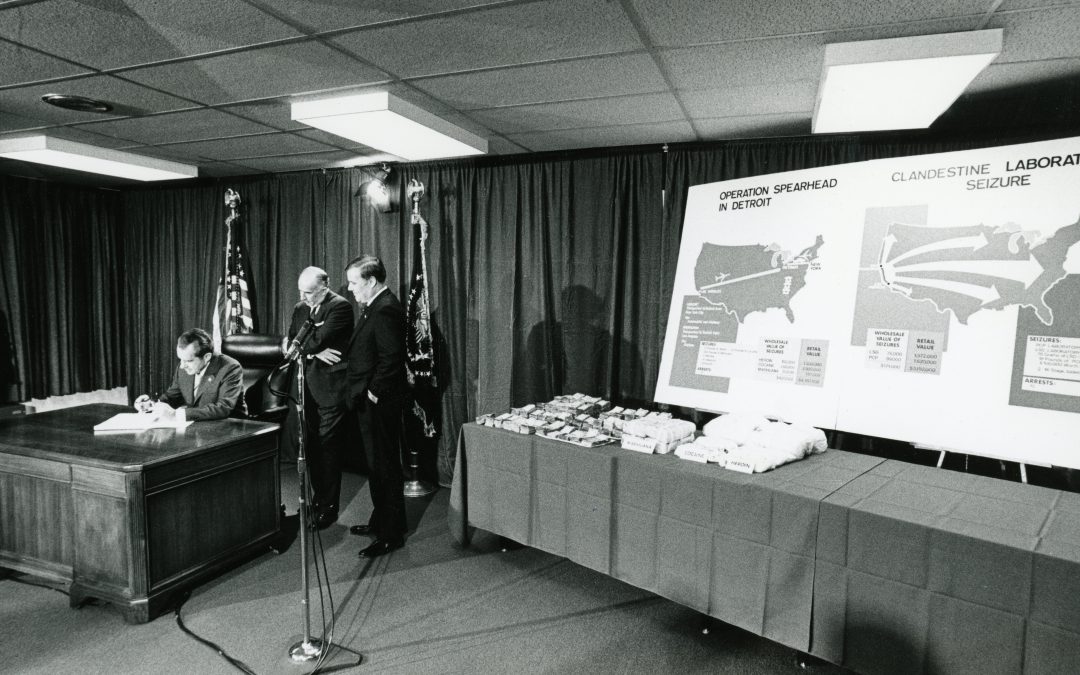
Contrary to the popular narrative, President Nixon’s comprehensive approach to drug policy provided an effective solution to a growing problem.

In the 1970s, the United States faced a growing heroin epidemic. By 1970, there were an estimated 600,000 heroin addicts and 7,200 overdose deaths—a crisis that demanded a national response.

President Richard Nixon took decisive action to address this crisis. While he did  declare drug abuse “public enemy number one,” the phrase “war on drugs” was largely a media invention. The public perception that Nixon launched a punitive campaign against drugs has overshadowed the more nuanced reality of his policy and its measurable success.

Judge Robert Bonner, former DEA administrator and U.S. District Court judge, addressed this misconception during remarks at the Nixon Library on August 22,  2023. In his research into President Nixon’s drug policy, Bonner found that Nixon used the term “war on drugs” only once—in a little-known speech to Customs personnel in Texas. As Bonner put it, “The ‘war on drugs’ is a horrid metaphor. We’ve never treated it as a war, never funded it like one, and there’s no ultimate victory.” 

Journalist Charles Fain Lehman, a Robert Novak Journalism Fellow, echoed this sentiment: “Despite what critics claim, there is no fifty-year straight line from Nixon to Reagan’s drug war.”

Instead of approaching the acute drug crisis like a war, President Nixon developed a strategic, two-pronged approach aimed at reducing heroin addiction in America. His strategy targeted both demand and supply. On the demand side, he expanded treatment and prevention programs. On the supply side, he cracked down on drug trafficking through law enforcement and international diplomacy. As Lehman puts it, “his policy agenda was responsive to a real and substantial drug epidemic, one which merited a proportional government response.”

One of President Nixon’s earliest legislative achievements was the Controlled Substances Act of 1970, the first comprehensive federal drug law. Contrary to later tough-on-crime narratives, this law actually eliminated mandatory minimum sentences for drug offenses—sentences that would only return with the Drug Abuse Act of 1986 under a different administration.

To enforce drug laws more effectively, President Nixon created the Drug Enforcement Administration (DEA), the first federal agency with a singular mission to combat drug trafficking. Under his leadership, the DEA partnered with international allies to curb the global heroin trade. In just two years, Nixon’s team helped disrupt heroin routes through France and negotiated efforts to ban opium production in Turkey. According to Bonner, these efforts helped reduce the number of heroin addicts in the U.S. from approximately 600,000 to fewer than 100,000—a number that remained low for over a decade.

Further busting the myth of a drug war, compassion was core to President Nixon’s drug policy. “Heroin addiction is a problem that demands compassion, not simply condemnation,” he said. To put that compassion into action, he created the Special Action Office for Drug Abuse Prevention and appointed Dr. Jerome Jaffe—a pioneer in addiction treatment—to lead it. One of the key objectives President Nixon assigned to Jaffe was addressing the treatment of servicemen returning from Vietnam with heroin addiction—an issue that, according to a 1971 congressional report, affected an estimated 30,000 to 40,000 veterans. Under President Nixon’s leadership, federally funded heroin treatment and education programs expanded dramatically. As Lehman noted, “Nixon spent more on drug treatment than enforcement year after year, and pioneered the use of methadone maintenance treatment.”

Richard Nixon’s approach—combining treatment, enforcement, and diplomacy—laid the groundwork for a more balanced and effective drug policy. As Bonner concluded, “In short, Nixon understood the problem. He also did something about it. It was a whole government effort—and it worked.”

View Judge Robert Bonner’s full remarks:

Sources

Bonner, Robert. Judge. 23 August 2023. Keynote Remarks by Judge Robert Bonner, YouTube, August 23, 2023.

Lehman, Charles Fain. “What Was the War on Drugs? Part I.” The Causal Fallacy, May 6, 2025.

Lehman, Charles Fain. “What Was the War on Drugs? Part II.”The Causal Fallacy, May 7, 2025.

By Dr. Nora Volkow – Nora’s Blog – June 17, 2025
In a recent commentary in The New England Journal of Medicine, my colleagues John Kelly, Howard Koh, and I likened the addicted brain to a house on fire—a crisis requiring urgent efforts to contain the damage and preserve life.1 The drug crisis in America has demanded a sustained focus to extinguish those fires by expanding treatment access and overdose prevention and reversal strategies—and encouragingly, data show that overdose fatalities have been declining since 2023. However, a house that has had its addiction fire extinguished still smolders and can readily burst into flames again. After an initial remission of substance use disorder (SUD) symptoms, it can take as much as 8 years and 4-5 engagements in treatment or mutual support groups to achieve sustained remission, and risk for meeting SUD criteria can remain elevated for several more years after that.2

As addiction clinicians and researchers, we have an obligation not only to improve our abilities at fighting the fires of active addiction, but also to enhance our ability to facilitate the processes of rebuilding in the aftermath, to reduce their future recurrence. Increasing the number of people achieving long-term recovery from SUDs is a national policy priority and a major goal of the research supported by NIDA—from basic neuroscience to understand how the brain rewires and recovers after addiction to an intensified focus on the supports and services that can help individuals thrive as they build healthier lives.3

Fortunately, the very same adaptability and neuroplasticity of the brain that makes it susceptible to developing addiction in the first place also enables it to heal, especially when internal and external conditions are supportive of recovery. The neurobiology underlying remission from SUDs has long been a focus of NIDA-funded research. Over two decades ago, as a NIDA grantee, I and my colleagues at Brookhaven National Laboratory and SUNY-Stony Brook used PET neuroimaging to show the recovery of lost dopamine transporters in the striatum of people with methamphetamine use disorder after prolonged abstinence.4 More recent longitudinal neuroimaging studies of people in SUD treatment show structural recovery in frontal cortical regions, insula, hippocampus, and cerebellum, and functional and neurochemical recovery in prefrontal cortical and subcortical regions.5

As the individual learns new behaviors, goals, and rewards, the learning process reshapes synaptic connectivity across a range of circuits, ultimately outcompeting drug-related memories and automatic behavioral patterns, which weaken over time.6 Among ongoing NIDA-funded projects is a study homing in on the circuits associated with medication adherence in patients with opioid use disorder (OUD) and those that predict return to opioid use during medication treatment. Another project is using biweekly neuroimaging of patients taking medications to treat OUD to characterize neural trajectories of remission.

NIDA has also made a major investment in research on services and supports that can make it easier for people in recovery to continue to choose non-drug rewards and thereby facilitate this neural rewiring. Such services may prove to be at least as important as treatment or overdose reversal in maintaining the recent gains made in reducing overdose deaths. A 2022 dynamic modeling study funded by the FDA projected that people returning to opioid use after a period of remission will account for an increasing proportion of OUD cases over the coming decade, compared to people newly developing OUD.7 Consequently, the authors found that, of 11 strategies to reduce OUD and fatal overdoses, services that help people stay in remission from OUD were likely to be among the most impactful.

Over the past few years, NIDA has funded several grants with the aim of building the infrastructure necessary to advance the science of recovery support. They included grants in 2020 and 2022 that supported the development of networks of recovery researchers working to establish key measures for the field, as well as clinical trial planning grants that establish the foundation necessary to conduct future large-scale clinical trials to understand the effectiveness of various recovery support services. NIDA is also supporting research on how to deliver services to groups like adolescents and young adults and people involved in the criminal-justice system, and to identify factors that are most predictive of recovery outcomes like recovery identity and meaningfulness.

One defining feature of recovery support services is the central role of peers who have lived or living experience of SUD. It can involve individual support by recovery coaches, living or working in settings with others in recovery such as recovery housing or recovery community centers, or mutual-aid groups like traditional 12-step programs and newer models like SMART Recovery. Among the many questions being addressed by NIDA grantees, therefore, are ways to support peers and their professional advancement to foster a more sustainable recovery workforce. NIDA is also working with startups to develop apps and other digital tools that can be used to facilitate connecting to peers, including mobile apps and digital peer-support platforms accessible in treatment settings for patients who are socioeconomically disadvantaged.

In whatever way recovery services are implemented, access and engagement over a longer duration of time than typical stints of addiction treatment can be crucial to help a person maintain remission and provide support when times get tough. Yet there is limited data on the optimal duration of recovery supports services, how the intensity or focus of services should change over the course of recovery, and, in the case of people taking medications for OUD, if and when medications can be safely discontinued. NIDA-funded recovery research is exploring the crucial question of optimal duration of medication treatment for people with OUD and developing discontinuation strategies for people who want to stop medication.

As we described in our New England Journal of Medicine commentary, the positive shift from punishing people experiencing addiction towards treating them in the clinic seen over the past four decades is now shifting into a new phase where the clinic is integrated with the community.  The integration of support in the community is giving nonclinicians, including peers, friends, and family, an increasingly important role in the care of people with SUDs, facilitating the continuity of care beyond treatment. NIDA recently solicited applications for research projects on the role played by loved ones and other support persons in SUD recovery, with the goal of incorporating them into individuals’ recovery process as well as developing interventions to give support to those who are supporting a loved one in recovery.

As more addiction fires are extinguished through public health measures at the national, state, and community levels, we must direct more scientific attention to the end goal of long-term health and wellness for all people whose lives have been affected by addiction.

Source: https://nida.nih.gov/about-nida/noras-blog/2025/06/advancing-recovery-research

While many of the conversations surrounding marijuana revolve around younger generations and their patterns of use, a growing body of research is starting to include older adults in the conversation. Two recent studies show an increase in the use of marijuana among older adults and a link to various health conditions.


The first study, out of the University of California, included data from 15,689 adults aged 65 and older. This study found a sharp increase in the prevalence of marijuana use over the past-month among this population – rising from 4.8% to 7.0%. This study identified a link between this rise and various factors, including residing in a state with legal medical marijuana, being a woman, and several health issues such as heart conditions, diabetes, hypertension, in addition to other sociodemographic and clinical outcomes.


The second study out of Ontario, Canada, where marijuana has been legal for recreational use since 2018, used health data from over 6 million individuals and focused on adults aged 45 and older over a 14-year period to assess whether marijuana use that led to an emergency department (ED) visit or hospitalization could be associated with future dementia diagnoses.

The study showed that between the years of 2008 to 2021, marijuana-related emergency care increased dramatically in adults aged 65 and older, with a 26.7-fold increase. Even among adults aged 45 to 64, the rate increased fivefold. This surge reflects both the growing normalization of marijuana and the growing number of older adults experimenting with or becoming dependent on its use. But as use has increased, so too has concern about its potential consequences for brain health.


This study found that those who required emergency care for marijuana-related reasons were significantly more likely to develop dementia. Within 5 years, 5% of marijuana-related acute care patients were diagnosed with dementia compared to 3.6% among individuals with other types of hospital visits, and just 1.3% in the general population.


Even after adjusting for factors like age, gender, chronic health conditions and mental health history, the elevated risk remained: Compared to peers hospitalized for any reason, marijuana users had a 23% higher risk of dementia. Compared to the general population, their risk was 72% higher. By 10 years, nearly one in five (18.6%) of those with marijuana-related hospital visits had developed dementia.


Although the specific biological mechanisms are still unknown, many studies have shown an association between heavy marijuana use and memory and cognitive decline, and this study adds to the concern that long-term use, heavy use or cannabis use disorder (CUD) may also accelerate long-term neurodegeneration. With chronic marijuana exposure possibly altering the brain structure, reducing cognitive reserve and interfering with key processes involved in memory and learning, this growing use is leaving older adults more vulnerable due to age-related changes in the brain and the possibility of unknown interactions with other health conditions or medications.


As marijuana use grows in this age group, targeted prevention and education strategies are urgently needed.


Source: Drug Free America Foundation | 333 3rd Ave N Suite 200 | St. Petersburg, FL 33701 US

OPENING REMARKS BY NDPA:

This book, and its review, engage with differing viewpoint s about addiction and addicts. Flanagan prefers to avoid the word ‘disease’ – characterising the condition as a behavioural ‘disorder’ – much in the way that Stanton Peele, in his classic 1975 text ‘Love and Addiction’ – (Peele and Brodsky – Pubd, Taplinger, New York) similarly views the condition. But in the professional field of today additional concepts have been introduced, what some might call ‘influencers’ – longest established is the notion of ‘harm reduction’ – this (in our opinion) has a valid purpose in limiting harm that users can experience, but it has also been ‘abused’ by campaigners who argue that ‘laws are harmful, so legalisation reduces harm’. More recently the notion of ‘stigma’ has become more prominent in the drug policy arena … and again, whilst there is a valid role for addressing gratuitous stigmatisation of users, the liberalising campaigners can be seen to abuse the notion, arguing that ‘all stigma is bad, therefore all stigma should be removed.’ In fact, society has long rationally deployed stigma where it can be seen as criticising an individuals drug abuse when this damages and jeopardises a healthful society, or threatens the health of people around the user … this is echoed in Flanagan’s text where, for example he says addicts are ‘… are by no means blameless just because they supposedly have a disease’. This dialogue will of course run and run, and NDPA will endeavour to maintain a balanced and rational journey through this jungle!

A new book looks at addiction through the lens of choice and responsibility.

 Reason Magazine – 

Owen Flanagan’s new book, What Is It Like To Be an Addict?, should be welcomed by anyone concerned with these issues. Despite its modest size, this is a work of large ambition and broad range informed not just by the author’s long career as a prominent philosopher but by his many years as a desperately addicted abuser of alcohol and sedatives.

“This is a deeply personal book,” he writes. “I was addicted to booze and benzos for twenty years on and off from the late 1970s until the early 2000s. The last years were especially ugly, requiring several hospitalizations, and involving constant self-loathing and suicidal despair.”

Unsurprisingly given his experience, Flanagan stresses that we should pay close attention to what the addicted have to tell us. And among the most important things addicts say is that they are by no means blameless just because they supposedly have a disease. On the contrary, many feel shame (for being an addict) and guilt (for behaviors that are slowly destroying them and harming their loved ones).

To Flanagan, these feelings are right and good. That stance may inspire horror from some people, who will see it as victim-blaming. But it’s consistent with Flanagan’s view that addicts can’t be reduced to flesh-and-blood automatons jerked about by their cravings. As he notes, even people who claim to believe this will then earnestly implore an addict to get help—a plea that could only be directed at someone presumed to have the ability to make choices. “Every treatment that works to unseat addiction,” he writes, “assumes that addicts are responsible and must participate in undoing their own addiction.”

Flanagan doesn’t even think addiction is a disease, exactly—more of a multifactorial disorder of enormous social, physical, psychological, and pharmacological complexity. Indeed, one of his book’s main points is that addiction cannot be seen as any one simple thing. But he doggedly insists that addicts retain some agency during their plight.

“Practices of compassion, forgiveness, and excusing are distinct from whether or not we hold the addict responsible,” he writes. “We hold addicts responsible in many respects and rightly so. Thus, the determination that addiction is a disease or mental disorder is much less consequential as far as holding addicts responsible goes than many suggest.”

Flanagan takes care to distinguish between unwilling addicts, willing addicts, and resigned addicts, helping us through these categories to think about what we mean by addiction and how best to mitigate it. Particularly notable are the minority who are willing addicts—he mentions as an example Keith Richards, who has said he was a longtime heroin user. At least some of these individuals are in control of the consequences of their habit and satisfied with their lives. Is their addiction any more meaningful than a coffee habit?

Unwilling addicts want to quit, and many will eventually succeed. And resigned addicts are those who wanted to quit, couldn’t, and just gave up, surrendering to hopelessness. They are in a sense beyond unwilling; by not trying to quit, they effectively acquiesce. Here, the author says, a kind of accommodation may help. One nonprofit in Europe helps resigned addicts to lead orderly lives through more disciplined consumption—in one methadone-like program, six pints of beer spread throughout the day—as well as suitable paid employment.

As for himself, the author credits Alcoholics Anonymous with saving his life by enabling his sobriety, but he also thinks it has a certain cultishness; like any good rationalist, he insists on “the distinction between the belief in a Higher Power having an effect and the Higher Power having an effect.”

Flanagan is also a capable researcher and reporter. Who knew that many addicts call the rest of us “earth people”? Or, more significantly, that there is so much overlap between addiction and other psychiatric disorders? “Twenty-five percent of individuals with severe mental illness, defined as a disorder that severely compromises normal functioning—schizophrenia with delusions or immobilizing depression—have a substance use disorder,” the author says. “In the other direction, 15 percent of individuals with a substance use disorder also have a severe mental illness.”

This book’s focus is substance abuse rather than, say, Facebook addiction, if such a thing exists. Flanagan is properly skeptical of the movement to medicalize all of life’s setbacks and sadnesses. He notes that men in most cultures are more likely than women to abuse alcohol and drugs, but that women are gaining. “There is no country where female alcoholism…rates are near 10 percent. But there are many countries in which the male alcoholism rate is above 10 percent and a few that top 13 percent: Russia (16.29 percent), Hungary (15.29 percent), Lithuania (13.35 percent), and South Korea (13.10 percent).”

He reminds us that while the war on drugs appears to be a costly failure, we can’t say for sure that many addictions wouldn’t be worse in its absence. And he notes some of the problems that have accompanied legalization initiatives. In Portugal, after a decade of good results, “substance use is on the rise, and fewer and fewer people in need are getting treatment. Recent data indicate that both overall drug use and drug overdose rates are up.” In Oregon, decriminalization Measure 110 “is being unwound” after evictions and fentanyl supplies surged. But he cautions: “The data do not mean, as some are quick to insist, that decriminalization, harm reduction, and treatment are not for the best.”

What Is It Like To Be an Addict? has its shortcomings, which largely stem from the author’s academic tribe. The book is not particularly well-organized or well-written; again and again, Flanagan tells us what he’s going to tell us, and then tells us the thing a couple more times to be on the safe side. And the book can be heavy on jargon. At one point, despite his professed sobriety, he writes: “When I report on the experiences of fellow addicts based on their autophenomenological reports, I am doing heterophenomenology.”

Particularly nettlesome is the author’s claim that, although addicts are responsible for their addiction, the rest of us are responsible too because of the woeful conditions we’ve allowed to persist. He wheels out the usual suspects including “social displacement,” poverty, inequality, racism, depression, “lack of good life options,” and other all-purpose woes that “are not caused by addicts.”

Blinkered by his ready-made list of villains, the author takes little account of other potential factors. Affluence in particular seems at least as likely a culprit as poverty. Today’s poor are often richer than middle-class Americans were in the middle of the last century, and today’s American middle class is extraordinarily affluent by historical and global standards. That means more of us can afford substance abuse of all kinds, not to mention addictions to shopping and other costly behaviors.

How about changes to family life or to levels of church attendance? Isn’t it possible that the religious and familial dimensions of A.A. are essential to its remarkable success? It’s noteworthy that the author’s own salvation came not from any arm of government but from a private, apolitical institution operating on a shoestring and making no attempt to end inequality or racism. Drunks come to A.A. and somehow get sober anyway.

But in truth, the author’s gestures toward collective responsibility feel more obligatory than emphatic. What he really wants is a humane, evidence-based approach to the problem of addiction consistent with individual agency, and that’s an approach fully in accord with a faith in human liberty. At the same time, we might as well recognize that voters will quickly lose their enthusiasm for legalizing drugs if they blame it for public chaos. Freedom always and everywhere relies on self-regulation. 

These are tough times for individual agency. Many philosophers and psychologists scoff at the notion of free will, which others seem to regard as the sole province of the “privileged.” A therapeutic culture and the nanny state give us all incentives to see ourselves as victims, helpless in the face of implacable forces of oppression. It is refreshing to read a book that refuses to dehumanize addicts by depriving them of responsibility or delegitimizing the shame they feel for their actions.

Source:  https://reason.com/2025/06/15/how-freedom-lovers-can-reckon-with-addicts-and-addiction/

  Lisbon 20.06.2025

 This week, the EUDA and the University of Limerick’s REPPP team (1) officially launched ‘Safe futures’, a project focused on identifying effective ways to prevent youth involvement in European drug markets.

The initiative responds to growing public and policy concern about the increasing recruitment and exploitation of young people by criminal drug networks across Europe. These networks often target the most vulnerable young people, leading to significant security, social and public health consequences.

The two-year project brings together policymakers, researchers, law enforcement agencies and practitioners from across Europe to collaborate in a new multi-disciplinary Community of Practice conceived to share knowledge and research and inform and design future interventions in this complex policy area. This week’s meeting involved a cross-section of these groups to examine the issue across different jurisdictions, share information and begin collaborative problem-solving.

The agenda featured a dynamic mix of presentations, group work and plenary discussions designed to highlight both existing challenges and promising solutions. Participants also explored knowledge gaps and discussed next steps for the Community of Practice.

The overall purpose of the project is to enhance drug-related crime prevention efforts in Europe by:

  • evaluating existing models and strategies for the involvement of young people in drug markets and drug-related crime;
  • supporting linked networking building activities; and
  • identifying possible facilitators and barriers to the implementation of programmes in this area. 

The project outputs are expected to contribute to a better understanding of future research, policy and developmental needs and inform future investments in this area at national and European level.

In November 2024, following the first European conference on the topic, the EUDA issued a Call to action to break the cycle of drug-related violence. This underlined the urgent need for cross-sector collaboration to ensure a safer and more secure Europe. It also stressed that targeted prevention mechanisms should focus on young people and other at-risk groups, including prevention of their recruitment into organised crime. ‘Safe futures’ responds to this call.

DAVE EVANS, LISKOWITZ V.  describes a significant victory re Vapes. The court upheld the Complaint for:

COUNT I:
DEFECTIVE DESIGN – NEW JERSEY PRODUCTS LIABILITY ACT – N.J.S.A. 2A:58C-1 ET SEQ.

COUNT II:
PRODUCT LIABILITY – FAILURE TO WARN (NEW JERSEY PRODUCTS LIABILITY ACT – N.J.S.A. 2A:58C-1 ET SEQ.

III and VI were dismissed without prejudice

The order – -which runs to 30 pages – can be accessed hereby:

To access the full document: Click on the ‘Source’ link below, at the foot of this web page.

                                                                       *      *      *      *      *      *

In a first of its kind lawsuit in New Jersey, a victim of Big Cannabis is seeking to hold it accountable for the terrifying mental health disorder Plaintiff suffered after using intoxicating hemp cannabis products.

The plaintiff is an athletic professional. While training, Plaintiff began consuming intoxicating cannabis hemp products.

After a few months of use, Plaintiff became psychotic and suicidal, suffering from extreme delusions and paranoia, and was hospitalized.  After the hospitalization, the Plaintiff was discharged to Plaintiff’s parents, and they flew back to their home state for further treatment.

While traveling, the Plaintiff believed that they were being followed by the FBI and would be subject to arrest.  To protect the parents from arrest, Plaintiff sought the opportunity to flee.  While traveling home from the airport, the plaintiff jumped out of the back seat car window and ran across six lanes of traffic and, to the horror of the parents watching from the car, and jumped off a 135-foot bridge, landing head-first into a river.

Miraculously, Plaintiff survived, but Plaintiff’s injuries included a torn ACL, right shoulder dislocation, and extensive road rash.  Plaintiff subsequently received substance abuse and psychological treatment and stopped using hemp products.  Plaintiff and family are still recovering from this harrowing ordeal.

As established by decades of medical research and as recognized by the National Institute of Health (NIH), the National Academy of Sciences, and the Center for Disease Control (CDC), cannabis use is indelibly linked to the development of psychosis and other mental health disorders such as schizophrenia, suicidal ideation, and depression.

Despite the robust evidence, Big Cannabis refuses to warn consumers of the devastating potential side effects.  Worse, Big Cannabis actively and maliciously markets these products as safe, even medicinal.

We are in the midst of a gathering mental health epidemic caused by increasing use of cannabis, especially high-potency cannabis after years of Big Cannabis’s sophisticated and coordinated legalization efforts.  There are tens, if not hundreds, of thousands who have been injured in a similar way to the Plaintiff.  Many, however, have failed to draw the connection between their cannabis use and their mental health disorders because the public relations arm of Big Cannabis has so effectively hidden and confused the association in an effort to realize extravagant profits.

This suit, drawing upon various consumer protection laws, seeks to hold the cannabis industry accountable for its lies and its failure to adequately warn an unsuspecting public of its products’ considerable and often devastating dangers.

The suit also seeks to raise awareness about the association between cannabis and mental health disorders so that those affected current or former users who have suffered at the hands of Big Cannabis can take action.

The case has survived a Motion to Dismiss

The Plaintiff is being represented in this matter by attorney David Evans whose office is in Flemington NJ . If you, or someone you know, has been affected by cannabis, Mr. Evans will be happy to discuss your potential claims.

Mr. Evans can be reached at 908-963-0254. (www.addictionslaw.com)


To access the full document:

  1. Click on the ‘Source’ link below.
  2. An image  – the front page of the full document will appear.
  3. Click on the image to open the full document.

Source:  ORDER.MO.DISS.6.18.2025 – Dave Evans

#cannabisculture is undermining #MentalHealth in most demographics, adolescents hardest hit!


The conversation around marijuana and mental illness has taken a new, alarming turn. A systematic review published in the journal Biomolecules this March presents fresh evidence of a strong link between marijuana use and severe mental health issues, particularly schizophrenia and psychosis. Notably, the study highlights that adolescents are at a significantly higher risk, amplifying urgent questions about its impact on younger users.


The Risk of Psychosis and Schizophrenia: The Biomolecules review analysed data…which documented an association between marijuana use and an increased risk of developing schizophrenia or psychosis-like events…One staggering takeaway from the review is the calculated odds ratio. Individuals using marijuana had a 2.88 higher likelihood of developing psychosis-related conditions than those who abstained.
Adolescents who use marijuana, however, face an even greater threat. The study authors pointed to a “large age effect,” suggesting that the impact of marijuana on younger users is far more severe…


Why Adolescents Are at Greater Risk: One key hypothesis from the researchers is that marijuana affects adolescents in two major ways. First, it can cause acute psychotic sensations that resemble those triggered by hallucinogenic drugs, indicative of acute toxicity. Second, it disrupts synaptic plasticity during adolescence, leading to developmental changes in the brain that could contribute to long-term mental health issues.
The End of the Self-Medication Argument: For years, the “self-medication hypothesis” has been used to explain the relationship between marijuana and schizophrenia. It claimed that individuals with schizophrenia used cannabis as a coping mechanism to manage symptoms. However, the review pushes back strongly against this narrative, stating that in these cases, it’s the cannabis that comes first. Alison Knopf of Alcoholism and Drug Abuse Weekly emphasised that these findings mark a key step in resolving the “chicken-and-egg conundrum” around marijuana and mental illness. (Research: https://www.dalgarnoinstitute.org.au/…/2708-marijuana…)

Source:  https://www.dalgarnoinstitute.org.au/index.php/resources/cannabis-conundrum/2708-marijuana-and-mental-illness-what-the-latest-research-reveals?

Forming healthy habits and building strong character is a top priority for students at Dr. Martin Luther King Jr. Elementary School in Santa Ana — and they have found a creative way to share that message with their peers.

Set to the tune of Raffi’s “Down By the Bay,” the Santa Ana Unified School District students wrote and performed their own rendition, “Here at King School,” to showcase what they have learned about drug prevention and healthy decision-making. Written by the students themselves, the lyrics highlight setting goals, making positive choices, resisting peer pressure and saying no to drugs. Watch their music video above.

Their message was inspired by a similar public service announcement titled “Stop and Think” created by Hope View Elementary students in the Ocean View School District. Hope View’s prevention song was shared with King Elementary students as part of King’s own curriculum, and it sparked an idea. After watching it in teacher Pam Morita-Hicks’ class, the fifth-graders were inspired to create a musical project of their own. 

The fifth-graders recently completed a 10-week curriculum called Too Good for Drugs presented by OCDE’s Youth Substance Use Prevention program. Starting in January and wrapping up in March, the lessons helped students develop healthier coping strategies and life skills through activities and discussions. The curriculum also educated the class on the dangers of alcohol, nicotine, marijuana and medication misuse, and how these substances can have long-term effects.

“Our goal is to build students’ health literacy by strengthening their knowledge and providing opportunities to practice real-life skills,” said Lisa Nguyen, project assistant at OCDE. “We want young people to feel more confident in setting reachable goals, making smart choices, managing feelings and saying no when it counts.”

After completing the curriculum, students were given the opportunity to plan a youth prevention project to share this message with their peers. Led by Nguyen and the OCDE team, Mrs. Morita-Hicks’ class participated in planning meetings where the students wrote their own lyrics, brainstormed visuals and rehearsed their performance. Their ideas came to life in a music video captured and produced by OCDE’s Media Services team.

Through sharing their performance, students from the class said they hoped to inspire other students to make healthy choices and spread awareness among their peers about the importance of staying drug-free.

OCDE’s Youth Substance Use Prevention Services brings free drug and alcohol education to schools and youth organizations in Santa Ana, Garden Grove, Irvine, Tustin, Orange, Stanton and Westminster.

Thanks to funding from the Orange County Health Care Agency, the program offers classroom presentations, peer-led projects, parent workshops and staff training at no cost. Additional support is also available through a network of regional providers, making it easy for schools and communities to get involved.

Source:  https://newsroom.ocde.us/watch-santa-ana-fifth-graders-promote-drug-free-message-in-music-video/

by Shane Varcoe – Executive Director for the Dalgarno Institute


Why do people continue with behaviours or substances, such as alcohol or drugs, even when they openly wish to stop? This question cuts to the heart of understanding addiction. The disparity between intention and action reveals contradictions central to addiction behaviour, often oversimplified by two prevalent views.

For decades, addiction has been described through the lens of brain disease models, focusing on how substance use alters brain function to make drug use compulsive. While these models uncover meaningful insights, they are just one part of the story. On the other hand, some reduce addiction to an issue of morality or simple bad decisions, claiming people use substances solely out of selfish indulgence. Both these views highlight partial truths but fail to complete the picture.

Instead, a deeper understanding must combine these perspectives, recognising both the complex brain changes involved and the environmental and social factors that shape behaviour.

Paths to Recovery: Understanding addiction through the lens of decision-making opens new pathways for support. Instead of framing individuals as broken or helpless, this perspective views people in the context of their environment.
Encouragingly, it shows recovery is possible by increasing the availability, visibility, and value of non-drug alternatives. This may include offering accessible education, creating stable job opportunities, or fostering supportive communities. By making these changes, we shift focus away from stigma and towards empowering individuals to make better-informed choices.

While the psychology of addiction is undeniably complex, treating those impacted with empathy and focusing on promoting meaningful alternatives is the way forward. The path to recovery is not simple, but it’s one that can be supported through understanding human behaviour and its environmental influences. Source: https://nobrainer.org.au/…/1448-understanding-addiction… )

(Also a must read Research Report on this; Drug Use, Stigma & Proactive Contagions to Reduce Both https://nobrainer.org.au/…/364-drug-use-stigma-and-the… also containing Dealing with Addiction. Models, Modes, Mantras & Mandates – A Review of Literature Investigating Models of Addiction Management)
Source: Shane Varcoe – Executive Director for the Dalgarno Institute
by Pavani Rangachari, Alvin Tran –  Department of Population Health and Leadership, University of New Haven, 300 Boston Post Road, West Haven, CT, USA, – 14 February 2025

Abstract: The opioid crisis in the United States remains a major public health emergency, claiming over 100,000 lives annually, with potent synthetic opioids like fentanyl driving the surge in overdose deaths. In response, the US Food and Drug Administration’s (FDA) approval of over-the-counter (OTC) Narcan represents a pivotal step toward expanding access to naloxone, a life-saving medication that reverses opioid overdoses. However, maximizing the public health impact of this measure requires more than increasing availability—it demands a comprehensive, systemic approach that fosters community engagement, advances harm reduction, and transforms healthcare delivery. This paper applies the Robert Wood Johnson Foundation’s (RWJF) Culture of Health (COH) model to provide a structured framework for optimizing Narcan’s impact. Through its four interconnected pillars, (1) making health a shared value, (2) fostering cross-sector collaboration, (3) ensuring equitable access, and (4) transforming healthcare systems, the COH model offers critical insights into building sustainable, community-wide overdose prevention strategies. Central to this effort is stigma reduction, as negative perceptions of opioid use disorder continue to undermine both public willingness to seek naloxone and healthcare providers’ readiness to offer it. Within the COH framework, the paper examines evidence-based interventions that normalize naloxone use, innovative cross-sector partnerships that foster acceptance, and policy initiatives that expand access while addressing systemic inequities. By synthesizing real-world success stories, including community-based naloxone distribution programs, law enforcement-assisted interventions, and hospital-based harm reduction initiatives, this paper outlines a strategic blueprint for translating the FDA’s Narcan ruling into lasting public health outcomes. It concludes with actionable recommendations for healthcare systems, policymakers, and public health agencies to institutionalize harm reduction practices and dismantle barriers to care. Only by embedding a Culture of Health into the fabric of healthcare, public health, and community systems can we achieve lasting progress against the opioid crisis and foster healthier, more equitable communities.

Keywords: opioid crisis, naloxone access, harm reduction, Narcan, culture of health model, substance use disorder, overdose prevention, health equity

Introduction

The opioid crisis continues to devastate the United States, with over 100,000 annual deaths linked to drug overdoses—75% involving opioids.1 Potent synthetic opioids like fentanyl exacerbate the crisis, often requiring multiple doses of naloxone to reverse an overdose. Naloxone, sold under the brand name Narcan, is a life-saving medication that quickly reverses opioid overdoses by blocking opioid receptors.2 With the surge in opioid-related deaths, harm reduction strategies like Narcan have become crucial tools in the fight against opioid addiction.2,3 Timely administration of Narcan can mean the difference between life and death, making widespread distribution and education on its use essential in combating the opioid crisis.

The COVID-19 pandemic intensified the opioid crisis, increasing substance use and overdose deaths due to isolation, economic instability, and disrupted healthcare services. Overdose death rates spiked nearly 30% between 2020 and 2021, underscoring the urgent need for accessible interventions.4 In March 2023, the US Food and Drug Administration (FDA) approved Narcan for over-the-counter (OTC) use, making it the first naloxone product available without a prescription. This landmark decision aimed to enhance harm reduction by expanding naloxone access to individuals at risk of overdose, their families, and communities.5

However, the OTC rollout has faced challenges. While major retailers now stock Narcan, the high price (around $45 per two-dose kit) remains a barrier.6 Rural and low-income pharmacies struggle with consistent availability, exacerbating disparities.7 Stigma surrounding opioid use and Narcan also persists, deterring some pharmacists from recommending or stocking it.8–10 Beyond access, awareness and confidence in using Narcan remain limited. Many potential users lack proper training, emphasizing the need for public education campaigns.11–13 Calls for naloxone training, similar to Cardiopulmonary Resuscitation (CPR) certification, highlight the importance of ensuring more people can effectively administer this life-saving intervention.14

The Robert Wood Johnson Foundation’s (RWJF) Culture of Health (COH) model provides a valuable framework for addressing these challenges.15 Developed through interdisciplinary consultation, evidence reviews, and stakeholder engagement, the COH model was designed to promote cross-sector collaboration, address social determinants of health, and foster equitable opportunities for well-being in all communities. It is particularly relevant to the opioid crisis, where stigma, fragmented systems, and entrenched inequities impede progress. Since its introduction in 2015, the COH model has been widely applied in public health, community development, and health equity efforts, demonstrating its utility as both a conceptual and practical guide for systemic change.16,17

While models such as the Social Ecological Model (SEM) and Social and Behavior Change Communication (SBCC) approaches emphasize the importance of multilevel interventions and sustainable behavior change, they often remain abstract and narrowly focused on programmatic strategies.18,19 In contrast, the COH model operationalizes these principles into a tangible, systems-level blueprint for driving long-term societal transformation. Applying the COH model to overdose prevention offers a comprehensive approach for shifting societal values, strengthening healthcare and community systems, and promoting resilience.

The four pillars of the COH model, (1) making health a shared value, (2) fostering cross-sector collaboration, (3) ensuring equitable healthcare access, and (4) transforming healthcare systems, are deeply interconnected rather than mutually exclusive. Some thematic overlap across the pillars is therefore expected and reflects real-world dynamics where key stakeholders, including pharmacies, healthcare providers, law enforcement, and community organizations, intersect across multiple strategies to address opioid overdose prevention. Drawing upon this framework, this paper examines how the COH model can guide the translation of the FDA’s Narcan ruling into meaningful public health impact. It explores challenges, opportunities, and evidence-based interventions aligned with each pillar, offering strategic insights for overcoming stigma, expanding naloxone distribution, promoting cross-sector partnerships, and embedding harm reduction within healthcare and community systems.

Purpose and Significance

Building on this framework, this paper applies the COH model to examine how the four pillars—making health a shared value, fostering cross-sector collaboration, ensuring equitable access, and transforming healthcare systems—can guide the translation of the FDA’s over-the-counter approval of Narcan into sustained public health impact.

By examining each pillar, this paper identifies key challenges, opportunities, and evidence-based strategies for creating a culture of health that prioritizes opioid overdose prevention and recovery. It highlights how stigma, access disparities, and systemic barriers can be overcome through targeted interventions, collaboration across sectors, and an integrated approach to harm reduction and treatment.

The significance of this work lies in its potential to guide stakeholders in translating the FDA ruling into actionable and sustainable solutions. The COH model provides a unique lens through which to address the structural inequities and social determinants of health that underlie the opioid crisis. By offering a comprehensive roadmap for building healthier, more equitable communities, this paper contributes to the broader public health effort to reduce overdose deaths and support individuals on their path to recovery. Given the interconnectedness of the COH pillars, some thematic overlap is expected, particularly regarding key strategies such as stigma reduction, cross-sector collaboration, and harm reduction integration, which span multiple domains of action.

Pillar 1: Making the Prevention of Opioid Overdose Deaths a Shared Value

The first pillar of the COH model, making health a shared value, emphasizes the need for a collective mindset in addressing public health crises.20 Preventing opioid overdose deaths requires not only access to Narcan but also a cultural shift where opioid overdose is seen as a community issue rather than an individual failing. Overcoming stigma surrounding opioid use disorder (OUD) is central to fostering shared responsibility.21

Addressing Stigma in Communities and Pharmacies

Stigma remains a major barrier to naloxone access. Many individuals hesitate to seek naloxone due to fear of being judged, while some pharmacists are reluctant to dispense it, believing it enables risky opioid use.22 Studies show that low-income and rural pharmacies are less likely to stock naloxone, limiting access in the very communities that need it most.23

However, promising initiatives demonstrate that stigma reduction can improve naloxone uptake. For example, in San Francisco, robust harm reduction messaging and naloxone distribution programs have helped normalize overdose prevention.24 These initiatives illustrate how treating overdose as a medical emergency rather than a moral failure can encourage individuals to seek naloxone without fear.25

The Role of Harm Reduction

Harm reduction is a crucial framework in changing societal views about opioid use. It emphasizes the importance of helping individuals where they are without judgment or discrimination.26 Harm reduction approaches, like the distribution of Narcan, aim to reduce the immediate harm caused by opioid use while acknowledging that recovery is a long-term process.25 Naloxone is increasingly recognized as a first-aid tool that can save lives in the same way as Cardio-Pulmonary Resuscitation (CPR) or an EpiPen does, shifting public perception of overdose response from an individual issue to a community responsibility.9

For example, in Massachusetts, a statewide overdose education and naloxone distribution program trained community members and law enforcement in Narcan administration.27 Thousands of overdoses have been reversed through these efforts, proving that equipping communities with the right tools can save lives.28

Shifting the Law Enforcement Perspective

Law enforcement officers are often the first responders to overdose emergencies, and their role in administering Narcan is pivotal. However, some police departments have been slow to adopt naloxone due to concerns about enabling drug use.12

Yet, success stories like those in Seattle, Washington, have demonstrated how law enforcement can become part of the solution.29 By adopting harm reduction principles, the Seattle Police Department began equipping officers with naloxone, saving over 100 lives in just one year.29 Changing police training to prioritize harm reduction over punitive measures can help officers view overdose prevention as part of their public duty rather than an enforcement challenge.30

The Role of Public Education

Public education campaigns are crucial in making naloxone use a shared responsibility. Initiatives in Rhode Island and Ohio have successfully increased community engagement by distributing naloxone kits alongside instructional materials.31,32 These efforts emphasize that anyone—a family member, friend, or bystander—can intervene in an overdose and save a life.

In summary, the first pillar of the COH model calls for a cultural shift in how opioid overdose prevention is perceived. Reducing stigma, fostering harm reduction, engaging law enforcement, and expanding public education are essential strategies in making naloxone access a shared value. Success stories from community pharmacy programs, law enforcement adoption, and public health initiatives underscore the importance of collaboration in changing societal attitudes. By making overdose prevention a collective responsibility, communities can create a culture of health that prioritizes saving lives.

Pillar 2: Fostering Cross-Sector Collaborations to Improve the Well-Being of People Affected by Opioid Overdose

The second pillar of the COH model emphasizes the importance of fostering cross-sector collaborations to address complex public health challenges.15 In the case of opioid overdose prevention, cross-sector collaboration is essential to ensure that individuals affected by OUD receive not only immediate overdose reversal via Narcan but also access to long-term treatment and recovery options. The FDA’s approval of OTC Narcan has opened new avenues for collaboration, particularly between traditional healthcare settings and community-based organizations that can distribute and educate the public about naloxone.5 However, challenges remain, in effectively coordinating these efforts across different sectors to maximize impact.33

Pharmacies and Public Health Agencies: A Crucial Partnership

Pharmacies play a pivotal role in the distribution of Narcan, as they are often the most accessible healthcare providers in many communities.34 However, their effectiveness depends on partnerships with public health agencies to address stigma, insurance coverage gaps, and disparities in access. Some community pharmacies work with local health departments to ensure naloxone availability, particularly in high-risk areas.35 For example, in Ohio, collaboration between pharmacies and the state health department has expanded naloxone distribution and pharmacist education.35,36

However, many rural and low-income urban pharmacies struggle to stock naloxone due to financial constraints. The state of Massachusetts has addressed this by funding pharmacy naloxone programs and mandating availability. Expanding such initiatives to other states could further reduce access barriers.37

Engaging Law Enforcement in Overdose Prevention

Law enforcement officers are often first responders to overdoses, making their involvement crucial.33 However, law enforcement participation in overdose prevention has been uneven due to concerns about enabling drug use and a lack of clarity on the role of harm reduction in public safety. Nevertheless, successful cross-sector collaborations between law enforcement and public health advocates have demonstrated the potential for law enforcement officers to play a vital role in overdose prevention.33,38

One example of effective collaboration is the Law Enforcement Assisted Diversion (LEAD) program, implemented in multiple cities, allowing officers to divert individuals with substance use disorders to treatment rather than jail.38 In Seattle, Washington, this approach has led to fewer drug-related arrests and greater engagement in recovery services.38

Similarly, Ohio police officers carrying naloxone have reversed thousands of overdoses with support from local health agencies providing training and supplies. Expanding naloxone training for law enforcement officers and integrating harm reduction into policing can further strengthen overdose response efforts.39

Hospitals and Community-Based Organizations: Bridging the Treatment Gap

Hospitals are another key player in overdose prevention, as they are often the first point of contact for individuals following a non-fatal overdose.40 However, ensuring that individuals receive follow-up care and access to long-term treatment remains a significant challenge. Cross-sector collaboration between hospitals and community-based organizations can help bridge this gap.41

For example, the “Warm Handoff” model, implemented in states like Pennsylvania and Rhode Island, involves connecting individuals who have experienced an overdose with peer recovery specialists before they are discharged from the hospital.42 In Rhode Island, this model has resulted in a significant increase in treatment engagement among individuals who have experienced a non-fatal overdose.43

Additionally, some hospitals now include naloxone kits and harm reduction education in discharge protocols. Expanding partnerships between hospitals and harm reduction organizations in the community can improve long-term outcomes for individuals at high risk of overdose.44

Schools and Educational Institutions: Expanding Naloxone Training

Schools have an important role to play in overdose prevention, particularly in areas where opioid use is prevalent among youth.45 Cross-sector collaborations between schools, public health agencies, and harm reduction organizations can help ensure that naloxone training is integrated into educational curricula and that students are equipped with the knowledge to respond to an overdose.46 In New Jersey, the Department of Education partnered with local health agencies to provide naloxone training to students and staff, increasing awareness and preparedness.47 Expanding similar programs nationwide could further strengthen community overdose response.48

In summary, fostering cross-sector collaboration is essential for expanding Narcan use and improving overdose prevention. Pharmacies, public health agencies, law enforcement, hospitals, and schools each play a critical role. Programs like LEAD, Warm Handoff, and school-based naloxone training demonstrate the effectiveness of collaboration in saving lives and promoting harm reduction. However, challenges remain, particularly in addressing disparities in naloxone access and shifting attitudes toward harm reduction. Continued investment in cross-sector partnerships is necessary to ensure that naloxone reaches those who need it most.

Pillar 3: Creating Healthier Communities by Investing in Efforts to Ensure Equitable Access to Narcan

The third pillar of the COH model emphasizes creating healthier communities by advancing policies and practices that promote well-being for all.15 Equitable access to life-saving interventions like Narcan is central to addressing the opioid crisis in the United States. While Narcan has proven to reduce opioid overdose deaths, barriers to access persist, especially among vulnerable populations.6,8 Addressing these barriers is essential for building healthier, more resilient communities.

Insurance Coverage and Affordability Barriers

Despite the FDA’s approval of over-the-counter Narcan, cost remains a significant barrier, particularly for those without insurance.49 Medicaid and Medicare generally cover naloxone, but private insurance coverage is inconsistent, and out-of-pocket costs can exceed $120 for a single box, making it unaffordable for low-income individuals and families in areas most impacted by the opioid epidemic.50

Many pharmacies in low-income communities do not carry Narcan due to limited demand, driven partly by high costs and lack of insurance coverage.10 Some states, like New York, have programs such as the Naloxone Co-payment Assistance Program (N-CAP), which covers up to $40 of co-payments for naloxone prescriptions.51 However, uninsured individuals still face significant challenges. Expanding public funding and mandating insurance coverage for naloxone could reduce these disparities.52

Geographic Disparities in Naloxone Access

Naloxone availability also varies significantly by region, with rural and low-income urban areas facing the greatest challenges.53 Pharmacies in these regions are less likely to stock naloxone due to lower demand and limited resources, leaving high-risk communities without access to this life-saving medication.23

To address these disparities, some states have implemented standing orders allowing pharmacies to dispense naloxone without a prescription.54 In Massachusetts, a statewide standing order has substantially increased naloxone distribution, particularly in rural areas.55 Harm reduction organizations have also stepped in to fill gaps in access.25 For instance, in West Virginia, harm reduction programs have distributed thousands of naloxone kits to rural communities, reducing overdose deaths.56

The Role of Independent and Chain Pharmacies

A stark contrast exists between independent and chain pharmacies in naloxone availability. Independent pharmacies, especially in rural areas, are less likely to stock naloxone due to financial constraints and concerns about serving individuals who use drugs.57 In contrast, chain pharmacies like CVS and Walgreens are more likely to stock naloxone and have policies in place to ensure availability.58

CVS, for example, launched a public education campaign to increase awareness of Narcan’s availability and its role in saving lives.59 However, independent pharmacies in underserved areas still require targeted support, including financial incentives and education programs, to address these disparities and ensure naloxone reaches communities in need.60

Overcoming Stigma and Promoting a Culture of Health

Stigma remains one of the most significant barriers to naloxone access. Many individuals who use opioids hesitate to seek naloxone out of fear of judgment or being labeled as drug users. This stigma extends to healthcare providers, pharmacists, and law enforcement officials, some of whom are reluctant to stock or distribute naloxone due to misconceptions that it enables risky opioid use.21

Shifting public perceptions is critical to overcoming these barriers. Public health campaigns, like California’s “Know Overdose” initiative, educate communities about naloxone’s role as a harm reduction tool that saves lives.61 These campaigns emphasize that opioid overdoses are medical emergencies requiring immediate intervention, similar to heart attacks or strokes. By changing attitudes, such initiatives help normalize naloxone use and encourage greater distribution in communities affected by the opioid crisis.62

Success Stories: Expanding Naloxone Access Through Public Policy

Several states and cities have successfully expanded naloxone access through innovative public policy initiatives. In Rhode Island, the Department of Health allows community organizations to distribute naloxone directly to individuals without requiring them to visit a pharmacy.43 This approach has been particularly effective in reaching homeless individuals and those living in poverty.

Similarly, Illinois runs a statewide program providing free naloxone kits to people at risk of overdose and their loved ones. These kits are distributed through a network of healthcare providers, harm reduction groups, and community organizations, ensuring naloxone reaches those who need it most.63

In Philadelphia, the city’s health department partnered with local businesses to distribute naloxone at convenience stores, libraries, and recreation centers, improving access in neighborhoods with high overdose rates. Such efforts demonstrate the potential for innovative strategies to reduce opioid-related deaths by ensuring naloxone is readily available in underserved communities.64 Similarly, in Minnesota, public health officials have launched Narcan vending machines in Minneapolis, ensuring 24/7 access to the medication in high-risk areas, further demonstrating how innovative distribution strategies can improve equitable naloxone access.65

In summary, creating healthier communities through equitable access to Narcan requires addressing cost, insurance coverage, and geographic disparities while reducing stigma. Public policy initiatives, partnerships between pharmacies and public health agencies, and public education campaigns are all essential components. Success stories from states like Massachusetts, Rhode Island, and Illinois highlight the impact of these efforts, but continued investment is needed to expand access to all at-risk populations. By prioritizing equitable access to naloxone, communities can take significant steps toward reducing overdose deaths and improving public health outcomes.

Pillar 4: Transforming Health and Healthcare Systems for Treatment of Opioid Use Disorder

The fourth pillar of the COH model emphasizes integrating healthcare and public health services to ensure equitable access to quality, affordable care. This is particularly critical for addressing OUD, which requires transforming healthcare systems to deliver comprehensive, evidence-based treatment that includes harm reduction, medication-assisted treatment (MAT), and long-term recovery support.66 The FDA’s approval of over-the-counter Narcan is a step in this direction, but systemic changes are needed to address the broader opioid crisis.66

Integrating Harm Reduction Into Healthcare Systems

Harm reduction, including naloxone distribution, is central to OUD care. However, healthcare systems must go beyond providing naloxone to integrate harm reduction into routine care. Hospitals play a crucial role through initiatives like “warm handoffs”, where overdose patients in emergency departments (EDs) are connected with addiction specialists or recovery services before discharge.67 This approach ensures follow-up care, including MAT and access to harm reduction tools such as fentanyl test strips.53,68

In Rhode Island, hospitals have integrated naloxone distribution into discharge protocols for OUD patients, reducing repeat overdoses and increasing engagement in recovery services. Such efforts demonstrate how transforming hospital protocols can embed harm reduction as a standard part of care.67,69

Expanding Access to Medication-Assisted Treatment (MAT)

MAT, which combines medications like methadone or buprenorphine with behavioral therapies, is one of the most effective treatments for OUD. However, access to MAT is uneven, particularly in rural and underserved areas.53 Telemedicine has emerged as a valuable solution, especially during the COVID-19 pandemic when regulatory changes allowed for remote MAT delivery.70 Permanently adopting telehealth flexibilities can further expand MAT access for those in areas with limited healthcare infrastructure.

Community-based pharmacies have also begun dispensing buprenorphine, providing additional access points for individuals who lack specialized addiction treatment centers. This model increases accessibility and helps normalize OUD treatment within the broader healthcare system, reducing stigma.71

Training Healthcare Providers to Address OUD

A significant barrier to improving OUD treatment is the lack of provider training. Many doctors, nurses, and pharmacists receive little education on substance use disorders, leading to missed intervention opportunities.72 States like Massachusetts have started addressing this gap by requiring prescribers to complete training on opioid safety, naloxone use, and MAT referrals.73 Expanding such requirements to include all healthcare providers, including behavioral and allied health professionals, would strengthen the workforce’s capacity to address OUD.74

Healthcare systems can also leverage online training modules and virtual workshops to keep providers updated on evidence-based practices.75 By investing in training, healthcare systems can create a more informed and effective workforce capable of meeting the needs of individuals with OUD.

Using Data to Drive Systemic Change

Leveraging data is essential for transforming healthcare systems to address OUD. Electronic health records (EHRs) and claims data can identify high-risk patients and enable targeted interventions. For example, pharmacies can track opioid prescriptions and provide naloxone or MAT to patients identified as at-risk.76

Public health agencies can collaborate with healthcare systems to implement data-driven strategies. In Pennsylvania, the Prescription Drug Monitoring Program (PDMP) has been used to track prescriptions, reduce overprescribing, and identify individuals at risk of overdose.76 By integrating PDMP data with public health initiatives, Pennsylvania has reduced opioid-related deaths and improved access to treatment.76,77

By combining harm reduction, MAT expansion, provider training, and data-driven strategies, healthcare systems can play a pivotal role in addressing the opioid crisis and supporting individuals with OUD.78

Discussion

The application of the four pillars of the COH model provides significant insights into the multifaceted strategies needed to address the opioid crisis through the wider use of Narcan. Each pillar emphasizes different dimensions of collaboration, equity, and system transformation, all of which are essential for reducing opioid overdose deaths and supporting individuals with OUD. Notably, success stories across different states demonstrate how the four pillars can operate synergistically to improve overdose outcomes. In Massachusetts and Rhode Island, comprehensive strategies integrating public health, healthcare, and community partners have expanded naloxone access, reduced stigma, and improved care transitions. In San Francisco, robust harm reduction messaging and community-based naloxone distribution initiatives have shifted cultural perceptions. Similarly, Ohio and Seattle, Washington, have demonstrated the importance of law enforcement engagement and cross-sector partnerships in supporting overdose prevention and recovery efforts. These examples illustrate that while each pillar offers distinct insights, their real-world application often occurs in combination, reinforcing the need for integrated, place-based approaches to building a Culture of Health. At the same time, each pillar addresses a unique dimension of systemic change: making health a shared value fosters societal norms that reduce stigma; cross-sector collaboration mobilizes diverse resources and leadership; equitable access ensures that life-saving interventions reach marginalized populations; and transforming healthcare systems embeds harm reduction and recovery support into clinical practice. Recognizing the distinct role of each pillar is critical to designing comprehensive and sustainable public health strategies to address the opioid crisis.

Summary of Insights and Takeaways from the Four Pillars

Pillar 1 emphasizes making opioid overdose prevention a shared value by overcoming stigma and fostering community-wide responsibility. Stigma in pharmacies and law enforcement discourages individuals from seeking naloxone.17,20 Successful harm reduction efforts in San Francisco and Massachusetts demonstrate that community support and education can normalize naloxone as a life-saving intervention, akin to other emergency medical tools.9,24,27

Pillar 2 underscores the importance of cross-sector collaborations in promoting Narcan’s use. Partnerships among pharmacies, law enforcement, hospitals, and community organizations have proven effective in programs like the LEAD program and hospital-based naloxone distribution. These collaborations increase access to timely overdose interventions and long-term treatment.38

Pillar 3 highlights the need to address economic and geographic barriers to Narcan access in rural and low-income communities. Initiatives in Rhode Island, New York, and Massachusetts have improved access by reducing costs and promoting community collaborations. Addressing disparities and ensuring pharmacies stock naloxone are essential to saving lives.43,51,54,55

Pillar 4 focuses on transforming healthcare systems to integrate harm reduction and MAT. Telemedicine has expanded MAT access in underserved areas, while hospital “warm handoff” programs connect overdose survivors to treatment. Systemic changes are vital for delivering comprehensive, patient-centered care for individuals with OUD.53,66–70

Implications for Practice

The insights gained from applying the COH model to opioid overdose prevention highlight several critical implications for practice across different sectors. For pharmacies, both chain and independent, there is a need to ensure that naloxone is readily available and affordable. Pharmacies should collaborate with public health departments37 to promote naloxone access, provide patient counseling, and participate in community education campaigns to reduce stigma.

For healthcare providers, including hospitals, clinics, and primary care practices, integrating harm reduction strategies like naloxone distribution and MAT into routine care is essential. Hospitals should implement protocols for overdose patients that include naloxone distribution and referrals to recovery services upon discharge.66,68,70

For law enforcement, adopting harm reduction principles and collaborating with healthcare providers and community organizations, as seen in LEAD programs, can help officers view overdose prevention as part of their public safety duties.38

Families and communities also play a key role in overdose prevention by learning how to use naloxone and supporting loved ones struggling with OUD. Public education campaigns should target families and at-risk communities to increase awareness and reduce stigma.31,32

Implications for Policy

Policymakers should prioritize expanding insurance coverage for naloxone, including making it available at no cost for uninsured individuals. States should consider mandating the stocking of naloxone in all pharmacies, particularly in high-risk areas, and provide financial support to independent pharmacies to ensure affordability.14,33,37,57 Additionally, telemedicine should be made a permanent option for MAT to improve access in underserved regions.70

Implications for Future Research

Further research is needed to evaluate the long-term effectiveness of cross-sector collaborations in reducing opioid overdose deaths. Additionally, studies should explore the impact of public education campaigns on reducing stigma and increasing naloxone usage. Understanding the barriers to naloxone access in rural and low-income areas will also be critical to developing more targeted interventions.53

In summary, addressing the opioid crisis requires coordinated efforts across all sectors of society. By applying the COH model’s four pillars—shared values, cross-sector collaboration, equitable access, and healthcare system transformation—communities can create a sustainable framework for reducing overdose deaths and supporting long-term recovery for individuals with Opioid Use Disorder.15,17,20

Conclusion

The US opioid epidemic remains one of the most urgent public health challenges of our time, demanding a shift from conventional healthcare interventions to broader system-level and cultural change. The FDA’s approval of over-the-counter Narcan represents a pivotal milestone, but its potential will be realized only through strategic efforts to make naloxone truly accessible, affordable, and normalized within communities. Applying the RWJF Culture of Health (COH) model, this paper presents a comprehensive roadmap for advancing harm reduction strategies, promoting equitable access, and integrating systemic reforms to combat opioid overdose deaths.

Evidence reviewed in this paper demonstrates that stigma remains a profound barrier to naloxone access and utilization, deterring both individuals and healthcare providers. Community-based naloxone distribution programs and public education campaigns, such as those implemented in San Francisco, Rhode Island, and Philadelphia, offer powerful models for increasing public uptake and saving lives. Nevertheless, challenges persist: Narcan’s price point, geographic disparities in availability, and limited public awareness continue to undermine the promise of OTC access. While national policy efforts have prioritized naloxone expansion, the full potential of these initiatives will depend on addressing these systemic barriers through multi-sector collaboration and sustained public health investment.

Ultimately, addressing the opioid crisis demands both urgent action and long-term cultural change. The COH model provides a guiding framework for engaging stakeholders across healthcare, public health, law enforcement, and community organizations to create a system where overdose prevention is a shared value and recovery pathways are accessible to all. Though uncertainties remain about how quickly OTC Narcan adoption will scale, the collective lessons from harm reduction and cross-sector collaboration are clear: building healthier, more resilient communities requires persistence, innovation, and a commitment to health equity.

Looking ahead, sustained and coordinated action across sectors will be critical to achieving the systemic and cultural changes needed to end the opioid epidemic. By fostering a culture of health that embraces harm reduction, advances equitable access, and transforms healthcare systems, we can help turn the tide on the opioid epidemic. The journey toward a healthier and more compassionate society will require sustained collaboration, innovation, and a commitment to addressing the social and structural determinants that perpetuate opioid-related harm. With deliberate and coordinated action, we can build a future where life-saving interventions like Narcan are universally accessible, and every individual has a fair opportunity for recovery and wellness.

Ethics Statement: Not Applicable: Ethics/IRB approval does not apply to this Perspective paper as this work did not involve human subjects.

Disclosure: The authors report no conflicts of interest in this work.

Source:  https://www.dovepress.com/transforming-opioid-overdose-prevention-in-the-united-states-leveragin-peer-reviewed-fulltext-article-RMHP

“Since the failed war on drugs began more than 50 years ago, the prohibition of marijuana has ruined lives, families and communities, particularly communities of color,” House Minority Leader Hakeem Jeffries (D-N.Y.) recently said while announcing a bipartisan bill to legalize cannabis that the federal level. Jeffries added that the bill “will lay the groundwork to finally right these wrongs in a way that advances public safety.”  

But the growing body of evidence on cannabis’s effects on kids suggests this is not true at all.  

Cannabis legalization efforts across the U.S. have greatly accelerated over the last 15 years. Despite some recent success at anti-legalization efforts (e.g., Florida and North Dakota voters rejected in 2024 an adult use bill), the widespread public support for cannabis reform has translated to nearly half of U.S. states permitting adult use of cannabis, and 46 states with some form of a medical cannabis program. 

Though all legal-marijuana states have set the minimum age at 21, underage use has become a significant health concern. National data indicate that in 2024, 16.2 percent of 12th graders reported cannabis use in the past 30 days, and about 5.1 percent indicated daily use. To compound matters, product potency levels of the main intoxicant in the cannabis plant, THC (or Delta-9), have skyrocketed, from approximately 5 percent in the 1970s to upwards of 95 percent in THC concentrate products today. Even street-weed is routinely five to six times more potent than it was back in the day. 

The pro-cannabis landscape has likely moved teen perceptions of cannabis use. A prior encouraging trend of the 1970s and 1980s, when more and more teens each year perceived use of cannabis to be harmful, is now in reverse. Only 35.9 percent of 12th graders view regular cannabis use as harmful, compared to 50.4 percent in 1980. 

This is happening even as research is showing that cannabis is more deleterious to young people than we previously believed.  

The negative effects of cannabis use on a teenager can be seen across a range of behaviors. Changes may be subtle at first and masked as typical teenage turmoil. But ominous signs can soon emerge, including changes in friends, loss of interest in school and hobbies, and use on a daily basis. The usual pushback against parental rules and expectations becomes anger and defiance. For many, underlying issues of depression and anxiety get worse.

And there is a vast body of scientific research indicating that teen-onset use of THC use significantly increases the risk of addiction and can be a trigger for developing psychosis, including schizophrenia.

The pro-cannabis trend is not occurring in a vacuum. Those entrusted with protecting the health and well-being of youth — parents, community leaders, policy makers — have dropped the ball on the issue. Policymakers tout exaggerated claims that THC is a source of wellness and safer than alcohol or nicotine. In some states, cannabis-based edibles are sold in convenience stores. Many parents have a rear-view-mirror perception of cannabis, as they assume the products these days are the water-downed versions from the 1960’s and ’70s.  

Aggravating matters are the influences of some business interests. The playbook from Big Tobacco is now being used by Big Cannabis: political donations, legislative lobbying, media support, and claims that solutions to social problems will follow legalization. 

The debate on the public health impact of legalizing cannabis will continue. We hope the discourse and policies will follow the science and give priority to the health and well-being of youth. An international panel of elite researchers on cannabis recently concluded that there is no level of cannabis use that is safe, and if use occurs, it’s vital to refrain until after puberty. The National Academy of Sciences and the National Institute on Drug Abuse also agree with these guidelines. One state — Minnesota — is requiring school-based drug prevention programs to include specific information on cannabis harms, a hopeful trend for other states to follow.

When recreational cannabis is made available to adults, perhaps we assume that legal restrictions to those age 21 and older is a sufficient guardrail. But history tells us that youth will indulge in adult-only activities. The pro-cannabis environment in the U.S. poses a public health challenge to young people. There isn’t a single challenge of being a teenager that cannabis will help solve. Sadly, this is a message that is not getting enough attention. 

Naomi Schaefer Riley is a senior fellow at the American Enterprise Institute, where she focuses on child welfare and foster care issues. Ken Winters is a senior scientist at the Minnesota branch of the Oregon Research Institute and is the co-founder of Smart Approaches to Marijuana Minnesota. This essay is adapted from a chapter in the forthcoming edited volume, “Mind the Children: How to Think About the Youth Mental Health Collapse.” 

Source:  https://thehill.com/opinion/healthcare/5347506-the-case-for-restricting-cannabis-age/

From National Public Radio – by Brian Mann – June 10, 2025

Justin Carlyle, age 23, photographed on the street in Kensington, a neighborhood of Philadelphia, has lived with addiction to fentanyl and other drugs for a decade. After a decade when overdoses devastated young Americans, drug deaths among people in the U.S. under age 35 are plummeting. The shift is saving thousands of young lives every year.

PHILADELPHIA — When Justin Carlyle, 23, began experimenting with drugs a decade ago, he found himself part of a generation of young Americans caught in the devastating wave of harm caused by fentanyl addiction and overdose.

“I use fentanyl, cocaine, crack cocaine, yeah, all of it,” Carlyle said, speaking to NPR on the streets of Kensington, a working class neighborhood in Philadelphia where dealers sell drugs openly. “I was real young. I was 13 or 14 when I tried cocaine, crack cocaine, for the first time.”

As an elevated train rumbled overhead, Carlyle described turning to fentanyl, xylazine and other increasingly toxic street drugs. “I’ve had three overdoses, and two of the times I was definitely Narcaned,” he said, referring to a medication, also known as naloxone, that reverses potentially fatal opioid overdoses.

Carlyle’s teens and early 20s have been wracked by severe drug use, but the fact that he’s still alive means he’s part of a hopeful new national trend.

“What we’re seeing is a massive reduction in [fatal] overdose risk, among Gen Z in particular,” said Nabarun Dasgupta, an addiction researcher at the University of North Carolina. “Ages 20 to 29 lowered the risk by 47%, cut it right in half.”

This stunning drop in drug deaths among people in the U.S.is being tracked indata compiled by the Centers for Disease Control and Prevention and other federal agencies.

The latest available records found fentanyl and other drugs killed more than 31,000 people (see chart) under the age of 35 in 2021. By last year, that number had plummeted to roughly 16,690 fatal overdoses, according to provisional CDC data.

The life-saving shift is welcome news for parents like Jon Epstein, who lost his son Cal to fentanyl in 2020. “What has happened with the 20- to 29-year-olds? They beat fentanyl,” said Epstein, who works with a national drug awareness group focused on young people called Song for Charlie.

Cal Epstein (right) died from a fentanyl overdose in 2020 when he was 18. His father, Jon Epstein, and mother, Jennifer Epstein, joined a movement of activist parents in a group called Song for Charlie that works to raise awareness about the risks of fentanyl and other street drugs. Also shown is Cal’s brother, Miles Epstein.

For America’s young, a decade of unprecedented carnage

To understand the significance of this promising trend, it’s important to recall the terror and devastation wrought by fentanyl among families and communities in the U.S.

Beginning around 2014, U.S. officials say Mexican drug cartels began smuggling large quantities of fentanyl into American communities, often disguising the street drug as counterfeit prescription pills resembling OxyContin or Percocet.

Over the past decade, drug overdoses among young people surged, killing more than 230,000 people under the age of 35. For many families and whole communities, the losses felt catastrophic.

“We went to check on [Cal] and he was unresponsive,” Jon Epstein recalled. “We made it to the hospital, but he didn’t make it home. It was a bolt out of the blue.”

Portraits on “The Faces of Fentanyl” wall, displays photos of Americans who died from a fentanyl overdose, at the Drug Enforcement Administration (DEA) headquarters in Arlington, Va.

Cal Epstein was 18, a college student. According to the family, it’s not clear why he decided to take an opioid pill. He tried to purchase a prescription-grade pill from a dealer on social media. In fact, it was a counterfeit pill containing a deadly dose of fentanyl.

While grieving, Jon Epstein started learning about fentanyl, digging through public health data. He found other kids in his town of Beaverton, Ore., were dying. “They had lost four students [to fatal overdoses in the local school district] in the preceding year,” he recalled.

Jon and his wife, Jennifer Epstein, connected with a growing network of shattered parents around the country who were waking up to a terrifying fact: Fentanyl, often sold on social media platforms, was making it into their homes and killing their kids.

Like many grieving families, they turned their sorrow into activism. Through the group Song for Charlie, they worked to educate young people and parents about the unique dangers of fentanyl.

“The game has completely changed, especially for kids who are going through an experimental phase,” Jon Epstein warned in a video distributed nationally. “An experimental phase is now deadly.” This message — summed up by the phrase One pill can kill — began spreading in schools and on social media nationwide but for years the wave of death seemed unsolvable.

In a study published last month in the journal Pediatrics, researcher Noa Krawczyk at the NYU Grossman School of Public Health found deaths attributed entirely to fentanyl “nearly quadrupled” among people people age 15 to 24 from 2018 through 2022.

“In your generation, people used drugs. In my generation people used drugs, we just didn’t use to die as much from them,” Krawcyzk said.

Especially among teenagers in the U.S., fentanyl deaths seemed stuck at catastrophic levels, between 1,500 and 2,000 fatal overdoses a year. Then last year, federal data revealed a stunning decline, with 40% fewer teens experiencing fatal overdoses. “We’re super heartened to finally see teens dropping,” Epstein said.

While the improvement is dramatic, Dasgupta at the University of North Carolina, found the recovery among teens appears uneven.

Some teens and twenty-somethings are seeing far fewer deaths, but he identified one cluster born between 2005 and 2011 who actually saw a slight uptick in deaths over the past two years. The increase is relatively small — about 300 additional fatalities nationwide over two years — but Dasgupta said it’s an area of concern that needs more study to determine why.

The question now is what changed that is suddenly saving so many young lives? Drug policy experts are scrambling to understand the shift.

Many U.S. kids appear more cautious about drug use

Theories include the wider distribution of Narcan, or naloxone; a trend of weaker, less deadly fentanyl being sold by dealers; more readily available addiction healthcare; and also the loss of so many vulnerable young people who have already died.

Many researchers believe another key factor may be less risky drug and alcohol use among teens and twenty-somethings, a pattern that emerged during the years of the COVID epidemic. One study by a team at the University of Michigan found the number of teens abstaining from substance grew to its highest level in 2024.

“This trend in the reduction of substance use among teenagers is unprecedented,” Nora D. Volkow, who has served as director of the U.S. government’s National Institute on Drug Abuse since 2003, said in a statement last December.

Keith Humphreys, an addiction researcher at Stanford University, credits this apparent behavioral shift with helping save lives. “There’s fewer people initiating with these substances. That should work in our favor,” he told NPR.

According to Dasgupta at the University of North Carolina, years of devastation caused by fentanyl and other opioids might mean more people in their teens and twenties are choosing to experiment with less risky drugs.

“Alcohol and opioids are on the outs with Gen Z, and instead we see [a shift to] cannabis and psychedelics, and those are inherently safer drugs,” he said.

Overall, this positive trend among younger Americans is outpacing the wider opioid recovery in the U.S., which saw 27% fewer fatal overdoses across all age groups in 2024.

Will drug deaths keep dropping for young Americans?

While this news is promising — roughly 15,000 fewer drug deaths among young people in the U.S. in 2024, according to preliminary data, compared with the deadliest year 2021 — researchers say sustaining progress may be difficult.

That’s because many of the young people still most at risk, like Justin Carlyle in Philadelphia, aren’t just experimenting with drugs. They’re struggling with full blown addiction.

“What I’m used to is getting high, you know?” he said.

Despite the danger of a fatal overdose, Carlyle told NPR he has tried to quit fentanyl repeatedly, even using the medication suboxone to to try to curb his opioid cravings, so far without success.

“I wish I had the answer to that. I know all of us fighting addiction right now wish we had the answer,” he said.

But many experts, activists and front-line healthcare workers say there’s more hope on the streets, too. The spread of Narcanis helping. Researchers studying street drugs say the fentanyl being sold by dealers in the U.S. is less potent, less deadly, than it once was.

That matters because studies show people who survive addiction long enough do typically recover.

There are also growing efforts around the U.S. aimed at reaching young people experiencing severe addiction, programs that ramped up over the past four years with federal funding from the Biden administration.

On a recent afternoon, two city drug response workers in Philadelphia, Kevin Howard and Dominick Maurizio, offered counseling to a young man huddled in a bus shelter.

“Anything we can help you with? Want to go in-patient?” Howard said. “Want to go to a shelter?”

Dominick Maurizio (left) and Keven Howard work for the city of Philadelphia’s Mobile Outreach and Recovery Services program, doing street outreach to people, including many young people, living with severe addiction. Both survived cocaine and heroin use when they were in their 20s and say they believe programs like this one are helping people recover.

Howard and Maurizio are themselves in recovery after surviving what they describe as their own battles with heroin and crack cocaine addiction when they were young men in their 20s.

Both said they believe this kind of outreach is helping. “If we help one person, we’re winning in some capacity,” Maurizio said.

“I see it as me saving lives,” Howard said. “Any time I give someone Narcan or just check on them to see if they’re alive, I believe we’re winning.”

But experts point to one other uncertainty in this first hopeful moment since the fentanyl crisis began.

The Trump administration wants to cut billions of dollars in funding for science and health agencies responding to the fentanyl crisis. The federal government has already moved to freeze or end grants that support front-line drug treatment and harm reduction programs.

In a statement, the U.S. Department of Health and Human Services said the goal is to “streamline resources and eliminate redundancies, ensuring that essential mental health and substance use disorder services are delivered more effectively.”

But doctors, researchers and harm reduction activists told NPR if addiction services are scaled back or shut down, the promising recovery among teens and young adults could unravel.

Source:  https://www.npr.org/2025/06/10/nx-s1-5414476/fentanyl-gen-z-drug-overdose-deaths

by Islamic Republic News Agency – Journalist ID: 1114 – Jun 8, 2025, 6:21 PM

Iran positions itself as a key partner for the SCO in tackling narcotics and boosting regional security.

Tehran, IRNA – Iran is prepared to become a regional hub for illicit drug prevention and treatment programs under the framework of the Shanghai Cooperation Organization (SCO), citing the country’s extensive experience and achievements in combating drug abuse, an official said.

Mohammad Narimani, head of the International Affairs Department of the Drug Control Headquarters, made the remarks on Sunday following his return from high-level SCO meetings in Xi’an, China.

“The SCO has strong structural capacities in the fight against drugs, but practical challenges still hinder its effectiveness,” Narimani said.

He stressed that the Islamic Republic has paid a heavy human and financial cost in the fight against drug trafficking and expects the SCO to use its political, security, and economic influence to assist Iran in that regard.

“This cooperation would not only benefit Iran but also contribute to the stability and security of the entire region,” he said.

Narimani added that Iran’s efforts to counter common threats such as terrorism, narcotics, and sanctions could strengthen the SCO’s standing as a powerful bloc in an increasingly multipolar world.

He also pointed to concrete areas where the SCO could support Iran, including identifying and dismantling drug trafficking and terrorist networks, pressuring the ruling Taliban to destroy heroin and methamphetamine production labs in Afghanistan, and facilitating Iran’s access to advanced border control equipment.

Source:  https://en.irna.ir/news/85855787/Iran-seeks-to-become-regional-hub-for-drug-prevention-under

by  Sarah Newey Global Health Security Correspondent, in Bangkok. Nuttakarn Sumon in Mae Sai    – Telegraph, London, UK – 08 June 2025

The region is now the world’s most active synthetic drug production zone – and authorities are struggling to intercept smugglers

The soldiers drop to the forest floor as their lieutenant barks an order and the men quickly meld into the lush hillside’s dense foliage, weapons poised.

“This part is about patience,” says Lt Ketsopon Nopsiri, as he inspects his men’s drill positions on a misty Saturday morning. “Once we have the intel, we scout a place for the ambush. Sometimes it’s hours before the smugglers come. But then everything happens very rapidly.” In these mountainous pine forests in the heart of the Golden Triangle, Thai soldiers are embroiled in a sometimes deadly standoff, as they struggle to stem the surging flow of illicit synthetic drugs flooding across the unmarked border with Myanmar.

In 2024, Thailand seized a record 130 tons of methamphetamine, according to a report last week from the United Nations Office on Drugs and Crime (UNODC), which uses confiscated drugs as a proxy for the scale of production and trafficking. That’s close to half of the 236 tons seized in East and Southeast Asia as a whole – itself a record figure, and 24 per cent higher than 2023.

“While these seizures reflect, in part, successful law enforcement efforts, we are clearly seeing unprecedented levels of methamphetamine production and trafficking from the Golden Triangle,” says Benedikt Hofmann, the UNODC’s acting regional representative for Southeast Asia and the Pacific.

“We are looking at the world’s most active synthetic drug production zone, here in this region,” he adds later.

The vast majority of these drugs come from Myanmar’s Shan state, where jungle labs are turning precursor chemicals from India and China into an “almost never-ending” stream of synthetic drugs.

While production pre-dated the military coup in 2021, these workshops have gone into overdrive since the country descended into a brutal civil war.

The heavily sanctioned military regime is increasingly reliant on proceeds from criminal activities – as are the armed groups fighting with and against them – while crime syndicates have exploited rising lawlessness to cement their influence.

According to the Global Organized Crime Index, Myanmar now ranks as the world’s top destination for organised, transnational crime – including human trafficking and scam centres, wildlife smuggling and illegal rare earth mines. And, of course, the drugs.

The opium trade that first made the Golden Triangle notorious has made a comeback, but there is now also “industrial-scale production” of synthetic drugs, says UNODC.

Alongside methamphetamine tablets, crystal meth (ice) and yaba (a very cheap combination of methamphetamine and caffeine popular in Southeast Asia), labs are also manufacturing ketamine, plus concoctions of various synthetic drugs known as “happy water”, “party lollipops” and “k-powdered milk”.

These are eventually transported across Asia and the Pacific, to countries as far away as Japan, Australia and New Zealand, via trafficking networks operated by what experts say are “agile, well-resourced” criminal gangs.

But often, their first port of call is Thailand – and the porous border that spans either side of Mae Sai town, where Lt Ketsopon and his unit are among the troops attempting to intercept smugglers.

“People cross the border on foot with backpacks full of drugs,” says Lt Ketsopon, as we trudge along a remote stretch of the 22km border which his unit at Doi Changmub monitors. “The paths are not easy, and we don’t have enough manpower in comparison to the region we have to cover.” When the unit does encounter smugglers – usually in night time ambushes, organised with intelligence from a network of informants on both sides of the border – the clashes can be deadly.

Across Chiang Rai and Chiang Mai provinces in northern Thailand, there were 37 confrontations between October 1 and April 30, and 13 smugglers died, according to military data from the Pha Mueng Taskforce.

Lt Ketsopon’s unit was involved in one of these deadly clashes, at 5am on a Sunday morning in February.

“We never fire a weapon before the other side. In our playbook you don’t do that. But we said we were officers of the law – and soon, 15 to 20 people were firing at us in the dark … with handmade guns and AK47s,” he says.

Myanmar now ranks as the world’s top destination for organised, transnational crime.

The clash, which he thinks lasted no more than 10 minutes, did not bring arrests – the surviving smugglers fled back into Myanmar, where Thai soldiers cannot follow. But the troops seized 15 rucksacks of drugs, with three million methamphetamine pills inside.

Despite record low prices amid a flooded market, this haul would still have been worth as much as $8.1 million (£5.9m) if sold in Thailand, where a single tablet costs between 80 cents and $2.7 (between 50p and £2), according to the UNODC report. Prices are as low as 60 cents in Myanmar, but jump to $19.3 per tablet in China, and $50 in South Korea.

In another incident in March, soldiers and police at one of the countless checkpoints dotted across Chiang Rai region intercepted 1,500kg of crystal meth concealed inside oil barrels in a military-style vehicle with a fake number plate. In Thailand, the average per gram price is $24 – making this shipment alone worth some $36 million.

At the Pha Mueng Forces’ military headquarters in Chiang Rai, Colonel Anywach Punyanum says drug trafficking “has grown exponentially” in recent years – with 52 million methamphetamine tablets, 723kg of ice, 20kg of opium and 5.3kg of heroin seized between October and April.

“In the past, to catch like 100,000 methamphetamine tablets was a big deal. Now we catch more than a million pills, and it’s just a normal day,” he says. “It’s getting a lot worse.”

It’s like a game of whack-a-mole. Military units constantly patrol chunks of the border, working with informants to ambush supply routes, often in collaboration with the police. But it’s a long, porous border and the smugglers are smart. No matter how much authorities confiscate, the drugs keep coming.

“Countries in the Mekong, especially Thailand, are seizing about the same amount of methamphetamines as we are seeing between Latin America and the United States,” says UNODC’s Mr Hofmann. “But if you look at the capacities, at the resources available to make those seizures, it’s very different.”

Experts note that there are significant overlaps with the criminal syndicates running scam compounds and illegal online casinos in the region, and there is no obvious way of stopping production of the drugs at source in war-torn Myanmar.

“The volume of drugs being produced and coming across [the Thai-Myanmar border] is almost never-ending. The nature of synthetic drugs means that they’re very easily producible, easily replaceable, and relatively cheap to manufacture,” says Mr Hofmann.

Two changes could help tackle the issue: cutting off the chemicals going into Myanmar that are used in the production process; and resolving the insecurities plaguing Myanmar. But neither seem likely.

“It doesn’t matter how well you organise a response on the Thai side, it is very difficult to see the same happening on the Myanmar side. So finding a solution to the situation in Myanmar needs to be part of the solution for the drug issues this region faces,” says Mr Hofmann.

“But at the end of the day, this is a supply driven market – drug traffickers steer the supply, but people somewhere are using these vast volumes of synthetic drugs,” he adds.

Exactly how drug use has shifted across the region is not yet well understood, but UNODC says it seems to be increasing in countries along the trafficking routes. In Thailand, for instance, household drug use surveys between 2016 and 2024 suggest methamphetamine tablet use is “rapidly expanding”, the UN agency said.

Many of the soldiers on patrol in northern Thailand’s mountains have witnessed these issues first-hand. Troops say the damage wrought by drugs at home and abroad is a major motivation for them as they spend long nights hiding in the forest’s undergrowth.

“I’ve seen people in my communities using drugs and hallucinating, or starting to hurt their own family members,” says Lt Ketsopon, as we climb the hill back towards the military trucks after a successful set of drills.

“When I was growing up, I thought being a soldier would be about fighting and battling,” he adds. “But I think this is an important thing to be a part of; to stop these drugs getting into the country.”


Source: drug-watch-international

by Sarah Nelson, The Minnesota Star Tribune

Brian Warden, the Harm Reduction Director at Anything Helps, talks with a client in Minneapolis on Wednesday. Anything Helps is an organization that does a lot of work with harm reduction and street outreach for people struggling with substance abuse. They provide people with a number of services, including showers, laundry, safe sharps removal, medical supplies for injuries and food.© Elizabeth Flores/Star Tribune/TNS

A subtle shift was happening among clients at the north Minneapolis community drop-in center.

For years, people seeking substance abuse services at Anything Helps reported using just one drug of choice. Recently, staff noticed more and more users had expanded their appetite, preferring a combination of drugs at once versus “picking a lane.” The polysubstance abuse among their regulars soon evolved almost exclusively to one pairing of drugs in the majority of their clients: fentanyl and methamphetamine.

“That’s pretty new,” according to Brian Warden, the nonprofit’s harm reduction director. “That’s something we traditionally see in cities like Denver, San Francisco or Seattle. That’s not something we’ve really seen here.”

To Warden, the change in the clientele’s drug use pattern could stem from a number of reasons, including a correlation with a rise in homelessness in Minneapolis. But undoubtedly, he said, the phenomenon can be explained in part by the recent surge of methamphetamine in Minnesota.

As the deadly fentanyl crisis demanded the state’s attention post-pandemic, another was building with methamphetamine. The stimulant, long supreme in the underbelly of Minnesota’s drug scene, is flooding the state — with a more dangerous dosage than meth of the past.

“The numbers are just a ridiculous amount of meth … it just hasn’t gotten enough publicity,” said Rafael Mattei, acting special agent in charge of the U.S. Drug Enforcement Administration’s division over Minnesota.

The meth surge in Minnesota came just as the street fentanyl crisis showed signs of easing.

U.S. opioid overdose deaths plummeted 41% in 2024, according to the Centers for Disease Control and Prevention, and fatal overdoses of all kinds fell 27%. In Minnesota, preliminary data from the Minnesota Department of Health showed an 8% drop in overall overdose deaths from 2022 to 2023.

But meth “has never gone away,” Mattei said.

No longer homemade in makeshift labs, meth is being churned out of Mexican super labs by cartels that cashed in on the lack of supply and cheaper production costs. And its price has plummeted, becoming a more lucrative option for dealers.

Ken Sass, state-wide drug and gang coordinator for the Minnesota Department of Public Safety, recalled a pound of meth costing $3,000 to $5,000 around 15 years ago, during his tenure as a federal drug agent. Now, he estimates, the price has fallen below $1,000.

The drug makes its way to Minnesota most often by snaking up the Interstate 35 corridor to be sold in droves or continue into neighboring states.

Last year, federal officials announced they had busted “one of the largest and most prolific drug organizations” in Minnesota’s history following the arrest of a Twin Cities man accused of helping push a historic amount of meth and other substances from Mexico.

Federal prosecutors allege Clinton Ward made ties with two of Mexico’s most notorious drug cartels and funneled the substance across the border via shipping containers, private vehicles and semitrailers before breaking the drug down into smaller quantities, then delivering it to Minnesota. The U.S. Attorney’s Office charged Ward under the rare “kingpin” statute, along with 14 others in the conspiracy case that led to the seizure of 1,600 pounds of methamphetamine, 4 kilograms of cocaine, 2 kilograms of fentanyl and 30,000 counterfeit fentanyl pills.

Federal officials described the bust as a success for having disrupted a major pipeline of illegal drugs in Minnesota.

Yet methamphetamine is continuing to pour into Minnesota with no sign of slowing down, data from the DEA indicates.

Last year, the amount of methamphetamine seized by federal agents in Minnesota increased 142%, totaling 2,080 pounds, compared with the roughly 860 pounds of meth seized in 2023. The numbers do not include drugs seized by state, local or tribal law enforcement.

Federal drug agents are on track to outpace the amount of meth seized last year. They’ve seen a 25% increase in the amount of meth seized from January to April 2025, compared with the same time last year.

More readily available meth, Sass said, “leads to more addiction and probably a broadening market as well.” And although meth may not be as lethal as fentanyl, the drug today poses its own dangers.

The meth from Mexican super labs holds higher potency, resulting in a more dangerous and addictive concoction than the meth sold in the 1990s and early 2000s. After federal legislation in 2005 cracked down on the commercial sale of products containing precursor chemicals to make meth, such as pseudoephedrine in the decongestant Sudafed, cartels pursued the chemicals overseas and became bulk buyers. The product is then cut with other hazardous materials to bring maximum profit.

Users deep in the throes of meth addiction can stay awake for days, leading to paranoia and hallucinations. A hallmark sign of meth addiction is wounds on a user’s skin caused by incessant scratching. People who experience withdrawals may resort to theft, robbery or other crimes to obtain money for another hit. The elevated potency can only worsen symptoms, which carry ripple effects into communities.

“Their health, their mental health, their relationships, medical conditions that arise from addiction and all the personal problems that would come from [addiction] … they relay that to the relationships with their family,” Sass said.

In some cases, law enforcement and treatment providers are seeing fentanyl added to methamphetamine.

Though the risk of dying from a meth overdose is much lower than that of fentanyl, which has a deadly dose that can fit on the tip of a pencil, the drug takes its toll “little by little.”

“There is no accident here,” Warden said, saying of the adulteration of fentanyl with meth, “I’ve never seen anything like that before.”

Mattei likened the difference between the meth on the streets today compared with meth of the past as that of whiskey versus beer.

“They were making beer first,” Mattei said. “Now the meth that’s out there is kind of like higher-proof alcohol. So you need less to feel.”

Source: https://www.msn.com/en-us/health/medical/meth-makes-comeback-in-minnesota-in-more-dangerous-and-record-ways/ar-AA1GgJ6j

Summary

This is the first systematic review of the safety of ketamine in the treatment of depression after single and repeated doses. We searched MEDLINE, PubMed, PsycINFO, and Cochrane Databases and identified 288 articles, 60 of which met the inclusion criteria. After acute dosing, psychiatric, psychotomimetic, cardiovascular, neurological, and other side-effects were more frequently reported after ketamine treatment than after placebo in patients with depresssion. Our findings suggest a selective reporting bias with limited assessment of long-term use and safety and after repeated dosing, despite these being reported in other patient groups exposed to ketamine (eg, those with chronic pain) and in recreational users. We recommend large-scale clinical trials that include multiple doses of ketamine and long-term follow up to assess the safety of long-term regular use.
Source: https://www.thelancet.com/journals/lanpsy/article/PIIS2215-0366(17)30272-9/abstract January 2018

Abstract

Introduction

In the USA, opioid analgesic use and overdoses have increased dramatically. One rapidly expanding strategy to manage chronic pain in the context of this epidemic is medical cannabis. Cannabis has analgesic effects, but it also has potential adverse effects. Further, its impact on opioid analgesic use is not well studied. Managing pain in people living with HIV is particularly challenging, given the high prevalence of opioid analgesic and cannabis use. This study’s overarching goal is to understand how medical cannabis use affects opioid analgesic use, with attention to Δ9-tetrahydrocannabinol and cannabidiol content, HIV outcomes and adverse events.

Methods and analyses

We are conducting a cohort study of 250 adults with and without HIV infection with (a) severe or chronic pain, (b) current opioid use and (c) who are newly certified for medical cannabis in New York. Over 18 months, we collect data via in-person visits every 3 months and web-based questionnaires every 2 weeks. Data sources include: questionnaires; medical, pharmacy and Prescription Monitoring Program records; urine and blood samples; and physical function tests. Using marginal structural models and comparisons within participants’ 2-week time periods (unit of analysis), we will examine how medical cannabis use (primary exposure) affects (1) opioid analgesic use (primary outcome), (2) HIV outcomes (HIV viral load, CD4 count, antiretroviral adherence, HIV risk behaviours) and (3) adverse events (cannabis use disorder, illicit drug use, diversion, overdose/deaths, accidents/injuries, acute care utilisation).

Ethics and dissemination

This study is approved by the Montefiore Medical Center/Albert Einstein College of Medicine institutional review board. Findings will be disseminated through conferences, peer-reviewed publications and meetings with medical cannabis stakeholders.

Source: https://pmc.ncbi.nlm.nih.gov/articles/PMC7778768/ Dec 2020

A few of us may know, or can infer, what the genera vitis or nicotiana refer to. Fewer, perhaps, malus or pyrus. How many of us are familiar with solanumHumulusTriticumHordeumZea?

Marijuana. Pot. Weed. Ganja. Reefer. Whacky tobacky. There are countless names for the drug that has become a cultural mainstay in America today. But the people who grow and sell it, the people who make up — and cater to — the booming industry that is “marijuana,” invariably refer to the drug as “cannabis.” Consciously or not, this is an attempt to reform the public’s view of an increasingly powerful psychoactive drug.

I am a grape grower and a viticulturist by title. I grow wine grapes for vineyard owners and wineries, so I am no stranger to the drug industry or it’s marketing efforts. If I were to use the term vitis with any of my clients I would surely get a raised eyebrow and maybe, if I were lucky, a chuckle.

I grew up in the tobacco country of Virginia and North Carolina. I’m fairly certain that I have never heard a tobacco farmer refer to his crop as “nicotiana.” I’ve worked in both pear and apple orchards and have yet to hear either referred to by their genera pyrus and malus, respectively.

The next time you’re buying tomatoes or potatoes, try asking the farmer or produce manager how the solanum crop was this year. Or maybe ask your local brewer what his favorite variety of humulus for his triticum beers is, or if he prefers 2-row to 6-row hordeum.

Many of us may be familiar with “maize” (another common name for corn) or even it’s origin, Z. mays. But to refer to it as Zea; that would be analogous to using the word cannabis to describe hemp and marijuana.

So what gives?

Pot growers live in a tenuous landscape. Their crop, while allowed in some states, is still federally illegal. By eschewing the long-standing colloquialisms associated with the drug, the industry is essentially rebranding itself in an effort to appear more legitimate and professional.

“Medicine” had long been preferred to “drug” when referring to marijuana, but this misnomer has faded as new recreational use laws have ended prohibition. And no one has ever gone to jail for “cannabis” possession because the legal system still refers to the drug as “marijuana.”

Cannabis, as defined by its current taxonomy, is a genus. Not all of the species or varieties within this genus will produce the psychoactive compounds associated with marijuana in sufficient concentration to elicit the drug’s mind-altering effects. Referring to marijuana as cannabis is a declassification; and while broadly accurate, it is by no means precise.

I can empathize with this labeling insecurity. Several varieties of vitis vinifera – Merlot, Syrah, Riesling – have fallen out of fashion with the public and are frequently bottled under proprietary names. Unfortunately for some growers, vitis doesn’t have the greatest ring to it. Nor is it very specific. Vitis (as a genus like cannabis) describes everything from wild grapes, muscadines and concords to the finest Pinot Noir or Champagne. Even more specifically, vitis vinifera still encompasses every fine wine-grape of old-world origin — some thousands of varieties.

Source: https://www.oregonlive.com/opinion/2017/08/why_marijuana_isnt_just_cannab.html  August 2017

Filed under: Cannabis/Marijuana :

Abstract

Background

Many risk behaviours in adolescence are socially patterned. However, it is unclear to what extent socioeconomic position (SEP) influences adolescent drinking in various parts of Europe. We examined how alcohol consumption is associated with parental SEP and adolescents’ own SEP among students aged 14–17 years.

Methods

Cross-sectional data were collected in the 2013 SILNE study. Participants were 8705 students aged 14–17 years from 6 European cities. The dependent variable was weekly binge drinking. Main independent variables were parental SEP (parental education level and family affluence) and adolescents’ own SEP (student weekly income and academic achievement). Multilevel Poisson regression models with robust variance and random intercept were fitted to estimate the association between adolescent drinking and SEP.

Results

Prevalence of weekly binge drinking was 4.2% (95%CI = 3.8–4.6). Weekly binge drinking was not associated with parental education or family affluence. However, weekly binge drinking was less prevalent in adolescents with high academic achievement than those with low achievement (PR = 0.34; 95%CI = 0.14–0.87), and more prevalent in adolescents with >€50 weekly income compared to those with ≤€5/week (PR = 3.14; 95%CI = 2.23–4.42). These associations were found to vary according to country, but not according to gender or age group.

Conclusions

Across the six European cities, adolescent drinking was associated with adolescents’ own SEP, but not with parental SEP. Socio-economic inequalities in adolescent drinking seem to stem from adolescents’ own situation rather than that of their family.

Source: https://bmcpublichealth.biomedcentral.com/articles/10.1186/s12889-017-4635-7 August 2017

  • Arrests for drunk behaviour at airports and aeroplanes have rocketed this year
  • BBC1 Panorama collected information for 18 out of 20  airport police forces 
  • More than 387 passengers were arrested last year, a rise of 50% from 2015 

Arrests for drunken behaviour at airports and on aeroplanes have rocketed by half over the past year, a report shows.

It said 387 passengers were arrested last year for causing alcohol-fuelled disruption at airports or on aircraft – a rise of 50 per cent on 2015.

BBC1’s Panorama collected the information from 18 of the 20 police forces that cover Britain’s airports.

Licensing laws which affect pubs, bars and shops do not apply to ‘airside’ areas of airports, the zones in which passengers wait for flights after passing through security.

A House of Lords committee reported this spring that one airline – Jet2 – was faced with 536 disruptive incidents in the summer of 2016. It said that many offenders ‘had the opportunity to drink heavily at the airport before they get on the flight’.

Panorama said more than half the cabin crew staff who answered a survey said they had either experienced or witnessed verbal, physical or sexual abuse on a UK flight. One in five had been physically abused.

Former Virgin airlines crew manager Ally Murphy said: ‘People just see us as barmaids in the sky. They would touch your breasts, or they’d touch your bum or your legs … I’ve had hands going up my skirt before.’

Baroness Hayter, of Alcohol Concern, said of airports: ‘They are selling alcohol in front of children, they are selling it around licensing hours, they are selling it without asking how much people have already drunk. They are making it very, very readily available.’

Karen Dee, of the Airport Operators Association, said: ‘I don’t accept that the airports don’t sell alcohol responsibly.

‘The sale of alcohol per se is not a problem. It is the misuse of it and drinking to excess and then behaving badly.’

The Lords committee said rules that applied elsewhere should also be implemented airside.

The Home Office said ministers were considering the peers’ report.

Source: https://www.dailymail.co.uk/news/article-4787478/Drunk-air-passenger-arrests-soar-50-2016.html August 2017

  • Experts warn that millions of people are drinking way more than they should
  • This week a US report showed 1 in 8 Americans are now deemed alcoholics
  • But how do you know if ‘happy hour’ has turned into a concerning issue?
  • Take this 10-step test, made in association with the World Health Organization, to find out 

From wine o’clock to the infamous ‘one for the road’, there are countless opportunities for us to booze on a regular basis.

But have you crossed the line from a ‘harmless’ drink to dependency? And would you be able to spot the signs?

Experts are warning that millions of us are overdoing it – and it could be more difficult to cut down or quit than we think.

Not only can heavy drinking devastate our livers, bones and brain cells, it also increases the risk of depression, divorce and redundancy.

Indeed, the Royal College of Psychiatrists has stated that alcohol causes much more harm than illegal drugs like heroin and cannabis. ‘It is a tranquilizer, it is addictive, and is the cause of many hospital admissions for physical illnesses and accidents,’ experts there warn.

What’s even more concerning is that many of us vastly underestimate how much we drink – and the effect it has on us.

‘Heavy drinking has become normalized – alcohol is ingrained in so many areas of our lives and there is a lot of pressure to drink,’ says Dr Iqbal Mohiuddin, a consultant psychiatrist with a special interest in addictions and clinical lead at Serena House a medical detox and treatment center in London’s Harley Street.

‘Many people I see either don’t realize or are in denial about their alcohol consumption – I often suspect it’s double what people admit to.

‘Part of the problem is many of us have no idea how many units are in various drinks – its nearly always more than you think – and can vary widely even among different types of wine and beers.’

SIZING UP YOUR DRINK

In the UK

This graphic by DrinkAware explains the UK’s guidelines for drinking.

They explain that the alcoholic content in similar types of drinks varies a lot, and just one pint of strong lager or a large glass of wine can contain more than three units of alcohol.

On a bottle of wine or a can of lager and you’ll see either a percentage, followed by the abbreviation ‘ABV’ (alcohol by volume), or sometimes just the word ‘vol’.

Wine that says ‘13 ABV’ on its label contains 13 percent pure alcohol.

While some ales are 3.5 percent, some lagers can be around 6 percent.

Some wines can contain upwards of 14 percent alcohol.

In the US

This graphic is by Substance Abuse and Mental Health Services Administration (SAMHSA).

It explains how the US advises people on drinking limits.

They offer examples of four different drinks of varying sizes, to show how alcohol content is different.

A DANGEROUS LINE

But when do your long lunches, after-work drinks or that ‘decompression’ glass of wine at home become a cause for concern?

‘Not everyone who drinks heavily will become dependent, or an alcoholic,’ explains Dr Mohiuddin. ‘But some of us are definitely predisposed to it.

‘It’s a mixture of genes and environment. Many people with a drinking problem have a family history of it – a parent, aunt/uncle, a grandparent. It doesn’t mean everyone in a family will suffer.

‘However, if the environment is there – perhaps a job with a heavy drinking culture – a problem can develop.’

Around 20 percent of people in Britain and the USA drink to a hazardous level, figures show.

‘It’s easy for many people to get through a bottle of wine a night, and over time, this can creep steadily upwards, to two or even three,’ says Dr Mohiuddin.

‘In my experience, a lot of heavy drinkers – both men and women – steadily move onto harder things.

‘They may start with beer or perhaps wine and then progress on to heavy spirits such as vodka or whiskey.

‘However it’s not necessarily what you are drinking or where, it’s the amount and the effect it’s having on your life (see below). Some people will be able to cut down, while others will try and then realise they can’t – a sign of dependence.

‘There is a significant proportion of heavy drinkers who don’t realise or are in denial that they could be functioning – albeit progressively less functioning – alcoholics.’

THE WARNING SIGNS

‘The main problem is that it’s quite easy for some people to slip into drinking regularly – and the soothing effect it gives you becomes like using a tranquilizing medication such as diazepam,’ explains Dr Mohiuddin.

‘But over time, the benefits wear off quicker and you need more alcohol to get the same effect.’

‘Many people associate being an alcoholic with drinking in the morning, the old adage of ‘vodka on the cornflakes’ or sitting on a park bench with a can of cider – but there are many more subtle signs of dependence and/or alcoholism.’

This graphic by SAMHSA outlines how alcohol can detrimentally affect your health

The Royal College of Psychiatrists has produced a list of classic symptoms that show your drinking has stepped up to a worrying level. These include:

  • You regularly use alcohol to cope with anger, frustration, anxiety or depression – instead of choosing to have a drink, you feel you have to have it.
  • You regularly use alcohol to feel confident
  • Your drinking affects your relationships with other people – they may tell you that, when you drink, you become gloomy or aggressive. Or, people around/with you look embarrassed or uncomfortable when you are drinking.
  • You stop doing other things to spend more time drinking – these other things become less important to you than alcohol.
  • You carry on drinking even though you can see it is interfering with your work, family and relationships.
  • You hide the amount you drink from friends and family
  • Your drinking makes you feel disgusted, angry, or suicidal – but you carry on in spite of the problems it causes
  • You start to drink earlier and earlier in the day and/or need to drink more and more to feel good/get the same effect
  • You start to feel shaky and anxious the morning after drinking the night before
  • You get ‘memory blanks’ where you can’t remember what happened for a period of hours or even days

FROM CANCER TO DEPRESSION, HOW HEAVY DRINKING WRECKS YOUR HEALTH

We all know the dangerous of heavy boozing on the liver – but there’s much more at stake.

‘One thing many people seem oblivious to is the massively increased risk of cancer from drinking alcohol excessively,’ says Dr Mohiuddin. ‘The risk is similar to smoking – and goes through the roof when it comes to breast, mouth and bowel cancer.’

In fact, alcohol is linked to over 60 illnesses and diseases, including heart disease, and it’s estimated that around one in three men and one in six women will develop some sort of health problem caused by it.

On top of physical damage, alcohol and depression go hand-in-hand. This is because it affects the chemistry of the brain – plus hangovers can create a cycle of waking up feeling ill, anxious, jittery and guilty.

The risk of suicide and self-harm also increases when alcohol is added into the mix.

‘There is the issue of cause and effect when it comes to alcohol and depression,’ explains Dr Mohiuddin.

‘More often than not, it’s alcohol making a person depressed rather than drinking because they’re depressed – although they may not realize it. Most people find their mood starts to lift when they stop drinking for a few weeks, which is a tell-tale sign.’

This is a copy of an article which was submitted to BMJ but was deemed unsuitable for publication

Short Title:
Case for Caution with Cannabis
Albert Stuart Reece 1,2
Moira Sim 2
Gary Kenneth Hulse 1,2
1 – Division of Psychiatry,
University of Western Australia,
Crawley, Western Australia 6009, Australia.
2 – School of Medical and Health Sciences,
Edith Cowan University,
Joondalup, Western Australia, 6027, Australia.

There exists sufficient empirical data from cellular to epidemiological studies to warrant caution in the use cannabinoids including cannabidiol as recreational and therapeutic agents.
Cannabinoids bind to CB1R receptors on neuronal mitochondrial membranes 1-7 where they can directly disrupt key functions 8-12; including cellular energy generation, DNA maintenance and repair, memory and learning 1-7,9,10,13-24.
Empirical literature associates cannabinoid use with CB1R-mediated vasospastic and vasothrombotic strokes, myocardial infarcts, arrhythmias 25-98 and arteritis 25,77,78,99-106.

Cannabis has been associated with increased cardiovascular stiffness and vascular aging, a major surrogate for organismal aging 107. In the pediatric-congenital context CB1R-mediated cannabis vasculopathy forms a major pathway to teratogenesis including VSD, ASD, endocardial cushion defects, several other cardiovascular anomalies 75,108 and, via the omphalo-vitelline arterial CB1R’s 25, gastroschisis 108-114. Cannabis has been linked with several other malformations including hydrocephaly 108. Cannabinoids also induce epigenetic perturbations 115-123; and, like thalidomide 124-126, interfere with tubulin polymerization 127-132 and the stability of the mitotic spindle precipitating micronucleus formation 129,133-142, chromosomal shattering (chromothripsis) 129,143-157 providing further major pathways to genotoxicity .
Assuming validity of the above data, increased levels of both adult and neonatal morbidity should accompany increased cannabis use. The “Colorado Responds to Children with Special Needs” (CRCSN) program tracked congenital anomalies 2000-2013 158. Importantly this data monitors the teratological history of Colorado since 2001 when the state was first advised that intrastate cannabis would not be prosecuted by the Federal Government. In 2012 medical cannabis was legalized and in 2014 cannabis was completely legalized.

Over the period 2000-2013 Colorado almost doubled its already high congenital anomaly rate rising from 4,830 anomalies / 65,429 births (7.4%) to 8,165 / 65,004 (12.6%; Figure 1); the US mean is 3.1%. Major cardiovascular defects rose 61% (number and rate); microcephaly
rose 96% (from 30 to 60 cases peaking at 72 in 2009); and chromosomal anomalies rose 28% (from 175 to 225, peaking at 264 in 2010; Figure 2-7). Over the whole period this totals to 87,772 major congenital anomalies from 949,317 live births (9.25%).
The use of cannabis in Colorado can be determined from the SAMHSA National Survey on Drug Use and Health. A close correlation is noted between major congenital anomaly rates and rates of cannabis use in Coloradans >12 years (R=0.8825; P=0.000029; Figure 8).
Although data is not strictly comparable across U.S. registries, the Colorado registry is a passive rather than active case-finding registry and so might be expected to underestimate anomaly rates. Given the Colorado birth rate remained almost constant over the period 2000-2013, rising only 3.6%, a simple way to quantitate historical trends is to simply project forwards the historical anomaly rate and compare it to the rise in birth numbers. However rather than remaining relatively stable in line with population births, selected defects (left hand column Table 1) have risen several times more than the birth rate (right hand column).
Colorado had an average of 67,808 births over the period 2000-2013 and experienced a total of 87,772 birth defects, 20,152 more than would have been predicted using 2000 rates. Given the association between cannabis use and birth defects and the plausible biological mechanisms, cannabis may be a major factor contributing to birth congenital morbidity in Colorado. If we accept this and apply the “Colorado effect” to the over 3,945,875 births in USA in 2016 we calculate an excess of 83,762 major congenital anomalies annually nationwide if cannabis use rises in the US to the level that it was in Colorado in 2013.
In reality both cannabis use and cannabis concentration is rising across USA following legalization which further implies that the above calculations represent significant underestimations 159,160. This CRCSN data series terminates in 2013 prior to full legalization in 2014. Moreover parents of children harbouring severe anomalies may frequently elect for termination, which will again underestimate numbers of abnormal live births.
In California 7% of all pregnant mothers were recently shown to test positive for cannabis exposure, including almost 25% of teenage mothers in 2015 so cannabinoids clearly constitute a significant population-wide teratological exposure 161. This is particularly relevant to cannabis genotoxicity as many studies show a dramatic up-tick in genotoxic effect in the dose-response curve for both tetrahydrocannabinol and cannabidiol above a certain threshold dose as higher, sedating levels are reached 132,136,162-166. Cannabis is usually used amongst humans for its sedative effects.
Other examples of high congenital anomaly rates accompanying increased cannabis use include North Carolina 167-169, Mexico 170-175, Northern Canada 111,176-178, New Zealand 179 and the Nimbin area in Australia 180-183.
The above data leave open the distinct possibility that the rate of congenital anomalies from significant prenatal paternal or maternal cannabis exposure may become substantial. With over 1,000 trials listed on clincaltrials.gov the chance of a type I experimental error for
cannabinoid therapeutics and a falsely positive trial finding is at least 25/1,000 trials at the 5% level. The major anomaly rate is just the “tip of the iceberg” of the often subtle neurobehavioral teratology of Foetal Cannabinoid Syndrome (FCS) following antenatal cannabinoid exposure characterized by attention, learning, behavioral and social deficits which in the longer term impose significant educational, other addiction and welfare costs – and is clearly more common 121,184-226. Foetal Alcohol Syndrome (FAS) is known to be epigenetically mediated 227-252 and foetal alcohol is known to act via CB1R’s 187,204,207-209,211,217,253-260.

Cannabis has significant and heritable epigenetic imprints in neural, immune and germ cell (sperm) tissues 20,117,119,120,122,261-263, and epigenomic disruption has been implicated in FCS 242. CB1R-mediated disruption by disinhibition of the normal gamma and theta oscillatory rhythms of the forebrain which underpin thinking, learning and sanity have been implicated both in adult psychiatric disease and the neurodevelopmental aspects of FCS 212.
All of this implies that in addition to usually short-term therapy-oriented clinical trials, longer term studies and careful twenty-first century next generation studies will be required to carefully review inter-related genotoxic, teratologic, epigenetic, transcriptomic, metabolomic, epitranscriptomic and long term cardiovascular outcomes which appears to have been largely overlooked in extant studies – effects which would appear rather to have taken Coloradans by surprise. Congenital registry data also needs to be open and transparent which it presently is not. We note that cannabidiol is now solidly implicated in genotoxicity 134,264-270.

Governments are duty-bound to carefully weigh and balance the implications of their social policies; lest like Colorado, we too unwittingly create a “Children with Special Needs Program” 158.

These data also directly imply that young adults, as the very group which most consumes cannabis 160,161,271-274 is the very group which most requires protection from its reproductive, genotoxic and teratogenic effects.

Yours sincerely,
Assoc. Prof. Dr. Stuart Reece.
University of Western Australia and
Edith Cowan University,
Perth,
Australia.

An original copy of the article with full references and figures is available here

Case for Caution with Cannabis JAMA 5.1 – With Full References

Source: Article from Dr Stuart Reece June 2018

by Barbara A. Preston | www.themontynews.orgJune 6, 2025

Montgomery Police and Health Department officials are partnering to raise awareness about the dangers of vaping and substance abuse. They sponsored a program at Montgomery High School on Friday, June 6, aimed at educating teens about the risks.

Experts say vaping weed, and nicotine, are very popular with teens across the country — however, users are often uninformed about the risks and harm associated with the trend.

According to the CDC and the Food and Drug Administration (FDA), Tobacco companies and e-cigarette companies are targeting youth. The problem goes beyond nicotine. The delivery device, commonly referred to Electronic Nicotine Delivery Systems (ENDS) is a major part of the problem. Also called electronic cigarettes, e-cigarettes, vaping devices, or vape pens, ENDS are battery-powered devices used to smoke or “vape” a flavored or unflavored solution which usually contains nicotine or marijuana, or both. The American Academy of Family Physicians (AAFP) recognizes the increased use of ENDS, especially among youth and young adults.

Montgomery Township Police Chief Silvio Bet said the Vaping Program at the high school is one of many important initiatives the police and health department plan to roll out.
“Our continued initiatives symbolize our commitment to fostering a culture of awareness that benefits all community members,” Chief Bet said. The programs also build a stronger relationship between the police department, the health department, and the community, he said.

ThinkFast Interactive, an educational consultant company based in Kent County, Michigan, led the assembly portion of the program. They gave a lively, loud, and fun interactive presentation to the MHS freshman and sophomores in the school auditorium.

The ThinkFast MCs and DJs raised student awareness on everything from the harmful chemicals found in e-cigarettes to the potency of today’s marijuana.

Chemicals Found in Vapes

According to ThinkFast and Prevention Resources Inc data, the following chemicals are commonly found in vape devices:
       – Diacetyl (The chemical associated with the disease “popcorn lung.”)
       – Heavy Metals ( Lead and nickel can build-up in the body to fatal levels.)
       – Formaldehyde (A toxic chemical component used in the embalming process.)

Potency of Today’s THC (Marijuana)

Teens are overdosing from vaping THC in our community, according to Prevention Resources. They have ended up in local hospitals for emergency care because of the very high concentration of THC in today’s weed.
Some studies show the percentage of THC in cannabis has more than quadrupled since 1995. Samples seized by the Drug Enforcement Administration in 1995 contained 3.96% of THC. By 2022, the percent of TCH increased to 16.14%, according to The National Institute on Drug Abuse.
Addictive Drugs such as nicotine and THC (marijuana), are known to cause brain changes, which are most harmful to adolescents. Research shows that about one in six teens who repeatedly use cannabis can become addicted, as compared to one in nine adults
Marcantuono summed up the program, telling The Montgomery News, “Our goal is to educate, raise awareness, and change the trajectory to prevent ENDS device initiation and ultimately, to end tobacco and marijuana use.”

Source:  https://www.themontynews.org/single-post/teens-learn-about-the-many-risks-of-vaping-nicotine-and-thc-more-potent-addictive-and-dangerous-t

by  Kabeer Bello,  Daily Post, Nigeria –   

The Drug-Free Arewa Movement (DFAM) has appealed to the leaders of Northern Nigeria to join forces in confronting the growing threat of drug trafficking and substance abuse taking root in the region.

In his Eid-el-Kabir message on Friday in Abuja, DFAM Lead Convener, Ibrahim Yusuf, expressed deep concern over the devastation drug abuse is inflicting on Northern Nigeria.

He described drug abuse as an epidemic that is “silently slaughtering the future of the region.”

While congratulating the Muslim faithful in the celebration of Eid, Yusuf called on leaders and stakeholders across all levels of society: politicians, traditional leaders, legislators, religious institutions, civil society, and families—treat the battle against drug abuse as a national emergency.

“This menace has paralyzed development and development opportunities, provided avenues for social vices, and mental health crises,” stated Yusuf.

“We are losing our youth—the greatest asset to addiction, unemployment, and/or hopelessness.”

Yusuf made it clear that DFAM isn’t just doing advocacy, it is collaborating with communities, schools, and religious institutions to implement evidence-based substance demand reduction strategies.

He called on the Northern States Governors’ Forum, their spouses, the Northern Traditional Rulers Council, not to run away nor be afraid to respond. He observed that

“Drug abuse does not discriminate based on ethnicity, politics, or religion… It is a monster that rides into the home, the school, the street and place of worship.”

He said that he had to honour the past North leaders like Sir Ahmadu Bello and Sir Abubakar Tafawa Balewa and he said that today’s generation learned and be influenced by the leaders’ legacies of unity, vision, and purpose.

He challenged the stakeholders to take the following steps: reintegrate out-of-school children, build rehabilitation centres, implement school based drug prevention programs, and create real economic opportunities for youths.

“Say no to drugs, it is a slow killer that steals your future and your peace. To those of you that are already addicted, you can quit! DFAM is here to help.”


Source:  https://dailypost.ng/2025/06/07/drug-abuse-silently-killing-northern-youths-dfam/

by Amy Norton – May 14, 2025

The trends are clear: Americans are in the midst of a marijuana high. Over the past 30 years, daily or near-daily marijuana use soared 15-fold, surpassing daily alcohol use for the first time in 2022. That same year, marijuana use reached historic levels among Americans aged 19-50 — with 11% of 19- to 30-year-olds saying they used the drug every day.

A key reason for the surge is that more states are legalizing both medical and recreational marijuana use. Another driver, which is closely tied to legalization, is the changing public perceptions around marijuana: Many people just don’t see much harm in the habit, or at least view a daily marijuana joint as safer than smoking cigarettes.

And they’re not necessarily wrong: Although it’s obvious marijuana use can have consequences — including intoxication, dependence, and respiratory symptoms such as chronic bronchitis — there is little, or not enough, evidence to definitively conclude that it’s a cancer risk.

But that also doesn’t mean marijuana is completely in the clear.

“Insufficient evidence doesn’t mean the risk isn’t there,” said Nigar Nargis, PhD, senior scientific director of tobacco control research, American Cancer Society (ACS).

‘The Crux of the Problem’

Marijuana smoke does contain many of the same carcinogens found in tobacco smoke, so it seems logical that a cannabis habit could contribute to some cancers. Yet studies have largely failed to bear that logic out.

In 2017, the National Academies of Sciences, Engineering, and Medicine (NASEM) published a comprehensive research review on cannabis smoking and cancer risk. It found modest evidence of an association with just one cancer: a subtype of testicular cancer. In the cases of lung and head and neck cancers, studies indicated no significant association between habitual cannabis use and risk for these cancers. When it came to other cannabis-cancer relationships, the evidence was mostly deemed insufficient or simply absent.

However, the overarching conclusion from the NASEM review was that studies to date have been hampered by limitations, such as small sample sizes and survey-based measurements of cannabis use that lack details on frequency and duration of use. In addition, many marijuana users may also smoke cigarettes, making it difficult to untangle the effects of marijuana itself.

“That’s the crux of the problem,” Nargis said. “We have a huge knowledge gap where existing evidence doesn’t allow us to draw conclusions.”

That long-standing gap is becoming more concerning, she said, because legalization may now be sending a “signal” to the public that cannabis is safe.

This concern prompted Nargis and her colleagues to explore whether studies conducted since the 2017 NASEM report have lifted the marijuana-cancer risk haze at all. Their conclusion, published in February in The Lancet Public Health: not really.

“Unfortunately, the evidence base hasn’t improved much,” Nargis said. However, she added, some studies have hinted at links between cannabis use and certain cancers beyond testicular. Although these studies have their own limitations, Nargis stressed, they do point to directions for future research.

Head and Neck Cancers

While the NASEM report cited reassuring data on head and neck cancers, a study published last year in JAMA Otolaryngology-Head & Neck Surgery reached a different conclusion. The researchers tried to overcome some limitations of prior research — including small sample sizes and relatively light and self-reported marijuana use — by analyzing records from patients diagnosed with cannabis use disorder at 64 US healthcare organizations.

The study involved over 116,000 patients with cannabis use disorder, matched against a control group without that diagnosis. Head and neck cancers were rare in both groups, but the overall incidence over 20 years was about three times higher among patients with cannabis use disorder (0.28% vs 0.09%).

After propensity score matching — based on factors such as age and tobacco and alcohol use — patients with cannabis use disorder had a 2.5-8.5 times higher risk for head and neck cancers, especially laryngeal cancer: any type (risk ratio [RR], 3.49), laryngeal cancer (RR, 8.39), oropharyngeal cancer (RR, 4.90), salivary gland cancer (RR, 2.70), nasopharyngeal cancer (RR, 2.60), and oral cancer (RR, 2.51).

But although the study was large, “it’s not particularly strong evidence,” said Gideon Meyerowitz-Katz, MPH, PhD, an epidemiologist and senior research fellow at the University of Wollongong, Australia.

Meyerowitz-Katz pointed to some key limitations, including the focus on people with cannabis use disorder, who are not representative of users in general. The study also lacked information on factors that aren’t captured in patient records, such as occupation — which, Meyerowitz-Katz noted, is known to be associated with both head and neck cancer risk and cannabis use.

Beyond that, the risk increases were generally small, even with extensive use of the drug.

“If we assume the study results are causal,” Meyerowitz-Katz said, “they suggest that people who use cannabis enough to get a diagnosis of cannabis use disorder get head and neck cancer at a rate of around 3 per 1000 people, compared to 1 per 1000 people who don’t use cannabis.”

Cannabis and Childhood Cancers

As marijuana use has shot up among Americans generally, so too has prenatal use. One study found, for instance, that the rates almost doubled from about 3.4%-7% of pregnant women in the US between 2002 and 2017. Many women say they use it to manage morning sickness.

Given the growing prenatal use, however, there is a need to better understand the potential risks of fetal exposure to the drug, said Kyle M. Walsh, PhD, associate professor in neurosurgery and pediatrics, Duke University School of Medicine, Durham, North Carolina.

The fortunate rarity of childhood cancers makes it challenging to study whether maternal substance use is a pediatric cancer risk factor. It’s also hard to define a control group, Walsh said, because parents of children with cancer often have difficulty recollecting their exposures before and during pregnancy.

To get past these limitations, Walsh and his colleagues took a different approach. Instead of trying to track cannabis use and tie it to cancer risk, Walsh’s team focused on families of children with cancer to see whether prenatal substance use was associated with any particular cancer subtypes. Their study, published last year in Cancer Epidemiology, Biomarkers & Prevention, surveyed 3145 US families with a child diagnosed with cancer before age 18. The study, however, did not focus on just marijuana; it looked at illicit drug use during pregnancy more generally. Although the authors assumed that would mostly mean marijuana, it could include other illicit drugs, such as cocaine.

Overall, 4% of mothers reported using illicit drugs during pregnancy. Prenatal use of illicit drugs was associated with an increased prevalence of two tumor types: intracranial embryonal tumors, including medulloblastoma and primitive neuroectodermal tumors (prevalence ratio [PR], 1.94), and retinoblastoma (PR, 3.11).

“Seeing those two subtypes emerge was quite interesting to us, because they’re both derived from a cell type in the developing fetal brain,” Walsh said. That, he added, “aligns in some ways” with research finding associations between prenatal cannabis use and increased frequencies of ADHD and autism spectrum disorders in children.

Interestingly, Walsh noted, prenatal cigarette smoking — which was also examined in the study — was not associated with any cancer subtype, suggesting that smoking might not explain the observed associations between prenatal drug use and central nervous system tumors. But, he stressed, it will take much more research to establish whether prenatal marijuana use, specifically, is associated with any childhood cancers, including studies in mice to examine whether cannabis exposure in utero affects neurodevelopment in ways that could promote cancer.

Testicular Cancer

Testicular cancer is the one cancer that has been linked to cannabis use with some consistency. But even those findings are shaky, according to Meyerowitz-Katz.

A 2019 meta-analysis in JAMA Network Open concluded that long-term marijuana use (over more than a decade) was associated with a significantly higher risk for nonseminomatous testicular germ cell tumors (odds ratio, 1.85). But the authors called the strength of the evidence — from three small case-control studies — low. All three had minimal controls for confounding, according to Meyerowitz-Katz.

“Whether this association is due to cannabis or other factors is hard to know,” he said. “People who use cannabis regularly are, of course, very different from people who rarely or never use it.”

In their 2025 Lancet Public Health review, Nargis and her colleagues pointed to a more recent study, published in 2021 in BMC Pharmacology and Toxicology, that looked at the issue in broader strokes. The study found parallels between population marijuana use and testicular cancer rates, as well as higher rates of the cancer in US states where marijuana was legal vs those where it wasn’t.

However, Nargis said, observational studies such as this must be interpreted with caution because they lack data on individuals.

If regular cannabis use does have effects on testicular cancer risk, the mechanisms are speculative at best. Researchers have noted that the testes harbor cannabinoid receptors, and there is experimental evidence that binding those receptors may alter normal hormonal and testicular function. But the path from smoking weed to developing testicular cancer is far from mapped out.

Risk for Other Cancers?

The recent Lancet Public Health overview also highlights emerging evidence suggesting a relationship between cannabis use and risks for a range of other cancer types.

A handful of observational studies, for instance, showed correlations between population-level cannabis use and risks for several cancers, such as breast, liver, thyroid, and prostate. The observational studies, mostly from a research team at the University of Western Australia, made headlines last year with a perspectives piece published in Addiction Biology, claiming there is “compelling” evidence that cannabis is “genotoxic” and raises cancer risk.

But, as Meyerowitz-Katz pointed out, the paper is only a perspective, not a study. And the human data it cites are from the same limited evidence base critiqued in the NASEM and ACS reports.

Meyerowitz-Katz does not discount the possibility that marijuana use contributes to some cancers. “I wouldn’t be surprised if we find that extensive cannabis use — particularly smoking — is related to cancer risk,” he said. But based on the existing evidence, he noted, the risk, if real, is “quite small.”

Where to Go From Here?

What’s needed, Nargis said, are large-scale cohort studies like those that showed cigarette smoking is a cancer risk factor. For the ACS, she said, the next step is to analyze decades of data from its own Cancer Prevention Studies, which included participants with a history of cannabis use and cancer diagnoses verified using state registries.

Nargis also noted that nearly all studies to date have focused on marijuana smoking, and “almost nothing” is known about the long-term health risks of newer ways to use cannabis, including vaping and edibles.

“What’s concerning,” she said, “is that the regulatory environment is not keeping up with this new product development.”

With the evolving laws and attitudes around cannabis use, Nargis said, it’s the responsibility of the research community to find out “the truth” about its long-term health effects.

“People should be able to make their choices based on evidence,” she said.


Source:  https://www.medscape.com/viewarticle/marijuana-use-rising-it-cancer-risk-2025a1000br5?

04 June 2025

Marcus Arduini Monzo is also charged with assaulting four others in Hainault attack in April last year

A man accused of murdering a 14-year-old schoolboy with a Japanese sword experienced psychotic episodes after taking cannabis, a court has heard.

Marcus Arduini Monzo, 37, believed “he was in a battle against evil forces” when he allegedly stabbed Daniel Anjorin as he walked to school in Hainault, north-east London, on April 30 last year.

He is said to have “moved quickly like a predator” behind Daniel before inflicting a “devastating and unsurvivable chopping injury” to his face and neck.

The Spanish-Brazilian national, from Newham, east London, is also accused of attacking four others, including two police officers, during a 20-minute rampage.

He has denied eight of the 10 charges against him, including murder.

A trial at the Old Bailey heard on Wednesday that Mr Monzo’s mental state had been “materially altered” by cannabis use and, at the time of the alleged attack, he had “developed a cannabis-induced fully fledged psychotic episode characterised by reality distortion symptoms”.

Tom Little KC, prosecuting, said Mr Monzo was “informed by his delusional beliefs that he and his family were in mortal danger, and that he was engaged in a battle against evil forces at a time of revelation or Armageddon”.

He said cannabis was identified in Mr Monzo’s urine and blood samples after the incident and a “large amount” of cannabis was also found in a search of his house, along with a “skinned and deboned cat”.

Mr Little, quoting forensic psychiatrist Prof Nigel Blackwood, who will later be called by the prosecution, said: “In Prof Blackwood’s opinion, cannabis misuse appears to have been the principal driver of his mental state deterioration at this time.

“The violence would not, in Prof Blackwood’s opinion, have happened in the absence of such voluntary substance misuse.”

Mr Monzo appeared in the dock wearing a bright green jumper with short, cropped hair and stubble. He looked furtively around the court at times and spoke often to security guards sitting on either side of him. Daniel’s family was also in the court.

Mr Little said Mr Monzo had left his home just before 6.30am in his van, wearing a yellow Quiksilver hoodie, black trousers, and black shoes.

He said the attack started at about 6.51am when he drove his van into Donato Iwule, a pedestrian in Laing Close, causing him to be “catapulted some distance into a garden”.

Video footage of the incident was played to the jury, in which Mr Iwule, who had been walking to a Co-op store where he worked, can be heard screaming in pain.

Mr Monzo allegedly then left the vehicle and approached Mr Iwule with a samurai sword.

Mr Little said: “Donato Iwule shouted at him ‘I don’t know you’ and the defendant said ‘I don’t care, I will kill you’.

“That comment from the defendant tells you, you may think, everything you need to know about his intention that morning.”

Mr Monzo is alleged to have swung his sword at Mr Iwule’s neck and torso, but he was able to roll away and escape over a fence.

“If he had not managed to escape, it seems inevitable that he too would have been killed,” said Mr Little.

Mr Monzo is then said to have driven further down Laing Close before exiting the vehicle.

At this time, the court heard that Daniel had left his home and was walking to school wearing sports clothes, his backpack, and headphones.

Mr Little said: “The defendant had obviously seen him and the defendant then moved quickly like a predator behind Daniel Anjorin.

“He lifted the sword above his head and then swung it downwards towards Daniel’s head and neck area.

“Daniel instantly fell to the ground. The defendant then leant over him and used the sword again to injure Daniel.”

He added: “The force used was extreme. It involved a devastating and unsurvivable chopping injury to the left-hand side of Daniel’s face and neck”.

Mr Monzo is then said to have taken off Daniel’s backpack, dragging the schoolboy’s body along the road in the process.

The court heard that emergency services had been called to the scene at this time.

Mr Monzo is said to have then attacked Pc Yasmin Margaret Mechem-Whitfield, who pursued him down a series of alleyways behind residential properties while he was still armed.

He is then alleged to have entered a nearby house where he attacked a couple in their bedroom.

Mr Little said the couple’s lives had been spared only because “their four-year-old child woke up and started crying”.

He said there were many police officers in the area at that time, and that Mr Monzo then became “surrounded in a garage area nearby to the other attacks”, where he attacked another police officer.

Mr Monzo was finally disarmed and detained after he climbed onto the roof of the garage, Mr Little said.

Asked about the attack in a police interview, Mr Monzo said his personality switched and that “something happened, like a game happening”, and it was like “the movie Hunger Games”.

Mr Little said: “He said that one of his personalities is a professional assassin.”

In court last month, Mr Monzo denied eight of the 10 charges against him but admitted two counts of having an offensive weapon – a katana sword and a tanto katana sword.

He also pleaded not guilty to the attempted murders of Mr Iwule, Sindy Arias, Henry De Los Rios Polania and Pc Mechem-Whitfield as well as wounding Insp Moloy Campbell with intent.

Mr Monzo denied aggravated burglary and possession of a bladed article relating to a kitchen knife.

The trial continues.


Source:  https://www.telegraph.co.uk/gift/c13e61a0c544cb64

by Pat Aussem, L.P.C., M.A.C., Vice President, Consumer Clinical Content Development – June 2025

Teen substance use trends are always changing, and staying informed can help parents have better conversations with their kids. The good news? Teen substance use is at an all-time low! According to the Monitoring the Future survey, fewer teens are drinking, vaping, or using drugs compared to previous years.1 So, the next time your teen says, “Everyone is doing it,” you can ask how they’re seeing substance use in their world and what their peers are saying. The truth is, most teens are making healthy choices.

That said, it’s still important to keep an eye on emerging trends. New products, shifting laws, and the influence of social media continue to shape how young people perceive and access substances. What was true when we were growing up may no longer apply today. This article breaks down the key trends for 2025—no scare tactics, just real information to help you guide and support your teen. Let’s explore what’s on the horizon together.

Trend #1: VAPING EVOLUTION

Vaping is not new, but it’s evolving. Today’s e-cigarettes are more discreet than ever, often resembling USB drives, pens, or even watches.

The biggest concerns? Flavors that mask the harshness of nicotine make it easier for first-time users. And nicotine concentrations have skyrocketed, as one pod can contain as much nicotine as an entire pack of cigarettes.

Signs of vape use can include increased thirst, sweet smells, unfamiliar tech devices, small cartridges or pods.

You can start a conversation with your child by asking, “Vaping devices keep changing. What are you seeing at school these days?”

Trend #2: NICOTINE POUCHES

Nicotine pouches are one of the fastest-growing nicotine products among young people. These small, tobacco-free pouches are placed between the lip and gum and contain nicotine powder delivered directly into the bloodstream.

Nicotine pouches come in small white pouches the size of Mentos or Chicklets gum. They are packaged in circular containers. In addition to seeing packaging, be aware of white stains on clothing and frequent spitting that are signs of use.

With flavors like mint and fruit, they’re designed to appeal to teens and young adults. In addition, because they’re tobacco-free, they face fewer regulations than traditional tobacco products.

If you see people using nicotine pouches or brands like Zyn on social media or TV shows, you could ask your child, “What have you heard about nicotine pouches?”

Trend #3: CANNABIS LANDSCAPE

With more states legalizing adult use of marijuana (cannabis), many people no longer see it as being risky. But today’s cannabis is not what it was decades ago.

Modern strains can have THC levels more than 3-4 times higher than in the 1990’s. And the ways to use it have expanded beyond smoking with options like edibles, vapes, drinks, salves and concentrates.

Marijuana use during adolescence has been linked to negative impacts on brain development and mental health problems like depression, anxiety, suicidal thinking and psychosis. And at the age when teens are becoming new drivers, remember that driving under the influence of marijuana is illegal, not to mention extremely dangerous.  It can impact a person’s ability to make split-second decisions, even to stay in their lane without weaving.

You can talk about safety with your child by offering options should they be in a situation where the driver is impaired. For example, you can come up with an emoji symbol that they can text you to let you know they need to be picked up with no questions asked until the next day.

Trend #4: ALCOHOL AWARENESS

Even today, alcohol is still the most commonly used substance among teens. While overall use has declined in recent years, the way teens consume alcohol has changed dramatically.

Today’s alcohol landscape is dominated by sweet, flavored options that mask the taste of alcohol, like hard seltzers, alcopops and coolers, and spirit-based ready-to-drink cocktails. Many teens don’t even consider these to be “real alcohol.” And social media-driven drinking games and challenges have made dangerous drinking patterns like binge drinking more normalized.

You may be able to use yourself as a way to open a conversation. Think back to when you first tried alcohol or share a situation you experienced with alcohol. Ask about what types of alcohol kids your age are talking about.

Trend #5: PRESCRIPTION DRUG MISUSE

Prescription medications—particularly ADHD stimulants like Adderall—continue to be misused, often for studying or weight loss.  School pressure can be intense, and some teens see these medications as performance enhancers rather than drugs of misuse.

Parents should secure medications, count pills regularly, and be aware of “study drug” culture. Teens often consider these medications “safe” because doctors prescribe them. But no one should take medication unless it is prescribed to them.

You may consider asking: “I’ve heard about students using medications to help with studying. What’s that like at your school?”

Trend #6: FENTANYL CRISIS

Fentanyl—a lab-made opioid 50 times stronger than heroin—is being found in counterfeit pills and mixed with other drugs like heroin and methamphetamine. These fake pills are flooding the U.S. and can look nearly identical to prescription medications like Xanax and Oxycontin.  Even one counterfeit pill can be fatal.

One way to support your child is by practicing or role playing with them how to manage peer pressure and how to decline a potential offer of any pills.

Trend #7: SOCIAL MEDIA INFLUENCE

Social media has transformed how substances are marketed and normalized. Content providers can push content making substance use look fun and cool, and teens are often exposed to misinformation.

What’s concerning? “Challenges” (like the Benadryl challenge) involving substances can go viral, and influencers may promote alcohol brands or cannabis products.

It’s helpful to stay familiar with your teen’s social platforms. Follow some of the same accounts they do. Create a family social media plan that includes critical thinking about sponsored content.

A conversation starter can be: “I noticed some of those social media videos show people partying with certain drinks or substances. Do you and your friends ever talk about whether that stuff is real or staged?”

Practical Tips:

What can you actually do with this information?

  1. Build trust through ongoing conversations, by finding opportunities to talk about substance misuse and risk – not just one big “drug talk”
  2. Focus on health and safety, not just rules
  3. Always stay curious, not judgmental
  4. Educate yourself on warning signs of substance use and mental health symptoms
  5. Roleplay scenarios involving peer pressure, saying “no” and planning an exit plan
  6. Identify trusted adults that your child can go to if you’re not available

The reality is that young people are going to encounter substances. Your goal isn’t to create fear around substance use, but to build trust and communication. With honest dialogue and good information, you’re giving them the tools to make better decisions.


Source:  https://drugfree.org/article/top-7-teen-substance-use-trends-parents-need-to-know-in-2025/

by Robert Colonna a,* , Zuha Pathan a , Anupradi Sultania a , Liliana Alvarez b

a Health and Rehabilitation Sciences, Western University, London, Canada

b School of Occupational Therapy, Western University, London, Canada

ARTICLE INFO:
Keywords:
Cannabis
Driving under the influence of cannabis
young drivers
systematic review
impaired driving

ABSTRACT:
Background: With recreational cannabis legalized across Canada, concerns persist about youth driving under the
influence of cannabis (DUIC). However, the extent of DUIC education and prevention efforts aimed at young
Canadians remains unclear. This systematic review examines recent Canadian initiatives (2017 onwards) focused
on reducing DUIC among youth. Specifically, we investigate (1) the types of initiatives and target audiences, (2)
content and delivery methods, (3) sustainability, and (4) evidence of impact.

Methods: A comprehensive search was conducted across MEDLINE, PsycINFO, CINAHL, SCOPUS, and EMBASE
(January 1, 2017–July 10, 2023), along with various grey literature sources. Initiatives were included if they
targeted DUIC behaviour among youth aged 16 to 24, were developed and delivered in Canada by reputable
organizations or individuals with institutional support, and aimed to address DUIC behaviour or its enabling
conditions. Data extraction and quality appraisal were performed.

Results: Fifteen Canadian initiatives were identified: seven educational programs and eight awareness campaigns,
encompassing national and regional levels. Delivery methods included in-person workshops, digital tools, online
programs, and smartphone applications. While some initiatives increased awareness and influenced perceptions
of DUIC, evidence of behaviour change remained limited. Challenges related to sustainability, particularly
concerning long-term funding and digital platform maintenance, were noted.

Conclusions: This research highlights the progress made in addressing youth DUIC in Canada. Examining current
DUIC educational initiatives is crucial for refining strategies, shaping policy, and allocating resources to prioritize the safety of young Canadians. Future efforts should focus on assessing behavioural impacts and ensuring financial sustainability and program longevity.

To access the full document:

  1. Click on the ‘Source’ link below.
  2. An image  – the front page of the full document will appear.
  3. Click on the image to open the full document.


Source:   Stoned on the road

Originally published in JAMA – JAMA Network Open. 2025;8(1):e2457069. doi:10.1001/jamanetworkopen.2024.57069

by Nora D. Volkow MD; Joshua L. Gowin, PhD; Jarrod M. Ellingson, PhD; Hollis C. Karoly, PhD; Peter Manza, PhD; J. Megan Ross, PhD; Matthew E. Sloan, MD; Jody L. Tanabe, MD;

Abstract:

IMPORTANCE Cannabis use has increased globally, but its effects on brain function are not fully
known, highlighting the need to better determine recent and long-term brain activation outcomes of
cannabis use.


To access the full document:

  1. Click on the ‘Source’ link below.
  2. An image  – the front page of the full document will appear.
  3. Click on the image to open the full document.

Source:  Brain Function Outcomes of Recent and Lifetime Cannabis Use

29 May 2025

Possession of hard drugs such as cocaine and heroin treated as a health issue rather than a criminal matter by UK forces

It represents a six-fold increase in drug users escaping prosecution since 2016, when the proportion was only 7.5 per cent.

In some forces, more than 80 per cent caught with cocaine, heroin or other class A drugs escaped any criminal punishment.

They were instead handed community resolutions, which do not result in a criminal record and only require an offender to accept “responsibility” for their crime, or were let off “in the public interest”.

Only a third of class A drug possession offences resulted in a charge.

The data reflects a shift by police to treat drug possession of any type as a health issue rather than criminal one and comes days after Sir Sadiq Khan, the Labour Mayor of London, called for possession of small amounts of natural cannabis to be decriminalised.

But critics have warned police against “decriminalising drugs via the back door by ignoring tens of thousands of offences”.

At least a quarter of the 43 police forces in England and Wales have adopted “diversion” schemes where users caught with small amounts of drugs like cannabis are “diverted” to treatment or education programmes rather than prosecuted, particularly for first-time offences.

Nearly three-quarters (72.1 per cent) of those caught in possession of cannabis were let off without any criminal sanctions.

Thames Valley, West Midlands and Durham are among the dozen forces to have adopted diversion schemes, which could be rolled out nationally if successful.

The Treasury and Cabinet Office have put £1.9 million into evaluating the approach in partnership with five universities, the National Police Chiefs’ Council (NPCC) and the College of Policing, the standards body for forces in England and Wales.

The College said the aim of the diversion scheme was to “reduce re-offending and wider harms by approaching substance use as a health issue rather than a criminal justice issue”.

The research will compare re-offending rates, hospital and treatment admissions with the aim of establishing “whether and how drug diversion works, for whom, when and why”.

‘Devastated by soft policy’

But Chris Philp, the Tory shadow home secretary, warned the move amounted to decriminalisation by stealth.

“Parliament has rightly legislated that certain drugs are illegal because they cause serious harm to health, lead to antisocial behaviour and fuel acquisitive crime like theft, burglary and shoplifting as addicts steal to fund buying drugs,” he said.

“Police should not be decriminalising drugs via the back door by ignoring tens of thousands of offences. People who break the law should be prosecuted, and a magistrate or judge can decide what to do.

“Options a magistrate has available include fines, community service and addiction treatment requirements as well as prison.

“We have seen many US and Canadian cities devastated by soft drugs policies. These have allowed ghettos to develop where zombified addicts loiter unpunished and law abiding members of the public fear to go. We can’t allow the UK to go the same way through weak policing.

“We need a zero tolerance approach to crime, including a zero tolerance approach to drug taking.”

But the College of Policing defended its approach and pointed to research, based on 16 different studies, that showed drug diversion had resulted in a “small but significant” reduction in drug use, particularly among young people.

The Telegraph analysis showed that Warwickshire had the lowest proportion of offenders caught with class A drugs who were let off, at just 9.2 per cent, while Dyfed Powys had the highest at 88.6 per cent.

Nerys Thomas, Director of Research at the College of Policing, said:“We are focussed on cutting crime and keeping the public safe. Class A drugs are the most harmful category and being found in possession of them is a criminal offence.

“The government has provided funding to understand what initiatives could be used to reduce offending and protect the public. This includes a piece of work between the College,  the University of Sheffield and 11 other agencies across the criminal justice system to interview hundreds of officers and drug offenders and analyse police data to understand if diversion schemes can reduce crime.

“The results of this study will be made publicly available next year.”

Source:  https://www.telegraph.co.uk/gift/6e423b9614e616f8


For Immediate Release

June 7, 2018

Contact: Bob Bushman

bbushman@nnoac.com

The National Narcotics Officers Association Coalition today released a letter to the President urging him not to weaken the memo issued by US Attorney General Jeff Sessions on January 4, 2018. The letter warns the President of the connection between legalized marijuana, the black market, and foreign cartel activity, as extensively documented by NBC News and Newsweek.

The text of the letter is as follows:

June 7, 2018

The President

The White House

1600 Pennsylvania Avenue, N.W.

Washington, D.C., 20500

Dear Mr. President,

We write as representatives for major law enforcement organizations representing federal, state, and local law enforcement. We are deeply concerned about reports that you may be considering action to overturn the January 4, 2018 Memorandum from the Department of Justice that merely restates current federal drug laws.

The fact is, gangs and cartels have been making liberal use of legalization to provide cover for their illegal activities. These gangs have ties to Mexican, Cuban, Vietnamese, and Russian cartels.[i] The gangs often purchase homes in residential neighborhoods, wire in extra electricity and water capacity, and convert them into multi-million dollar grow houses in suburban neighborhoods. These gangs are also trafficking in other illegal drugs, organized crime, and prostitution. Crime has been steadily increasing in Colorado in all categories since legalization, including violent crimes.[ii]

Make no mistake, the black market does not honor state lines. Colorado and other legalized states have many embarrassing examples of providing cover for trafficking of marijuana to other states. In one of the most egregious examples, Operation Toker Poker, 62 people and 12 businesses were indicted for growing marijuana under the cover of legalization. Colorado Attorney General Cynthia Coffman said, “The black market for marijuana has not gone away since recreational marijuana was legalized in our state, and in fact continues to flourish.”[iii]

In another example, an organized crime unit with multiple licenses to grow and manufacture marijuana was finally caught after several years of shipping marijuana to other states. The Drug Enforcement Administration agents in Colorado indicated that this was a common arrangement.[iv]

Other states, like Oregon and California, have been growing much more marijuana than the state can consume and are mass exporters of marijuana to other states. The California Growers Association estimates that their members grow at least eight times as much marijuana as the entire state of California can consume and ship the rest out of state.[v] The Oregon State Police estimate that their state grows four to five times as much as it can consume, shipping the rest as far as Florida and even abroad.[vi]

We urge you to see through the smoke screen and reject attempts to encourage more drug use in America.

Sincerely,

National Sheriffs’ Association

Major County Sheriffs’ Association

Major Cities Chiefs Association

National Narcotics Officers’ Associations’ Coalition

National High Intensity Drug Trafficking Area Directors’ Association

Law Enforcement Action Network

CC:      Marc Short, Office of Legislative Affairs

     Kellyanne Conway, Counselor to the President

     James Carroll, Acting Director of the Office of National Drug Control Policy

     The Honorable Jefferson Sessions, Attorney General of the United States.

Source: Copy of letter June 2018 https://www.nnoac.com/

This is an email from Professor Stuart Reece sent to the Drug Watch International mailing list: 

Yes indeed there is certainly more to the Cannabis in Canada story than given in Pam McColl’s Oped.

If one looks at the places where the most cannabis is smoked in Canada it is in those same northern reaches where congenital anomalies are commonest – serious defects amongst children like heart defects and born with bowels hanging out.

That is to say – Canada has shown the world what not to do!!!!

Why is this story not being widely told when the maps are so clear???

Canada’s Trudeau’s claims to be following Colorado….

And indeed he is.  Colorado’s congenital anomaly rate  – and especially congenital heart defect rate rose 70% 2000-2013 – prior to legalization in 2014 – it is almost certainly way north of that now – the only question is how far???.

In 2000 only 7.6% of Colorado children had a major congenital anomaly rate – that is more than twice the national USA average about 3.1%. 

In 2013 12.6% of children had a major congenital anomaly – four times the national average – and 1 in 8 Coloradan children!!!!!!!

And we are continuing down this path… because….???

So both Canada – and Colorado – have taught the world what NOT to do….

So why are we rushing as fast as we can in so many places to repeat their mistakes???

Because the media told us to????

Sorry this story is not making sense at all….

Thanks so much,

Prof. Dr. Stuart Reece,

Australia.

Email sent to Drug Watch International (DWI) drug-watch-international@googlegroups.com June 2018

This paper was forwarded to NDPA by Gary Hulse of Drug Free Australia, with his remark that this is “an  important recent paper in JAMA from Dr Volkow on Cannabis Brain Damage Deficits


To access the full document:

  1. Click on the ‘Source’ link below.
  2. An image  – the front page of the full document will appear.
  3. Click on the image to open the full document.

Source:  Brain Function Outcomes of Recent and Lifetime Cannabis Use

What Is The “Fentanyl Fold”?

by Jessica Sherer B.A., Ashford University –

The “fenty fold” (also “fenty lean” or “fentanyl fold”) is a startling but common occurrence among regular users of fentanyl, and other illicit drugs like xylazine, where they are bent at the waist, slumped forward, in a rigid position. Their heads are bowed, their knees are bent, and they are often unable to respond or move.

While jarring to witness, the fenty fold has become a sad yet common phenomenon in cities like San Francisco and Baltimore, where fentanyl use has grown rampant alongside the growing nationwide trend. Chronic users of fentanyl can be stuck in this position for minutes to hours, with possible complications including decreased breath rate, poor circulation, and increased risk of falls and injuries.

Research has not yet pinpointed what exactly causes the fenty fold, as fentanyl use is not known to directly affect the spine. Instead, it’s becoming clear that it is a neuromuscular side effect of synthetic opioids like fentanyl. Studies from the Journal of Applied Physiology and the Harm Reduction Journal highlighted similar findings that fentanyl use can lead to severe and widespread muscle rigidity, particularly in the trunk muscles, which restricts respiration and affects posture and mobility.

Additionally, doctors and addiction professionals think the fold is also connected to the central nervous depression caused by opioids. After using fentanyl (usually in large amounts), people enter a state of slowed consciousness (nodding out), where their bodies and brains are functioning at a depressed level. This system depression leads to muscle weakness, which causes bending, and slowed thought processing, which inhibits the brain from instructing the body to stand upright, resulting in prolonged time spent in an unnatural position.

While more research is needed on the causes of fentanyl fold, it is clear that it is an uncomfortable and potentially dangerous side-effect of fentanyl use.

Pain: A Common Path To Fentanyl Addiction

In the 2024 exposé on the fentanyl fold, the San Francisco Chronicle highlighted that many of the fentanyl users they interviewed were first introduced to the pain-numbing effects of opioids through prescription opioids. These people were prescribed opioids like oxycodone and hydrocodone for legitimate pain and turned to fentanyl when they could no longer obtain their prescriptions.

This is the story of many fentanyl users who become dependent on and develop a tolerance to opioids without realizing it until they are unable to get them. As they continue to seek a solution for their pain, fentanyl often fills the gap as a cheaper, easier-to-obtain alternative, leading to a cycle of addiction that supersedes most everything else in their life.

Social Media’s Take On The “Fenty Fold”

In 2024, videos started circulating on social media sites like X and TikTok of people experiencing the fold, often on urban streets, with tags of #fentyfold and #fentylean used. This exposure garnered both disdain and empathy as the real-life effects of fentanyl abuse were put on display.

Some videos of the fenty fold, often stripped of context, were met with ridicule and disdain for the people featured in the videos. However, public health officials and substance abuse professionals warn of the dehumanizing effects of social media and urge the general public to acknowledge it for what it is: a sobering reminder of the dangerous and debilitating effects of opioid addiction.

They further emphasize the need for harm reduction strategies and addiction treatment to help the growing problem of fentanyl abuse.

Seek Help For Fentanyl Addiction

While more nationwide prevention efforts and reduction strategies are needed to combat the opioid epidemic, prevention can also start in the home. If you or a loved one is struggling with a fentanyl addiction, help is available. Inpatient treatment can provide you with a safe environment where you can detox and learn the tools necessary for a healthy recovery. Contact a treatment provider today to learn more and begin your healing journey.

System dynamics modeling to inform implementation of evidence-based prevention of opioid overdose and fatality: A state-level model from the New York HEALing Communities Study

Highlights

  • Simulations showed fentanyl spread challenges reducing overdoses in the short run.
  • Prevention of opioid misuse among opioid-exposed individuals should be prioritized.
  • Combined strategies effectively reduce fatalities and OUD prevalence.
  • Bolstering community awareness mitigates possible rise of fatalities in the future.

Abstract

Background

As part of the New York HEALing Communities Study, we modeled the opioid epidemic in New York State (NYS) to help coalition members understand short- and long-term capacity-building needs and trade-offs in choosing the optimal mix of harm reduction, treatment, and prevention strategies.

Methods

We built and validated a system dynamics simulation model of the interdependent effects of exposure to opioids, opioid supply and overdose risk, community awareness of overdose risk, naloxone supply and use, and treatment for opioid use disorder (OUD). We simulated overdose and fatality rates, OUD prevalence, and related measures from 2012 to 2032 for the NYS population aged ≥12 and tested policy scenarios for reducing future overdose deaths.

Results

Increasing naloxone distribution by 50 % led to a 10 % decrease in overdose deaths, but only minimally reduced OUD prevalence (1 %) by 2032. Enhancing by 50 % medications for OUD (MOUD) initiations and prevention efforts each led to substantial decreases in deaths (29 % and 25 %, respectively) and OUD prevalence (27 % and 6 %) by 2032. Simultaneously increasing naloxone distribution and MOUD initiations by 50 % resulted in 38 % fewer deaths, while adding prevention efforts alongside resulted in 56 % fewer fatalities. Sensitivity analyses of the models’ feedback loops demonstrated similar relative impacts.

Conclusions

A combination of evidence-based strategies while also promoting prevention should be prioritized to reduce overdose fatality. Sustained community awareness and prevention efforts are needed even as overdoses and deaths decline due to the significant effects of the community awareness feedback loop on the epidemic trends.

Introduction

Although opioid-related fatalities decreased in the United States (US) and New York State (NYS) from 2022 to 2023, fatality remains high (81,083 (US) and 5,308 (NYS) in 2023) after years of unprecedented increases of fatal and non-fatal overdoses (Centers for Disease Control and Prevention, National Center for Health Statistics, 2021, 2024; National Institute on Drug Abuse, 2023). A dramatic rise in the availability of illicitly manufactured fentanyl has also been documented in the US and NYS, resulting in a more potent opioid supply (Kilmer et al., 2022; New York State Department of Health, 2023a). Intentional and unintentional exposure to fentanyl among people who use drugs has been associated with increased risk of overdose and death (Hughto et al., 2022). Fentanyl co-involved with psychostimulants, benzodiazepines, and xylazine may characterize a new wave of the opioid epidemic (Ciccarone, 2021a; Friedman & Shover, 2023; Jenkins, 2021).
In 2019, the National Institute on Drug Abuse (NIDA) funded the HEALing (Helping to End Addiction Long-term®) Communities Study (HCS), a large implementation research project designed to reduce opioid fatalities, increase access to medications for opioid use disorder (MOUD), and reduce stigma toward people on MOUD (National Institutes of Health HEAL Initiative, n.d.; The HEALing Communities Study Consortium, 2020). The HCS employed a coalition-driven intervention to inform the deployment of evidence-based practices to rapidly reduce opioid-related overdoses and fatalities in 67 highly affected communities in NYS, Kentucky, Massachusetts, and Ohio. Through a data-driven approach to community-engaged planning and action, the HCS sought to learn how to increase the reach of evidence-based harm reduction and treatment interventions (Chandler et al., 2023; Chandler et al., 2020; El-Bassel et al., 2021).
System dynamics (SD) modeling was incorporated to support the HCS in NYS to engage community coalitions. SD models use feedback loops (i.e., closed sequences of time-dependent causal relationships) to hypothesize the endogenous drivers of a system’s behavior over time (Richardson, 2011). These feedback loops are able to capture accumulation processes, nonlinearities, and time delays to gain insight into the causal nature of complex problems (Yasarcan, 2023). SD models also serve as tools to help diverse community members build a shared appreciation of why systems problems manifest and persist, how such problems can be resolved, and what can be done to mitigate unintended consequences of policies and practices (Forrester & Senge, 1980; Senge & Sterman, 1992). Simulation analyses can then test policy interventions and assess possible intended and unintended consequences (Sterman, 2006).
Prior publications have described SD models of earlier waves of the US opioid and non-opioid drug epidemics (Levin et al., 1972, 1975; Homer, 1993, 1997; Wakeland et al., 2011, 2013, 2015, 2016; Homer & Wakeland, 2021; Lim et al., 2022; Stringfellow et al., 2022; Sabounchi et al., 2023). The earliest model examined the 1970s heroin epidemic in a New York City neighborhood characterized by high rates of youth heroin use (Levin et al., 1972, 1975). This model included feedback loops capturing the heroin supply, community education, policing, and incarceration, among others. Though not calibrated to historical data, the model suggested that a comprehensive set of policy interventions were needed to curb the epidemic. Another early illicit drug model studied the US cocaine epidemic of the 1970s and 1980s (Homer, 1993, 1997). A key feedback loop of this model showed how the popularity of cocaine drove an increase in its use. By highlighting time delays and gaps in data reporting of drug use, the model pushed back against the then-current idea that drug seizure policies were effective at reducing cocaine use prevalence.
More recently, Wakeland et al (2011, 2013, 2015, 2016) modeled excessive opioid prescribing practices in the US and the diversion of pharmaceutical opioids to the illicit market through 2011. An update extended the model’s boundary to include the effects of fentanyl in the illicit drug supply after 2013 (Homer & Wakeland, 2021). Another update incorporated additional structures for MOUD, naloxone use, supply-side changes on prescription opioids, and the perceived risk of overdose fatality (Lim et al., 2022; Stringfellow et al., 2022).
Building upon these earlier SD models and adding additional structures identified in our preparatory qualitative modeling of the opioid epidemic (Sabounchi et al., 2023), we present here an opioid SD model built to support implementation of the HCS in NYS and the short- and long-term effects of simulated strategies around opioid overdose education and naloxone distribution (OEND) and MOUD.

Section snippets

Model development

We developed and validated an SD model that simulated opioid overdose and fatality trends of the NYS population aged ≥12 years from 2012 through 2023 and their potential evolution to 2032. We iteratively revised the model’s structure in consultation with subject-matter experts, county staff and coalition members, and literature review, while also comparing simulated output to opioid-related historical data series (Table 1). This iterative model building process helped to ensure sufficient

Base run

Fig. 2 shows selected base run results and the fit to available NYS time series data. The base run showed an increasing trend in the number of annual opioid overdose deaths with a peak of 3,111 in 2017 and a second peak of 5,383 deaths in 2022, followed by a continuous decline to 4,189 in 2032 (Fig. 2A). Annual overdose-related ED visits and hospitalizations (Fig. 2B) and naloxone administrations by emergency medical services and law enforcement (Fig. 2C) showed similar trends. Naloxone

Discussion

We have presented a generalized opioid SD model structure that captures the main drivers of the opioid epidemic including the effects of fentanyl and the COVID-19 pandemic. When calibrated to NYS, the model replicated historical trends in opioid-specific overdose and fatality from 2012 to 2023 and generated plausible projected trends of key variables through 2032.
The model also serves as a unique analytical tool to facilitate an understanding of the underlying dynamics of the opioid epidemic

Limitations

Limited data availability led to higher uncertainty in calibrated parameters related to the opioid supply, exposure to opioids, and community awareness model sectors. Known limitations and uncertainty in the number of individuals using illicit opioids reported in national surveillance data (e.g., National Survey on Drug Use and Health) may have led to an underestimation of opioid use prevalence.
Our model does not explicitly inform questions or policies around health equity due to limited

Conclusions

Our model has revealed important insights about likely trajectories in NYS opioid overdose fatality rates, which have worsened with the COVID-19 pandemic and a growing supply of cheaper, more lethal illicit synthetic opioids. Simulated policies that simultaneously build capacity for OEND and MOUD and foster efforts around community awareness and prevention were shown to be most effective over time. Simulated results indicated a clear challenge in substantially reducing overdose death rates in

Acknowledgements

This research was supported by the National Institutes of Health (NIH) and the Substance Abuse and Mental Health Services Administration through the NIH HEAL (Helping to End Addiction Long-term®) Initiative under award number UM1DA049415 (ClinicalTrials.gov Identifier: NCT04111939). This study protocol (Pro00038088) was approved by Advarra Inc., the HEALing Communities Study single Institutional Review Board. We wish to acknowledge the participation of the HEALing Communities Study communities,
Source:  https://www.sciencedirect.com/science/article/abs/pii/S0955395925001434

By: Oman News Agency – Thursday 29/May/2025

Dhank: The Wilayat of Dhank in Al Dhahirah Governorate on Thursday hosted an awareness seminar
titled “Your Mind is Your Identity – Don’t Lose It to Drugs,” held under the auspices of
Sheikh Musallam Ahmed Al Ma’shani, Wali of Dhank.

The event was organised as part of ongoing community efforts to strengthen national belonging and reinforce Omani identity while addressing the dangers of drugs and psychotropic substances.

The seminar featured two main thematic discussions. The first segment addressed critical perspectives on the issue, examining the health consequences, legal implications, and religious rulings regarding drug abuse. The session began with an impactful theatrical performance by the Wahj Al Khayal team, illustrating the devastating effects of narcotics on individuals and society at large.

The second part of the seminar focused on identity and citizenship values. A working paper was presented about this theme that emphasised the fundamental role of national identity in building an aware and cohesive society capable of overcoming various challenges.

A highlight of the event was the official unveiling of the winning logo for Dhank’s Community Competition Team to Combat Drug Abuse. This initiative aims to enhance community awareness and support youth-driven projects in drug prevention efforts, reflecting the local commitment to addressing this critical social issue.

Source:  https://timesofoman.com/article/158685-anti-drug-awareness-seminar-held-in-al-dhahirah

NDPA opening statement:

This piece by AALM (Americans Against Legalisation of Marijuana) counters the assertion that legalisation would bring fairness to people of colour.

To access the full document:

  1. Click on the ‘Source’ link below.
  2. An image  – the front page of the full document will appear.
  3. Click on the image to open the full document.

Source:  AALM statement on pot

by Ch28 May 2025

Police Commissioner says drug should be Class A over long-term health impacts

Cannabis should be upgraded to a class A drug because of the harm it can cause, a policing chief has said.

As Sir Sadiq Khan calls for possession of the drug to be decriminalised, David Sidwick, Dorset’s police and crime commissioner, has urged that cannabis, currently a Class B drug, should be put on a par with crack cocaine and heroin.

Such a move would see the maximum penalties for possession increase from five to seven years in jail, while the maximum penalty for supplying cannabis would rise from 14 years in prison to life.

Sir Mark Rowley, the Met Commissioner, also opposed Sir Sadiq’s call for cannabis to be decriminalised. He pointed out that drugs were “at the centre of a lot of crime” and said drug use was one of the main drivers of antisocial behaviour.

Sir Sadiq, the Mayor of London, has proposed that the possession of small amounts of natural cannabis should no longer be a criminal offence. Dealing in or producing the drug would remain illegal.

Mr Sidwick sets out his demand in a foreword to a new book by Albert Reece and Gary Hulse, two Australian professors of medicine and psychiatry, who have linked cannabis to mental ill-health, autism and cancer.

He said there was growing evidence linking psychosis, cancer and birth defects to cannabis use, particularly with the development of more potent strains.

Mr Sidwick warned it was also a “gateway” drug used by crime gangs to lure in users. They then entice them on to addictive class A drugs such as crack that not only provide more profit per unit but also give the gangs greater power to leverage them into criminal activity.

“Cannabis needs to be taken seriously on a national scale because of the danger it presents, and there needs to be money put into prevention and education to ensure people are aware of these dangers,” he said.

“Currently, Class A drugs take precedence when it comes to enforcement and treatment, but it is my view that there is no point focusing on the destination of addiction if we don’t stop people getting on the first two or three carriages of the train in the first place.

“Only through reclassifying cannabis will it be treated with the severity it deserves.”

The London Drugs Commission, set up by Sir Sadiq, ruled out full legalisation of cannabis in its report because it said any benefits from tax revenues and reduced police workload were outweighed by the potential longer-term health impacts on users.

Instead, it proposed that natural cannabis would be removed from the Misuse of Drugs Act and brought under the Psychoactive Substances Act.

This would mean possession of small amounts of cannabis for personal use would no longer be a criminal offence, but importing, manufacturing and distributing the drug would remain a criminal act.

The Home Office has ruled out any reclassification of cannabis.

Mr Sidwick’s proposals have been backed by Janie Hamilton, a Dorset mother who has campaigned for upgrading cannabis to class A.

Her son James died when he was 36 after refusing treatment for testicular cancer. It followed years of battling mental illness, which his family believes was triggered by his addiction to cannabis, which he started using at 14.

Ms Hamilton said: “My beloved son James was a fun-loving, mischievous, clever, tender-hearted boy who wanted to fit in with his peers and be part of the ‘in’ crowd. This was to be his undoing.

“At the age of 14, unbeknown to us, living at a boarding school where his father taught, he started smoking cannabis. He became arrogant, rude, secretive, rebellious and unpredictable. I remember thinking how I loved him, but that I didn’t like him.

“He dropped out of university after one term and took job after job, worrying us with his bizarre behaviour. He shaved his hair, his eyebrows, cut his eyelashes and became aggressive. He would stay in his room all day and come out at midnight to shower and cook.

“One day, he came home from his job on a building site, turning in circles in the garden and all that night. He told me he had spent all his wages on cannabis. I called the doctor the next day and James was sectioned within an hour, diagnosed with schizophrenia.”

She said there had been a 16-year cycle of medical treatment, relapses and trouble with the police before her son died.

“Cannabis is everyone’s problem. It destroys lives and families. Let no one say that cannabis is harmless – cracking down on this destructive drug is one of the greatest and most urgent needs facing us all,” she said.

Source:  https://www.telegraph.co.uk/gift/32da88934bd58598

by Michael Deacon       Columnist & Assistant Editor  – The Telegraph of London (UK)        28 May 2025

The Mayor of London has called for law reform because he believes that stop-and-search powers disproportionately affect black communities

Mayor of London Sadiq Khan walking through cannabis plants at a licensed factory in Los Angeles Credit: PA

Sadiq Khan, the Mayor of London, says he believes the police should stop arresting people for possessing cannabis. Frankly, I’m shocked.

Mainly because I didn’t know the police were arresting people for it in the first place.

It certainly doesn’t smell like it. These days, practically all our towns and cities – including the one run by Mr Khan – stink of weed. Which suggests that a very large number of people now feel able to smoke it with absolutely no fear of getting arrested. Whether this is because the police can no longer be bothered to enforce the law, or they’re too busy carrying out dawn raids on the bookshelves of Spectator readers, I don’t know. But either way, it hardly seems worth clamouring for decriminalisation, when in effect we’ve already got it.

Even so, Mr Khan has backed calls to change the law. And these calls seem to have something to do with race.

According to an independent commission, set up by the Mayor, the policing of cannabis use is shamefully unjust to people who aren’t white. In a new report, the commission says: “The law with respect to cannabis possession is experienced disproportionately by those from ethnic minority (excluding white minority) groups, particularly London’s black communities. While more likely to be stopped and searched by police on suspicion of cannabis possession than white people, black Londoners are no more likely to be found carrying the drug.”

If so, that plainly is unfair. But it’s not an argument for decriminalisation. It’s an argument for stopping and searching greater numbers of white people. Which, of course, would be completely fine. Go right ahead. Even if today’s over-anxious police chiefs would probably misunderstand such an edict, and tell their officers: “When investigating crime, we must never treat any community with more suspicion than any other. Which is why, this afternoon, I’m sending you all to a WI jumble sale, to search little old ladies for machetes.”

Advertisement

None the less, the report maintains that the way forward is to decriminalise possession. At the same time, though, it says producing and dealing should remain illegal. Which is odd, because it implies that the blame for the trade lies solely with the people doing the latter. But if it weren’t for all the people wishing to possess the drug, no one would produce or deal it. Ultimately, therefore, it’s their fault.

Anyway, if possession does get decriminalised, you can bet there’ll soon be calls to loosen the law further. Which would be even more unwise. Just look at what’s happened to New York, which in 2021 decided not only that people should be allowed to smoke cannabis, but that shops should be granted licences to sell it. Has this put criminals out of business, while raising lots of lovely extra cash through tax?

Funnily enough, no. Illegal vendors simply undercut the legal ones. Kathy Hochul, who is New York’s governor (and a Democrat, rather than some stereotypically stuffy Republican), has called it “a disaster”. Even The New Yorker, proud tribune of liberal America, ran a dismayed article asking: “What happened?”

All the same, the Mayor of London insists that his commission’s report makes a “compelling” case. I don’t think it does. And I especially think we could have done without the irrelevant wittering about ethnicity. We’ve got quite enough “community tensions” in this country as it is. So we certainly don’t want people thinking: “What? They want to allow possession of a dangerous drug, just because they think it will improve ‘police relations’ with ‘black communities’? That sounds awfully like special treatment. Mind you, I suppose they need to free up the cells, to make more space for middle-aged women who post problematic opinions on the internet.”

This, in short, is why Mr Khan’s plan for cannabis isn’t just naive. It’s dangerously divisive.

I note, incidentally, that the Mayor has just proposed a 20 per cent rise in London’s congestion charge. But don’t worry. I’ve prepared a report arguing that the charge is unjust, because it’s experienced disproportionately by the motoring community, while the cycling and walking communities get off scot-free. So the whole thing should be scrapped.


Source: (Via Drugwatch International): www.telegraph.co.uk

Opening comment by NDPA: Although this item is a fairly unashamed promo for AI, it nevertheless gives a useful summary of how AI can be applied to this field, so we have retained it.


A New Era in Health Begins with Intelligence — Artificial and Human

Artificial Intelligence (AI) is not just a buzzword — it’s one of the most transformative forces reshaping modern healthcare. From revolutionizing diagnostics and personalizing treatments to advancing drug prevention strategies, AI is enhancing the way we understand, predict, and treat human health. As the world embraces the potential of AI, organizations working in prevention and treatment must also evolve — strategically and ethically.

  1. Artificial Intelligence in Healthcare: The Global Landscape

AI is redefining care on a global scale. According to the European Commission, AI technologies are already supporting physicians, analyzing large datasets in seconds, and optimizing hospital workflows. Countries like the US, UK, Canada, China, and the EU are implementing large-scale AI integration strategies to support digital health systems.

The AI Act of the European Union is the world’s first legal framework on AI, emphasizing risk-based regulation. For health-focused organizations, this framework ensures safety, transparency, and human oversight in the deployment of AI tools.

  1. AI’s Role in Drug Discovery, Prevention, and Treatment

AI accelerates drug discovery and improves accuracy in substance use disorder (SUD) diagnosis and treatment planning. According to ScienceDirect, machine learning models can predict relapse risks, personalize therapy plans, and even detect substance use through digital biomarkers such as speech or behavioral patterns.

As Gubra outlines, AI is enabling:

  • Simulation of molecular interactions to discover new therapeutic targets
  • Automation in toxicology screenings
  • Integration of patient data for tailored treatment
  1. Best Practices in AI-Driven Drug Prevention and Education

From chatbots offering 24/7 counseling to AI-curated educational content, innovative prevention models are emerging worldwide:

  • USA: The NIH’s 2025 HHS AI Strategic Plan promotes AI for early screening of addiction risks, especially in underserved populations.
  • Denmark: National efforts combine AI with social data to map out drug-use hotspots and target community outreach.
  • India & Brazil: AI is integrated into mobile health (mHealth) apps that detect mood changes and alert caregivers, reducing dropout rates in prevention programs.

Platforms like Listen First by UNODC could benefit from AI enhancements to deliver content tailored to emotional tone and local language patterns.

  1. AI and the Prevention of Drug Use and Online Gaming Disorders

One of the most exciting — and necessary — frontiers of AI is its application in preventing drug use and behavioral addictions such as online gaming disorder. Emerging research shows how predictive algorithms can identify vulnerable individuals and intervene early.

According to a 2023 article in the American Journal of Preventive Medicine, AI tools are being developed to detect substance use behaviors through digital footprints, social media interactions, and app usage patterns. These tools can flag at-risk youth in real time, prompting early outreach.

The Ashdin Foundation reports that AI-powered interventions, including conversational agents and real-time behavioral monitoring, are revolutionizing how we approach drug prevention — making it more personalized, scalable, and responsive.

In Portugal, the NOVA University Lisbon project is pioneering AI models that track user behavior on gambling platforms to intervene before addiction escalates. This approach is equally relevant for youth struggling with excessive gaming — an issue increasingly associated with anxiety, depression, and even substance use.

As a recent Nature Medicine article highlights, AI is becoming a cornerstone in the personalization of behavioral health interventions, offering adaptive content, peer support suggestions, and gamified learning modules.

A comprehensive review confirms that AI algorithms can be trained to predict not only who is likely to use substances but also who is most likely to benefit from specific prevention programs. Moreover, NACADA Kenya is investing in AI to power community mapping tools that identify high-risk zones and recommend targeted prevention messaging.

  1. Ethical and Educational Considerations

AI offers vast promise, but not without limitations. As explored in BMC Medical Education, there is a growing need to train healthcare professionals and community workers to interpret AI results critically. Meanwhile, UMaryland highlights challenges around algorithmic bias, data privacy, and accountability.

Source:  https://www.dianova.org/news/how-ai-is-transforming-drug-prevention-and-healthcare-worldwide/

Dianova is a Swiss-based NGO.


Back to top of page

Powered by WordPress